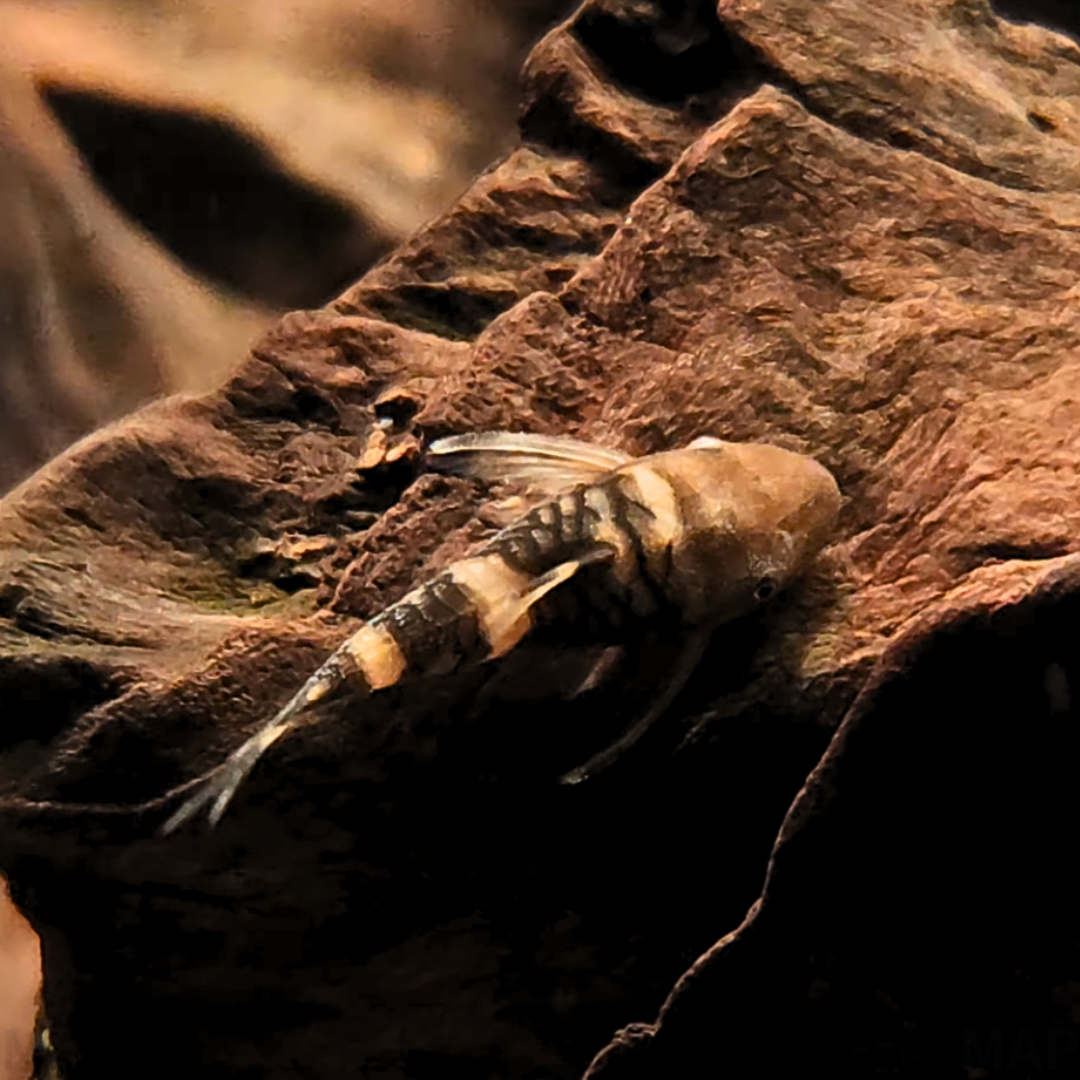
ボルケーノオトシンは、南米ペルーのアマゾン川上流域に生息する、ロリカリア科ナンノプトポマ属の未記載種です。最大でも5cmに満たない極小型のナマズでありながら、その存在感は圧倒的です。最大の特徴は、和名の由来にもなっている火山の火口を思わせる鮮烈な赤色のアイリングと、白地に濃褐色のゼブラ模様が織りなす美しいコントラストです。一般的なオトシンクルスと比べ、頭部が平たく横に張り出した「ロボコップ」とも称されるメカニカルなフォルムを持ち、観賞魚としての高い魅力と、未だ多くの謎に包まれた学術的な希少性を兼ね備えています。The Volcano Otocinclus is an undescribed species belonging to the genus Nannoptopoma within the Loricariidae family, native to the upper Amazon basin in Peru. Despite being a tiny catfish reaching less than 5cm, it possesses an overwhelming presence. Its most striking feature is the brilliant red eye ring, reminiscent of a volcanic crater, combined with a sharp zebra pattern of dark brown on a white background. Compared to common Otocinclus, it has a flat, wide head often described as a mechanical or Robocop-like form, offering both immense aesthetic appeal and academic rarity.
南米:ペルー(ナナイ川、ワジャガ川、ティグレ川などアマゾン川上流域)South America: Upper Amazon basin in Peru (Rio Nanay, Rio Huallaga, Rio Tigre, etc.)
最大体長 / Max Size
3cmから5cm程度Approximately 3cm to 5cm
寿命 / Lifespan
3年から5年程度(飼育環境による)Approximately 3 to 5 years (depending on the environment)
飼育環境 / Aquarium Environment
水槽サイズ / Tank Size
30cm規格水槽(約12リットル)以上。水質の安定を考慮すると45cmから60cm規格水槽(約60リットル)が理想的です。At least a 30cm standard tank (approx. 12L). A 45cm to 60cm standard tank (approx. 60L) is ideal for water stability.
水温 / Temperature
21度から28度(26度前後の安定した高めの水温が活性を高めます)21 to 28 degrees Celsius (stable temperatures around 26C promote higher activity)
水質 / Water Quality
pH 6.0から7.5(弱酸性から中性)。硬度は軟水(GH 0から3)を好みます。pH 6.0 to 7.5 (slightly acidic to neutral). They prefer soft water (GH 0 to 3).
レイアウト / Layout
角のない細かい砂利や砂を用い、流木、なめらかな石、アヌビアスやエキノドルスなどの広葉の水草を配置します。落ち葉(マジックリーフなど)を沈めると微生物が発生しやすくなります。Use smooth fine gravel or sand, decorated with driftwood, smooth stones, and broad-leafed plants like Anubias or Echinodorus. Adding leaf litter (e.g., Indian Almond leaves) encourages microbial growth.
注意点 / Precautions
高い新陳代謝を支えるため、極めて高い溶存酸素量を要求します。強力なエアレーションと、澱みのない緩やかな水流を維持することが長期飼育の絶対条件です。They require extremely high dissolved oxygen levels to support their high metabolic rate. Powerful aeration and a gentle, constant water current are essential for long-term success.
餌と給餌 / Feeding
餌の種類 / Diet
植物質(珪藻、バイオフィルム、茹でた野菜、植物性タブレット)と、動物質(イトメ、冷凍アカムシ)をバランスよく与えます。Provide a balanced diet of plant matter (diatoms, biofilm, boiled vegetables, algae wafers) and animal protein (tubifex, frozen bloodworms).
給餌のポイント / Feeding Tips
非常に痩せやすいため、常に餌がある状態が理想です。複数匹で飼育すると、人工飼料への餌付けがスムーズになる「ラーニング(学習)」効果が期待できます。They are prone to emaciation, so constant food availability is ideal. Keeping them in groups encourages “learning” to accept artificial foods.
性格と混泳 / Temperament and Tank Mates
性格 / Temperament
非常に温和で、同種間では群れを作ります。ただし、驚くとパニックになりやすいため、静かな環境が好ましいです。Very peaceful and shoaling within their species. However, they are easily startled and prefer a quiet environment.
混泳の相性 / Compatibility
上層・中層を泳ぐ小型カラシンやラスボラとは好相性です。餌を奪い合う大型のプレコや他のロリカリア類との混泳は避けるべきです。They get along well with small tetras and rasboras in the upper/middle layers. Avoid large plecos or other Loricariids that might compete for food.
病気と対策 / Diseases and Prevention
かかりやすい病気 / Common Diseases
輸入直後のエロモナス感染症、白点病、および絶食による腸内細菌叢の崩壊と餓死。Aeromonas infections shortly after import, Ich (White spot disease), and starvation or gut flora collapse due to prolonged fasting.
対策と予防 / Prevention
導入時の丁寧な水合わせと検疫が重要です。初期トリートメントとして、ごく少量のプレーンヨーグルトを投与し、腸内環境を整える手法も有効とされています。Careful acclimatization and quarantine are crucial. Some experts suggest adding a tiny amount of plain yogurt during initial treatment to help stabilize gut flora.
増やし方(繁殖) / Breeding
雌雄の判別 / Sexing
成熟したオスは腹鰭にトゲ状の突起があり、頭部の赤みが強くなります。メスは抱卵すると腹部が丸みを帯びます。Mature males have odontodes on their pelvic fins and more intense red on the head. Females develop a noticeably rounded abdomen when gravid.
繁殖形態 / Reproduction
開放産卵型(オープン・スポーナー)。ガラス面や水草の葉に卵を産み付けます。Open spawners. They lay eggs on glass surfaces or aquatic plant leaves.
繁殖のポイント / Breeding Tips
オスが卵を保護する習性があります。稚魚は極めて小さく成長も遅いため、インフゾリアやバイオフィルムが豊富な専用水槽での育成が必要です。Males guard the eggs. Since fry are extremely small and slow-growing, they require a dedicated tank rich in infusoria and biofilm.
雑学と豆知識 / Trivia and Fun Facts
1. 分類学上の「空白」を埋める存在 / 1. Filling the Taxonomic Gap
ボルケーノオトシンは、1996年にシェイファーによって提唱された「ナンノプトポマ属」に属しています。この属は烏口骨の構造や腹部の骨板の並びによって他のオトシン類と区別されますが、ボルケーノオトシン自体は依然として学術記載を待つ「未記載種」です。近縁種とは色彩で明確に区別されており、分類学者たちの間でもその独自性が認められている興味深い存在です。The Volcano Otocinclus belongs to the genus Nannoptopoma, established by Schaefer in 1996. This genus is distinguished from other otos by its coracoid structure and ventral plates. However, the Volcano Otocinclus itself remains an “undescribed species.” It is clearly distinguished from relatives by its coloration, and its uniqueness is widely recognized among taxonomists.
彼らの眼球は頭部の側面に極端に張り出しており、これによって静止した状態でもほぼ全方位を監視することができます。これは自然界において、水上の鳥類や水中の大型魚といった捕食者から身を守るために進化した結果です。アクアリウムでも、人が近づくと敏感に反応するのは、この広大な視野で私たちの動きをいち早く察知しているからなのです。Their eyeballs protrude significantly from the sides of the head, allowing them to monitor almost 360 degrees even while stationary. This is an evolutionary adaptation to detect predators like birds from above or large fish from below. In an aquarium, their quick reaction to human presence is due to this expansive visual range.
3. 世界中で愛される多彩な呼び名 / 3. Various Names Loved Worldwide
日本では「ボルケーノ(火山)」の名で親しまれていますが、世界に目を向けるとさらに面白い呼び名に出会えます。イギリスなどの欧州では、その装甲に覆われた姿から「ロボコップ・キャットフィッシュ」と呼ばれ、アジアの輸出拠点では赤目と青白い体色の対比から「ヴァンパイア」の名でリストに載ることもあります。どの名前も、本種の持つ唯一無二の個性を的確に捉えています。While known as “Volcano” in Japan, international trade names are equally fascinating. In Europe, they are called “Robocop Catfish” due to their armored appearance. In Asian export hubs, the contrast between red eyes and pale body led to the name “Vampire.” Each name perfectly captures the unique personality of this species.
まとめ / Conclusion
ボルケーノオトシンは、その美しさと引き換えに、繊細な水質管理と絶え間ない栄養補給を求める「情熱的な挑戦」をアクアリストに突きつける魚です。しかし、適切なエアレーションと、植物質・動物質を組み合わせた充実した食事を提供できれば、水槽内で元気に泳ぎ回るその姿は、他に代えがたい癒やしと感動を与えてくれるでしょう。The Volcano Otocinclus offers a “passionate challenge” to aquarists, demanding delicate water management and constant nutrition in exchange for its beauty. However, with proper aeration and a rich diet of both plant and animal matter, their lively presence in the tank provides irreplaceable comfort and wonder.
特に日本で一般的な60cm規格水槽であれば、豊かな微生物を育むレイアウトを作る余裕があり、本種の長期育成に非常に適しています。ぜひ、この南米の小さな火山をあなたの水槽に迎え入れ、その深い魅力に触れてみてください。Standard 60cm tanks, common in Japan, are particularly suitable for long-term care as they provide enough space for a layout that fosters rich microbial life. We invite you to welcome this tiny South American volcano into your aquarium and experience its profound charm.
Schaefer, S. A. (1996). Nannoptopoma, a new genus of Loricariid catfishes (Siluriformes: Loricariidae) from the Amazon and Orinoco rivers. Copeia, 1996(4), 913-926.
Aquino, A. E., & Schaefer, S. A. (2010). Systematics of the genus Hypoptopoma Günther, 1868 (Siluriformes, Loricariidae, Hypoptopomatinae). Bulletin of the American Museum of Natural History, (336), 1-110.
Trabac, P. (2018). Reproduction de Nannoptopoma sp. “Peru” (LDA 110). [French Aquarist Breeding Report].
PlanetCatfish.com. Nannoptopoma sp. (LDA110) Database. (Retrieved from https://www.planetcatfish.com/)
SeriouslyFish.com. Nannoptopoma sp. “Peru” Species Profile. (Retrieved from https://www.seriouslyfish.com/)
Wels-Atlas (LDA Number System). LDA110 identification and classification history.



 アイのアクアグッズ案内バルブの仲間に合わせる飼育用品|チェリーバルブ・スマトラ・中型種の水槽とろ過道具の特徴や使い方、選ぶときのポイントをアイが紹介します。記事はコチラ →
 アイのアクアグッズ案内ショップで見かけるカラフルなバケツ。いったい何が入ってる?道具の特徴や使い方、選ぶときのポイントをアイが紹介します。記事はコチラ →




コメント