

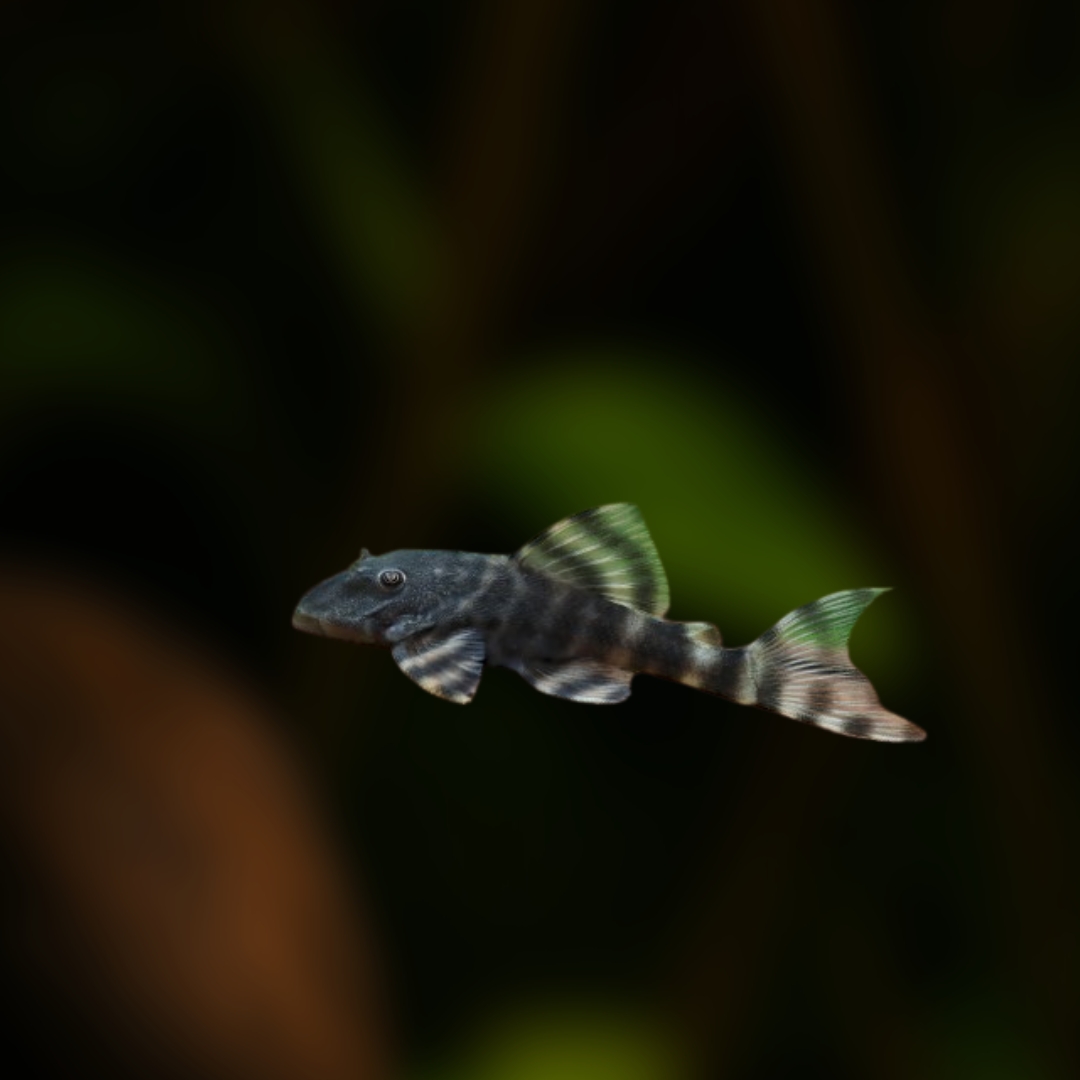
解説 / Description
ホワイトタイガープレコは、ペルーのアマゾン川上流域に分布する小型のロリカリア科魚類です。淡いベージュから白っぽい地色に、濃褐色の細かなバンドや虫食い状の模様が入り、流通名の「ホワイトタイガー」を思わせる独特の美しさがあります。分類上は現在、パナコラス属の Panaqolus changae として扱われますが、記載時の学名 Panaque changae もシノニムとして残っています。 The White Tiger Pleco is a small loricariid catfish from the upper Amazon basin of Peru. Its pale beige to whitish base color is overlaid with dark brown bands and fine maze-like markings, giving it the distinctive appearance suggested by its trade name. It is currently treated as Panaqolus changae, while the originally described name Panaque changae remains as a synonym.
基本情報 / Basic Information
| 学名 / Scientific Name | Panaqolus changae |
|---|---|
| 通称 / Common Name | ホワイトタイガープレコ、L226、LDA26、イキトスタイガープレコWhite Tiger Pleco, L226, LDA26, Iquitos Tiger Pleco |
| 分類 / Family | ナマズ目ロリカリア科ヒポストムス亜科パナコラス属Order Siluriformes, family Loricariidae, subfamily Hypostominae, genus Panaqolus |
| 英名 / English Name | White Tiger Pleco / Iquitos Tiger Pleco |
| 分布 / Distribution | 南米ペルー。文献上はロレト県イキトス周辺のイタヤ川およびモモン川流域が中心とされます。アクアリウム流通では近隣水系名が添えられる場合もありますが、確実な記述ではイタヤ川・モモン川を軸に扱うのが安全です。Peru, South America. Reliable references primarily list the Itaya and Momon River basins around Iquitos, Loreto. Nearby river names may appear in aquarium trade contexts, but the Itaya and Momon basins are the safest confirmed distribution to state. |
| 最大体長 / Max Size | 標準体長で約8.5cm。飼育上の全長目安は10cm前後から最大12cm程度として扱うと余裕を持てます。About 8.5 cm standard length. In aquarium planning, allowing for around 10 cm and up to roughly 12 cm total length gives a practical safety margin. |
| 寿命 / Lifespan | 正確な野外寿命は情報が限られます。良好な飼育環境では10年以上、資料によっては12年前後から15年程度が目安として紹介されます。Precise wild longevity is not well documented. Under good aquarium care, 10 years or more is a reasonable expectation, and some care sources cite approximately 12 to 15 years. |
飼育環境 / Aquarium Environment
| 水槽サイズ / Tank Size | 単独または少数なら60cm規格水槽を最低ラインとし、複数飼育や繁殖を視野に入れる場合は90cm規格水槽以上を推奨します。小型種ですが底面で縄張りを作るため、体長だけでなく底面積と隠れ家の数を重視します。A standard 60 cm aquarium is the practical minimum for a single fish or a small number, while a standard 90 cm aquarium or larger is recommended for groups or breeding attempts. Although small, it is territorial on the bottom, so floor area and shelter count matter as much as body size. |
|---|---|
| 水温 / Temperature | 25〜28℃を中心に安定させます。飼育資料では22〜30℃程度の幅も見られますが、急変と高水温時の酸欠を避けることが大切です。 Keep the temperature stable around 25 to 28°C. Some care references give a broader range of about 22 to 30°C, but avoiding sudden changes and oxygen shortage at high temperatures is especially important. |
| 水質 / Water Quality | 弱酸性から中性、目安はpH 6.0〜7.5。軟水から中硬水で飼育できますが、pHを極端に下げるよりも、換水と濾過で安定させることを優先します。Slightly acidic to neutral water is suitable, with pH 6.0 to 7.5 as a practical guide. It can be kept in soft to moderately hard water, but stability through filtration and regular water changes is more important than pushing the pH extremely low. |
| レイアウト / Layout | 流木を必ず複数入れ、石、プレコ用シェルター、土管などで隠れ家を多く作ります。流木表面を削る行動が自然で、餌場、隠れ家、縄張りの境界としても機能します。水草は食害や掘り返しを受けることがあるため、アヌビアス、ミクロソリウム、ボルビティスなど硬めの種類を活着させる程度が無難です。Use several pieces of driftwood and add rocks, pleco caves, or tubes to create many shelters. Rasping wood is natural behavior, and wood also functions as feeding surface, refuge, and territory boundary. Aquatic plants may be damaged or uprooted, so hardy attached plants such as Anubias, Microsorum, or Bolbitis are the safer options. |
| 注意点 / Precautions | 流木を削るため木屑状のフンが多く出ます。アンモニアだけでなく物理的な汚れがフィルターを詰まらせやすいので、外部式フィルターや上部式フィルター、スポンジフィルターを組み合わせ、ウールマットやスポンジをこまめに洗浄します。高水温期はエアレーションや水流を増やし、溶存酸素を確保してください。Because it rasps wood, it produces a large amount of woody waste. The issue is not only ammonia but also physical debris that can clog filters, so combine strong filtration such as canister, overhead, or sponge filtration and clean mechanical media frequently. In warm seasons, increase aeration and flow to maintain dissolved oxygen. |
餌と給餌 / Feeding
| 餌の種類 / Diet | 流木を常設したうえで、植物質の多いプレコ用タブレット、アルジーウェハー、スピルリナ配合フード、茹でたズッキーニやキュウリ、カボチャなどを補助的に与えます。冷凍赤虫などの動物質も食べますが、主食にするのではなく少量の補助食として扱います。Provide permanent driftwood and supplement it with vegetable-rich pleco tablets, algae wafers, spirulina foods, and blanched vegetables such as zucchini, cucumber, or pumpkin. It may accept animal foods such as frozen bloodworms, but these should be occasional supplements rather than the staple diet. |
|---|---|
| 給餌のポイント / Feeding Tips | 夜行性寄りで臆病な個体も多いため、消灯前後に沈下性の餌を入れると食べやすくなります。高タンパクな餌に偏ると腹部膨満や消化不良のリスクが高まるため、植物質と流木を中心に、食べ残しは翌朝までに取り除きます。Many individuals are shy and partly nocturnal, so sinking foods are often best offered around lights-out. Diets that are too high in protein may increase the risk of bloating and digestive problems, so keep wood and vegetable matter central and remove leftovers by the next morning. |
性格と混泳 / Temperament and Tank Mates
| 性格 / Temperament | 基本的には温和で、他種に積極的に攻撃する魚ではありません。ただし、同種や似た生活圏の底棲魚とは、流木、餌場、シェルターをめぐって小競り合いが起きることがあります。It is generally peaceful and not usually aggressive toward unrelated tank mates. However, disputes can occur with its own kind or other bottom dwellers over wood, feeding spots, and caves. |
|---|---|
| 混泳の相性 / Compatibility | 小型から中型のカラシン、ラスボラ、ペンシルフィッシュ、ハチェット、コリドラス、小型シクリッドなど、口に入らず穏やかな魚と相性が良いです。大型で気性の荒いシクリッド、プレコをつつく魚、餌を独占する底棲魚との混泳は避けます。Good tank mates include small to medium characins, rasboras, pencilfish, hatchetfish, Corydoras, and smaller peaceful cichlids that cannot swallow it. Avoid large aggressive cichlids, fish that harass plecos, and bottom dwellers that monopolize food. |
病気と対策 / Diseases and Prevention
| かかりやすい病気 / Common Diseases | 白点病、尾ぐされ、スレ傷からの細菌感染、酸欠や水質悪化に伴う体調不良に注意します。流木の粉状の汚れが多い水槽では、底床やフィルター内に有機物が溜まりやすく、間接的に病気のきっかけになります。Watch for ich, fin rot, bacterial infections following abrasions, and general decline caused by poor water quality or low oxygen. In wood-heavy tanks, fine debris can accumulate in the substrate and filter, indirectly increasing disease risk. |
|---|---|
| 対策と予防 / Prevention | 導入時はトリートメントを行い、急な水温・pH変化を避けます。こまめな換水、底面の掃除、フィルターの物理濾過材の洗浄、十分なエアレーションを継続してください。薬浴を行う場合は、ナマズ類が薬剤に敏感なことを考慮し、製品表示を守って慎重に行います。Quarantine new arrivals and avoid sudden changes in temperature or pH. Maintain regular water changes, bottom cleaning, mechanical media maintenance, and strong aeration. If medication is required, treat carefully according to the product instructions because catfish can be sensitive to some medicines. |
増やし方(繁殖) / Breeding
| 雌雄の判別 / Sexing | 成熟したオスはエラ蓋周辺、胸ビレの棘条、体側後半に細かなオドントードが発達し、毛羽立った印象になります。メスはオドントードが比較的弱く、抱卵時には腹部に丸みが出ます。ただし若魚では判別が難しいため、複数匹をじっくり育てて確認するのが現実的です。Mature males develop fine odontodes around the gill covers, on the pectoral spines, and along the rear body, giving them a bristly appearance. Females tend to have weaker odontodes and become rounder when carrying eggs. Juveniles are difficult to sex, so raising a group is the most practical approach. |
|---|---|
| 繁殖形態 / Reproduction | 洞窟産卵型のプレコです。オスが筒状のシェルターやプレコ用ケーブを守り、メスを誘い込んで産卵した後、オスが卵を保護し、ヒレで新鮮な水を送ります。It is a cave-spawning pleco. The male guards a tube-like shelter or pleco cave, invites the female to spawn, and then protects the eggs while fanning them with his fins. |
| 繁殖のポイント / Breeding Tips | 成熟個体、十分な栄養、流木、複数のケーブ、清潔で酸素の多い水が前提です。季節変化を意識し、やや高めの水温で状態を作った後、温度差の小さい換水や水流増加で産卵を促す方法が紹介されます。ただし急激な水質変化は危険なため、個体の状態を見ながら段階的に行います。稚魚には流木表面のバイオフィルムと細かく砕いた植物質フードを切らさないことが重要です。Mature fish, good conditioning, driftwood, multiple caves, clean water, and high oxygen are essential. Breeders often encourage spawning by simulating seasonal change, such as conditioning the fish at slightly warmer temperatures and then increasing water changes and flow. Avoid abrupt water-chemistry shocks, and proceed gradually while observing the fish. Fry need constant access to biofilm on wood and finely crushed vegetable-based foods. |
雑学と豆知識 / Trivia and Fun Facts
| 1. L226という番号の意味 / 1. What L226 Means | プレコの世界では、正式な学名が整理される前から観賞魚として流通する種類が多く、ドイツの観賞魚誌などを中心にLナンバーが使われてきました。ホワイトタイガープレコのL226やLDA26もその歴史を受け継ぐ呼び名で、学名が定着した現在でも、ショップや愛好家の間では個体のイメージを伝える便利な名称として残っています。Many plecos entered the aquarium trade before their scientific names were fully settled, so L-numbers became widely used, especially through German aquarium publications. The White Tiger Pleco’s L226 and LDA26 names are part of that history, and even today they remain useful trade names that quickly convey the fish’s identity to hobbyists. |
|---|---|
| 2. 種小名 changae に込められた敬意 / 2. The Dedication Behind changae | 種小名の changae は、ペルーの魚類学者フォンチー・チャン氏に献名されたものです。彼女はロリカリア科を含むペルー産淡水魚の研究に貢献した人物で、採集調査中の事故で早逝しました。水槽内で見る一匹のプレコの名前にも、南米の川を歩き、魚類相を明らかにしようとした研究者の足跡が刻まれています。The species name changae honors the Peruvian ichthyologist Fonchii Chang, who contributed to the study of Peruvian freshwater fishes including loricariids and died young following an accident during fieldwork. The name reminds us that even a small pleco in an aquarium carries a connection to researchers who explored South American rivers to document their fish life. |
| 3. 流木は飾りではなく生活基盤 / 3. Driftwood Is More Than Decoration | パナコラス属のプレコにとって、流木は見た目を自然にするための飾りではありません。彼らは流木表面を削り、木質繊維、表面に育つ微生物膜、そこに付着する有機物を利用します。そのため、水槽を美しく見せるレイアウト素材であると同時に、健康を支える食卓であり、隠れ家であり、縄張りの境界でもあります。For Panaqolus plecos, driftwood is not merely a natural-looking decoration. They rasp wood surfaces and use wood fibers, microbial biofilm, and attached organic matter. In the aquarium, wood is therefore not only a design element but also a dining table, refuge, and territorial boundary. |
| 4. 似たプレコとの見分け方 / 4. Distinguishing Similar Plecos | タイガー系プレコには似た種類が多く、流通名だけでは判断が難しい場合があります。本種は頭部に細かい虫食い状、迷路状の模様が入りやすく、尾ビレには縞模様が出る点が観察ポイントになります。ただし地域差や個体差、混じり入荷もあるため、高価な個体や繁殖目的の個体を選ぶ場合は、信頼できるショップで産地や入荷名を確認するのが安心です。Many tiger-type plecos look similar, and trade names alone can be unreliable. This species often shows fine maze-like markings on the head and striped patterning on the caudal fin. Because regional variation, individual differences, and mixed imports can occur, it is best to confirm origin and import name with a reliable shop when buying valuable fish or breeding stock. |
まとめ / Conclusion
ホワイトタイガープレコは、派手すぎない上品な模様と、最大でも扱いやすいサイズ感を持つ魅力的な小型プレコです。流木を中心にしたレイアウト、安定した弱酸性から中性の水質、強めの濾過と酸素供給を整えれば、長く付き合える主役級の底棲魚になります。 The White Tiger Pleco is an appealing small pleco with elegant patterning and a manageable adult size. With a driftwood-centered layout, stable slightly acidic to neutral water, strong filtration, and ample oxygen, it can become a long-lived feature fish of the lower aquarium levels.
一方で、単なるコケ取り役として迎える魚ではありません。木屑状のフンが多いこと、動物質に偏らない給餌が必要なこと、同種間の縄張りに配慮することを理解しておくと、本種本来の行動や美しさをより自然に引き出せます。 At the same time, it should not be acquired merely as an algae cleaner. Understanding its heavy woody waste production, its need for a diet not dominated by animal protein, and its territorial behavior with its own kind will help bring out the fish’s natural behavior and beauty.
気になる道具や飼い方を見つけてみませんか?
 アイのアクアグッズ案内水草水槽のCO₂添加|3つの方式の選び方とおすすめ用品道具の特徴や使い方、選ぶときのポイントをアイが紹介します。記事はコチラ →
 アイのアクアグッズ案内ショップで見かけるカラフルなバケツ。いったい何が入ってる?道具の特徴や使い方、選ぶときのポイントをアイが紹介します。記事はコチラ →
さまざまな飼育テーマをご紹介。リンク先の記事には広告・商品紹介が含まれます。
案内・紹介記事一覧へ →参考文献・参照資料
本記事では、ホワイトタイガープレコ(Panaqolus changae)の分類、分布、形態、生息環境、木を利用する食性、飼育上の注意、繁殖、病気予防に関する記述を確認するため、下記の資料を参照しました。店舗・通販サイト、個人ブログ、一般的なまとめサイトは参考文献から除外しています。
-
Chockley, B. R. & Armbruster, J. W. (2002). Panaque changae, a new species of catfish (Siluriformes: Loricariidae) from eastern Peru. Ichthyological Exploration of Freshwaters, 13(1), 81-90.
https://webhome.auburn.edu/~armbrjw/Panaque_changae.pdf
本種の原記載論文。学名、形態識別、イタヤ川・モモン川周辺という分布、頭部の虫食い模様、歯や顎の特徴、種小名の由来を確認するための中核資料です。 -
Eschmeyer’s Catalog of Fishes, California Academy of Sciences. Panaqolus changae species record.
https://researcharchive.calacademy.org/research/ichthyology/catalog/fishcatget.asp?spid=66828
現在の有効名、ロリカリア科ヒポストムス亜科としての分類、Panaque changaeからPanaqolus changaeとして扱われている分類上の位置づけを確認する資料です。 -
Froese, R. & Pauly, D. (eds.). FishBase. Panaqolus changae summary / field guide.
https://www.fishbase.se/Fieldguide/FieldGuideSummary.php?c_code=604&genusname=Panaqolus&speciesname=changae
最大標準体長、淡水・底層性という環境情報、ペルーのイタヤ川・モモン川流域という分布、背ビレ鰭条数や体側バンドなどの診断形質を確認するために参照しています。 -
GBIF Backbone Taxonomy. Panaqolus changae (Chockley & Armbruster, 2002).
https://www.gbif.org/species/2339417
生物多様性データベース上での分類階級、シノニム、基礎的な分類情報の照合に使用しています。 -
Cramer, C. A. & de Sousa, L. M. (2016). A new species of tiger pleco Panaqolus (Siluriformes: Loricariidae) from the Xingu Basin, Brazil. PLOS ONE.
https://pmc.ncbi.nlm.nih.gov/articles/PMC5102395/
Panaqolus属の分類的位置づけと、近縁のタイガー系プレコとの識別、とくにP. changaeに見られる頭部の虫食い状模様を確認する補助資料です。 -
German, D. P. (2009). Inside the guts of wood-eating catfishes: can they digest wood? Journal of Comparative Physiology B.
https://link.springer.com/article/10.1007/s00360-009-0381-1
木を食べるロリカリア科魚類について、木材摂取と消化の関係を検討した研究です。記事内では「流木を利用するが、木材そのものをどの程度栄養化しているかは慎重に扱う」という表現の根拠にしています。 -
McDonald, R. C., Watts, J. E. M. & Schreier, H. J. (2019). Effect of Diet on the Enteric Microbiome of the Wood-Eating Catfish Panaque nigrolineatus. Frontiers in Microbiology.
https://www.frontiersin.org/journals/microbiology/articles/10.3389/fmicb.2019.02687/full
同じ木材利用性の強いロリカリア科魚類を対象に、食性と腸内微生物の関係を検討した研究です。流木、バイオフィルム、植物質主体の給餌に関する背景資料として参照しています。 -
Sabaj, M. H., Armbruster, J. W. & Page, L. M. (1999). Spawning in Ancistrus (Siluriformes: Loricariidae) with comments on the evolution of snout tentacles as a novel reproductive strategy: larval mimicry. Ichthyological Exploration of Freshwaters.
https://auburn.edu/~armbrjw/Ancistrus.pdf
ロリカリア科における洞窟・隠れ家での産卵、オスによる卵や仔魚の保護行動を支える一般的な繁殖資料です。Panaqolus changae固有の繁殖データではないため、記事内では近縁分類群の知見として慎重に扱います。 -
MSD Veterinary Manual. Disorders and Diseases of Fish.
https://www.msdvetmanual.com/all-other-pets/fish/disorders-and-diseases-of-fish
魚病全般について、ストレス、過密、 poor water quality、新規導入魚の隔離不足が病気の発生要因になりやすいことを確認するための獣医学系資料です。 -
MSD Veterinary Manual. Bacterial Diseases of Fish.
https://www.msdvetmanual.com/exotic-and-laboratory-animals/aquarium-fish/bacterial-diseases-of-fish
エロモナス、シュードモナス、カラムナリスなどの細菌性疾患と、水質悪化、有機物負荷、低酸素、温度変化、輸送・ハンドリングストレスとの関係を確認する資料です。 -
University of Florida IFAS Extension. Ichthyophthirius multifiliis (White Spot) Infections in Fish.
https://ask.ifas.ufl.edu/publication/FA006
淡水魚の白点病について、原因生物、感染性、温度変化や過密との関係、早期発見・対応の重要性を確認するための公的普及資料です。
注記:飼育温度、pH、餌、繁殖誘発などの実践的な数値は、種固有の査読済み飼育実験が限られるため、原記載・分類データとロリカリア科魚類の一般的知見を組み合わせ、断定を避けた目安として扱っています。




コメント