

▶ 記事の生体をAMAZONで買う ▶ 記事の生体をYahooで買う
解説 / Description
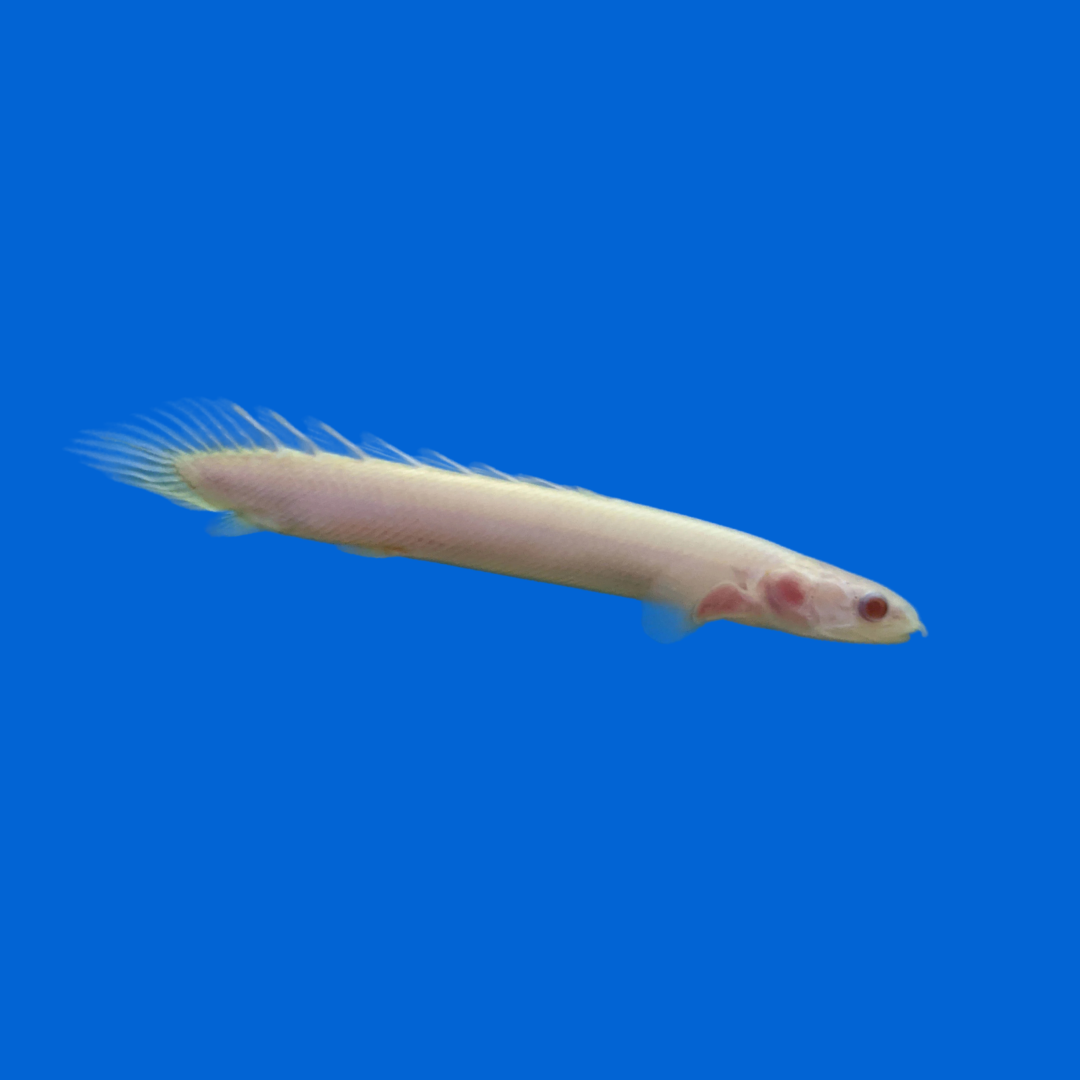
ポリプテルス・セネガルス・アルビノは、アフリカに分布するポリプテルス・セネガルスから固定された白化品種です。白から淡いピンクがかった体色と赤い目を持ち、古代魚らしい重厚な雰囲気を楽しめる一方で、ポリプテルスの中では比較的小型で扱いやすいことから、国内でも古代魚入門種として親しまれています。丈夫で餌付きやすい個体が多い反面、肺呼吸のために水面へ上がる習性があり、飛び出し事故への対策は必須です。 The Albino Senegal Bichir is a captive-bred albino form of Polypterus senegalus, an African freshwater bichir. Its pale white to pinkish body and red eyes give it a distinctive appearance, while its relatively manageable size makes it one of the most accessible ancient fish in the aquarium hobby. It is generally hardy and feeds well, but because it breathes air at the surface, a secure lid is essential.
基本情報 / Basic Information
| 学名 / Scientific Name | Polypterus senegalus |
|---|---|
| 通称 / Common Name | ポリプテルス・セネガルス・アルビノ、アルビノセネガルス、アルビノ・セネガルビチャーAlbino Senegal Bichir, Albino Gray Bichir |
| 分類 / Family | ポリプテルス目 ポリプテルス科 ポリプテルス属Order Polypteriformes, family Polypteridae, genus Polypterus |
| 英名 / English Name | Albino Senegal Bichir |
| 分布 / Distribution | 原種はアフリカ大陸の河川・湖沼・湿地に広く分布します。観賞魚として流通するアルビノ個体は、東南アジアなどで養殖されたブリード個体が中心です。The wild form is widely distributed in rivers, lakes, and wetlands of Africa. Albino specimens in the aquarium trade are mainly captive-bred, especially from Asian farms. |
| 最大体長 / Max Size | 一般的な飼育下では約25〜35cm前後が目安です。原種としてはさらに大きくなる記録もあるため、販売時の幼魚サイズだけで判断せず、成長後の底面積を考えて水槽を用意することが大切です。In aquariums, it is commonly around 25–35 cm, although larger sizes are recorded for the species. Tank planning should be based on adult size rather than juvenile size at purchase. |
| 寿命 / Lifespan | 10年前後、またはそれ以上。長期飼育される例もあるため、購入時から数年単位ではなく長く付き合う魚として考える必要があります。Around 10 years or longer is possible. Since long-term captive records exist, it should be considered a fish for long-term care rather than a short-term pet. |
飼育環境 / Aquarium Environment
| 水槽サイズ / Tank Size | 幼魚は60cm規格水槽から飼育できますが、終生飼育を前提にするなら90cm規格水槽以上が安心です。奥行きのある60cmワイド水槽でも飼育されることはありますが、成長後の動きやすさを考えると、余裕のある底面積を確保することが大切です。Juveniles can be kept in a standard 60 cm tank, but a standard 90 cm aquarium or larger is safer for long-term care. A wider 60 cm tank may be used in some cases, but generous floor space is preferable for adult movement. |
|---|---|
| 水温 / Temperature | 24〜28℃前後。国内の一般家庭では、秋から春にかけてヒーターとサーモスタットで安定させることが重要です。 Around 24–28°C. In temperate regions, a heater and thermostat are important for stable long-term care. |
| 水質 / Water Quality | 弱酸性〜弱アルカリ性付近まで比較的幅広く適応します。丈夫な魚ですが、肉食魚で残餌やフンが水を汚しやすいため、強めのろ過と定期的な換水が必要です。It adapts to a fairly broad range from slightly acidic to slightly alkaline water. It is hardy, but as a carnivorous bottom-dweller it can produce a heavy organic load, so strong filtration and regular water changes are important. |
| レイアウト / Layout | 底を這うように移動するため、角の鋭い石や粗い砂利は避けます。ベアタンク、細かい砂、丸みのある底床が扱いやすく、流木や土管などの隠れ家を用意すると落ち着きやすくなります。Avoid sharp rocks or coarse gravel because the fish moves along the bottom. A bare-bottom tank, fine sand, or smooth substrate works well, with driftwood or caves for shelter. |
| 注意点 / Precautions | 最も重要なのは飛び出し防止です。肺呼吸のために水面へ上がるほか、驚いた拍子にわずかな隙間から外へ出ることがあります。ガラスフタやアクリルフタで隙間をふさぎ、配管まわりまで確認しておくことが大切です。The most important precaution is preventing escapes. Bichirs surface to breathe air and may jump when startled. Use a tight-fitting glass or acrylic lid and check gaps around pipes and equipment. |
餌と給餌 / Feeding
| 餌の種類 / Diet | 沈下性の肉食魚用人工飼料を主食に、冷凍アカムシ、冷凍エビ、魚の切り身などを補助的に与えます。国内では底棲肉食魚向けのペレットが使いやすく、ブリード個体であれば人工飼料に慣れた個体も多いです。Use sinking carnivore pellets as the staple food, supplemented with frozen bloodworms, shrimp, or small pieces of fish. Captive-bred individuals often adapt well to prepared foods. |
|---|---|
| 給餌のポイント / Feeding Tips | 夜行性で視力より嗅覚に頼る傾向があるため、消灯前後に沈下性の餌を与えると食べやすくなります。食べ残しは水質悪化の原因になるため、数分で食べ切れる量に調整します。メダカや小赤などの生き餌は食いつきがよい反面、寄生虫や病原体の持ち込みにつながるため、常用は避けたほうが安心です。Because it is nocturnal and relies strongly on smell, feeding around lights-out often works well. Remove uneaten food and avoid overfeeding. Live feeder fish may be accepted readily but can introduce parasites or pathogens, so they should not be used routinely. |
性格と混泳 / Temperament and Tank Mates
| 性格 / Temperament | 古代魚・肉食魚の中では比較的温和で、同程度以上のサイズの魚には強く干渉しにくい傾向があります。アルビノ個体は視覚が弱いこともあり、餌を探すときには匂いを頼りにゆっくり動く姿がよく見られます。It is relatively peaceful for a predatory ancient fish and usually does not bother tank mates of suitable size. Albino individuals often rely heavily on smell and move slowly when searching for food. |
|---|---|
| 混泳の相性 / Compatibility | 口に入らない大きさで、極端に攻撃的でない中型魚・大型魚と相性がよいです。同種や他のポリプテルス類との混泳もよく行われます。一方で、ネオンテトラやグッピーのような小型魚は夜間に捕食される可能性が高く、混泳相手としては不向きです。It can be kept with medium to large fish that are too large to be swallowed and not overly aggressive. It is also commonly kept with other bichirs. Small fish such as neon tetras or guppies are likely to be eaten, especially at night. |
病気と対策 / Diseases and Prevention
| かかりやすい病気 / Common Diseases | 白点病、水質悪化による肌荒れ、外傷、寄生虫の持ち込みに注意します。ポリプテルス類では体表に寄生する単生類が問題になることもあり、体をこすりつける、落ち着きなく泳ぐ、食欲が落ちるといった変化は早めに確認したいサインです。Watch for ich, skin irritation from poor water quality, injuries, and external parasites. In bichirs, skin flukes may sometimes become a problem. Scratching, restlessness, or loss of appetite should be checked early. |
|---|---|
| 対策と予防 / Prevention | 予防の基本は、水温の安定、十分なろ過、食べ残しの除去、定期的な換水です。ポリプテルスは薬に敏感な面があるため、薬浴を行う場合は薬剤の種類と濃度に注意し、古代魚への使用実績を確認してから慎重に行います。導入直後は隔離観察をしておくと安心です。Stable temperature, strong filtration, removal of uneaten food, and regular water changes are the basis of prevention. Bichirs can be sensitive to some medications, so treatment should be done cautiously with products known to be safe for ancient fish. Quarantine after purchase is recommended. |
増やし方(繁殖) / Breeding
| 雌雄の判別 / Sexing | 成熟したオスは尻ビレが幅広く厚みを帯び、メスは全体的にふっくらした体型になりやすいです。幼魚の段階では判別が難しく、ある程度成長してから確認する必要があります。Mature males usually have a broader, thicker anal fin, while females tend to have a fuller body. Juveniles are difficult to sex reliably. |
|---|---|
| 繁殖形態 / Reproduction | 卵生です。オスが尻ビレでメスの産んだ卵を受け止めるような行動を見せ、ばらまかれた卵は水草や産卵床に付着します。It is an egg-layer. The male may use his anal fin to cup the eggs as they are released, and the eggs attach to plants or spawning media. |
| 繁殖のポイント / Breeding Tips | 国内の一般的な飼育環境での繁殖は簡単ではありません。十分に成熟したペア、広い水槽、安定した水質、産卵床、稚魚用の初期飼料を準備する必要があります。アルビノ品種として流通する個体は養殖によって供給されることが多く、家庭では観察目的の飼育を中心に考えると扱いやすい魚です。Breeding in a home aquarium is not easy. Mature pairs, a spacious tank, stable water quality, spawning media, and suitable first foods for fry are required. Most albino specimens in the trade are farm-bred, so home aquarists usually keep them mainly for observation. |
雑学と豆知識 / Trivia and Fun Facts
| 1. 「古代魚」と呼ばれる理由 / 1. Why It Is Called an Ancient Fish | ポリプテルス類は、現生する条鰭類の中でも非常に古い系統に属すると考えられている魚です。硬いガノイン鱗、複数に分かれた背ビレ、幼魚期に見られる外鰓など、一般的な熱帯魚とは異なる特徴を多く残しています。見た目の迫力だけでなく、魚類の進化を感じさせる形そのものが、本種の大きな魅力です。Bichirs belong to a very ancient lineage among living ray-finned fishes. Their hard ganoid scales, separate dorsal finlets, and external gills in juveniles make them very different from many common aquarium fish. Their appeal lies not only in appearance but also in the evolutionary story their body tells. |
|---|---|
| 2. 肺呼吸をする魚 / 2. A Fish That Breathes Air | ポリプテルスは水中のエラ呼吸だけでなく、発達した肺を使って空気中の酸素を取り込むことができます。空気を吸う際には口だけでなく、頭部にある噴水孔も関わることが知られています。そのため低酸素に比較的強い一方、水面に上がれない環境では大きな負担になります。水面をふさぎすぎないこと、呼吸のためのスペースを確保することは、見落とされやすい重要な飼育ポイントです。Bichirs can breathe air using well-developed lungs in addition to their gills. During air breathing, the spiracles on the head can also play an important role. This gives them tolerance to low-oxygen conditions, but they must be able to reach the surface. Keeping open access to the surface is an often-overlooked but essential care point. |
| 3. アルビノと白変個体の違い / 3. Albino and Leucistic Forms | アルビノはメラニン色素が欠乏するため、体色が白く、目は赤く見えます。一方で、プラチナやリューシスティックと呼ばれる白い個体は、体色が白くても目が黒い場合があります。外見が似ていても遺伝的な仕組みは異なるため、見分ける際は目の色が大きな手がかりになります。Albino fish lack melanin, giving them a pale body and red eyes. Platinum or leucistic individuals may also appear white, but often retain dark eyes. Eye color is therefore an important clue when distinguishing these forms. |
| 4. 視力よりも嗅覚に頼るハンター / 4. A Hunter Guided More by Smell Than Sight | ポリプテルス・セネガルスはもともと視力が強い魚ではなく、餌を探すときは嗅覚や水の動きに頼る傾向があります。アルビノ個体は強い光をまぶしく感じやすいと考えられるため、明るすぎる照明よりも、落ち着いた環境で飼育したほうが本来の行動を観察しやすくなります。Polypterus senegalus is not a highly visual hunter and relies strongly on smell and movement in the water. Albino individuals may be more sensitive to bright light, so subdued lighting often makes their natural behavior easier to observe. |
まとめ / Conclusion
ポリプテルス・セネガルス・アルビノは、古代魚らしい個性を持ちながら、比較的小型で丈夫なため、初めてポリプテルスを飼う人にも選びやすい種類です。白い体と赤い目の印象的な姿に加え、肺呼吸や底を這うような動きなど、一般的な熱帯魚とは違った観察の楽しさがあります。 The Albino Senegal Bichir is a hardy and relatively manageable bichir, making it a good choice for aquarists interested in ancient fish. Its pale body and red eyes are striking, and its air-breathing behavior and bottom-walking movements offer a very different experience from many common aquarium fish.
飼育では、水槽サイズ、強めのろ過、肉食魚向けの餌、そして何より飛び出し防止が重要です。口に入る魚との混泳を避け、落ち着ける隠れ家と安定した水質を用意すれば、長く付き合える魅力的な古代魚と考えると扱いやすい魚です。 For successful care, provide adequate tank space, strong filtration, suitable carnivorous foods, and above all, a secure lid. Avoid small tank mates that can be swallowed, maintain stable water quality, and provide shelters. With these basics in place, it is a fascinating ancient fish that can be enjoyed for many years.

気になる道具や飼い方を見つけてみませんか?
 アイのアクアグッズ案内水草水槽のCO₂添加|3つの方式の選び方とおすすめ用品道具の特徴や使い方、選ぶときのポイントをアイが紹介します。記事はコチラ →
 アイのアクアグッズ案内エーハイムはおもちゃから始まった? 小さな噴水から水槽へ、アイとコタロウの探訪道具の特徴や使い方、選ぶときのポイントをアイが紹介します。記事はコチラ →
さまざまな飼育テーマをご紹介。リンク先の記事には広告・商品紹介が含まれます。
案内・紹介記事一覧へ →参考文献・参照資料
本記事では、ポリプテルス・セネガルス・アルビノの基本情報、原種の分類・分布、飼育環境、肺呼吸や噴水孔に関する特徴を確認するため、以下の資料を参照しました。
- Froese, R. and Pauly, D. Editors. FishBase. Polypterus senegalus, Gray bichir. 分布、最大体長、成熟サイズ、食性、空気呼吸、寿命など、本種の基礎的な生物情報の確認に使用。
- GBIF Secretariat. Polypterus senegalus Cuvier, 1829. 学名、記載者、分類階級、シノニムの確認に使用。
- Seriously Fish. Polypterus senegalus senegalus — Senegal Bichir. 飼育水温、pH、水槽サイズ、レイアウト、混泳時の注意点など、アクアリウムでの飼育情報の確認に使用。
- Fishipedia. Polypterus senegalus. 平均サイズ、最大サイズ、寿命、生息地、夜行性・肉食性、底層性、繁殖形態などの補助確認に使用。
- Graham, J. B., Wegner, N. C., Miller, L. A., Jew, C. J., Lai, N. C., Berquist, R. M., Frank, L. R. and Long, J. A. 2014. Spiracular air breathing in polypterid fishes and its implications for aerial respiration in stem tetrapods. Nature Communications 5, 3022. ポリプテルス類の噴水孔を介した空気呼吸と、魚類から四肢動物への進化を考えるうえでの意義の確認に使用。
- NCBI Datasets. Polypterus senegalus genome assembly ASM1683550v1. 本種がゲノム研究の対象となっている基礎情報、および進化・発生研究における学術的背景の確認に使用。
補足:本記事の「アルビノ」については、原種であるPolypterus senegalusの分類・生態・飼育情報を基礎に、観賞魚として流通する白化品種の特徴を加えて整理しています。




コメント