
解説 / Description
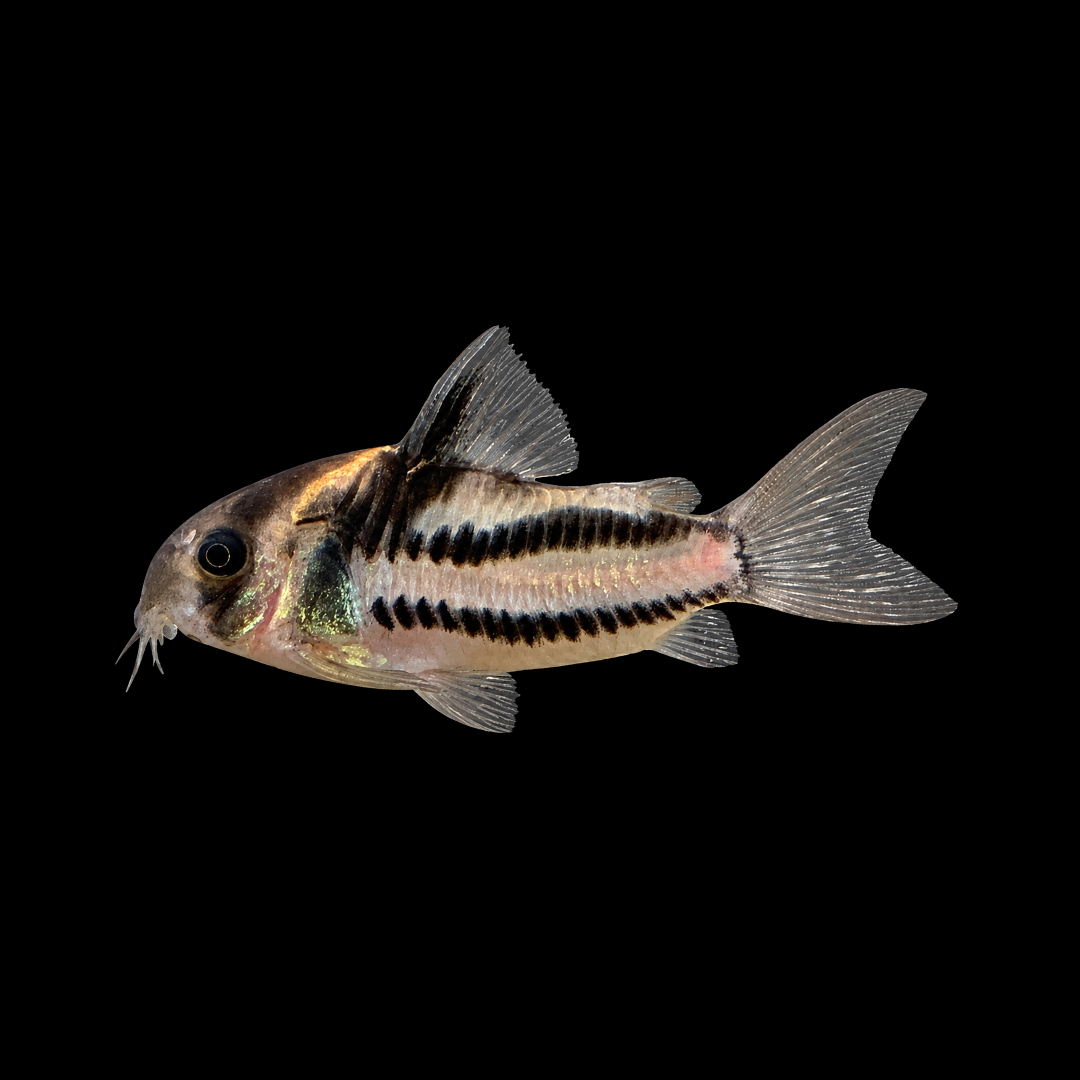
コリドラス・スーパーパラレルスは、淡いベージュから銀白色の体に走る太い黒い平行線と、目を横切る黒い帯が印象的な底生魚です。短く丸みのある口先としっかりした体つきに加え、背びれの黒い模様も美しく、背びれが長く伸びる個体ではいっそう存在感が増します。ブラジルのタパジョス川水系に由来し、正式な種名がまだ与えられていない魚として「CW127」の識別番号で知られています。近年の分類ではホプリソマ属に置かれますが、日本では引き続きコリドラスの名で親しまれています。落ち着いた環境で仲間と砂を探る姿には、模様を眺めるだけでは気づかない魅力があります。清潔な底床、十分な酸素、そして一匹ずつに届く餌を用意することが、健やかな飼育の基本です。 The Super Parallelus Cory is a bottom-dwelling catfish distinguished by bold, parallel black stripes on a pale beige to silvery-white body and a dark band across the eyes. Its short, rounded snout and substantial build are complemented by dark dorsal-fin markings, while individuals with an elongated dorsal fin have an especially striking appearance. Originating from Brazil’s Tapajós River basin, it remains scientifically undescribed and is recognized by the identification code CW127. Current classification places it in Hoplisoma, although aquarists in Japan continue to know it as a Corydoras. Watching a settled group explore the sand reveals a charm that goes beyond its markings. A clean substrate, plentiful oxygen, and food that reaches every individual are the foundations of good care.
基本情報 / Basic Information
| 学名 / Scientific Name | Hoplisoma sp. “CW127” |
|---|---|
| 通称 / Common Name | コリドラス・スーパーパラレルス、スーパーパラレルス、CW127。日本では「ショートノーズビファシアータス」の流通名で扱われることもあります。Super Parallelus Cory, Super Parallelus, and CW127. In Japan, it is also sometimes sold under a trade name meaning “Short-nosed Bifasciatus.” |
| 分類 / Family | ナマズ目・カリクティス科・コリドラス亜科・ホプリソマ属。従来は Corydoras 属の未記載種として扱われていました。Order Siluriformes; family Callichthyidae; subfamily Corydoradinae; genus Hoplisoma. Previously treated as an undescribed species of Corydoras. |
| 英名 / English Name | Super Parallelus Cory |
| 分布 / Distribution | 南米ブラジルのタパジョス川水系。ジャマンシン川由来の個体が流通し、同水系のアグアブランカ川(別名イピシュナ川)でも生息が記録されています。The Tapajós River basin in Brazil, South America. Fish originating from the Rio Jamanxim occur in the aquarium trade, and CW127 has also been recorded in the igarapé Água-branca, also known as Ipixuna, within the same drainage. |
| 最大体長 / Max Size | 成魚では約6〜7.5cmを飼育上の目安とします。雌雄や個体によって差があり、CW127としての厳密な最大体長は十分に整理されていません。購入時の大きさだけで判断せず、成長後の体格を見込んで飼育場所を用意しましょう。Allow for adults of approximately 6–7.5 cm when planning their accommodation. Size varies with sex and individual development, and a rigorously established maximum for CW127 is not yet available. Choose housing for their eventual adult size rather than their size at purchase. |
| 寿命 / Lifespan | CW127に限った信頼できる寿命の目安は確立されていません。数年単位の長期飼育を見据え、安定した水質と栄養状態を保ちます。野生採集個体は導入時の年齢が分からないことも多く、飼育年数と実際の年齢は一致しない場合があります。A reliable lifespan estimate specific to CW127 has not been established. Plan for long-term care over several years, maintaining stable water conditions and good nutrition. The age of wild-caught fish is often unknown, so time spent in an aquarium may not reflect their actual age. |
飼育環境 / Aquarium Environment
| 水槽サイズ / Tank Size | 同種5〜6匹程度の小さな群れなら、60cm規格水槽(幅60×奥行30×高さ36cm、水量の目安約60L)以上を目安にします。成魚を8匹以上で飼う場合や混泳を楽しむ場合は、90cm規格水槽(幅90×奥行45×高さ45cm、水量の目安約180L)など、底面積に余裕のある水槽がおすすめです。流木や石で底面を埋めすぎず、群れ全体が餌を探せる砂地を確保してください。実際の水量は水位や底砂、レイアウトによって少なくなります。For a small group of around five or six, use a 60 cm standard aquarium measuring approximately 60 × 30 × 36 cm, with a nominal capacity of about 60 L, as a starting point. For eight or more adults, or a community aquarium, a 90 cm standard tank measuring approximately 90 × 45 × 45 cm, around 180 L, offers a more generous footprint. Leave sufficient open sand for the whole group to forage rather than filling the bottom with wood and rocks. Actual water volume will be lower depending on water level, substrate, and furnishings. |
|---|---|
| 水温 / Temperature | 22〜26℃を日常管理の目安にし、急な変化を避けます。冬はサーモスタット付きヒーターで保温し、夏は室温と水温を確認しながら、室内の冷房、冷却ファン、水槽用クーラーなどを使い分けましょう。高温時は水中の酸素が不足しやすくなるため、水温管理とエアレーションを併せて考えることが大切です。 Use 22–26°C as a practical range for routine care and avoid abrupt changes. A thermostatically controlled heater is useful in winter. In summer, monitor both room and water temperatures and use room air conditioning, a cooling fan, or an aquarium chiller as appropriate. Because warm water holds less oxygen, temperature control should be considered together with aeration. |
| 水質 / Water Quality | 弱酸性〜中性付近の軟水を基本とし、pH6.0〜7.2前後を飼育上の目安にします。極端な低pHや低硬度を追い求めるより、導入前後や換水時の変動を小さく保つことを優先してください。日本の水道水にも地域差があるため、カルキ抜きに加えてpHと硬度を確認します。アンモニアと亜硝酸が検出されない、十分に立ち上がったろ過環境を用意し、硝酸塩や有機物の蓄積は定期的な換水と清掃で抑えます。Soft, slightly acidic to near-neutral water is a suitable starting point, with a practical pH target of approximately 6.0–7.2. Prioritize small changes during introduction and water changes rather than pursuing extremely low pH or hardness. Tap water varies between regions in Japan, so check pH and hardness as well as treating it with a suitable dechlorinator. Provide a fully established biological filter that keeps ammonia and nitrite undetectable, and control the accumulation of nitrate and organic waste through regular water changes and cleaning. |
| レイアウト / Layout | 角のない細かな砂を、清掃しやすい1〜2cm程度の薄さで敷くと管理しやすくなります。前面には広い砂地を残し、奥や側面に流木、水草、なめらかな石などを配置して、明るい場所と落ち着ける陰を作りましょう。アヌビアスやミクロソリウムを流木に活着させれば、底床を厚くせずに緑を取り入れられます。砂の厚さだけで清潔さが決まるわけではないため、物陰に残餌や糞がたまっていないかも確認してください。A shallow layer of fine, smooth sand, approximately 1–2 cm deep, is convenient to maintain. Leave an open sandy area at the front and arrange driftwood, plants, and smooth stones toward the back and sides to provide both open areas and shaded resting places. Anubias and Java fern attached to wood add greenery without requiring deep substrate. Substrate depth alone does not determine cleanliness, so also check for food and waste collecting beneath cover. |
| 注意点 / Precautions | 十分なろ過とエアレーションを行い、底層にも水が穏やかに回るようにします。強い水流が一方向から当たり続ける配置は避け、休める場所も残してください。水面へ上がれる通り道を確保しつつ、飛び出しを防ぐふたを設置します。移動時は背びれや胸びれの棘が網に絡みやすいため、可能なら水を張った容器へ誘導してすくいましょう。導入直後は落ち着ける環境を用意し、餌を探す様子と実際の摂餌、腹部の状態をよく観察します。Provide adequate filtration and aeration, with gentle circulation reaching the bottom. Avoid a layout that exposes the fish continuously to a strong jet, and retain sheltered resting areas. Keep a clear route to the surface while fitting a lid to prevent jumping. Dorsal and pectoral spines can become entangled in nets, so guide fish into a water-filled container when practical. Newly introduced fish benefit from a quiet environment; watch their foraging, actual food intake, and abdominal condition closely. |
餌と給餌 / Feeding
| 餌の種類 / Diet | 動物性の餌を好む雑食性の底生魚として、栄養バランスのよい沈下性のコリドラス用飼料を主食にします。小粒のペレットや食べやすいタブレットを使い、冷凍アカムシ、冷凍ブラインシュリンプなどを適量組み合わせるとよいでしょう。活イトメも食欲を引き出す餌の一つですが、飼育や繁殖に必須ではありません。使用する場合は状態のよいものを選び、砂の中へ大量に潜り込ませないよう少量ずつ与えます。Feed it as an omnivorous bottom-dweller with a preference for animal foods, using a nutritionally balanced sinking Corydoras food as the staple. Suitable options include small pellets and easily eaten tablets, supplemented with modest portions of frozen bloodworms or brine shrimp. Live tubifex can encourage feeding but is not essential for maintenance or breeding. If used, select a well-maintained supply and offer small portions so that large numbers do not disappear into the substrate. |
|---|---|
| 給餌のポイント / Feeding Tips | 成魚は1日1〜2回を目安に、実際の食べ方を見ながら少量ずつ与えます。餌を数か所に分けると、おとなしい個体にも行き渡りやすくなります。混泳水槽では中層の魚に先に食べ尽くされないよう、底まで届いたか確認してください。導入直後の警戒心が強い時期は、照明を少し落として給餌する方法もあります。食べ残しは取り除き、腹部が痩せた個体がいないかを継続して観察しましょう。貝などを同居させていても、給餌量の調整と残餌の回収は必要です。For adults, one or two feedings a day are a useful starting point, with portions adjusted to their actual intake. Distribute food across several locations so quieter individuals can feed. In a community tank, confirm that food reaches the substrate before midwater fish consume it. Slightly dimmed lighting may help cautious newcomers begin feeding. Remove uneaten food and regularly check for individuals developing a sunken abdomen. Keeping snails or other scavengers does not remove the need to control portions and collect leftovers. |
性格と混泳 / Temperament and Tank Mates
| 性格 / Temperament | 基本的に温和で、同種の仲間と一緒に落ち着いて過ごす魚です。同種5〜6匹程度の群れで飼うと、単独飼育よりも自然な採餌や休息の様子を観察しやすくなります。導入直後や周囲が騒がしい環境では隠れがちですが、安心できる陰と開けた砂地の両方があると、次第に行動範囲を広げることがあります。背びれの立ち方や体色だけで状態を判断せず、呼吸、食欲、仲間との距離も合わせて見守りましょう。Generally peaceful, it settles well in the company of its own kind. A group of around five or six provides better opportunities to observe natural foraging and resting behavior than keeping a single fish. New arrivals or fish exposed to frequent disturbance may remain hidden, but a combination of secure shade and open sand can encourage them to explore. Assess breathing, appetite, and interactions with companions rather than interpreting fin position or coloration alone. |
|---|---|
| 混泳の相性 / Compatibility | 飼育条件が合う、温和な小型テトラ、ペンシルフィッシュ、ラスボラなどが候補になります。中層を泳ぐ魚との組み合わせでも、給餌時の競争と水槽全体の収容数には注意してください。大型の肉食魚、ひれをかじる魚、底層で強い縄張りを持つ魚との同居は避けます。小型シクリッドも繁殖期には底近くで攻撃的になることがあるため、無条件に相性がよいとはいえません。プレコ類との混泳は体格と性質に左右されます。繁殖を目指す場合は、近縁種の混入や交雑の可能性を避けるため、CW127だけで管理すると安心です。Peaceful small tetras, pencilfish, and rasboras with compatible water requirements are potential companions. Even when tankmates occupy midwater, consider competition for food and the total stocking level. Avoid large predators, fin-nipping species, and fish that defend strong territories on the bottom. Dwarf cichlids may become aggressive near the substrate when breeding and are therefore not automatically suitable. Compatibility with plecos depends on their size and temperament. For breeding, maintain CW127 separately from similar species to reduce the risk of mixed identities or possible hybridization. |
病気と対策 / Diseases and Prevention
| かかりやすい病気 / Common Diseases | CW127が特にかかりやすい病気は十分には分かっていませんが、一般的な淡水魚と同様に、白点病、傷口などに生じる水カビ、細菌感染に伴うひれや皮膚の異常に注意が必要です。ヒゲが短くなる、口元が赤くなる、腹部が痩せるといった変化も見逃さないようにしましょう。ヒゲの損傷には底床や装飾による傷、汚れの蓄積、感染など複数の要因が関係し得ます。目の突出や腹部の膨らみも症状であり、見た目だけで原因を決めることはできません。Diseases to which CW127 is particularly predisposed are not well established. As with other freshwater fish, watch for white spot disease, water mould on damaged tissue, and bacterial conditions affecting the fins or skin. Shortening barbels, redness around the mouth, and a progressively sunken abdomen also deserve attention. Barbel damage can involve several factors, including abrasion, accumulated waste, and infection. Protruding eyes or abdominal swelling are symptoms rather than diagnoses and cannot establish the cause on appearance alone. |
|---|---|
| 対策と予防 / Prevention | 週1回、20〜30%程度の換水を目安にし、飼育数、給餌量、水質測定の結果に合わせて頻度を調整します。換水時には砂の表面や流木の下にたまった汚れを吸い出し、水槽の水と新しい水の温度・水質に大きな差が出ないようにしてください。新しく迎えた魚は、ろ過の働く別水槽で体調と摂餌を確認してから合流させます。異常が見られたら、まず水温、酸素供給、アンモニア、亜硝酸、最近の環境変化を確認しましょう。薬を使う場合は症状の原因と製品の適用対象を確かめ、用法・用量に従います。Use a weekly water change of approximately 20–30% as a starting point, then adjust the frequency according to stocking, feeding, and water-test results. Siphon accumulated waste from the sand surface and beneath wood, ensuring that replacement water does not differ greatly from the aquarium water in temperature or chemistry. Observe new fish in a separate, biologically filtered aquarium before introducing them to the group. If problems develop, first check temperature, oxygen supply, ammonia, nitrite, and recent environmental changes. When medication is appropriate, confirm the suspected cause and the product’s intended use, and follow its instructions and dosage. |
増やし方(繁殖) / Breeding
| 雌雄の判別 / Sexing | 成熟した個体を上から見ると、メスは腹部から体の中央にかけて幅が広く、ふっくらした体型になりやすい一方、オスは比較的細身です。幼魚や栄養状態が整っていない個体では判別が難しくなります。背びれの長さや模様の太さだけでは確実に見分けられません。また、腹部の膨らみには摂餌や体調も関係するため、ふだんの体型と比較して判断してください。Viewed from above, mature females tend to be broader through the abdomen and midbody, while males are usually more slender. Juveniles and fish in poor condition can be difficult to sex. Dorsal-fin length and stripe width are not reliable indicators on their own. Because abdominal fullness can also reflect a recent meal or a health problem, compare each fish with its usual condition. |
|---|---|
| 繁殖形態 / Reproduction | 卵生で、水槽内での産卵と稚魚の育成例があります。コリドラス類では、雌雄がT字状に接する「Tポジション」に続き、メスが腹びれで保持した粘着性の卵をガラス面や水草などへ付着させる繁殖行動が広く知られています。CW127の繁殖管理でも、こうした近縁種の習性を参考に採卵場所を用意します。親魚が卵を食べることがあるため、食卵を防ぐには、採卵して親魚と分けて管理します。An egg-laying fish, CW127 has spawned in aquaria and its fry have been successfully raised. Among corydoradine catfishes, the characteristic T-position is commonly followed by the female holding adhesive eggs between her pelvic fins and attaching them to glass, plants, or other surfaces. These behaviors in related species provide a useful basis for arranging spawning surfaces for CW127. Adults may eat their own eggs. To protect eggs from predation by the parents, collect them and keep them separately. |
| 繁殖のポイント / Breeding Tips | 十分に成熟した雌雄を含む同種の群れを用意し、沈下性の人工飼料を中心に冷凍アカムシやブラインシュリンプなどを組み合わせ、親魚の栄養状態を整えます。食べさせすぎによる残餌の蓄積を防ぎ、清潔な水と十分な酸素を維持しましょう。 コリドラス類では、部分換水が産卵のきっかけになることがあります。雨季の環境変化を意識する場合も、新しい水の水質を合わせ、温度差を小さくしてゆっくり交換します。水温、pH、硬度が急に変わる換水は避けてください。換水前後の水温、給餌、追尾行動などを記録すると、自分の群れの変化をつかみやすくなります。 卵を見つけたら、産み付けられた水草や産卵用の素材ごと移すか、卵を潰さないよう丁寧に回収します。水温と水質をそろえた別容器で穏やかにエアレーションし、発生が止まった卵や水カビの生じた卵を取り除いてください。外掛け式の育成ボックスを使う場合は、水が十分に循環し、卵や稚魚が強い流れや排水部へ吸い寄せられないようにします。 孵化までの日数は水温などに左右されるため、固定した日数だけで判断せず、卵の中の発生を観察します。孵化直後は腹部の卵黄嚢に蓄えた栄養を利用します。卵黄が減り、稚魚が餌を探し始めたら、孵化したてのブラインシュリンプなど、実際に口へ入る大きさの餌を少量ずつ与えましょう。給餌は数回に分け、腹部のふくらみと食べ残しを確認します。 育成中は底の汚れをこまめに除去し、温度と水質を合わせた少量の換水で清潔さを保ちます。成長に合わせて細かな人工飼料へ慣らし、成長によって過密になる前に、生物ろ過が十分に働くスポンジフィルターを備えた育成水槽へ移します。成長速度には差があるため、親魚との合流は月齢だけで決めず、体格、摂餌能力、ほかの魚との関係を確認してから行ってください。Start with a group of mature CW127 containing both males and females. Condition the adults with a balanced sinking staple supplemented with frozen bloodworms, brine shrimp, and similar foods. Prevent excess feeding from creating accumulated waste, and maintain clean, well-oxygenated water. In corydoradine catfishes, a partial water change may help trigger spawning. Even when attempting to imitate seasonal conditions, match the replacement water’s chemistry, keep temperature differences small, and add it gradually. Avoid water changes that cause abrupt shifts in temperature, pH, or hardness. Records of temperature, feeding, and courtship before and after maintenance can help reveal how a particular group responds. When eggs appear, transfer the plant or spawning material carrying them, or collect the eggs carefully without crushing them. Use a separate container with matching temperature and water chemistry, provide gentle aeration, and remove eggs that have stopped developing or become covered in water mould. If using an externally mounted rearing box, ensure adequate circulation without exposing eggs or fry to strong currents or outlets that could trap them. Incubation time varies with temperature and other conditions, so observe development inside the eggs rather than relying on a fixed schedule. Newly hatched fry initially use the nutrients in their yolk sacs. As the yolk diminishes and the fry begin searching for food, offer small amounts of newly hatched brine shrimp or another food they can actually swallow. Divide feeding into several small meals and check both abdominal fullness and uneaten food. During rearing, remove bottom debris frequently and maintain cleanliness with small water changes using closely matched water. Gradually introduce finely sized prepared food and transfer growing fry to a larger rearing aquarium with a mature sponge filter before overcrowding develops. Growth rates vary, so introduce juveniles to the adult aquarium according to their size, feeding ability, and compatibility with its inhabitants rather than age alone. |
雑学と豆知識 / Trivia and Fun Facts
| 1. CW127という番号に残る、愛好家の観察 / 1. An Aquarist’s Observations Behind CW127 | 「CW」は、コリドラスの専門サイト「Corydoras World」に由来する識別コードです。正式な種名が定まっていない魚でも、同じ番号を使えば、離れた国の愛好家同士が同じ魚について話しやすくなります。CW127では、パラレルスとして輸入された魚を飼育した愛好家が、体格や模様、産地、さらに卵の違いに気づいたことが、独立した番号を与えるきっかけになりました。毎日の飼育で目にする小さな違いが、その魚の正体を考える手掛かりになったのです。ただし、CナンバーやCWナンバーは正式な学名ではなく、一つの番号が必ず一つの生物学的な種に対応するとは限りません。分類が進むまでの共通の呼び名として、大切な役割を果たしています。The letters CW come from the specialist website Corydoras World. An identification code allows aquarists in different countries to discuss the same fish even before it has a formal species name. In the case of CW127, an aquarist noticed differences in the build, markings, origin, and eggs of fish imported as Parallelus, helping establish the case for a separate code. Small observations made during everyday fishkeeping became clues to the fish’s identity. C-numbers and CW-numbers are not scientific names, however, and a single code does not necessarily correspond to one biological species. They serve as valuable shared identifiers while taxonomic work continues. |
|---|---|
| 2. ホプリソマという名が語る、小さな鎧 / 2. Hoplisoma and Its Little Suit of Armor | コリドラス類の体の側面には、硬い骨質の板が並んでいます。ホプリソマという属名は、ギリシャ語の「盾・鎧」と「体」に結びつく言葉で、この体のつくりを思わせる名前です。属名そのものは1838年にスウェインソンが提唱したもので、近年新しく作られた名前ではありません。 2024年に先行公開された研究では、遺伝情報と体のつくりを比較して魚同士の進化的な関係が見直され、コリドラス亜科を七つの属に整理する分類が示されました。この分類では、ホプリソマも独立した属として再び認められています。CW127は現在この属に置かれますが、種としての正式な記載はまだ行われていません。「コリドラス」という親しみのある呼び名と、進化的な関係を表す属名を知っておくと、同じ魚が異なる表記で紹介される理由も分かりやすくなります。Rows of bony plates cover the sides of corydoradine catfishes. The name Hoplisoma combines Greek elements associated with a shield or armor and the body, recalling this protective structure. The genus name was proposed by Swainson in 1838 rather than newly invented in recent years. By comparing genetic information and body structure, a study first published online in 2024 reassessed evolutionary relationships and presented a classification recognizing seven genera within Corydoradinae. This classification restored Hoplisoma as a distinct genus. CW127 is now placed in this genus but has not yet received a formal species description. Understanding both the familiar aquarium name Corydoras and the genus used to express evolutionary relationships makes it easier to recognize the fish under different labels. |
| 3. パラレルスやビファシアータスとの違い / 3. Distinguishing Parallelus and Bifasciatus | 日本で「コルレア」とも呼ばれるパラレルスは、C002に対応する Hoplisoma parallelum で、ネグロ川水系のイサナ川に由来する魚です。一方、タパジョス川水系に由来するCW127は、パラレルスの大型個体や改良品種ではなく、別の未記載種として扱われています。 CW127は太い黒い帯とがっしりした体格が目を引きますが、模様や背びれの伸び方には個体差があります。また、似た二本線を持つビファシアータスは、現在 Brochis bifasciata と呼ばれる別属の魚で、CW127より口先が長く伸びる傾向があります。見分ける時は線の太さだけに頼らず、口先の形、体型、産地や入荷時の情報を合わせて考えることが大切です。The Parallelus Cory, also known as Korurea in Japan, is Hoplisoma parallelum, associated with code C002 and originating from the Rio Içana in the Negro River basin. CW127 comes from the Tapajós drainage and is treated as a separate, undescribed species, rather than a larger individual or selectively bred variety of Parallelus. CW127 is notable for its broad black stripes and substantial build, but markings and dorsal-fin development vary between individuals. The similarly striped Bifasciatus belongs to another genus and is now called Brochis bifasciata; it generally has a more elongated snout than CW127. Identification should therefore combine snout shape, body form, origin, and import history rather than relying on stripe width alone. |
| 4. 違う仲間が、同じ川で似た姿になる / 4. Different Species Sharing a Similar Appearance | タパジョス川水系のアグアブランカ川では、CW127とビファシアータス、さらに Hoplisoma tenebrosum が同じ水域で確認されています。異なる魚が、目を横切る帯や体の黒い線を共有していることは、アマゾンの小さなナマズたちの興味深い特徴です。コリドラス亜科では、身を守る仕組みを備えた異なる種が似た模様を持つ「擬態」が研究されています。捕食者がその模様の魚を避けるようになることで、似た姿をした複数の種が襲われにくくなると考えられています。CW127を含む組み合わせも、このような擬態の可能性という観点から注目されています。模様がよく似ていても、それだけで血縁が近いとは判断できないのです。CW127, Brochis bifasciata, and Hoplisoma tenebrosum have been recorded together in the igarapé Água-branca of the Tapajós basin. Different species sharing an eye mask and dark body stripes are an intriguing feature of these small Amazonian catfishes. Mimicry involving similar coloration among species with defensive traits has been studied in Corydoradinae. Predators that learn to avoid fish with a particular pattern may also avoid other species with a similar appearance, potentially protecting several species. The association involving CW127 is also considered as a possible example of this kind of mimicry. Similar markings alone therefore cannot establish a close evolutionary relationship. |
| 5. 砂を探るひげは、暮らしと分類の手掛かり / 5. Barbels as Clues to Daily Life and Classification | 砂の上で口元を細かく動かす姿は、コリドラス類らしい光景です。口の周囲のひげは、底にある餌を探すための感覚器官として働きます。そのため、餌を食べる場所を清潔に保ち、口元を傷つけにくい底床を用意することは、自然な行動を支えるうえでも意味があります。 この小さな口元は、魚の分類を考える時にも役立ちます。CW127の口やひげの構造は、コリドラス亜科の仲間同士を比較する研究にも用いられています。正式な種名がまだない魚でも、番号で識別しながら体のつくりを詳しく調べることができるのです。目立つ体の模様だけでなく、口元の細かなつくりにも、仲間との共通点や違いが表れています。The small, repeated mouth movements of a fish exploring sand are a familiar corydoradine sight. Barbels around the mouth act as sensory structures that help locate food on the bottom. Keeping feeding areas clean and providing a substrate unlikely to damage the mouth therefore supports natural behavior as well as good health. These small structures also help scientists study classification. The mouth and barbels of CW127 have been used in comparative research on Corydoradinae. Even without a formal species name, a fish can be consistently identified by its code and examined in detail. Shared features and differences between relatives can be found not only in conspicuous body markings but also in the fine structures around the mouth. |
| 6. 水面への短い往復に隠れた呼吸の仕組み / 6. The Breathing Behind a Quick Trip to the Surface | コリドラス類を飼っていると、底で休んでいた魚がすっと水面へ上がり、空気を取り込んですぐに戻ることがあります。この仲間には、飲み込んだ空気から腸の一部を通して酸素を取り込む、腸呼吸の能力が知られています。水面までの通り道をふさがないことは、こうした行動を妨げないためにも大切です。 ただし、空気を利用できることと、酸素の乏しい水で快適に暮らせることは同じではありません。ふだんより頻繁に浮上する、複数の魚が落ち着かず呼吸を速めるといった変化があれば、水温、エアレーション、ろ過の流量、水質を確認しましょう。いつもの行動を知っていることが、小さな異変に気づく助けになります。A corydoradine resting on the bottom may suddenly rise to the surface, take in air, and return immediately. These catfishes are known for intestinal air breathing, in which oxygen is absorbed from swallowed air through a specialized region of the intestine. An unobstructed route to the surface allows this behavior. The ability to use air does not make poorly oxygenated water a comfortable environment. If surfacing becomes more frequent than usual, or several fish appear restless and breathe rapidly, check temperature, aeration, filter flow, and water quality. Familiarity with their normal behavior helps reveal small but meaningful changes. |
| 7. 美しい一尾から、次の世代へ / 7. From a Beautiful Individual to the Next Generation | スーパーパラレルスには野生採集個体だけでなく、飼育下で繁殖した個体も流通しています。模様の太さや背びれの姿に惹かれて迎えた一尾でも、暮らしを共にするうちに、餌の好みや仲間との距離といった、その個体らしさが見えてきます。繁殖を楽しむ場合は、親魚の由来や識別番号を記録し、似た魚が混ざらないよう管理することが大切です。さらに、水温、産卵の時期、稚魚が食べ始めた餌などの記録は、次の飼育者にとっても参考になります。未記載種であるCW127には、身近な観察を積み重ねる余地がまだ多く残されています。Both wild-caught and captive-bred Super Parallelus Cories occur in the aquarium trade. A fish first chosen for its bold stripes or dorsal fin gradually reveals individual habits, such as food preferences and the way it rests beside its companions. When breeding them, record the parents’ origin and identification code and prevent similar-looking fish from being mixed into the group. Notes on temperature, spawning dates, and the first foods accepted by fry can also help the next keeper. As an undescribed fish, CW127 still offers considerable scope for useful observations made through attentive everyday care. |
まとめ / Conclusion
コリドラス・スーパーパラレルスは、太い平行線の美しさと、仲間と砂地で餌を探す穏やかな姿を楽しめる魚です。広い底面と口元を傷つけにくい砂を用意し、水を清潔に保って十分な酸素を供給することが、飼育の基本です。一匹ずつがしっかり餌を食べられるようにすることも、健やかな飼育につながります。 The Super Parallelus Cory combines bold parallel markings with the quiet appeal of a group searching the sand for food. A generous footprint, a substrate that is gentle on the mouth, and clean, well-oxygenated water form the basis of good care. Ensuring that every individual receives enough food is equally important for maintaining good condition.
背びれの伸び方や模様の違いに加え、食欲や体つきの小さな変化を観察することで、それぞれの個体の様子をつかみやすくなります。仲間と砂地を探る姿や陰で休む様子には、日々見守る楽しみがあります。くっきりした黒いラインと穏やかな動きが、水槽の中で静かな存在感を見せてくれる魚です。 Alongside differences in dorsal-fin shape and markings, small changes in appetite and body condition help reveal how each individual is doing. Watching them explore the sand with their companions or rest in the shade offers lasting everyday enjoyment. Their distinct black stripes and gentle movements give them a quietly memorable presence in the aquarium.
気になる道具や飼い方を見つけてみませんか?
 アイのアクアグッズ案内テトラミンって、こんなにあるの? アイとコタロウのごはん探究旅道具の特徴や使い方、選ぶときのポイントをアイが紹介します。記事はコチラ →
 アイのアクアグッズ案内水槽の中に掃除機がある!? コタロウと探る、フィッシュレットの仕掛け道具の特徴や使い方、選ぶときのポイントをアイが紹介します。記事はコチラ →
さまざまな飼育テーマをご紹介。リンク先の記事には広告・商品紹介が含まれます。
案内・紹介記事一覧へ →分布マップ
コリドラス・スーパーパラレルス(CW127)は、南米ブラジルのタパジョス川水系に分布します。ジャマンシン川由来の個体が流通し、同水系のアグアブランカ川(別名イピシュナ川)でも生息が記録されています。
地図は分布地域の位置関係を示す概略表示です。マーカーとGoogle Earthのリンク先は、タパジョス川水系のおおよその位置を示す代表地点であり、実際の採集地点ではありません。地図の表示範囲全域での生息を示すものでもありません。
参考文献
分類・分布・生息環境
-
Dias, A. C., et al. (2025).
Phylogenomic analyses in the complex Neotropical subfamily Corydoradinae (Siluriformes: Callichthyidae) with a new classification based on morphological and molecular data.
Zoological Journal of the Linnean Society, 203(3), zlae053. 2024年6月11日オンライン先行公開。コリドラス亜科の分子系統と形態を検討し、ホプリソマ属を含む7属への分類を示した研究。
-
Tencatt, L. F. C., Ohara, W. M., Carvalho, V., Grant, S., & Britto, M. (2025).
Two exquisite new species of Hoplisoma (Siluriformes: Callichthyidae) from the rio Tapajós basin, Brazil, with a discussion on the morphology of the mesethmoid within Corydoradinae.
Neotropical Ichthyology, 23(1), e240100. DOI: 10.1590/1982-0224-2024-0100.タパジョス川水系におけるCW127の生息記録と、同じ水域にすむ近似種の形態・生息環境を扱った研究。
飼育条件・繁殖
-
Chiang, A., Haine, S. S. S., Goldring, R., Jungwirth, A., Siddiqui, M., Wilkinson, G., Manica, A., & Riley, R. J. (2024).
Comprehensive Husbandry Protocol for Corydoras Catfish and Many Other Amazonian Species.
Journal of the American Association for Laboratory Animal Science, 63(5), 472–479. DOI: 10.30802/AALAS-JAALAS-24-039.コリドラス類の水質・給餌管理、産卵、卵の管理、稚魚の育成を扱う飼育プロトコル。
-
Kohda, M., Tanimura, M., Kikue-Nakamura, M., & Yamagishi, S. (1995).
Sperm drinking by female catfishes: a novel mode of insemination.
Environmental Biology of Fishes, 42, 1–6.アエネウス(論文中の学名:Corydoras aeneus)のTポジションと受精行動を調べた研究。
病気・注意点
-
Francis-Floyd, R., Watson, C., Petty, D., & Pouder, D. B. (2022).
Ammonia in Aquatic Systems.
University of Florida, UF/IFAS Extension, FA16(EDIS FA031). 2022年6月改訂。DOI: 10.32473/edis-fa031-2022.魚類の飼育水におけるアンモニア・亜硝酸の管理、生物ろ過と酸素供給、過剰給餌や魚病薬が水質に与える影響。
-
Francis-Floyd, R., & Petty, B. D.
Disorders and Diseases of Fish.
Merck Veterinary Manual, Pet Owner Version. 2020年2月全面レビュー、2026年4月更新。観賞魚一般の白点病、細菌感染症、水カビと、水質・衛生管理および投薬時の基本的な留意点。



コメント