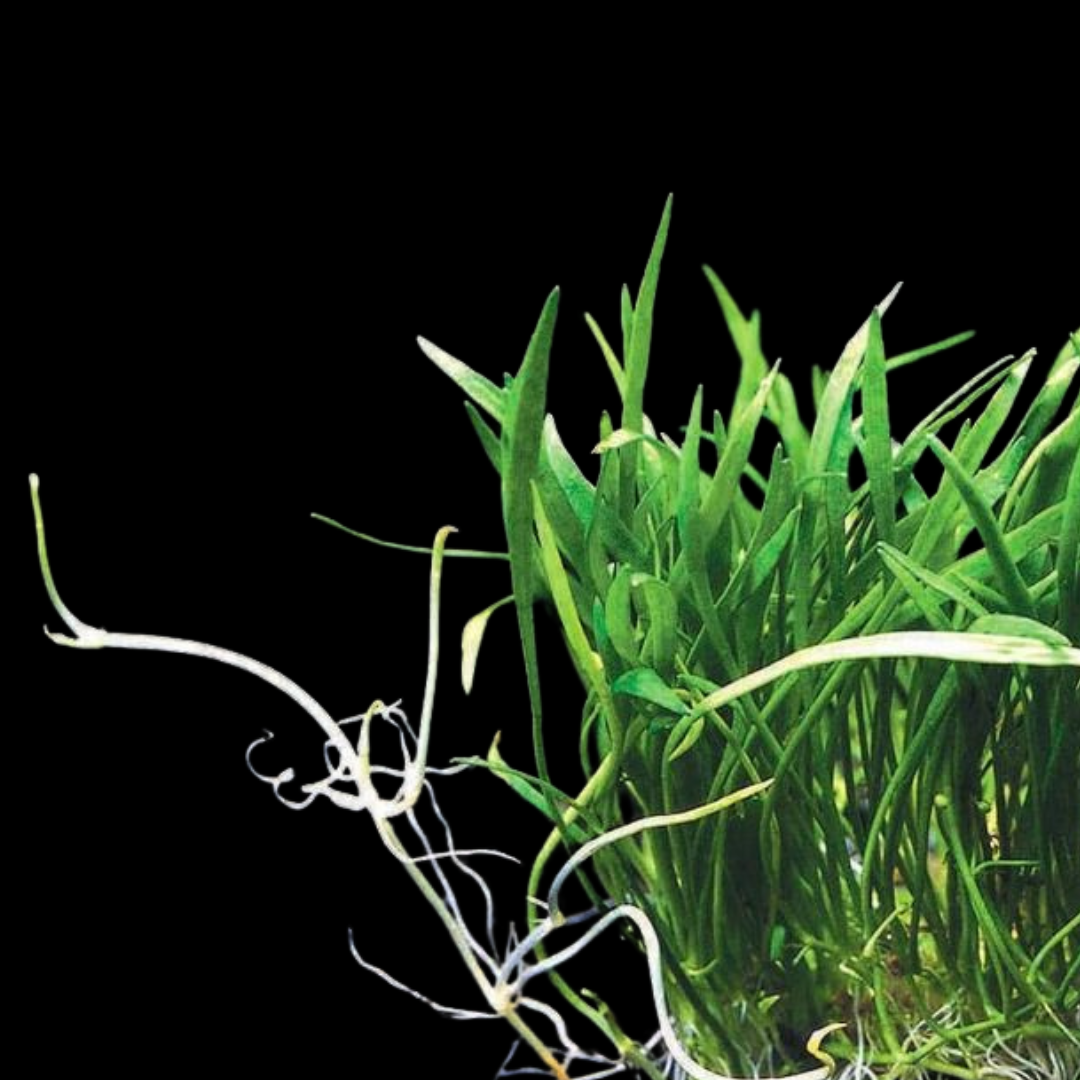
ブラジリアン・コブラグラスは、南米原産のセリ科に属する非常にユニークな前景草です。水草としては珍しい分類群に属し、その名の通りコブラが鎌首をもたげるような独特の曲線を描く葉姿が最大の特徴です。ネイチャーアクアリウムの創始者である天野尚氏によってその芸術的価値が見出され、時の経過を感じさせる重厚な景観を作り出すために重用されてきました。グロッソスティグマのような鮮やかな草原とは一線を画す、深みのある緑色と硬質な質感が、水槽内に野生の力強さと郷愁をもたらします。Brazilian Cobra Grass is a unique foreground plant native to South America, belonging to the Apiaceae family. It is distinct in its classification among aquarium plants, featuring leaves that curve gracefully like a cobra raising its head. Its artistic value was popularized by Takashi Amano, the founder of Nature Aquarium, who used it to create profound landscapes that evoke a sense of time and nostalgia. Unlike the bright, uniform lawns of Glossostigma, its deep green hue and rigid texture bring a sense of wild strength and rustic charm to the aquarium.
ブラジル、アルゼンチン、パラグアイ、ウルグアイなどの南米一帯South America (Brazil, Argentina, Paraguay, Uruguay)
育成難易度 / Difficulty
普通(中光量以上とCO2添加が望ましい)Moderate (Prefers medium-high light and CO2 injection)
育成環境 / Cultivation Environment
光量 / Light
中光量から高光量(60cm規格水槽で20W蛍光管3灯相当以上、または高出力LED)Medium to High (Equivalent to 3x20W T8 bulbs for a 60cm standard tank or high-output LED)
CO2添加 / CO2 Injection
推奨(1秒間に1から3滴程度。添加により密度が高まる)Recommended (1 to 3 bubbles per second. Injection promotes denser growth)
水質 / Water Quality
水温15度から26度、pH6.0から8.0、弱酸性から弱アルカリ性まで幅広く適応Temperature: 15-26C, pH 6.0-8.0. Adapts to a wide range from slightly acidic to slightly alkaline.
底床 / Substrate
栄養系ソイルが最適。砂や大磯砂でも育成可能だが肥料分が必要Nutrient-rich soil is ideal. Growth in sand or gravel is possible but requires supplemental fertilization.
レイアウト / Layout
配置 / Positioning
前景(レイアウトの最前面から、石や流木の際まで)Foreground (From the very front to the base of rocks and driftwood)
注意点 / Precautions
成長が比較的遅いため、他の成長の早い水草に覆われないよう注意が必要です。石の根元に配置することで自然な陰影を演出できます。Since growth is relatively slow, ensure it is not overshadowed by faster-growing plants. Planting near the base of stones creates natural-looking shadows.
増やし方(トリミング) / Propagation & Trimming
増やし方 / Propagation
匍匐茎(ランナー)を伸ばして増殖します。十分に増えたところでランナーをカットして植え直すことも可能です。Propagates via runners (stolons). Once sufficiently grown, runners can be cut and replanted elsewhere.
トリミング / Trimming
葉が重なり合い、マット状に厚くなりすぎた場合は、水草専用ハサミで根元近くから刈り込みます。これにより新芽の展開を促し、浮き上がりを防止します。When the mat becomes too thick, prune near the base using aquascaping scissors. This encourages new growth and prevents the mat from detaching and floating.
病気と対策(コケなど) / Pests & Algae
かかりやすい病気 / Common Issues
成長が遅いため、葉面に糸状藻や緑藻が付着しやすい傾向があります。また、導入直後に環境の変化で葉が溶ける「メルト」が起こる場合があります。Slow growth makes it susceptible to filamentous and green algae on the leaves. It may also experience “melting” (leaf decay) shortly after introduction due to environmental changes.
対策と予防 / Prevention
ヤマトヌマエビやオトシンクルスなどのお掃除役を適切に導入することが重要です。溶けた葉は放置せず、吸い出して水質悪化を防ぎます。Introducing an appropriate number of algae eaters like Amano shrimp or Otocinclus is crucial. Remove any decaying leaves promptly to prevent water quality degradation.
雑学と豆知識 / Trivia and Fun Facts
1. 「コブラ」という名の由来と日本人の美的感覚 / 1. Origin of “Cobra” Name and Japanese Aesthetics
欧米では小さな剣を意味する「マイクロ・ソード」の名で親しまれていますが、日本では「コブラグラス」という独特の呼称が定着しています。これは、水中葉の先端がわずかに広がり、上部で軽く捩れながら立ち上がる姿が、威嚇するコブラの鎌首を連想させたことに由来します。単なる植物としてではなく、そこに動物的な躍動感を見出した、日本のアクアリスト独自の観察眼が反映された非常に興味深い命名といえます。While known as “Micro Sword” in the West, the name “Cobra Grass” is standard in Japan. This stems from the way the submersed leaves widen slightly at the tips and twist upwards, resembling a cobra’s hood. It reflects the unique observational perspective of Japanese aquarists who see biological dynamism in simple plant forms.
2. ネイチャーアクアリウムにおける「時間の経過」の表現 / 2. Expressing the Passage of Time in Nature Aquariums
故・天野尚氏が提唱したネイチャーアクアリウムにおいて、本種は非常に重要な役割を担ってきました。明るく均一な草原を作る他の前景草に対し、本種はやや暗く硬質な質感を持ちます。これを陰性植物(ミクロソリウムなど)や石の根元に配置することで、あたかも何十年もの歳月が流れた原生林の足元のような、重厚で侘び寂びを感じさせる景観を演出できるのです。天野氏は、単なる装飾ではなく「自然の記憶」を呼び覚ますためのツールとして、この草を愛用していました。In Nature Aquarium, popularized by the late Takashi Amano, this plant plays a vital role. Unlike other foreground plants that create bright, uniform lawns, it has a darker, more rigid texture. By placing it at the base of stones or with “shade-loving” plants like Microsorum, one can recreate a heavy, dignified landscape that feels like an ancient primeval forest floor. Amano used this plant as a tool to evoke “natural memories” rather than mere decoration.
3. 環境を浄化する「生きたフィルター」としての機能 / 3. Function as a “Living Filter” for Environmental Purification
近年の環境科学の研究により、ブラジリアン・コブラグラスは驚異的な「重金属蓄積能力」を持つことが明らかになっています。水中の鉛や銅、カドミウムといった有害物質を極めて短期間で吸収・蓄積する性質があり、ファイトレメディエーション(植物による環境修復技術)の有力なツールとして注目されています。水槽内においても、強固な根系を底床に張り巡らせることで、嫌気的なガスの発生を防ぎ、生態系の健全なサイクルを維持する助けとなっていることが示唆されています。Recent environmental studies reveal that Brazilian Cobra Grass has an extraordinary capacity for heavy metal accumulation. It can absorb and store harmful substances like lead, copper, and cadmium from the water very quickly, making it a promising tool for phytoremediation. In the aquarium, its robust root system helps prevent anaerobic gas pockets in the substrate, supporting a healthy ecological cycle.
4. 最先端AIが導き出した「究極の育て方」 / 4. “Ultimate Cultivation” Derived by Cutting-Edge AI
2024年の最新研究では、AI(機械学習)を用いて本種の組織培養を最適化する試みが行われました。数理モデルによる解析の結果、培地に含まれる植物ホルモンや糖分の黄金比が特定され、これまでの常識を上回る効率での増殖が可能になったと報告されています。私たちがショップで手にする清潔な「組織培養カップ」の裏側には、こうしたバイオテクノロジーと人工知能の進歩が隠されており、現代のアクアリウムが科学の最先端と密接に繋がっていることを象徴しています。A 2024 study utilized AI and machine learning to optimize the tissue culture of this species. By identifying the “golden ratio” of plant hormones and sugars through mathematical modeling, researchers achieved propagation efficiencies far beyond traditional methods. The clean tissue culture cups we find in stores today are a result of these advancements in biotechnology and AI, symbolizing how modern aquekeeping is closely linked to the cutting edge of science.
まとめ / Conclusion
ブラジリアン・コブラグラスは、その独特のフォルムと深みのある色合いによって、水槽内に唯一無二の存在感を放つ水草です。単なる前景の「芝生」としてではなく、自然の重厚感や時間の流れを表現したいレイアウターにとって、これほど頼もしいパートナーは他にいないでしょう。With its unique form and deep coloration, Brazilian Cobra Grass possesses an unrivaled presence in the aquarium. For aquascapers looking to express natural weight and the flow of time rather than a simple foreground “lawn,” there is perhaps no more reliable partner.
育成にはある程度の光量とCO2が必要ですが、その環境さえ整えば、強靭な生命力で底床を浄化し、長期にわたって美しい景観を維持してくれます。最新の組織培養技術によって届けられるこの南米の至宝を、ぜひあなたの水槽でも迎えてみてください。While it requires adequate light and CO2, once these conditions are met, its robust vitality will purify the substrate and maintain a beautiful landscape for the long term. We encourage you to welcome this South American treasure, delivered via the latest tissue culture technology, into your own aquarium.



 アイのアクアグッズ案内コケを食べるコイの仲間に合わせる飼育用品|フライングフォックス・アルジイーター・ガラ道具の特徴や使い方、選ぶときのポイントをアイが紹介します。記事はコチラ →
 アイのアクアグッズ案内ベタの一匹飼いを楽しむ|水槽・ヒーター・ふた・フィルターの選び方ベタの一匹飼いに向く水槽容量、ふたと空気層、ヒーターと水温計、弱い水流のフィルターを、コタロウとアイの会話で分かりやすく解説します。記事はコチラ →
 アイのアクアグッズ案内海水魚初心者の必需品|水槽・人工海水・比重計・水質検査道具の特徴や使い方、選ぶときのポイントをアイが紹介します。記事はコチラ →
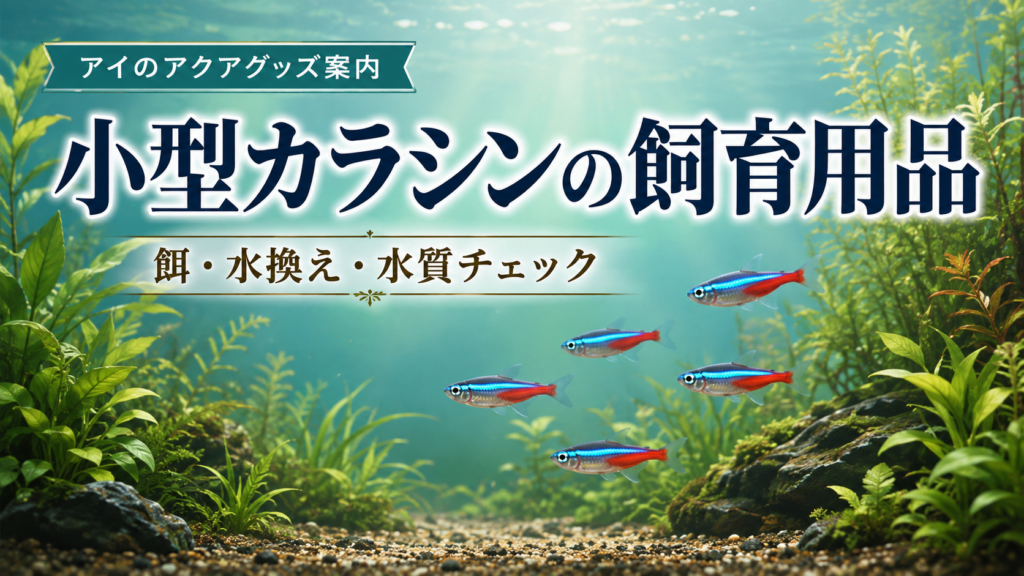 アイのアクアグッズ案内小型カラシンの群れを楽しむ|餌と水換えから考える飼育用品ガイド小型カラシンの群れを眺める時間を、もっと楽しく。泳ぐ余白、餌の食べ方、続けやすい水換えを軸に、日本で揃えやすい用品の選び方を紹介します。記事はコチラ →



コメント