
解説 / Description
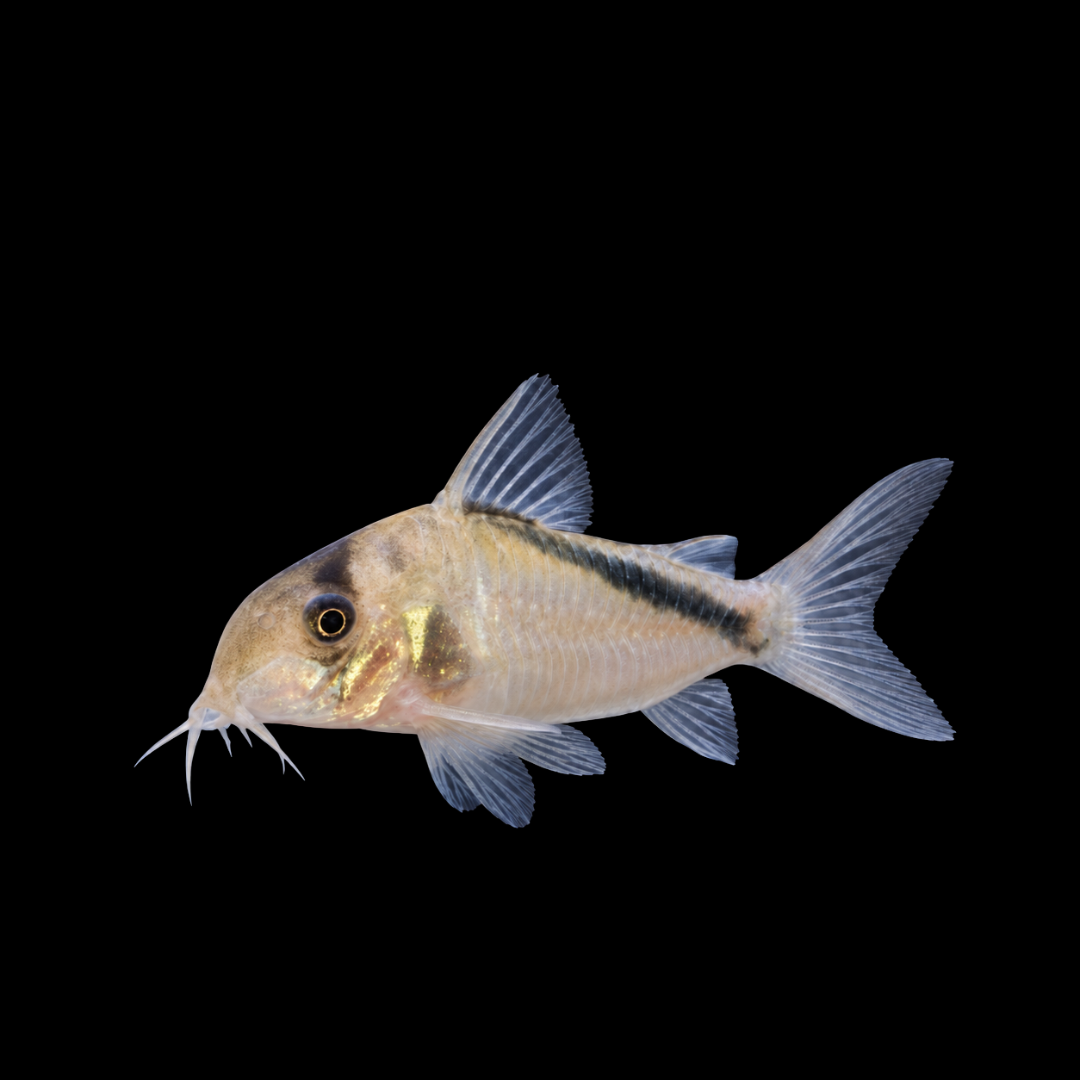
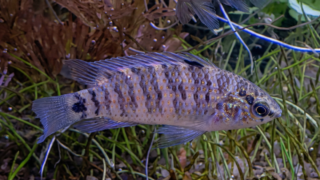
コリドラス・メガメタエは、やや長く突き出した吻(口先)と、厚みのある体つきが印象的な南米産のコリドラス類です。淡いベージュから灰褐色の体に、目を横切る黒い帯と背びれ付近から尾へ向かう黒い模様が入り、砂の上でもその姿がよく引き立ちます。日本では「セミロングノーズ」と呼ばれる体型の個体が知られ、メタエに似た姿でありながら、黒い線の走り方にはメリニを思わせる個体もいます。「メガメタエ」は流通名で、属や種の同定が定まっていないため、名前だけで分類や採集地を決めつけず、個体の特徴を丁寧に見て楽しみたい仲間です。落ち着いた環境で口元のヒゲを動かしながら餌を探す姿には、存在感のある体格とコリドラスらしい愛らしさが同居しています。 Corydoras “Megametae” is a South American cory catfish known for a moderately elongated snout and a substantial body. A dark band crosses the eyes, while another dark marking extends from the dorsal region toward the tail, standing out against a pale beige to grayish brown background. Fish sold under this name in Japan are commonly described as having a “semi-long nose.” Although their appearance recalls the bandit cory, some have a stripe more reminiscent of the false bandit cory, Hoplisoma melini. “Megametae” is a trade name, and its precise generic and species identity remains unresolved, so the name alone should not determine classification or collection locality. In a settled aquarium, the deliberate search for food along the sand combines a striking silhouette with the familiar charm of cory catfish.
基本情報 / Basic Information
| 学名 / Scientific Name | Corydoras sp. "megametae" |
|---|---|
| 通称 / Common Name | コリドラス・メガメタエ、メガメタエ。メガメリニなど、ほかの流通名との使い分けが一定しない場合もあるため、販売名と実際の個体の特徴を合わせて確認します。Megametae cory. The distinction between this name and other trade names, including “Megamelini,” is not always consistent, so identification should consider both the label and the fish itself. |
| 分類 / Family | ナマズ目カリクティス科コリドラス亜科。Corydoras sp. "megametae" は、従来から使われている流通上の仮表記です。未記載種として流通し、Brochis sp. と表記される例もありますが、正確な属や種は販売名や吻の長さだけでは判断できません。Order Siluriformes, family Callichthyidae, subfamily Corydoradinae. Corydoras sp. “megametae” is a traditional provisional trade designation. These fish are traded as an undescribed form, and some sellers use Brochis sp. Their precise genus and species cannot be determined from the trade name or snout length alone. |
| 英名 / English Name | Megametae cory / Megametae corydoras |
| 分布 / Distribution | 南米。ペルー産としての流通や、コロンビア便での輸入が知られています。ただし、輸出国と実際の採集国・採集河川は必ずしも一致せず、「メガメタエ」という名前だけで正確な自然分布を特定することはできません。South America. Fish are traded as originating from Peru and are also imported through Colombia. However, the exporting country does not necessarily identify the country or river where a fish was collected, and the name “Megametae” alone does not establish an exact natural distribution. |
| 最大体長 / Max Size | 飼育計画では7〜8cm程度まで見込んでおくと安心です。5〜7cm前後の流通例があり、大型個体では8cm近い販売例もあります。流通名に幅があるため、学術的に確定した最大体長は不明です。Allow for a size of approximately 7–8 cm when planning the aquarium. Fish are offered at around 5–7 cm, with some larger specimens approaching 8 cm. A scientifically established maximum size is unavailable because the trade name does not correspond to a securely defined species. |
| 寿命 / Lifespan | 正確な平均寿命や最長寿命は不明です。野生採集魚では導入時の年齢も分かりにくいため、長期飼育を見据えて、水質、食欲、体つきの変化を継続して見守ります。Neither an average nor a maximum lifespan has been reliably established. The age of wild-caught fish at purchase is also difficult to determine. Plan for long-term care and monitor water quality, appetite, and body condition consistently. |
飼育環境 / Aquarium Environment
| 水槽サイズ / Tank Size | 60cm規格水槽(幅60×奥行30×高さ36cm、総容量の目安約65L)以上を基本に、底面に広い採餌場所を用意します。同種5〜6匹の群れや他魚との混泳には、60cmワイド水槽(60×45×45cm、約120L)や90cm規格水槽(90×45×45cm、約180L)のように、底面積に余裕のある水槽がおすすめです。底砂やレイアウト、水位によって実際の水量は少なくなります。Use at least a Japanese 60 cm standard aquarium measuring 60 × 30 × 36 cm, with an approximate gross capacity of 65 L, and provide a generous feeding area on the bottom. For a group of five or six or a community aquarium, a 60 cm wide tank measuring 60 × 45 × 45 cm, approximately 120 L, or a Japanese 90 cm standard tank measuring 90 × 45 × 45 cm, approximately 180 L, offers a more spacious footprint. Substrate, decorations, and the chosen water level reduce the actual water volume. |
|---|---|
| 水温 / Temperature | 22〜27℃を飼育上の目安とし、日常は24〜26℃程度で安定させます。夏は十分なエアレーションを行い、室温管理、冷却ファン、水槽用クーラーを状況に応じて使い、長時間の高水温と急な温度変化を避けます。 A practical maintenance range is 22–27°C, with a stable temperature around 24–26°C as a routine target. Maintain good aeration during warm weather and use room cooling, aquarium fans, or a chiller as appropriate to prevent prolonged overheating and abrupt temperature changes. |
| 水質 / Water Quality | 弱酸性〜中性の軟水を基本に、pH6.0〜7.2程度を管理の目安とします。導入元の水質も確認し、急に数値を動かさないことが大切です。生物ろ過が十分に働く環境を整え、アンモニアと亜硝酸が検出されない状態を維持します。硝酸塩は定期的に測定し、部分換水と底床の清掃で蓄積を抑えます。Soft, slightly acidic to neutral water is a suitable starting point, with approximately pH 6.0–7.2 as a practical guideline. Check the conditions in which the fish were previously kept and avoid sudden adjustments. Use an established biological filter and maintain undetectable ammonia and nitrite. Test nitrate regularly and limit accumulation through partial water changes and substrate maintenance. |
| レイアウト / Layout | 田砂など、角の丸い細かな砂を0.5〜1cm程度の薄敷きにすると、口元で砂を探りやすく、日常の清掃もしやすくなります。流木や丈夫な水草で日陰と休息場所を作り、前面には開けた砂地を残します。水流は底付近にも穏やかに届くようにし、強い流れを避けて休める場所も確保します。水面へ上がる通り道をふさがず、飛び出し防止のフタを設けます。A thin layer of smooth, fine sand, approximately 0.5–1 cm deep, allows natural foraging and simplifies cleaning. Use driftwood and robust plants to provide shade and resting places, while leaving an open sandy area at the front. Arrange gentle circulation near the bottom and retain sheltered areas away from stronger currents. Keep a clear route to the surface and fit a lid to prevent jumping. |
| 注意点 / Precautions | 導入直後は、ろ過が十分に機能している隔離水槽で、食欲、呼吸、ヒゲやヒレの状態を観察します。水合わせでは温度と水質の差に配慮し、状態の悪い輸送水に長時間とどめないようにします。袋の水は本水槽へ入れません。胸びれや背びれの硬い棘は、手を傷つけたり網に引っかかったりすることがあるため、移動の際は小さな容器へ静かに誘導します。輸送時は過密と強い刺激を避けます。After arrival, monitor appetite, breathing, barbels, and fins in a quarantine aquarium with established filtration. Acclimation should account for temperature and water-chemistry differences without unnecessarily prolonging exposure to deteriorated shipping water. Do not add bag water to the main aquarium. The rigid pectoral and dorsal spines can injure hands or become entangled in nets, so gently guide the fish into a small container when moving them. Avoid crowding and excessive disturbance during transport. |
餌と給餌 / Feeding
| 餌の種類 / Diet | 主食には、動物性原料を含み、栄養のバランスが整ったコリドラス用の沈下性ペレットやタブレットを使います。補助食として冷凍アカムシ、冷凍ブラインシュリンプ、ミジンコなどを組み合わせます。輸入直後で人工飼料への反応が弱い個体には、冷凍餌や清潔に管理されたイトミミズが餌付けの助けになることがあります。生餌だけに偏らず、人工飼料も食べられるよう少しずつ慣らします。Use a nutritionally balanced sinking cory pellet or tablet containing animal ingredients as the staple diet. Supplement it with foods such as frozen bloodworms, brine shrimp, and daphnia. Newly imported fish that are reluctant to accept prepared foods may respond to frozen foods or carefully maintained live tubifex worms. Gradually introduce a suitable prepared diet so that feeding does not depend entirely on live foods. |
|---|---|
| 給餌のポイント / Feeding Tips | 成魚は1日1回を基準に、体格、食欲、飼育密度に合わせて量を調整します。餌を複数の場所へ沈め、控えめな個体にも行き渡るか確認しましょう。導入直後など、人の気配を警戒しているときは、照明を落とした時間帯の給餌が役立つことがあります。他魚の食べ残しだけでは十分な栄養を確保できません。腹部のへこみや体幅の減少を見逃さず、食べ残しは取り除いて底を清潔に保ちます。For adults, one feeding per day is a useful starting point; adjust the amount to body size, appetite, and stocking density. Distribute food among several locations and check that quieter individuals receive their share. Feeding under subdued lighting can help newly introduced or cautious fish. Leftovers from other species do not provide a dependable diet. Watch for a hollow abdomen or declining body condition, and remove uneaten food to keep the bottom clean. |
性格と混泳 / Temperament and Tank Mates
| 性格 / Temperament | 基本的には温和で、底付近を中心に活動します。コリドラス類らしく複数での飼育に向き、十分な底面積を用意できるなら、同じ流通タイプの個体を5〜6匹程度で迎えると群れの様子を観察しやすくなります。導入直後は隠れがちでも、落ち着くにつれて採餌に出てくることがあります。隠れ場所を残し、無理に追い出さずに見守ります。Generally peaceful, these fish spend much of their time near the bottom. Like other cory catfish, they are suited to group keeping. Where sufficient floor space is available, approximately five or six fish of the same trade form provide an opportunity to observe social behavior. Newly introduced individuals may hide before gradually becoming more confident at feeding time. Retain suitable refuges and avoid forcing them into the open. |
|---|---|
| 混泳の相性 / Compatibility | 同程度の水温・水質に適応する、温和な小型カラシンやラスボラなどと組み合わせやすい魚です。他のコリドラス類とも同居できますが、底面の混雑と餌の競争には配慮します。縄張り意識の強いシクリッド、ヒレをかじる魚、本種を飲み込める大型魚は避けます。繁殖期に攻撃的になる魚との同居にも注意が必要です。小さな稚魚や稚エビは食べられる可能性があるため、それらを育てる水槽への同居は避けます。Suitable companions include peaceful small characins and rasboras that share compatible temperature and water requirements. Other cory catfish can also be kept alongside them, provided the bottom is not overcrowded and food competition is controlled. Avoid strongly territorial cichlids, fin-nippers, and fish large enough to swallow them. Species that become aggressive during breeding also require caution. Very small fry and baby shrimp may be eaten, so keep Megametae out of their nursery tanks. |
病気と対策 / Diseases and Prevention
| かかりやすい病気 / Common Diseases | 本種で特に発症しやすい病気は明らかではありませんが、飼育中は白点病などの寄生虫による病気や、ヒレ・口元の細菌感染に注意します。ヒゲの短縮や口元の傷みには、底床との摩擦、汚れ、感染などが関係することがあり、見た目だけで原因を決めつけないことが大切です。食欲低下、やせ、体をこすりつける動作、呼吸の荒さが続く場合は、体調と飼育環境の両方を確認します。No particular susceptibility to specific diseases has been established for this trade form. During aquarium care, watch for parasitic diseases such as freshwater white spot and bacterial infections affecting the fins or mouth. Shortened barbels or mouth damage may involve abrasion, poor hygiene, infection, or a combination of factors, so appearance alone should not determine the diagnosis. Persistent appetite loss, wasting, rubbing, or rapid breathing should prompt an assessment of both the fish and its environment. |
|---|---|
| 対策と予防 / Prevention | 新しく迎えた魚は隔離して観察し、安定した水温、十分な酸素、清潔な底床、偏りのない給餌を保ちます。異常を見つけたら、まず水温、アンモニア、亜硝酸、ろ過やエアレーションの作動を確認し、原因に応じて部分換水や隔離を行います。薬を使用する場合は、ナマズ類への使用可否と製品の用法・用量を確かめます。原因を決めつけて塩浴を行ったり、複数の薬剤を併用したりせず、症状が悪化する場合は魚の治療に詳しい獣医師などへ相談します。Quarantine new arrivals and maintain stable temperature, adequate oxygen, a clean substrate, and a balanced diet. If abnormalities appear, first check temperature, ammonia, nitrite, filtration, and aeration, then use partial water changes or isolation as appropriate to the cause. Before medicating, confirm that the product is suitable for catfish and follow its directions and dosage. Avoid salt baths or combinations of medications based on an assumed diagnosis, and seek advice from a veterinarian experienced with fish if symptoms worsen. |
増やし方(繁殖) / Breeding
| 雌雄の判別 / Sexing | 成熟したコリドラス類では、一般にメスのほうが腹部に丸みがあり、上から見ると体幅が広くなる傾向があります。本種でも判別の参考になりますが、幼魚や輸入直後のやせた個体では判別が難しく、体の大きさだけで確定しないことが大切です。腹びれの形の違いも補助的に観察し、体調のよい成熟個体を複数見比べます。In mature cory catfish, females generally develop a fuller abdomen and appear broader when viewed from above. These features can guide sexing of Megametae, but juveniles and thin, newly imported fish are difficult to assess, and size alone is not conclusive. Pelvic-fin shape may provide an additional clue. Compare several mature fish in good condition rather than relying on a single feature. |
|---|---|
| 繁殖形態 / Reproduction | 卵生です。多くのコリドラス類では、メスがオスの腹部に口を寄せ、2匹の体がT字状になる「Tポジション」と呼ばれる産卵行動が見られます。その後、メスは腹びれの間に保持した粘着性の卵を、水草やガラス面などへ産み付けます。メガメタエの詳しい産卵行動や産卵数、孵化までの日数は、十分に確かめられていません。These are egg-laying fish. In many cory species, spawning involves a “T-position,” in which the female brings her mouth to the male’s underside and the two fish form a T-shaped arrangement. The female subsequently places adhesive eggs held between her pelvic fins onto plants, glass, or other surfaces. Detailed spawning behavior, clutch size, and incubation time have not been securely established for Megametae. |
| 繁殖のポイント / Breeding Tips | 本種の繁殖条件は十分に確かめられていないため、近縁のコリドラス類の方法を手がかりにします。同じ流通タイプの成熟した雌雄を、底面積と隠れ場所に余裕のある水槽で育て、人工飼料と補助食を組み合わせて体調を整えます。安定した水質と定期的な部分換水を基本に、急激な低温化や連日の大量換水で無理に産卵を促さないようにします。 卵が得られたら、可能であれば産み付けられた水草や産卵床ごと親魚から分け、同程度の水温・水質を保つ容器へ移します。生物ろ過の働いているスポンジフィルターなどで穏やかな水流と十分な酸素を確保し、カビの生じた卵や汚れを取り除きます。 孵化直後は卵黄を利用するため、その吸収と稚魚の行動を見ながら給餌を始めます。口に入る大きさの孵化したてのブラインシュリンプや稚魚用の微細な餌を少量ずつ与え、残餌をこまめに除去します。成長に合わせて、口の大きさと食べ方を見ながら餌の種類や粒の大きさを少しずつ調整します。Because breeding conditions have not been securely established for Megametae, methods used with other cory catfish provide a starting point. Maintain mature males and females of the same trade form in a spacious aquarium with suitable shelter, and condition them with a balanced prepared diet and supplementary foods. Prioritize stable water quality and regular partial water changes, avoiding abrupt cooling or repeated massive water changes intended to force spawning. If eggs are obtained, separate them from the adults, preferably by moving the plant or spawning surface on which they were laid. Use a container with similar temperature and water chemistry, and provide gentle circulation and adequate oxygen through an established sponge filter or equivalent arrangement. Remove fungus-affected eggs and accumulated debris. Newly hatched fry initially rely on their yolk reserves. Begin feeding as the yolk is absorbed and the fry become ready to eat. Offer small portions of appropriately sized newly hatched brine shrimp or fine fry food, and remove leftovers frequently. Gradually adjust food type and particle size according to the fry’s growth, mouth size, and feeding behavior. |
雑学と豆知識 / Trivia and Fun Facts
| 1. メガメタエという名前と識別番号 / 1. Trade Names and Identification Codes | 「メガメタエ」は正式な種名ではなく、観賞魚の流通で使われる呼び名です。属名の後ろに付く「sp.」は種が特定されていないことを表し、それだけで未記載の新種と証明されるわけではありません。コリドラスの世界では、名前の定まらない魚を区別するためにCナンバーやCWナンバーも使われています。こうした番号は、愛好家同士が同じタイプの魚について情報を共有する助けになりますが、正式な学名とは役割が異なります。メガメタエという呼び方には揺れがあるため、特定の番号へ一律に結び付けず、写真、体型、模様、採集地の情報を合わせて見ていくことが大切です。“Megametae” is a name used in the aquarium trade rather than a formal species name. The abbreviation “sp.” after a genus name indicates that the species has not been identified; it does not by itself prove that the fish represents an undescribed species. Cory enthusiasts also use C-numbers and CW-numbers to distinguish forms whose identity is unresolved. These codes help enthusiasts exchange information about the same type of fish, but serve a different purpose from formal scientific names. Because “Megametae” is not used consistently, it should not automatically be equated with one particular code. Photographs, body shape, markings, and locality information are all useful pieces of the identification process. |
|---|---|
| 2. セミロングノーズと新しい分類 / 2. Snout Shape and Modern Classification | 2024年に発表された分類の再検討では、DNAの情報と体の構造をもとに、コリドラス亜科で7属が認められました。この再検討でホプリソマ属やブロキス属などが復活し、おなじみのメタエも Hoplisoma metae として扱われるようになりました。「セミロングノーズ」は吻の見た目を表す飼育上の呼び方です。似た長さの吻が異なる属に現れることもあるため、メガメタエの属を判断するには、吻だけでなく骨格やヒレの棘など複数の特徴を確かめる必要があります。A taxonomic revision published in 2024 used DNA evidence and anatomical features to recognize seven genera within Corydoradinae. It restored names including Hoplisoma and Brochis, and the bandit cory came to be treated as Hoplisoma metae. “Semi-long nose,” however, is an aquarium description of outward appearance. Similar snout lengths occur in different genera, so assigning Megametae to a genus requires consideration of several anatomical features, including skeletal structures and fin spines. |
| 3. 似た模様をまとう理由 / 3. Why Different Species Share Similar Markings | 南米の川では、系統の異なるコリドラス類が、同じ場所でよく似た模様を持つことがあります。その有力な説明が「ミューラー型擬態」です。棘や硬い体表で身を守る魚が共通の模様を持つと、捕食者に食べにくい相手として覚えてもらう利益を共有できる、と考えられています。2011年の研究では、こうした魚同士で吻や体格、利用する食物が異なることも示されました。餌をめぐる競争を抑えることが、同じ場所での共存を支えていると考えられます。ただし、模様の類似だけでは、メガメタエの近縁関係や特定の魚との擬態関係を確定できません。In South American rivers, cory catfish from different evolutionary lineages sometimes share a habitat and similar markings. Müllerian mimicry is a leading explanation: defended species sharing an appearance may benefit together when predators learn that this appearance signals difficult prey. A 2011 study also found differences in snout shape, body size, and food use among such fish. Reduced competition for food is thought to help them coexist. Similar markings alone, however, do not establish a close evolutionary relationship or a particular mimicry partnership for Megametae. |
| 4. 小さな体を守る骨のよろい / 4. Bony Armor on a Small Fish | コリドラスの体側に並ぶ硬い板は、一般的な薄いうろことは異なる骨質板です。属名 Corydoras は、兜や皮膚・革を表すギリシャ語に由来し、頭や体を覆う装甲にちなんでいます。別種のトリリネアータスでは、ピラニア・ナッテリーの幼魚による咬みつきに対して、骨質板が防御に役立つことが実験で示されています。ただし、それはメガメタエの耐久性を直接測った結果ではなく、装甲があっても大型肉食魚との混泳が安全になるわけではありません。The hard plates along a cory’s flanks are bony armor rather than the ordinary thin scales found on many fish. The Greek roots of Corydoras, referring to a helmet and skin or hide, allude to its armored head and body. Experiments on the threestripe cory showed that its armor can resist bites from juvenile red-bellied piranhas. That result does not directly measure Megametae’s resistance, and armor does not make keeping these fish with large predators safe. |
| 5. 防御の分泌物と輸送中の自家中毒 / 5. Defensive Secretions and Transport Stress | コリドラス類には、胸びれの付け根付近に腋窩腺(えきかせん)と呼ばれる分泌器官が知られています。また、仲間の一部では強いストレスを受けた際の分泌物が、狭い容器の中で魚自身や同居魚に悪影響を及ぼす「自家中毒」が報告されています。分泌物の成分や作用には未解明の点があり、メガメタエでの毒性の強さや、自家中毒の起こりやすさも十分には分かっていません。飼育者ができる配慮は、移動時の刺激を減らすことです。発送や長距離の移動では、個別包装や十分な水量について販売店と相談し、受け入れ先をあらかじめ整えておくと安心です。Axillary glands are known near the pectoral-fin bases of cory catfish. In some species, secretions released under strong stress have been associated with “self-poisoning,” affecting the fish itself or its companions in a confined container. The composition and effects of these secretions remain incompletely understood. Their potency and the frequency of self-poisoning in Megametae have not been established. A practical response is to minimize disturbance during movement. For shipping or longer journeys, discuss individual packing and adequate water volume with the seller, and prepare the receiving aquarium in advance. |
| 6. 水面へ向かう一往復の秘密 / 6. The Reason for a Quick Trip to the Surface | 砂の上にいたコリドラスが、急に水面へ上がってすぐに戻ることがあります。この仲間には、飲み込んだ空気から腸を通じて酸素を取り込む「腸呼吸」というしくみがあり、アエネウスなどで詳しく調べられています。ときどき水面で空気を取り込み、すぐに底へ戻る行動は、それだけで病気を意味するものではありません。ただし、何度も慌ただしく浮上したり、エラの動きが速い状態が続いたりするときは、水温、水質、酸素供給を確認しましょう。水面までの道を空けておくことと、水中にも十分な酸素を保つことの両方が大切です。A cory resting on the sand may suddenly dart to the surface and return almost immediately. These catfish can obtain oxygen from swallowed air through intestinal air breathing, a process studied in species such as the bronze cory. An occasional quick trip to the surface to take in air, followed by a return to the bottom, does not by itself indicate illness. Repeated frantic surfacing or persistently rapid gill movements should nevertheless prompt checks of temperature, water quality, and oxygen supply. Keep access to the surface clear while maintaining adequate oxygen in the water. |
| 7. スポット型と産地名を楽しむ / 7. Spotted Forms and Locality Names | メガメタエには、体側の斑点が目立つ個体を「スポット・メガメタエ」と呼ぶ例があり、「ニュー・メガメタエ」のような名称も使われています。黒い帯だけでなく、その周囲に散る点や線へ目を向けると、一匹ごとの違いが見えてきます。ただし、これらの違いが個体差や成長によるものなのか、地域差なのか、別種なのかは、見た目と販売名だけでは決められません。産地表示や個体の写真を残しておくことは、成長に伴う変化を楽しみ、繁殖を試みる際に親魚の由来をたどる助けにもなります。Individuals with conspicuous flank spots may be sold as “Spotted Megametae,” and names such as “New Megametae” also occur. Looking beyond the main dark stripe reveals differences in the smaller spots and lines of individual fish. Appearance and trade names alone cannot determine whether these differences reflect individual variation, growth, geography, or separate species. Keeping locality labels and photographs helps track changes during growth and preserves useful parentage information for any future breeding attempts. |
| 8. Tポジションの奥にある繁殖のしくみ / 8. Reproductive Biology Behind the T-Position | アエネウスでは、メスがオスの精液を口から取り込み、消化管を通った精子が、腹びれの間に保持された卵の受精に関わるしくみが知られています。受精が起こるのは体の外です。2025年には、オスの精嚢液(精液の成分となる分泌液)に含まれるタンパク質が、精子の運動を抑えることが示されました。卵の近くに届くまで精子を動かない状態に保つ役割が示唆されています。メガメタエで同じしくみが働くかは未確認ですが、コリドラス類の繁殖を知るうえで興味深い特徴です。In the bronze cory, females ingest semen, and sperm passing through the digestive tract contribute to fertilizing eggs held between the pelvic fins. Fertilization occurs outside the female’s body. Research published in 2025 showed that a protein in the male’s seminal vesicle fluid, a secretion that contributes to semen, suppresses sperm movement. It may help keep sperm immotile until they are close to the eggs. Whether the same mechanism operates in Megametae remains unconfirmed, but it offers a remarkable insight into cory reproductive biology. |
まとめ / Conclusion
コリドラス・メガメタエの魅力は、黒い帯が描く落ち着いた美しさと、やや長い吻を備えた存在感のある体つきにあります。広い砂地、清潔で酸素の豊富な水、十分な餌を用意し、仲間と過ごせる環境を整えることが、自然な採餌の姿を楽しむための土台になります。 Megametae’s appeal lies in the understated beauty of its dark markings and the presence created by its substantial body and moderately elongated snout. Open sand, clean and well-oxygenated water, adequate food, and suitable company provide the foundation for enjoying its natural foraging behavior.
口元のヒゲが砂をなぞる動きや、餌を見つけて集まる姿、成長とともに変わる体の厚みや模様からは、一匹一匹の個性が見えてきます。日々の小さな変化を丁寧に見守ることも、メガメタエと付き合う楽しみの一つです。 The movement of barbels over sand, fish gathering around food, and gradual changes in body shape and markings reveal each fish’s individuality. Following these small daily changes is part of the pleasure of keeping Megametae.
気になる道具や飼い方を見つけてみませんか?
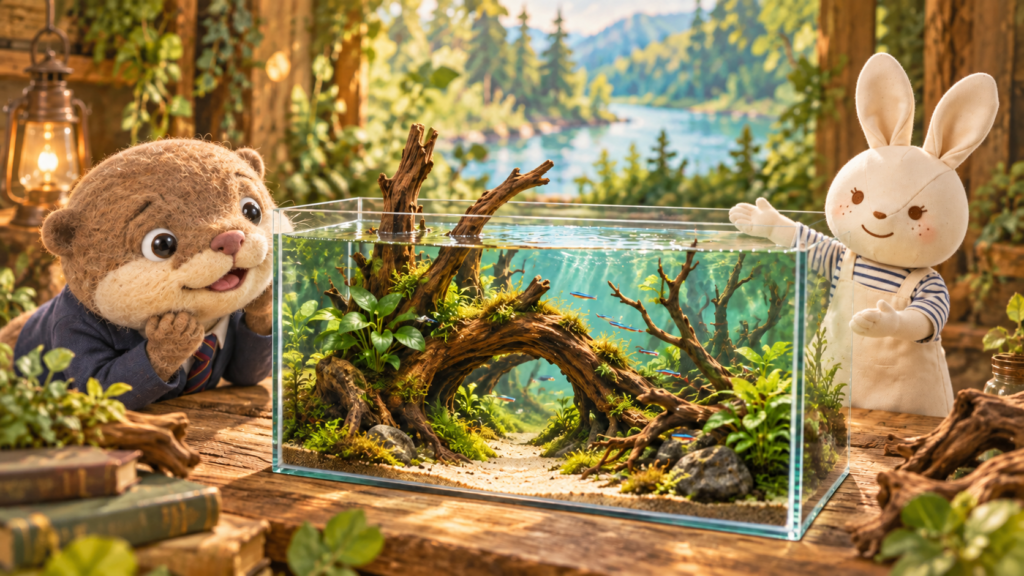 アイのアクアグッズ案内水槽の流木の選び方|枝・マングローブ・アク抜きとおすすめ商品水槽に小さな森を作る流木。枝流木やマングローブという名前の違いから、魚の隠れ家、水草の取り付け、浮く・水が茶色くなるときの準備まで、アイとコタロウが商品とともに案内します。記事はコチラ →
 アイのアクアグッズ案内エビのおうち、食べちゃっていいの!? コタロウと探る、不思議なエビのごはん道具の特徴や使い方、選ぶときのポイントをアイが紹介します。記事はコチラ →
さまざまな飼育テーマをご紹介。リンク先の記事には広告・商品紹介が含まれます。
案内・紹介記事一覧へ →分布マップ
コリドラス・メガメタエは、ペルー産としての流通やコロンビア便での輸入が知られています。流通名だけでは正確な自然分布を特定できないため、地図では両国を含む範囲を概略表示しています。
この地図は流通情報に関連する地域の概略表示であり、表示範囲全体に生息することを示すものではありません。マーカーとGoogle Earthのリンク先には、表示上の代表地点を設定しています。実際の採集地点や、確認された生息地を示すものではありません。
参考文献
-
分類・属の再編
Dias, A. C., et al. (2025).
Phylogenomic analyses in the complex Neotropical subfamily Corydoradinae (Siluriformes: Callichthyidae) with a new classification based on morphological and molecular data.
Zoological Journal of the Linnean Society, 203(3), zlae053. 2024年6月11日先行公開。 -
比較対象メタエの学名・分布
Fricke, R., Eschmeyer, W. N., & van der Laan, R. (eds.) (2026).
Eschmeyer’s Catalog of Fishes: Genera, Species, References.
California Academy of Sciences. 「metae, Corydoras」の項目。2026年10月19日閲覧。 -
コリドラス類の系統・擬態・食物資源の利用
Alexandrou, M. A., et al. (2011).
Competition and phylogeny determine community structure in Müllerian co-mimics.
Nature, 469(7328), 84–88. -
コリドラス類の生息環境・飼育・給餌・繁殖
Chiang, A., et al. (2024).
Comprehensive Husbandry Protocol for Corydoras Catfish and Many Other Amazonian Species.
Journal of the American Association for Laboratory Animal Science, 63(5), 472–479. -
アエネウスの繁殖行動・受精
Kohda, M., Tanimura, M., Kikue-Nakamura, M., & Yamagishi, S. (1995).
Sperm drinking by female catfishes: a novel mode of insemination.
Environmental Biology of Fishes, 42, 1–6. -
アエネウスの精子運動・精嚢液の働き
Yoshida, J., et al. (2025).
Seminal vesicle protein caCA12 in Corydoras aeneus inhibits sperm motility for sperm drinking.
Journal of Experimental Biology, 228(9), jeb250293. -
魚類の病気・水質管理・予防
Francis-Floyd, R., Stilwell, N. K., & Yanong, R. P. E. (2025年6月改訂).
Introduction to Fish Health Management.
University of Florida, UF/IFAS Extension, CIR921/FA004. -
観賞魚の導入・隔離・治療判断
Petty, B. D., Francis-Floyd, R., & Yanong, R. P. E. (2026年6月更新).
Management of Aquarium Fish.
Merck Veterinary Manual, Professional Version. -
ステルバイの腋窩腺・輸送時の分泌
Kiehl, E., Rieger, C., & Greven, H. (2006).
Axillary gland secretions contribute to the stress-induced discharge of a bactericidal substance in Corydoras sterbai (Callichthyidae, Siluriformes).
Verhandlungen der Gesellschaft für Ichthyologie, 5, 111–115. Heinrich Heine University Düsseldorf公開PDF。 -
トリリネアータスの骨板・捕食防御
Lowe, A., Kolmann, M. A., & Paig-Tran, E. W. M. (2023).
How to Survive a (Juvenile) Piranha Attack: An Integrative Approach to Evaluating Predator Performance.
Integrative Organismal Biology, 5(1), obad032.




コメント