

解説 / Description
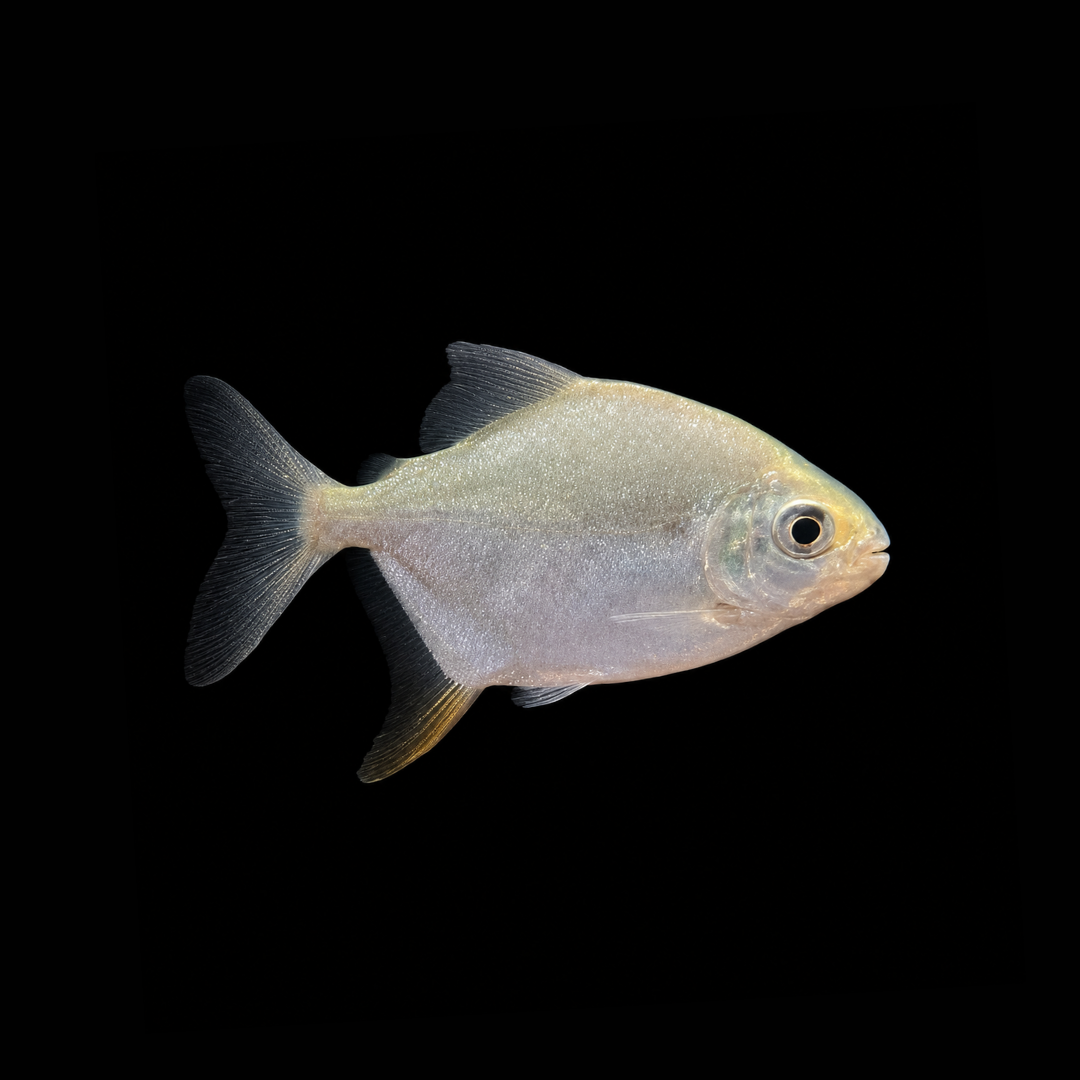
タイガードルフィンパクーは、日本の大型熱帯魚市場で用いられる流通名で、主にブラジルのトカンチンス川水系、または広義のトカンチンス・アラグアイア地域に由来する急流域適応型のパクー類を指します。幼魚期には体側に黒い縦帯が入り、丸みを帯びた吻部とやや細身の体型が目を引きます。成長に伴い縞模様は薄れ、銀色から暗色を帯びた体色、赤みのある斑紋、伸長した鰭などが現れ、幼魚とは異なる力強い姿へ移行します。 Tiger Dolphin Pacu is a trade name used in the Japanese large tropical fish market, mainly for rapids-adapted pacus originating from the Tocantins River basin of Brazil, or from the broader Tocantins-Araguaia region. Juveniles show dark vertical bands, a rounded and slightly protruding snout, and a relatively slender body. As they grow, the stripes fade and the fish may develop a silvery to darker body tone, reddish markings, and elongated fins, changing into a more powerful adult form.
この名称は、現時点では単一の確定した学名を示すものではありません。流通個体にはMylesinus属に近いもの、Tometes属に近いもの、または外見だけでは判別が難しい近縁個体が含まれる可能性があります。そのため、一般的な果実食性パクーの延長としてではなく、急流の岩場で水生植物を利用する魚として、水流、酸素量、植物質中心の給餌、飛び出し防止を重視した飼育が適しています。 The name does not currently point to one firmly established scientific species. Imported individuals may be close to the genus Mylesinus, close to Tometes, or belong to related forms that are difficult to identify by appearance alone. For this reason, they are best kept not simply as fruit-eating pacus, but as rapids-associated fish that make use of aquatic vegetation on rocks. Strong current, high oxygen, a plant-based diet, and secure jump prevention are especially important.
基本情報 / Basic Information
| 学名 / Scientific Name |
推奨表記 Mylesinus sp. / Tometes sp. cf. 候補として挙げられる近縁種 Mylesinus paucisquamatus、Tometes siderocarajensis、Tometes ancylorhynchus など 流通名の「タイガードルフィンパクー」は、現時点では単一の学名に対応させにくい商業名です。産地、成長後の体型、歯列、発色などを総合して同定する必要があるため、図鑑内では未同定要素を含むグループ名として扱います。 Recommended notation Mylesinus sp. / Tometes sp. cf. Likely related candidate species Mylesinus paucisquamatus, Tometes siderocarajensis, and Tometes ancylorhynchus, among others “Tiger Dolphin Pacu” is a trade name that cannot be safely matched to a single scientific name at present. Because identification requires locality, adult body shape, dentition, and coloration, this guide treats it as a trade group that may include unidentified or closely related rheophilic pacus. |
|---|---|
| 通称 / Common Name | タイガードルフィンパクー、トカンチンス産タイガードルフィンパクー、タイガーパクーTiger Dolphin Pacu, Tocantins Tiger Dolphin Pacu, Tiger Pacu |
| 分類 / Family | カラシン目 セラサルムス科。近年の分類ではセラサルムス科内のMyleini族、またはMyleus系統群に含まれる急流域適応型パクー類として扱われる。属レベルの整理は現在も研究が進んでいる。Order Characiformes, family Serrasalmidae. In recent classifications it is treated among rapids-adapted pacus within the tribe Myleini or the Myleus group. Generic limits in this group remain under active study. |
| 英名 / English Name | Tiger Dolphin Pacu |
| 分布 / Distribution | ブラジルのトカンチンス川水系、および流通上はトカンチンス・アラグアイア地域の急流域に由来するとされる。産地表記がある場合は、トカンチンス産、アラグアイア産、支流名などを分けて記録したい。Reported from the Tocantins River basin of Brazil and, in the aquarium trade, from rapids within the broader Tocantins-Araguaia region. When locality information is available, labels such as Tocantins, Araguaia, or specific tributaries should be recorded separately. |
| 最大体長 / Max Size | 流通個体群としてはおおよそ25〜35cm前後を想定する。近縁種や個体差によって30cmを超える場合があり、終生飼育では中型魚ではなく大型カラシンとして扱う。For traded forms, about 25–35 cm should be expected. Related species and individual variation can exceed 30 cm, so this fish should be treated as a large characin for long-term care. |
| 寿命 / Lifespan | 本流通名での長期記録は多くない。水槽サイズ、水質、給餌管理が整えば、大型カラシンとして10年前後、またはそれ以上の長期飼育が期待される。Long-term records under this trade name are limited. With suitable tank size, water quality, and feeding, a lifespan of around 10 years or longer may be expected, as with many large characins. |
飼育環境 / Aquarium Environment
| 水槽サイズ / Tank Size | 幼魚期は90cm規格水槽でも一時飼育できるが、終生飼育では120cmワイド水槽以上を最低ラインと考えたい。余裕を持って育てるなら150cm水槽、複数飼育や大型の混泳魚を入れる場合は180cmクラスが望ましい。奥行きは60cm以上あると体の成長と旋回に対応しやすい。Juveniles can be kept temporarily in a standard 90 cm tank, but long-term care should start from at least a 120 cm wide tank. A 150 cm tank is preferable, and a 180 cm class aquarium is recommended for groups or large tank mates. A depth of 60 cm or more helps accommodate growth and turning space. |
|---|---|
| 水温 / Temperature | 23〜28℃を目安にする。30℃以上の高水温が続くと溶存酸素量が下がりやすく、急流域に適応した魚には負担が大きくなるため、夏場は冷却とエアレーションを強化する。 A range of 23–28°C is suitable. Prolonged temperatures above 30°C can reduce dissolved oxygen and place heavy stress on a rapids-adapted fish, so cooling and aeration should be reinforced in summer. |
| 水質 / Water Quality | 弱酸性〜中性の清潔な水を基準にし、pHはおおよそ6.0〜7.5を目安にする。数値を細かく追い込むより、強いろ過、十分な酸素、定期換水、急変を避けることが重要。硝酸塩が蓄積しやすい大型魚水槽では、換水量とろ材の余裕を確保する。Clean, slightly acidic to neutral water is preferred, with a practical pH guideline of about 6.0–7.5. Rather than chasing exact numbers, prioritize strong filtration, high oxygen, regular water changes, and stability. In large-fish aquaria where nitrate accumulates easily, provide generous filtration volume and water-change capacity. |
| レイアウト / Layout | 遊泳スペースを広く取り、造波ポンプや水中ポンプで一方向の流れを作る。岩や流木は隠れ場所や視線を切る障害物として有効だが、突進時に擦り傷を作らないよう角の鋭い素材は避ける。柔らかい水草は食害されやすいため、鑑賞用の水草レイアウトには向かない。Provide wide swimming space and use wavemakers or powerheads to create directional flow. Rocks and driftwood are useful as shelters and visual barriers, but sharp materials should be avoided to reduce abrasions during sudden dashes. Soft aquatic plants are likely to be eaten, so planted display layouts are generally unsuitable. |
| 注意点 / Precautions | 飛び出し事故は最も警戒すべきリスク。驚いた瞬間や給餌時に強く跳ねることがあるため、ガラス蓋やポリカーボネート板を隙間なく設置し、軽い蓋は必ず重しで固定する。配管、コード、外部フィルターの戻り口まわりなど、小さな隙間も事前に塞いでおく。Jumping is the most important risk to manage. The fish may leap powerfully when startled or during feeding, so glass or polycarbonate lids must fit tightly and lightweight lids should be weighted. Small gaps around pipes, cords, and filter returns should be sealed in advance. |
餌と給餌 / Feeding
| 餌の種類 / Diet | 植物質を中心に与える。スピルリナ、クロレラ、海藻成分を含む草食魚用人工飼料、プレコ用タブレット、植物質の多い沈下性ペレットを主食にし、副食として小松菜、ホウレンソウ、ズッキーニ、レタスなどを柔らかくして与える。冷凍赤虫やエビ類などの動物質は嗜好性が高くても、常用せず少量にとどめる。Feed mainly plant-based foods. Suitable staples include herbivore pellets containing spirulina, chlorella, or seaweed ingredients, pleco tablets, and vegetable-rich sinking pellets. Blanched komatsuna, spinach, zucchini, lettuce, and similar vegetables can be offered as supplements. Animal foods such as frozen bloodworms or shrimp may be eagerly accepted, but should not be used as daily staples. |
|---|---|
| 給餌のポイント / Feeding Tips | 長い腸を持つ植物食寄りの魚として、少量をこまめに与える管理が向く。食べ残しは水を汚しやすいため早めに取り除く。高たんぱく・高脂肪の餌に偏ると、消化不良や肥満を招きやすいので、体を太らせるよりも引き締まった体型を維持する意識で給餌する。As a plant-oriented fish with a long digestive tract, it does well with modest portions offered regularly. Remove leftovers promptly because they foul the water quickly. Diets too rich in animal protein or fat can contribute to digestive trouble and obesity, so feeding should aim for a firm, well-conditioned body rather than rapid fattening. |
性格と混泳 / Temperament and Tank Mates
| 性格 / Temperament | 活発で遊泳力が高く、環境に慣れると前面に出て餌を求める。植物食性という印象に反して、同種間や体型の近い魚に対して追い払い、噛みつき、順位争いを見せることがある。驚きやすい一面もあるため、急な点灯、衝撃音、無理な追い回しは避ける。It is active and powerful, and once settled it often comes forward for food. Despite its plant-based diet, it may chase, nip, or compete for rank with conspecifics or similarly shaped fish. It can also be skittish, so sudden lighting, loud impacts, and unnecessary chasing should be avoided. |
|---|---|
| 混泳の相性 / Compatibility | 混泳相手は、口に入らないサイズで、体型や遊泳層が異なる丈夫な魚が候補になる。大型プレコ、ドラス類、上層を泳ぐ大型魚などは比較的合わせやすい。小型カラシン、細身の魚、長いヒレを持つ繊細な魚は避ける。同種複数飼育は可能性がある一方、順位争いが強く出るため、水槽サイズ、隠れ場所、個体差を見ながら調整する。Tank mates should be too large to swallow and preferably differ in body shape or swimming level. Large plecos, doradid catfish, and robust surface-oriented fish are often easier candidates. Avoid small characins, slender fish, and delicate long-finned species. Keeping multiple individuals may be possible, but dominance disputes can be strong, so tank size, shelter, and individual temperament must be monitored closely. |
病気と対策 / Diseases and Prevention
| かかりやすい病気 / Common Diseases | 導入直後は白点病、外傷、輸送ストレスによる拒食に注意する。長期飼育では、酸素不足や水質悪化による不調、過密飼育による擦れ、動物質に偏った給餌による消化不良、肥満、内臓への負担が問題になりやすい。After introduction, watch for ich, abrasions, and refusal to feed caused by transport stress. In long-term care, problems are more often linked to low oxygen, poor water quality, abrasion from crowding, digestive issues from animal-heavy diets, obesity, and internal stress. |
|---|---|
| 対策と予防 / Prevention | 新規導入時は隔離飼育で状態を確認し、急な水質変化を避けて慎重に水合わせする。日常管理では、強いろ過、十分なエアレーション、定期換水、植物質中心の給餌を維持する。擦り傷を防ぐためレイアウト素材は丸みのあるものを選び、蓋の固定は健康管理の一部として徹底する。Quarantine new arrivals and acclimate them carefully while avoiding sudden water changes. For daily care, maintain strong filtration, vigorous aeration, regular water changes, and a plant-centered diet. Use rounded decor to prevent abrasions, and treat secure lids as an essential part of health management. |
増やし方(繁殖) / Breeding
| 雌雄の判別 / Sexing | 幼魚での判別は難しい。成熟したオスでは、臀鰭が二葉状に見えたり、背鰭や一部の鰭条が伸長したり、体色や赤みが強く出ることがある。雌は相対的に腹部がふっくらする場合があるが、流通名でまとめられる個体群では確実な判別は難しい。Juveniles are difficult to sex. Mature males may show a bilobed-looking anal fin, elongated dorsal or other fin rays, and stronger body coloration or reddish tones. Females may appear fuller-bodied, but reliable sexing is difficult in fish grouped under this trade name. |
|---|---|
| 繁殖形態 / Reproduction | 卵生。野生下では水位、流速、季節変化、急流域の水生植物の繁茂などが繁殖行動に関係すると考えられる。家庭水槽での確実な繁殖情報は限られ、一般的な繁殖対象としては確立していない。Egg-laying. In the wild, breeding is thought to be related to water level, current, seasonal change, and the growth of aquatic vegetation in rapids. Reliable home-aquarium breeding information is limited, and this fish is not established as a routine breeding subject. |
| 繁殖のポイント / Breeding Tips | 現実的には、繁殖よりも長期育成を主目的に考える魚である。繁殖を視野に入れる場合は、複数個体を大型水槽で成熟まで育て、強い水流、高い酸素量、植物質の豊富な餌、季節的な換水や水温変化を安全な範囲で再現する必要がある。ただし、無理な環境変化は健康を損なうため、繁殖刺激よりも安定飼育を優先する。In practice, this fish is best approached as a long-term display and growth subject rather than a breeding project. Breeding attempts would require a mature group in a large aquarium, strong current, high oxygen, abundant plant-based food, and carefully managed seasonal cues in water changes and temperature. Forced environmental changes can harm the fish, so stable husbandry should take priority. |
雑学と豆知識 / Trivia and Fun Facts
| 1. 流通名と学名は切り分けて考える / 1. Trade Name and Scientific Name Should Be Separated | タイガードルフィンパクーという名前は、幼魚期の縞模様と吻部の印象から付けられた流通名です。シングー川のドルフィンパクーであるOssubtus xinguenseを連想させますが、トカンチンス川水系の流通個体をすべてOssubtusとして扱うのは慎重さを欠きます。見た目の魅力と分類学上の確定情報を分けて扱うことが、この魚を正しく紹介する第一歩になります。Tiger Dolphin Pacu is a trade name inspired by juvenile stripes and the impression of the snout. Although it may evoke the Xingu Dolphin Pacu, Ossubtus xinguense, it would be imprudent to treat all Tocantins-origin trade fish as Ossubtus. Separating visual appeal from confirmed taxonomy is the first step in presenting this fish accurately. |
|---|---|
| 2. Myleini族は研究が続くグループ / 2. Myleini Remains an Actively Studied Group | 急流域に適応したパクー類は、Mylesinus、Tometes、Myleus、Ossubtusなどを含むMyleini族の文脈で語られることが多い一方、分子系統解析では属の境界が単純ではないことも示されています。つまり、古い図鑑名や流通名だけで断定するより、産地、体型、歯列、成長後の色彩、必要に応じてDNA情報を合わせて判断する魚です。Rapids-adapted pacus are often discussed in the context of the tribe Myleini, including genera such as Mylesinus, Tometes, Myleus, and Ossubtus. At the same time, molecular studies show that generic boundaries are not always simple. Identification should therefore consider locality, body shape, dentition, adult coloration, and, when necessary, DNA evidence rather than relying only on older guidebook names or trade labels. |
| 3. 片側ずつ歯が入れ替わるセラサルムス科の特徴 / 3. One-Sided Tooth Replacement in Serrasalmids | セラサルムス科では、歯列が左右どちらかの側でまとまって交換される独特の仕組みが知られています。これはピラニアだけの特徴ではなく、パクー類にも関わる科全体の重要な性質として理解されます。タイガードルフィンパクーの仲間では、岩に付着した水生植物を削り取るための切歯状の歯が発達し、食べ物と環境に合わせた形態の面白さがよく表れます。Serrasalmids are known for an unusual pattern in which teeth are replaced as a set on one side of the jaws. This is not only a piranha trait, but an important family-level feature also relevant to pacus. In Tiger Dolphin Pacu-type fish, incisor-like teeth suited to scraping aquatic vegetation from rocks show how closely form is tied to diet and habitat. |
| 4. タイガー模様は成長の通過点 / 4. The Tiger Pattern Is a Growth Stage | 幼魚期の縞模様はこの魚を象徴する魅力ですが、多くの場合、成長とともに薄れていきます。これは色あせではなく、岩陰で目立ちにくい幼魚から、体色や鰭で存在感を示す成魚へ移り変わる自然な変化です。幼魚の模様を楽しみ、やがて異なる表情へ変わる過程まで観察できる点に、育成魚としての価値があります。The juvenile stripes are one of the fish’s defining attractions, but in many cases they fade with growth. This is not a loss of quality, but a natural transition from a juvenile that blends into rocky shelter to an adult that shows presence through body color and fins. The value of keeping this fish lies in observing both the striped juvenile stage and the later transformation. |
| 5. 国内流通では産地表記が重要 / 5. Locality Labels Matter in the Japanese Market | 日本国内では、ワイルド個体の幼魚が専門店や通販で不定期に流通します。価格は入荷量、サイズ、状態、為替、国際物流費で変動しやすく、特定の価格帯を固定的に示すより、入荷時点の情報を確認するほうが正確です。トカンチンス産、アラグアイア産、支流名などのロカリティ情報は、コレクション性だけでなく、将来的な同定や飼育記録の価値を高めます。In Japan, wild-caught juveniles appear irregularly through specialist shops and online retailers. Prices vary with import volume, size, condition, exchange rates, and international shipping costs, so current shop information is more reliable than any fixed price range. Locality data such as Tocantins, Araguaia, or tributary names adds value not only for collecting, but also for future identification and husbandry records. |
| 6. 急流魚にとってダムは大きな環境変化 / 6. Dams Are a Major Change for Rapids Fish | トカンチンス・アラグアイア地域では水力発電開発が進み、急流域の生態系への影響が研究されています。急流がダム湖に変わると、水流、酸素量、岩盤に付着する水生植物の環境が大きく変わります。Mylesinus paucisquamatusのような種では国際評価と地域的な懸念が一致しない場合もあり、保全状況は一つのラベルだけでなく、産地ごとの環境変化を合わせて見る必要があります。Hydropower development in the Tocantins-Araguaia region has been studied for its impacts on rapids ecosystems. When rapids become reservoirs, current, oxygen, and aquatic plants attached to rock surfaces can change dramatically. For species such as Mylesinus paucisquamatus, global status and local concerns may not always tell the same story, so conservation should be viewed not only through one label but also through habitat changes at each locality. |
まとめ / Conclusion
タイガードルフィンパクーは、幼魚期の縞模様と成長後の迫力を併せ持つ、観賞価値の高い大型カラシンです。その一方で、流通名と学名が完全には一致しない点、急流域という特殊な環境に由来する点、そして現地の河川環境が変化し続けている点を理解しておく必要があります。 Tiger Dolphin Pacu is a highly attractive large characin, combining striking juvenile stripes with the presence of a powerful adult fish. At the same time, it should be understood with care: the trade name does not perfectly match a single scientific name, the fish comes from specialized rapids habitats, and its native river environments continue to change.
長期飼育では、大型水槽、強い水流、高い酸素量、植物質中心の給餌、確実な飛び出し防止が欠かせません。条件を整えて迎えれば、幼魚から成魚へ移り変わる姿と、急流魚らしい力強い泳ぎが水槽内で長く楽しめる存在になります。 Long-term care requires a large aquarium, strong current, high oxygen, a mainly plant-based diet, and reliable jump prevention. When these conditions are prepared, the fish offers lasting appeal through its transformation from juvenile to adult and through the powerful swimming behavior characteristic of a rapids-adapted species.

気になる道具や飼い方を見つけてみませんか?
 アイのアクアグッズ案内水槽ライトの選び方|魚の見え方・水草・海水で選ぶおすすめ照明道具の特徴や使い方、選ぶときのポイントをアイが紹介します。記事はコチラ →
 アイのアクアグッズ案内マジックリーフ物語|一枚の葉がアクアリウム用品になるまで道具の特徴や使い方、選ぶときのポイントをアイが紹介します。記事はコチラ →
 アイのアクアグッズ案内コリドラスのもふもふ時間を楽しむ|餌・底砂・お掃除用品の選び方コリドラスのもふもふする食事風景を楽しむために。沈む餌2種類の違い、口元に配慮した底砂、食べ残しを回収する道具を、アクアグッズナビゲーターのアイが紹介します。記事はコチラ →
 アイのアクアグッズ案内ローチの仲間に合わせる飼育用品|クーリー・流水性・ボーシャの水槽と底砂道具の特徴や使い方、選ぶときのポイントをアイが紹介します。記事はコチラ →
さまざまな飼育テーマをご紹介。リンク先の記事には広告・商品紹介が含まれます。
案内・紹介記事一覧へ →分布マップ
タイガードルフィンパクーは、ブラジルのトカンチンス川水系、および流通上はトカンチンス・アラグアイア地域の急流域に由来するとされます。この地図では、分布イメージを示すため、トカンチンス川とアラグアイア川が関係する地域の概略代表地点を表示しています。
※このマップは分布欄の内容をもとにした概略プロットです。実際の採集地点や厳密な生息範囲を示すものではありません。産地表記がある個体では、トカンチンス産、アラグアイア産、支流名などを個別に確認してください。
この参考文献リストは、タイガードルフィンパクーとして流通するトカンチンス・アラグアイア水系産の急流域適応型パクー類について、分類、分布、生息環境、食性、繁殖、飼育条件、病気予防の根拠として使える資料に絞って選定しています。店舗、通販ページ、個人ブログ、まとめサイトは除外し、魚類分類データベース、査読付き論文、公的・専門機関の資料を中心にしています。
注意:流通名の「タイガードルフィンパクー」は学術的な単一種名ではないため、参考文献は主に Mylesinus paucisquamatus、Tometes siderocarajensis、Tometes ancylorhynchus など、該当する可能性がある近縁の急流性セラサルムス科魚類を根拠にしています。飼育条件は、これらの自然史と魚類の一般的な水質・疾病管理資料を組み合わせて補強しています。
-
Fricke, R., Eschmeyer, W. N. & van der Laan, R. (eds.). Eschmeyer’s Catalog of Fishes: Genera, Species, References. California Academy of Sciences. Eschmeyer’s Catalog of Fishes
支える内容:学名の有効性、原記載、タイプ産地、分類上の位置づけ。特に Mylesinus paucisquamatus を有効種として扱う根拠、およびトカンチンス川流域分布の確認に使用。
-
Froese, R. & Pauly, D. (eds.). FishBase. Species summary: Mylesinus paucisquamatus Jégu & Santos, 1988. FishBase species summary
支える内容:分類、淡水性・熱帯性、トカンチンス川流域の分布、最大体長、IUCN評価、人体への危険性の整理。本文中の最大サイズや分布表記の確認に使用。
-
Jégu, M. (2003). Serrasalminae (Pacus and piranhas). In Reis, R. E., Kullander, S. O. & Ferraris, C. J. Jr. (eds.), Checklist of the Freshwater Fishes of South and Central America, pp. 182–196. IRD full text PDF
支える内容:セラサルムス科魚類の形態、歯列、パクー類とピラニア類の違い、Mylesinus・Ossubtus・Tometes の切歯状歯列、繁殖期の性的二型に関する基礎資料。
-
Mateussi, N. T. B., Melo, B. F., Ota, R. P., Roxo, F. F., Ochoa, L. E., Foresti, F. & Oliveira, C. (2020). Phylogenomics of the Neotropical fish family Serrasalmidae with a novel intrafamilial classification (Teleostei: Characiformes). Molecular Phylogenetics and Evolution, 153, 106945. DOI
支える内容:UCEを用いたセラサルムス科の分子系統、Myleini周辺の分類整理、Myleus、Mylesinus、Tometes などの属が単純に単系統として扱いにくい点。本文で流通名と学名を切り分ける根拠。
-
Machado, V. N., Ota, R. P., Andrade, M. C., et al. (2024). Integrative taxonomy of the black-barred disk pacus (Characiformes: Serrasalmidae), including the redescription of Myloplus schomburgkii and the description of two new species. Neotropical Ichthyology. SciELO
支える内容:近年の統合分類学、Myleini周辺で見られる形態的収斂と分類の複雑さ。見た目だけで種を断定しない本文方針の補強資料。
-
Vitorino Júnior, O. B., Agostinho, C. S. & Pelicice, F. M. (2016). Ecology of Mylesinus paucisquamatus Jégu & Santos, 1988, an endangered fish species from the rio Tocantins basin. Neotropical Ichthyology, 14(2), e150124. DOI
支える内容:Mylesinus paucisquamatus のトカンチンス川流域における生態、急流性、希少性、季節的な繁殖傾向。本文の生息環境、繁殖、保全上の注意書きに使用。
-
Andrade, M. C., Machado, V. N., Jégu, M., Farias, I. P. & Giarrizzo, T. (2017). A new species of Tometes Valenciennes 1850 (Characiformes: Serrasalmidae) from Tocantins-Araguaia River Basin based on integrative analysis of molecular and morphological data. PLOS ONE, 12(4), e0170053. DOI
支える内容:Tometes siderocarajensis の記載、トカンチンス・アラグアイア水系の急流域分布、岩盤とカワゴケソウ科植物に依存する生息環境、植物食性、長い腸管、ダムによる急流環境消失の影響。
-
Andrade, M. C., Jégu, M. & Giarrizzo, T. (2016). Tometes kranponhah and Tometes ancylorhynchus (Characiformes: Serrasalmidae), two new phytophagous serrasalmids, and the first Tometes species described from the Brazilian Shield. Journal of Fish Biology, 89(1), 467–494. DOI
支える内容:Tometes ancylorhynchus のトカンチンス・アラグアイア水系およびシングー川水系での分布、ブラジル楯状地の急流性・植物食性セラサルムス科魚類としての位置づけ。
-
Svobodová, Z., Lloyd, R., Máchová, J. & Vykusová, B. (1993). Water quality and fish health. EIFAC Technical Paper No. 54. Rome: FAO. FAO full text
支える内容:水温、pH、溶存酸素、アンモニア、亜硝酸、魚の中毒・疾病リスクに関する一般的な魚類健康管理。本文の高酸素環境、ろ過、水質悪化予防、急な不調時の確認項目に使用。
-
Noga, E. J. (2010). Fish Disease: Diagnosis and Treatment, 2nd edition. Wiley-Blackwell. Google Books
支える内容:魚類の細菌性、真菌性、寄生虫性、非感染性疾患の診断・治療に関する専門書。本文の白点病、外傷、細菌感染、トリートメント、隔離・観察の重要性を支える補助資料。
参考文献の使い分け:種名・分類・分布は魚類分類データベースと査読論文を優先し、水槽内での水質・病気予防はFAO資料および魚病学の専門書で補強しています。流通価格、入荷頻度、ショップでの呼び名に関する情報は、学術的根拠としては採用していません。





コメント