ロングノーズブロキスは、南米アマゾン川上流域に暮らすカリクティス科コリドラス亜科の底棲魚です。体長10cm前後に達するコリドラス類の中でも大型の種で、前方へ長く伸びた吻(鼻先)と、17〜18本もの軟条が並ぶ大きな背ビレが最大の特徴です。成魚の体は緑がかった灰褐色に金属光沢を帯び、落ち着いた色合いながら重厚な存在感があります。一時期はコリドラス属に含められていましたが、2024年に発表された大規模な系統解析によってブロキス属が復活し、現在はブロキス・マルチラディアトゥスとして扱われています。日本に入ってくるのはほとんどが野生採集のワイルド個体で、入荷も限られるため、愛好家の間で根強い人気があります。細かい砂の上で群れがゆったりと餌を探す姿は、大型水槽の底層に落ち着いた雰囲気をもたらしてくれます。The Hognosed Brochis is a bottom-dwelling fish of the subfamily Corydoradinae (family Callichthyidae) native to the upper Amazon basin of South America. Growing to around 10 cm, it is one of the larger members of the corydoras group, and its most distinctive features are its long, forward-projecting snout and a large dorsal fin bearing 17 to 18 rays. Adults have a greenish grey-brown body with a metallic sheen, giving them a calm yet substantial presence. Although it was placed in the genus Corydoras for a time, a large-scale phylogenetic study published in 2024 revalidated the genus Brochis, and the species is now treated as Brochis multiradiatus. Almost all specimens reaching Japan are wild-caught and arrive only occasionally, so the species has a loyal following among enthusiasts. A group calmly foraging over fine sand brings a quiet, settled atmosphere to the bottom of a large aquarium.
ナマズ目 カリクティス科 コリドラス亜科 ブロキス属Siluriformes, Callichthyidae, Corydoradinae, genus Brochis
英名 / English Name
Hognosed Brochis
分布 / Distribution
南米アマゾン川上流域。エクアドルとペルーを中心に、ナポ川水系などの流れの穏やかな支流や三日月湖、氾濫原の湖沼に生息しています。Upper Amazon basin of South America, mainly in Ecuador and Peru, where it inhabits slow-flowing tributaries, oxbow lakes, and floodplain lakes in drainages such as the Napo River system.
最大体長 / Max Size
通常9〜10cm前後。大きな個体では12cm程度になるとされます。Usually around 9-10 cm; large individuals are said to reach about 12 cm.
寿命 / Lifespan
飼育下で4〜10年程度。良好な環境では10年を超えて生きる例もあるとされます。About 4 to 10 years in captivity; some individuals are said to live beyond 10 years in good conditions.
飼育環境 / Aquarium Environment
水槽サイズ / Tank Size
成魚を群れで飼うなら、90cm規格水槽(約160L)以上が推奨されます。底面積が広いほど群れで餌を探す自然な姿を楽しめるため、可能であれば120cm規格水槽(120×45×45cm)以上が理想的です。若魚を数匹だけ一時的に飼う場合は60cm規格水槽でも対応できますが、成長に合わせて大きな水槽へ移すことを前提に考えましょう。For a group of adults, a 90 cm standard tank (about 160 L) or larger is recommended. Because a larger footprint lets the group forage naturally, a 120 cm standard tank (120 x 45 x 45 cm) or larger is ideal. A 60 cm standard tank can temporarily house a few juveniles, but plan to move them to a larger tank as they grow.
水温 / Temperature
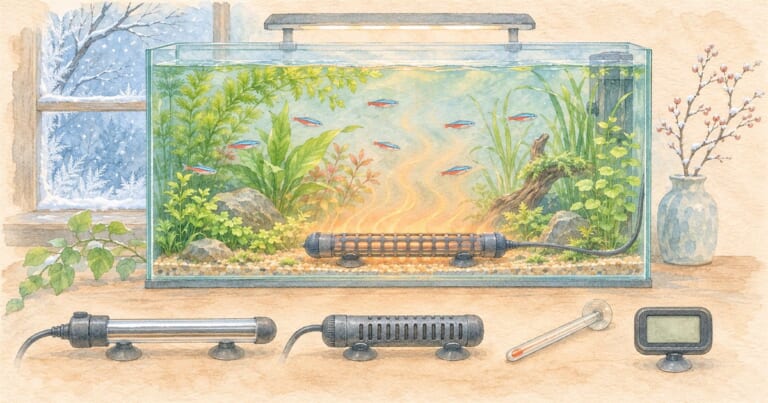
22〜25℃前後が適温とされ、20〜26℃程度の範囲であれば安定して飼育できます。比較的涼しい水を好むとされるため、水温が28℃を超える日が続く日本の夏には注意が必要です。冷却ファンや水槽用クーラーを使い、26℃以下を目安に管理すると安心です。Around 22-25°C is considered ideal, and the species can be kept stably within roughly 20-26°C. Since it is said to prefer relatively cool water, care is needed during Japanese summers, when water temperatures can stay above 28°C for days. Using a cooling fan or an aquarium chiller to keep the water at or below about 26°C is reassuring.
水質 / Water Quality
pH6.0〜7.5の弱酸性〜中性、GH2〜15程度の軟水〜やや硬めの水に適応します。日本の水道水は、カルキを抜けばおおむねそのまま使えます。換水をせずに古くなった水ではpHが大きく下がり、体表の粘膜トラブルにつながることがあるため、2週間に1回程度、全水量の25〜30%を目安に換水しましょう。Adapts to slightly acidic to neutral water with a pH of 6.0-7.5 and a GH of roughly 2-15 (soft to moderately hard). Dechlorinated Japanese tap water is generally suitable as is. In old water that has not been changed, the pH can drop sharply and cause skin and mucus problems, so change about 25-30% of the water roughly every two weeks.
レイアウト / Layout
最も重要なのは底床選びです。長い吻と繊細なヒゲで砂を掘りながら餌を探すため、田砂など角の取れたパウダー状の細かい砂を敷きましょう。角の鋭い砂利や大磯砂は、ヒゲを傷める原因になります。流木や落ち葉で隠れ家を作り、原産地のようなやや薄暗い雰囲気にすると、落ち着いた様子を見せてくれます。群れで動き回れるよう、底面には開けたスペースも十分に残してください。Substrate choice is the most important element. Since this fish digs through sand with its long snout and delicate barbels to find food, use a fine, rounded, powder-like sand such as river sand. Sharp gravel can damage the barbels. Providing cover with driftwood and leaf litter and keeping the tank slightly dim, like its native waters, helps the fish settle. Also leave plenty of open bottom space so the group can move around freely.
注意点 / Precautions
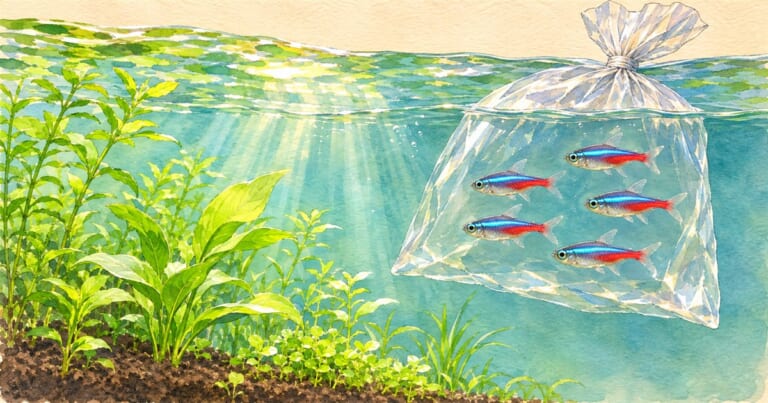
胸ビレと背ビレには硬い棘があり、驚くと棘を立てて固定します。網に絡まりやすく、外すときに魚も人も傷つくおそれがあるため、プラケースなどで水ごとすくうのが安全です。胸ビレの棘の付け根には腋窩腺と呼ばれる分泌腺があり、棘が刺さると強い痛みを伴うことがあります。また、強いストレスを受けると周囲の魚に悪影響を及ぼす物質を分泌するとされ、輸送中の袋の中など狭い空間では特に注意が必要です。なお、水面へ急に浮上して空気を吸う行動は正常な腸呼吸によるもので、心配はいりません。The pectoral and dorsal fins have hard spines that the fish raises and locks in place when startled. They easily snag in nets, and freeing them can injure both fish and keeper, so it is safer to scoop the fish up with water in a plastic container. At the base of the pectoral spines is a secretory organ called the axillary gland, and a puncture from the spine can be quite painful. Under severe stress, the fish is also said to release substances harmful to other fish, so extra care is needed in confined spaces such as shipping bags. Darting to the surface to gulp air is normal intestinal breathing and is not a cause for concern.
餌と給餌 / Feeding
餌の種類 / Diet
底棲性の雑食魚です。コリドラス用などの沈下性タブレットや沈下性ペレットを主食にし、冷凍アカムシ、イトミミズ、ミジンコ、ブラインシュリンプなどを週に数回補助的に与えると、健康維持と自然な採餌行動の促進につながります。An omnivorous bottom feeder. Use sinking tablets or sinking pellets, such as corydoras foods, as the staple, and supplement several times a week with frozen bloodworms, tubifex worms, daphnia, or brine shrimp to support health and encourage natural foraging.
給餌のポイント / Feeding Tips
「水槽の掃除屋」として食べ残しだけで飼えると思われがちですが、それでは栄養が足りず、痩せたり成長不良になったりします。必ず専用の餌を与えてください。食欲旺盛な魚ですが、中層を泳ぐ魚と同居させていると、餌が底に届く前に食べられてしまうことがあります。消灯直後に沈下性の餌を入れるなど、確実に口に入る工夫をしましょう。They are often thought of as clean-up fish that can live on leftovers, but that leaves them undernourished, leading to weight loss and poor growth. Always provide dedicated food. Although they have hearty appetites, mid-water tank mates may eat the food before it reaches the bottom. Try adding sinking food right after the lights go out so that it reliably reaches them.
性格と混泳 / Temperament and Tank Mates
性格 / Temperament
非常に温和で、他の魚を攻撃することはほとんどありません。野生では群れで暮らす社会性の高い魚なので、単独飼育は避け、6匹以上、できれば8匹以上で飼うと落ち着いて本来の行動を見せてくれます。Very peaceful and rarely aggressive toward other fish. As a highly social species that lives in groups in the wild, it should not be kept alone; keeping six or more, ideally eight or more, helps it settle and show natural behavior.
混泳の相性 / Compatibility
ネオンテトラやカージナルテトラなどアマゾン原産の小型カラシン、ハチェットフィッシュ、アピストグラマなどの小型シクリッド、オトシンクルスや小型プレコといった温和な魚とよく合います。一方、底層で縄張りを張る中・大型シクリッドとの混泳は避けましょう。追い回されてストレスを受けるだけでなく、相手が本種を飲み込もうとした際に硬い棘が口の中に刺さり、双方が命を落とすおそれがあります。Good tank mates include small Amazonian characins such as neon and cardinal tetras, hatchetfish, small cichlids such as Apistogramma, and peaceful loricariids such as Otocinclus and small plecos. Avoid medium to large territorial cichlids that claim the bottom. Besides being chased and stressed, if a cichlid tries to swallow this fish, the hard spines can lodge in its mouth and both fish may die.
病気と対策 / Diseases and Prevention
かかりやすい病気 / Common Diseases
粗い底砂や汚れた底床でヒゲが傷つき、そこから細菌に感染してヒゲが溶けたり短くなったりする症状がよく見られます。また、流通個体のほとんどが野生採集個体のため、体内の寄生虫にも注意が必要です。原産地の個体からは、腸に寄生して腸の組織を傷つける線虫の仲間(カマラヌス類)や、肝臓や腸の壁に小さな袋状のシストを作る吸虫の幼生が見つかったという報告があります。よく餌を食べているのに痩せていく場合は、こうした寄生虫の影響が疑われます。A common problem is barbel erosion: barbels damaged by coarse or dirty substrate become infected with bacteria and melt away or shorten. In addition, since almost all specimens in the trade are wild-caught, internal parasites deserve attention. There are reports of fish from the native range carrying camallanid nematodes that live in the intestine and damage its tissue, as well as larval flukes that form small cysts in the liver and intestinal wall. If a fish keeps losing weight despite eating well, such parasites may be the cause.
対策と予防 / Prevention
ヒゲを守るには、細かく柔らかい砂を選び、底床の掃除と定期的な換水で清潔に保つことが基本です。購入した個体はすぐにメイン水槽へ入れず、別の水槽で数週間ほど様子を見るトリートメント期間を設けると安心です。寄生虫が疑われる場合、吸虫にはプラジカンテル、線虫にはレバミソールなどの駆虫薬が使われることがあります。薬の扱いには注意が必要なため、専門店や魚の病気に詳しい獣医師に相談しながら進めましょう。なお、吸虫は巻貝や水鳥を経由しなければ生活環を完結できないため、水槽内でほかの魚へ広がる可能性は低いと考えられています。To protect the barbels, choose fine, soft sand and keep the substrate clean through regular cleaning and water changes. Rather than adding newly purchased fish straight to the main tank, it is wise to keep them in a separate tank for several weeks to observe them. If parasites are suspected, dewormers such as praziquantel for flukes and levamisole for nematodes are sometimes used. Because medications require careful handling, proceed with advice from a specialist shop or a veterinarian familiar with fish diseases. Flukes cannot complete their life cycle without passing through snails and waterbirds, so they are thought to be unlikely to spread to other fish in the aquarium.
増やし方(繁殖) / Breeding
雌雄の判別 / Sexing
外見での判別が難しい種です。一般的なコリドラス類と同様に、成熟したメスはオスより一回り大きく、上から見ると腹部に丸みと幅が出るとされます。卵を抱えた時期のメスは、特に体型の違いがわかりやすくなります。Sexing by appearance is difficult. As in other corydoras, mature females are said to be slightly larger than males and look broader and rounder when viewed from above. The difference is especially easy to see in females carrying eggs.
繁殖形態 / Reproduction
卵生です。コリドラス亜科に特有の「Tポジション」と呼ばれる姿勢で交尾し、オスがメスの口元に体を直角に寄せます。メスは腹ビレをすぼめて作ったかごに数個の粘着卵を抱え、きれいにしたガラス面や水草の葉、流木などに産み付けます。親が卵や稚魚を守る習性はなく、むしろ卵を食べてしまうことがあります。Egg-laying. Spawning takes place in the T-position typical of Corydoradinae, with the male positioning his body at a right angle to the female’s mouth. The female holds a few adhesive eggs in a basket formed by her pelvic fins and attaches them to cleaned surfaces such as aquarium glass, plant leaves, or driftwood. The parents provide no care and may even eat the eggs.
繁殖のポイント / Breeding Tips
小型のコリドラスとは異なり、水槽内での繁殖は非常に難しいとされ、確立された方法はまだありません。近縁種の例から考えると、アカムシやイトミミズなど栄養価の高い餌でメスを十分に成熟させたうえで、低気圧が近づくタイミングに合わせ、普段より2〜3℃低い新鮮な軟水で30〜50%ほど換水し、雨季の訪れを再現する方法が有効と考えられています。産卵を確認したら卵を別の水槽へ移しましょう。孵化した稚魚にはインフゾリアやマイクロワームから与え始め、成長に合わせてブラインシュリンプの幼生へ切り替えます。Unlike small corydoras, this species is considered very difficult to breed in aquariums, and no established method exists yet. Based on related species, a promising approach is to condition the females well with nutritious foods such as bloodworms and tubifex, then simulate the arrival of the rainy season by changing 30-50% of the water with fresh, soft water 2-3°C cooler than usual as a low-pressure system approaches. Once spawning is confirmed, move the eggs to a separate tank. Start the fry on infusoria or microworms, and switch to newly hatched brine shrimp as they grow.
雑学と豆知識 / Trivia and Fun Facts
1. 背ビレの数が物語る学名 / 1. A Name Told by the Dorsal Fin
本種は1960年、エクアドルとペルーの国境付近を流れるナポ川水系の支流で採集された標本をもとに、Chaenothorax multiradiatus という名で記載されました。種小名の multiradiatus はラテン語で「多くの条を持つ」という意味です。一般的なコリドラス類の背ビレの軟条が6〜8本程度なのに対し、本種は17〜18本もあることから、この名が付けられました。同じブロキス属でも、ブロキス・スプレンデンスは10〜12本、ブロキス・ブリツキイは15〜18本とされ、軟条の数は吻の長さと並んで種を見分ける大切な手がかりになっています。名前そのものが、この魚のいちばんの特徴を言い当てているのです。The species was described in 1960 as Chaenothorax multiradiatus from specimens collected in a tributary of the Napo River system near the Ecuador-Peru border. The species name multiradiatus means “having many rays” in Latin. While typical corydoras have only about 6-8 dorsal fin rays, this species has 17-18, which gave it its name. Within Brochis, B. splendens has 10-12 rays and B. britskii 15-18, so ray count, along with snout length, is an important clue for telling the species apart. The name itself captures the fish’s most defining feature.
2. 消えては戻ってきたブロキス属 / 2. The Genus That Disappeared and Returned
ブロキス属は1871年にアメリカの博物学者コープが設けた古い属で、属名はギリシャ語で「輪」や「ループ」を意味する言葉に由来するという説があります。本種ものちにこの属へ移されましたが、2003年の形態学的研究で、ブロキス属を独立させたままではコリドラス属の分け方に無理が生じると指摘され、ブロキス属はコリドラス属にまとめられました。そのため本種は、しばらくコリドラス・マルチラディアトゥスと呼ばれることになります。ところが2024年、体のつくりと大量の遺伝子データを組み合わせた大規模な研究によってコリドラス亜科の分類が見直され、ブロキス属が正式に復活しました。新しい分類ではブロキス属の範囲が広がり、それまでコリドラス属とされていた一部の種も含まれるようになっています。本種は約20年ぶりに、元の属名へ戻ったことになります。Brochis is an old genus established in 1871 by the American naturalist Cope, and its name is thought by some to come from a Greek word meaning “loop” or “noose.” This species was later moved into it, but a 2003 morphological study pointed out that keeping Brochis separate made the grouping of Corydoras inconsistent, so Brochis was merged into Corydoras. As a result, the fish was known as Corydoras multiradiatus for a while. In 2024, however, a large-scale study combining anatomical features with extensive genetic data revised the classification of the subfamily, and Brochis was formally revalidated. Under the new classification the genus has been broadened to include some species previously placed in Corydoras. After about two decades, this fish returned to its original genus.
3. 長い鼻と大きな帆の意味 / 3. The Meaning of the Long Nose and Big Sail
英名の「ホグノーズ」は「豚の鼻」という意味で、前方へ伸びた吻の形をよく表しています。原産地の川底には落ち葉や柔らかな泥、細かい砂が厚く積もっており、本種はこの長い吻を差し込んで、奥に潜む水生昆虫などの小さな生き物を掘り出して食べていると考えられています。同じ水域には吻の短い近縁種も暮らしていますが、本種はより深いところまで探れることで、餌の奪い合いを避けて住み分けているのではないかと推測されています。また幼魚は、体高を超えるほど大きな帆のような背ビレとまだら模様を持っています。成長とともに背ビレは体に見合った大きさになり、体色も落ち着いた金属光沢へと変わっていきます。若いころにしか見られないこの姿の移り変わりも、本種を育てる楽しみのひとつです。The English name “hognose” means “pig’s nose” and aptly describes the forward-projecting snout. The riverbeds of its homeland are thickly layered with leaf litter, soft mud, and fine sand, and the fish is thought to push its long snout into this layer to dig out aquatic insects and other small creatures. Short-snouted relatives live in the same waters, and it is suggested that by probing deeper, this species avoids competing with them for food. Juveniles also have a sail-like dorsal fin taller than their bodies and a mottled pattern. As they grow, the fin becomes proportionate to the body and the coloration shifts to a subdued metallic sheen. Watching this change, seen only in young fish, is one of the pleasures of raising the species.
4. 腸で空気を吸う魚 / 4. A Fish That Breathes Through Its Gut
アマゾンの三日月湖や氾濫原では、乾季や夜間に水中の酸素が大きく減ることがあります。こうした環境に適応するため、本種は腸の後半に毛細血管が密に集まった部分を持ち、水面で飲み込んだ空気から直接酸素を取り込むことができます。水槽の底から急に水面へ駆け上がり、すぐに底へ戻っていく行動はこの腸呼吸によるもので、必ずしも酸欠のサインではありません。ただし、その回数が明らかに増えたときは、水質や水温を見直すきっかけにするとよいでしょう。Oxbow lakes and floodplains in the Amazon can lose much of their dissolved oxygen during the dry season or at night. To cope, this species has a section of the rear intestine densely lined with capillaries, allowing it to absorb oxygen directly from air swallowed at the surface. The sudden dash from the bottom to the surface and back is this intestinal breathing at work and is not necessarily a sign of oxygen shortage. Still, if it happens noticeably more often, it is a good cue to check water quality and temperature.
5. 似た者同士で身を守るミューラー型擬態 / 5. Strength in Resemblance: Müllerian Mimicry
コリドラス類の研究では、硬い骨板や毒のある棘を持つ別系統の種同士が、同じ川の中でよく似た色や模様をしている例が知られています。これはミューラー型擬態と呼ばれる現象です。つまり、どちらも「食べにくく、痛い思いをする」魚であることを、共通の見た目で捕食者に覚えさせることで、身を守る効果を高めていると考えられています。本種が属する系統の仲間も、こうした擬態のグループに加わっていることが示唆されています。また野生では数百匹以上の群れを作るとされ、群れで一斉に底砂をかき回すことで、砂の中の餌を効率よく掘り起こしていると考えられています。Research on corydoras has shown that species from different lineages, each armed with bony plates and venomous spines, can share similar colors and patterns in the same river. This is known as Müllerian mimicry. In other words, by sharing one appearance, these fish teach predators more effectively that such prey is “hard and painful to eat,” which is thought to strengthen their protection. Members of the lineage this species belongs to are suggested to take part in such mimicry groups. In the wild it is said to form schools of hundreds or more, and stirring up the sand together is thought to help the group uncover food efficiently.
6. ペルーの町から届くワイルド個体 / 6. Wild Fish from a Peruvian River Town
水槽内での商業的な繁殖が確立されていないため、流通している個体のほとんどは南米で採集された野生個体です。主な供給地は、ペルー・ロレト県のアマゾン川上流にある都市イキトスで、この地域はペルーの観賞魚輸出の大部分を担っています。周辺の三日月湖や氾濫原で地元の漁師が採集した魚は輸出業者のもとに集められ、空路でヨーロッパやアジアを経由して、あるいは直接日本へと運ばれてきます。入荷の機会が限られ、小型のブリードコリドラスと比べると価格も高めになりがちですが、そのぶん出会えたときの喜びはひとしおです。Because commercial captive breeding has not been established, almost all specimens in the trade are wild-caught in South America. The main source is Iquitos, a city on the upper Amazon in Peru’s Loreto region, which accounts for most of Peru’s ornamental fish exports. Fish caught by local fishermen in nearby oxbow lakes and floodplains are gathered by exporters and flown to Japan either directly or via Europe or Asia. Arrivals are infrequent and prices tend to be higher than for small captive-bred corydoras, which makes finding one all the more rewarding.
まとめ / Conclusion
ロングノーズブロキスは、長く伸びた吻、多くの軟条を持つ大きな背ビレ、そしてコリドラス類の中でも大柄な体を備えた、存在感のある底棲魚です。所属する属が何度も変わりながら、独自の系統であることが改めて確かめられてきた魚であり、その姿にはアマゾンの川底で暮らすための工夫が詰まっています。The Hognosed Brochis is a striking bottom dweller with a long snout, a large many-rayed dorsal fin, and a body that is large for the corydoras group. Its genus has changed more than once, yet it has been reconfirmed as a distinct lineage, and its form embodies the adaptations that suit life on the Amazon riverbed.
細かく柔らかい砂、夏場の水温管理、底まで確実に届く餌、そして迎え入れた直後の丁寧なトリートメント。こうした基本を守れば、温和な群れが長く水槽の底をゆったりと行き交ってくれるでしょう。仲間と並び、鼻先を砂に差し入れながら餌を探す姿は、付き合いが長くなるほど味わいを増していきます。Fine soft sand, summer temperature control, food that reliably reaches the bottom, and careful quarantine on arrival: with these basics in place, a peaceful group can glide along the bottom of the aquarium for many years. The sight of them foraging side by side, snouts buried in the sand, only grows more charming the longer you keep them.
Dias, A. C., Tencatt, L. F. C., Roxo, F. F., Silva, G. S. C., Santos, S. A., Britto, M. R., Taylor, M. I. & Oliveira, C. (2024). Phylogenomic analyses in the complex Neotropical subfamily Corydoradinae (Siluriformes: Callichthyidae) with a new classification based on morphological and molecular data. Zoological Journal of the Linnean Society, zlae053. https://doi.org/10.1093/zoolinnean/zlae053 コリドラス亜科の新分類とブロキス属の復活
Britto, M. R. (2003). Phylogeny of the subfamily Corydoradinae Hoedeman, 1952 (Siluriformes: Callichthyidae), with a definition of its genera. Proceedings of the Academy of Natural Sciences of Philadelphia, 153, 119–154. ブロキス属をコリドラス属の同物異名とした形態学的系統解析
García-Dávila, C. et al. (2021). Peces Ornamentales de la Amazonía Peruana. Iquitos: Instituto de Investigaciones de la Amazonía Peruana (IIAP). ペルー・アマゾンにおける観賞魚の採集と輸出
形態・生理・生態
Alexandrou, M. A., Oliveira, C., Maillard, M., McGill, R. A. R., Newton, J., Creer, S. & Taylor, M. I. (2011). Competition and phylogeny determine community structure in Müllerian co-mimics. Nature, 469, 84–88. https://doi.org/10.1038/nature09660 コリドラス亜科のミューラー型擬態と、吻の形による餌資源の住み分け
Kramer, D. L. & McClure, M. (1980). Aerial respiration in the catfish, Corydoras aeneus (Callichthyidae). Canadian Journal of Zoology, 58, 1984–1991. https://doi.org/10.1139/z80-273 コリドラス類の腸呼吸
Wright, J. J. (2009). Diversity, phylogenetic distribution, and origins of venomous catfishes. BMC Evolutionary Biology, 9, 282. https://doi.org/10.1186/1471-2148-9-282 ナマズ類のヒレの棘と毒腺(カリクティス科を含む)
繁殖
Kohda, M., Tanimura, M., Kikue-Nakamura, M. & Yamagishi, S. (1995). Sperm drinking by female catfishes: a novel mode of insemination. Environmental Biology of Fishes, 42, 1–6. コリドラス類のTポジションと受精の仕組み
病気・寄生虫
Ortiz Arias, N. M., Serrano Martínez, M. E. et al. (2023). Intestinal endoparasitism in Corydoras multiradiatus (Siluriformes: Callichthyidae) in Iquitos, Loreto-Peru. Revista de Ciências Agroveterinárias, 22(4), 631–639. https://doi.org/10.5965/223811712242023631 イキトス産個体の腸内寄生虫と腸の組織損傷
Murrieta Morey, G. A. (2018). Metacercariae of Tylodelphys sp. (Trematoda: Diplostomidae) parasite of Brochis multiradiatus and Corydoras splendens (Siluriformes: Callichthyidae) from the Peruvian Amazon. Acta Scientiarum. Biological Sciences, 40, e41280. https://periodicos.uem.br/ojs/index.php/ActaSciBiolSci/article/view/41280 肝臓と腸に寄生する吸虫の幼生
Murrieta Morey, G. A. & Florindez, F. (2018). Procamallanus (Spirocamallanus) pintoi (Kohn and Fernandes, 1988) (Nematoda: Camallanidae) infecting species of Callichthyidae from the Peruvian Amazon. Bulletin of the European Association of Fish Pathologists, 38(6). ペルー・アマゾン産カリクティス科魚類のカマラヌス類線虫






コメント