

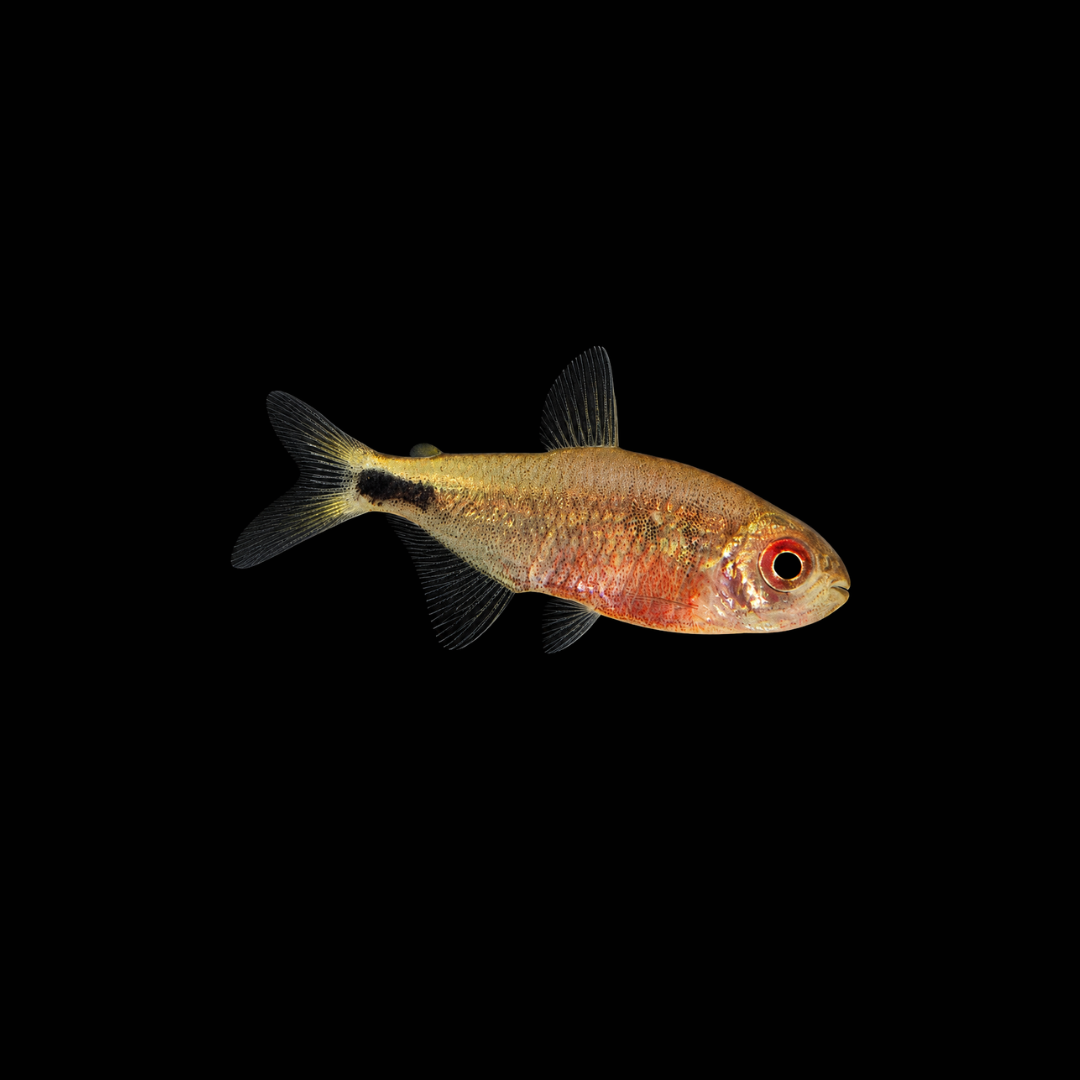
解説 / Description
フィコカラックス・ラスボラは、ブラジルのタパジョス川水系、テレスピレス川流域のブラソノルテ川上流域から知られる小型カラシンです。体側後半に伸びる三角形に近い暗色斑が大きな特徴で、南米のカラシンでありながら、東南アジアのラスボラ類を思わせる独特の印象を持っています。落ち着いた環境で状態が上がったオスでは、眼の上部や頭部、体の前半に赤みが出やすく、控えめな体色の中に繊細な美しさが現れます。 Phycocharax rasbora is a small characin known from the upper Rio Braço Norte in the Rio Teles Pires drainage of the Tapajós basin, Brazil. Its most distinctive feature is a dark, nearly triangular blotch extending along the rear half of the body, giving this South American characin a look that recalls Southeast Asian rasboras. Well-conditioned males kept in a calm aquarium may show reddish tones around the upper eye, head, and anterior body, creating a subtle but refined beauty.
本種は、藻類や植物質を多く利用する食性が報告されており、歯列にもその暮らしを思わせる特徴があります。原産地はブラックウォーターの支流やダム化された穏やかな水域と関わりが深いとされるため、飼育では弱酸性寄りの軟水、暗めの底床、流木や落ち葉を使った落ち着いたレイアウトがよく合います。水槽内での飼育情報はまだ多い魚ではないため、確実に知られている自然史と、小型カラシンとしての一般的な飼育経験を分けて考えることが大切です。 The species has been reported to feed mainly on algae and plant matter, and its dentition reflects that way of life. Because its natural habitat is associated with a blackwater tributary and calmer dammed areas, aquariums with soft, slightly acidic water, dark substrate, driftwood, and leaf litter are well suited to it. Aquarium information remains limited, so it is important to separate confirmed natural-history data from husbandry practices inferred from experience with small characins.
基本情報 / Basic Information
| 学名 / Scientific Name | Phycocharax rasbora |
|---|---|
| 通称 / Common Name | フィコカラックス・ラスボラPhycocharax rasbora |
| 分類 / Family | カラシン目 アセストロランフス科 Hyphessobryconinae。2017年の原記載ではカラシン科の新属新種として発表されましたが、現在の主要データベースではアセストロランフス科として扱われます。Order Characiformes, family Acestrorhamphidae, subfamily Hyphessobryconinae. It was originally described in 2017 as a new genus and species of Characidae, while current major databases place it in Acestrorhamphidae. |
| 英名 / English Name | Phycocharax rasbora |
| 分布 / Distribution | 南米ブラジル、マトグロッソ州のブラソノルテ川上流域。テレスピレス川流域、タパジョス川水系に属する限られた地域から知られています。Upper Rio Braço Norte in Mato Grosso State, Brazil. It is known from a restricted area in the Rio Teles Pires drainage of the Tapajós basin. |
| 最大体長 / Max Size | 標本記録では標準体長約3.3〜3.4cm。水槽内では全長としてもう少し大きく見える場合があります。About 3.3 to 3.4 cm standard length in specimen records. In aquariums it may appear slightly longer when viewed as total length. |
| 寿命 / Lifespan | 本種単独の確実な飼育寿命データは多くありません。小型カラシンとしては、安定した環境で2〜4年程度をひとつの目安にできます。Reliable species-specific aquarium lifespan data are limited. As a small characin, 2 to 4 years under stable care can be used as a practical estimate. |
飼育環境 / Aquarium Environment
| 水槽サイズ / Tank Size | 小型種ですが、複数匹で飼うと落ち着きやすい魚です。5〜6匹以上なら45cm規格水槽以上、より安定させるなら60cm規格水槽がおすすめです。少数での一時管理は30cmキューブ水槽でも可能ですが、水質の急変を避ける管理が必要です。Although small, it settles more easily when kept in a group. For 5 to 6 or more individuals, a standard 45 cm tank or larger is recommended, with a standard 60 cm tank offering greater stability. A 30 cm cube can be used for short-term care of a small number, but sudden water changes must be avoided. |
|---|---|
| 水温 / Temperature | 飼育上の目安は23〜28℃です。原記載や主要データベースに詳細な飼育水温が示されているわけではないため、一般的な熱帯性小型カラシンの範囲として管理します。30℃以上が続く環境は避けます。 A practical aquarium range is 23 to 28°C. Detailed aquarium temperature data are not established in the original description or major databases, so this should be treated as a general range for tropical small characins. Avoid prolonged temperatures above 30°C. |
| 水質 / Water Quality | 弱酸性〜中性付近の軟水が扱いやすい目安です。原産地がブラックウォーターの支流とされることから、pH 5.5〜7.0前後、低めの硬度を意識するとよいでしょう。ただし具体的な飼育最適値が確立されているわけではないため、数値を追い込みすぎるよりも安定を優先します。Soft water from slightly acidic to near neutral is a practical target. Because the species is associated with a blackwater tributary, around pH 5.5 to 7.0 and low hardness is a reasonable approach. However, exact aquarium optimum values are not firmly established, so stability is more important than chasing a specific number. |
| レイアウト / Layout | 暗めの底床、流木、落ち葉、浮き草を組み合わせると、臆病さを抑えつつ体色を観察しやすくなります。ヤシャブシの実やマジックリーフを使い、薄く色づいたブラックウォーター風にするのも相性がよい方法です。水流は強くしすぎず、泳ぎ疲れない程度の穏やかさを保ちます。Dark substrate, driftwood, leaf litter, and floating plants help reduce shyness and make its coloration easier to appreciate. Alder cones or Indian almond leaves can be used to create a lightly tinted blackwater-style setup. Water movement should remain gentle enough that the fish do not tire. |
| 注意点 / Precautions | 流通個体は野生採集個体が中心と考えられるため、導入時の水合わせは時間をかけて行います。輸送直後に痩せやスレが見られる場合は、明るすぎる照明、強い水流、餌取りの激しい混泳魚を避け、静かな環境で状態を立て直します。Most traded individuals are likely wild-caught, so acclimation should be gradual. If newly arrived fish are thin or abraded, avoid overly bright lighting, strong current, and aggressive feeders, and allow them to recover in a quiet environment. |
餌と給餌 / Feeding
| 餌の種類 / Diet | 自然下では藻類と植物質を主に含む胃内容物が報告されています。飼育下では細かな顆粒餌やフレークフードを基本に、ブラインシュリンプ、冷凍赤虫などを補助的に使い、スピルリナやクロレラを含む植物質配合フードも組み合わせます。Stomach contents from the wild have been reported to consist mainly of algae and plant matter. In aquariums, fine granules and flakes can be used as staples, supplemented with brine shrimp or frozen bloodworms, while also including plant-rich foods containing spirulina or chlorella. |
|---|---|
| 給餌のポイント / Feeding Tips | 動物性の餌だけに偏らせず、植物質を含む餌を定期的に混ぜることが長期維持のポイントです。流木や石の表面にできる薄い藻類やバイオフィルムをついばむ可能性があるため、すべてを磨き上げるより、魚が利用できる自然な表面を少し残すとよいでしょう。小型魚なので、一度に多く与えず、食べ切れる量を少量ずつ与えます。For long-term maintenance, avoid relying only on animal-based foods and regularly include plant matter. It may graze on thin algae or biofilm on driftwood and stones, so leaving some natural surfaces rather than polishing everything clean can be beneficial. Because it is small, feed modest portions that are eaten quickly. |
性格と混泳 / Temperament and Tank Mates
| 性格 / Temperament | 基本的には温和な小型魚です。同種同士では軽いフィンスプレッディングを見せることがありますが、激しく争うタイプではないと考えられます。単独や少数では隠れがちになることがあるため、可能であれば複数匹での飼育が向きます。It is generally a peaceful small fish. Individuals may show mild fin-spreading displays, but it is not expected to be highly aggressive. Single fish or very small groups may hide more often, so group maintenance is preferable when possible. |
|---|---|
| 混泳の相性 / Compatibility | 同程度の大きさで温和な小型カラシン、小型コイ科魚、オトシンクルス、小型コリドラス、穏やかなドワーフシクリッドなどと相性がよいです。自然下でアピストグラマ類と同所的に見つかっていることから、落ち着いた小型シクリッドとの組み合わせも候補になります。餌取りが速すぎる魚、ヒレをつつく魚、口に入るサイズの魚を捕食する魚は避けます。Suitable tank mates include similarly sized peaceful small characins, small cyprinids, Otocinclus, small Corydoras, and calm dwarf cichlids. Since the species has been found syntopically with Apistogramma in nature, calm dwarf cichlids can be considered. Avoid very fast feeders, fin nippers, and predatory fish large enough to swallow it. |
病気と対策 / Diseases and Prevention
| かかりやすい病気 / Common Diseases | 白点病、尾ぐされ、肌荒れ、輸送後の細菌性トラブルに注意します。本種特有の病気がよく知られているわけではありませんが、小型で野生採集由来の個体では、導入直後のスレや水質ショックが不調のきっかけになりやすいです。Watch for ich, fin rot, skin irritation, and bacterial issues after transport. Species-specific disease tendencies are not well documented, but as a small wild-caught fish it may be vulnerable to abrasions and water-chemistry shock soon after arrival. |
|---|---|
| 対策と予防 / Prevention | 導入時は水温と水質を合わせ、できれば隔離水槽で数週間観察します。過密を避け、ろ過の効いた清潔な水を保ち、急な大換水は控えます。薬浴を行う場合は小型カラシンであることを考慮し、説明書の範囲内で慎重に進めます。Match temperature and water chemistry during acclimation, and ideally observe new fish in quarantine for several weeks. Avoid overcrowding, maintain clean filtered water, and do not perform sudden large water changes. If medication is needed, dose carefully within label directions with the sensitivity of small characins in mind. |
増やし方(繁殖) / Breeding
| 雌雄の判別 / Sexing | オスはメスより色が強く出やすく、眼の上部が赤く輝き、頭部から体の前半に赤みが散ることがあります。メスは全体に淡い銀黄色寄りで、尻ビレの前方の軟条が長く、縁がやや凹む形になるとされます。成熟した個体では尻ビレの形と発色を合わせて見ると判別しやすくなります。Males tend to be more strongly colored than females, with the upper eye shining red and reddish pigment scattered around the head and anterior body. Females are generally paler silvery yellow and are reported to have longer anterior anal-fin rays with a slightly concave margin. In mature fish, combining anal-fin shape with coloration makes sexing easier. |
|---|---|
| 繁殖形態 / Reproduction | 水槽内繁殖の確立情報は限られます。自然下の調査では雨季と乾季の両方で発達した生殖腺が確認され、メスの卵巣にはサイズの異なる卵母細胞が見られたことから、条件が合えば複数回に分けて産卵する可能性が示唆されています。Established aquarium breeding information is limited. Field observations found well-developed gonads in both rainy and dry seasons, and females had oocytes of different sizes, suggesting the possibility of multiple spawning when conditions are favorable. |
| 繁殖のポイント / Breeding Tips | 繁殖を狙う場合は、小型カラシンの一般的な方法を参考にします。弱酸性寄りの軟水、薄暗い照明、細かな水草やウィローモス、産卵モップ、卵を親から守るネットやビー玉を用意し、状態のよいペアまたは小群を入れます。親が卵を食べる可能性を考え、産卵後は親を戻すか、卵を別容器で管理します。稚魚にはインフゾリアや市販の微細フードから始め、成長に合わせてブラインシュリンプ幼生へ切り替えます。For breeding attempts, follow general small-characin methods. Prepare soft, slightly acidic water, dim lighting, fine-leaved plants or Java moss, spawning mops, and a mesh or marbles to protect eggs from the adults, then introduce a well-conditioned pair or small group. Because adults may eat eggs, remove the adults after spawning or manage the eggs separately. Start fry on infusoria or commercial micro foods, then switch to newly hatched brine shrimp as they grow. |
雑学と豆知識 / Trivia and Fun Facts
| 1. 学名に込められた藻類食の手がかり / 1. A clue to algae feeding in the scientific name | 属名のPhycocharaxは、藻類を意味する語と、カラシン類を連想させるcharaxを組み合わせた名前です。原記載では胃内容物に藻類と植物質が多く含まれることが示されており、この名前は単なる飾りではなく、魚の暮らしそのものを映しています。小さな口元に並ぶ多頭歯は、流木や植物、底質の表面にある付着物を利用する生活と結びついていると考えられます。The genus name Phycocharax combines a word meaning algae with charax, a term associated with characins. The original description reported stomach contents dominated by algae and plant matter, so the name reflects the fish’s way of life rather than being merely decorative. Its multicuspid teeth are thought to be connected with using growth on wood, plants, and substrate surfaces. |
|---|---|
| 2. ラスボラの名を持つ南米カラシン / 2. A South American characin named rasbora | 種小名rasboraは、アジアの小型魚として親しまれるラスボラに由来します。理由は、体側後半の大きな三角形の暗色斑です。この模様はヘテロモルファなどのラスボラ類を思わせる位置と形をしており、遠く離れた大陸の魚が似た視覚的特徴を持つ面白さを感じさせます。分類上はまったく別のグループでありながら、見た目の一点で不思議な橋がかかっているような魚です。The species name rasbora comes from the rasboras familiar as small Asian aquarium fishes. The reason is the large triangular dark blotch on the rear half of the body. Its shape and position recall rasboras such as the harlequin rasbora, creating an intriguing visual link between fishes from distant continents. Taxonomically they are unrelated, yet a single pattern creates a curious bridge between them. |
| 3. ブラックウォーターとダム湖のあいだで / 3. Between blackwater and a dam reservoir | ブラソノルテ川は、タパジョス水系の多くの澄んだ支流とは異なり、ブラックウォーターの支流として記録されています。さらに本種は、ダム化された水域で多く採集され、藻類の増加が有利に働いた可能性が示されています。川をせき止めることは多くの魚にとって大きな負担になりますが、本種では少なくとも調査時点で、穏やかになった環境と餌資源の増加が個体数の多さにつながったと考えられています。ただし、それが長期的な安定を意味するとは限らず、環境の変化を慎重に見守る必要があります。The Rio Braço Norte is recorded as a blackwater tributary, unlike many clearer tributaries of the Tapajós basin. The species was also collected abundantly in dammed areas, where increased algae may have been favorable. Damming is a major disturbance for many river fishes, but in this case, at least at the time of study, calmer conditions and increased food resources appear to have contributed to high abundance. This does not necessarily mean long-term stability, so environmental change should still be viewed with caution. |
| 4. 雌雄で変わる表情 / 4. Different expressions in males and females | 本種は雌雄の違いが比較的はっきりした小型カラシンです。オスはより強い色を見せ、眼の上部が赤く輝き、体の前半に赤みが現れます。一方、メスは銀黄色を帯び、尻ビレ前方の形に特徴が出ます。派手に泳ぎ回る魚ではありませんが、落ち着いた水槽でじっくり見ると、雌雄それぞれの形と色の差が少しずつ読み取れるようになります。This species shows relatively clear sexual differences for a small characin. Males display stronger coloration, with a red upper eye and reddish pigment on the anterior body. Females are more silvery yellow and show distinctive shape in the anterior part of the anal fin. It is not a fish that overwhelms with constant movement, but in a calm aquarium the differences in form and color gradually become apparent. |
| 5. 珍しさだけで終わらない魅力 / 5. An appeal beyond rarity | 国内のアクアリウム趣味では、入荷の少ない南米小型カラシンを珍カラとして楽しむ文化があります。フィコカラックス・ラスボラもその文脈で語られやすい魚ですが、魅力は希少性だけではありません。藻類食を示す名前、ラスボラを思わせる斑紋、ブラックウォーターの支流、ダム湖での多産という背景が重なり、小さな体に何層もの物語を宿しています。In the Japanese aquarium hobby, uncommon South American small characins are often appreciated as rare characins. Phycocharax rasbora is easily discussed in that context, but its appeal is not rarity alone. Its algae-feeding name, rasbora-like blotch, blackwater tributary habitat, and reported abundance in a reservoir all overlap, giving this small fish a layered story. |
まとめ / Conclusion
フィコカラックス・ラスボラは、三角形の斑紋をまとった小さな体に、藻類食への適応、雌雄で変わる色彩、限られた水域に生きる固有性を凝縮したようなカラシンです。強い主張で水槽の中心に立つ魚ではありませんが、暗めの底床や流木の陰を泳ぐ姿には、知るほどに深まる静かな存在感があります。 Phycocharax rasbora is a small characin whose triangular marking is joined by adaptations to algae feeding, sexually different coloration, and the individuality of a fish known from a limited drainage. It is not a fish that dominates an aquarium with bold display, but as it moves among dark substrate and driftwood shadows, it offers a quiet presence that grows more meaningful the more one learns about it.
安定した軟水、穏やかな水流、植物質を意識した餌、そして仲間と落ち着いて過ごせる空間を整えることで、この魚の魅力はゆっくりと立ち上がります。水槽の中でふと赤い眼が光り、三角斑が流木の影を横切る瞬間に、遠いブラソノルテ川の風景までそっと重なって見えるような、味わい深い一種です。 With stable soft water, gentle flow, plant-conscious feeding, and enough companions to feel secure, this fish’s appeal slowly emerges. When a red eye glints and the triangular blotch passes through the shadow of driftwood, the distant landscape of the Rio Braço Norte seems to quietly overlap with the aquarium, making it a deeply rewarding species to keep.

気になる道具や飼い方を見つけてみませんか?
 アイのアクアグッズ案内ダニオの仲間に合わせる飼育用品|ゼブラダニオから超小型種まで水槽・ろ過・餌を選ぶ道具の特徴や使い方、選ぶときのポイントをアイが紹介します。記事はコチラ →
 アイのアクアグッズ案内カルキ抜き・水質調整剤の選び方|水換えと水槽の種類に合わせて選ぶ道具の特徴や使い方、選ぶときのポイントをアイが紹介します。記事はコチラ →
 アイのアクアグッズ案内水槽のコケ掃除|道具の選び方とお掃除生体の得意・不得意道具の特徴や使い方、選ぶときのポイントをアイが紹介します。記事はコチラ →
 アイのアクアグッズ案内エンゼルフィッシュの飼育用品|高さのある水槽・ろ過・水草・餌の選び方道具の特徴や使い方、選ぶときのポイントをアイが紹介します。記事はコチラ →
さまざまな飼育テーマをご紹介。リンク先の記事には広告・商品紹介が含まれます。
案内・紹介記事一覧へ →分布マップ
フィコカラックス・ラスボラは、南米ブラジルのマトグロッソ州にあるブラソノルテ川上流域、テレスピレス川流域、タパジョス川水系に属する限られた地域から知られています。
この地図のプロットは、分布欄の内容にもとづいてブラソノルテ川上流域周辺を示した概略代表地点です。実際の採集地点や厳密な生息範囲を示すものではありません。
参考文献・根拠資料
本種の記事では、店舗・通販サイト・個人ブログ・まとめサイトを参考文献から除外し、分類、分布、形態、生息環境、食性、繁殖、飼育上の注意、病気対策を支えるために、原記載論文、主要魚類データベース、獣医学・大学機関系の資料を中心に選定しています。
補足: 水温、pH、水槽サイズ、水槽内繁殖手順は、フィコカラックス・ラスボラ単独で確立された飼育試験データではなく、原産地・生態情報と小型カラシンの一般的な飼育管理を合わせた目安として扱います。これらの飼育条件は、本種固有の確定値ではなく、実用上の目安です。
-
Ohara, W. M., Mirande, J. M., & de Lima, F. C. T. (2017). Phycocharax rasbora, a new genus and species of Brazilian tetra (Characiformes: Characidae) from Serra do Cachimbo, rio Tapajós basin. PLOS ONE, 12(2), e0170648.
支える内容: 原記載、分類学的位置づけ、形態的特徴、歯列、三角形状の暗色斑、雌雄差、ブラソノルテ川上流域の分布、生息環境、ダム湖での採集状況、胃内容物、繁殖に関わる生殖腺・卵母細胞の情報。
-
FishBase. Phycocharax rasbora Ohara, Mirande & Lima, 2017. In: FishBase species summary.
支える内容: 現行データベース上の分類、分布、淡水・熱帯性、最大体長、識別形質、同所的に見られる魚種、藻類・植物質を食べる食性、多回産卵を示唆する繁殖情報、IUCNで未評価である点。
-
Fricke, R., Eschmeyer, W. N., & van der Laan, R. (eds.). Eschmeyer’s Catalog of Fishes. California Academy of Sciences.
支える内容: 魚類の学名、属名、種小名、命名者、記載年、分類上の扱いを確認するための基礎資料。記事内の学名表記と分類確認の裏付けに使用。
https://researcharchive.calacademy.org/research/ichthyology/catalog/fishcatmain.asp
-
Petty, B. D., Francis-Floyd, R., & Yanong, R. P. E. Management of Aquarium Fish. Merck Veterinary Manual.
支える内容: 観賞魚の導入・隔離、バイオセキュリティ、水質管理、新規水槽で起こりやすいアンモニア・亜硝酸の問題、薬剤使用を安易に行わないこと、小型魚を扱う際の慎重な管理。
-
Francis-Floyd, R., & Petty, B. D. Disorders and Diseases of Fish. Merck Veterinary Manual.
支える内容: 観賞魚の病気がストレス、悪い水質、過密、隔離不足によって起こりやすいこと、白点病、細菌性トラブル、皮膚・鰓の障害、栄養管理、病気を疑う場合の専門家相談の必要性。
https://www.merckvetmanual.com/all-other-pets/fish/disorders-and-diseases-of-fish
-
Francis-Floyd, R., Yanong, R. P. E., & Pouder, D. B. Ichthyophthirius multifiliis (White Spot) Infections in Fish. University of Florida IFAS Extension.
支える内容: 白点病の原因生物、淡水魚全般への感受性、急速に広がる性質、水温変化や過密時に問題化しやすい点、早期発見と適切な対処の重要性。
参考文献確認日: 2026年6月28日




コメント