

解説 / Description
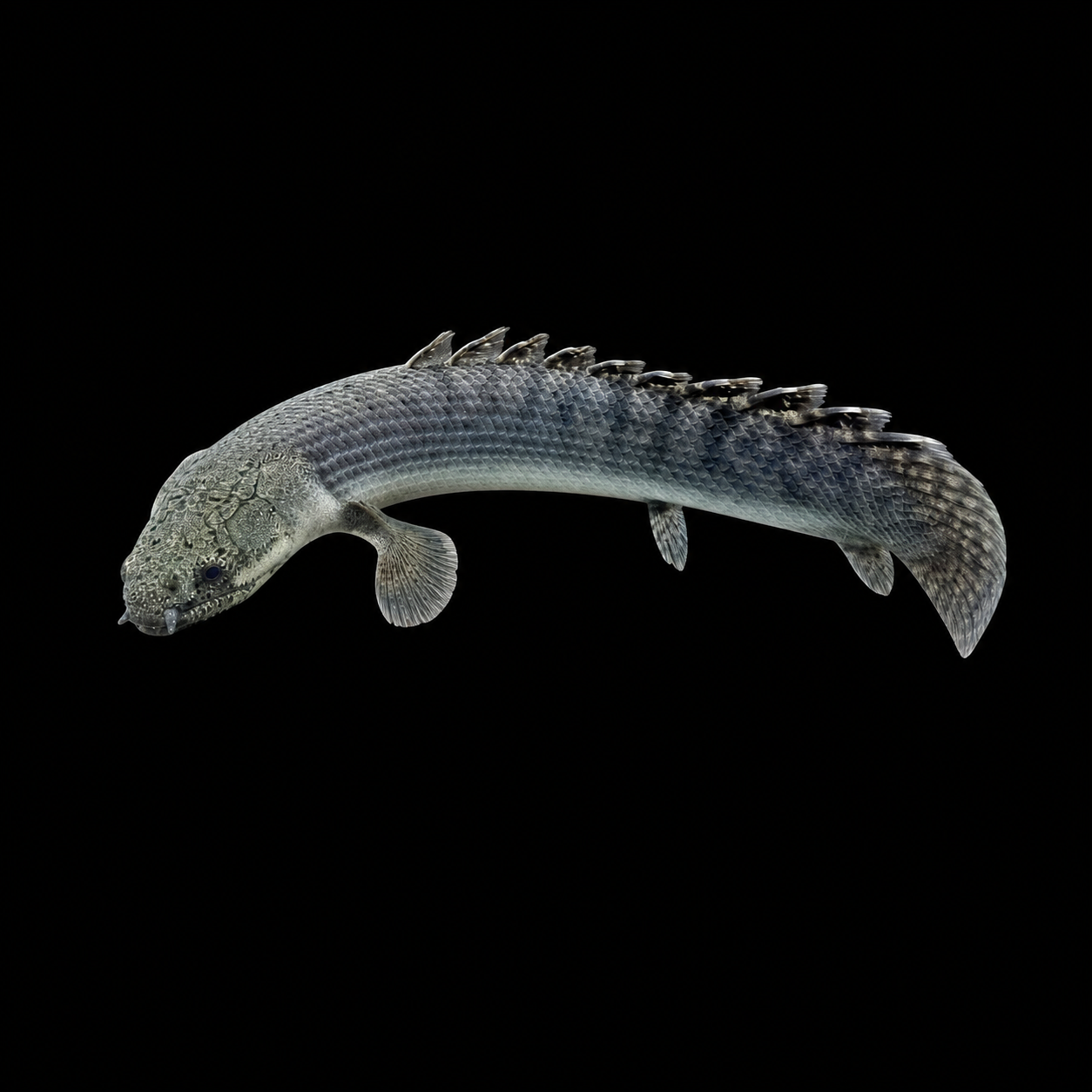
ポリプテルス・ウィークシーは、中央アフリカのコンゴ川中流域を中心に分布するポリプテルス科の淡水魚です。幅のある頭部と、オリーブグリーンから灰褐色の体側に入る暗色の帯模様が特徴で、英名では「Mottled Bichir」と呼ばれます。「Fatheaded Bichir」という呼び名もあり、頭部の存在感と個体ごとに異なる斑紋が、本種らしい重厚な表情をつくっています。 Polypterus weeksii is a freshwater bichir native mainly to the middle Congo River basin of Central Africa. It is characterized by a broad head and dark bands over an olive-green to gray-brown body. The established English common name is Mottled Bichir, while Fatheaded Bichir is also used in the aquarium trade. Variation in markings and head proportions gives individual fish a distinctive appearance.
体表を覆うガノイン鱗、背中に列をつくる複数の小離鰭、そしてエラ呼吸に加えて空気呼吸にも使われる一対の肺など、ポリプテルス類ならではの特徴を備えています。飼育自体は比較的丈夫な部類に入りますが、最大記録が50cmを超える大型魚であり、飛び出し事故も起こりやすいため、成長後まで見据えた広い底面積と確実なフタが必要です。 Like other bichirs, it has hard ganoid scales, a row of separate dorsal finlets, and paired lungs used for aerial respiration in addition to gill breathing. It is generally robust in aquariums, but its recorded maximum size exceeds 50 cm and it is capable of escaping through surprisingly small openings, so long-term housing requires generous floor space and a secure lid.
基本情報 / Basic Information
| 学名 / Scientific Name | Polypterus weeksii Boulenger, 1898 |
|---|---|
| 通称 / Common Name | ウィークシー、ポリプテルス・ウィークシーWeeks’ bichir, mottled bichir, fatheaded bichir |
| 分類 / Family | 条鰭綱・ポリプテルス目・ポリプテルス科・ポリプテルス属Class Actinopterygii, Order Polypteriformes, Family Polypteridae, Genus Polypterus |
| 英名 / English Name | Mottled Bichir / Fatheaded Bichir |
| 分布 / Distribution | アフリカ中央部のコンゴ川中流域。コンゴ民主共和国およびコンゴ共和国の水系に分布します。Central Africa, primarily the middle Congo River basin in the Democratic Republic of the Congo and the Republic of the Congo. |
| 最大体長 / Max Size | 最大で全長54cmの記録があります。飼育個体の最終サイズには個体差がありますが、設備は最大記録に近い大きさまで成長する可能性を見込んで用意します。A maximum total length of 54 cm has been recorded. Final aquarium size varies among individuals, but housing should be planned with the possibility of growth approaching the recorded maximum. |
| 寿命 / Lifespan | 本種だけに絞った標準的な寿命を示す信頼性の高い資料は十分ではありません。大型のポリプテルス類として長期飼育を前提にし、導入時から終生飼育できる設備と維持計画を整えておくことが大切です。Reliable species-specific lifespan data are limited. As a large bichir that may be kept for many years, it should be acquired only with a long-term plan for permanent housing and maintenance. |
飼育環境 / Aquarium Environment
| 水槽サイズ / Tank Size | 最大で全長54cmの記録があるため、90cm規格水槽は幼魚〜若魚の育成用と考え、成魚の終生飼育では120cmワイド水槽(120×60cm程度の底面)以上を目安にすると安心です。大型個体や複数飼育、混泳では150cmクラス以上を検討してください。底層を利用する時間が長いため、水深を増やすことよりも底面積を広く確保することが重要です。Because the species has a recorded maximum total length of 54 cm, a 90 cm standard aquarium is better regarded as temporary housing for juveniles. For an adult, a tank with at least about a 120 × 60 cm footprint is a more practical long-term starting point. Large individuals, groups, or community setups benefit from 150 cm-class aquariums or larger. Floor area is more important than exceptional depth. |
|---|---|
| 水温 / Temperature | 飼育上は25〜28℃前後を目安に、急変を避けて安定させます。厳密な一点の温度を追うより、日内・換水時の大きな変動を抑えることが重要です。日本の冬は水量に見合ったヒーターと温度管理機器を使用します。 A practical aquarium range is around 25–28°C. Stability is more important than targeting a single exact value, so avoid abrupt temperature changes, especially during water changes. Appropriately sized heaters and temperature control are important during cold seasons. |
| 水質 / Water Quality | 飼育上の目安としては弱酸性〜中性のpH6.5〜7.5前後が扱いやすく、数値そのものより安定性を優先します。大型の肉食魚で水を汚しやすいため、十分な生物ろ過と定期的な部分換水を組み合わせ、アンモニアと亜硝酸を検出させない管理が基本です。A practical aquarium target is mildly acidic to neutral water around pH 6.5–7.5, with stability taking priority over chasing exact numbers. As a large carnivorous fish, it can place a substantial load on filtration, so adequate biological filtration and regular partial water changes are essential to keep ammonia and nitrite at zero. |
| レイアウト / Layout | ベアタンクでも飼育できますが、落ち着かせたい場合はガーネットサンドなど舞い上がりにくい細かな底床が使いやすいでしょう。流木や角のない石で暗がりを作り、日中に休める場所を確保します。水草を入れる場合は、掘り返されにくいアヌビアス類やミクロソリウムなどを流木に活着させる方法が向いています。Bare-bottom tanks are workable, but a dense, fine substrate such as garnet sand can provide a calmer appearance while resisting excessive disturbance. Add driftwood or smooth rocks to create shaded resting places. If plants are used, hardy epiphytes such as Anubias or Microsorum attached to wood are practical because they are less likely to be uprooted. |
| 注意点 / Precautions | 飛び出し対策は必須です。フタや配管まわりの隙間はできるだけなくし、魚が押し上げにくい構造にします。ただし完全密閉にはせず、水面に上がって空気を取り込める空間と換気を確保してください。最大サイズを見据えた終生飼育の設備を準備し、飼育個体を自然水域へ放すことは避けます。Escape prevention is essential. Close gaps around lids, pipes, and cables and use a cover the fish cannot easily lift. Do not seal the aquarium airtight; leave ventilated air space above the water so the fish can surface and take atmospheric air. Plan for lifelong housing at adult size and never release aquarium fish into natural waterways. |
餌と給餌 / Feeding
| 餌の種類 / Diet | 沈下性の肉食魚用人工飼料を主食にし、補助的にエビのむき身、小魚の切り身、冷凍アカムシなどを利用します。導入直後のワイルド個体では人工飼料を警戒することがあるため、状態を見ながら徐々に切り替えます。活餌を使用する場合は、病原体や寄生虫の持ち込みに十分注意します。Use sinking carnivore pellets as the nutritional staple, supplemented with foods such as peeled shrimp, pieces of fish, and frozen bloodworms. Newly imported wild specimens may initially refuse prepared foods, so transition them gradually. Live foods can stimulate feeding but may introduce parasites or pathogens and should be used cautiously. |
|---|---|
| 給餌のポイント / Feeding Tips | 薄暗い時間帯に活動しやすい傾向があるため、消灯前後に沈下性の餌を与えると摂餌を確認しやすくなります。食べ残しは水質悪化の原因になるので、量を調整し、残餌は早めに回収してください。成魚では体型を見ながら過食を避け、栄養設計された人工飼料を軸に複数の餌を組み合わせると管理しやすくなります。The species tends to be more active under subdued light, so sinking foods offered around dusk are often easier to monitor. Remove uneaten food before it degrades water quality. For adults, avoid chronic overfeeding and use a nutritionally complete prepared food as the core of a varied diet. |
性格と混泳 / Temperament and Tank Mates
| 性格 / Temperament | 肉食性の大型魚ですが、常に他魚を追い回すタイプではなく、底層で休んでいる時間も長く見られます。ただし、口に入る大きさの魚やエビは捕食対象になり得ます。同種や他のポリプテルス類でも、体格差が大きい組み合わせでは事故が起こりやすいため、サイズをそろえることが重要です。Although it is a large predatory fish, it is not typically a relentless chaser and often spends long periods resting near the bottom. Fish or shrimp small enough to fit in its mouth may still be treated as prey. Large size differences among bichirs should also be avoided because they increase the risk of injury or predation. |
|---|---|
| 混泳の相性 / Compatibility | 同程度の体格を持つポリプテルス類や、口に入らない中大型魚が候補になりますが、種名だけで安全性を判断せず、個体差と体格差を必ず確認してください。プレコ類については、飼育現場でポリプテルスの体表に吸着して粘膜を傷めたとされる例があるため、安全側に考えるなら同居は避けるのが無難です。コリドラスなど小型で硬い棘を持つ底生魚も、誤飲時に双方が傷つくおそれがあるため適しません。Similarly sized bichirs and other medium-to-large fishes that cannot be swallowed may be possible tank mates, but species names alone do not guarantee compatibility; individual temperament and size differences must be monitored. Aquarists have reported plecos attaching to bichirs and damaging the protective mucus layer, so avoiding this combination is the safer approach. Small armored bottom dwellers such as Corydoras are also unsuitable because accidental swallowing can injure both fish. |
病気と対策 / Diseases and Prevention
| かかりやすい病気 / Common Diseases | ウィークシーだけに特有の「かかりやすい病気」が十分に整理されているわけではありません。実際の飼育では、水質悪化、急な水温変化、輸送ストレス、擦れ傷などをきっかけに、外部寄生虫や二次的な細菌感染が問題になることがあります。とくにワイルド個体は、導入直後の痩せ、体表異常、呼吸状態、排泄物などを注意深く観察します。No single disease is well established as uniquely common in P. weeksii. In practice, poor water quality, abrupt temperature changes, transport stress, and abrasions can predispose aquarium fish to external parasites or secondary bacterial infection. Wild-caught specimens should be watched especially closely after import for weight loss, skin abnormalities, respiratory changes, and abnormal feces. |
|---|---|
| 対策と予防 / Prevention | 予防の基本は、安定した水温、十分なろ過、定期的な換水、過密を避けた飼育です。新規導入魚は可能なら隔離して状態を確認し、擦れ傷、呼吸の変化、拒食、急な体色変化などを早めに捉えます。尖ったレイアウトや相性の悪い同居魚による外傷も避けてください。薬剤を使う場合は自己判断で濃度を上げず、製品表示や魚病に詳しい専門家の助言に従います。Prevention is based on stable temperature, adequate filtration, regular water changes, and avoiding overcrowding. When possible, quarantine new arrivals and watch for abrasions, changes in breathing, appetite loss, or sudden color changes. Prevent injuries from sharp decor or incompatible tank mates. When medication is required, do not increase dosage arbitrarily; follow the product label and seek specialist advice when possible. |
増やし方(繁殖) / Breeding
| 雌雄の判別 / Sexing | 成熟個体では尻ビレが最も分かりやすい判断材料です。オスは尻ビレが肉厚で幅広く発達し、メスは比較的細く小さめです。成熟したメスは腹部に厚みが出ることがありますが、体型だけでの判定は避け、尻ビレと合わせて確認します。The anal fin is the most useful feature for sexing mature fish. Males develop a broad, thick, fleshy anal fin, while females have a slimmer and less robust anal fin. Mature females may appear fuller-bodied, but body shape alone is not a reliable method and should be assessed together with the anal fin. |
|---|---|
| 繁殖形態 / Reproduction | 本種の詳細な繁殖記録は限られていますが、卵生で、ポリプテルス属にみられる散卵型の繁殖様式をとると考えられます。ポリプテルス類では、オスが発達した尻ビレを使ってメスが放出した卵を受け、受精卵を水草などへ散らす行動が知られています。ウィークシーでも同様の様式が想定されますが、本種固有の産卵条件や卵数などは十分に確立されていません。Detailed breeding records for P. weeksii are limited, but it is oviparous and is expected to follow the egg-scattering pattern seen in Polypterus. In bichirs, the male uses the enlarged anal fin to receive eggs released by the female before fertilized eggs are scattered among vegetation. P. weeksii is expected to follow the same general pattern, although species-specific spawning conditions and fecundity are not well established. |
| 繁殖のポイント / Breeding Tips | ウィークシーの飼育下繁殖については、再現性のある手順が確立しているとは言いにくいのが現状です。ポリプテルス類では季節変化を意識した換水や水温変化が繁殖刺激として試されますが、本種に有効な条件として保証されているわけではありません。産卵が確認できた場合は親による捕食を避けるため卵を分け、孵化後は仔魚の口に合う小さな生餌を用意します。近縁種の繁殖情報は参考になりますが、本種の確立手順とは区別して扱ってください。Captive breeding of P. weeksii does not have a widely established, repeatable protocol. Seasonal-style water changes and temperature shifts are sometimes used with bichirs, but they should not be presented as proven triggers for this species. If eggs are obtained, separating them from the adults can reduce egg predation, and newly feeding larvae require suitably small live foods. Methods reported for related species are useful references, but they are not a confirmed formula for P. weeksii. |
雑学と豆知識 / Trivia and Fun Facts
| 1. 名前に残るジョン・ヘンリー・ウィークス / 1. The man remembered in the name weeksii | 種小名の weeksii は、コンゴで活動したイギリス人宣教師ジョン・ヘンリー・ウィークスに献名されたものです。本種のタイプ標本は、ウィークスが採集したものとして記録されています。彼は宣教活動に加えて民族誌や言語の記録にも携わり、自然史標本も収集しました。1898年、ジョルジュ・アルベール・ブーランジェがモンセンベ産の標本をもとに Polypterus weeksii を記載しました。一つの学名の背景をたどると、19世紀末のコンゴで進められた博物学的採集と、その時代の歴史まで見えてきます。The specific name weeksii honors the British missionary John Henry Weeks, who worked in the Congo and is recorded as the collector of the type specimen. Alongside missionary work, he documented local languages and cultures and collected natural-history material. In 1898, George Albert Boulenger described Polypterus weeksii from a specimen from Monsembé. The name therefore preserves a direct connection with late nineteenth-century collecting and museum-based natural history in the Congo. |
|---|---|
| 2. 背中の「小離鰭」がつくる古代魚らしい輪郭 / 2. Dorsal finlets create the classic bichir silhouette | ポリプテルス類の背中には、一般的な魚のような一枚の背ビレではなく、独立した小さな背ビレが列になって並びます。ウィークシーでは小離鰭が9〜11本ほど見られ、このギザギザした背中の輪郭が「古代魚らしさ」を強く印象づけます。体表を覆うガノイン鱗も硬く、触れれば鎧のような質感を思わせますが、実際の飼育ではその丈夫そうな外見に油断せず、粘膜や皮膚を傷めない環境づくりが大切です。Instead of a single continuous dorsal fin, bichirs carry a row of separate finlets along the back. P. weeksii typically has about 9–11 dorsal finlets, producing the serrated silhouette that makes bichirs look so distinctive. Its body is also covered with hard ganoid scales. Despite this armored appearance, aquarium care should still protect the skin and mucus layer from abrasion and unsuitable tank mates. |
| 3. 水面へ上がるのは「苦しい」からとは限らない / 3. Surfacing is a normal part of bichir respiration | ポリプテルス類は一対の肺を備え、エラ呼吸に加えて空気呼吸も行います。ウィークシーは「facultative air-breather(条件に応じて空気呼吸を利用する魚)」として扱われており、水面へ上がって空気を取り込む行動そのものは異常ではありません。飼育では水面への経路を塞がず、普段と比べて浮上回数や呼吸の様子が急に変わったときに、水質や水温などを点検します。Bichirs possess paired lungs and can supplement gill respiration by breathing atmospheric air. P. weeksii is listed as a facultative air-breather, so surfacing to take air is not automatically a sign of distress. The aquarium should allow unobstructed access to the surface, while sudden changes in surfacing frequency or breathing behavior should prompt checks of water quality and temperature. |
| 4. 幼魚に現れる「外鰓」 / 4. Juveniles can carry striking external gills | ポリプテルス類の幼魚には、頭部の左右から羽毛のような外鰓が伸びる時期があります。両生類の幼生を思わせる姿ですが、ポリプテルスの発生過程で実際に形成される器官です。ウィークシーで外鰓が長く残るという飼育者の観察は見られるものの、現時点では「本種は他種より明確に長期間保持する」と一般化できるだけの資料は乏しいため、個体差を含む観察例として捉えるのが適切です。Juvenile bichirs pass through a stage with feathery external gills on both sides of the head. Although the appearance resembles an amphibian larva, these gills are a normal developmental feature of Polypterus. Aquarists sometimes report prolonged retention in P. weeksii, but evidence is insufficient to state confidently that this species consistently retains external gills longer than other bichirs; it is better treated as an observation with individual variation. |
| 5. 「上顎系」と呼ばれるグループ / 5. A member of the so-called upper-jaw bichirs | アクアリウムの世界ではポリプテルス類を、上顎が下顎より前へ出る「上顎系」と、下顎が前へ出る「下顎系」に大きく分けて語ることがあります。ウィークシーは上顎がわずかに突出するか、上下顎がほぼ同長になるタイプで、一般に上顎系として扱われます。この顔つきと幅広い頭部が組み合わさり、エンドリケリーなど下顎系の大型種とはまた違う、丸みのある独特の表情を生み出しています。Aquarists often informally divide bichirs into upper-jaw and lower-jaw groups according to which jaw projects farther forward. P. weeksii has an upper jaw that is slightly prominent or roughly equal in length to the lower jaw and is therefore treated as an upper-jaw bichir. Combined with its broad head, this creates a rounded expression quite different from the more projecting lower jaws of species such as P. endlicherii. |
| 6. 模様は「選ぶ楽しさ」が大きい / 6. Individual pattern variation is part of the appeal | ウィークシーは体側の暗色バンドや斑紋の入り方に個体差が大きく、太いバンドがはっきり出る個体、細く複雑に分かれる個体、全体に濃色で渋い印象を見せる個体などさまざまです。頭部の幅や輪郭にも差があるため、ショップで複数個体を見比べると同種とは思えないほど印象が変わることがあります。成長や底床、照明などによって見え方も変化するため、購入時の模様だけで将来の姿を完全に予測することはできません。P. weeksii shows considerable individual variation in flank bands and mottling. Some fish display broad, strong bars, others have finer or broken markings, and some develop a darker, more subdued overall appearance. Head width and outline also vary. Substrate, lighting, growth, and condition can alter how the pattern is perceived, so the exact adult appearance cannot be predicted solely from a juvenile’s markings at the time of purchase. |
| 7. 日本での法規制を考えるときの位置づけ / 7. Its position under Japanese invasive-species regulation | 日本では、ガー科の全種とその交雑個体が2018年4月から特定外来生物として規制されています。2026年7月時点の環境省「特定外来生物等一覧」に、ポリプテルス・ウィークシーは掲載されていません。ただし、法的な指定の有無とは別に、飼育個体を自然水域へ放すことは避けるべきです。大型魚を迎える際は、成魚を収容できる水槽、設置場所、維持費まで含めて終生飼育の見通しを立てておきます。In Japan, all gars in the family Lepisosteidae and their hybrids have been regulated as designated invasive alien species since April 2018. As of July 2026, P. weeksii does not appear on the Ministry of the Environment’s current list of designated invasive alien species. Regardless of legal designation, aquarium fish should not be released into natural waterways. Long-term housing, installation space, and maintenance costs should be considered before acquiring a large fish. |
| 8. 有効種として現在も認められる1898年の名前 / 8. An 1898 name that remains valid today | ウィークシーは1898年にブーランジェによって記載され、2026年7月時点でも Polypterus weeksii Boulenger, 1898 が有効種として扱われています。タイプ産地は「Monsembé, upper Congo River」と記録されており、100年以上前の記載名が現在まで受け継がれていることからも、タイプ標本を基準に積み重ねられてきた分類学の連続性が感じられます。The species was described by Boulenger in 1898, and Polypterus weeksii Boulenger, 1898 remains recognized as a valid species as of July 2026. Its type locality is recorded as “Monsembé, upper Congo River.” The persistence of the name for more than a century reflects the continuity of taxonomy built around type specimens and repeated review. |
まとめ / Conclusion
ポリプテルス・ウィークシーは、幅のある頭部、不規則な暗色帯、9〜11本の小離鰭、そして空気呼吸を行う一対の肺という、ポリプテルスらしい特徴をよく備えた大型魚です。水槽の底で静かに休む姿と、ときおり水面へ浮上する動きには独特の緩急があり、派手さとは違う重厚な存在感があります。個体ごとに模様や頭部の印象が異なるため、成長とともに変化していく姿を長く観察できることも本種の魅力です。 Polypterus weeksii combines a broad head, irregular dark banding, 9–11 dorsal finlets, and paired lungs for aerial respiration. Its long periods of quiet bottom-resting are punctuated by deliberate trips to the surface, giving the fish a distinctive rhythm in the aquarium. Variation in pattern and head shape also means that individual fish continue to develop their own appearance as they grow.
一方で、最大記録が54cmに達する以上、幼魚の姿だけを基準に設備を決めることはできません。十分な底面積を持つ大型水槽、安定した水質と水温、空気を取り込める水面、確実な飛び出し対策、そして捕食事故を避ける混泳相手の選定まで整えてこそ、ウィークシー本来の落ち着いた姿を引き出せます。迎えた一匹の成長を最後まで見届けられる環境を用意することが、この古くから続く魚の魅力とじっくり向き合うための何より大切な条件です。 At the same time, a fish with a recorded maximum length of 54 cm should never be planned around juvenile size alone. Generous floor space, stable water quality and temperature, open access to ventilated air above the surface, secure escape prevention, and carefully selected tank mates are all essential. Providing those conditions from the outset allows this distinctive bichir to be observed through its full growth and cared for responsibly over the long term.
分布マップ
ポリプテルス・ウィークシーは、アフリカ中央部のコンゴ川中流域を中心に、コンゴ民主共和国およびコンゴ共和国の水系に分布します。地図上のマーカーと囲みは記事の分布記載から設定した概略表示で、実際の採集地点や厳密な生息範囲を示すものではありません。
※この地図は記事に記載された「コンゴ川中流域」という情報をもとにした概略図です。マーカーは分布域を把握するための代表地点であり、実際の採集地点や正確な生息地点ではありません。囲みも厳密な分布境界を示すものではありません。
参考文献・根拠資料
ポリプテルス・ウィークシーの分類、分布、形態、生息環境、呼吸生理、繁殖、魚病予防に関する記述を確認するため、学術データベース、原記載、査読論文、専門書から主要資料を選定しています。店舗・通販サイト、個人ブログ、まとめサイトは参考文献に含めていません。
飼育水温25〜28℃、pH6.5〜7.5、120cmワイド水槽以上といった数値は、ウィークシーだけを対象に実験的に決定された「最適値」ではありません。自然分布域の環境資料、ポリプテルス類の生理学、一般的な魚類の水質管理を踏まえた実用上の目安です。また、プレコとの混泳回避や強固な飛び出し対策は安全側に立った飼育上の推奨であり、本種単独の査読研究によって危険率まで定量化された事項ではありません。
分類・分布・形態
-
Fricke, R., Eschmeyer, W. N. & van der Laan, R. (eds.). 2026.Eschmeyer’s Catalog of Fishes: Genera, Species, References. California Academy of Sciences. Online version updated 7 July 2026.主に支える内容:Polypterus weeksii Boulenger, 1898 の有効種としての扱い、原記載情報、タイプ産地、シノニム、ポリプテルス科への分類。
-
Boulenger, G. A. 1898.On the species of Polypterus. Annals and Magazine of Natural History, Series 7, 2: 416–420.主に支える内容:ウィークシーの原記載、命名、タイプ標本に基づく形態学的特徴。P. weeksii の記載はp.419。
-
Froese, R. & Pauly, D. (eds.). 2026.FishBase: Polypterus weeksii Boulenger, 1898. World Wide Web electronic publication. 参照日:2026年7月27日。主に支える内容:コンゴ川中流域という分布、淡水・底生性、最大全長54cm、9〜11本の小離鰭、上顎の形態、ガノイン鱗、条件に応じた空気呼吸。
-
Near, T. J., Dornburg, A., Tokita, M., Suzuki, D., Brandley, M. C. & Friedman, M. 2014.Boom and bust: ancient and recent diversification in bichirs (Polypteridae: Actinopterygii), a relictual lineage of ray-finned fishes. Evolution, 68: 1014–1026.主に支える内容:ポリプテルス科の系統的位置と現生種間の系統関係。本種を「古い系統を受け継ぐ現生条鰭類」と説明する際の背景資料。DOI: 10.1111/evo.12323
生息環境・呼吸生理・飼育条件の根拠
-
Graham, J. B., Wegner, N. C., Miller, L. A., Jew, C. J., Lai, N. C., Berquist, R. M., Frank, L. R. & Long, J. A. 2014.Spiracular air breathing in polypterid fishes and its implications for aerial respiration in stem tetrapods. Nature Communications, 5: 3022.主に支える内容:ポリプテルス類の肺と空気呼吸、水面から空気を取り込む行動、噴水孔を利用した呼吸。水面へのアクセスを確保する必要性の生理学的根拠。DOI: 10.1038/ncomms4022
-
Spencer, R. G. M., Hernes, P. J., Aufdenkampe, A. K., Baker, A., Gulliver, P., Stubbins, A., Aiken, G. R., Dyda, R. Y., Butler, K. D., Mwamba, V. L., Mangangu, A. M., Wabakanghanzi, J. N. & Six, J. 2012.An initial investigation into the organic matter biogeochemistry of the Congo River. Geochimica et Cosmochimica Acta, 84: 614–627.主に支える内容:コンゴ川本流で観測された熱帯性の水温・pHなどの物理化学環境。飼育水温や弱酸性〜中性域を検討する際の生息域側の補助資料。DOI: 10.1016/j.gca.2012.01.013
繁殖・初期発育
-
Holden, M. J. 1971.Significance of sexual dimorphism of the anal fin of Polypteridae. Nature, 232: 135–136.主に支える内容:ポリプテルス科でみられる尻ビレの性的二型。成熟したオスで尻ビレが幅広く発達するという雌雄判別の根拠。DOI: 10.1038/232135b0
-
Britz, R. & Bartsch, P. 1998.On the reproduction and early development of Erpetoichthys calabaricus, Polypterus senegalus, and Polypterus ornatipinnis (Actinopterygii: Polypteridae). Ichthyological Exploration of Freshwaters, 9: 325–334.主に支える内容:ポリプテルス科における繁殖様式、卵、初期発育、外鰓を備える仔魚。本種の繁殖情報が少ないため、近縁種から属・科レベルの繁殖様式を説明する際の基礎資料。
-
Bartsch, P., Gemballa, S. & Piotrowski, T. 1997.The embryonic and larval development of Polypterus senegalus Cuvier, 1829: its staging with reference to external and skeletal features, behaviour and locomotory habits. Acta Zoologica, 78: 309–328.主に支える内容:ポリプテルス属の胚・仔魚発生、外鰓、仔魚から稚魚へ移る過程。ウィークシー幼魚の外鰓を説明する際の比較発生学的根拠。DOI: 10.1111/j.1463-6395.1997.tb01014.x
病気・水質悪化の予防
-
Noga, E. J. 2010.Fish Disease: Diagnosis and Treatment, 2nd ed. Wiley-Blackwell.主に支える内容:魚類の細菌感染、寄生虫、外傷、水質・ストレスと疾病の関係、新規導入魚の観察・隔離、薬剤使用時の基本的な考え方。DOI: 10.1002/9781118786758
-
Randall, D. J. & Tsui, T. K. N. 2002.Ammonia toxicity in fish. Marine Pollution Bulletin, 45: 17–23.主に支える内容:アンモニアが魚類に及ぼす毒性。大型肉食魚で十分な生物ろ過と換水を行い、アンモニアを蓄積させない管理の根拠。DOI: 10.1016/S0025-326X(02)00227-8
-
Lewis, W. M. Jr. & Morris, D. P. 1986.Toxicity of nitrite to fish: a review. Transactions of the American Fisheries Society, 115: 183–195.主に支える内容:亜硝酸によるメトヘモグロビン形成と酸素運搬障害。ろ過を安定させ、亜硝酸を蓄積させない管理の根拠。DOI: 10.1577/1548-8659(1986)115<183:TONTF>2.0.CO;2
文献の使い分け:分類・分布・最大体長などウィークシー固有の情報は、原記載、Catalog of Fishes、FishBaseを優先しています。呼吸、繁殖、初期発育、疾病管理では、ウィークシー単独の研究が限られるため、ポリプテルス科・ポリプテルス属または魚類一般を対象とした査読研究・専門書を補助的に使用しています。
そのため、本文中の水槽寸法、底床の選択、混泳相手の具体例などは「論文で確立した生物学的定数」ではなく、最大体長、生態、呼吸様式、魚類の水質管理原則をもとに安全側へ設定した飼育上の目安として読むのが適切です。




コメント