

解説 / Description
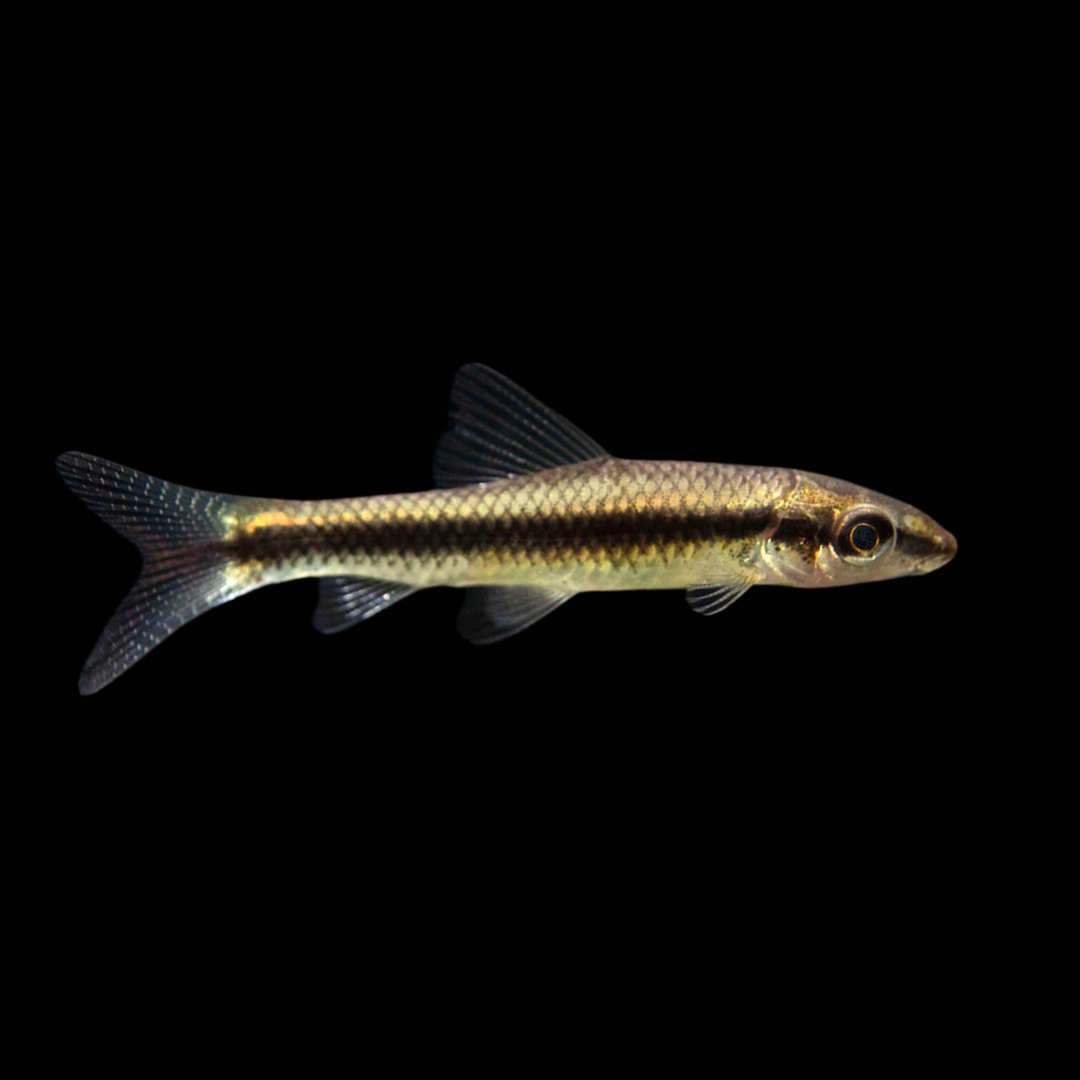
サイアミーズ・フライングフォックスは、水草水槽で黒髭ゴケ対策としてよく知られる東南アジア原産のコイ科魚類です。細長い体に黒いラインが走るすっきりとした姿を持ち、流木や石、水草の表面に付いた藻類やバイオフィルムをついばむように食べます。観賞魚としては派手な色彩を楽しむ魚というより、水景の維持を支える実用性と、よく動く自然なふるまいを楽しむ魚といえるでしょう。 The Siamese flying fox is a cyprinid fish from Southeast Asia, widely known in planted aquariums for its usefulness against black beard algae. It has a slender body with a dark horizontal stripe, and it grazes algae and biofilm from driftwood, stones, plant leaves, and other aquarium surfaces. Rather than being kept for flashy coloration, it is valued for its practical role in maintaining aquascapes and for its lively, natural behavior.
ただし、流通名としての「サイアミーズ・フライングフォックス」には注意が必要です。学術上のCrossocheilus oblongusを指す場合がある一方で、観賞魚市場ではサイアミーズ・アルジーイーター系の近縁種や、外見の似た魚が近い名前で扱われることがあります。そのため本記事では、学名をCrossocheilus oblongusとして整理しつつ、日本のアクアリウム市場でこの名前に期待される「黒髭ゴケ対策の魚」としての実用面も含めて、飼育上のポイントを解説します。 However, the trade name “Siamese flying fox” requires some caution. It may refer to Crossocheilus oblongus in a scientific sense, while closely related Siamese algae eater-type fish and similar-looking species may be sold under similar names in the aquarium trade. This article therefore organizes the profile around Crossocheilus oblongus while also explaining the practical care points expected of fish sold for black beard algae control in Japanese aquariums.
基本情報 / Basic Information
| 学名 / Scientific Name | Crossocheilus oblongus |
|---|---|
| 通称 / Common Name | サイアミーズ・フライングフォックス、サイアミーズ・アルジーイーター、コケ取り魚Siamese flying fox, Siamese algae eater, algae-eating cyprinid |
| 分類 / Family | コイ目 コイ科 クロスオケイルス属Order Cypriniformes, family Cyprinidae, genus Crossocheilus |
| 英名 / English Name | Siamese Flying Fox / Siamese Algae Eater |
| 分布 / Distribution | 東南アジア。タイからインドネシア方面にかけて分布するとされ、澄んだ流れのある河川、渓流、急流近くの底層で見られる魚です。流通個体については、東南アジアで養殖されたブリード個体が多いと考えられます。Southeast Asia, from Thailand to Indonesia. It is associated with clear, flowing rivers, hill streams, and areas near rapids, where it lives around the lower part of the water column. Many aquarium specimens are thought to be commercially bred in Southeast Asia. |
| 最大体長 / Max Size | 最大で約16cm前後。販売時は3〜5cmほどの幼魚が多いですが、成長後は小型魚というより中型のコイ科魚として扱う必要があります。Up to around 16 cm. They are often sold as 3–5 cm juveniles, but adults should be treated as medium-sized cyprinids rather than tiny community fish. |
| 寿命 / Lifespan | 目安として5年前後以上。安定した水質と十分な遊泳空間があれば、より長く飼育できることもあります。As a practical guide, around 5 years or more. With stable water quality and enough swimming space, they may live longer. |
飼育環境 / Aquarium Environment
| 水槽サイズ / Tank Size | 小型個体の導入直後でも60cm規格水槽以上を目安にし、終生飼育や複数匹での飼育を考えるなら90cm規格水槽以上が安心です。よく泳ぐうえ、成長すると体格も出るため、30cm前後の小型水槽での長期飼育には向きません。Even for newly introduced juveniles, a standard 60 cm tank or larger is a practical starting point, while a standard 90 cm tank or larger is safer for long-term care or groups. They are active swimmers and become fairly robust as adults, so long-term care in very small tanks around 30 cm is not recommended. |
|---|---|
| 水温 / Temperature | 24〜26℃前後を中心に管理すると安定します。適応範囲は比較的広い魚ですが、急な温度変化や夏場の高水温には注意が必要です。 Around 24–26°C is a stable target. Although it is fairly adaptable, sudden temperature changes and excessive summer heat should be avoided. |
| 水質 / Water Quality | 弱酸性から中性、弱アルカリ性まで比較的幅広く適応します。目安としてpH6.5〜8.0、硬度5〜20dH程度の範囲で飼育しやすい魚です。急変には弱いため、導入時は水合わせを丁寧に行ってください。It adapts to slightly acidic, neutral, to slightly alkaline water. A practical range is around pH 6.5–8.0 and 5–20 dH. Sudden changes should be avoided, so careful acclimation is important. |
| レイアウト / Layout | 流木、石、水草を組み合わせた水草水槽と相性が良く、表面に付いた藻類や付着物を探しながら泳ぎ回ります。原産地では流れのある環境と関わりが深いため、ろ過を安定させ、酸素が行き渡る水槽にすると状態を保ちやすくなります。休む場所や視線を切る場所として、流木や石組み、大きめの水草を配置すると落ち着きやすくなります。モス類は食害されることがあるため、ウィローモスを主役にした繊細なレイアウトでは導入を慎重に判断しましょう。It suits planted aquariums with driftwood, stones, and aquatic plants, where it grazes surfaces while swimming actively. Because it is associated with flowing habitats in nature, stable filtration and well-oxygenated water help maintain good condition. Driftwood, rockwork, and larger plants provide resting places and visual barriers. Mosses may be damaged, so introduction should be considered carefully in delicate layouts centered on willow moss or similar plants. |
| 注意点 / Precautions | 飛び出し事故が非常に起こりやすい魚です。導入直後、驚いた時、同種間で追い合った時などに勢いよく跳ねることがあります。ガラス蓋やアクリル蓋で隙間をふさぎ、配管まわりの小さな開口部にも注意してください。また、幼魚の印象だけで購入すると、成長後のサイズと行動量に驚くことがあります。Jumping accidents are a major risk. They may leap when newly introduced, startled, or chased by tank mates. Use tight-fitting glass or acrylic lids and pay attention to small gaps around pipes and equipment. Buyers should also remember that the small juvenile appearance does not reflect the adult size and activity level. |
餌と給餌 / Feeding
| 餌の種類 / Diet | 藻類、バイオフィルム、植物質を含む付着物をよく食べます。自然下では底面や石、流木などに付着する微細な生物膜や藻類を利用する魚と考えられます。飼育下では沈下性タブレット、植物質を含む人工飼料、冷凍赤虫なども食べる雑食性です。水草水槽では黒髭ゴケ対策として導入されることが多いですが、すべてのコケを均等に食べるわけではありません。It grazes algae, biofilm, and plant-based surface growths. In nature, it is thought to feed on fine films and algae attached to the substrate, stones, and driftwood. In aquariums it is omnivorous and will also accept sinking tablets, vegetable-based prepared foods, and frozen bloodworms. It is often introduced against black beard algae in planted tanks, but it does not eat every type of algae equally. |
|---|---|
| 給餌のポイント / Feeding Tips | 人工飼料に慣れすぎると、黒髭ゴケを削る行動が弱くなることがあります。コケ取り効果を期待する場合は、他魚への給餌量を過剰にせず、底に餌が残りすぎないように管理することが大切です。ただし、極端な絶食は体調不良につながるため、痩せやすい個体には適量の補助給餌を行います。Once accustomed to rich prepared foods, they may graze black beard algae less actively. If algae control is expected, avoid overfeeding the tank and prevent excessive food from accumulating on the bottom. However, extreme starvation is harmful, so thin individuals should still receive suitable supplemental feeding. |
性格と混泳 / Temperament and Tank Mates
| 性格 / Temperament | 若魚のうちは活発で比較的温和です。成長すると同種間で追い合ったり、体型の似た魚を意識したりすることがあります。個体差も大きく、広い水槽と隠れ家があるほどトラブルは抑えやすくなります。Juveniles are active and generally peaceful. As they mature, they may chase conspecifics or react to similarly shaped fish. Individual variation is significant, and a spacious aquarium with hiding places helps reduce conflict. |
|---|---|
| 混泳の相性 / Compatibility | 小型カラシン、ラスボラ、レインボーフィッシュ、コリドラス、オトシンクルスなど、多くの温和な熱帯魚と混泳できます。ただし、成長した個体は餌場で強く出ることがあり、小型エビの稚エビや脱皮直後のエビは捕食される可能性があります。ミナミヌマエビの繁殖水槽や、モスを育てる水槽では相性を慎重に見てください。It can be kept with many peaceful community fish such as small characins, rasboras, rainbowfish, Corydoras, and Otocinclus. However, adults may dominate feeding areas, and tiny shrimp or freshly molted shrimp may be eaten. Use caution in tanks intended for breeding Neocaridina shrimp or growing mosses. |
病気と対策 / Diseases and Prevention
| かかりやすい病気 / Common Diseases | 丈夫な魚ですが、水質悪化や輸送直後のストレスがあると白点病、尾ぐされ病、口ぐされ病、エロモナス症などを発症することがあります。痩せ、体表の白点、ヒレの裂け、体表の充血、呼吸の荒さが見られる場合は早めに観察と対処を行います。It is generally hardy, but poor water quality or post-shipping stress can lead to ich, fin rot, mouth rot, Aeromonas-related infections, and similar problems. Watch for weight loss, white spots, fin damage, redness, or rapid breathing. |
|---|---|
| 対策と予防 / Prevention | 予防の基本は、過密を避けること、底に餌を残しすぎないこと、フィルターを安定させること、定期的な換水を行うことです。導入直後は水合わせを丁寧に行い、可能であればトリートメント期間を設けると安心です。水温やpHを急に変える薬浴は負担になるため、症状に合わせて慎重に行ってください。Prevention depends on avoiding overcrowding, preventing excess food from accumulating, maintaining stable filtration, and performing regular water changes. Careful acclimation and a quarantine or conditioning period are recommended when possible. Medication that causes sudden changes in temperature or pH should be used carefully according to the symptoms. |
増やし方(繁殖) / Breeding
| 雌雄の判別 / Sexing | 外見だけでの雌雄判別は難しい魚です。成熟したメスのほうがやや腹部に丸みを帯びることがありますが、販売サイズでは明確な判断はほとんどできません。Sexing is difficult by appearance alone. Mature females may appear slightly fuller-bodied, but reliable identification is usually not possible at common retail sizes. |
|---|---|
| 繁殖形態 / Reproduction | 卵生です。自然下では季節的な増水や水質変化、広い河川環境などが繁殖行動に関わると考えられます。It is an egg-laying fish. In nature, seasonal flooding, water-quality changes, and broad riverine habitats are thought to be involved in its reproductive cycle. |
| 繁殖のポイント / Breeding Tips | 一般家庭の水槽で自然繁殖させるのは非常に難しく、観賞魚としての流通個体は東南アジアの養殖施設で計画的に生産されたものが多いと考えられます。家庭飼育では繁殖を狙う魚というより、長期飼育を前提に健康管理と空間確保を重視する魚です。Natural breeding in home aquariums is extremely difficult. Many aquarium specimens are thought to come from planned commercial production in Southeast Asian fish farms. In home aquaria, it is better regarded as a fish for long-term care rather than a practical breeding project. |
雑学と豆知識 / Trivia and Fun Facts
| 1. 黒髭ゴケ対策で知られる理由 / 1. Why it is known for black beard algae control | サイアミーズ・フライングフォックスが水草水槽で重宝される最大の理由は、黒髭ゴケを食べる魚として知られていることです。黒髭ゴケは水草の葉、流木、石、フィルターの吐出口まわりなどに固く付着し、手で取り除くのも難しい厄介な藻類です。本種は下向きの口で表面をなぞるように削り取るため、発生初期の黒髭ゴケ対策として導入されることがあります。ただし、繁茂しきったコケを完全に消し去る万能薬ではありません。照明時間、栄養塩、ろ過、換水、CO2添加のバランスを見直しながら、補助的な生物対策として活用するのが現実的です。The main reason Siamese flying foxes are valued in planted aquariums is their reputation for eating black beard algae. This algae attaches firmly to plant leaves, driftwood, stones, and filter outlets, making it difficult to remove by hand. The fish grazes surfaces with its downward-facing mouth, so it can be useful against early growth. However, it is not a universal cure for a tank already overwhelmed by algae. It works best as part of a broader approach that includes lighting control, nutrient management, filtration, water changes, and CO2 balance. |
|---|---|
| 2. 名前と分類が少しややこしい魚 / 2. A fish with a confusing name and classification | この魚の面白い点は、アクアリウムでの「役割名」と学術的な「種名」が必ずしもぴったり重ならないことです。サイアミーズ・フライングフォックス、サイアミーズ・アルジーイーター、フライングフォックスといった名前は、外見の似た複数の魚に使われてきました。Crossocheilus oblongusでは、体側の太い黒線が尾びれ中央の条まで伸びることが識別点の一つとされますが、近縁種や別属の似た魚も流通名では混同されやすいのが実情です。飼育者にとって重要なのは、ラベル名だけでなく、体側の黒線の伸び方、ヒレに色や模様が入るか、成長後の性格が荒くなりやすい別種ではないかを確認することです。One interesting aspect of this fish is that its aquarium “role name” does not always match a single scientific species. Names such as Siamese flying fox, Siamese algae eater, and flying fox have been applied to several similar-looking fish. In Crossocheilus oblongus, one identification feature is a broad dark lateral stripe extending onto the middle rays of the caudal fin, but related species and similar fish are easily confused in the trade. For aquarists, it is important not to rely only on the label, but also to check how far the stripe extends, whether the fins have color or markings, and whether the fish might be a more aggressive look-alike species. |
| 3. 成長すると「仕事ぶり」が変わることがある / 3. Its “work ethic” may change as it grows | 幼魚のころは熱心に水槽内をついばみ、黒髭ゴケ対策の主役として期待されます。しかし成長して人工飼料や冷凍餌の味を覚えると、硬いコケを削るよりも、落ちてきた餌を食べるほうを選びやすくなります。アクアリストの間で「コケ取りを引退する」と表現されるのはこの変化です。これは怠けているというより、魚にとって高栄養で食べやすいものを選ぶ自然な行動です。そのため、導入後もコケの原因を放置せず、給餌量を調整しながら水槽全体のバランスを整えることが大切です。As juveniles, these fish often graze actively and are expected to be key algae-control helpers. As they grow and learn to eat prepared or frozen foods, they may prefer easy, nutritious foods over scraping tough algae. Aquarists sometimes describe this as the fish “retiring” from algae duty. This is not laziness, but a natural preference for foods that are easier and richer in energy. Therefore, it is important to manage the causes of algae and adjust feeding rather than relying entirely on the fish. |
| 4. モス水槽では味方にも敵にもなる / 4. In moss tanks, it can be both helper and troublemaker | 本種は水草水槽の味方として紹介されることが多い一方で、モス類との相性には注意が必要です。ウィローモスや南米ウィローモスのような柔らかい組織は、藻類ごとついばまれたり、引きちぎられたりすることがあります。アヌビアスやミクロソリウムのような硬い葉の水草では、葉を傷めずに表面のコケだけを食べてくれることが多いですが、繊細なモスを主役にしたレイアウトでは導入前に目的を整理しましょう。黒髭ゴケを減らしたいのか、モスを美しく育てたいのかによって、最適な選択は変わります。Although it is often introduced as a planted-tank helper, caution is needed with mosses. Soft tissues such as willow moss or similar aquatic mosses may be grazed or torn along with algae. With tougher plants such as Anubias or Microsorum, the fish often removes surface algae without damaging the leaves. In aquascapes centered on delicate moss growth, the goal should be clarified before introduction. The best choice depends on whether the priority is reducing black beard algae or preserving fine moss textures. |
| 5. 「お掃除役」ではなく、長く飼う魚として考える / 5. Think of it as a long-term fish, not just a cleaner | サイアミーズ・フライングフォックスは、店頭では小さく安価に見えることが多いため、つい「コケ取り用に数匹入れる魚」として扱われがちです。しかし実際には、よく泳ぎ、成長し、時には性格も変化する生命力のあるコイ科魚類です。十分な水槽サイズ、飛び出し防止、成長後の混泳バランスまで考えて導入すれば、水景を裏から支える頼れる存在になります。便利なメンテナンス要員としてだけではなく、東南アジアの流れのある水域に暮らす一種の魚として、その生態に合わせた飼育を意識したいところです。Because it is often sold small and inexpensively, the Siamese flying fox is sometimes treated simply as a group of algae-control fish. In reality, it is an active, growing cyprinid with strong vitality and changing behavior. With enough tank space, secure lids, and consideration for adult compatibility, it can become a reliable supporter of the aquascape. Rather than viewing it only as a maintenance tool, it should be kept with respect for its nature as a fish from flowing Southeast Asian waters. |
まとめ / Conclusion
サイアミーズ・フライングフォックスは、黒髭ゴケ対策として水草水槽で高く評価される、実用性と観察の楽しさを兼ね備えた魚です。よく泳ぎ、表面をついばむ姿も愛らしく、レイアウト水槽に自然な動きを加えてくれます。一方で、流通名と学名がやや混乱しやすく、外見の似た魚が混ざることもあるため、購入時は信頼できる販売元で特徴を確認することが大切です。 The Siamese flying fox is highly valued in planted aquariums for black beard algae control, combining practical usefulness with enjoyable behavior. It is an active, charming grazer that adds natural movement to aquascapes. However, trade names and scientific names can be confusing, and similar-looking species may be mixed in, so it is important to buy from a reliable source and check the fish’s features.
飼育では、60cm規格水槽以上を目安に、終生飼育なら90cm規格水槽以上を意識すると安心です。成長後は体格が出て、人工飼料に慣れるとコケ取り能力が落ちたり、同種間で追い合ったり、モスや小型エビに影響を与えたりすることがあります。十分な遊泳スペース、隠れ家、飛び出し防止を整えたうえで、単なる「お掃除役」ではなく、一匹の魚として長く付き合うことが大切です。 For care, a standard 60 cm tank or larger is a practical starting point, while a 90 cm tank or larger is safer for long-term maintenance. As it grows, it may become bulkier, graze less after learning prepared foods, chase conspecifics, or affect mosses and small shrimp. Provide swimming space, hiding places, and secure lids, and treat it not merely as a cleaner but as a fish to be cared for over the long term.

気になる道具や飼い方を見つけてみませんか?
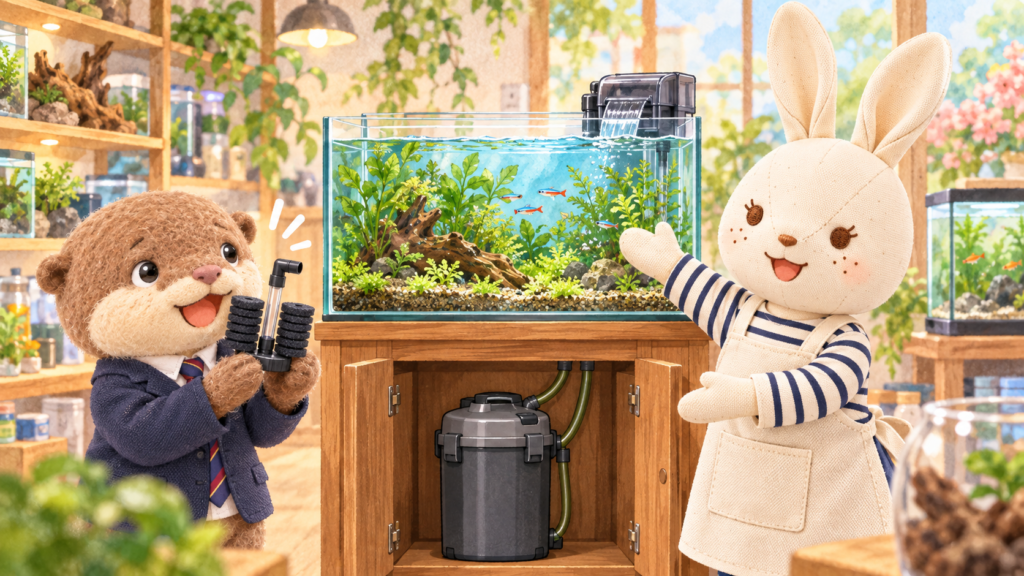 アイのアクアグッズ案内水槽フィルターの選び方|外掛け・外部・上部から小型オーバーフローまで道具の特徴や使い方、選ぶときのポイントをアイが紹介します。記事はコチラ →
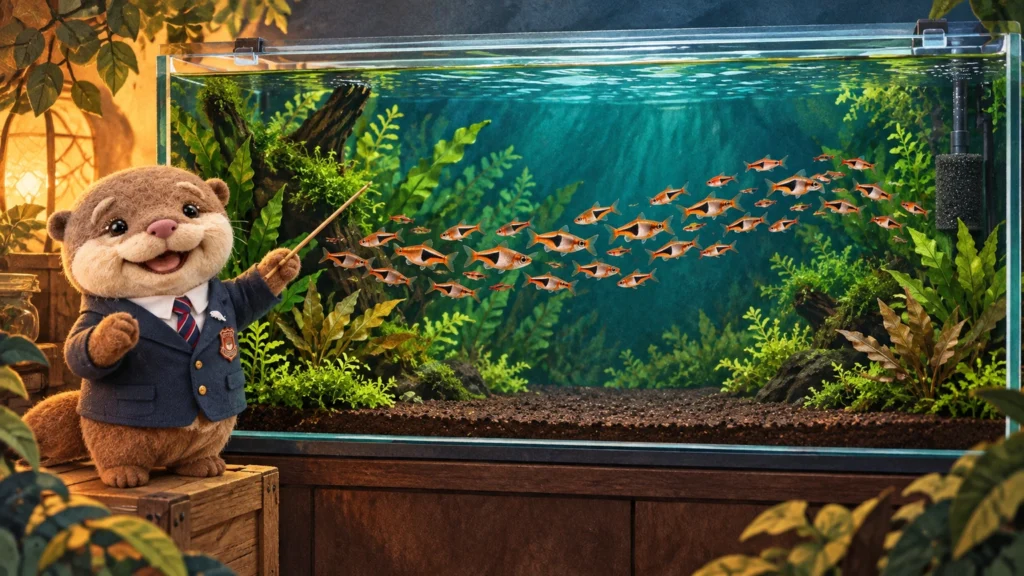 アイのアクアグッズ案内ラスボラ・ボララスの群泳を楽しむ飼育用品|水槽・ろ過・ヒーター・餌・水草道具の特徴や使い方、選ぶときのポイントをアイが紹介します。記事はコチラ →
さまざまな飼育テーマをご紹介。リンク先の記事には広告・商品紹介が含まれます。
案内・紹介記事一覧へ →参考文献
本記事は、サイアミーズ・フライングフォックスの分類、分布、最大体長、水質条件、流通名の混同、黒髭ゴケ対策としての利用に関する情報を、以下の資料をもとに整理しています。
-
Froese, R. and D. Pauly. Editors. FishBase. Crossocheilus oblongus, Siamese flying fox. FishBase.
https://www.fishbase.se/summary/Crossocheilus-oblongus
分布、最大体長、pH、硬度、水温、淡水性・底中層性などの基本情報を確認するために参照。 -
Froese, R. and D. Pauly. Editors. FishBase. Field guide summary: Crossocheilus oblongus. FishBase.
https://www.fishbase.se/Fieldguide/FieldGuideSummary.php?genusname=Crossocheilus&speciesname=oblongus
体側の黒いラインが尾びれ中央の条まで伸びる点など、形態的特徴の確認に使用。 -
Fricke, R., Eschmeyer, W. N. and Van der Laan, R. Editors. Eschmeyer’s Catalog of Fishes. Crossocheilus oblongus. California Academy of Sciences.
https://researcharchive.calacademy.org/research/ichthyology/catalog/fishcatget.asp?spid=3062
学名、分類上の有効名、シノニム、原記載情報を確認するために参照。 -
GBIF Secretariat. Crossocheilus oblongus Kuhl & Van Hasselt, 1823. GBIF Backbone Taxonomy.
https://www.gbif.org/species/2361970
分類階級、シノニム、分布記録の補助確認に使用。 -
Seriously Fish. Crossocheilus langei — Siamese Algae Eater.
https://www.seriouslyfish.com/species/crossocheilus-langei/
サイアミーズ・アルジーイーターとして流通する近縁種、流れのある環境、似た魚との混同についての補助資料として参照。 -
Seriously Fish. Crossocheilus nigriloba.
https://www.seriouslyfish.com/species/crossocheilus-nigriloba/
「Siamese algae-eater」という流通名が、近縁の複数種に使われることがある点の補助確認に使用。 -
The Spruce Pets. How to Remove Beard Algae From Your Aquarium.
https://www.thesprucepets.com/beard-algae-1378627
黒髭ゴケが紅藻類系の厄介な藻類として扱われること、サイアミーズ・アルジーイーターが対策魚として挙げられること、環境管理と併用すべき点の補助資料として参照。 -
FishiPedia. Siamese algae-eater, Crossocheilus oblongus.
https://www.fishi-pedia.com/fishes/crossocheilus-oblongus
水温、pH、流れのある環境、飼育水量、行動傾向など、飼育面の一般的な補助確認に使用。
注記:観賞魚市場では「サイアミーズ・フライングフォックス」「サイアミーズ・アルジーイーター」などの名称が近縁種や類似種にまたがって使われることがあります。そのため、本記事ではCrossocheilus oblongusの基礎情報を中心にしつつ、流通名としての混同にも注意が必要です。




コメント