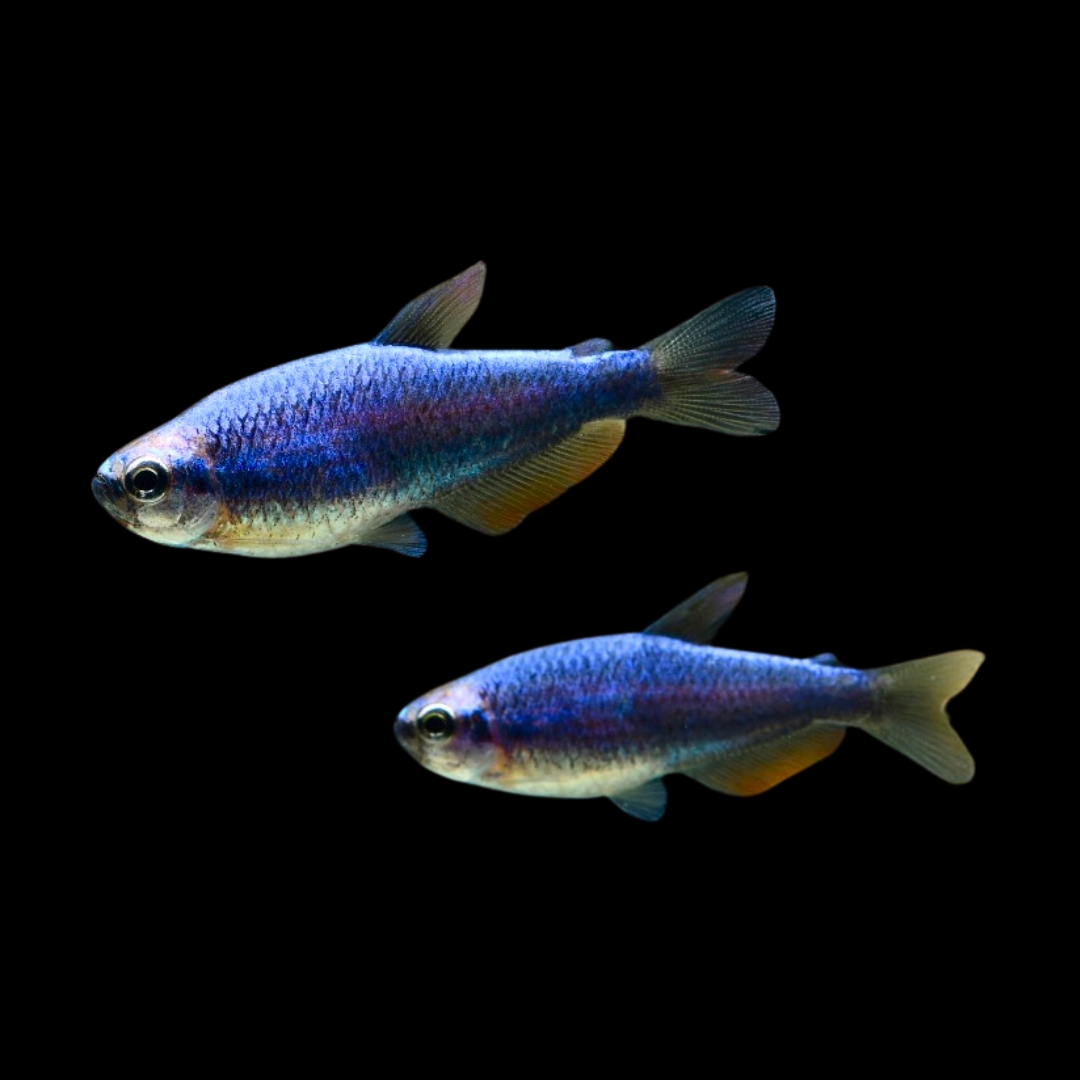
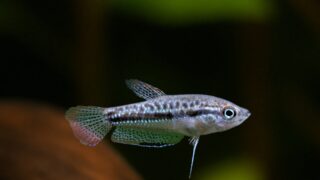
インパイクティスケリー・スーパーブルーは、ブラジルのアリプアナ川水系に由来する小型カラシン、インパイクティス・ケリーをもとに、青い発色をより強く見せる方向で選別された観賞魚流通上の改良品種です。オスのメタリックブルーは水草水槽の緑や暗色の底床によく映え、国内で流通するスーパーブルー系統では、メスが黒みの強いメタリックな体色を見せる個体群として紹介されることがあります。ただし、スーパーブルーは正式な分類学上の学名ではなく、流通名・品種名として扱うのが正確です。Inpaichthys kerri “Super Blue” is an aquarium strain selected from Inpaichthys kerri, a small South American tetra originating from the Aripuanã River system in Brazil, for stronger blue coloration. Males show a striking metallic blue that contrasts beautifully with aquatic plants and dark substrates. In Japan, some Super Blue lines are described as having females with a dark metallic, almost black appearance. However, “Super Blue” is not a formal scientific name; it is best treated as a trade or strain name.
基本情報 / Basic Information
学名 / Scientific Name
Inpaichthys kerri Géry & Junk, 1977 “Super Blue”
通称 / Common Name
インパイクティスケリー・スーパーブルー、スーパーブルー・インパイクティスケリー、ロイヤル・テトラ、ブルーエンペラー・テトラSuper Blue Royal Tetra, Royal Tetra, Blue Emperor Tetra, Purple Emperor Tetra
分類 / Family
カラシン目、Acestrorhamphidae(近年の分類で用いられる科名。流通・旧分類では広義のカラシン科として扱われることがあります)、Thayeriinae。インパイクティス属はかつて単型属とされましたが、近年は複数種を含む属として扱われます。Order Characiformes, family Acestrorhamphidae in recent classifications, often treated in the broad traditional Characidae in aquarium literature, subfamily Thayeriinae. The genus Inpaichthys was once regarded as monotypic, but recent taxonomy treats it as containing multiple species.
英名 / English Name
Super Blue Royal Tetra / Blue Emperor Tetra / Purple Emperor Tetra
分布 / Distribution
スーパーブルーは改良品種のため自然分布はありません。原種のインパイクティス・ケリーは南米ブラジル、マトグロッソ州のアリプアナ川およびマデイラ川上流域の支流に分布します。The Super Blue strain has no natural distribution. The wild form, Inpaichthys kerri, is native to South America: the Aripuanã River and tributaries of the upper Madeira River basin in Mato Grosso, Brazil.
最大体長 / Max Size
標準体長では約2.8cm、飼育下での全長はおおむね3〜4cm前後が目安です。About 2.8 cm standard length; in aquariums, total length is usually around 3–4 cm.
寿命 / Lifespan
飼育下ではおおむね3〜5年が目安です。水温を高めに保ち続けるより、安定したやや涼しめの環境で長期維持しやすい傾向があります。A typical aquarium lifespan is about 3–5 years. Stable, moderately cool conditions often support better long-term maintenance than consistently high temperatures.
飼育環境 / Aquarium Environment
水槽サイズ / Tank Size
5匹以上、できれば10匹前後の群れで飼育する魚です。単独種または小型混泳なら60cm規格水槽(約57〜60L)以上を基本とし、混泳数を増やす場合は75cm水槽や90cm規格水槽も検討すると余裕が出ます。Keep in a group of at least five, preferably around ten. A standard 60 cm aquarium of about 57–60 L is a good starting point for a species tank or small community setup; larger 75 cm or 90 cm tanks provide more room for larger communities.
水温 / Temperature
23〜27℃が扱いやすい範囲です。一般的な維持は24〜27℃で問題ありませんが、発色を重視する場合は23〜24℃前後のやや低めの管理が好まれることがあります。日本の夏は水温上昇に注意し、冷却ファンや小型クーラーを活用します。23–27°C is a practical range. General maintenance is usually fine at 24–27°C, while slightly cooler conditions around 23–24°C are often preferred when emphasizing color. In Japanese summers, prevent overheating with a cooling fan or small aquarium chiller.
水質 / Water Quality
弱酸性〜中性寄りの軟水から中硬水が向きます。目安はpH5.5〜7.2、GH5〜12程度です。急激なpH変動、硝酸塩の蓄積、極端な高硬度は避け、定期的な換水で安定を重視します。Soft to moderately hard, slightly acidic to near-neutral water is suitable. Aim for about pH 5.5–7.2 and GH 5–12. Avoid sudden pH swings, nitrate buildup, and very hard water; stable maintenance through regular water changes is more important than chasing exact numbers.
レイアウト / Layout
暗色系の底床、流木、マジックリーフやヤシャブシの実などのボタニカル素材、水草の茂み、浮き草による適度な遮光がよく合います。左右や後景には隠れ場所を作り、中央には群れで泳ぐためのオープンスペースを残すと、警戒心を抑えながら美しい発色を観察しやすくなります。Dark substrate, driftwood, botanicals such as catappa leaves or alder cones, dense plants, and partial shade from floating plants suit this fish well. Provide cover along the sides and back while leaving an open swimming area in the center to encourage natural schooling and display behavior.
注意点 / Precautions
少数飼育や殺風景な水槽では隠れがちになり、色も上がりにくくなります。高水温が続く季節、導入直後の水質変化、過密飼育には注意してください。また、スーパーブルーは流通名のため、購入時はオス・メスの表現や系統の由来を販売店で確認すると安心です。When kept in very small numbers or in bare tanks, they may hide and show weaker coloration. Watch for prolonged high temperatures, sudden water chemistry changes after introduction, and overcrowding. Because “Super Blue” is a trade name, confirm the strain and male-female expression with the seller when possible.
餌と給餌 / Feeding
餌の種類 / Diet
小粒の顆粒飼料、細かく砕いたフレークフードを主食にできます。補助的に冷凍アカムシ、冷凍ブラインシュリンプ、孵化直後のブラインシュリンプ、ミジンコ、イトミミズ類などを少量ずつ与えると、体づくりや繁殖コンディションを整えやすくなります。Fine micro-pellets and crushed flake foods can be used as staples. Small portions of frozen bloodworm, frozen brine shrimp, newly hatched brine shrimp, daphnia, and small worms can be added to improve condition and breeding readiness.
給餌のポイント / Feeding Tips
口が小さいため、粒は小さめで柔らかいものを選びます。1日1〜2回、数分で食べ切れる量を与え、食べ残しを残さないことが大切です。繁殖を狙う場合は、親魚に冷凍アカムシやブラインシュリンプなどを組み合わせ、腹部がふっくらするまでじっくり仕上げます。Choose small, soft foods because the mouth is small. Feed once or twice daily, only as much as they can finish within a few minutes, and avoid leftovers. For breeding, condition adults with a varied diet including frozen bloodworm and brine shrimp until females become noticeably rounded.
性格と混泳 / Temperament and Tank Mates
性格 / Temperament
基本的には温和ですが、ネオンテトラのような非常におとなしい小型種と比べると活発で、オス同士が軽く追い合ったり、ヒレを広げて誇示したりします。群れで飼うほど警戒心が薄れ、オス同士の力関係も分散しやすくなります。Generally peaceful, but more active and assertive than very mild small tetras such as neon tetras. Males may chase and display to one another by spreading their fins. A proper group makes them more confident and helps distribute social tension.
混泳の相性 / Compatibility
カージナルテトラ、ブラックネオンテトラ、ラミーノーズテトラ、ラスボラ類、コリドラス、オトシンクルス、小型プレコ、穏やかなドワーフシクリッドなど、同程度のサイズで極端に遅くない魚と相性が良いです。ベタやロングフィン系グッピーなど、ヒレが長く動きの遅い魚はヒレかじりのリスクがあります。成体のヤマトヌマエビやチェリーシュリンプとは条件次第で混泳できますが、稚エビは捕食される可能性があります。Good tank mates include similarly sized and reasonably active fishes such as cardinal tetras, black neon tetras, rummy-nose tetras, rasboras, Corydoras, Otocinclus, small plecos, and peaceful dwarf cichlids. Long-finned, slow-moving fish such as bettas or fancy guppies are at risk of fin-nipping. Adult Amano shrimp and cherry shrimp may coexist, but baby shrimp can be eaten.
病気と対策 / Diseases and Prevention
かかりやすい病気 / Common Diseases
本種だけに特有の病気は知られていませんが、導入直後や水質悪化時には白点病、尾ぐされ病、細菌性の体表トラブル、ストレス性の色落ちが見られることがあります。高水温や水質の急変が重なると体調を崩しやすくなります。No disease is specific to this strain, but newly introduced or stressed fish may develop ich, fin rot, bacterial skin problems, or stress-related fading. Prolonged high temperatures and sudden changes in water quality increase risk.
対策と予防 / Prevention
新規導入魚は可能であれば隔離観察し、温度合わせと水合わせを丁寧に行います。硝酸塩をためない換水、過密を避けた群れ飼育、隠れ家の確保、安定した弱酸性〜中性の水質維持が基本です。異常が出た場合は早めに隔離し、症状に合った薬浴を検討します。Quarantine new fish when possible, and acclimate them carefully to temperature and water chemistry. Prevent nitrate buildup, avoid overcrowding, keep them in an appropriate group, provide cover, and maintain stable slightly acidic to neutral water. If symptoms appear, isolate affected fish early and consider medication suited to the diagnosis.
増やし方(繁殖) / Breeding
雌雄の判別 / Sexing
雌雄判別は比較的容易です。原種・改良品種ともに、オスの脂鰭は青く、メスの脂鰭は赤橙色〜オレンジ色になるのが大きな目印です。スーパーブルー系統ではオスが強い青色、メスが黒みを帯びたメタリックな体色を示す個体群も流通しますが、表現には系統差があるため、脂鰭の色も併せて確認します。Sexing is relatively easy. In both wild and selected forms, males usually have a blue adipose fin, while females have a reddish-orange to orange adipose fin. Some Super Blue lines show intensely blue males and dark metallic females, but expression can vary by line, so the adipose fin color is the most useful check.
繁殖形態 / Reproduction
水草や産卵モップ、底床付近に卵をばらまくタイプの産卵魚です。親魚は卵や稚魚を保護せず、卵を食べてしまうことがあるため、計画繁殖では産卵後に親を取り出します。This is an egg-scattering tetra that deposits eggs among plants, spawning mops, or near the bottom. Adults do not guard eggs or fry and may eat the eggs, so remove the parents after spawning in planned breeding setups.
繁殖のポイント / Breeding Tips
繁殖用水槽は弱酸性の軟水、薄暗い照明、スポンジフィルター、ウィローモスや産卵モップを組み合わせると管理しやすくなります。pH5.5〜6.8前後を目安に、よく仕上げたペアまたは小グループを導入します。卵は水温によりおおむね24〜36時間で孵化し、さらに数日で遊泳を始めます。初期飼料はインフゾリアや微細なパウダーフードから始め、成長に合わせて孵化直後のブラインシュリンプやマイクロワームへ移行します。A breeding tank with soft acidic water, subdued light, a sponge filter, and Java moss or spawning mops is recommended. Aim around pH 5.5–6.8 and introduce a well-conditioned pair or small group. Eggs usually hatch in about 24–36 hours depending on temperature, and fry become free-swimming a few days later. Start with infusoria or very fine powdered fry food, then move to newly hatched brine shrimp and microworms as they grow.
雑学と豆知識 / Trivia and Fun Facts
1. 学名に刻まれたINPAとケール博士 / 1. INPA and Dr. Kerr in the Scientific Name
属名のインパイクティスは、ブラジルの国立アマゾン研究所を示すINPAに由来すると紹介されることが多く、直訳すれば「INPAの魚」という意味合いを持ちます。種小名のkerriは、当時の研究所関係者であり、農業技術者・遺伝学者・昆虫学者として知られるWarwick Estevam Kerr博士への献名です。小さなテトラの名前の中に、アマゾン研究の拠点と人物史がそっと残されているのは、とても味わい深い点です。The genus name Inpaichthys is commonly explained as referring to INPA, the Instituto Nacional de Pesquisas da Amazônia, giving the sense of “the fish of INPA.” The species name kerri honors Dr. Warwick Estevam Kerr, known as an agricultural engineer, geneticist, and entomologist. In the name of this small tetra, both an Amazonian research institute and a piece of scientific history are quietly preserved.
2. かつての単型属から、現在は変わりつつある分類へ / 2. From a Former Monotypic Genus to a Changing Taxonomy
以前の飼育書や図鑑では、インパイクティス属はインパイクティス・ケリーだけを含む単型属として説明されることがありました。しかし近年の研究では、新種の記載や近縁種の移動により、インパイクティス属は複数種を含む属として再整理されています。さらに、カラシン類全体の分類も分子系統解析によって見直されており、古い「カラシン科」という便利な呼び方の背後で、研究の地図は今も塗り替えられています。Older aquarium books and profiles often described Inpaichthys as a monotypic genus containing only I. kerri. Recent research, however, has added newly described species and transferred close relatives into the genus, so it is now treated as containing multiple species. The broader classification of tetras is also being revised by molecular phylogenetics, meaning the familiar aquarium term “characin” hides a scientific map that is still being redrawn.
3. 水草に卵が付いていたという発見逸話 / 3. The Story of Eggs Arriving on Aquatic Plants
観賞魚の世界では、INPAの水草ストック水槽に魚を入れていなかったにもかかわらず稚魚が現れ、そこから未知の青いテトラの発見につながった、という美しい逸話が語られています。水草に卵が付着して持ち込まれたのではないか、という物語です。ただし、この話は資料によっては「本当かは分からないが語る価値のある話」として紹介されているため、確定した学術事実としてではなく、インパイクティス・ケリーをめぐる魅力的な伝承として楽しむのがよいでしょう。A popular aquarium story says that fry appeared in an INPA aquarium that had been used only for aquatic plants, leading to the discovery of an unknown blue tetra. The idea is that eggs may have been brought in attached to plants. Some sources present this story with caution, so it is best enjoyed as a charming tradition surrounding Inpaichthys kerri rather than as a fully confirmed scientific fact.
4. ロイヤル・テトラという名前の日本での響き / 4. Why “Royal Tetra” Has a Special Ring in Japan
日本では、1978年の日本人ブラジル移住70周年に合わせた皇太子御夫妻のブラジル訪問と関連づけて、本種が紹介されることがあります。この訪問自体は外交史上の出来事として確認でき、観賞魚界では、ブラジルから贈られた本種が国内繁殖を経て流通に広がったというストーリーが語られてきました。ただし、訪問の記録と、魚が贈られて国内に広まったという由来話は、確かめられている範囲が異なります。由来話は、観賞魚文化の中で語り継がれてきた逸話として楽しむとよいでしょう。In Japan, this species is sometimes linked to the 1978 visit of the Crown Prince and Crown Princess to Brazil for the 70th anniversary of Japanese immigration to Brazil. The visit itself is confirmed in diplomatic history, while aquarium culture has passed down the story that this fish was presented from Brazil and later became established through domestic breeding. However, the documented visit and the story of the fish being presented and spreading in Japan have different levels of confirmation. The latter is best enjoyed as an anecdote passed down in aquarium culture.
5. スーパーブルーは学名ではなく、系統の表現を示す流通名 / 5. “Super Blue” Is a Trade Name, Not a Scientific Name
スーパーブルーという名は、分類学上の亜種名や変種名ではありません。オスの青い面積や光沢を強く見せる方向で選別された系統を示す、アクアリウム流通上の名前です。そのため、産地やブリーダー、累代の仕方によって、青の濃さ、メスの黒み、若魚の発色時期に差が出ることがあります。名前だけで判断せず、実物の発色、脂鰭の色、入荷経路を確認することが、よい個体選びにつながります。“Super Blue” is not a subspecies or formal variety name in taxonomy. It is an aquarium trade name for lines selected to emphasize larger areas of blue and stronger metallic sheen, especially in males. Depending on breeder, origin, and line history, the intensity of blue, the darkness of females, and the age at which color appears can vary. Rather than relying on the name alone, check the actual color, adipose fin color, and source of the fish.
6. エンペラー・テトラとの見分け方 / 6. How to Tell It from the Emperor Tetra
インパイクティス・ケリーは、背の青い輝きからエンペラー・テトラ類と混同されることがあります。見分けるときに便利なのが脂鰭です。インパイクティス・ケリーには脂鰭があり、しかもオスでは青く、メスでは赤橙色〜オレンジ色を帯びます。一方、エンペラー・テトラとしてよく知られるネマトブリコン属の種では脂鰭を持たないものが多く、さらに成熟したオスでは尾鰭の形や伸び方も異なります。小さな鰭ひとつが、魚の正体を教えてくれるのです。Inpaichthys kerri is sometimes confused with emperor tetras because of its bluish dorsal sheen. The adipose fin is a useful clue. I. kerri has an adipose fin, blue in males and reddish-orange to orange in females. By contrast, well-known Nematobrycon emperor tetras generally lack an adipose fin, and mature males also differ in tail shape. One tiny fin can reveal the fish’s identity.
まとめ / Conclusion
インパイクティスケリー・スーパーブルーは、原種インパイクティス・ケリーの上品な青い輝きを、観賞価値の高い方向へさらに押し出した魅力的な小型カラシンです。正式な分類名ではなく流通名である点、現在の分類ではインパイクティス属が単型属ではなくなっている点を踏まえると、「品種としての特徴」と「原種の生態や分類」を分けて知ると、この魚への理解が深まります。Inpaichthys kerri “Super Blue” is an attractive small tetra that emphasizes the refined blue sheen of the wild species in a highly ornamental direction. Because “Super Blue” is a trade name rather than a formal taxonomic name, and because the genus Inpaichthys is no longer treated as strictly monotypic in recent taxonomy, it is important to separate the strain’s aquarium appeal from the scientific information about the wild species.
飼育では、60cm規格水槽以上、5〜10匹以上の群れ、弱酸性〜中性寄りの安定した水質、暗色の底床と水草・流木を使った落ち着いた環境が成功の近道です。やや低めの水温で丁寧に仕上げると、オスのメタリックブルーやメスのシックな体色が水景の中でいっそう美しく映えます。For successful care, use at least a standard 60 cm aquarium, keep a group of five to ten or more, maintain stable slightly acidic to near-neutral water, and provide a calm layout with dark substrate, plants, and driftwood. When conditioned carefully at moderately cool temperatures, the males’ metallic blue and the females’ elegant darker coloration can become especially striking in a planted aquascape.

 アイのアクアグッズ案内水槽ライトの選び方|魚の見え方・水草・海水で選ぶおすすめ照明道具の特徴や使い方、選ぶときのポイントをアイが紹介します。記事はコチラ →
 アイのアクアグッズ案内エンゼルフィッシュの飼育用品|高さのある水槽・ろ過・水草・餌の選び方道具の特徴や使い方、選ぶときのポイントをアイが紹介します。記事はコチラ →
コメント