

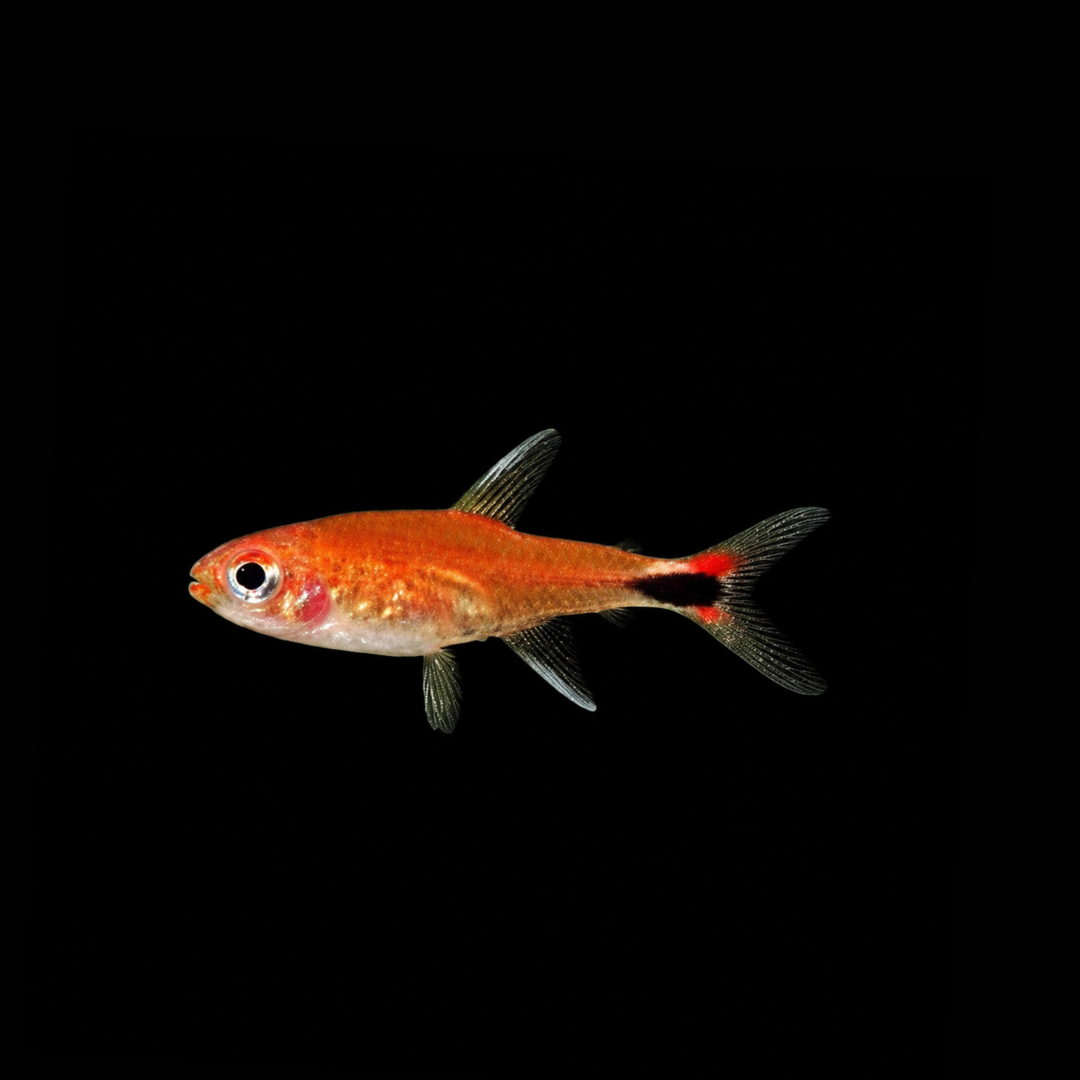
解説 / Description
ディープレッドホタルテトラは、南米コロンビアのメタ川上流域を中心に知られるごく小型のカラシンです。英名ではRuby Tetraと呼ばれ、落ち着いた環境では体側がルビーからワインレッドのように染まり、尾柄部の黒いスポットが小さな体を引き締めます。水草の緑と赤い体色の対比が美しく、静かな小型水草水槽で魅力を発揮する魚です。 The Deep Red Hotaru Tetra, more widely known in English as the Ruby Tetra, is a very small characiform fish best known from the upper Río Meta basin in Colombia, South America. In settled conditions, its body can take on ruby to wine-red tones, while the dark caudal spot gives the tiny fish a clear visual accent. Its red body contrasts beautifully with green aquatic plants, making it especially attractive in calm planted aquariums.
派手に泳ぎ回るタイプではなく、水草や流木の陰で小刻みにホバリングしながら過ごす姿に本種らしさがあります。飼育では、きれいな軟水、弱酸性寄りの水質、穏やかな水流、暗めの照明、そして群れで安心できる環境を用意することが大切です。小さな魚ですが、水質の安定と落ち着ける空間を整えるほど、深い赤と繊細な行動を見せてくれます。 This is not a fast, showy swimmer; its character appears in the way it hovers delicately among plants and driftwood. In the aquarium, clean soft water, slightly acidic conditions, gentle flow, subdued lighting, and the security of a group are important. Although very small, it rewards stable water and a calm layout with deeper color and subtle, graceful behavior.
基本情報 / Basic Information
| 学名 / Scientific Name | Axelrodia riesei Géry, 1966 |
|---|---|
| 通称 / Common Name | ディープレッドホタルテトラ、ルビーテトラRuby Tetra, Deep Red Hotaru Tetra |
| 分類 / Family | カラシン目、Acestrorhamphidae科、Megalamphodinae亜科。従来は広義のカラシン科として紹介されることも多かった魚です。Order Characiformes, family Acestrorhamphidae, subfamily Megalamphodinae. It has often been introduced in the aquarium hobby under a broad, traditional concept of Characidae. |
| 英名 / English Name | Ruby Tetra |
| 分布 / Distribution | 南米コロンビア、オリノコ川水系のメタ川上流域を中心に記録されています。流れの弱い小川や淀み、落ち葉や水草の多い環境に関連する小型種です。Known primarily from the upper Río Meta basin of the Orinoco drainage in Colombia, South America. It is associated with quiet tributaries, slow backwaters, leaf litter, and dense cover. |
| 最大体長 / Max Size | 標準体長で約2cm前後、飼育下では全長で約3cmほどまで見られることがあります。Around 2 cm standard length, with aquarium individuals sometimes reported at about 3 cm total length. |
| 寿命 / Lifespan | 一般的には2〜3年ほどが目安です。水質が安定した弱酸性の軟水で丁寧に管理すると、それ以上長く維持できることもあります。Usually around 2–3 years. With stable, clean, slightly acidic soft water, individuals may sometimes be maintained for longer. |
飼育環境 / Aquarium Environment
| 水槽サイズ / Tank Size | 小型種ですが、10匹以上の群れで落ち着かせる魚です。少数なら30cmキューブ水槽(約27L)でも管理できますが、長期飼育や群れの安定を重視するなら45cm規格水槽(約35L)以上、余裕を持つなら60cm規格水槽(約57L)がおすすめです。Although tiny, it is best kept in a secure group of 10 or more. A small group can be managed in a 30 cm cube aquarium of about 27 L, but a standard 45 cm tank of about 35 L or larger is better for long-term stability, and a standard 60 cm tank of about 57 L provides more comfortable space. |
|---|---|
| 水温 / Temperature | 20〜26℃を目安に、安定した水温を保ちます。日本の夏場に30℃前後が続くと体力を消耗しやすいため、冷却ファンや室温管理で高水温を避けます。 Keep the temperature stable at around 20–26°C. Prolonged summer temperatures near or above 30°C can be stressful, so cooling fans or room temperature management are recommended. |
| 水質 / Water Quality | 軟水から中程度までの弱酸性寄りを好みます。目安はpH5.0〜6.8、総硬度0〜8 dH程度です。ソイル、ピート、ヤシャブシの実、マジックリーフなどを使うと、タンニンを含む落ち着いた水を作りやすくなります。水質悪化には弱いため、硝酸塩は低めに保ちます。It prefers soft, slightly acidic water. A practical target is pH 5.0–6.8 and total hardness around 0–8 dH. Aquasoil, peat, alder cones, and catappa leaves can help create tannin-stained, calmer water. Because the species is sensitive to declining water quality, nitrate should be kept low. |
| レイアウト / Layout | 暗めの照明、浮き草、水草の茂み、流木、落ち葉を組み合わせると落ち着きます。明るいグリーン系の水草を背景にすると赤い体色が引き立ちます。水流は強くせず、フィルターの吐出口を壁面に向けるなどして穏やかな流れにします。Subdued lighting, floating plants, dense plant cover, driftwood, and leaf litter help it feel secure. Bright green aquatic plants bring out the red body color especially well. Keep flow gentle by directing the filter outlet toward the tank wall or otherwise diffusing the current. |
| 注意点 / Precautions | 導入直後の急変、過密飼育、餌の与えすぎに注意します。少数では隠れがちで色も抜けやすいため、できれば10匹以上で迎えると本来の落ち着きと発色を引き出しやすくなります。強すぎる照明や活発すぎる混泳魚もストレスの原因になります。Avoid sudden changes during introduction, overcrowding, and overfeeding. In very small numbers it tends to hide and lose color, so a group of 10 or more helps it settle and color up. Overly bright lighting and very active tank mates can also cause stress. |
餌と給餌 / Feeding
| 餌の種類 / Diet | 微細な顆粒フード、細かく砕いたフレークフード、孵化直後のブラインシュリンプ、冷凍ミジンコ、細かな冷凍アカムシなどを与えます。自然下では小さな無脊椎動物や動物プランクトンを食べるマイクロプレデターとして扱うと理解しやすい魚です。Offer fine micro pellets, crushed flakes, newly hatched brine shrimp, frozen daphnia, and finely sized frozen bloodworms. It is best understood as a micropredator that feeds on tiny invertebrates and zooplankton in nature. |
|---|---|
| 給餌のポイント / Feeding Tips | 口が非常に小さく、水面まで積極的に取りに来ない個体も多いため、沈下性または半沈下性の細かな餌が向いています。1日1〜2回、2分ほどで食べきれる量に抑え、水質悪化を防ぎます。混泳水槽では、速い魚に餌を取られないよう中層へゆっくり広がるように与えると安心です。Because the mouth is very small and many individuals are reluctant to feed at the surface, fine sinking or semi-sinking foods work best. Feed once or twice daily, only as much as they can finish in about two minutes, to prevent water quality problems. In community tanks, distribute food so it drifts through the midwater before faster fish take everything. |
性格と混泳 / Temperament and Tank Mates
| 性格 / Temperament | 非常に温和で、やや臆病です。群れで一糸乱れず泳ぎ続けるというより、互いに少し距離を取りながらゆるく集まります。成熟したオスは小さな場所を巡ってヒレを広げるディスプレイを見せることがありますが、通常は大きなけがにつながりません。It is very peaceful and somewhat shy. Rather than forming a tight synchronized school, it tends to gather loosely while maintaining small personal spaces. Mature males may display by spreading their fins over tiny territories, but this rarely leads to serious injury. |
|---|---|
| 混泳の相性 / Compatibility | 同じく小型で温和なボララス、超小型ラスボラ、オトシンクルス、小型コリドラス、クーリーローチ、ミナミヌマエビなどと相性がよいです。動きが速く餌を独占する魚、口に入るサイズの小魚を狙う魚、気の強いシクリッド類との混泳は避けます。Good tank mates include other tiny peaceful fishes such as Boraras, micro rasboras, Otocinclus, dwarf Corydoras, kuhli loaches, and small freshwater shrimp. Avoid fast feeders that outcompete them, fish large enough to view them as prey, and aggressive cichlids. |
病気と対策 / Diseases and Prevention
| かかりやすい病気 / Common Diseases | 白点病、尾ぐされ病、細菌性の肌荒れ、導入直後のストレスによる体色の退色や食欲不振に注意します。特定の病気だけに極端に弱い魚というより、水質悪化や急変が引き金になって体調を崩しやすい小型魚と考えると管理しやすくなります。Watch for ich, fin rot, bacterial skin problems, stress-related fading, and loss of appetite after introduction. Rather than being unusually prone to one specific disease, it is best treated as a tiny fish that declines quickly when water quality deteriorates or changes suddenly. |
|---|---|
| 対策と予防 / Prevention | 予防の中心は、安定した弱酸性寄りの軟水と清潔な環境です。小まめな少量換水、硝酸塩の抑制、餌の残りの除去、導入前の観察を徹底します。薬浴が必要な場合は、体が小さく薬に敏感な面があるため、規定量を守り、エアレーションを強め、状態を細かく観察します。Prevention centers on stable, clean, slightly acidic soft water. Perform regular small water changes, keep nitrate low, remove leftover food, and observe new fish carefully before introduction. If medication is needed, follow the recommended dosage, increase aeration, and monitor closely because this tiny fish can be sensitive to treatments. |
増やし方(繁殖) / Breeding
| 雌雄の判別 / Sexing | 成熟したメスは腹部がふっくらし、オスより丸みを帯びて見えることがあります。オスはスリムで発色が強く、他のオスに対してヒレを広げるディスプレイが目立ちます。ただし小型種のため、若い個体では判別が難しいです。Mature females often appear fuller in the abdomen, while males tend to be slimmer, more vividly colored, and more likely to display by spreading their fins at other males. Sexing juveniles is difficult because of the species’ small size. |
|---|---|
| 繁殖形態 / Reproduction | 水草や産卵モップに少量ずつ卵をばらまくタイプの卵生魚です。一度に大量産卵するというより、条件が合うと数日にわたって少しずつ産み続ける傾向があります。親魚は卵を食べることがあるため、採卵後は親を移すか、卵が隠れる構造を作ります。It is an egg-scattering species that deposits small numbers of eggs among fine plants or spawning mops. Rather than laying one large batch, pairs may spawn gradually over several days when conditions are right. Adults may eat eggs, so remove the parents after spawning or provide structures where eggs can fall out of reach. |
| 繁殖のポイント / Breeding Tips | 繁殖を狙う場合は、RO水などを使った非常に軟らかい弱酸性の水を用意し、ウィローモスや産卵モップを多めに入れます。孵化した稚魚は極小で、初期にはブラインシュリンプ幼生も大きすぎることがあります。最初はインフゾリアやゾウリムシなどの微小餌を用意し、成長後にブラインシュリンプへ移行すると成功率が上がります。For intentional breeding, prepare very soft, slightly acidic water using RO water or similar methods, and add plenty of Java moss or spawning mops. Newly hatched fry are extremely small, and even brine shrimp nauplii may be too large at first. Begin with infusoria or paramecia, then transition to newly hatched brine shrimp once the fry grow large enough. |
雑学と豆知識 / Trivia and Fun Facts
| 1. 学名に残る熱帯魚探検の歴史 / 1. A scientific name tied to aquarium exploration | 本種は1966年に魚類学者ジャック・ジェリーによって記載されました。属名のAxelrodiaは熱帯魚出版で大きな影響力を持ったハーバート・R・アクセルロッドに、種小名のrieseiは採集に関わったウィリアム・リーゼに由来します。小さな魚の名前の中に、20世紀の熱帯魚探検と観賞魚文化の広がりが刻まれています。This species was described in 1966 by ichthyologist Jacques Géry. The genus name Axelrodia honors Herbert R. Axelrod, an influential figure in tropical fish publishing, while the species name riesei refers to William Riese, who was involved in collecting the type material. The name of this tiny fish preserves a piece of 20th-century aquarium exploration history. |
|---|---|
| 2. 分類は今も整理が進んでいる / 2. Its classification is still being refined | ディープレッドホタルテトラは長く広義のカラシン科として紹介されてきましたが、近年の分子系統研究ではAcestrorhamphidae科のMegalamphodinae亜科に位置づけられています。観賞魚として昔から知られる小型魚でも、DNA解析が進むことで近縁関係の見方が更新されていく点は、アクアリウムと魚類学がつながる面白さのひとつです。The Deep Red Hotaru Tetra has long been introduced in the aquarium trade under a broad concept of Characidae, but recent molecular work places it in the family Acestrorhamphidae, subfamily Megalamphodinae. Even familiar aquarium fishes continue to gain new scientific context as DNA-based studies refine our understanding of their relationships. |
| 3. よく似たホタルテトラとの混同に注意 / 3. Take care not to confuse it with the Firefly Tetra | 近縁のホタルテトラAxelrodia stigmatiasは、淡い赤みや黄色みを帯びる小型種で、状態やロットによってディープレッドホタルテトラと紛らわしく見えることがあります。本種はより深いルビー色を見せることが魅力ですが、輸入名だけで判断せず、体色、体型、尾柄部のスポットなどを総合的に確認すると安心です。The related Firefly Tetra, Axelrodia stigmatias, can show pale reddish or yellowish tones and may sometimes look confusingly similar depending on condition and shipment. The appeal of A. riesei is its deeper ruby coloration, but trade names alone are not always enough; body color, shape, and the caudal spot should be considered together. |
| 4. プラチナ個体は固定品種として断定しない / 4. Platinum individuals should not be treated as a fixed strain | まれに銀白色に輝くプラチナ個体が話題になることがあります。カラシン類の金属光沢については、寄生虫への皮膚反応やグアニン結晶による反射が関わる例が知られていますが、ディープレッドホタルテトラ単独で機序が十分に検証されたとは言い切れません。そのため、固定された改良品種ではなく、ワイルド個体にまれに見られる特殊な表現として慎重に扱うのが安全です。Occasionally, silvery platinum-looking individuals attract attention in the hobby. Metallic sheen in some characins has been linked to skin reactions involving parasites and guanine crystal reflection, but the exact mechanism has not been sufficiently demonstrated for A. riesei specifically. It is therefore safer to treat such fish as rare special expressions seen in wild-type stock rather than as a fixed selectively bred strain. |
| 5. 赤を引き出すのは派手な照明ではなく安心感 / 5. Security, not bright light, brings out the red | 赤い魚を美しく見せようとして強い照明を当てたくなることがありますが、本種の場合は逆効果になることがあります。暗めの照明、浮き草、流木、水草の茂みがあると警戒心が薄れ、結果として深い赤色を見せやすくなります。発色は餌だけでなく、魚が安心して暮らせる空間そのものから生まれます。It is tempting to use bright lighting to show off a red fish, but with this species the opposite can happen. Subdued light, floating plants, driftwood, and dense plant cover reduce nervousness and help the fish display deeper color. Coloration is supported not only by food, but by an environment where the fish feels safe. |
まとめ / Conclusion
ディープレッドホタルテトラは、体の大きさだけを見れば目立たない小魚ですが、落ち着いた水草水槽では深紅の色彩と静かなホバリングで強い印象を残します。華やかに群泳する魚というより、よく整えられた環境の中で少しずつ魅力を増していく、繊細な小型カラシンです。 The Deep Red Hotaru Tetra may be tiny at first glance, but in a calm planted aquarium it leaves a strong impression through its deep red color and delicate hovering behavior. Rather than a fish that dazzles with constant schooling, it is a subtle small characin whose appeal grows as the environment becomes more stable and refined.
清潔な軟水、弱酸性寄りの水質、暗めの照明、十分な隠れ家、そして安心できる群れを用意できれば、小さなルビーのような姿が水草の間に長く穏やかな余韻を添えてくれます。手をかけすぎず、急がず、環境を丁寧に保つことが、この魚の美しさを引き出すいちばんの近道です。 With clean soft water, slightly acidic conditions, subdued lighting, ample cover, and the security of a group, this tiny ruby-like fish adds a lasting quiet presence among aquatic plants. The best way to bring out its beauty is not to force it, but to maintain a stable, carefully prepared environment over time.

気になる道具や飼い方を見つけてみませんか?
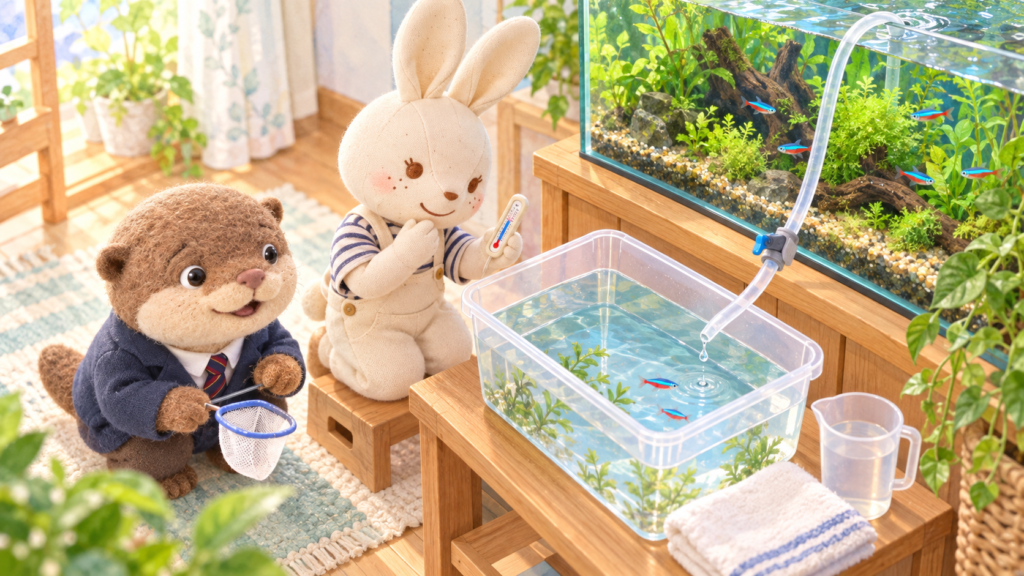 アイのアクアグッズ案内水合わせの道具とやり方|魚を迎える前にそろえたい容器・点滴キット・ネット買ってきた魚はすぐ水槽に入れていい? 水温合わせと水合わせの違いから、透明ケース・点滴キット・ネットの選び方、時間をかけすぎない注意点まで、アイとコタロウが紹介します。記事はコチラ →
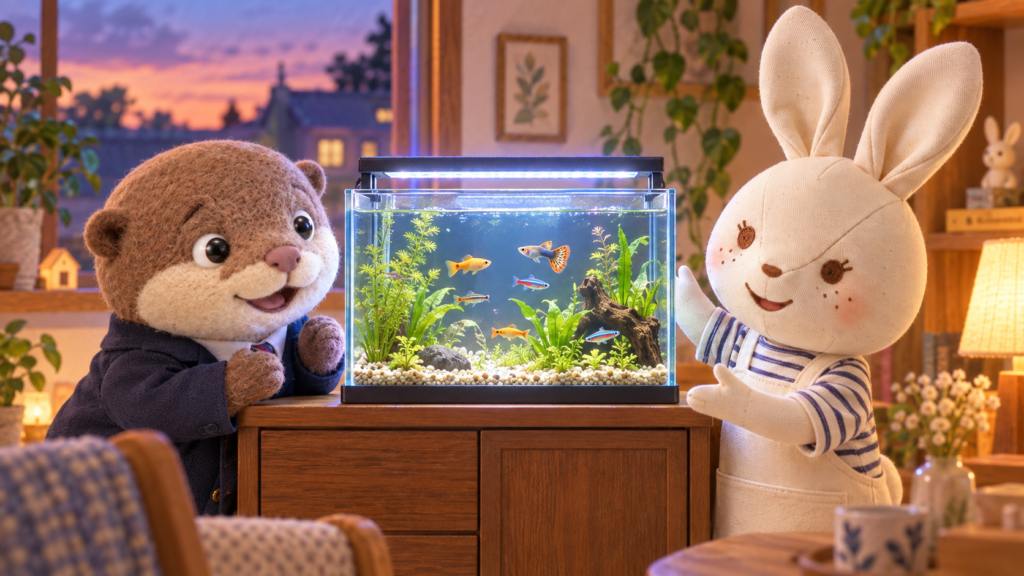 アイのアクアグッズ案内水槽ライトの選び方|魚の見え方・水草・海水で選ぶおすすめ照明道具の特徴や使い方、選ぶときのポイントをアイが紹介します。記事はコチラ →
 アイのアクアグッズ案内水槽の流木の選び方|枝・マングローブ・アク抜きとおすすめ商品水槽に小さな森を作る流木。枝流木やマングローブという名前の違いから、魚の隠れ家、水草の取り付け、浮く・水が茶色くなるときの準備まで、アイとコタロウが商品とともに案内します。記事はコチラ →
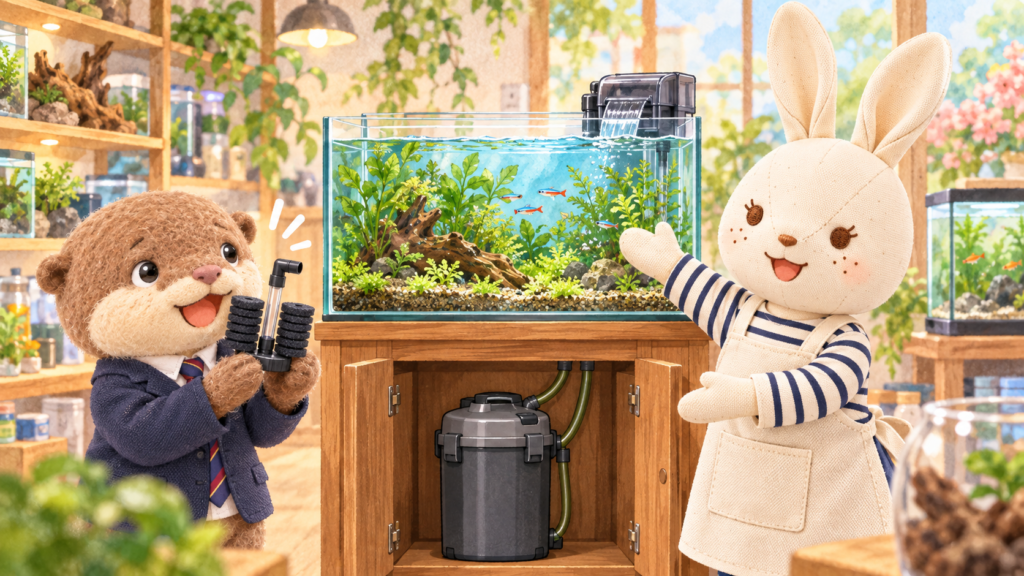 アイのアクアグッズ案内水槽フィルターの選び方|外掛け・外部・上部から小型オーバーフローまで道具の特徴や使い方、選ぶときのポイントをアイが紹介します。記事はコチラ →
さまざまな飼育テーマをご紹介。リンク先の記事には広告・商品紹介が含まれます。
案内・紹介記事一覧へ →分布マップ
ディープレッドホタルテトラは、南米コロンビアのオリノコ川水系、メタ川上流域を中心に記録されている小型カラシンです。地図では分布イメージを示すため、メタ川上流域の概略代表地点を表示しています。
このマップのプロットは、分布欄の記述をもとにした概略代表地点です。実際の採集地点や厳密な生息範囲を示すものではありません。
参考文献・参照資料
ディープレッドホタルテトラの分類、分布、生息環境、飼育管理などに関する参考文献です。店舗、通販、個人ブログ、まとめサイトは除外し、学術データベース、査読論文、公的・専門機関の資料を中心に絞っています。
分類・学名・記載情報は魚類分類データベースと査読論文を優先し、飼育条件は種固有データとして確認できる水温・硬度・分布情報に、魚類医学・水質管理の専門資料を組み合わせて補強しています。繁殖については、ディープレッドホタルテトラ単独の詳細な査読資料が限られるため、小型カラシン類および新熱帯区魚類の繁殖特性を扱う資料を補助的に採用しています。
-
Fricke, R., Eschmeyer, W. N. & Van der Laan, R. (eds.). Eschmeyer’s Catalog of Fishes, California Academy of Sciences. Géry, J. 1966 [ref. 1587], Axelrodia riesei, a new characoid fish from Upper Rio Méta in Colombia.
https://researcharchive.calacademy.org/research/ichthyology/catalog/getref.asp?id=1587
裏付け範囲:学名、記載者、記載年、原記載文献、Upper Rio Méta in Colombiaというタイプ産地情報。 -
Froese, R. & Pauly, D. (eds.). FishBase. Axelrodia riesei Géry, 1966, Ruby tetra.
https://www.fishbase.se/summary/Axelrodia-riesei.html
裏付け範囲:Acestrorhamphidae科・Megalamphodinae亜科、淡水・中底層性、上部メタ川流域の分布、最大標準体長、水温20〜26℃、硬度上限の目安。 -
GBIF Backbone Taxonomy. Axelrodia riesei Géry, 1966.
https://www.gbif.org/species/2352795
裏付け範囲:分類名の照合、原記載情報、国際的な生物多様性データベース上でのタクソン確認。 -
Melo, B. F. et al. (2024). Phylogenomics of Characidae, a hyper-diverse Neotropical freshwater fish lineage, with a phylogenetic classification including four families. Zoological Journal of the Linnean Society, 202(1), zlae101.
https://academic.oup.com/zoolinnean/article/202/1/zlae101/7748269
裏付け範囲:旧来の広義カラシン科を含む新熱帯カラシン類の分子系統、Acestrorhamphidaeを含む近年の分類枠組み、Megalamphodinaeを含む系統的位置づけ。 -
Esguícero, A. L. H. & Mendonça, M. B. (2023). A new genus and two new species of tetras (Characiformes: Characidae), with a redescription and generic reassignment of Axelrodia lindeae Géry. Ichthyology & Herpetology, 111(3), 426–447.
https://doi.org/10.1643/i2021122
裏付け範囲:Axelrodia属周辺の近年の整理、A. lindeaeの属移動に関する補助情報。記事中の近縁種・分類変遷の説明を支える資料。 -
Freshwater Ecoregions of the World. Orinoco Llanos, Ecoregion 307.
https://www.feow.org/ecoregions/details/307
裏付け範囲:オリノコ川流域、メタ川を含む西部・北部支流域、低勾配河川・氾濫原・湿地などの地域的な生息環境背景。 -
Bogotá-Gregory, J. D., Lima, F. C. T., Correa, S. B. et al. (2020). Biogeochemical water type influences community composition, species richness, and biomass in megadiverse Amazonian fish assemblages. Scientific Reports, 10, 15349.
https://doi.org/10.1038/s41598-020-72349-0
裏付け範囲:ブラックウォーターの「腐植質を含み酸性で貧栄養」という水質背景、南米熱帯魚の生息環境を水質タイプから理解するための補助資料。 -
Azevedo, M. A. (2010). Reproductive characteristics of characid fish species (Teleostei, Characiformes) and their relationship with body size and phylogeny. Iheringia, Série Zoologia, 100(4), 469–482.
https://www.scielo.br/j/isz/a/M3RCTL6G3JJ3W3nGt8xpzqN/
裏付け範囲:小型カラシン類にみられる繁殖期間、複数回産卵、卵数・体サイズとの関係。記事中の「少量ずつ産む」「繁殖難易度」説明の補助資料。 -
Rizzo, E., Sato, Y., Barreto, B. P. & Godinho, H. P. (2002). Adhesiveness and surface patterns of eggs in neotropical freshwater teleosts. Journal of Fish Biology, 61(3), 615–632.
https://doi.org/10.1111/j.1095-8649.2002.tb00900.x
裏付け範囲:新熱帯区淡水魚における卵の粘着性・卵表面構造。水草や産卵モップを使う繁殖環境の考え方を補助する資料。 -
Merck Veterinary Manual. Environmental Diseases of Aquatic Animals in Aquatic Systems.
https://www.merckvetmanual.com/exotic-and-laboratory-animals/aquatic-systems/environmental-diseases-of-aquatic-animals-in-aquatic-systems
裏付け範囲:アンモニア、亜硝酸、硝酸塩、pH、溶存酸素など水質悪化が魚の健康に与える影響。病気予防を水質管理中心に組み立てる根拠。 -
Merck Veterinary Manual. Management of Aquarium Fish.
https://www.merckvetmanual.com/exotic-and-laboratory-animals/aquarium-fish/management-of-aquarium-fish
裏付け範囲:観賞魚の管理、検疫・バイオセキュリティ、薬剤使用時の注意、治療時の観察とエアレーション強化に関する補助資料。 -
Yanong, R. P. E. et al. University of Florida IFAS Extension. Fish Health Management Considerations in Recirculating Aquaculture Systems—Part 1: Introduction and General Principles.
https://ask.ifas.ufl.edu/publication/FA099
裏付け範囲:生物ろ過、過密、給餌過多、アンモニア・亜硝酸の上昇、立ち上げ直後の水質リスク。小型魚で過密や餌の与えすぎを避ける注意点の補強。
注記:本種の「プラチナ個体」が生じる詳しい仕組みは、十分には明らかになっていません。ディープレッドホタルテトラ単独で十分に検証された査読資料を確認できないため、この参考文献欄では確証資料として採用していません。




コメント