
解説 / Description
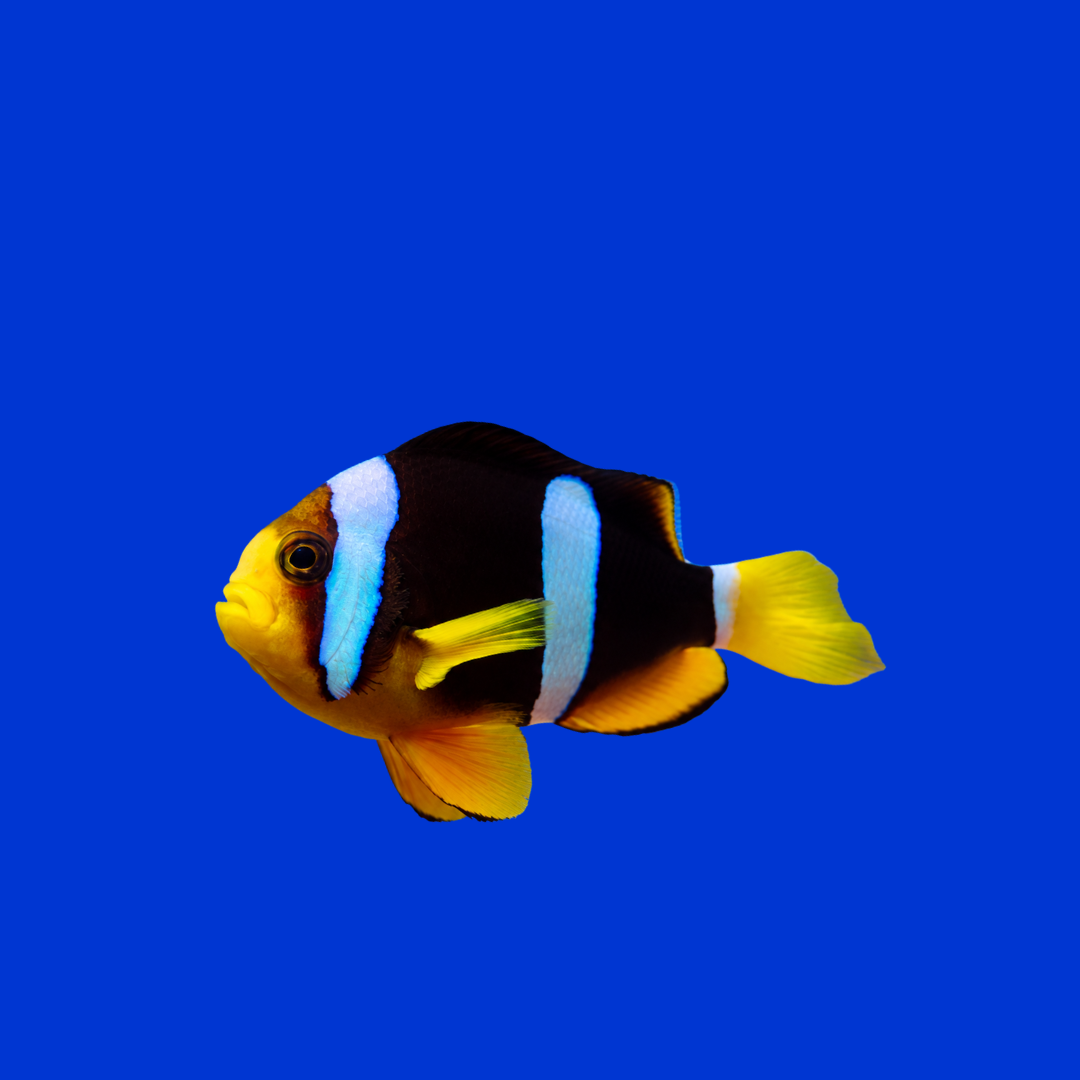
セバエアネモネフィッシュは、黒褐色の体に入る2本の白帯と、鮮やかな黄色から橙色の尾鰭が印象的なクマノミの仲間です。インド洋北部の砂地やラグーンに暮らし、自然界では主にイボハタゴイソギンチャクを生活の拠点にします。地域や個体によって黒化の程度が大きく異なり、腹部まで黒い個体から黄色が広く残る個体まで、同じ種とは思えないほど多彩な表情を見せます。 The Sebae anemonefish is a distinctive clownfish marked by two broad white bars on a dark brown to black body and a vivid yellow to orange tail. It inhabits sandy lagoons and coastal reefs of the northern Indian Ocean, where it is most often associated with Haddon’s carpet anemone. The degree of melanism varies greatly among regions and individuals, producing fish that range from extensively black to forms with broad yellow areas on the lower body.
丈夫で人工飼料にも慣れやすい一方、クマノミ類の中でも縄張り意識が強く、成長すると存在感も攻撃性も増します。とくにペアが形成された水槽では、ほかのクマノミや底層を利用する魚を激しく追うことがあります。十分な水量と逃げ場を用意し、混泳相手を慎重に選べば、力強い泳ぎやイソギンチャクとの共生、産卵行動まで長く観察できる魅力的な海水魚です。 Although hardy and generally willing to accept prepared foods, this species is among the more territorial clownfish. As it grows, both its physical presence and aggression become more pronounced. A bonded pair may vigorously drive away other clownfish and bottom-dwelling tank mates. With adequate water volume, well-planned shelter, and carefully selected companions, it can reward the aquarist with years of bold behavior, anemone association, and even spawning.
基本情報 / Basic Information
| 学名 / Scientific Name | Amphiprion sebae |
|---|---|
| 通称 / Common Name | セバエクマノミ、セバエSebae clownfish |
| 分類 / Family | スズキ目スズメダイ科クマノミ亜科クマノミ属Order Perciformes, family Pomacentridae, subfamily Amphiprioninae, genus Amphiprion |
| 英名 / English Name | Sebae Anemonefish |
| 分布 / Distribution | インド洋北部。アラビア半島周辺からインド、スリランカ、モルディブ、アンダマン諸島を経て、スマトラ島、ジャワ島、バリ島周辺に分布します。主に水深2〜25mほどのラグーン、沿岸の浅海、砂地を伴うサンゴ礁に生息します。Northern Indian Ocean, from waters around the Arabian Peninsula through India, Sri Lanka, the Maldives, and the Andaman Islands to Sumatra, Java, and the Bali region. It usually inhabits lagoons, shallow coastal waters, and reef areas with open sand at depths of roughly 2–25 m. |
| 最大体長 / Max Size | 全長約14〜16cm。クマノミ属では比較的大型です。Approximately 14–16 cm in total length, making it a relatively large member of the genus. |
| 寿命 / Lifespan | 適切な環境では10年以上を見込めます。長期飼育例では15年以上に達することもありますが、水質、栄養、個体の来歴によって差があります。More than 10 years is possible under suitable conditions. Some long-term captive individuals may exceed 15 years, although lifespan varies with water quality, nutrition, and the fish’s history. |
飼育環境 / Aquarium Environment
| 水槽サイズ / Tank Size | 単独の若魚でも最低60cm規格水槽(約60L)を目安にし、成魚やペア、混泳を考える場合は90cm規格水槽(約150〜180L)以上が安心です。縄張りが広いため、水量だけでなく横方向の遊泳距離も重視します。A standard 60 cm aquarium of about 60 L is the practical minimum even for a single juvenile. For adults, a bonded pair, or a community setup, a standard 90 cm aquarium of approximately 150–180 L or larger is preferable. Horizontal swimming space is as important as total volume. |
|---|---|
| 水温 / Temperature | 22〜26℃。長期飼育では24〜26℃前後を安定して維持すると管理しやすく、繁殖を狙う場合も急な温度変化を避けます。 22–26°C. A stable range around 24–26°C is generally convenient for long-term care, and sudden changes should be avoided when breeding is intended. |
| 水質 / Water Quality | 海水比重1.022〜1.025、pH8.1〜8.4を目安にし、アンモニアと亜硝酸は検出されない状態を保ちます。硝酸塩の慢性的な蓄積や比重の急変は、体表の防御力低下や食欲不振につながるため、定期換水と十分なろ過を行います。Maintain a specific gravity of about 1.022–1.025 and a pH of 8.1–8.4, with undetectable ammonia and nitrite. Chronic nitrate accumulation and rapid salinity changes can weaken the skin barrier and suppress appetite, so regular water changes and adequate filtration are essential. |
| レイアウト / Layout | 砂地とライブロックを組み合わせ、縄張りの中心となる窪みや平らな産卵面、追われた魚が視線を切れる複数の隠れ場所を用意します。イソギンチャクは必須ではありません。導入する場合は、自然界で主要な宿主となるイボハタゴイソギンチャクのほか、飼育下で利用することがある種類も選択肢になりますが、強い照明、安定した水質、吸水口への巻き込み防止が必要です。Combine open sand with live rock, providing a central shelter, a flat potential spawning surface, and several structures that break lines of sight for chased fish. An anemone is not essential. If one is kept, Haddon’s carpet anemone is the principal natural host, while other suitable aquarium species may also be accepted. Strong lighting, stable water quality, and protection from pump intakes are required. |
| 注意点 / Precautions | 最大の注意点は攻撃性です。小型水槽でほかのクマノミと同居させると、逃げ場がなくなり重い外傷につながることがあります。新しい魚はできるだけ本種より先に導入し、セバエアネモネフィッシュを最後に入れると縄張りの固定を抑えやすくなります。購入直後は別水槽で状態を観察し、呼吸の速さ、体表の粘液、白点、擦りつけ行動を確認します。Aggression is the primary concern. Housing it with other clownfish in a small aquarium can leave the subordinate fish with no escape and may result in severe injury. When possible, establish other tank mates first and add the Sebae anemonefish last to reduce immediate territorial ownership. Newly acquired fish should be observed separately for rapid breathing, excess mucus, white spots, and flashing behavior. |
餌と給餌 / Feeding
| 餌の種類 / Diet | 海水魚用の高品質なペレットやフレークを主食にし、冷凍イサザアミ、冷凍ブラインシュリンプ、細かく刻んだエビや貝類などを組み合わせます。自然界では動物プランクトン、小型甲殻類、付着藻類などを食べる雑食性のため、海藻成分を含む飼料も補助的に与えると栄養の偏りを抑えられます。Use a high-quality marine pellet or flake as the staple diet, supplemented with frozen mysid shrimp, frozen brine shrimp, and finely chopped shrimp or mollusk meat. In nature it is an omnivore that consumes zooplankton, small crustaceans, and attached algae, so foods containing marine algae can help broaden the nutritional profile. |
|---|---|
| 給餌のポイント / Feeding Tips | 1日1〜2回、数分で食べ切れる量を与えます。ペアや混泳水槽では、優位個体が餌を独占しやすいため、複数箇所に分けて投入します。繁殖を狙う親魚には、人工飼料だけに偏らず、脂質とたんぱく質の質が異なる複数の餌をローテーションし、痩せや腹部のへこみがないかを確認します。Feed once or twice daily in portions that are consumed within a few minutes. In pairs or community aquariums, the dominant fish may monopolize food, so distribute it in several locations. Conditioning breeders benefit from a rotation of foods with different protein and lipid profiles rather than relying on a single prepared diet. |
性格と混泳 / Temperament and Tank Mates
| 性格 / Temperament | 非常に縄張り意識が強く、成魚の雌や繁殖ペアはとくに攻撃的です。宿主や隠れ家の周囲だけでなく、水槽の広い範囲を自分たちの領域として扱うことがあります。飼育者の手や器具に向かって突進する個体もいるため、メンテナンス時は驚いて手をぶつけないよう落ち着いて作業します。This is a highly territorial species, and adult females or breeding pairs can be especially assertive. They may treat a broad area of the aquarium, not just the immediate host or shelter, as their territory. Some individuals charge hands or tools during maintenance, so work calmly to avoid sudden reactions. |
|---|---|
| 混泳の相性 / Compatibility | 同種は相性の合う1ペアを基本とし、複数の幼魚を長期間そのまま飼う方法は避けます。ほかのクマノミ類との混泳は、十分に大きな水槽でも争いが起こりやすいため推奨されません。混泳相手には、体格が極端に小さくなく、遊泳層や生活場所が競合しにくい丈夫な海水魚を選びます。底生ハゼ、小型の温和な魚、長い鰭を持つ動きの遅い魚は、追撃の対象にならないか注意深く観察します。Keep either a single fish or a compatible pair, and do not assume that a group of juveniles can remain together indefinitely. Mixing with other clownfish is generally not recommended because conflict can occur even in large aquariums. Choose robust tank mates that are not extremely small and do not compete for the same shelter or bottom territory. Bottom-dwelling gobies, very peaceful small fish, and slow species with long fins require close observation. |
病気と対策 / Diseases and Prevention
| かかりやすい病気 / Common Diseases | 海水魚の白点病、ウーディニウム病、ブルックリネラ症、体表や鰭の細菌感染症に注意します。輸送直後や水質が不安定な環境では、呼吸が速くなる、体表の粘液が増える、体を岩に擦りつける、餌を急に食べなくなるといった初期症状が現れることがあります。Watch for marine ich, marine velvet, brooklynellosis, and bacterial infections of the skin or fins. After transport or during unstable water conditions, early signs may include rapid breathing, excess mucus, flashing against rocks, or a sudden loss of appetite. |
|---|---|
| 対策と予防 / Prevention | 新規個体は隔離水槽で十分に観察し、網やホースを本水槽と共用しないことが基本です。安定した比重と水温、過密を避けた飼育、栄養の偏りを抑えた給餌によって発症リスクを下げられます。治療薬はサンゴやイソギンチャク、ろ過細菌に影響するものが多いため、原則として治療用の別水槽で使用し、症状に応じて海水魚診療に詳しい獣医師や専門店へ相談します。Quarantine new arrivals and avoid sharing nets or hoses with the display aquarium. Stable salinity and temperature, moderate stocking density, and a varied diet reduce disease risk. Many medications can harm corals, anemones, and biological filtration, so treatment should generally be carried out in a separate hospital tank with guidance from a veterinarian or experienced marine-fish specialist. |
増やし方(繁殖) / Breeding
| 雌雄の判別 / Sexing | 雄性先熟の性転換を行い、群れの中で最も大きく優位な個体が雌、次に大きい個体が繁殖雄になります。外見だけで確実に判別するのは難しいものの、安定したペアでは雌が明らかに大型で、雄は産卵床の清掃や卵の世話を多く担当します。The species is a protandrous sequential hermaphrodite. The largest and most dominant fish becomes the female, while the second-largest functions as the breeding male. Visual sexing alone is difficult, but in an established pair the female is clearly larger and the male usually performs more nest cleaning and egg care. |
|---|---|
| 繁殖形態 / Reproduction | 基質産卵型です。ペアは縄張り内の平らな岩、素焼き鉢、タイルなどを清掃し、雌が粘着性の卵を産み付けた後に雄が放精します。卵は主に雄が胸鰭で新鮮な水を送り、未受精卵や死卵を取り除きながら保護します。水温28℃前後ではおよそ6〜8日で、日没後の暗い時間帯に孵化します。It is a substrate spawner. The pair cleans a flat rock, clay pot, tile, or similar surface within the territory. The female deposits adhesive eggs and the male fertilizes them. The male performs most of the care by fanning the clutch and removing infertile or dead eggs. At around 28°C, hatching commonly occurs after about 6–8 days during darkness after sunset. |
| 繁殖のポイント / Breeding Tips | 親魚には安定した環境と栄養価の高い餌を与え、取り外せる産卵床を縄張りの近くに置くと管理しやすくなります。孵化仔魚は非常に小さく、初期餌料として小型のシオミズツボワムシを高密度で用意し、微細藻類を加えたグリーンウォーター法で餌の見つけやすさと栄養価を保ちます。成長に合わせてアルテミア幼生へ切り替えます。親魚の飼育よりも、孵化時刻の把握、仔魚水槽の準備、初期餌料の安定培養が成功の鍵になります。Condition the pair with stable water and nutrient-rich foods, and place a removable spawning surface close to their territory. Newly hatched larvae are tiny and require a dense supply of small rotifers. A green-water method using microalgae helps keep prey visible and nutritionally useful. Artemia nauplii can be introduced as the larvae grow. Success depends less on spawning itself than on predicting hatch time, preparing the larval tank, and maintaining a reliable live-food culture. |
雑学と豆知識 / Trivia and Fun Facts
| 1. 学名に残る二人の博物学者 / 1. Two naturalists behind the name | 本種は1853年にオランダの魚類学者ピーター・ブリーカーによって記載されました。種小名の sebae は、17〜18世紀に膨大な自然史標本を集め、美しい博物画集を残したアルベルトゥス・セバへの献名です。つまり学名には、実際にインド太平洋の魚を分類した研究者と、その前世代に自然史資料を蓄積した収集家の歴史が重なっています。The species was described in 1853 by the Dutch ichthyologist Pieter Bleeker. The specific name sebae honors Albertus Seba, a seventeenth- to eighteenth-century collector whose richly illustrated natural-history works influenced later taxonomists. Its scientific name therefore links the researcher who formally classified Indo-Pacific fishes with an earlier collector who helped preserve knowledge of them. |
|---|---|
| 2. 黄色い尾鰭が識別の大きな手掛かり / 2. The yellow tail is a major identification clue | セバエアネモネフィッシュは、クマノミやトウアカクマノミと混同されることがあります。見分けるときは、2本の白帯、後方へ斜めに入る第2帯、そして黄色から橙色の尾鰭をまとめて確認します。1つの特徴だけでは地域変異や成長段階に惑わされるため、帯の本数、傾き、尾柄部の模様まで組み合わせて観察することが大切です。Sebae anemonefish are sometimes confused with Clark’s or saddleback anemonefish. Identification is strongest when several features are considered together: two white bars, a second bar that slopes backward, and a yellow to orange tail. Regional variation and juvenile patterns can make a single trait unreliable, so the number and angle of bars and the markings around the caudal peduncle should all be checked. |
| 3. 開けた砂地が育てた積極的な防衛 / 3. Open sand and the evolution of bold defense | 主要な宿主であるイボハタゴイソギンチャクは、枝状サンゴの迷路ではなく、見通しのよい砂地に定着します。隠れ場所の少ない環境では、脅威が近づいてから逃げ込むだけでは十分でない場合があります。本種が宿主から離れてまで相手を追い払う強い防衛行動は、そのような生活場所と関係して発達した可能性が考えられています。水槽内での気の強さにも、野生で生き残るための背景があります。Its principal host, Haddon’s carpet anemone, often settles on exposed sand rather than within a maze of branching coral. In a habitat with few hiding places, simply retreating after a threat approaches may not be enough. The species’ tendency to leave the host and drive intruders away may have developed in association with this open environment. Its aquarium aggression therefore reflects a survival strategy shaped in the wild. |
| 4. 群れの順位が性を決める / 4. Social rank determines sex | クマノミの群れでは、最も大きな個体が雌、その次が雄、さらに小さな個体は繁殖しない順位に置かれます。雌がいなくなると、雄が成長して雌へ性転換し、次順位の個体が雄の役割を引き継ぎます。広い海で新しい配偶者を探す代わりに、限られたイソギンチャクの中で空いた役割を埋める仕組みです。飼育下で複数個体が争うのも、この厳格な順位形成と無関係ではありません。Within a clownfish group, the largest individual is female, the second-largest is male, and smaller fish occupy non-breeding ranks. If the female disappears, the male grows and changes sex, while the next-ranked fish takes over the male role. Instead of crossing open habitat to find a mate, the group fills a vacant role within the safety of one anemone. Conflict among captive juveniles is closely connected to this strict social hierarchy. |
| 5. セバエイソギンチャクという名前のねじれ / 5. The naming puzzle of the “Sebae anemone” | 観賞魚店でセバエイソギンチャクと呼ばれることがあるのは、一般にシライトイソギンチャクの仲間です。しかし自然界のセバエアネモネフィッシュは、主にイボハタゴイソギンチャクを利用します。魚とイソギンチャクの通称が強く結び付いて見える一方で、野生で最も一般的な組み合わせとは一致しません。流通名と自然史の関係を調べると、アクアリウム用語が必ずしも生態をそのまま表していないことが分かります。The aquarium animal commonly sold as the “Sebae anemone” is generally associated with Heteractis crispa, yet wild Sebae anemonefish most often use Haddon’s carpet anemone. The names appear to imply a close natural pairing, but they do not represent the species’ most typical host relationship. This is a useful reminder that aquarium trade names do not always mirror natural history. |
| 6. 卵の色は発生の時計になる / 6. Egg color works like a developmental clock | 産み付けられた卵は、発生が進むにつれて黄橙色から暗色へ変わり、孵化直前には発達した眼が銀色に輝くように見えます。雄は胸鰭で卵に水を送り、状態の悪い卵を取り除きながら世話を続けます。飼育者は卵の色と眼の輝きから孵化日を予測できるため、親魚の行動そのものが仔魚育成の準備を始める合図になります。The eggs change from yellow-orange to darker tones as development proceeds, and shortly before hatching the enlarged eyes give the clutch a silvery appearance. The male continues fanning the eggs and removing unhealthy ones. Aquarists can estimate hatch timing from these color changes and the reflective eyes, turning the parents’ behavior into a practical signal for preparing the larval system. |
| 7. 黒化の程度が地域ごとに異なる / 7. Melanism varies by region | 同じセバエアネモネフィッシュでも、東部インド洋では腹部まで強く黒化した個体が目立ち、西部の個体群では黄色が広く残る傾向が知られています。ただし境界は単純ではなく、地域内にも個体差があります。遺伝、宿主、生活環境、成長や社会的条件など、複数の要因が色彩に関わる可能性があり、黒と黄色の配分は産地を想像する手掛かりであると同時に、まだ解明の余地を残した研究対象でもあります。Even within the same species, individuals from the eastern Indian Ocean are often strongly melanistic, sometimes black across the lower body, while western populations more often retain extensive yellow. The pattern is not absolute, and variation occurs within regions. Genetics, host association, habitat, development, and social conditions may all influence coloration, making the balance of black and yellow both a clue to origin and an open subject for research. |
まとめ / Conclusion
セバエアネモネフィッシュは、黄色い尾鰭と地域変異に富んだ体色、そして宿主を守る力強い行動によって、水槽の中でもひときわ明確な個性を示します。丈夫さだけを見れば飼いやすい魚ですが、成長後の体格と縄張りの広さを見越し、十分な水槽サイズと慎重な混泳計画を用意することが長期飼育の基本です。 The Sebae anemonefish brings a striking personality to the aquarium through its yellow tail, geographically variable coloration, and forceful defense of its chosen territory. It is hardy in many respects, but successful long-term care depends on planning for its adult size, broad territorial range, and carefully selected tank mates.
落ち着いたペアができると、産卵床の清掃、卵への送水、孵化前の色の変化など、クマノミの社会と繁殖を間近で観察できます。その強さを抑え込むのではなく、性質に合った空間を整えることで、10年以上にわたり飼育者との関係を深めていける、知的な魅力に満ちた海水魚です。 Once a stable pair forms, the aquarist may observe nest cleaning, egg fanning, and the color changes that precede hatching. Rather than trying to suppress its natural assertiveness, providing a space that accommodates it allows this intelligent and engaging marine fish to become a long-term companion for a decade or more.
気になる道具や飼い方を見つけてみませんか?
 アイのアクアグッズ案内水草用ライトの選び方|緑の絨毯と赤い水草を楽しむ照明・植栽用品道具の特徴や使い方、選ぶときのポイントをアイが紹介します。記事はコチラ →
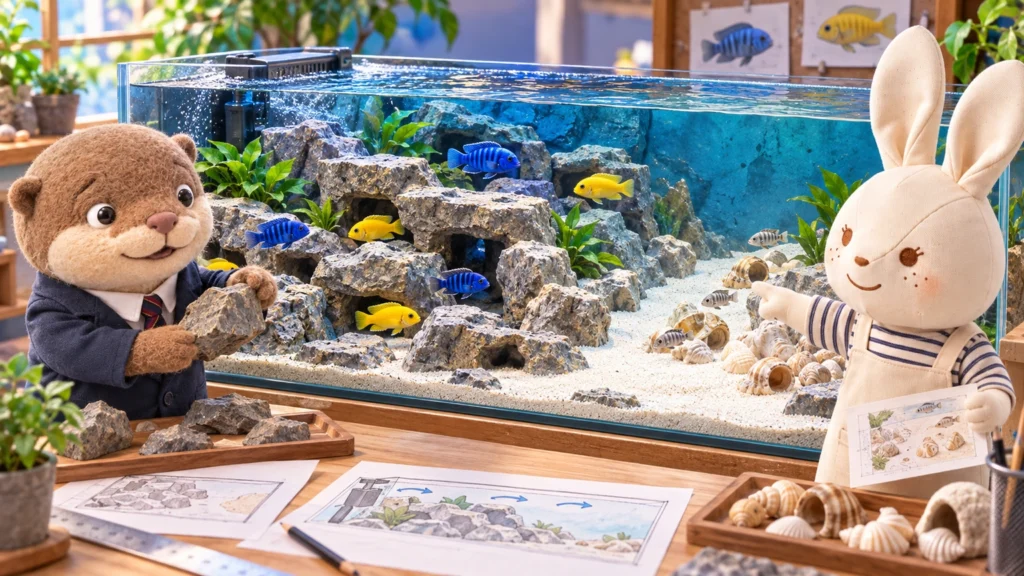 アイのアクアグッズ案内アフリカンシクリッドの飼育用品|水槽・ろ過・底砂・岩組み・餌の選び方道具の特徴や使い方、選ぶときのポイントをアイが紹介します。記事はコチラ →
さまざまな飼育テーマをご紹介。リンク先の記事には広告・商品紹介が含まれます。
案内・紹介記事一覧へ →分布マップ
セバエアネモネフィッシュは、アラビア半島周辺からインド、スリランカ、モルディブ、アンダマン諸島を経て、スマトラ島、ジャワ島、バリ島周辺までのインド洋北部に分布します。
この地図の着色範囲と代表地点は、記事の分布記述をもとにした概略イメージです。実際の採集地点や厳密な生息範囲を示すものではありません。
セバエアネモネフィッシュ記事の参考文献
分類、分布、生息環境、宿主関係、飼育管理、繁殖、疾病予防に関する記述を支える資料を、学術論文、公的・専門データベース、大学および獣医学の専門資料から選定しています。店舗、通販サイト、個人ブログ、一般的なまとめサイトは含めていません。
文献の適用範囲:記事中の「90cm規格水槽以上」という寸法は、本種の最大体長、縄張り性、飼育下研究で用いられた水槽規模を踏まえた飼育に余裕を持たせるための目安です。特定の学術論文が定めた種固有の最低水槽規格ではありません。また、水温・塩分・pHの数値は、繁殖研究の飼育条件と一般的な海水魚飼育管理を組み合わせた目安であり、本種の耐性限界を示すものではありません。
1. 分類・学名・記載史
-
World Register of Marine Species(WoRMS). Amphiprion sebae Bleeker, 1853. AphiaID: 212772.有効学名、著者名と記載年、スズメダイ科・クマノミ属という分類、原記載文献の確認に使用。WoRMSの分類ページ (閲覧日:2026年7月13日)
-
Fricke, R., Eschmeyer, W. N. & Van der Laan, R.(eds.). Eschmeyer’s Catalog of Fishes: Genera, Species, References. Species record for Amphiprion sebae.原記載の掲載頁、タイプ産地がジャカルタであること、現在の有効性、分類上の位置、インド洋北部における分布概要の確認に使用。California Academy of Sciencesの種記録 (オンライン版更新:2026年7月7日、閲覧日:2026年7月13日)
2. 分布・形態・生息環境・宿主・社会構造
-
Froese, R. & Pauly, D.(eds.). FishBase. Amphiprion sebae, Sebae anemonefish.インド洋北部の分布、水深2〜25m、沿岸・ラグーンという生息環境、最大体長16cm、底生粘着卵、雄による卵保護、イボハタゴイソギンチャクとの宿主関係の確認に使用。FishBaseの種概要 (閲覧日:2026年7月13日)
-
Fautin, D. G. & Allen, G. R.(1992). Field Guide to Anemonefishes and Their Host Sea Anemones. Western Australian Museum, Perth.クマノミ類の識別、分布、宿主イソギンチャクとの組み合わせ、相利共生に関する基礎資料。セバエアネモネフィッシュとイボハタゴイソギンチャクの関係を支える専門書。書誌情報・閲覧ページ
-
Roux, N., Salis, P., Lee, S.-H. et al.(2020). Anemonefish, a model for Eco-Evo-Devo. EvoDevo, 11, 20.クマノミ類の雄性先熟、社会順位による性の制御、ペア形成、発生、生態と進化を総合的に確認するための査読総説。DOI: 10.1186/s13227-020-00166-7
3. 飼育条件・繁殖・仔魚育成・栄養
-
Spotte, S.(1992). Captive Seawater Fishes: Science and Technology. John Wiley & Sons, New York. 942 pp. ISBN 978-0-471-54554-5.海水水槽の塩分、pH、窒素化合物、ろ過、栄養、ストレス、疾病予防など、飼育環境全般の科学的基礎を支える専門書。記事の水質管理は本書の一般原則も踏まえています。書誌情報・内容概要
-
Thomas, D., Prakash, C. & Gopakumar, G.(2015). Spawning behaviour and embryonic development in the sebae anemonefish Amphiprion sebae(Bleeker, 1853). Indian Journal of Fisheries, 62(4), 58–65.本種のペアサイズ、500L水槽での飼育、産卵行動、1腹300〜1,500卵、15〜26日の産卵間隔、卵色の橙色・黒色・銀色への変化を直接支える研究。CMFRI Digital Repository
-
Ignatius, B., Rathore, G., Jagadis, I., Kandasamy, D. & Victor, A. C. C.(2001). Spawning and larval rearing technique for tropical clown fish Amphiprion sebae under captive condition. Journal of Aquaculture in the Tropics, 16(3), 241–249.飼育下での繁殖成立、卵保護、孵化、シオミズツボワムシ・アルテミア・コペポーダを用いた仔魚育成の基礎を支える本種の直接研究。CMFRI Digital Repository
-
Divya, S. P., Ajith Kumar, T. T., Rajasekaran, R. & Balasubramanian, T.(2011). Larval rearing of clownfish using Brachionus plicatilis rotifer as starter food. ScienceAsia, 37, 179–185.セバエアネモネフィッシュ仔魚の初期餌料としてシオミズツボワムシを用いる方法と、仔魚期の生残・育成条件を支える査読研究。DOI: 10.2306/scienceasia1513-1874.2011.37.179
-
Varghese, B., Paulraj, R., Gopakumar, G. & Chakraborty, K.(2009). Dietary influence on the egg production and larval viability in True Sebae Clownfish Amphiprion sebae Bleeker 1853. Asian Fisheries Science, 22(1), 7–20.親魚の餌内容が産卵数、受精率、孵化率、仔魚の質へ及ぼす影響を扱い、繁殖用親魚に多様な海産餌料を与える根拠となる研究。DOI: 10.33997/j.afs.2009.22.1.002
4. 病気・隔離・予防上の注意
-
Noga, E. J.(2010). Fish Disease: Diagnosis and Treatment, 2nd ed. Wiley-Blackwell. ISBN 978-0-8138-0697-6.魚病の診断、臨床症状、寄生虫・細菌性疾患、隔離、衛生管理、治療用水槽の考え方を支える獣医学の標準的専門書。DOI: 10.1002/9781118786758
-
Merck Veterinary Manual. Parasitic Diseases of Fish.海水魚の白点病を起こす Cryptocaryon、ブルックリネラ症、ウーディニウム病を起こす Amyloodinium の症状、診断、衛生・過密との関係、別水槽治療の必要性を確認する獣医向け資料。Merck Veterinary Manual (閲覧日:2026年7月13日)
-
Yanong, R. P. E.(2021). Cryptocaryon irritans Infections(Marine White Spot Disease)in Fish. UF/IFAS Extension, University of Florida, FA164.海水魚の白点病における白点、呼吸促迫、擦りつけ行動などの症状、生活環、診断、長期隔離と防疫の必要性を支える大学公開資料。UF/IFAS Extension (閲覧日:2026年7月13日)
データベース型資料は内容が更新されるため、公開時には閲覧日を残すことを推奨します。疾病の診断や薬剤使用は、外観だけで断定せず、可能な限り魚類診療に対応する獣医師または魚病の専門家へ相談してください。
コメント