

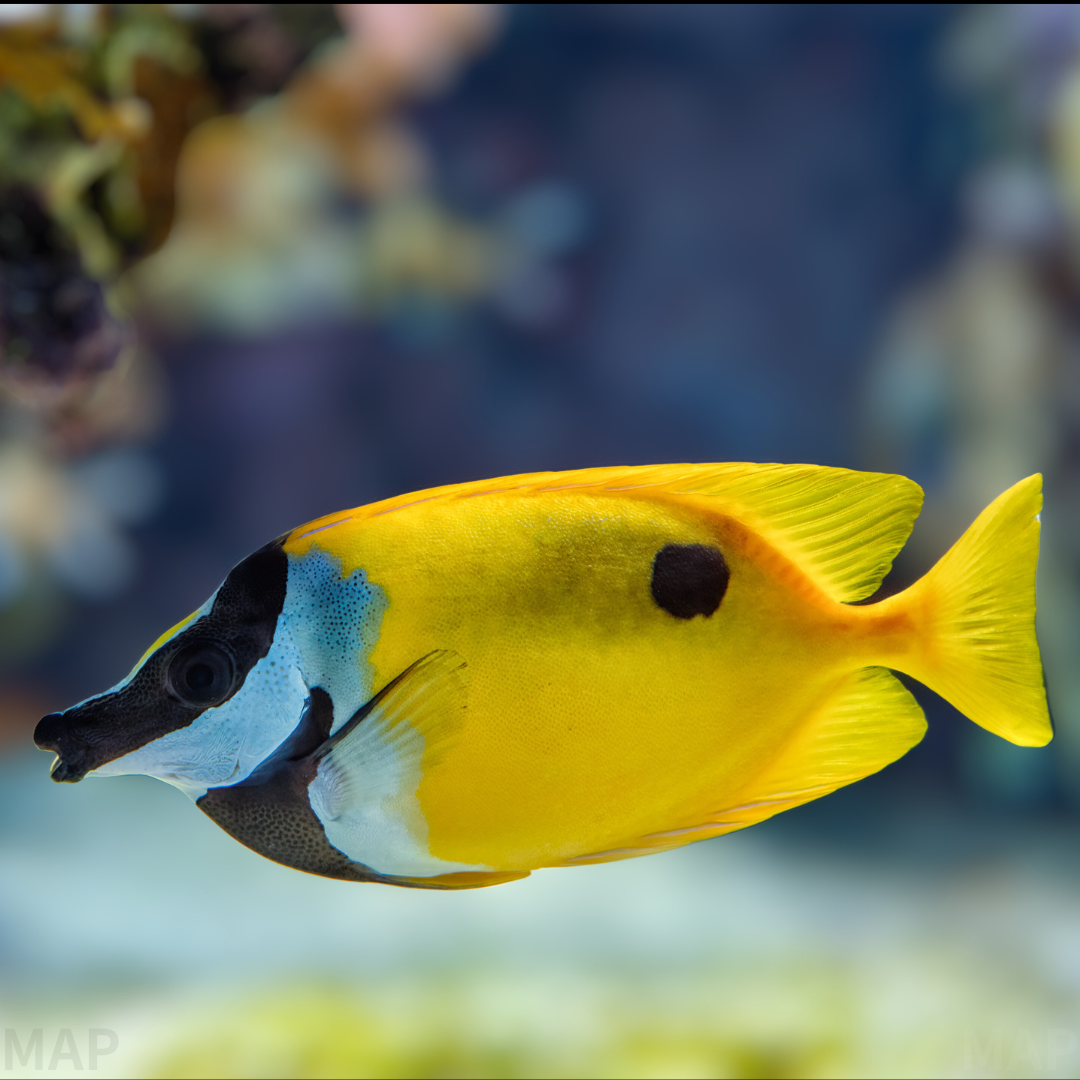
解説 / Description
ヒフキアイゴは、鮮やかな黄色の体に白黒の顔模様と体側上部の黒い斑点を持つ、アイゴ科の海水魚です。前へ突き出た小さな口で岩やサンゴの隙間に生えた藻類をついばみ、水槽でもコケ取りを助ける魚として親しまれています。他種に対しては比較的温和ですが、警戒すると岩陰へ逃げたり、体色をまだらに変えたりします。成長後も泳げる広さと十分な餌を確保し、鰭の毒棘に注意して扱うことが、長期飼育の基本です。 The one-spot foxface is a marine rabbitfish with a vivid yellow body, black-and-white facial markings, and a dark blotch on its upper flank. Its small, projecting mouth allows it to graze algae from rocks and coral crevices, making it a popular aquarium algae grazer. It is generally peaceful toward other species but may retreat into shelter or develop mottled coloration when alarmed. Long-term care requires ample space for its adult size, adequate feeding, and careful handling around its venomous fin spines.
基本情報 / Basic Information
| 学名 / Scientific Name | Siganus unimaculatus |
|---|---|
| 通称 / Common Name | ヒフキアイゴ。販売時にはフォックスフェイスと呼ばれることもありますが、この名称は近縁種にも使われます。One-spot foxface. It may also be sold simply as a foxface, a name also used for closely related species. |
| 分類 / Family | アイゴ科・アイゴ属。目の扱いは分類体系によって異なり、従来のスズキ目のほか、ニザダイ目に含める体系もあります。Family Siganidae, genus Siganus. Its ordinal placement varies between classifications, including traditional Perciformes and Acanthuriformes. |
| 英名 / English Name | One-spot foxface, Blotched foxface |
| 分布 / Distribution | 西太平洋を中心とした熱帯・亜熱帯の浅いサンゴ礁域。日本の南西諸島やフィリピン、オーストラリア北西部などで知られています。近縁種との分類上の扱いによって、示される分布範囲が異なる場合があります。Shallow tropical and subtropical coral reefs, principally in the western Pacific. Reported areas include the southwestern Japanese islands, the Philippines, and northwestern Australia. Published distribution ranges may differ depending on the taxonomic treatment of closely related forms. |
| 最大体長 / Max Size | 尾鰭を含めない標準体長で約20cm。尾鰭を含めた全長はこれより長くなるため、水槽は成魚の大きさに余裕を持って選びます。Approximately 20 cm in standard length, which excludes the caudal fin. Total length is greater, so allow additional space when planning an aquarium for an adult. |
| 寿命 / Lifespan | 飼育下での寿命について、確かな平均値は明らかではありません。短期間のコケ取り要員としてではなく、長期飼育を前提に迎え、水質と栄養を安定させて病気や事故を防ぎます。A reliable average captive lifespan has not been established. Plan for long-term care rather than temporary algae control, maintaining stable water quality and nutrition while preventing disease and accidents. |
飼育環境 / Aquarium Environment
| 水槽サイズ / Tank Size | 成魚の長期飼育には、120cmワイド水槽(120×60×45cm、寸法から計算した容積約324L)など、泳ぐ距離と奥行きを確保できる水槽を推奨します。90cm規格水槽(90×45×45cm、容積約182L)で成魚まで十分に飼えるとは一律にいえません。60cm規格水槽(60×30×36cm、容積約65L)は幼魚の一時的な管理に限り、成長前に移せる設備を準備してください。実際の水量は水位、底砂、岩などによって少なくなります。For long-term adult care, choose an aquarium with ample swimming length and depth, such as a 120 × 60 × 45 cm wide tank with a calculated capacity of approximately 324 L. A 90 × 45 × 45 cm aquarium, approximately 182 L, should not automatically be considered adequate through adulthood. A 60 × 30 × 36 cm tank, approximately 65 L, is suitable only for temporary juvenile housing with a larger aquarium prepared in advance. Actual water volume is lower after accounting for water level, substrate, and rocks. |
|---|---|
| 水温 / Temperature | 24〜26℃を管理の目安とし、急激な変化を避けます。夏は必要に応じて冷却し、水面を攪拌して酸素供給を確保します。冬は水量に合ったヒーターで安定させてください。Aim for 24–26°C and avoid sudden changes. Use cooling as needed in summer and maintain surface agitation for oxygenation. In winter, use a heater suitable for the aquarium’s water volume. |
| 水質 / Water Quality | 生物ろ過が十分に機能する海水水槽で、pH8.0〜8.4、塩分33〜35‰程度を管理の目安とします。比重は25℃付近でおおむね1.024〜1.026に相当しますが、測定器の基準温度を確認してください。アンモニアと亜硝酸は検出されない状態を保ち、ろ過、換水、必要に応じたプロテインスキマーの使用で有機物の蓄積を抑えます。蒸発した水は淡水で補います。Use a marine aquarium with established biological filtration, aiming for pH 8.0–8.4 and salinity around 33–35 ppt. This corresponds approximately to a specific gravity of 1.024–1.026 near 25°C; check the instrument’s reference temperature. Keep ammonia and nitrite undetectable and control organic accumulation through filtration, water changes, and protein skimming where appropriate. Replace evaporation losses with freshwater. |
| レイアウト / Layout | ライブロックなどで体全体を隠せる岩陰や洞窟を作り、前面には広い遊泳空間を残します。岩は崩れないよう固定し、逃げ込んだ際に体や鰭が挟まる狭い隙間を避けてください。適度な水流と十分な酸素供給も確保します。Provide rock shelters or caves large enough to conceal the entire fish while leaving open swimming space at the front. Secure the rockwork and avoid tight gaps that could trap its body or fins. Maintain suitable water movement and adequate oxygenation. |
| 注意点 / Precautions | 背鰭、臀鰭、腹鰭の棘には毒があるため、素手でつかまないでください。移動には十分な大きさの硬い容器を使うと、網への絡まりを避けやすくなります。手袋だけで刺傷を防げるとは限りません。飛び出し対策としてフタを設け、掃除の際も魚の位置を確認します。刺された場合は作業を中止して医療機関に相談し、呼吸困難や意識の異常があれば救急要請をしてください。輸送袋は棘で破れることがあるため、販売店に適切な梱包を依頼します。The dorsal, anal, and pelvic spines are venomous, so never grasp the fish with bare hands. A suitably sized rigid container can reduce net entanglement during transfers. Gloves alone do not guarantee protection from punctures. Fit a lid and locate the fish before aquarium maintenance. If stung, stop work and seek medical advice; breathing difficulty or altered consciousness requires emergency assistance. Its spines can puncture transport bags, so appropriate packing is essential. |
餌と給餌 / Feeding
| 餌の種類 / Diet | 藻類を主に食べます。海藻やスピルリナを配合した海水魚用人工飼料を中心に、味付けされていない海苔や観賞魚用の乾燥海藻を補助的に与えます。ブラインシュリンプなどの動物性の餌を食べることもありますが、それだけに偏らないようにします。Algae form the main part of its diet. Offer marine fish foods containing seaweed or spirulina, supplemented with unseasoned nori or dried seaweed intended for aquarium fish. It may also accept animal-based foods such as brine shrimp, but these should not dominate the diet. |
|---|---|
| 給餌のポイント / Feeding Tips | 毎日少量ずつ複数回に分け、他魚に餌を奪われずに食べられているか確認します。海苔は給餌クリップで固定し、残った分は水を汚す前に取り除いてください。水槽内のコケだけに頼らず、食欲と体つきを見ながら給餌量を調整します。糸状藻類やバロニアを食べることもありますが、藻類の種類や個体によって差があり、必ず除去できるとは限りません。Offer small portions several times daily and check that tank mates do not prevent feeding. Secure seaweed with a feeding clip and remove leftovers before they foul the water. Do not rely solely on aquarium algae; adjust feeding according to appetite and body condition. Some individuals eat filamentous algae or bubble algae, but effectiveness varies between fish and algae types. |
性格と混泳 / Temperament and Tank Mates
| 性格 / Temperament | 他種には比較的温和で、導入直後は隠れて過ごすことがあります。環境に慣れると、日中に岩をついばみながら泳ぎ回ります。驚くと棘を立てて身を守るため、追い回したり隠れ家から無理に出したりしないことが大切です。同種や近縁のアイゴ類に対しては争う場合があります。Generally peaceful toward other species, it may spend time hiding after introduction. Once settled, it swims around grazing on rocks during the day. When frightened, it raises its spines defensively, so avoid chasing it or forcing it from shelter. It may become aggressive toward its own species or related rabbitfishes. |
|---|---|
| 混泳の相性 / Compatibility | クマノミ、ハゼ、比較的温和なヤッコ類などが候補ですが、相手の性格や水槽の広さによって相性は変わります。強く追い回す魚や、本種を飲み込める大きさの肉食魚との混泳は避けます。一般的な家庭水槽では、アイゴ類は1匹にするのが無難です。サンゴと飼育できる場合もありますが、サンゴの種類や魚の個体によってはポリプや共肉をつつくため、導入後も観察を続けてください。十分な給餌をしても、サンゴへの被害を完全に防げるわけではありません。Potential companions include clownfishes, gobies, and relatively peaceful angelfishes, although compatibility depends on individual behavior and tank size. Avoid persistent bullies and predators capable of swallowing it. Keeping a single rabbitfish is the safer approach in most home aquariums. It may coexist with corals, but some individuals nip polyps or fleshy tissue. Continue monitoring after introduction; adequate feeding does not guarantee coral safety. |
病気と対策 / Diseases and Prevention
| かかりやすい病気 / Common Diseases | ほかの海水魚と同様に、海水性白点病やハダムシなどの外部寄生虫に注意します。体を岩にこすりつける、体表に白い点が現れる、眼が濁る、呼吸が速くなる、餌を食べなくなるといった変化が観察の手がかりです。ただし、眼の白濁や擦りつけ行動だけでは原因を特定できません。外傷、水質悪化、別の感染症などでも似た症状が出ることがあります。Like other marine fishes, it can be affected by marine white spot disease and external parasites such as monogenean flukes. Warning signs include rubbing against rocks, white spots on the body, cloudy eyes, rapid breathing, and loss of appetite. Cloudy eyes or rubbing alone do not establish a diagnosis; injury, poor water quality, and other infections can cause similar signs. |
|---|---|
| 対策と予防 / Prevention | 新しい魚は隔離水槽で状態を観察してから導入し、網や容器の共用による病原体の持ち込みも避けます。症状が出たら水温、水質、酸素供給を確認し、海水魚の治療に詳しい獣医師や販売店に相談してください。ハダムシの対処には淡水浴や駆虫薬が使われることがありますが、魚の状態と寄生虫の種類に応じた判断が必要です。淡水浴だけでは水槽内に残る卵まで除去できません。白点病に使う銅系薬剤はサンゴやエビ、貝に有害なため、隔離水槽で製品の指示に従って管理します。寄生虫を食べる魚やエビの導入だけで、予防や治療を済ませることはできません。Observe new fish in a quarantine aquarium before introduction and avoid transferring pathogens through shared nets or containers. If symptoms appear, check temperature, water quality, and oxygenation, then consult a veterinarian or retailer experienced in marine fish care. Freshwater dips or antiparasitic medication may be used for flukes, but suitability depends on the fish and parasite. Dips do not eliminate eggs remaining in the aquarium. Copper treatments for marine white spot are harmful to corals, shrimps, and snails; use an isolation tank and follow the product instructions. Cleaner fishes or shrimps cannot replace appropriate prevention and treatment. |
増やし方(繁殖) / Breeding
| 雌雄の判別 / Sexing | 外見だけで雌雄を確実に見分けることは困難です。体色や黒斑の大きさは、雌雄を判断する確かな目印にはなりません。2匹が一緒に泳いでいても、繁殖可能な雌雄の組み合わせとは限りません。Reliable sex determination from external appearance is difficult. Coloration and blotch size are not dependable sexing features, and two fish swimming together are not necessarily a breeding male–female pair. |
|---|---|
| 繁殖形態 / Reproduction | 卵生で、体外受精を行います。自然界では成魚がペアで見られるほか、繁殖に関連すると考えられる大きな群れも観察されています。ただし、自然界でペアや群れを作ることと、家庭の水槽で産卵から仔魚の育成まで成功することは別です。An egg-laying fish with external fertilization. Adults are observed in pairs in the wild, and large aggregations thought to be associated with reproduction have also been reported. Natural pairing or aggregation should not be confused with successful spawning and larval rearing in a home aquarium. |
| 繁殖のポイント / Breeding Tips | 家庭の水槽で安定して増やすための方法は確立されていません。繁殖を試みるには、親魚を維持できる十分な設備に加え、卵や仔魚を管理する専用の育成環境が必要です。繁殖を狙って同種を追加すると争う可能性があるため、まずは単独で健康に長期飼育することを優先します。A reliable home-aquarium breeding method has not been established. Breeding attempts require adequate facilities for the adults and dedicated conditions for managing eggs and larvae. Adding another individual solely to attempt breeding may cause aggression; prioritize healthy long-term care of a single fish first. |
雑学と豆知識 / Trivia and Fun Facts
| 1. 火を吹くような口と、一つの黒い斑点 / 1. A projecting snout and a single dark spot | 「ヒフキ」という和名は、突き出した口を、火を起こすために息を吹きかける姿に見立てたものとされています。その口は見た目の特徴であると同時に、岩のくぼみやサンゴの隙間から藻類を食べるのにも役立ちます。種小名の「unimaculatus」は「一つの斑点がある」という意味で、体側の黒斑を表しています。1907年にエバーマンとシールによって記載され、学名にも特徴的な姿が反映されています。The Japanese name refers to its projecting mouth, likened to someone blowing air to kindle a fire. This distinctive snout also helps it graze algae from rock recesses and coral crevices. The species name “unimaculatus” means “single-spotted,” referring to its dark flank blotch. Described by Evermann and Seale in 1907, the fish carries a reference to its appearance in its scientific name. |
|---|---|
| 2. よく似たフォックスフェイスとの関係 / 2. Its close resemblance to the foxface rabbitfish | 近縁のフォックスフェイス(Siganus vulpinus)は、黄色い体と白黒の顔模様がよく似ています。両者を見分ける主な特徴は、体側上部に輪郭のはっきりした黒斑があるかどうかです。ヒフキアイゴにはこの黒斑がありますが、フォックスフェイスには通常見られません。一方、遺伝子を調べた研究では両者を同じ種の体色変異とみなす見解も示されており、分類上の扱いには議論があります。つまり、見た目の違いは明瞭でも、それが別種の境界に当たるかは、模様だけでは決められないということです。販売名が重なる場合もあるため、学名と体側の模様を合わせて確認すると区別しやすくなります。The closely related foxface rabbitfish, Siganus vulpinus, has a very similar yellow body and black-and-white face. The principal visual distinction is the clearly defined dark blotch on the upper flank: it is present in the one-spot foxface and normally absent in the foxface rabbitfish. Genetic research has also supported treating them as color variants of the same species, so their taxonomic relationship remains debated. In other words, an obvious difference in appearance does not by itself establish a species boundary. Because trade names may overlap, checking both the scientific name and flank markings is helpful. |
| 3. 黄色い魚が夜にはまだらになる理由 / 3. Why a yellow fish becomes mottled at night | 昼間は明るい黄色でも、夜の休息中や驚いたときには灰褐色のまだら模様になることがあります。体表の色素細胞の働きによる変化で、周囲に紛れて目立ちにくくする反応と考えられています。導入直後にも見られるため、体色の変化だけで病気と判断する必要はありません。ただし、日中もその状態が続き、食欲低下や速い呼吸を伴う場合は、水質や混泳相手からのストレスを確認します。色だけでなく、変化が起きた時間や行動も合わせて観察すると、魚の状態を把握しやすくなります。Although bright yellow during the day, the fish may develop gray-brown mottling while resting at night or when frightened. Pigment-cell activity produces this change, which is thought to help it blend into its surroundings. Newly introduced fish often show it, so a color change alone does not indicate disease. Persistent daytime mottling accompanied by poor appetite or rapid breathing warrants a check of water quality and social stress. Consider the timing and behavior alongside the coloration. |
| 4. お掃除役を支える毎日の食事 / 4. Daily feeding sustains an algae grazer | 岩をついばむ姿には、自然のサンゴ礁で藻類を食べる暮らしが表れています。サンゴ礁では、草食魚が藻類を食べることで、藻類がサンゴの生育場所を覆うのを抑える働きがあります。ただし、サンゴ礁の状態は水温や水質、さまざまな生物との関係にも左右されます。水槽でも、ヒフキアイゴを入れるだけでコケの問題が解決するわけではありません。飼育者による水質管理を続け、コケが減った後も十分な餌を与えることが、この魚の健康と日々の摂食行動を支えます。Its rock-grazing reflects a life spent feeding on algae on natural reefs. Herbivorous fishes help prevent algae from covering space where corals grow, although reef condition also depends on temperature, water quality, and relationships among many organisms. Likewise, adding a one-spot foxface does not automatically solve aquarium algae problems. Continued maintenance and adequate feeding after visible algae diminish support its health and everyday grazing behavior. |
| 5. 棘は身を守るための備え / 5. Spines as a defensive adaptation | ヒフキアイゴは温和な印象を与えますが、背鰭には13本、臀鰭には7本の棘があり、腹鰭にも棘を備えています。とくに腹鰭は、3本の柔らかい鰭条を内側と外側の2本の棘で挟む、アイゴ科に特徴的な構造です。こうした棘は、獲物を捕らえるためではなく、捕食者などから身を守るためのものです。水槽の掃除中に岩陰へ追い込むと、見えない場所で棘を立てることもあります。おとなしい魚でも、手で触れて安全とは限りません。魚の居場所を確かめながら、距離を保って作業することが大切です。Despite its peaceful appearance, the fish has 13 dorsal spines, seven anal spines, and additional pelvic spines. Each pelvic fin has three soft rays between an inner and an outer spine, a distinctive rabbitfish arrangement. These structures serve defense rather than prey capture. A fish driven into rockwork during maintenance may raise its spines out of sight. Peaceful behavior does not mean safe handling; locate the fish and maintain a safe distance while working. |
まとめ / Conclusion
ヒフキアイゴの魅力は、鮮やかな黄色と独特の顔立ち、岩肌をついばむ姿にあります。成長後も泳げる広い水槽と落ち着ける隠れ家を用意し、植物質を中心に十分な餌を与えることで、その日常の行動を楽しめます。 The one-spot foxface combines brilliant yellow coloration, a distinctive face, and engaging rock-grazing behavior. A spacious aquarium suited to its adult size, secure shelter, and a sufficient plant-rich diet allow its everyday activities to be enjoyed.
藻類を食べる働きに頼りすぎず、毒棘への注意と混泳相手やサンゴへの影響も考えて飼育したい魚です。体色、食欲、泳ぎ方を日々観察しながら世話を続けると、環境に慣れて過ごす姿にも親しみが深まり、水槽の中でひときわ明るい存在になります。 Care should account for its venomous spines and its effects on tank mates and corals, without relying too heavily on its algae-grazing ability. Daily attention to coloration, appetite, and swimming behavior helps the aquarist appreciate its settled routines and vivid presence.

気になる道具や飼い方を見つけてみませんか?
 アイのアクアグッズ案内プレコ飼育に必要なもの|餌・流木・ろ過・隠れ家・掃除用品道具の特徴や使い方、選ぶときのポイントをアイが紹介します。記事はコチラ →
 アイのアクアグッズ案内エンゼルフィッシュの飼育用品|高さのある水槽・ろ過・水草・餌の選び方道具の特徴や使い方、選ぶときのポイントをアイが紹介します。記事はコチラ →
さまざまな飼育テーマをご紹介。リンク先の記事には広告・商品紹介が含まれます。
案内・紹介記事一覧へ →分布マップ
ヒフキアイゴ(Siganus unimaculatus)は、西太平洋を中心とする熱帯・亜熱帯の浅いサンゴ礁域に分布し、日本の南西諸島、フィリピン、オーストラリア北西部などで知られています。
地図は分布欄に記載された地域を見渡すための概略表示です。表示範囲全体に生息することや、正確な分布境界を示すものではありません。マーカーはフィリピン周辺に設定した代表地点(北緯12度・東経125度)で、実際の採集地点や生息確認地点ではありません。近縁種との分類上の扱いによって、示される分布範囲が異なる場合があります。
参考文献
-
FishBase:Siganus unimaculatus(Blotched foxface)
学名、分類、分布、生息環境、標準体長、食性、幼魚の群れと成魚のペア行動、毒棘に関する種情報。
-
小枝圭太・本村浩之(2016)「奄美大島から得られたヒフキアイゴ Siganus (Lo) unimaculatus の標本に基づく北限記録」
Nature of Kagoshima, 42: 315–320。日本での標本に基づく分布記録、体色と鰭の構造、近縁種との識別と分類上の議論、雌雄とペア行動。
-
Woodland, D. J.(2001)「SIGANIDAE — Rabbitfishes (spinefoots)」
FAO『The living marine resources of the Western Central Pacific』第6巻、pp. 3627–3641。アイゴ科の形態、毒棘、植物質を主とする食性、繁殖に関する科全体の知見と種の識別。
-
Nanami, A.(2008)「Aggregation of the siganid Siganus unimaculatus at Ishigaki Island, Okinawa, Japan」
Galaxea, Journal of Coral Reef Studies, 10(2): 89。石垣島で観察された成魚の大規模な集合と、繁殖との関連を考察した報告。
-
Petty, B. D., Francis-Floyd, R. & Yanong, R. P. E.「Management of Aquarium Fish」
Merck Veterinary Manual。観賞魚全般の飼育環境管理、水温と魚の生理、水質検査、生物ろ過、換水、隔離と器具を介した感染の予防。
-
Petty, B. D., Francis-Floyd, R. & Yanong, R. P. E.「Parasitic Diseases of Fish」
Merck Veterinary Manual。海水性白点病、海水魚のハダムシ類、症状と診断、駆虫薬、淡水浴の効果と卵が残る問題。
-
NHS「Jellyfish and other sea creature stings」
英国の公的医療情報。海の生物による刺傷時の受診、棘を素手で扱わないこと、呼吸困難や意識消失など救急対応が必要な症状。




コメント