

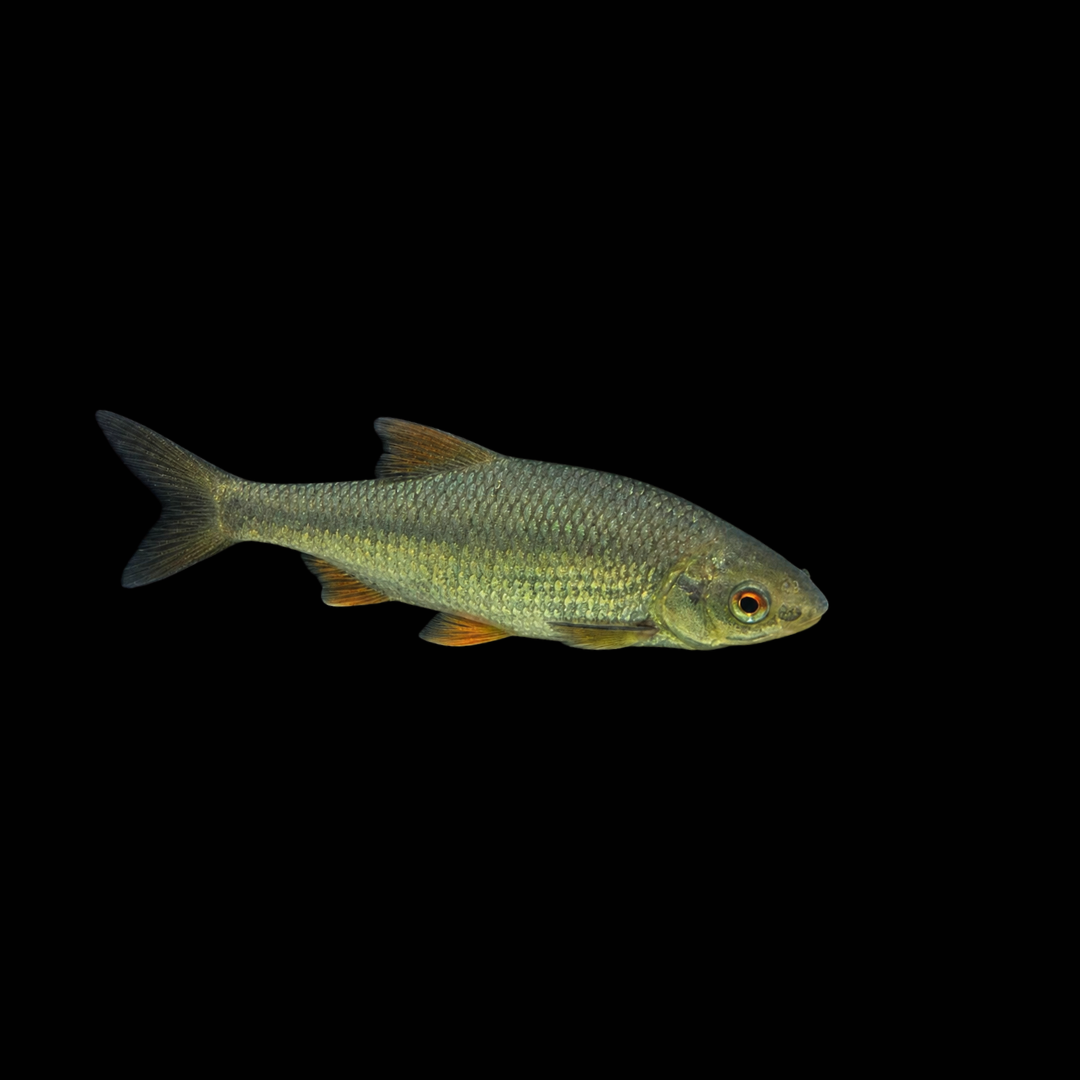
解説 / Description
オオバナウグイは、ヨーロッパの中・大規模河川にすむ好流性の淡水魚です。細長い銀色の体、赤みを帯びるヒレ、前へ張り出した吻、そして頭部の下側にまっすぐ開く口が特徴で、成長した個体は硬く発達した下唇を使って石の表面の藻類やバイオフィルムを削り取ります。派手な熱帯魚とは違いますが、流れの中で群れて泳ぎながら河床をなめるように採餌する姿には、清流魚らしい力強さがあります。 The common nase is a rheophilic freshwater fish of medium to large European rivers. It has a slender silvery body, reddish fins, a protruding snout, and a straight underslung mouth. Mature fish use a hard, cornified lower lip to scrape algae and biofilm from stones. It is not a flashy tropical fish, but its shoaling movement in current and grazing behavior give it the strong character of a fast-flowing river fish.
観賞魚としては、ヨーロッパ産の珍しい温帯魚、または大型になるコケ取り魚として扱われることがあります。ただし、一般的な熱帯魚とは飼育条件が大きく異なり、涼しい水温、強い水流、高い溶存酸素量、十分な遊泳空間が欠かせません。さらに、原産地では保全対象となる一方、移入先では在来魚に影響を与える例も知られるため、終生飼育と逸出防止を前提に迎えるべき魚です。 In the aquarium hobby it is sometimes kept as an unusual European temperate fish or as a large algae-grazing species. Its needs, however, are very different from those of ordinary tropical fish: cool water, strong current, high dissolved oxygen, and generous swimming space are essential. It is also a species of conservation concern in parts of its native range, while introduced populations can affect native fishes, so lifelong care and strict escape prevention are fundamental responsibilities.
基本情報 / Basic Information
| 学名 / Scientific Name | Chondrostoma nasus (Linnaeus, 1758) |
|---|---|
| 通称 / Common Name | オオバナウグイ、コモンネース、ナゼCommon nase, Nase, Sneep, Undermouth |
| 分類 / Family | 条鰭綱 コイ目 ウグイ科 Leuciscidae ウグイ亜科 LeuciscinaeActinopterygii, Cypriniformes, family Leuciscidae, subfamily Leuciscinae |
| 英名 / English Name | Common nase |
| 分布 / Distribution | 自然分布は、黒海、南部バルト海、南部北海へ注ぐヨーロッパの河川水系を中心とし、ドナウ川、ドニエストル川、南ブーフ川、ドニエプル川、ヴィスワ川、オドラ川、ネマン川、マース川周辺などが代表的です。トルコにも分布が示されます。フランスのローヌ川、ロワール川、エロー川、セーヌ川、イタリアおよびスロベニアのソチャ川水系などでは移入・定着例があります。Its native range is mainly in European river basins draining to the Black Sea, southern Baltic Sea, and southern North Sea, including systems such as the Danube, Dniester, Southern Bug, Dnieper, Vistula, Odra, Nieman, and Meuse. It is also reported from Turkey. Introduced or established populations are known from systems such as the Rhône, Loire, Hérault, Seine, and the Soca drainage of Italy and Slovenia. |
| 最大体長 / Max Size | 通常は25〜40cm前後で、主要な図鑑データでは最大50cm程度がよく用いられます。近年の総説では約60cmに達し得るとする記述もあるため、飼育では少なくとも50cm級の魚として水槽を設計するのが安全です。Usually around 25 to 40 cm, with about 50 cm commonly used as the maximum size in major species profiles. Some recent reviews mention the possibility of about 60 cm, so aquarium planning should treat it as a fish that can reach at least the 50 cm class. |
| 寿命 / Lifespan | 15年前後の記録がよく引用されます。文献によってはさらに長寿の可能性も示されるため、短期飼育向きではなく、長期管理を前提に迎える魚です。A lifespan of around 15 years is commonly cited. Some literature suggests the possibility of greater longevity, so it should be treated as a long-term commitment rather than a short-term aquarium fish. |
飼育環境 / Aquarium Environment
| 水槽サイズ / Tank Size | 導入サイズが7〜10cm程度でも、初期飼育は最低60cm規格水槽 約60L以上とし、長期飼育では90cm規格水槽 約180L以上、できれば120cm規格水槽 約240L以上や120cmワイド水槽を用意します。水量だけでなく、直線的に泳げる空間と強い水流を確保することが大切です。Even juveniles of 7 to 10 cm should start in at least a standard 60 cm aquarium of about 60 L. For long-term care, a standard 90 cm aquarium of about 180 L or larger is recommended, with a 120 cm aquarium of about 240 L or a wider 120 cm setup being preferable. Water volume matters, but open swimming space and strong directional current are equally important. |
|---|---|
| 水温 / Temperature | 目安は5〜24℃です。飼育上は18〜22℃前後を保つと管理しやすく、日本の夏に水温が25℃を超えやすい環境では水槽用クーラーやエアコン管理が必要です。30℃前後の高水温は避けてください。A practical range is about 5 to 24°C. Around 18 to 22°C is easier to manage in aquariums. In Japanese summers, an aquarium chiller or air-conditioned room is needed if the water may exceed 25°C. Temperatures near 30°C should be avoided. |
| 水質 / Water Quality | 中性から弱アルカリ性、pH6.8〜8.0前後を目安に、アンモニアと亜硝酸が検出されない清浄な水を維持します。溶存酸素量の低下に弱いため、大型外部式フィルター、十分な水面攪拌、強めのエアレーションを組み合わせると安定します。Keep the water clean, neutral to slightly alkaline, roughly pH 6.8 to 8.0, with no detectable ammonia or nitrite. This species is sensitive to low dissolved oxygen, so a large canister filter, strong surface agitation, and generous aeration are recommended. |
| レイアウト / Layout | 丸みのある川石、砂利、流木を使い、急流域の河床を意識したレイアウトにします。中央には泳ぐための空間を残し、水流ポンプで一方向の流れを作ると本種らしい遊泳行動が見られます。表面にうっすら藻類が育つ石を用意すると、自然な摂食行動を引き出せます。Use rounded river stones, gravel, and driftwood to suggest a fast-flowing riverbed. Leave open space in the center for swimming, and use a circulation pump to create a directional current. Stones with a light growth of algae encourage natural grazing behavior. |
| 注意点 / Precautions | 飛び出し事故、夏の高水温、酸欠、急な水質悪化が主なリスクです。重みのあるガラスフタを隙間なく設置し、配管まわりの小さな隙間もふさぎます。国外由来の魚であるため、個体はもちろん、飼育水や底床、ろ材を河川・池・用水路へ流さない管理が必要です。Jumping, summer heat, oxygen shortage, and sudden water deterioration are the main risks. Use a heavy, tight-fitting glass lid and close small gaps around pipes and equipment. Because this is a non-native fish in Japan, neither the fish nor aquarium water, substrate, or filter media should be released into rivers, ponds, or irrigation channels. |
餌と給餌 / Feeding
| 餌の種類 / Diet | 自然下では、石に付着した珪藻などの藻類、バイオフィルム、デトリタスを主に利用し、成長段階によっては小型無脊椎動物も食べます。飼育下では川魚用ペレット、植物質を含む沈下性フード、藻類タブレット、金魚・錦鯉用の良質な人工飼料、冷凍アカムシなどを組み合わせます。In nature it mainly uses attached algae such as diatoms, biofilm, and detritus from stones, while small invertebrates are important at some life stages. In aquariums, combine river-fish pellets, sinking foods with vegetable matter, algae wafers, quality goldfish or koi foods, and occasional frozen bloodworms. |
|---|---|
| 給餌のポイント / Feeding Tips | コケ取り役として期待できますが、水槽内の藻類だけで長期維持するのは不十分です。植物質を多めにした人工飼料を主食にし、動物性フードは補助的に与えます。強い水流の中でも餌が全個体に回るよう、沈下性の餌を複数箇所に分けて与えると安心です。It can graze algae, but aquarium algae alone is not enough for long-term care. Use vegetable-rich prepared foods as the staple and animal foods as supplements. In strong current, offer sinking foods in several places so all individuals can feed. |
性格と混泳 / Temperament and Tank Mates
| 性格 / Temperament | 基本的には群れで行動する温和な魚ですが、非常に活発で遊泳力があります。単独や少数では落ち着きにくく、人影や物音に驚いて飛び出すことがあります。十分な水槽サイズがある場合は5匹前後以上で飼うと、警戒心や小競り合いが分散しやすくなります。It is generally peaceful and shoaling, but very active and powerful. Single fish or very small groups may be nervous and can jump when startled by movement or noise. If the tank is large enough, a group of about five or more helps distribute nervousness and minor sparring. |
|---|---|
| 混泳の相性 / Compatibility | 同程度のサイズで、冷水から温帯域の水温、強い水流、高い酸素量に耐えられる温和な魚と相性がよいです。高水温を好む熱帯魚、泳ぎが遅い魚、ヒレの長い魚、小さすぎる魚との混泳は避けます。餌場では勢いがあるため、臆病な魚が餌を取れない場合は給餌位置を分けます。It is best kept with peaceful fish of similar size that tolerate cool to temperate water, strong current, and high oxygen. Avoid warm-water tropical species, slow swimmers, long-finned fish, and very small tank mates. Because it feeds energetically, use separate feeding spots if shy fish are being outcompeted. |
病気と対策 / Diseases and Prevention
| かかりやすい病気 / Common Diseases | 輸入直後や導入直後は白点病、肌荒れ、細菌性の二次感染、エラ寄生虫に注意します。特に高水温、酸欠、アンモニアや亜硝酸の上昇は体力を落とし、病気を誘発しやすくなります。Watch for ich, skin irritation, secondary bacterial infections, and gill parasites after import or introduction. Heat stress, low oxygen, and elevated ammonia or nitrite weaken the fish and make disease outbreaks more likely. |
|---|---|
| 対策と予防 / Prevention | 導入時は別水槽で検疫し、呼吸の荒さ、体表の白点、ヒレの裂け、体をこする行動を観察します。水温を涼しく安定させ、強いエアレーションと定期換水で水を清浄に保つことが最も重要です。薬浴を行う場合は、対象病原体と水温を確認し、冷水性・温帯性魚類に無理のない処置を選びます。Quarantine new fish in a separate tank and observe for heavy breathing, white spots, fin damage, or rubbing behavior. The most important prevention is cool, stable water, strong aeration, and regular water changes. If medication is needed, identify the likely pathogen and choose a treatment appropriate for cool-water or temperate fishes. |
増やし方(繁殖) / Breeding
| 雌雄の判別 / Sexing | 繁殖期にはオスの体色が強まり、頭部や体表、ヒレに追星が現れます。メスは成熟すると腹部がふくらみ、繁殖期の追星はオスより目立ちにくい傾向があります。非繁殖期の幼魚や若魚では雌雄判別は困難です。During the breeding season males become more strongly colored and develop breeding tubercles on the head, body, and fins. Mature females become fuller in the abdomen, and tubercles are usually less conspicuous. Juveniles and non-breeding fish are difficult to sex. |
|---|---|
| 繁殖形態 / Reproduction | 春に水温や流量の変化をきっかけとして産卵場へ移動し、浅く流れのある砂利底に粘着性の卵を産み付ける河川回遊性・礫底産卵型の魚です。親は卵や仔魚を保護しません。It is a potamodromous, lithophilic spawner. In spring, changes in temperature and flow stimulate movements to spawning sites, where adhesive eggs are laid on shallow gravel beds in flowing water. The parents do not guard eggs or larvae. |
| 繁殖のポイント / Breeding Tips | 家庭水槽での繁殖は非常に難しいです。大型水槽、強い水流、冷涼な季節変化、清浄な砂利底、成熟した複数個体が必要となります。繁殖を狙うよりも、長期的に健康を保ち、逸出や放流を防ぐ飼育管理を優先する魚です。Breeding in a home aquarium is very difficult. It would require a large tank, strong current, cool seasonal cues, clean gravel substrate, and multiple mature fish. For most keepers, the priority should be long-term health and strict prevention of escape or release rather than breeding. |
雑学と豆知識 / Trivia and Fun Facts
| 1. 名前に刻まれた「鼻」と「硬い口」 / 1. A name shaped by its nose and hard mouth | ドイツ語のNaseは「鼻」を意味し、英名のnaseもこの特徴的な突き出た吻に由来します。一方、属名のChondrostomaはギリシャ語のchondrosとstomaに由来し、硬い口、または軟骨質の口を思わせる名前です。つまり本種の名前には、見た目で目を引く鼻先と、石の表面を削るために発達した口器の両方が刻まれています。The German word Nase means “nose,” and the English name nase also refers to its protruding snout. The genus name Chondrostoma comes from Greek roots, chondros and stoma, suggesting a hard or cartilaginous mouth. Its name therefore captures both the visible snout and the specialized scraping mouth that defines its way of life. |
|---|---|
| 2. 河床に「筆跡」を残す藻類食魚 / 2. An algae grazer that leaves marks on the riverbed | オオバナウグイが石に付いた藻類を削ると、河床には細かな擦過痕が残ります。その線状の跡は、見る人によっては文字や記号のようにも見えます。フランス語圏で使われるÉcrivain、つまり「書き手」や「書記官」を思わせる呼び名は、このような摂食痕と結びつけて語られます。水槽内でも、石や流木に口を当てて少しずつ表面をなぞる動きに、本種の本来の暮らしがよく表れます。When the common nase scrapes algae from stones, it leaves fine grazing marks on the riverbed. These lines can look like writing or symbols, and the French name Écrivain, suggesting a “writer” or “scribe,” is often linked to such feeding traces. In aquariums, the same life history can be seen when it slowly works over stones and driftwood with its mouth. |
| 3. 淡水では珍しい掃除行動の報告 / 3. A rare report of freshwater cleaning behavior | 海ではクリーナーフィッシュがよく知られていますが、淡水魚で自然環境下の掃除共生が詳しく報告された例は多くありません。オオバナウグイを含むドナウ川流域の魚では、他魚の体表をついばむような掃除行動が報告されています。ただし、常に水槽内で再現される行動ではなく、相利共生として断定できる場面ばかりでもありません。形態的には、石を削る下唇が細かな付着物を取る動きにもつながり得る、という理解が自然です。Cleaner fishes are well known in the sea, but detailed records of cleaning symbiosis among freshwater fishes in natural habitats are relatively uncommon. In the Danube system, cleaning-like behavior has been reported among fishes including the common nase. This does not mean it will always occur in aquariums, nor that every interaction is a clear mutualism. Morphologically, it is reasonable to see the stone-scraping lower lip as a tool that can also remove fine material from another fish’s body surface. |
| 4. 黒い腹膜については、断定しすぎない / 4. The black peritoneum should not be overstated | 本種では腹腔内の黒い腹膜が特徴として語られることがあります。草食性・雑食性魚類では、腹腔内への光を遮る働きなどが説明されることがありますが、オオバナウグイにおいて「腸内細菌を紫外線から守るため」とまで断定するには、個別の実証情報が不足します。黒い腹膜は本種の特徴の一つですが、その働きについてはまだ仮説の段階です。The common nase is sometimes described as having a dark or black peritoneum. In herbivorous and omnivorous fishes, dark peritoneal pigmentation is sometimes explained as reducing light entering the body cavity. However, for this species it is safer not to state as a proven fact that it specifically protects gut bacteria from ultraviolet light. The dark peritoneum is an anatomical feature of the fish, but explanations of its function remain hypotheses. |
| 5. 保全対象であり、移入先では問題にもなりうる / 5. A conservation concern that can also cause problems when introduced | 原産地の一部では、堰やダムによる移動阻害、砂利底の目詰まり、産卵場の消失、水質悪化によって個体群が弱っています。一方で、フランスやイタリアなどの移入先では、在来の近縁種との競合や交雑、寄生虫相の変化が問題視されています。日本の在来ウグイ類との交雑が確認されているわけではありませんが、温帯河川に適応した魚である以上、放流しない、逃がさない、飼育水を自然水域へ流さないという基本は徹底する必要があります。In parts of its native range, populations have been weakened by barriers such as weirs and dams, silted spawning gravel, loss of spawning sites, and water pollution. In introduced areas such as parts of France and Italy, competition, hybridization with related native species, and changes in parasite communities are concerns. Hybridization with Japanese native daces has not been confirmed, but because this is a temperate river fish, keepers must never release it, allow escape, or discharge untreated aquarium water into natural waters. |
| 6. 日本では「見つけた時が入荷時期」の希少魚 / 6. An occasional specialty import in Japan | 日本国内では一般的な熱帯魚店で常時見かける魚ではなく、ヨーロッパ便や専門店の入荷で少数流通することがあります。海外の観賞魚問屋では8〜10cmほどの若魚が扱われる例があり、日本の販売情報でも7〜8cm前後の入荷例が見られます。小さな状態で入手しても、本来は大型化し、水流と低水温を必要とする魚です。希少性だけで選ばず、夏越しと終生飼育の準備を整えてから迎えるのが安心です。In Japan it is not a fish that ordinary tropical fish shops keep in stock regularly, but small numbers may appear through European shipments and specialist retailers. Overseas ornamental fish wholesalers have listed juveniles around 8 to 10 cm, and Japanese retail records also show arrivals around 7 to 8 cm. Even when purchased small, it is ultimately a large, current-loving, cool-water fish. It is best chosen only after preparing for summer cooling and lifelong care, not merely because it is rare. |
まとめ / Conclusion
オオバナウグイは、銀色の体、赤みを帯びたヒレ、石を削るように藻類を食べる独特の口器によって、冷水・温帯魚水槽にヨーロッパの急流を思わせる存在感を運んでくれる魚です。水流に向かって群れで姿勢を保ち、時おり河床をなぞるように採餌する姿には、単なるコケ取り役では語りきれない魅力があります。 The common nase brings the presence of a European fast-flowing river into a cool-water or temperate aquarium. Its silvery body, reddish fins, and specialized algae-scraping mouth make it far more than a simple algae eater. A group holding position in the current and grazing over stones offers a vivid glimpse of river ecology.
その魅力を長く楽しむためには、涼しい水、強い水流、高い酸素量、広い遊泳空間、確実なフタ、そして自然環境へ絶対に出さない責任が欠かせません。条件を整えられる飼育者にとって、オオバナウグイは水槽の中で清流の時間をゆっくり見せてくれる、奥行きのある温帯魚になります。 To enjoy that appeal for many years, the keeper must provide cool water, strong current, high oxygen, generous swimming space, a secure lid, and an absolute commitment never to release it into the wild. For aquarists who can meet those needs, the common nase becomes a deeply rewarding temperate fish that lets the quiet rhythm of a clear river unfold inside the aquarium.

気になる道具や飼い方を見つけてみませんか?
 アイのアクアグッズ案内水槽用ヒーターの選び方|固定式・温度調節式と、水量に合うW数の考え方水槽の魚は冬に寒くない? アイとコタロウが水温計から固定式・温度調節式・分離式ヒーターまで比較。水量と室温に合うW数、設置場所、水換えや交換の注意点を、国内メーカーの商品とともに紹介します。記事はコチラ →
 アイのアクアグッズ案内海水魚初心者の必需品|水槽・人工海水・比重計・水質検査道具の特徴や使い方、選ぶときのポイントをアイが紹介します。記事はコチラ →
 アイのアクアグッズ案内旅行中、お魚のごはんはどうする? 自動給餌器・使える餌・スマート水槽の選び方旅行中の魚の餌やりを助ける自動給餌器を、アイとコタロウが紹介。時間指定、おかわり給餌、対応するフレークや顆粒、設置台、スマホ管理、一体型水槽、留守番フードまで、使いどころと選び方を案内します。記事はコチラ →
 アイのアクアグッズ案内カルキ抜き・水質調整剤の選び方|水換えと水槽の種類に合わせて選ぶ道具の特徴や使い方、選ぶときのポイントをアイが紹介します。記事はコチラ →
さまざまな飼育テーマをご紹介。リンク先の記事には広告・商品紹介が含まれます。
案内・紹介記事一覧へ →分布マップ
オオバナウグイは、黒海、南部バルト海、南部北海へ注ぐヨーロッパの河川水系を中心に分布し、ドナウ川、ドニエストル川、ドニエプル川、ヴィスワ川、オドラ川、ネマン川、マース川周辺などが代表的です。地図では、広い分布域のイメージを示すため、中央ヨーロッパのドナウ川流域付近を概略代表地点として表示しています。
このマップのプロットは、分布欄の文章から作成した分布イメージ用の概略代表地点です。実際の採集地点や厳密な生息範囲を示すものではありません。
参考文献・参照資料
オオバナウグイの分類、分布、生息環境、飼育条件、繁殖、病気や導入時の注意点を支える資料として、学術論文、公的機関、国際的な生物多様性データベース、獣医学系資料に絞って選定しています。店舗、通販ページ、個人ブログ、一般的なまとめサイトは含めていません。
-
FishBase. Chondrostoma nasus, Common nase.
https://www.fishbase.se/summary/Chondrostoma-nasus
学名、分類、最大体長、寿命、自然分布、河川環境、食性、産卵生態など、図鑑の基礎情報を確認するための中核資料です。 -
GBIF Secretariat. Chondrostoma nasus (Linnaeus, 1758).
https://www.gbif.org/species/2360551
受理学名、シノニム、分類階層、分布記録を確認するための国際的な生物多様性データベースです。 -
Kottelat, M. & Freyhof, J. 2007. Handbook of European Freshwater Fishes.
https://portals.iucn.org/library/node/9068
ヨーロッパ産淡水魚の分類、同定、分布、生態、保全状況を扱う標準的文献で、本種の基礎的な図鑑情報を補強する資料です。 -
IUCN Red List. Species changing IUCN Red List Status, 2024-2.
https://nc.iucnredlist.org/redlist/content/attachment_files/2024-2_RL_Table_7.pdf
保全評価の更新状況を確認するためのIUCN公式資料です。記事内で扱う「準絶滅危惧」相当の扱いを確認する根拠として使用できます。 -
Ovidio, M. & Nzau Matondo, B. 2024. Ecology and Sustainable Conservation of the Nase Chondrostoma nasus: A Literature Review.
https://www.mdpi.com/2071-1050/16/14/6007
本種が藻類食性、好流性、礫底産卵性、好酸素性であることや、河川分断・産卵床劣化への感受性を整理した総説です。飼育条件を自然環境から逆算する際の主要資料です。 -
Keckeis, H., Bauer-Nemeschkal, E. & Kamler, E. 1996. Effects of reduced oxygen level on the mortality and hatching rate of Chondrostoma nasus embryos. Journal of Fish Biology.
https://onlinelibrary.wiley.com/doi/abs/10.1111/j.1095-8649.1996.tb00039.x
低酸素が胚の死亡率や孵化成功に与える影響を扱う研究で、高い溶存酸素を重視する飼育・繁殖条件の根拠になります。 -
Ovidio, M. & Philippart, J. C. 2008. Movement patterns and spawning activity of individual nase Chondrostoma nasus in flow-regulated and weir-fragmented rivers. Journal of Applied Ichthyology.
https://onlinelibrary.wiley.com/doi/abs/10.1111/j.1439-0426.2008.01050.x
繁殖期の移動、産卵活動、堰や流量調整の影響を扱うテレメトリー研究です。遊泳力、回遊性、強い水流を好む性質を説明する資料として有用です。 -
Nagel, C., Mueller, M., Pander, J. & Geist, J. 2020. Making up the bed: Gravel cleaning as a contribution to nase spawning and recruitment success. Aquatic Conservation: Marine and Freshwater Ecosystems.
https://onlinelibrary.wiley.com/doi/full/10.1002/aqc.3458
砂利底の目詰まり、産卵床の透水性、卵と仔魚の発育環境を扱う研究です。繁殖欄やレイアウト欄で礫底・清浄な底床・高酸素を重視する根拠になります。 -
Costedoat, C., Pech, N., Chappaz, R. & Gilles, A. 2007. Novelties in Hybrid Zones: Crossroads between Population Genomic and Ecological Approaches. PLOS ONE.
https://journals.plos.org/plosone/article?id=10.1371/journal.pone.0000357
導入域での近縁種との交雑を扱う査読論文です。外来化した場合の遺伝的影響や、放流・逸出を避けるべき理由を支える資料です。 -
Šimková, A. et al. 2012. Does invasive Chondrostoma nasus shift the parasite community structure of endemic Parachondrostoma toxostoma in sympatric zones? Parasites & Vectors.
https://pmc.ncbi.nlm.nih.gov/articles/PMC3508841/
移入個体群と在来近縁種の寄生虫相を扱う研究です。エラ寄生虫や外来寄生虫の持ち込み、検疫、飼育水や生体の取り扱いへの注意を説明する根拠になります。 -
MSD Veterinary Manual. Parasitic Diseases of Fish.
https://www.msdvetmanual.com/exotic-and-laboratory-animals/aquarium-fish/parasitic-diseases-of-fish
白点病や単生類など、観賞魚で問題になりやすい外部寄生虫と予防の考え方を確認するための獣医学系資料です。 -
環境省. 特定外来生物等一覧.
https://www.env.go.jp/nature/intro/2outline/list.html
日本国内での特定外来生物・未判定外来生物などの指定状況を確認するための公的資料です。指定の有無にかかわらず、観賞魚の逸出・放流を避ける注意喚起と併せて確認する資料として使用できます。
選定日:2026年6月23日。分類体系や保全評価、国内規制は更新される可能性があるため、各リンク先の最新版を参照してください。





コメント