

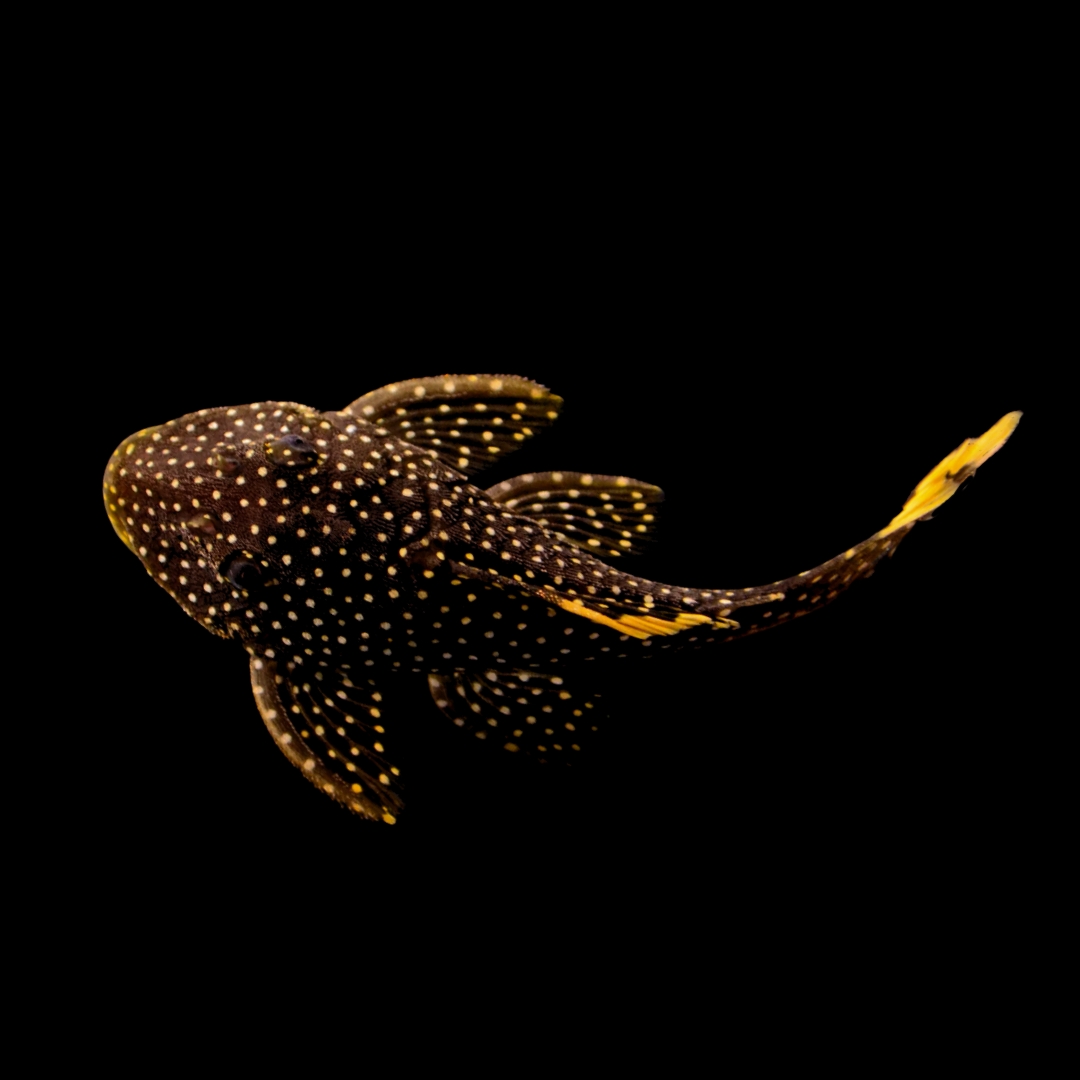
解説 / Description
オレンジフィンカイザープレコは、ブラジルのシングー川水系に分布する中大型のプレコです。黒褐色の体に黄色いスポットが散り、背鰭や尾鰭の縁に鮮やかな黄色の帯が入る姿から、英名では Gold Nugget Pleco と呼ばれます。日本のアクアリウム市場でも古くから人気が高く、L018、L081、L177などのLナンバーで流通してきました。美しい幼魚の印象から小型のコケ取り魚のように見られがちですが、実際には高温、強い水流、高い溶存酸素、清浄な水を必要とするシングー川の急流環境に適応した専門性の高い魚です。長期飼育には、一般的なコミュニティ水槽ではなく、本種の生態に合わせた専用環境を用意することが大切です。 The Orange Fin Kaiser Pleco is a medium to large loricariid catfish from the Xingu River system in Brazil. Its dark brown to black body is covered with yellow spots, and the bright yellow edging on the dorsal and caudal fins gives rise to the English name Gold Nugget Pleco. It has long been popular in the Japanese aquarium trade under L-numbers such as L018, L081, and L177. Although its attractive juveniles may look like small algae-cleaning fish, this species is actually a specialized rheophilic pleco adapted to the hot, fast-flowing, oxygen-rich, and clean waters of the Xingu River. Long-term success requires a dedicated aquarium that reflects its natural ecology rather than an ordinary community tank.
基本情報 / Basic Information
| 学名 / Scientific Name | Baryancistrus xanthellus |
|---|---|
| 通称 / Common Name | オレンジフィンカイザープレコ、ファインスポット・オレンジフィンカイザー、クイーン・オレンジフィンカイザーGold Nugget Pleco, Orange Fin Kaiser Pleco, Fine Spot Gold Nugget Pleco, Queen Gold Nugget Pleco |
| 分類 / Family | ナマズ目 ロリカリア科 ヒポストムス亜科 バリアンキストルス属Order Siluriformes, Family Loricariidae, Subfamily Hypostominae, Genus Baryancistrus |
| 英名 / English Name | Gold Nugget Pleco |
| 分布 / Distribution | ブラジル、パラ州のシングー川水系。主にヴォルタ・グランデ周辺、イリリ川、クルア川などの岩礁性の急流域に分布します。Xingu River system in Pará, Brazil. It is mainly associated with rocky rapids around Volta Grande, the Iriri River, and the Curuá River. |
| 最大体長 / Max Size | 標準体長で約21.5〜22.4cm、全長では30cm前後に達することがあります。Approximately 21.5 to 22.4 cm in standard length, and it may reach around 30 cm in total length. |
| 寿命 / Lifespan | 正確な記録は限られますが、適切な環境では10年以上の長期飼育が期待できる中大型プレコです。Exact records are limited, but under suitable conditions this medium to large pleco can be expected to live for more than 10 years. |
飼育環境 / Aquarium Environment
| 水槽サイズ / Tank Size | 幼魚の一時飼育でも60cmワイド水槽以上が望ましく、終生飼育では最低でも90cm規格水槽を目安にします。成魚の複数飼育や他の底生魚との混泳を考える場合は、120cm以上、できれば100ガロン級、約380L以上の底面積がある水槽が適しています。Even juveniles are best kept temporarily in at least a wide 60 cm tank. For lifelong care, a standard 90 cm tank should be considered the minimum. For adults in groups or with other bottom-dwelling fish, a tank of 120 cm or larger, ideally around 100 gallons or 380 liters or more with ample floor space, is recommended. |
|---|---|
| 水温 / Temperature | 27℃を下回らないように管理し、理想は28〜32℃です。低温では代謝や消化が落ちやすく、状態を崩す原因になります。 Keep the temperature from dropping below 27°C, with an ideal range of 28 to 32°C. Lower temperatures can reduce metabolism and digestion, leading to poor condition. |
| 水質 / Water Quality | 弱酸性から中性、pH 6.0〜7.2程度、軟水から中程度の硬度が目安です。高温では酸素が不足しやすいため、強力なろ過、十分なエアレーション、定期的な換水でアンモニア、亜硝酸、硝酸塩の蓄積を抑えます。Aim for slightly acidic to neutral water, around pH 6.0 to 7.2, with soft to moderately hard water. Because warm water holds less oxygen, strong filtration, vigorous aeration, and regular water changes are important to prevent the accumulation of ammonia, nitrite, and nitrate. |
| レイアウト / Layout | シングー川の岩場を意識し、滑らかな石、岩組み、沈木、プレコ用シェルターを組み合わせて、複数の隠れ家と視線を遮る構造を作ります。底面を洗うような強い水流を作り、淀みが出ないようにします。Use smooth stones, rockwork, driftwood, and pleco caves to create multiple shelters and visual barriers, reflecting the rocky Xingu River habitat. Provide strong current that sweeps across the bottom and avoid stagnant areas. |
| 注意点 / Precautions | 本種は単なるお掃除役の魚ではありません。高温と強い水流を好む一方で、酸欠や水質悪化には弱いため、ヒーター、ろ過器、エアレーション、水流ポンプを組み合わせた専用管理が必要です。購入直後は痩せや腸内環境の崩れによる餓死が起こりやすいため、入荷後に状態が落ち着き、腹部がふっくらした個体を選ぶことが重要です。This species is not merely a utility algae eater. It prefers heat and strong current, yet it is sensitive to oxygen shortage and deteriorating water quality. Dedicated management with heaters, filtration, aeration, and current pumps is essential. Newly imported fish are prone to starvation due to emaciation and disrupted gut condition, so choose individuals that have settled after import and show a rounded belly. |
餌と給餌 / Feeding
| 餌の種類 / Diet | 植物質を含むプレコ用タブレット、藻類系の人工飼料、ズッキーニやサツマイモなどの野菜、レパシー・ソイレントグリーンのようなゲル状フードが使いやすい餌です。自然下では珪藻や緑藻を含むバイオフィルムを中心に、微小な底生無脊椎動物も一緒に摂取するため、冷凍赤虫、細かく刻んだエビや貝類などの動物質も少量補います。Suitable foods include pleco tablets with plant matter, algae-based prepared foods, vegetables such as zucchini and sweet potato, and gel foods such as Repashy Soilent Green. In nature, it grazes mainly on biofilm containing diatoms and green algae, while also ingesting small benthic invertebrates, so small amounts of animal-based foods such as frozen bloodworms, finely chopped shrimp, or shellfish can also be offered. |
|---|---|
| 給餌のポイント / Feeding Tips | 一度に多く与えるより、岩や流木に塗れるゲル状フードや沈下性の餌を使い、長時間少しずつ削り取れる状態を作ると自然な摂餌に近づきます。夜行性の傾向が強いため、消灯後の給餌が有効です。同居魚に餌を奪われると痩せやすいので、腹部の丸みを定期的に観察します。Rather than feeding a large amount at once, use gel foods spread onto rocks or driftwood and sinking foods that allow the fish to graze gradually over a longer period. Feeding after lights out is effective because the species is strongly nocturnal. Watch the belly regularly, as it can become thin if tank mates outcompete it for food. |
性格と混泳 / Temperament and Tank Mates
| 性格 / Temperament | 幼魚のうちは比較的おとなしく見えますが、成長に伴って縄張り意識が強くなります。特に同種や他のプレコ類など、生活圏が重なる底生魚に対しては、シェルターや餌場を巡って争うことがあります。Juveniles may appear relatively calm, but territorial behavior increases as they grow. They may fight over shelters and feeding areas, especially with their own kind or other plecos and bottom-dwelling fish that share the same space. |
|---|---|
| 混泳の相性 / Compatibility | 高温、強水流、高酸素を好む中層魚とは比較的合わせやすく、流水性のテトラ類などが候補になります。一方、金魚のような低温を好む魚、餌を奪いやすい大食漢、同じシェルターを争う大型プレコとの混泳は不向きです。複数飼育では十分な底面積、隠れ家、視線を切るレイアウトを用意します。It can be compatible with midwater fish that also enjoy warm, fast-flowing, oxygen-rich water, such as rheophilic tetras. It is unsuitable with cool-water fish such as goldfish, heavy feeders that steal food, or large plecos that compete for the same shelters. Group keeping requires ample floor space, many shelters, and layouts that break lines of sight. |
病気と対策 / Diseases and Prevention
| かかりやすい病気 / Common Diseases | 導入直後の痩せ、餓死、消化不良、酸欠による不調、白点病や原生動物性の体表・鰓トラブル、傷からの細菌感染に注意が必要です。特に輸入直後の個体は長い絶食とストレスで腸内環境が崩れていることがあります。Common concerns include post-import emaciation, starvation, digestive trouble, oxygen-stress-related decline, ich or protozoan problems on the skin and gills, and bacterial infections from wounds. Newly imported individuals may have disrupted gut condition after prolonged fasting and transport stress. |
|---|---|
| 対策と予防 / Prevention | 状態の良い個体を選ぶことが最初の予防です。目が落ち窪んでいない、腹部がふっくらしている、鰭を不自然に立てて苦しそうにしていない個体を選びます。導入後は急な水質変化を避け、強いエアレーションと清潔な水を維持し、消化しやすい餌を少量から与えます。薬浴を行う場合は、プレコ類が薬剤に敏感なことを考慮し、用量と水質を慎重に管理します。Prevention begins with choosing a healthy fish. Select individuals with eyes that are not sunken, a rounded belly, and fins that are not held unnaturally in a stressed posture. After introduction, avoid sudden water changes, maintain strong aeration and clean water, and begin with small amounts of easily accepted food. If medication is needed, manage dosage and water quality carefully because plecos can be sensitive to treatments. |
増やし方(繁殖) / Breeding
| 雌雄の判別 / Sexing | 明確な雌雄差は分かりにくい魚です。成熟した雄では頭部や胸鰭周辺の発達、体つき、縄張り行動が手がかりになることがありますが、外見だけでの判別は確実ではありません。Sexing is difficult. Mature males may show clues such as stronger development around the head and pectoral fins, differences in body shape, and territorial behavior, but external identification is not fully reliable. |
|---|---|
| 繁殖形態 / Reproduction | ロリカリア科の多くと同様、洞窟や岩の隙間を利用する産卵形態が想定されます。ただし、本種の安定した水槽内繁殖は一般的ではなく、詳細な繁殖情報は限られます。As with many loricariids, cave or crevice spawning is expected. However, stable aquarium breeding of this species is not common, and detailed breeding information remains limited. |
| 繁殖のポイント / Breeding Tips | 繁殖を狙う場合は、成熟したペアまたは小グループを大型水槽で長期的に状態よく育て、強い水流、高い酸素量、清潔な水、複数のシェルターを維持します。雨季と乾季の変化を意識した換水や水流変化が刺激になる可能性はありますが、確立された方法としては扱わず、まずは安定飼育を最優先にします。For breeding attempts, maintain mature pairs or small groups in excellent condition over the long term in a large aquarium with strong current, high oxygen levels, clean water, and multiple shelters. Water changes and current shifts that imitate seasonal changes may act as triggers, but these should not be treated as an established method. Stable husbandry should come first. |
雑学と豆知識 / Trivia and Fun Facts
| 1. Lナンバーに刻まれた分類の歴史 / 1. A taxonomic history recorded in L-numbers | オレンジフィンカイザープレコは、学名が整理される以前から観賞魚として流通していたため、L018、L081、L177、L085など複数の番号で知られてきました。これは別々の魚が無秩序に混ざっていたというより、シングー川水系の産地差、斑点の大きさ、鰭の黄色い縁取り、そして成長段階の違いが市場名として細かく切り分けられていた歴史を示しています。2011年に Baryancistrus xanthellus として正式に記載されたことで、これらの多くが同一種内の変異として理解されるようになりました。The Orange Fin Kaiser Pleco was traded in the aquarium hobby before its scientific name was settled, so it became known under several numbers such as L018, L081, L177, and L085. Rather than simply representing a random mix of different fishes, these names reflect a trade history in which locality, spot size, yellow fin edging, and growth stage were separated into market categories. After the species was formally described as Baryancistrus xanthellus in 2011, many of these forms became understood as variations within the same species. |
|---|---|
| 2. 種小名 xanthellus の意味 / 2. The meaning of the species name xanthellus | 種小名の xanthellus は黄色を連想させる言葉で、本種の最大の魅力である黄色い斑点と鰭の縁取りをよく表しています。暗い岩場に張り付く黒褐色の体に、星のような黄色が浮かぶ姿は、英名 Gold Nugget Pleco の印象とも重なります。The species name xanthellus evokes the color yellow, fitting the yellow spots and fin edging that make this fish so attractive. Its dark body dotted with bright yellow on rocky substrates also matches the impression behind the English name Gold Nugget Pleco. |
| 3. 美しい幼魚と落ち着いた成魚 / 3. Brilliant juveniles and more subdued adults | 販売水槽で見かける幼魚は、黄色いスポットと太い黄色のフィンエッジが非常に目立ちます。しかし成長すると、鰭の帯は細くなり、スポットも相対的に目立ちにくくなることがあります。これは魅力が失われるというより、シングー川の岩盤に溶け込むような、成魚らしい落ち着いた姿へ変化していくと捉えるとよいでしょう。Juveniles seen in shops often show striking yellow spots and broad yellow fin edging. As they grow, the fin bands may narrow and the spots can become relatively less conspicuous. Rather than seeing this as a loss of beauty, it is better understood as a shift into the more subdued adult appearance that blends with the rocky Xingu River environment. |
| 4. 急流に生きる専門家 / 4. A specialist of fast water | 本種の故郷であるシングー川の岩礁地帯は、水温が高いにもかかわらず、激しい流れによって豊富な酸素が保たれています。オレンジフィンカイザーは吸盤状の口で岩に張り付き、岩肌のバイオフィルムを削り取るように食べます。そのため水槽内でも、強い水流と酸素、そして清潔な水が飼育の中心になります。The rocky rapids of the Xingu River maintain abundant oxygen through intense flow despite their high temperature. The Orange Fin Kaiser Pleco clings to rocks with its sucker-like mouth and grazes biofilm from the surface. In aquariums, strong current, oxygen, and clean water therefore become the foundation of successful care. |
| 5. 環境問題と観賞魚文化 / 5. Environmental issues and the aquarium hobby | 本種の野生個体群にとって大きな脅威とされるのは、観賞魚としての採集だけではなく、ダム建設や森林伐採、土砂流入、水質汚染による生息地そのものの変化です。適切に管理された流通は、現地の漁業コミュニティに収入をもたらし、川の価値を保つ一面もあります。だからこそ、飼育者側も安価に消費する魚ではなく、長く健康に飼うべき貴重な生き物として向き合う姿勢が求められます。Major threats to wild populations are not limited to aquarium collection, but include habitat alteration caused by dam construction, deforestation, sediment runoff, and water pollution. Properly regulated trade can also provide income for local fishing communities and help maintain the value of the river. This is why aquarists should treat the species not as a cheap disposable fish, but as a valuable animal that deserves long-term, healthy care. |
まとめ / Conclusion
オレンジフィンカイザープレコは、黄色い斑点とフィンエッジが美しい、シングー川を代表する魅力的なプレコです。一方で、成長すると30cm前後になることがあり、高温、強水流、高酸素、清潔な水、十分な底面積を必要とするため、初心者向けの小型コケ取り魚として扱うには向きません。 The Orange Fin Kaiser Pleco is an attractive representative pleco of the Xingu River, admired for its yellow spots and fin edging. However, it may grow to around 30 cm and requires high temperature, strong current, high oxygen, clean water, and ample floor space, so it is not suitable as a beginner-level small algae cleaner.
本種を長く楽しむためには、購入時に痩せていない安定個体を選び、導入後は餌を確実に食べられる環境を整えることが大切です。シングー川の急流に生きる専門家としての性質を理解し、専用水槽に近い環境を用意できれば、幼魚の華やかさだけでなく、成魚へ育っていく過程そのものを味わえる奥深い魚になります。 To enjoy this species over the long term, choose a stable individual that is not emaciated and provide an environment where it can feed reliably after introduction. If its nature as a fast-water Xingu River specialist is understood and a dedicated aquarium is prepared, it becomes a deeply rewarding fish whose appeal lies not only in its brilliant juvenile colors but also in the process of growing into an adult.
気になる道具や飼い方を見つけてみませんか?
 アイのアクアグッズ案内旅行中、お魚のごはんはどうする? 自動給餌器・使える餌・スマート水槽の選び方旅行中の魚の餌やりを助ける自動給餌器を、アイとコタロウが紹介。時間指定、おかわり給餌、対応するフレークや顆粒、設置台、スマホ管理、一体型水槽、留守番フードまで、使いどころと選び方を案内します。記事はコチラ →
 アイのアクアグッズ案内プレコ飼育に必要なもの|餌・流木・ろ過・隠れ家・掃除用品道具の特徴や使い方、選ぶときのポイントをアイが紹介します。記事はコチラ →
 アイのアクアグッズ案内ダニオの仲間に合わせる飼育用品|ゼブラダニオから超小型種まで水槽・ろ過・餌を選ぶ道具の特徴や使い方、選ぶときのポイントをアイが紹介します。記事はコチラ →
 アイのアクアグッズ案内水合わせの道具とやり方|魚を迎える前にそろえたい容器・点滴キット・ネット買ってきた魚はすぐ水槽に入れていい? 水温合わせと水合わせの違いから、透明ケース・点滴キット・ネットの選び方、時間をかけすぎない注意点まで、アイとコタロウが紹介します。記事はコチラ →
さまざまな飼育テーマをご紹介。リンク先の記事には広告・商品紹介が含まれます。
案内・紹介記事一覧へ →参考文献・根拠資料
本記事では、分類、分布、生息環境、飼育条件、繁殖、病気や注意点を裏付ける資料として、原記載論文、国際的な生物多様性データベース、査読論文、専門団体の繁殖報告、魚病学・魚類生理学の専門書を中心に選定しています。店舗、通販サイト、個人ブログ、まとめサイトは参考文献から除外しました。
- Rapp Py-Daniel, L.; Zuanon, J.; Ribeiro de Oliveira, R. (2011). Two new ornamental loricariid catfishes of Baryancistrus from rio Xingu drainage (Siluriformes: Hypostominae). Neotropical Ichthyology, 9(2), 241-252. 主な根拠: 学名、分類、原記載、識別形質、幼魚と成魚の色彩差、シングー川水系での分布、岩場・急流環境、食性。 資料リンク
- GBIF Secretariat. Baryancistrus xanthellus Rapp Py-Daniel, Zuanon & Ribeiro de Oliveira, 2011. GBIF Backbone Taxonomy. 主な根拠: 受容名、分類階級、著者表記、英名・現地名などの名称情報。 資料リンク
- Froese, R.; Pauly, D. (eds.). Baryancistrus xanthellus. FishBase. 参照日: 2026年6月16日。 主な根拠: 最大体長、淡水・底生性、分布、幼魚と成魚の居場所、藻類・コケムシ・ユスリカ幼虫を含む食性、IUCN評価の確認。 資料リンク
- Magalhães, K. X.; Silva, R. D. F. da; Sawakuchi, A. O.; Gonçalves, A. P.; Evangelista-Gomes, G. F.; Muriel-Cunha, J.; Sabaj, M. H.; Sousa, L. M. de. (2021). Phylogeography of Baryancistrus xanthellus (Siluriformes: Loricariidae), a rheophilic catfish endemic to the Xingu River basin in eastern Amazonia. PLOS ONE, 16(8), e0256677. 主な根拠: シングー川水系固有の好流水性種であること、浅い急流と岩盤基質への適応、イリリ川・バカジャ川を含む個体群構造、ベロ・モンテダムによる分断リスク。 資料リンク
- Instituto Chico Mendes de Conservação da Biodiversidade (ICMBio). (2022). Baryancistrus xanthellus. The IUCN Red List of Threatened Species 2022: e.T134694428A134694432. 主な根拠: 保全状況を「準絶滅危惧」に扱う根拠、生息環境の質の低下に関する注意点。 資料リンク
- Furrer, F.; Konn-Vetterlein, D. (rev.). (2021). Successful breeding of Baryancistrus xanthellus. IG BSSW e.V. 初出: DATZ 07/2013。 主な根拠: 長期飼育での高水温、強い酸素供給、少量多回給餌、強水流、繁殖の難しさ、繁殖時の水温・水流・導電率低下の実例。 資料リンク
- Barros, F. J. T. de; Yasui, G. S.; Soares, A. X.; Amorim, E. de P.; Nascimento, T. P.; Silva, M. P. da; Bandeira, M. M.; Rodrigues, E. L. C.; Lopes, T. da S.; Sousa, L. M. de. (2025). Characterization of semen of Baryancistrus xanthellus Rapp Py-Daniel, Zuanon & Ribeiro de Oliveira, 2011 (Siluriformes, Loricariidae), an endemic catfish species from the Xingu River, Pará, Brazil. Theriogenology Wild, 7, 100138. 主な根拠: 野生成熟雄の繁殖生理、保全繁殖や人工繁殖技術の必要性、シングー川固有種としての保全上の重要性。 資料リンク
- Noga, E. J. (2010). / Wedemeyer, G. A. (1996). Fish Disease: Diagnosis and Treatment, 2nd ed. Wiley-Blackwell. / Physiology of Fish in Intensive Culture Systems. Chapman & Hall. 主な根拠: 輸送・水質悪化・低酸素・不適切な水温が魚のストレスや感染症リスクを高めるという、魚病学および飼育生理の一般的根拠。
補足: 飼育条件の数値は目安です。飼育下での繁殖報告はありますが、一般的な家庭水槽で容易に再現できるものではありません。成熟した個体と、十分な水流・酸素・空間を確保することが重要です。




コメント