

解説 / Description
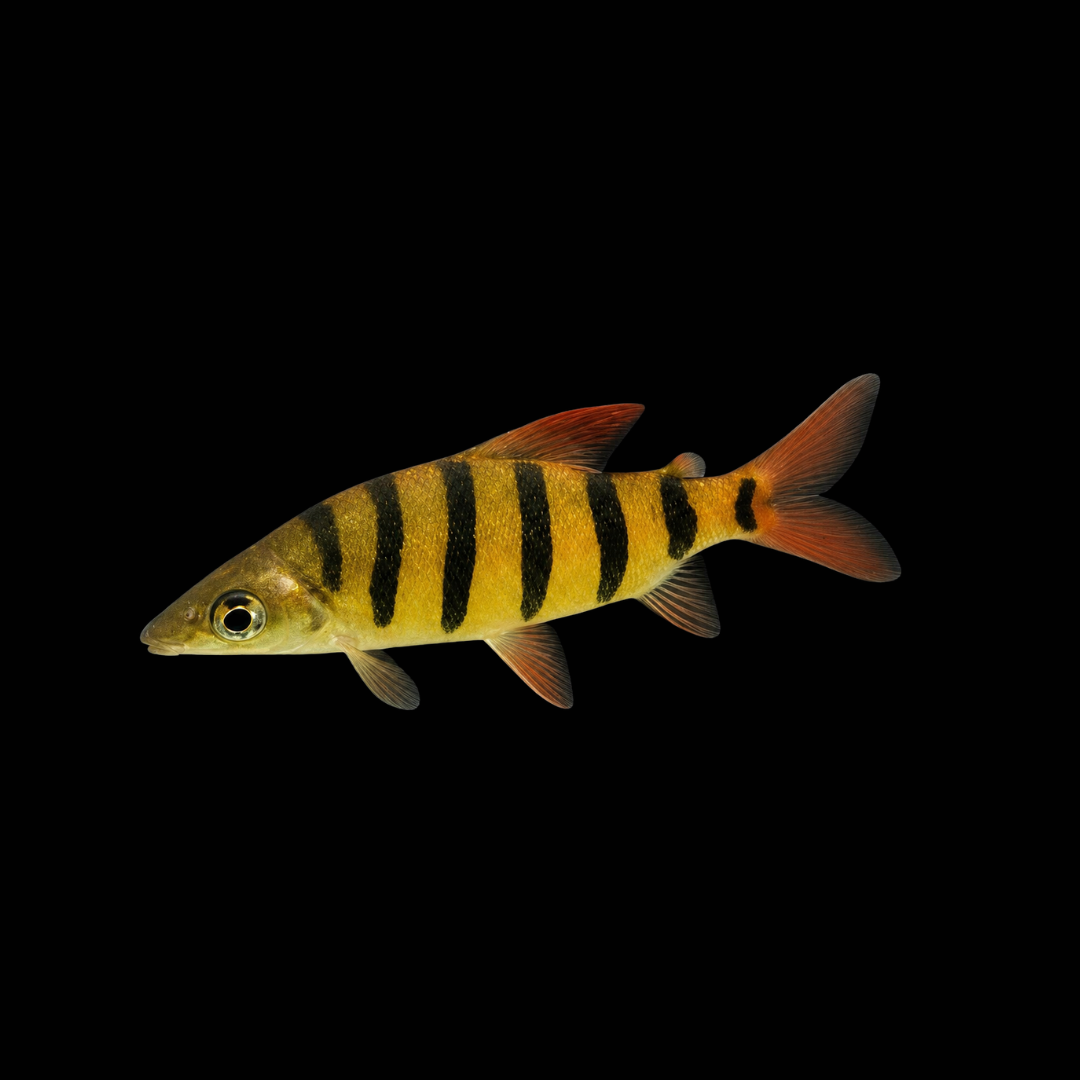
ロングノーズクラウンテトラは、中央アフリカのコンゴ川流域に分布するディスティコドゥス科の大型カラシンです。長く伸びた吻と、幼魚期に目立つ橙色から赤みを帯びた体色、6〜8本の暗色の縦帯が大きな特徴です。成長後も縞模様は残るとされますが、体色が落ち着くことで若魚期ほど鮮明には見えにくくなります。日本の観賞魚流通では「テトラ」と呼ばれますが、一般的な小型テトラとは異なり、最終的には40cm近い体格を持つ存在感のある魚です。 The Longnose Clown Tetra is a large distichodontid characin from the Congo River basin of central Africa. It is recognized by its extended snout, orange to reddish juvenile coloration, and six to eight dark vertical bars. Those bars are reported to remain through life, although they often become less conspicuous as the body darkens with age. Despite being called a “tetra” in the aquarium trade, this is not a small community tetra; it is a substantial fish that can approach 40 cm in total length.
丈夫で餌付きやすい一方、長期飼育には大型水槽、強力なろ過、飛び出し防止、植物質を含む給餌が欠かせません。成長とともに同種や同居魚に対して強く出ることがあるため、混泳は慎重に判断します。幼魚の華やかさだけで迎えるのではなく、成魚になった姿と性格まで見越して準備したいアフリカンカラシンです。 It is generally hardy and usually accepts prepared foods well, but long-term care requires a large aquarium, powerful filtration, a secure lid, and a diet that includes plant matter. As it matures, it may become forceful toward both its own kind and other tank mates, so compatibility must be judged carefully. This is an African characin to keep with its adult size and temperament in mind, not just for the beauty of its juvenile colors.
基本情報 / Basic Information
| 学名 / Scientific Name | Distichodus lusosso Schilthuis, 1891 |
|---|---|
| 通称 / Common Name | ロングノーズクラウンテトラ、ロングノーズディスティコドゥスLongnose Clown Tetra, Long-nosed Distichodus, Longsnout Distichodus |
| 分類 / Family | カラシン目 ディスティコドゥス科 ディスティコドゥス属Order Characiformes, family Distichodontidae, genus Distichodus |
| 英名 / English Name | Longsnout Distichodus, Long-nosed Distichodus, Longnose Clown Tetra |
| 分布 / Distribution | 中央アフリカのコンゴ川流域。下流コンゴから上部ルアラバ川にかけて広く知られますが、ルアプラ川・ムウェル湖水系からは確認されていないとされています。The Congo River basin of central Africa. It is known from the lower Congo to the upper Lualaba, but is reported as absent from the Luapula-Mweru system. |
| 最大体長 / Max Size | 文献上の最大値は全長38cm。飼育情報では40cm前後と表現されることもあり、いずれにしても大型水槽での終生飼育を前提にします。The documented maximum length is 38 cm total length. Aquarium references often describe it as around 40 cm, so lifelong care should be planned around a large adult fish. |
| 寿命 / Lifespan | 飼育下では10年前後、良好な環境では12年程度が目安とされます。In aquariums, a lifespan of around 10 years is a practical expectation, with about 12 years possible under good conditions. |
飼育環境 / Aquarium Environment
| 水槽サイズ / Tank Size | 幼魚の短期育成であれば90cm規格水槽から始められますが、成長が早いため早めのサイズアップを前提にします。終生飼育では最低でも150cm×45cm×45cm水槽、余裕を持つなら180cm規格水槽または180cmワイド水槽以上が望ましいです。混泳を考える場合は500L以上を目安に、個体の性格に応じてさらに余裕を持たせます。Juveniles can be raised temporarily in a standard 90 cm aquarium, but they should be upgraded early as they grow. For lifelong care, a 150 × 45 × 45 cm aquarium is the minimum practical size, while a standard 180 cm tank or larger, preferably a wide 180 cm setup, is more suitable. If tank mates are attempted, plan for at least 500 liters and provide more space depending on the individual fish’s temperament. |
|---|---|
| 水温 / Temperature | 22〜26℃を基本に管理します。飼育下では22〜28℃程度まで扱われますが、急変を避けて安定させることが大切です。 Maintain the aquarium at 22 to 26°C as a basic target. In captivity, 22 to 28°C is often used, but stability is more important than chasing the edge of the range. |
| 水質 / Water Quality | pH6.5〜7.5前後の弱酸性から中性、硬度2〜20dH程度までに適応します。大食漢で排泄量も多いため、強力な外部式フィルターやオーバーフロー水槽などで物理ろ過と生物ろ過を確保し、硝酸塩の蓄積を抑えます。定期的な換水と十分なエアレーションで、清潔で酸素量の多い水を維持します。Slightly acidic to neutral water around pH 6.5 to 7.5 is suitable, with a broad hardness tolerance of roughly 2 to 20 dH. Because this species eats heavily and produces substantial waste, strong mechanical and biological filtration, such as canister filtration or an overflow system, is recommended. Regular water changes and good aeration help keep the water clean and oxygen-rich. |
| レイアウト / Layout | 前面には広い遊泳スペースを残し、背面や側面に大型の流木、丸みのある石、隠れ家を配置します。底床は大磯砂や川砂などで問題ありません。水草は食害されやすいため、基本的には水草レイアウト向きではありません。入れる場合は、アヌビアス、ミクロソリウム、ボルビティスなど硬い葉を持つ種類を流木に活着させる程度にとどめ、成長した個体ではそれでも傷む可能性を考慮します。Leave a wide open swimming area at the front, with large driftwood, smooth rocks, and retreats toward the back or sides. Standard gravel or river sand is suitable as substrate. This is not a good choice for planted aquariums because many aquatic plants may be eaten or damaged. If plants are used, limit them to tougher types such as Anubias, Microsorum, or Bolbitis attached to wood, while accepting that large individuals may still damage them. |
| 注意点 / Precautions | 驚いた拍子に飛び出すことがあるため、重さのあるフタと隙間対策は必須です。輸入直後のワイルド個体は痩せ、スレ、呼吸の速さが見られることがあるため、本水槽へ直接入れず、できれば検疫水槽で状態を整えます。塩を使う場合は高濃度を避け、低濃度から慎重に様子を見ます。水質悪化と酸欠に弱くなりやすいため、清潔な淡水、十分な酸素、落ち着いた環境を優先します。A heavy, secure lid is essential because startled fish can jump forcefully. Newly imported wild specimens may show weight loss, abrasions, or rapid breathing, so quarantine is strongly recommended before they enter the main aquarium. If salt is used, avoid strong salt baths and start cautiously with a mild concentration. Clean freshwater, high oxygen levels, and a calm environment are safer priorities than aggressive treatment in newly arrived fish. |
餌と給餌 / Feeding
| 餌の種類 / Diet | 植物食傾向の強い雑食性です。沈下性の顆粒フード、大型魚用ペレット、スピルリナ配合フード、プレコ用タブレット、藻類ウェハーを基本にします。補助的に冷凍アカムシ、ブラインシュリンプ、イサザアミ、オキアミ、刻んだエビや貝のむき身なども与えられます。茹でたホウレンソウ、殻をむいたグリーンピース、ズッキーニ、レタス片などの植物質を定期的に取り入れると、消化とコンディションの維持に役立ちます。This is an omnivore with a strong herbivorous tendency. Use sinking granules, large-fish pellets, spirulina-based foods, pleco tablets, and algae wafers as staples. Frozen bloodworms, brine shrimp, mysis shrimp, krill, chopped shrimp, and mussel meat can be offered as supplementary foods. Regular vegetable matter such as blanched spinach, shelled peas, zucchini, or small pieces of lettuce helps support digestion and overall condition. |
|---|---|
| 給餌のポイント / Feeding Tips | 動物性の餌だけに偏らせず、植物質を組み込んだローテーションにします。大食いですが、水を汚しやすい魚でもあるため、食べ切れる量を観察しながら与え、食べ残しは早めに取り除きます。導入直後や臆病な個体では、照明を落とした直後の給餌が有効なことがあります。Do not rely only on animal-based foods; rotate in plant-rich items regularly. This species has a large appetite and can pollute the water quickly, so feed amounts that are eaten promptly and remove leftovers. Newly introduced or shy individuals may feed more readily just after the lights are dimmed. |
性格と混泳 / Temperament and Tank Mates
| 性格 / Temperament | 幼魚期は比較的おとなしく見えることがありますが、成長とともに同種間で争ったり、同居魚を追い回したりする個体がいます。口は極端に大きくありませんが、噛む力と突進力があるため、相手のヒレや体表を傷つけることがあります。性格には個体差があるため、飼育者の観察と早めの隔離判断が重要です。Juveniles may appear relatively calm, but adults can become quarrelsome with their own kind or harass other fish. The mouth is not extremely large, but the bite and body strength can still injure fins and skin. Individual temperament varies, so close observation and a willingness to separate fish are important. |
|---|---|
| 混泳の相性 / Compatibility | 最も安全なのは単独飼育です。混泳する場合は、同等以上のサイズがあり、遊泳力が高く、過度に臆病でない魚に限ります。候補としてはシルバーダラー類、大型コイ科、頑丈なロリカリア類やプレコ類、ポリプテルス類などが挙げられますが、必ず成功するわけではありません。小型魚、長いヒレを持つ魚、動きの遅い魚、ヒレをかじる魚、強すぎる縄張り性を持つ魚は避けます。同種の複数飼育は、少数では争いが激しくなりやすく、10匹以上の大きな群れで攻撃性を分散させる考え方もありますが、家庭水槽では非常に大きな設備が必要です。The safest approach is to keep a single specimen. If tank mates are attempted, choose robust fish of similar or larger size that are active and not overly timid. Possible candidates include silver dollars, large cyprinids, sturdy loricariids and plecos, or bichirs, but success is never guaranteed. Avoid small fish, long-finned fish, slow swimmers, fin-nippers, and highly territorial species. Keeping several of this species together can be risky in small numbers; very large groups may disperse aggression, but this requires an exceptionally large aquarium system. |
病気と対策 / Diseases and Prevention
| かかりやすい病気 / Common Diseases | 輸入直後は白点病、外部寄生虫、内部寄生虫、輸送ストレスに伴う細菌感染、スレ傷の悪化に注意します。日常飼育では、水質悪化による肌荒れやヒレの傷み、動物性の餌に偏ったことによる消化不良、混泳トラブルによる外傷が問題になりやすいです。New imports should be watched for ich, external parasites, internal parasites, bacterial infections associated with shipping stress, and worsening abrasions. In daily care, poor water quality can lead to skin and fin problems, an overly animal-based diet can contribute to digestive issues, and tank mate conflicts can cause injuries. |
|---|---|
| 対策と予防 / Prevention | 導入時は検疫水槽で呼吸、体表、便、餌への反応を観察します。水温とpHを急変させず、強めのエアレーションと清潔な水を維持します。薬浴が必要な場合は、観賞魚用薬を規定量で使用し、魚の反応を見ながら進めます。塩は補助的に使うとしても低濃度・短期間にとどめ、高濃度の塩水浴を漫然と行わないようにします。普段から過密を避け、定期換水、ろ過の維持、食べ残しの除去を徹底することが最も大切です。During quarantine, observe respiration, skin condition, feces, and feeding response. Avoid sudden changes in temperature and pH, and maintain strong aeration and clean water. When medication is required, use aquarium medicines at the labeled dosage and watch the fish’s response closely. Salt, if used at all, should be mild and temporary rather than a routine strong bath. In everyday care, the best prevention is to avoid overcrowding, perform regular water changes, maintain filtration, and remove uneaten food promptly. |
増やし方(繁殖) / Breeding
| 雌雄の判別 / Sexing | 明確な性的二型は知られていません。成熟したメスは上から見たときに腹部がややふっくらする可能性がありますが、外見だけで確実に判別するのは困難です。Clear sexual dimorphism is not known. Mature females may appear slightly fuller when viewed from above, but reliable visual sexing is difficult. |
|---|---|
| 繁殖形態 / Reproduction | 卵生です。詳しい繁殖行動は十分に解明されていませんが、大型カラシン類と同様に、親が卵を保護しないエッグスキャッター型である可能性が高いと考えられます。It is an egg-laying fish. Detailed breeding behavior is not well documented, but it is likely to be an egg scatterer with no parental care, as in many large characiform fishes. |
| 繁殖のポイント / Breeding Tips | 家庭水槽で安定して繁殖させる方法は確立されていません。雨季の増水、水質変化、広い産卵場所などが引き金になる可能性は考えられますが、実践的な情報は限られます。繁殖を狙うには非常に大きな水量、成熟個体の確保、産卵後の親魚隔離、微細な初期飼料の準備が必要になると推測されます。A reliable aquarium breeding method has not been established. Seasonal flooding, water chemistry shifts, and broad spawning areas may be involved as triggers, but practical information is limited. Any attempt would likely require a very large volume of water, mature adults, removal of the adults after spawning, and preparation of fine first foods for fry. |
雑学と豆知識 / Trivia and Fun Facts
| 1. 「テトラ」と呼ばれる大型魚 / 1. A large fish with a “tetra” name | 国内名ではロングノーズクラウンテトラと呼ばれますが、本種はネオンテトラのような小型魚ではありません。カラシン目という大きな分類群に属する点では共通しますが、ディスティコドゥス科はアフリカで独自に多様化したグループです。名前の親しみやすさと実際の成魚サイズには大きな差があるため、購入時には成長後の水槽計画まで考えておく必要があります。In Japan, this species is often sold under a name that includes “tetra,” but it is not comparable to small species such as neon tetras. It shares the broader order Characiformes, yet belongs to the African family Distichodontidae. Because the friendly trade name can hide the reality of its adult size, long-term aquarium planning is essential before purchase. |
|---|---|
| 2. 現行の有効名と模式標本 / 2. Valid name and type material | 本種は1891年にLeendert Schilthuisによって記載され、現在もDistichodus lusossoが有効名として扱われています。EschmeyerのCatalog of Fishesでは、模式標本はホロタイプではなくシンタイプとして整理され、下流コンゴやスタンリー・プール周辺に由来する標本が挙げられています。1897年に記載されたDistichodus leptorhynchusなどは、現在では同物異名として扱われます。The species was described by Leendert Schilthuis in 1891, and Distichodus lusosso remains the valid name. Eschmeyer’s Catalog of Fishes treats the type material as syntypes rather than a single holotype, with specimens associated with the lower Congo and Stanley Pool area. Names such as Distichodus leptorhynchus, described in 1897, are now treated as synonyms. |
| 3. 属名に込められた二列の歯 / 3. Two rows of teeth in the genus name | 属名Distichodusは、ギリシャ語の「2つ」「列」「歯」に由来するとされます。これは、顎に並ぶ特徴的な歯列を示した名前です。この歯は、水草の柔らかい部分や付着藻類などを削り取るために役立つ構造で、水槽内で水草をかじる行動も、この食性を考えると自然なものです。The genus name Distichodus is understood to refer to “two rows of teeth” from Greek roots. It points to the characteristic dentition of the group. These teeth are useful for cropping soft plant material and algae films, so the tendency to damage plants in aquariums is a natural expression of the fish’s feeding biology. |
| 4. 幼魚の派手さと成魚の落ち着き / 4. Brilliant juveniles, understated adults | 幼魚期の橙色から赤みを帯びた体色と黒い縦帯は、観賞魚として非常に魅力的です。成長すると体色は暗く落ち着き、縞模様も背景色に沈んで見えやすくなります。これは色が失われるというより、若魚期の鮮やかさから、大型カラシンらしい重厚な雰囲気へ移っていく変化と捉えると、本種の魅力をより長く楽しめます。Juveniles are extremely attractive, with orange to reddish body color and dark vertical bars. As they grow, the body darkens and the bars become less visually dominant against the background color. Rather than seeing this simply as a loss of color, it can be appreciated as a transition from juvenile brilliance to the heavier presence of a mature large characin. |
| 5. 国内流通ではワイルド個体として扱われることが多い / 5. Often encountered as wild-caught imports | 日本国内で見かける個体は、アフリカからの輸入個体、つまりワイルド個体として扱われることが多い魚です。人工繁殖が安定して普及している魚ではないため、入荷は現地採集や国際輸送の状況に左右されます。購入時は価格だけで判断せず、痩せ、ヒレの欠け、体表のスレ、呼吸の速さ、餌への反応を確認すると安心です。Specimens seen in Japan are often treated as wild-caught imports from Africa. Because stable captive breeding is not widely established, availability depends on collecting and international transport conditions. When selecting a fish, judge not only the price but also body condition, fin damage, skin abrasions, respiration, and feeding response. |
まとめ / Conclusion
ロングノーズクラウンテトラは、幼魚の華やかな体色と、成魚の落ち着いた迫力を併せ持つアフリカンカラシンです。長い吻、二列に並ぶ歯、植物質を好む食性は、コンゴ川流域の淡水環境の中で形づくられた本種ならではの個性です。 The Longnose Clown Tetra is an African characin that combines brilliant juvenile coloration with the calm force of a mature large fish. Its long snout, two-rowed dentition, and appetite for plant matter reflect the distinctive adaptations shaped in the freshwater environments of the Congo River basin.
十分な水量とろ過、飛び出し対策、植物質を取り入れた給餌、成長後を見越した混泳判断がそろってこそ、本来の魅力が引き出されます。小型テトラの感覚ではなく、大型魚として丁寧に向き合える環境で迎えることで、水槽の中に力強く悠然とした存在感を長く残してくれる魚です。 Its real appeal is brought out only when ample water volume, strong filtration, jump prevention, vegetable-rich feeding, and adult-focused compatibility decisions are all in place. Kept not as a small tetra but as a true large aquarium fish, it can become a powerful and enduring presence in the aquarium.
気になる道具や飼い方を見つけてみませんか?
 アイのアクアグッズ案内水草水槽のCO₂添加|3つの方式の選び方とおすすめ用品道具の特徴や使い方、選ぶときのポイントをアイが紹介します。記事はコチラ →
 アイのアクアグッズ案内水草用ソイルの選び方|土・砂の違いとおすすめ商品道具の特徴や使い方、選ぶときのポイントをアイが紹介します。記事はコチラ →
 アイのアクアグッズ案内小型カラシンの群れを楽しむ|餌と水換えから考える飼育用品ガイド小型カラシンの群れを眺める時間を、もっと楽しく。泳ぐ余白、餌の食べ方、続けやすい水換えを軸に、日本で揃えやすい用品の選び方を紹介します。記事はコチラ →
 アイのアクアグッズ案内プレコ飼育に必要なもの|餌・流木・ろ過・隠れ家・掃除用品道具の特徴や使い方、選ぶときのポイントをアイが紹介します。記事はコチラ →
さまざまな飼育テーマをご紹介。リンク先の記事には広告・商品紹介が含まれます。
案内・紹介記事一覧へ →分布マップ
ロングノーズクラウンテトラは、中央アフリカのコンゴ川流域に分布し、下流コンゴから上部ルアラバ川にかけて知られています。この地図では、分布イメージを示すためにコンゴ川流域の概略代表地点を表示しています。
※このプロットは、記事中の分布情報をもとにした概略代表地点です。実際の採集地点や厳密な生息範囲を示すものではありません。
参考文献
分類、分布、生息環境、飼育条件、繁殖、病気や導入時の注意点を支える資料として、学術機関・国際データベース・獣医学系資料・公的機関の資料を中心に選定しています。店舗、通販サイト、個人ブログ、まとめサイトは含めていません。
-
分類・有効名・模式標本・分布の確認
Fricke, R., Eschmeyer, W. N. & Van der Laan, R. (eds.). Eschmeyer’s Catalog of Fishes: Distichodus lusosso Schilthuis, 1891. California Academy of Sciences.
現行の有効名、記載者と記載年、Distichodontidaeへの所属、シンタイプ情報、シノニム、コンゴ川流域の分布、淡水性生息環境の確認に用いた分類学的基礎資料です。
-
形態・最大体長・水質範囲・保全状況の確認
Froese, R. & Pauly, D. (eds.). FishBase: Distichodus lusosso, Longsnout distichodus.
最大体長、長く伸びた吻、鰭条数、縦帯の特徴、分類階級、アクアリウムでの利用、IUCN評価の確認に用いた魚類データベースです。飼育条件は本資料だけで断定せず、他資料と照合するための基礎値として扱います。
-
保全状況・分布域の確認
Moelants, T. (2010). Distichodus lusosso. The IUCN Red List of Threatened Species 2010: e.T182158A7819191. DOI: 10.2305/IUCN.UK.2010-3.RLTS.T182158A7819191.en
野生個体群の保全評価、分布域、脅威情報を確認するための国際的な評価資料です。記事内の「低懸念」と分布に関する記述を支える根拠として参照します。
-
アフリカ淡水魚相・Distichodus属の系統地理
Arroyave, J., Denton, J. S. S. & Stiassny, M. L. J. (2020). Pattern and timing of diversification in the African freshwater fish genus Distichodus (Characiformes: Distichodontidae). BMC Evolutionary Biology, 20, 48.
Distichodus属の分子系統、分岐年代、生物地理を扱う査読論文です。コンゴ盆地を中心とした属レベルの進化史や、アフリカ淡水魚相の形成に関する背景説明の根拠として用います。
-
アフリカ産淡水魚の分類・地域分布の基礎文献
Daget, J., Gosse, J.-P. & Thys van den Audenaerde, D. F. E. (eds.). (1984). Check-list of the freshwater fishes of Africa, Vol. 1. ORSTOM, Paris; MRAC, Tervuren.
アフリカ淡水魚の体系的なチェックリストです。Distichodontidaeの分類、アフリカ産カラシン類の基礎的な分布整理、古典的文献との照合に用います。
-
寄生虫・白点病・野生採集個体の疾病リスク
Petty, B. D., Francis-Floyd, R. & Yanong, R. P. E. Parasitic Diseases of Fish. Merck Veterinary Manual, Professional Version.
魚類の原虫、線虫、条虫、甲殻類寄生虫などを扱う獣医学系資料です。白点病を含む外部寄生虫、野生採集魚が寄生虫を持ち込む可能性、塩分処理は魚種の耐性を確認して用いるべきという注意点の根拠として参照します。
-
白点病の予防・検疫・治療管理
Francis-Floyd, R. & Yanong, R. P. E. Ichthyophthirius multifiliis (White Spot) Infections in Fish. UF/IFAS Extension, University of Florida.
新規導入魚、底床、水草、器具を介した白点病の持ち込み、隔離と必要に応じた治療、生活環に応じた複数回処置の必要性を確認するための資料です。
-
輸入生体・導入時検疫・バイオセキュリティ
Arthur, J. R., Bondad-Reantaso, M. G. & Subasinghe, R. P. (2008). Procedures for the quarantine of live aquatic animals: a manual. FAO Fisheries Technical Paper No. 502. FAO.
輸入・移動される水生生物の隔離、検疫施設、病原体持ち込みリスクの管理に関するFAO資料です。ワイルド個体導入時の検疫や隔離飼育の必要性を支える一般的な根拠として参照します。




コメント