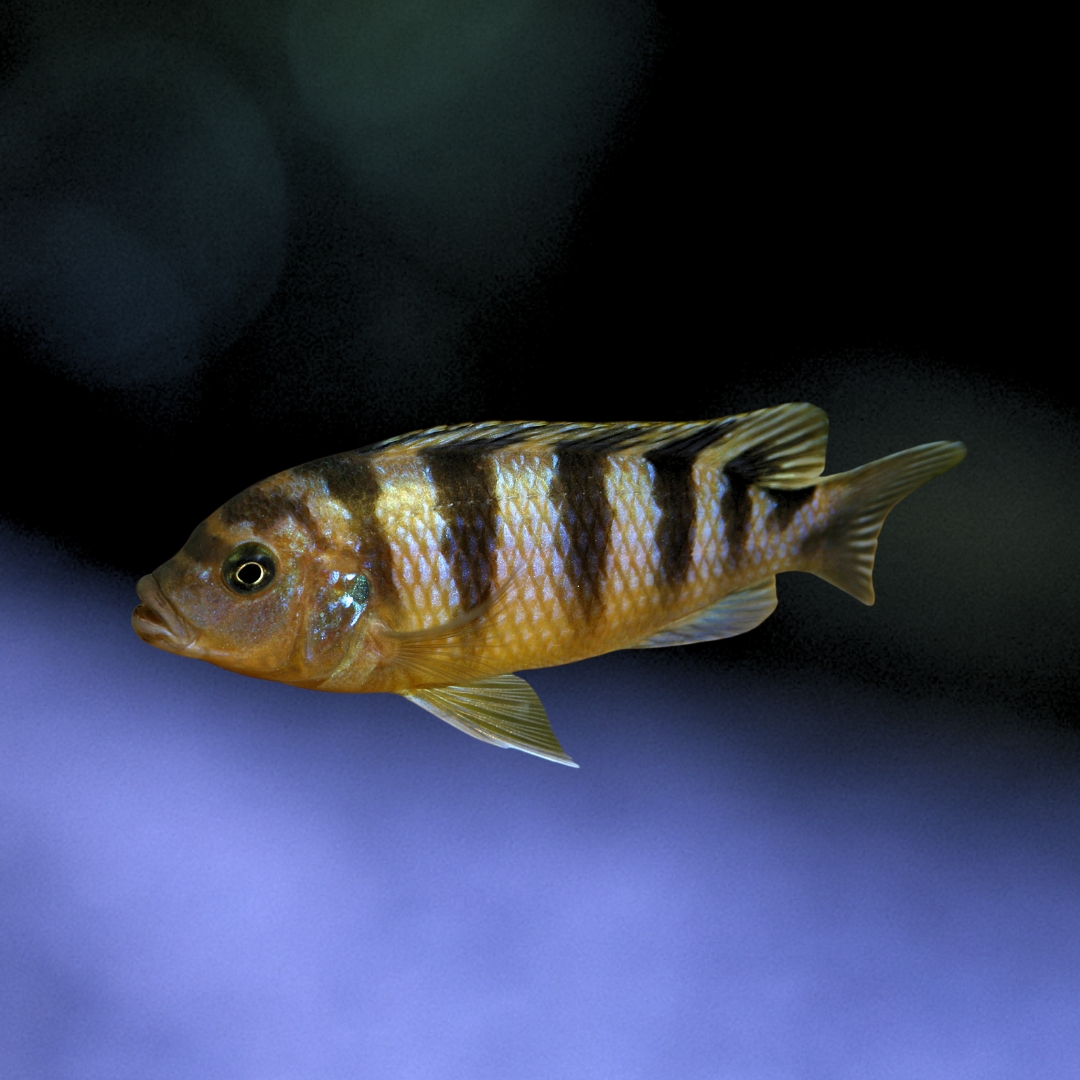
ゴールデンゼブラシクリッドは、アフリカ・マラウイ湖にすむ岩礁性シクリッド、いわゆるムブナの一種です。幼魚とメスは青地に黒い横帯をもつゼブラ模様を示し、成熟した優位オスは鮮やかな黄色へ変化します。この雌雄で色彩が大きく異なる特徴と、強い縄張り意識、口内で卵や稚魚を守るマウスブリーディングが大きな魅力です。一方で攻撃性はかなり強く、弱アルカリ性の硬水管理も必要なため、初心者向けというよりは、アフリカンシクリッドの性質を理解して飼育したい方向けの魚です。The Golden Zebra Cichlid is a rock-dwelling mbuna cichlid from Lake Malawi in Africa. Juveniles and females show a blue body with dark vertical bars, and mature dominant males turn a vivid yellow. Its reversed sexual coloration, strong territorial behavior, and maternal mouthbrooding make it a fascinating aquarium fish. However, it is very aggressive and requires hard, alkaline water, so it is better suited to aquarists who understand African cichlid care rather than complete beginners.
カワスズメ科(Cichlidae)・プセウドクレニラブルス亜科に属するマラウイ湖産ムブナFamily Cichlidae, subfamily Pseudocrenilabrinae; Lake Malawi mbuna cichlid group
英名 / English Name
Golden Zebra Cichlid / Kenyi Cichlid
分布 / Distribution
アフリカ・マラウイ湖のムベンジ島周辺を中心に、ンコモ礁でも記録される固有種です。岩礁と砂地が入り組む、堆積物の多い中間帯に見られ、自然下ではおおむね水深10〜25m前後の記録が多いとされます。Endemic mainly to the Mbenji Island area of Lake Malawi, Africa, and also recorded from Nkhomo Reef. It is associated with sediment-rich intermediate zones where rocky areas meet sandy bottoms, with many records around 10–25 m depth.
最大体長 / Max Size
最大で約13cm前後がよく引用されます。飼育下では10〜12cm前後でまとまることも多く、環境や系統によってはそれ以上に見える個体もいます。Often cited at around 13 cm maximum. In aquariums, many individuals remain around 10–12 cm, though some may appear larger depending on conditions and strain.
寿命 / Lifespan
明確な寿命データは資料により幅がありますが、飼育下ではおおむね5〜8年程度を目安にできます。水質と混泳ストレスの管理が良ければ、より長く飼育できることもあります。Published lifespan estimates vary, but in aquariums a practical expectation is roughly 5–8 years. With stable water quality and reduced social stress, individuals may live longer.
飼育環境 / Aquarium Environment
水槽サイズ / Tank Size
単独または少数飼育でも60cm規格水槽以上を目安にします。混泳や複数飼育では90cm規格水槽以上が望ましく、余裕があれば120cm水槽のほうが縄張り争いを分散しやすくなります。A standard 60 cm tank or larger is recommended even for a single fish or a small group. For community mbuna setups or multiple individuals, a standard 90 cm tank or larger is preferable, and a 120 cm tank provides more space to spread aggression.
水温 / Temperature
24〜26℃前後を中心に、飼育上はおおむね22〜28℃の範囲で安定させます。急変を嫌うため、夏場は冷却ファンや水槽用クーラー、冬場はヒーターで管理します。Keep the temperature centered around 24–26°C, with a practical aquarium range of about 22–28°C. Avoid sudden changes by using an aquarium heater in winter and a cooling fan or chiller in summer when necessary.
水質 / Water Quality
弱アルカリ性からアルカリ性の硬水を好みます。目安はpH8.0〜8.5前後、総硬度は中硬水から硬水です。日本の水道水は軟水に傾きやすいため、サンゴ砂やアラゴナイト系の底床・ろ材を用いてpHと硬度を安定させます。Prefers hard, alkaline water. A practical target is around pH 8.0–8.5 with moderate to high hardness. Since Japanese tap water is often soft, coral sand or aragonite-based substrate/filter media can help stabilize pH and hardness.
レイアウト / Layout
石を複雑に組んで、隠れ家と視線を遮る場所を多く作ります。底砂を掘るため、石は砂の上に置かず、ガラス底面に安定させてから砂を入れると崩落を防ぎやすくなります。水草は掘り返しや硬水環境で傷みやすいため、基本的には岩組み中心のレイアウトが向きます。Use complex rockwork to create hiding places and visual barriers. Because this species digs, place rocks securely on the tank bottom before adding sand to reduce the risk of collapse. Plants are often uprooted or damaged in hard alkaline water, so a rock-based layout is usually best.
注意点 / Precautions
高pH環境では遊離アンモニアの毒性が問題になりやすいため、ろ過能力を強めに確保し、立ち上げ直後の導入は避けます。過密気味にして攻撃を分散する飼育法もありますが、その場合は特に強力なろ過、十分なエアレーション、週1〜2回程度の水換えが重要です。また、野外放流は在来生態系への影響が大きいため絶対に行わないでください。In high-pH water, unionized ammonia becomes a greater concern, so strong biological filtration is essential and newly set up tanks should be avoided. Controlled overcrowding is sometimes used to spread aggression, but it requires powerful filtration, strong aeration, and frequent water changes once or twice per week. Never release this fish into the wild, as it may harm local ecosystems.
餌と給餌 / Feeding
餌の種類 / Diet
主食はスピルリナ配合フードや草食性シクリッド用の人工飼料が適しています。自然下では岩についた藻類や微生物の集合体をこそげ取るほか、開けた水域でプランクトンを食べることもあるため、飼育下では植物質を中心にしつつ、動物性の餌は補助的に少量へ抑えると安全です。A spirulina-based food or herbivorous cichlid pellet/flake is best as the staple diet. In nature, this species brushes algae and aufwuchs from rocks and may also take plankton in open water, so plant-rich foods should form the basis of feeding. Animal foods such as brine shrimp should be offered only sparingly as a supplement or conditioning food.
給餌のポイント / Feeding Tips
一度に大量に与えず、短時間で食べ切れる量を1日1〜2回程度与えます。冷凍赤虫や肉食魚用ペレットを多用すると消化不良やマラウイ・ブロートの原因になりやすいため、日常的な主食にはしないほうが安全です。Feed small portions once or twice daily, only as much as the fish can consume quickly. Frequent use of bloodworms or high-protein carnivore pellets may contribute to digestive problems and Malawi bloat, so they should not be used as staple foods.
性格と混泳 / Temperament and Tank Mates
性格 / Temperament
非常に縄張り意識が強く、同種・他種を問わず攻撃的になりやすい魚です。特に優位オスは岩組みの一部をテリトリーとして守り、侵入した個体を激しく追い払います。Very territorial and often aggressive toward both its own species and other fish. Dominant males in particular defend sections of rockwork and may chase intruders intensely.
混泳の相性 / Compatibility
小型テトラ、グッピー、コリドラス、エビ類などとの混泳は不向きです。混泳させる場合は、同程度の気の強さと体格をもつマラウイ湖産シクリッドが候補になります。ただし、どの組み合わせでも水槽サイズ、岩組み、個体差によって結果が大きく変わるため、弱い個体を隔離できる準備が必要です。Not suitable with small tetras, guppies, Corydoras, shrimp, or other delicate tank mates. Possible companions are similarly robust Lake Malawi cichlids, especially other mbuna. Even then, success depends heavily on tank size, rockwork, and individual temperament, so be ready to remove bullied fish.
病気と対策 / Diseases and Prevention
かかりやすい病気 / Common Diseases
不適切な餌や水質悪化により、マラウイ・ブロート、腹水、エロモナス症、肌荒れ、白点病などが問題になります。特にマラウイ・ブロートは、腹部の膨張、食欲不振、白い糞、元気消失などを伴い、進行すると治療が難しくなります。Possible problems include Malawi bloat, dropsy, Aeromonas-related infections, skin irritation, and ich, often triggered by poor diet or deteriorating water quality. Malawi bloat is especially serious and may involve abdominal swelling, loss of appetite, pale feces, and lethargy; advanced cases are difficult to treat.
対策と予防 / Prevention
植物質中心の餌、安定した弱アルカリ性硬水、強いろ過、十分な酸素量、定期的な水換えが基本です。新しく導入する個体は状態をよく観察し、痩せ、ヒレの傷、呼吸の荒さがある場合は無理に混泳させず、隔離して様子を見ると安全です。Prevention depends on a plant-rich diet, stable hard alkaline water, strong filtration, good oxygenation, and regular water changes. Observe new fish carefully; if they are thin, injured, or breathing heavily, keep them isolated rather than adding them directly to an established community.
増やし方(繁殖) / Breeding
雌雄の判別 / Sexing
成熟した優位オスは黄色からオレンジがかった黄色になり、メスは青地に黒い横帯を残すのが一般的です。ただし劣位オスがメスのような青い体色を保つこともあり、体色だけでの判別が難しい場合があります。Mature dominant males usually become yellow to orange-yellow, while females retain a blue body with dark vertical bars. However, subordinate males may keep female-like blue coloration, so color alone is not always a perfect indicator.
繁殖形態 / Reproduction
メスが卵と稚魚を口内で守る母系性マウスブリーダーです。オスは産卵場所へメスを誘い、メスが卵を口に含む際にオスの臀ビレのエッグスポットへ反応することで、口内受精が成立しやすくなります。A maternal mouthbrooder. The male attracts the female to a spawning site, and when the female picks up the eggs, she also responds to the egg spots on the male’s anal fin, which helps sperm reach the eggs in her mouth.
繁殖のポイント / Breeding Tips
オス1匹に対してメスを3匹以上入れるハーレム構成にすると、オスの追尾が分散しやすくなります。メスが口に卵を含んだら、他魚からの攻撃を避けるため隔離水槽へ移す方法が確実です。抱卵中のメスはほとんど餌を食べないため、過度に追い回さず静かな環境を保ちます。A harem group with one male and three or more females helps spread the male’s attention. Once a female is holding eggs, moving her to a separate brooding tank can improve fry survival. Holding females eat little or nothing, so keep them in a calm environment and avoid unnecessary stress.
雑学と豆知識 / Trivia and Fun Facts
1. 名前と分類をめぐる物語 / 1. A Story Behind the Name and Classification
本種は1977年に Pseudotropheus lombardoi として記載されました。その後、マラウイ湖産ムブナの分類整理が進む中で Maylandia 属、あるいは Metriaclima 属として扱われることがあり、現在も資料によって表記が揺れます。これは単なる名前の違いではなく、マラウイ湖のシクリッドがあまりに短い進化時間の中で多様化したため、形態だけで分類することの難しさを映し出しています。観賞魚店では今でも旧学名や流通名が使われることが多いため、購入時には同じ魚を指しているか確認すると安心です。This species was described in 1977 as Pseudotropheus lombardoi. As the taxonomy of Lake Malawi mbuna was revised, it has also been treated under Maylandia or Metriaclima, and different sources may still use different names. This is more than a naming issue; it reflects how rapidly Lake Malawi cichlids diversified and how difficult they can be to classify by morphology alone. In the aquarium trade, older scientific names and trade names are still common, so it is wise to confirm that the name refers to the same fish.
2. オスが黄色、メスが青いという逆転した色彩 / 2. Reversed Colors: Yellow Males and Blue Females
多くのムブナではオスが青く、メスが黄色や地味な色を示すことがありますが、ゴールデンゼブラシクリッドでは成熟した優位オスが黄色、メスが青いゼブラ模様という印象的な逆転が見られます。さらに、群れの中で立場の弱いオスは、優位オスから攻撃されにくくするため、メスのような青い姿を保つことがあります。水槽内で体色が変わるとき、それは単なる成長だけでなく、群れの順位や繁殖状態を反映している場合があります。In many mbuna, males are blue while females may be yellow or more subdued, but the Golden Zebra Cichlid shows a striking reversal: dominant mature males are yellow, while females are blue with dark bars. Subordinate males may retain a female-like blue appearance to avoid aggression from dominant males. When the color changes in an aquarium, it may reflect not only growth but also social rank and breeding condition.
3. エッグスポットは繁殖のための精巧な合図 / 3. Egg Spots Are Sophisticated Breeding Signals
オスの臀ビレにある黄色い斑点はエッグスポットと呼ばれ、メスが卵を拾い集める行動と結びついています。メスがこの斑点を卵のように認識して口を近づけることで、オスが放精し、卵が口の中で受精しやすくなります。本種のオスは臀ビレに1つのエッグスポットをもつことが報告されており、近縁種が多く同じ湖にすむマラウイ湖では、こうした小さな模様の違いが、相手を見分ける重要な手がかりになっていると考えられています。The yellow spots on the male’s anal fin are called egg spots and are linked to the female’s egg-picking behavior. When the female approaches these spots as if they were eggs, the male releases sperm, making fertilization inside the female’s mouth more likely. Males of this species have been reported to carry a single egg spot on the anal fin, and in Lake Malawi, where many closely related species live side by side, such small visual cues are thought to help fish recognize suitable mates.
4. 飼育の鍵は「硬水」と「攻撃性の分散」 / 4. The Keys Are Hard Water and Spreading Aggression
日本の水道水は地域差こそありますが、マラウイ湖に比べると軟水寄りになりやすい傾向があります。そのため、本種の飼育ではサンゴ砂などを使って、弱アルカリ性の硬水を安定させることが重要です。また、気の強い魚を少数だけ入れると、弱い個体に攻撃が集中しやすくなります。岩組みで視線を切ること、十分な水槽サイズを用意すること、必要に応じて個体数で攻撃を分散することが、水槽内の秩序を保つ実践的な工夫になります。Japanese tap water varies by region, but it is often softer than Lake Malawi water. For this species, stabilizing hard alkaline water with materials such as coral sand is important. Also, keeping only a few aggressive fish may cause attacks to focus on the weakest individual. Rockwork that blocks sight lines, adequate tank size, and, when appropriate, spreading aggression across a larger group are practical ways to maintain order.
5. 美しい魚ほど、最後まで飼う責任がある / 5. A Beautiful Fish Comes With Long-Term Responsibility
ゴールデンゼブラシクリッドは丈夫で魅力的な魚ですが、その強さは野外に出たときのリスクにもつながります。本種は観賞魚由来の移入記録が報告されており、温暖な地域や水温が保たれる水域では、観賞魚が生き残ってしまう可能性があります。攻撃性の強い外来魚が定着すれば、在来の小魚や水生生物に影響を与えるおそれがあります。飼いきれなくなった場合でも、河川や池に放すのではなく、ショップや経験者に相談し、必ず終生飼育または適切な譲渡を選ぶことが大切です。The Golden Zebra Cichlid is hardy and attractive, but that hardiness can become a risk if the fish is released outdoors. Introductions linked to the aquarium trade have been reported, and in warm regions or waters where temperatures remain suitable, aquarium fish may survive. If an aggressive non-native fish becomes established, it may affect native small fish and aquatic organisms. If you can no longer keep this species, never release it into rivers or ponds; consult a shop or experienced aquarist and choose responsible long-term care or rehoming.
まとめ / Conclusion
ゴールデンゼブラシクリッドは、マラウイ湖産ムブナらしい鮮やかな色彩と力強い行動を楽しめる、非常に個性的なアフリカンシクリッドです。成熟したオスの黄色、メスや幼魚の青いゼブラ模様、そしてマウスブリーディングによる繁殖行動は、観察するほど奥深さを感じさせてくれます。The Golden Zebra Cichlid is a distinctive African cichlid that showcases the vivid coloration and energetic behavior typical of Lake Malawi mbuna. The yellow of mature males, the blue barred pattern of females and juveniles, and the mouthbrooding breeding behavior all make it a deeply rewarding fish to observe.
一方で、飼育には弱アルカリ性硬水の維持、強力なろ過、植物質中心の給餌、攻撃性を見越した水槽設計が欠かせません。美しさだけで選ぶのではなく、その生態と性格を理解して迎え入れることで、長く健康に飼育しやすくなります。At the same time, successful care requires stable hard alkaline water, powerful filtration, a plant-rich diet, and an aquarium layout designed with aggression in mind. Rather than choosing this fish for its beauty alone, understanding its ecology and temperament will make long-term, healthy care much easier.
Genner, M. J. and Turner, G. F. 2005. The mbuna cichlids of Lake Malawi: a model for rapid speciation and adaptive radiation. Fish and Fisheries.
ムブナ類の適応放散、性的二型、母系性マウスブルーディング、繁殖様式など、マラウイ湖産ムブナ全体の進化・生態背景を支える学術資料として参照。 https://onlinelibrary.wiley.com/doi/abs/10.1111/j.1467-2679.2005.00173.x
Couldridge, V. C. K. 2002. Experimental manipulation of male egg-spots demonstrates female preference for one large spot in Pseudotropheus lombardoi. Journal of Fish Biology, 60: 726–730.
本種のエッグスポットと配偶者選択、繁殖時の視覚的シグナルに関する記述を支えるために参照。 関連文献リスト掲載ページ



 アイのアクアグッズ案内金魚を長く楽しむ飼育用品|水槽・フィルター・エアレーション・水換え道具の特徴や使い方、選ぶときのポイントをアイが紹介します。記事はコチラ →
 アイのアクアグッズ案内アカヒレの仲間に合わせる飼育用品|無加温・混泳・繁殖の水槽とろ過道具の特徴や使い方、選ぶときのポイントをアイが紹介します。記事はコチラ →




コメント