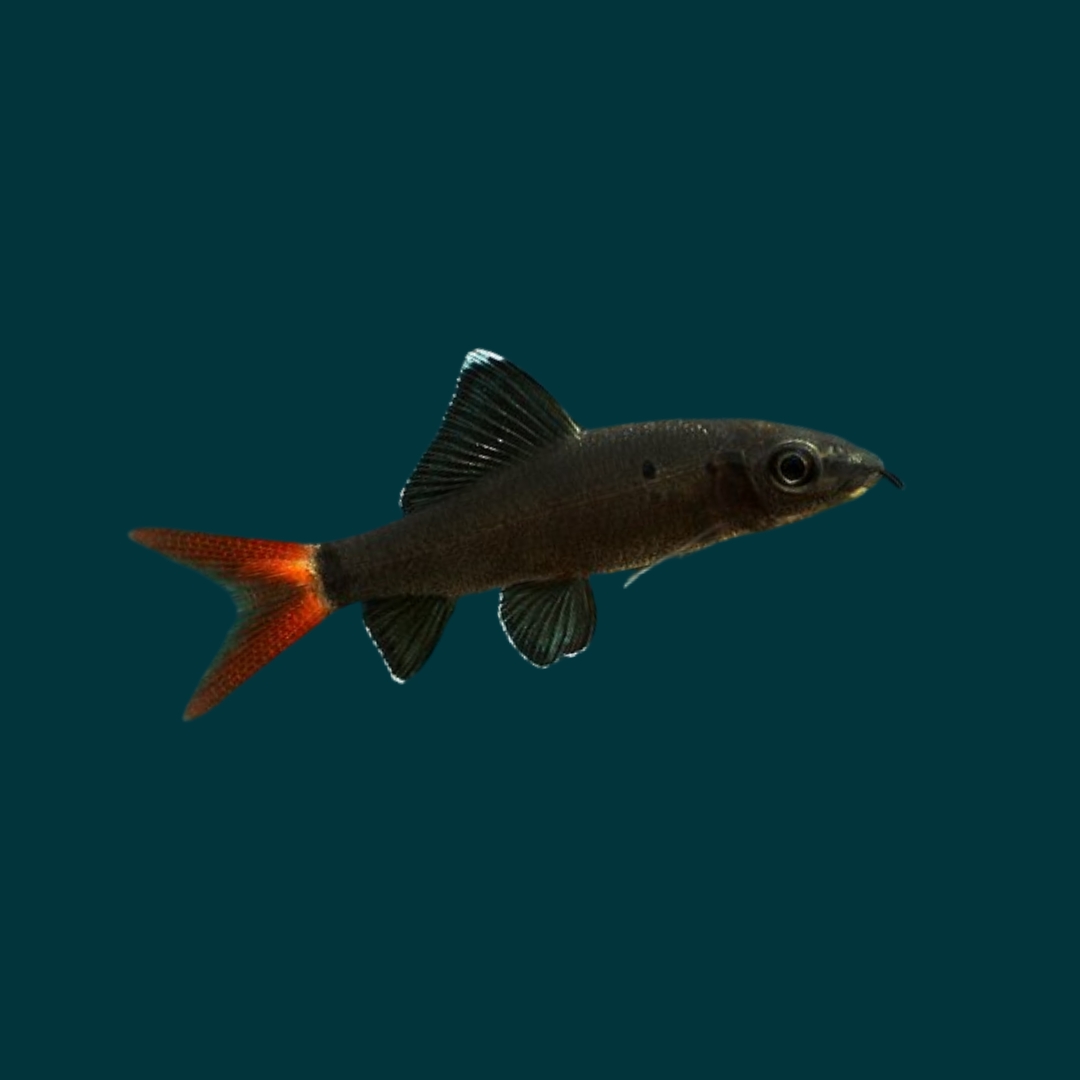
レッドテールブラックシャークは、ベルベットのような黒い体と、鮮やかな赤い尾びれの対比が美しいタイ原産の中型淡水魚です。名前に「シャーク」と付きますが、サメの仲間ではなく、コイ科に属する魚です。幼魚のうちはかわいらしく見えるため小型水槽向けに思われがちですが、成長すると縄張り意識が強くなり、底層を中心に活発に巡回します。そのため、見た目の美しさだけでなく、十分な水槽サイズ、隠れ家、混泳相手の選び方まで考えて迎えたい魚です。現在の観賞魚流通個体は基本的に養殖由来ですが、野生では近絶滅種として扱われる重要な背景を持っています。The redtail black shark is a medium-sized freshwater fish from Thailand, known for its velvety black body and vivid red caudal fin. Despite the word “shark” in its common name, it is not related to marine sharks, but belongs to the carp family. Juveniles may look small and manageable, but adults become territorial and actively patrol the lower areas of the aquarium. For this reason, it should be kept with careful attention to tank size, shelters, and tank mate selection. Aquarium specimens are basically captive-bred today, while wild populations have an important conservation background as Critically Endangered.
基本情報 / Basic Information
学名 / Scientific Name
Epalzeorhynchos bicolor
通称 / Common Name
レッドテールブラックシャーク、レッドテールシャークRedtail black shark, redtail sharkminnow
分類 / Family
コイ目 コイ科 エパルゼオリンクス属。体系によってはラベオ亜科の魚として扱われますOrder Cypriniformes, family Cyprinidae, genus Epalzeorhynchos. In some classifications, it is treated within the labeonine cyprinids
英名 / English Name
Redtail black shark, Redtail sharkminnow
分布 / Distribution
タイ固有種です。チャオプラヤ川下流域、バーンパコン川流域、メークロン川下流域などから記録があります。現在の野生個体群は非常に限られており、IUCNレッドリストでは近絶滅種として扱われています。Endemic to Thailand. It has been recorded from the lower Chao Phraya, Bang Pakong, and lower Mae Klong river basins. Remaining wild populations are highly restricted, and the species is treated as Critically Endangered on the IUCN Red List.
最大体長 / Max Size
約12〜15cm。飼育下では13cm前後で見られることが多いですが、個体や環境によって差があります。About 12–15 cm. In aquaria, many individuals are seen around 13 cm, though size varies by individual and environment.
寿命 / Lifespan
一般的には5〜10年程度。安定した水質と十分な空間を用意できれば、より長く飼育できる可能性があります。Usually around 5–10 years. With stable water quality and adequate space, individuals may live longer.
飼育環境 / Aquarium Environment
水槽サイズ / Tank Size
終生飼育では120cm規格水槽、または120cmワイド水槽を基本に考えると安心です。単独飼育であっても90cm規格水槽はかなり下限寄りで、混泳や長期飼育まで考えるなら余裕のある120cm以上が適しています。60cm規格水槽では成魚の遊泳力や縄張り行動を受け止めにくく、長期飼育にはおすすめしにくい魚です。For long-term care, a standard 120 cm tank or wider 120 cm tank is the safer baseline. A 90 cm tank is a very limited lower-end option even for a single individual, while community setups and long-term adult care are better planned around 120 cm or larger aquaria. A 60 cm tank is generally unsuitable for long-term care because it does not provide enough space for adult activity and territorial behavior.
水温 / Temperature
22〜26℃前後を中心に、20〜28℃程度の範囲で管理します。急な温度変化を避け、ヒーターで安定させることが大切です。Keep the water around 22–26°C, within a general range of about 20–28°C. Avoid sudden temperature swings and maintain stability with a heater.
水質 / Water Quality
弱酸性から中性付近、または弱アルカリ性寄りまで比較的幅広く適応します。目安はpH6.5〜7.5前後、硬度は軟水から中程度の硬水までを安定して保つとよいでしょう。アンモニアと亜硝酸塩は必ず0を維持し、硝酸塩が溜まりすぎないよう定期的な水換えを行います。It adapts to a fairly broad range from slightly acidic to neutral or mildly alkaline water. A useful target is around pH 6.5–7.5, with soft to moderately hard water kept stable. Ammonia and nitrite must be kept at 0, and regular water changes are needed to prevent excessive nitrate buildup.
レイアウト / Layout
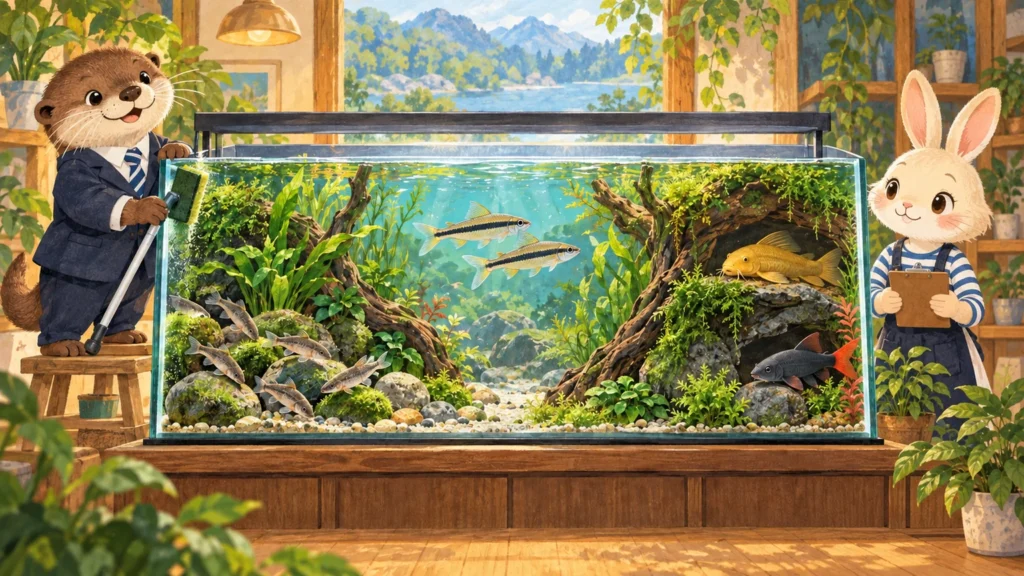
流木、丸みのある石、洞窟状の隠れ家を使い、視線が通りすぎないレイアウトにします。底層を巡回する魚なので、底面付近に隠れ場所と通り道を両立させると落ち着きやすくなります。ミクロソリウム、アヌビアス、ボルビティスなどの丈夫な水草も相性がよいです。Use driftwood, rounded stones, and cave-like shelters to break up sightlines. Since this fish patrols the lower part of the tank, provide both hiding places and open routes near the bottom. Hardy plants such as Microsorum, Anubias, and Bolbitis are suitable choices.
注意点 / Precautions
成長とともに縄張り意識が強くなります。水槽から飛び出すこともあるため、フタは必ず設置してください。また、尾びれの赤みが急に薄くなる場合は、水質悪化、ストレス、病気の初期サインである可能性があります。Territorial behavior becomes stronger as the fish matures. A secure lid is essential because it may jump from the aquarium. If the red tail suddenly fades, it may indicate poor water quality, stress, or the early stage of disease.
餌と給餌 / Feeding
餌の種類 / Diet
雑食性です。沈下性の人工飼料、植物質を含むタブレット、コリドラス用やプレコ用の餌、冷凍アカムシ、冷凍ブラインシュリンプ、ミジンコなどを組み合わせます。軽く湯通ししたホウレンソウ、ズッキーニ、キュウリなどを補助的に与えることもできます。It is omnivorous. Offer a varied diet of sinking prepared foods, vegetable-based tablets, foods for bottom-feeding fishes, frozen bloodworms, frozen brine shrimp, and daphnia. Blanched vegetables such as spinach, zucchini, or cucumber can also be offered as supplements.
給餌のポイント / Feeding Tips
底層で餌を探すため、沈む餌を中心に与えます。与えすぎは水質悪化につながるため、数分で食べきれる量を基本にします。コケ取り目的で導入する魚ではなく、成長すると人工飼料を好む傾向が強くなるため、清掃役として過度に期待しないことが大切です。Because it feeds mainly near the bottom, sinking foods should form the core of the diet. Avoid overfeeding, as leftover food quickly affects water quality. This species should not be introduced as an algae-cleaning fish; adults often prefer prepared foods and should not be expected to function as a dedicated cleaner.
性格と混泳 / Temperament and Tank Mates
性格 / Temperament
幼魚期は臆病で隠れがちな一面がありますが、成魚になるにつれて縄張り意識が強くなります。とくに底層や隠れ家周辺を自分の場所として主張し、近づく魚を追い払うことがあります。Juveniles may be shy and hide frequently, but adults become increasingly territorial. They often claim the lower part of the aquarium or areas around shelters and may chase away fish that enter these spaces.
混泳の相性 / Compatibility
基本は1水槽1匹です。同種、レインボーシャーク、フライングフォックス類、体型や行動圏が似た魚との混泳は避けます。混泳させる場合は、上層から中層を泳ぐ体格のある魚を選び、120cm規格水槽以上で隠れ家を多く作ります。小型エビ、極端に小さい魚、底層性の小型魚は攻撃や捕食、ストレスのリスクがあります。The basic rule is one redtail black shark per aquarium. Avoid keeping it with its own species, rainbow sharks, flying foxes, or other fishes with similar body shape and territory. If kept in a community tank, choose robust fish that occupy the middle to upper levels and provide many shelters in a tank of 120 cm or larger. Small shrimp, very small fish, and small bottom dwellers are at risk of attack, predation, or stress.
病気と対策 / Diseases and Prevention
かかりやすい病気 / Common Diseases
白点病、尾ぐされ病、スレ傷からの細菌感染、水質悪化にともなう体調不良に注意します。特定の病気だけに極端に弱い魚というより、水質悪化やストレスが続いたときに免疫が落ちやすい魚として考えると管理しやすいです。Watch for ich, fin rot, bacterial infections from abrasions, and general health decline caused by poor water quality. Rather than being unusually vulnerable to one specific disease, it is best understood as a fish whose immunity can drop under prolonged stress or unstable water conditions.
対策と予防 / Prevention
十分にろ過が安定した水槽へ導入し、定期的な水換えで清潔な環境を保ちます。新しく迎えた魚は可能であればトリートメント期間を設け、体表やヒレの状態を確認してから本水槽へ入れます。尾びれの赤み、呼吸の速さ、隠れ方の変化は、日々の健康チェックに役立ちます。Introduce it only to a mature, well-filtered aquarium and maintain cleanliness with regular water changes. If possible, quarantine or observe new fish before adding them to the main tank. Changes in tail color, breathing rate, and hiding behavior are useful daily health indicators.
増やし方(繁殖) / Breeding
雌雄の判別 / Sexing
幼魚の雌雄判別は非常に難しいです。成熟すると、メスは腹部がややふっくらし、オスは比較的スリムで色彩が鮮明に見える傾向があります。ただし、個体差も大きく、外見だけで確実に判断するのは簡単ではありません。Sexing juveniles is very difficult. Mature females tend to have a fuller abdomen, while males may appear slimmer and more vividly colored. However, individual variation is considerable, and reliable sexing by appearance alone is not easy.
繁殖形態 / Reproduction
卵生です。自然下では河川や氾濫原など、水位変化と移動をともなう環境で繁殖していたと考えられます。It is an egg-laying species. In nature, reproduction is thought to have been associated with river and floodplain environments involving seasonal water-level changes and movement.
繁殖のポイント / Breeding Tips
家庭水槽での自然繁殖は非常に難しく、一般的な飼育目標にはしない方が現実的です。国内で一般的に流通する個体は、基本的に東南アジアなどの養殖場で専門的な管理のもと繁殖された養殖個体です。同種間の闘争が激しいため、繁殖目的で安易に複数匹を同じ水槽へ入れることは避けてください。Natural breeding in home aquaria is extremely difficult and is not a realistic goal for most keepers. Specimens commonly available in the aquarium trade are basically captive-bred in commercial farms under specialized conditions. Because aggression between individuals is intense, multiple fish should not be placed together casually for breeding attempts.
雑学と豆知識 / Trivia and Fun Facts
1. 「シャーク」でもサメではない魚 / 1. A “shark” that is not a shark
レッドテールブラックシャークという名前は、鋭角的な体型や背びれの印象から付いた流通名です。しかし分類上はサメとはまったく別で、コイの仲間にあたります。アクアリウムの世界では、見た目や泳ぎ方の印象から「シャーク」と呼ばれる淡水魚がいくつも存在しますが、本種もその代表例です。名前の迫力に反して、海水魚でも肉食性の大型魚でもなく、岩や流木の表面に付く藻類や微小生物、沈んだ餌などをついばむ雑食性の淡水魚です。The name “redtail black shark” comes from its angular body shape and prominent dorsal fin. Taxonomically, however, it is not related to marine sharks; it is a member of the carp family. In the aquarium hobby, several freshwater fishes are called “sharks” because of their appearance or swimming style, and this species is one of the best-known examples. Despite the dramatic name, it is neither a marine fish nor a large predatory shark-like animal, but an omnivorous freshwater fish that grazes on algae, microorganisms, and sinking foods.
2. 学名に込められた「二色」の意味 / 2. The meaning of “two colors” in the scientific name
種小名の bicolor は「二色の」という意味で、黒い体と赤い尾びれという本種の特徴をそのまま表しています。観賞魚としての魅力もまさにこの一点に集約されます。黒一色の体に赤い尾びれだけが浮かび上がる姿は、水草水槽や石組み水槽の中でも非常に目を引きます。一方で、その美しさを保つには、単に色揚げ餌を与えるだけでは不十分です。水質、ストレス、隠れ家、混泳相手まで含めた総合的な管理が、黒と赤のコントラストを支えています。The species name bicolor means “two-colored,” directly referring to the black body and red tail. This contrast is the heart of the fish’s appeal. In planted or rock-based aquascapes, the red tail stands out vividly against the dark body. However, maintaining this beauty requires more than color-enhancing food. Stable water quality, low stress, shelters, and appropriate tank mates all contribute to preserving the striking black-and-red contrast.
3. 観賞魚として繁栄しながら、野生では危機的な魚 / 3. Common in aquaria, but threatened in the wild
レッドテールブラックシャークは、観賞魚店では比較的見かけやすい魚です。しかし野生では、タイの河川環境の改変、湿地の減少、水質悪化、過去の観賞魚採集圧などが複合的に影響した可能性が指摘され、非常に厳しい状況に置かれてきました。かつては野生絶滅と扱われた時期もあり、その後わずかな野生個体群の再確認により、現在は近絶滅種として扱われています。つまり、店頭で入手しやすいことと、自然界で安定していることは同じではありません。この魚を飼うことは、ただ美しい魚を楽しむだけでなく、東南アジアの淡水環境に起きている変化を知るきっかけにもなります。The redtail black shark is relatively easy to find in the aquarium trade. In the wild, however, it has faced severe pressure from river modification, wetland loss, water degradation, and possibly past collecting pressure for the aquarium trade in Thailand. It was once treated as extinct in the wild, and after small wild populations were rediscovered, it has been regarded as critically endangered. In other words, being common in shops does not mean being secure in nature. Keeping this fish can also become an opportunity to learn about changes affecting Southeast Asian freshwater ecosystems.
4. 尾びれの赤は健康状態のサイン / 4. The red tail can signal condition
本種の赤い尾びれは、単なる鑑賞ポイントではなく、飼育者にとって大切な観察材料です。水質が悪化したり、混泳によるストレスが続いたり、体調を崩し始めたりすると、赤みが薄くなったように見えることがあります。もちろん個体差や照明の見え方もあるため、色の変化だけで病気を断定することはできません。それでも、いつもの赤さを知っておくと、異変に早く気づきやすくなります。毎日眺める美しさが、そのまま健康チェックにもつながる魚です。The red caudal fin is not only an aesthetic feature, but also an important observation point. When water quality declines, social stress persists, or the fish begins to lose condition, the red color may appear duller. Color change alone cannot diagnose disease, because lighting and individual variation also matter. Still, knowing the fish’s normal coloration helps keepers notice problems early. Its beauty can also serve as a daily health check.
5. コケ取り役としては考えない / 5. Not a dedicated algae cleaner
本種は自然下で岩や流木の表面をついばむため、若い個体が水槽内の藻類を口にすることはあります。ただし、オトシンクルスやヤマトヌマエビのような「コケ取り専門」の生体として考えるのは適切ではありません。成長すると人工飼料への依存が強くなり、縄張り意識も増します。水槽をきれいにするために入れる魚というより、しっかりした環境を用意して主役級の存在感を楽しむ魚として捉える方が、本種にも飼育者にも無理がありません。Because it grazes surfaces in nature, young individuals may nibble algae in the aquarium. However, it should not be considered a dedicated algae cleaner like Otocinclus or Amano shrimp. As it matures, it often relies more on prepared foods and becomes more territorial. It is better understood as a centerpiece fish that requires a well-designed environment, rather than as a cleaning animal introduced to solve algae problems.
まとめ / Conclusion
レッドテールブラックシャークは、黒い体と赤い尾びれの美しさが際立つ、非常に印象的な熱帯魚です。一方で、成長後の縄張り意識が強く、十分な水槽サイズとレイアウトを必要とするため、見た目の小ささや価格の手頃さだけで選ぶと扱いにくく感じることがあります。The redtail black shark is a striking aquarium fish with a beautiful contrast between its black body and red tail. However, adults are strongly territorial and require adequate tank size and layout. If chosen only because juveniles are small or inexpensive, it may become difficult to manage.
飼育するなら、120cm規格水槽以上を基本に用意し、1水槽1匹を原則に考えると安心です。清潔でよく流れる水、視線を遮る隠れ家、適切な混泳相手をそろえることで、本種は長く美しい姿を見せてくれます。野生では危機的な背景を持つ魚でもあるため、その歴史を知ったうえで、責任を持って飼育したい一種です。For reliable care, keep one individual per aquarium and plan around a 120 cm tank or larger. Clean, well-oxygenated water, shelters that break sightlines, and carefully selected tank mates allow this fish to show its beauty over the long term. Because it also has a serious conservation background in the wild, it is a species best kept with knowledge and responsibility.







コメント