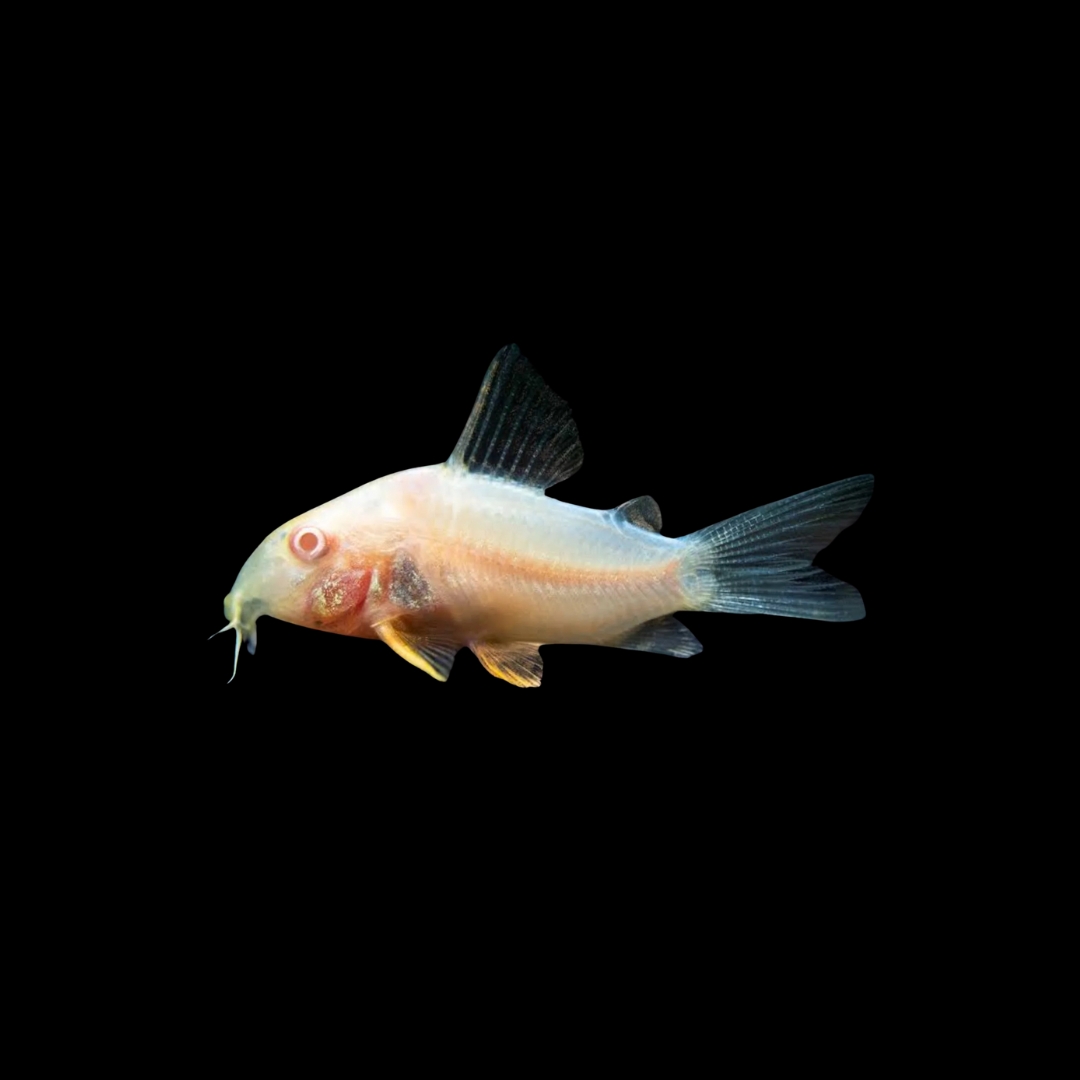
アエネウスアルビノは、ブロンズコリドラスとして親しまれてきたアエネウス系のアルビノ品種です。日本のアクアリウムでは「白コリドラス」や「白コリ」という通称で広く流通し、淡いクリーム色からピンクがかった体色、赤い瞳、底砂を探る愛らしいしぐさで人気があります。温和で丈夫な定番種ですが、底床の清潔さ、柔らかい砂、確実な給餌を意識することで、より長く健康に飼育できます。Albino Aeneus is an albino variety of the bronze corydoras group. In the Japanese aquarium hobby, it is widely sold under familiar names such as “Shiro Corydoras” or “Shiro Cory.” Its creamy to pale pink body, red eyes, and charming substrate-foraging behavior make it a favorite. Although it is a hardy and peaceful staple fish, long-term success depends on clean substrate, soft sand, and reliable feeding.
基本情報 / Basic Information
学名 / Scientific Name
Osteogaster aenea var. Albino(旧来の流通名・一般表記:Corydoras aeneus var. Albino)
ナマズ目 カリクティス科 コリドラス亜科 オステオガスター属。観賞魚流通では現在もコリドラス属名で表記されることが多いです。Order Siluriformes, family Callichthyidae, subfamily Corydoradinae, genus Osteogaster. In the aquarium trade, it is still often labeled under Corydoras.
英名 / English Name
Albino Bronze Corydoras, Albino Aeneus Cory
分布 / Distribution
原種は南米の広い範囲に分布するアエネウス系の魚です。アエネウスアルビノとして店頭に並ぶ個体は、野生採集個体ではなく、主に養殖・繁殖された改良品種として流通します。The wild form belongs to a broadly distributed South American aeneus-group catfish. Fish sold as Albino Aeneus are not wild-caught albinos in normal trade, but captive-bred ornamental strains.
最大体長 / Max Size
約5〜7cm。メスはオスよりやや大きく、成熟すると腹部に丸みが出やすいです。About 5–7 cm. Mature females are usually slightly larger and rounder-bodied than males.
寿命 / Lifespan
一般的には3〜5年ほどです。水質と底床環境が安定していれば、7年以上生きる個体もいます。Typically around 3–5 years. With stable water quality and clean substrate, some individuals may live for more than 7 years.
飼育環境 / Aquarium Environment
水槽サイズ / Tank Size
少数なら45cm規格水槽から飼育可能です。コリドラスらしい群れの落ち着きや底床探索を楽しむなら、5〜6匹以上を目安に60cm規格水槽以上で飼育すると管理しやすくなります。A small group can be kept in a standard 45 cm tank. For more natural shoaling and foraging behavior, a group of five or more in a standard 60 cm tank or larger is easier to manage.
水温 / Temperature
22〜28℃。日常管理では24〜26℃前後で安定させると扱いやすいです。急な水温変化は体調不良のきっかけになるため避けます。22–28°C. Around 24–26°C is easy to maintain for everyday care. Avoid sudden temperature swings.
水質 / Water Quality
弱酸性から弱アルカリ性まで幅広く適応します。目安はpH6.0〜8.0です。丈夫な魚ですが、底層で暮らすため、底床付近に汚れがたまる環境ではヒゲや体表を傷めやすくなります。Adaptable from slightly acidic to slightly alkaline water, roughly pH 6.0–8.0. It is hardy, but because it lives near the bottom, accumulated debris in the substrate can damage the barbels and skin.
レイアウト / Layout
田砂やボトムサンドなど、角の丸い細かな砂が適しています。流木、石、水草で隠れ場所を作ると落ち着きます。アルビノ個体は強い光を避けることがあるため、浮き草や陰性水草で明暗差を作ると日中も動きやすくなります。Fine, smooth sand such as rounded aquarium sand is suitable. Driftwood, stones, and plants help the fish feel secure. Albino fish may avoid intense light, so floating plants and shade-tolerant plants can create comfortable shaded areas.
注意点 / Precautions
ときどき水面へ上がって空気を飲み込む行動は、腸呼吸を行うコリドラス類では自然に見られます。ただし、回数が急に増えた場合は、溶存酸素不足、水温上昇、底床汚れ、水質悪化の可能性があるため、換水、エアレーション、ろ過の状態を見直してください。Occasional dashes to the surface to gulp air are natural in corydoradine catfishes with intestinal air-breathing ability. If the behavior suddenly becomes frequent, check for low oxygen, high temperature, dirty substrate, or deteriorating water quality.
餌と給餌 / Feeding
餌の種類 / Diet
沈下性のコリドラス用タブレット、沈下性顆粒フード、冷凍アカムシ、イトミミズ、ブラインシュリンプなどを組み合わせます。雑食性ですが、動物性タンパク質を含む餌を好む傾向があります。Offer sinking corydoras tablets, sinking granules, frozen bloodworms, tubifex worms, and brine shrimp. It is omnivorous but often favors protein-rich foods of animal origin.
給餌のポイント / Feeding Tips
「残り餌だけで足りる魚」と考えないことが大切です。中層魚に餌を取られやすい場合は、消灯前や他魚が落ち着いた時間に沈下性フードを入れ、アエネウスアルビノの口元まで餌が届いているか確認します。食べ残しは底床悪化の原因になるため、少量から調整してください。Do not treat it as a fish that can live only on leftovers. If active mid-water fish outcompete it, feed sinking foods near lights-out or when other fish are calmer, and confirm that food reaches the bottom. Adjust portions carefully because leftovers can foul the substrate.
性格と混泳 / Temperament and Tank Mates
性格 / Temperament
非常に温和で、他魚を攻撃することはほとんどありません。本来は仲間と集まって行動する魚なので、複数匹で飼育すると落ち着き、底床を探る姿も観察しやすくなります。Very peaceful and rarely aggressive toward other fish. It is a social, shoaling fish, so keeping several individuals together helps it feel secure and encourages visible foraging behavior.
混泳の相性 / Compatibility
ネオンテトラ、ラミーノーズテトラ、グッピー、プラティ、オトシンクルス、温和な小型ラスボラ、他の温和なコリドラス類とは相性が良好です。アベニーパファーのようにヒレをかじる魚、大型シクリッド、大型肉食魚、気性の荒い底ものとの混泳は避けます。Compatible with neon tetras, rummy-nose tetras, guppies, platies, otocinclus, peaceful small rasboras, and other gentle corydoradine catfishes. Avoid fin-nippers such as dwarf puffers, large cichlids, predatory fish, and aggressive bottom dwellers.
病気と対策 / Diseases and Prevention
かかりやすい病気 / Common Diseases
底床の汚れやスレ傷がきっかけとなり、赤斑病、尾腐れ病、ヒゲの欠損、細菌性の皮膚炎が見られることがあります。白い体色のため、充血や赤みは比較的見つけやすいです。Dirty substrate and abrasions can lead to red blotch disease, fin rot, barbel erosion, and bacterial skin infections. Because of its pale body, redness and inflammation are comparatively easy to notice.
対策と予防 / Prevention
予防の基本は、角のない底砂、過密を避けた飼育、定期的な換水、底床の汚泥除去です。軽い異常であれば水質改善で回復することもありますが、出血、ヒレの崩れ、食欲低下が目立つ場合は隔離して観賞魚用の抗菌薬を規定量で使います。薬浴は濃くしすぎず、魚の様子を見ながら慎重に行ってください。Prevention starts with smooth sand, avoiding overcrowding, regular water changes, and removing debris from the substrate. Mild problems may improve after water quality correction, but visible bleeding, fin deterioration, or appetite loss should be treated in a hospital tank with an appropriate aquarium antibacterial medication at the labeled dosage. Avoid overdosing and monitor the fish carefully.
増やし方(繁殖) / Breeding
雌雄の判別 / Sexing
成熟したメスはオスより大きく、上から見ると腹部に丸みがあります。オスはやや小型で細身になりやすく、繁殖期にはメスを追うような行動が見られます。Mature females are larger and rounder, especially when viewed from above. Males are usually smaller and slimmer, and may actively follow females during the breeding period.
繁殖形態 / Reproduction
卵生です。コリドラス類に特徴的なTポジションをとり、メスが腹ビレで卵を包むように保持しながら受精させ、ガラス面、水草、産卵床などへ粘着卵を産み付けます。Egg-laying. It performs the characteristic corydoradine T-position, with the female holding eggs between her pelvic fins before attaching adhesive eggs to glass, plants, or spawning mops.
繁殖のポイント / Breeding Tips
親魚を複数匹でよく太らせ、冷凍アカムシなどで栄養をつけます。換水ややや低めの新しい水が刺激となり、産卵につながることがあります。卵は親に食べられることがあるため、見つけたら別容器へ移すか、親魚を隔離します。孵化後の稚魚にはヨークサック吸収後にブラインシュリンプ幼生などの細かな餌を与えます。Condition a group of adults with nutritious foods such as frozen bloodworms. Water changes with slightly cooler fresh water may encourage spawning. Adults may eat the eggs, so move the eggs to a separate container or remove the adults. After the fry absorb their yolk sacs, feed fine foods such as newly hatched brine shrimp.
雑学と豆知識 / Trivia and Fun Facts
1. 「白コリドラス」は通称として使うと自然 / 1. “Shiro Corydoras” works best as a common name
日本の店頭で「白コリドラス」と呼ばれる魚の多くは、アエネウス系のアルビノ品種です。「白コリドラス」「白コリ」という名前でも親しまれているので、お店で探すときはこれらの呼び名も手がかりになります。Many fish sold in Japan as “Shiro Corydoras” are albino forms of the aeneus group. The Japanese common names “Shiro Corydoras” and “Shiro Cory” are also useful when looking for this fish in shops.
2. 学名表記は過渡期にある / 2. The scientific name is in a transition period
長くコリドラス・アエネウスとして親しまれてきましたが、近年のコリドラス亜科の再分類ではアエネウス系がオステオガスター属として扱われる流れがあります。一方、観賞魚店や飼育書では現在もコリドラス・アエネウスの表記が広く使われています。新旧の名前を知っておくと、店頭の表示と新しい分類情報を結び付けやすくなります。This fish has long been known as Corydoras aeneus, but recent revisions of Corydoradinae place the aeneus group in the genus Osteogaster. At the same time, the older Corydoras aeneus label remains common in shops and hobby literature. Knowing both names helps connect shop labels with newer taxonomic information.
3. 腸呼吸は水槽管理のヒントになる / 3. Intestinal breathing can hint at tank conditions
アエネウスアルビノは、空気を飲み込んで腸から酸素を取り込む能力を持ちます。水面へ一瞬だけ上がる行動は自然なものですが、いつもより頻繁に見られるときは水槽の環境を点検する合図にもなります。コリドラスの小さな動きは、底床や酸素状態の変化を教えてくれることがあります。Albino Aeneus can gulp air and use the intestine for gas exchange. A quick surface dash is natural, but unusually frequent trips can be a useful prompt to check oxygen level, temperature, filtration, and substrate cleanliness.
4. Tポジションと精子飲みの研究 / 4. T-position and sperm drinking research
コリドラス類の繁殖では、オスとメスがT字のような姿勢をとることで知られます。アエネウスでは、メスがオスの精子を口から取り込み、消化管を通過した精子が腹ビレで保持した卵の受精に関わるという、非常に珍しい仕組みが報告されています。さらに近年の研究では、オスの精嚢液に含まれるタンパク質が精子の運動を一時的に抑え、通過中の消耗を抑えている可能性が示されています。小さな水槽の中の産卵行動にも、進化の不思議が凝縮されています。Corydoradine breeding is famous for the T-position. In aeneus, research has reported an unusual mechanism in which the female takes sperm into her mouth, and the sperm pass through the digestive tract before contributing to fertilization of eggs held by the pelvic fins. More recent work suggests that proteins in the male seminal vesicle fluid may temporarily suppress sperm motility, possibly reducing energy loss during passage. A small spawning event in the aquarium can reflect a remarkably unusual evolutionary mechanism.
5. 棘と粘液にはやさしく注意 / 5. Handle spines and mucus with gentle care
コリドラス類は胸ビレや背ビレに硬い棘を持ち、強いストレスを受けると刺激性の分泌物を出すことがあります。アエネウスアルビノで深刻な事故が多いわけではありませんが、網に絡ませると魚体を傷つけたり、人の手に刺さったりすることがあります。移動時は無理に追い回さず、必要に応じて容器でそっとすくうと安全です。Corydoradine catfishes have firm pectoral and dorsal fin spines, and stressed fish may release irritating secretions. Serious incidents are not common with Albino Aeneus, but spines can become caught in nets or prick human skin. During transfer, avoid chasing the fish and gently scoop it with a container when practical.
まとめ / Conclusion
アエネウスアルビノは、白コリドラスという親しみやすい通称で知られる、コリドラス類の定番中の定番です。赤い瞳と白い体の見た目だけでなく、仲間と寄り添う性格、底砂を丁寧に探る行動、腸呼吸やTポジションに代表される独自の生態まで、図鑑で紹介する価値の高い魅力をいくつも備えています。Albino Aeneus, widely known in Japan by the friendly common name “Shiro Corydoras,” is one of the classic corydoradine aquarium fish. Its appeal goes beyond white coloration and red eyes: it also offers gentle shoaling behavior, careful substrate foraging, intestinal air breathing, and the distinctive T-position breeding behavior.
長く健康に楽しむための要点は、角のない細かな底砂、清潔な底床、確実に届く沈下性フード、そして安心して休める陰のあるレイアウトです。単なる「残り餌を食べる魚」ではなく、底層で暮らす主役の一種として迎えることで、アエネウスアルビノは水槽に穏やかな動きと、観察するほど深まる面白さをもたらしてくれます。The keys to long-term success are fine smooth sand, clean substrate, sinking foods that reliably reach the fish, and shaded areas where it can rest securely. Treat it not merely as a “leftover eater,” but as a bottom-dwelling aquarium resident in its own right, and Albino Aeneus will bring calm movement and ever-deepening interest to the aquarium.
Dias, A. C., Tencatt, L. F. C., Roxo, F. F., Silva, G. S. C., Santos, S. A., Britto, M. R., Taylor, M. I. & Oliveira, C. (2024/2025). Phylogenomic analyses in the complex Neotropical subfamily Corydoradinae (Siluriformes: Callichthyidae) with a new classification based on morphological and molecular data. Zoological Journal of the Linnean Society. https://doi.org/10.1093/zoolinnean/zlae053 コリドラス亜科の再分類、Osteogasterの復活、アエネウス系の分類整理を確認するために参照。
Burgess, W. E. (1989). An atlas of freshwater and marine catfishes: a preliminary survey of the Siluriformes. T.F.H. Publications. FishBaseでも主要参照文献として扱われるナマズ類の基礎資料。コリドラス類の形態、生態、観賞魚としての基本情報の裏付けとして参照。
Reis, R. E., Kullander, S. O. & Ferraris, C. J. Jr. (eds.). (2003). Check List of the Freshwater Fishes of South and Central America. EDIPUCRS. 南米淡水魚の分類・分布を確認するための標準的資料として参照。
呼吸・生理的特徴
Gee, J. H. (1980). Aerial respiration in the catfish, Corydoras aeneus (Callichthyidae). Canadian Journal of Zoology. https://doi.org/10.1139/z80-273 アエネウスの腸呼吸、空気を飲み込む行動、肛門からの排気、溶存酸素との関係を支える資料として参照。
Podkowa, D. & Goniakowska-Witalińska, L. (2002). Adaptations to the air breathing in the posterior intestine of the catfish Corydoras aeneus (Callichthyidae). A histological and ultrastructural study. Folia Biologica. https://pubmed.ncbi.nlm.nih.gov/12597538/ 後腸が空気呼吸に適応していることを組織学的に確認する資料として参照。
Nelson, J. A. (2014). Breaking wind to survive: fishes that breathe air with their gut. Journal of Fish Biology. https://doi.org/10.1111/jfb.12323 魚類における腸を用いた空気呼吸の総説として、腸呼吸の一般的背景を確認するために参照。
繁殖行動
Kohda, M., Tanimura, M., Kikue-Nakamura, M. & Yamagishi, S. (1995). Sperm drinking by female catfishes: a novel mode of insemination. Environmental Biology of Fishes, 42, 1–6. https://doi.org/10.1007/BF00002344 Tポジション、精子飲み、腹ビレで作るポケット内での受精という特異な繁殖行動の主要文献として参照。
Yoshida, J., Yamamoto, M., Nakajima, K., Matsumoto, J., Takamori, K. & others. (2025). Seminal vesicle protein caCA12 in Corydoras aeneus inhibits sperm motility for sperm drinking. Journal of Experimental Biology, 228, jeb250293. https://doi.org/10.1242/jeb.250293 精嚢液、caCA12、精子運動の抑制など、繁殖行動の生化学的背景を補強する資料として参照。
毒棘・取り扱い上の注意
Wright, J. J. (2009). Diversity, phylogenetic distribution, and origins of venomous catfishes. BMC Evolutionary Biology, 9, 282. https://doi.org/10.1186/1471-2148-9-282 ナマズ類に広く見られる毒棘、防御機構、刺傷リスクの背景を確認するために参照。
He, J. Y., Geller, J. B. & Thomas, E. (2018). Interspecific comparison of venom secretions in Corydoras catfish. University of the Pacific Undergraduate Research and Creativity Conference. https://scholarlycommons.pacific.edu/purcc/2018/events/25/ コリドラス類のストレス時分泌、白濁、自己毒性に関する観察を、過度に断定しない範囲で補助的に参照。
Declercq, A. M., Haesebrouck, F., Van den Broeck, W., Bossier, P. & Decostere, A. (2013). Columnaris disease in fish: a review with emphasis on bacterium-host interactions. Veterinary Research, 44, 27. https://doi.org/10.1186/1297-9716-44-27 尾腐れ病・カラムナリス病の原因菌、皮膚・ヒレ・鰓への影響、淡水魚での発生背景を確認するために参照。
Semwal, A., Kumar, A. & Kumar, N. (2023). A review on pathogenicity of Aeromonas hydrophila and their mitigation through medicinal herbs in aquaculture. Heliyon. https://www.ncbi.nlm.nih.gov/pmc/articles/PMC10018484/ エロモナス菌の病原性、魚類の敗血症、飼育環境悪化やストレスとの関連を補強する資料として参照。



 アイのアクアグッズ案内ダニオの仲間に合わせる飼育用品|ゼブラダニオから超小型種まで水槽・ろ過・餌を選ぶ道具の特徴や使い方、選ぶときのポイントをアイが紹介します。記事はコチラ →
 アイのアクアグッズ案内グッピー・プラティ・モーリーを親子で楽しむ飼育用品|水槽・稚魚保護・ろ過・餌・水草道具の特徴や使い方、選ぶときのポイントをアイが紹介します。記事はコチラ →
 アイのアクアグッズ案内水草用ソイルの選び方|土・砂の違いとおすすめ商品道具の特徴や使い方、選ぶときのポイントをアイが紹介します。記事はコチラ →
 アイのアクアグッズ案内ラスボラ・ボララスの群泳を楽しむ飼育用品|水槽・ろ過・ヒーター・餌・水草道具の特徴や使い方、選ぶときのポイントをアイが紹介します。記事はコチラ →



コメント