

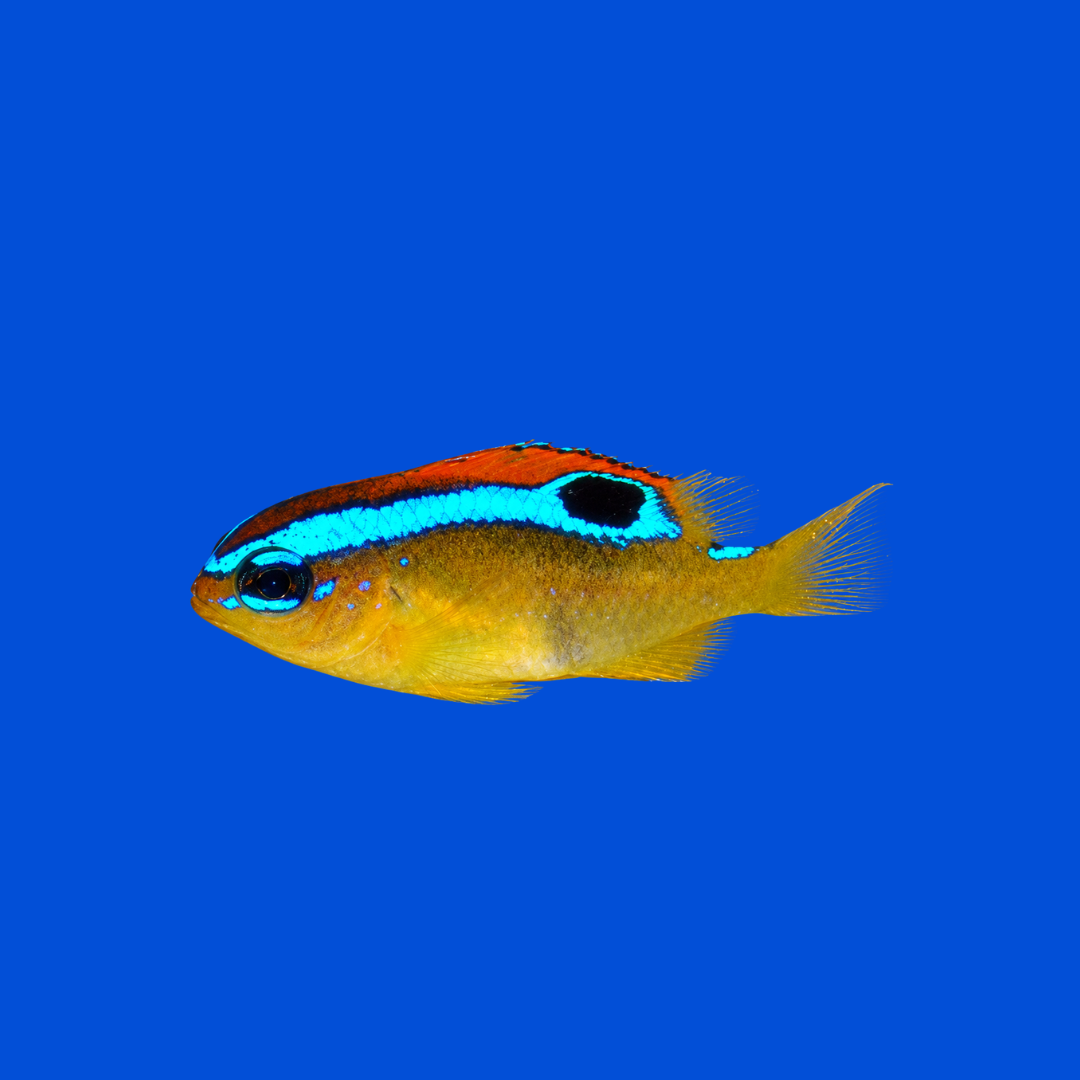
解説 / Description
ミヤコキセンスズメダイは、浅いサンゴ礁や波の当たる岩礁域で見られる小型のスズメダイです。幼魚は黄色い体に青いラインが入る鮮やかな姿で知られ、成長すると暗色の体に白い横帯をもつ個体も見られます。丈夫で餌付きやすい一方、成長とともに縄張り意識が強くなるため、長期飼育では水槽サイズ、隠れ家、混泳相手の選び方が重要になります。 The surge damselfish, known in Japan as Miyako-kisen-suzumedai, is a small damselfish found around shallow coral reefs and wave-washed rocky reef zones. Juveniles are known for a vivid yellow body with blue markings, while adults may show a darker body with pale bars. It is hardy and usually accepts prepared foods readily, but its territorial behavior becomes stronger with age, so long-term care depends on appropriate tank size, shelter, and careful choice of tank mates.
基本情報 / Basic Information
| 学名 / Scientific Name | Chrysiptera leucopoma。現在でも資料によって扱いが分かれ、FishBaseやGBIFなどでは広義の Chrysiptera brownriggii に含める扱いが見られます。一方、魚類目録や日本国内の魚類図鑑では Chrysiptera leucopoma を有効名として扱う例があり、このページでは国内向けの図鑑名として C. leucopoma を採用します。 |
|---|---|
| 通称 / Common Name | ミヤコキセンスズメダイSurge damselfish, Pacific surge damselfish |
| 分類 / Family | スズメダイ科 Pomacentridae、ソラスズメダイ亜科 Pomacentrinae、ルリスズメダイ属 ChrysipteraFamily Pomacentridae, subfamily Pomacentrinae, genus Chrysiptera |
| 英名 / English Name | Surge damselfish / Pacific surge damselfish |
| 分布 / Distribution | C. leucopoma としては、東インド洋から西太平洋にかけての熱帯から亜熱帯域に分布するとされます。日本では琉球列島、小笠原諸島、屋久島、伊豆諸島などに記録があり、幼魚は黒潮の影響を受けて千葉県以南の太平洋岸で夏から秋に観察されることがあります。広義の C. brownriggii として扱う資料では、東アフリカからフランス領ポリネシア、日本、オーストラリア方面までを含む広い分布として記載されます。When treated as C. leucopoma, it is generally associated with tropical to subtropical waters from the eastern Indian Ocean to the western Pacific. In Japan, records include the Ryukyu Islands, Ogasawara Islands, Yakushima, and the Izu Islands, and juveniles may appear seasonally along the Pacific coast from Chiba Prefecture southward under the influence of the Kuroshio Current. Under the broader C. brownriggii treatment, the range is described more widely from East Africa to French Polynesia, Japan, and Australia. |
| 最大体長 / Max Size | 約8cm。国内の観察・図鑑では全長7cm前後として紹介されることもあります。About 8 cm total length, though some Japanese field guides describe it at around 7 cm. |
| 寿命 / Lifespan | 本種単独の明確な寿命データは多くありません。安定した海水環境で適切に飼育できれば数年の飼育が見込めますが、実際の寿命は導入時の状態、混泳ストレス、水質管理に左右されます。Species-specific lifespan data are limited. Under stable marine aquarium conditions, several years can be expected, but actual longevity depends on the condition at purchase, social stress, and water quality management. |
飼育環境 / Aquarium Environment
| 水槽サイズ / Tank Size | 単独飼育であれば45cm規格水槽でも管理は可能ですが、水質の安定と縄張りの確保を考えると60cm規格水槽、約60L以上が扱いやすい目安です。混泳や成魚の長期飼育では90cm規格水槽以上が安心で、複数の魚を入れる場合は120cm規格水槽から120cmワイド水槽相当の水量があるとトラブルを抑えやすくなります。A single specimen can be managed in a 45 cm standard tank, but a 60 cm standard tank of around 60 liters or more is a safer and easier guideline for water stability and territory. For adults or community aquariums, a 90 cm standard tank or larger is recommended, and 120 cm standard to wide-format systems provide more room to reduce conflict. |
|---|---|
| 水温 / Temperature | 23〜26℃を目安に、急変を避けて安定させます。日本の室内では夏の高水温と冬の低水温のどちらも起こりやすいため、季節に応じて水槽用クーラー、冷却ファン、ヒーターを使い分けます。 Keep the temperature stable at about 23 to 26°C and avoid sudden changes. In Japanese indoor conditions, both summer overheating and winter cooling can occur, so use a chiller, cooling fan, or heater as needed. |
| 水質 / Water Quality | 比重1.020〜1.025、pH8.1〜8.4、炭酸塩硬度8〜12dKH前後を目安にします。強健な魚ですが、アンモニアや亜硝酸が検出される環境は避け、硝酸塩も蓄積させすぎないように定期的な換水と濾過の維持を行います。Aim for a specific gravity of 1.020 to 1.025, pH 8.1 to 8.4, and carbonate hardness around 8 to 12 dKH. Although hardy, it should not be kept in water with detectable ammonia or nitrite, and nitrate accumulation should be controlled through regular water changes and filtration maintenance. |
| レイアウト / Layout | ライブロックや人工ライブロックで、洞窟、岩陰、アーチ、すぐ逃げ込める隙間を多めに作ります。混泳では、岩組みで視線を遮る場所を複数作ることが特に大切です。サンゴや大型の無脊椎動物を積極的に傷つける魚ではないため、基本的にはリーフタンクにも導入しやすい種類です。Use live rock or artificial reef rock to create caves, shaded areas, arches, and narrow retreats. In community aquariums, multiple line-of-sight breaks are especially important. It is not known for deliberately damaging corals or large invertebrates, so it is generally suitable for reef aquariums. |
| 注意点 / Precautions | 幼魚は比較的扱いやすいものの、成長とともに自分の場所を強く守るようになります。小型水槽で先に入れてしまうと、後から入れた温和な魚を追い回すことがあります。混泳水槽では、最後のほうに導入する、導入時に岩組みを少し変える、複数の隠れ家を用意する、といった工夫が有効です。Juveniles are often manageable, but adults defend their chosen space strongly. If added first to a small tank, it may chase newly introduced peaceful fish. In community tanks, it is often better to add it later, slightly rearrange the rockwork at introduction, and provide several shelters. |
餌と給餌 / Feeding
| 餌の種類 / Diet | 雑食性です。海水魚用の人工飼料を主食にし、動物質と植物質のバランスが取れた粒餌やフレーク、スピルリナ配合飼料を組み合わせるとよいでしょう。副食として冷凍ブラインシュリンプ、イサザアミ、細かく刻んだ甲殻類系の餌なども利用できます。It is omnivorous. Use quality marine pellets or flakes as the staple, combining animal- and plant-based formulas, including spirulina-enriched foods. Frozen brine shrimp, mysid-type foods, and finely chopped crustacean-based foods can be used as supplements. |
|---|---|
| 給餌のポイント / Feeding Tips | 1日1〜2回、数分で食べ切れる量を与えます。餌付きはよい魚ですが、与えすぎは水質悪化の原因になります。混泳水槽では強い個体が餌場を独占しやすいため、餌を数か所に散らすと、ほかの魚にも行き渡りやすくなります。Feed once or twice daily, offering only what can be consumed within a few minutes. It usually feeds readily, but overfeeding degrades water quality. In community tanks, spread food across several areas so dominant fish do not monopolize feeding opportunities. |
性格と混泳 / Temperament and Tank Mates
| 性格 / Temperament | 活発で物怖じせず、縄張り意識の強い魚です。自然下では隠れ家の近くで生活し、ときに小さな群れで見られますが、水槽内では限られた空間を強く守るため、体の大きさ以上に存在感があります。It is active, bold, and territorial. In the wild it stays close to shelter and may occur in small groups, but in aquariums it can defend limited space intensely, giving it a presence greater than its small size suggests. |
|---|---|
| 混泳の相性 / Compatibility | 同種同士や、体型・生活圏が似た小型魚とは争いやすい傾向があります。温和なハゼ類、臆病な遊泳性ハゼ、小型テンジクダイなどとの組み合わせは慎重に考えてください。混泳相手には、ある程度気が強い魚、遊泳力のあるベラ類、生活圏が異なる魚、サイズに余裕のある魚を選ぶと成功しやすくなります。ただし、気の強い魚を狭い水槽に詰め込むと別の争いが起こるため、水量と隠れ家の余裕が前提です。It may quarrel with conspecifics and other small fishes of similar shape or habitat. Timid gobies, delicate dartfish, and small cardinalfish should be considered carefully. Better companions are moderately assertive fishes, active wrasses, species occupying different areas of the tank, or fishes with enough size and confidence to avoid being bullied. However, keeping several assertive fishes in a small tank can create new conflicts, so adequate water volume and shelter are essential. |
病気と対策 / Diseases and Prevention
| かかりやすい病気 / Common Diseases | 特別に病弱な魚ではありませんが、海水白点病、ベルベット病、輸送や争いでできたスレ傷からの細菌感染には注意します。導入直後、低水温、高水温、急な比重変化、いじめによるストレスが発症のきっかけになります。It is not especially delicate, but it can still suffer from marine ich, velvet disease, and bacterial infections following abrasions from shipping or fighting. Newly introduced fish, temperature stress, sudden salinity changes, and bullying can trigger disease outbreaks. |
|---|---|
| 対策と予防 / Prevention | 導入時は水合わせを丁寧に行い、可能であれば検疫水槽で数週間観察します。水温と比重を安定させ、隠れ家を十分に用意し、過密や強すぎる混泳を避けます。異常が見られた場合は、サンゴや無脊椎動物のいる本水槽で薬剤を使う前に、隔離して原因を確認するのが安全です。Acclimate carefully and, when possible, observe new arrivals in a quarantine tank for several weeks. Keep temperature and salinity stable, provide enough hiding places, and avoid overcrowding or overly aggressive tank mates. If symptoms appear, isolation is safer than medicating a display reef aquarium containing corals or invertebrates. |
増やし方(繁殖) / Breeding
| 雌雄の判別 / Sexing | 外見だけでの雌雄判別は難しい魚です。成熟個体では体格、縄張り行動、産卵前の動きに差が出る場合がありますが、単独の外見から確実に判断するのは困難です。Sexing by appearance alone is difficult. Mature individuals may show differences in size, territorial behavior, or pre-spawning behavior, but reliable identification from appearance alone is not easy. |
|---|---|
| 繁殖形態 / Reproduction | 卵生で、繁殖時にはペアを形成します。卵は岩面や隠れ家の壁面などの基質に付着し、産卵後は主にオスが卵を守り、ひれで水を送るような行動を行います。It is oviparous and forms pairs during breeding. Eggs adhere to a hard surface such as rock or the wall of a shelter. After spawning, the male primarily guards the eggs and fans them with his fins. |
| 繁殖のポイント / Breeding Tips | 水槽内で産卵行動が見られる可能性はありますが、孵化仔魚は小さく浮遊生活を送るため、一般家庭での育成難度は高いです。成功を狙う場合は、専用の育成水槽、安定した親魚ペア、微細な初期餌、仔魚を吸い込まない弱い水流、こまめな水質管理が必要になります。Spawning may occur in aquariums, but raising the larvae is difficult in a typical home setup because the larvae are small and pelagic. A dedicated rearing tank, a stable breeding pair, very small first foods, gentle filtration, and consistent water quality are required. |
雑学と豆知識 / Trivia and Fun Facts
| 1. 学名の扱いに揺れがある魚 / 1. A fish with a debated scientific name | ミヤコキセンスズメダイで最も注意したい点は、色や飼い方だけでなく、学名の扱いです。古くから広いインド太平洋の個体群を Chrysiptera brownriggii としてまとめる扱いがあり、現在の国際的なデータベースにもその見方が残っています。一方で、太平洋側の個体群に Chrysiptera leucopoma を用いる資料もあり、日本の魚類図鑑や近年の魚類目録ではこの名前で扱われる例があります。したがって、流通名や古い図鑑で C. brownriggii と書かれていても、必ずしも別の魚を指しているとは限りません。図鑑や販売情報を読むときは、学名と産地の両方を確認すると理解しやすくなります。One of the most important points about this species is not only its color or care, but also its name. Some references have long treated broad Indo-Pacific populations as Chrysiptera brownriggii, and this view remains in major databases. Other references use Chrysiptera leucopoma for Pacific populations, and this name is used in some Japanese fish guides and recent catalog treatments. Therefore, an older guide or aquarium listing using C. brownriggii may not necessarily refer to a different-looking fish. Checking both the scientific name and the origin makes the information easier to interpret. |
|---|---|
| 2. 黄色い幼魚と暗色の成魚 / 2. Bright juveniles and darker adults | 本種は、同じ魚とは思えないほど印象が変わる色彩多型で知られています。幼魚は黄色い体に青いラインが入り、背びれ付近の黒色斑もよく目立ちます。成長した個体では暗褐色から黒っぽい体に白い横帯が出ることがあり、サンゴ礁の礫や岩場に溶け込むような印象になります。研究では、着底直後の若い個体が背景の明るさや同種個体の密度に応じて色を変え、その変化が初期には可逆的であることが示されています。水槽で見える色の変化も、単なる気分ではなく、環境への反応として理解すると本種の面白さが一段と深まります。This fish is known for color variation that can make individuals look almost like different species. Juveniles show a yellow body with blue markings and a clear black spot near the dorsal fin. Adults may become dark brown to blackish with pale bars, blending visually with rubble and rocks. Research has shown that recently settled juveniles can change color in response to habitat brightness and conspecific density, and that this change is reversible during the early post-settlement stage. In aquariums, color change should therefore be understood not merely as mood, but as part of the fish’s response to its surroundings. |
| 3. 紫外線で広がるスズメダイの視覚世界 / 3. The ultraviolet visual world of damselfishes | スズメダイの仲間では、紫外線に関わる視覚能力や体表の反射パターンが研究されています。これは本種だけに限定して断定できる話ではありませんが、スズメダイ類の多くが、人間には見えにくい波長を使って仲間を識別したり、近距離で情報を伝えたりしている可能性を示しています。水槽の前で見ている鮮やかな黄色や青色の奥には、人の目では拾い切れないサンゴ礁の信号が重なっているかもしれません。In damselfishes, ultraviolet vision and UV-reflective body patterns have been studied in detail. This should not be overstated as a species-specific claim for this fish alone, but it suggests that many damselfishes may use wavelengths less visible to humans for close-range recognition or communication. Behind the yellow and blue colors seen in an aquarium, there may be additional reef signals that human eyes cannot fully perceive. |
| 4. 日本の磯に現れる季節来遊魚 / 4. A seasonal visitor to Japanese rocky shores | 日本では、黒潮に乗って北上した幼魚が、房総半島、三浦半島、伊豆半島、紀伊半島などの潮だまりや浅場で見つかることがあります。こうした南方系の魚は、かつて「死滅回遊魚」と呼ばれることが多く、現在では「季節来遊魚」という呼び方も広がっています。秋の磯で小さな熱帯魚を見つける体験は、日本の海水魚愛好家にとって特別な楽しみです。観察や採集を行う場合は、岩を荒らさず、必要以上に持ち帰らず、飼い切れる個体だけを扱う姿勢が大切です。In Japan, juveniles carried northward by the Kuroshio Current may appear in tide pools and shallow rocky shores of areas such as the Boso Peninsula, Miura Peninsula, Izu Peninsula, and Kii Peninsula. Such southern visitors were often called doomed migrants in the past, while the more neutral term seasonal visitors is increasingly used today. Finding a small tropical fish on an autumn rocky shore is a special pleasure for Japanese marine-fish enthusiasts. When observing or collecting, it is important not to disturb rocks, not to take more than necessary, and to keep only fish that can be cared for responsibly. |
| 5. イチモンスズメダイとの見分け方 / 5. Distinguishing it from similar damselfish | 幼魚はイチモンスズメダイに似ており、磯やダイビング中の一瞬の観察では迷いやすい魚です。見分けるときは、黄色い体色だけで判断せず、吻から眼の上を通る青いラインの走り方、背びれ付近の黒色斑、頬や鰓蓋周辺の色の出方、成長に伴う体側の白帯の有無を合わせて確認します。小さな個体ほど個体差や観察条件の影響を受けるため、写真を撮って複数の特徴を見直すと、識別の精度が上がります。Juveniles can resemble the one-spot damselfish and may be difficult to identify quickly in tide pools or while diving. Do not rely on the yellow body color alone. Check the course of the blue line from the snout over the eye, the black spot near the dorsal fin, the coloration around the cheek and gill cover, and whether pale body bars appear as the fish grows. Small individuals vary and are affected by viewing conditions, so photographs are useful for reviewing multiple features. |
| 6. 丈夫な魚ほど、環境づくりが大切 / 6. A hardy fish that still needs thoughtful care | ミヤコキセンスズメダイは丈夫で、海水魚飼育の入り口として出会いやすい魚です。しかし、丈夫であることは、雑に扱ってよいという意味ではありません。水槽内では小さな体でも明確な縄張りを持ち、隠れ家や視線を遮る岩組みが不足すると、ほかの魚に強く当たることがあります。飼育者が空間をうまく設計すれば、活発に泳ぎ、よく食べ、サンゴ礁の浅場を思わせる生き生きとした姿を見せてくれます。Miyako-kisen-suzumedai is hardy and may be one of the first marine fishes encountered by aquarists. However, hardiness does not mean it should be treated casually. Even with its small body, it can hold a clear territory in the aquarium, and a lack of shelters or line-of-sight breaks may lead to aggression toward other fish. When the aquarist designs the space well, it swims actively, feeds boldly, and brings the lively impression of a shallow coral reef into the tank. |
まとめ / Conclusion
ミヤコキセンスズメダイは、鮮やかな幼魚の姿、環境によって印象を変える色彩、そして浅い岩礁域でたくましく暮らす性質をあわせ持つ、見どころの多いスズメダイです。小型で丈夫な魚ですが、成長すると縄張りを強く主張するため、水量、岩組み、隠れ家、混泳相手の選び方が飼育の質を大きく左右します。 Miyako-kisen-suzumedai is a damselfish with many points of interest: vivid juvenile colors, environmentally influenced color variation, and the resilience to live in shallow rocky reef habitats. It is small and hardy, but adults defend territory strongly, so water volume, rockwork, shelters, and tank-mate selection have a major effect on the quality of its care.
適した環境で迎えれば、よく泳ぎ、よく食べ、岩陰を拠点に水槽全体へ活気を加えてくれます。分類名に揺れがあることや、日本の沿岸で季節来遊魚として出会える背景まで知ると、この小さな魚は単なる丈夫な入門種ではなく、サンゴ礁と日本の海をつなぐ興味深い存在として映ります。 When kept in a suitable environment, it swims actively, feeds readily, and adds energy to the aquarium from its chosen rocky shelter. Understanding its debated taxonomy and its role as a seasonal visitor along parts of the Japanese coast reveals it not merely as a hardy beginner fish, but as a small and fascinating link between coral reefs and the seas of Japan.

気になる道具や飼い方を見つけてみませんか?
 アイのアクアグッズ案内エーハイムはおもちゃから始まった? 小さな噴水から水槽へ、アイとコタロウの探訪道具の特徴や使い方、選ぶときのポイントをアイが紹介します。記事はコチラ →
 アイのアクアグッズ案内ローチの仲間に合わせる飼育用品|クーリー・流水性・ボーシャの水槽と底砂道具の特徴や使い方、選ぶときのポイントをアイが紹介します。記事はコチラ →
 アイのアクアグッズ案内水槽の底砂の選び方|砂・砂利の違いとおすすめ商品道具の特徴や使い方、選ぶときのポイントをアイが紹介します。記事はコチラ →
 アイのアクアグッズ案内グッピー・プラティ・モーリーを親子で楽しむ飼育用品|水槽・稚魚保護・ろ過・餌・水草道具の特徴や使い方、選ぶときのポイントをアイが紹介します。記事はコチラ →
さまざまな飼育テーマをご紹介。リンク先の記事には広告・商品紹介が含まれます。
案内・紹介記事一覧へ →分布マップ
ミヤコキセンスズメダイは、東インド洋から西太平洋の熱帯〜亜熱帯域に広く分布し、日本では琉球列島、小笠原諸島、屋久島、伊豆諸島などで記録があります。ここでは分布イメージとして、国内記録の中心的な海域にあたる琉球列島周辺を概略代表地点として示しています。
この地図は分布欄の内容をもとにした概略プロットです。実際の採集地点や厳密な生息範囲を示すものではありません。
以下は、ミヤコキセンスズメダイの分類、分布、生息環境、飼育条件、繁殖、病気や注意点を確認するために選定した資料です。店舗・通販ページ、個人ブログ、一般的なまとめサイトは除外し、魚類分類データベース、学術論文、公的・獣医学系資料、専門書を中心にしています。
-
分類・学名・分布
Fricke, R., Eschmeyer, W. N. & Van der Laan, R. (eds.). Eschmeyer’s Catalog of Fishes. California Academy of Sciences. Chrysiptera leucopoma (Cuvier, 1830).
Eschmeyer’s Catalog of Fishes: Chrysiptera leucopoma
記事内で採用した学名 Chrysiptera leucopoma の有効名扱い、シノニム、タイプ産地、分類上の位置づけ、東インド洋から西太平洋にかけての分布確認に用いました。 -
分類上の扱いの揺れ
GBIF Secretariat. GBIF Backbone Taxonomy / Catalogue of Life. Chrysiptera brownriggii (Bennett, 1828).
GBIF: Chrysiptera brownriggii
資料によって C. leucopoma を広義の C. brownriggii に含める扱いがあること、和名ミヤコキセンスズメダイや過去の学名が関連づけられていることを確認するために参照しました。 -
形態・生息環境・食性・繁殖
Froese, R. & Pauly, D. (eds.). FishBase. Chrysiptera brownriggii, Surge damselfish.
FishBase: Chrysiptera brownriggii
広義扱いの資料として、最大体長、鰭条数、0〜12mの浅所、波当たりのある礁原・サージ水路、底生藻類と小型甲殻類を中心とした食性、基質産卵、雄による卵保護を確認しました。 -
野外観察データ・温度域
Reef Life Survey. Chrysiptera brownriggii – Surge demoiselle.
Reef Life Survey: Chrysiptera brownriggii
野外調査に基づく最大体長、水深、海水温の出現範囲、浅い礁域を中心とする生息環境の補助資料として参照しました。飼育水温の目安は、この自然分布の温度域をそのまま上限まで採用せず、家庭水槽で安定管理しやすい範囲に調整しています。 -
日本国内の記録
神奈川県立生命の星・地球博物館・国立科学博物館. 魚類写真資料データベース. ミヤコキセンスズメダイ Chrysiptera leucopoma.
魚類写真資料データベース: KPM-NR 39956
国内記録と写真資料の確認に用いました。本文中の日本国内分布や季節来遊魚としての説明は、こうした国内記録と魚類図鑑・分類資料を照合して整理しています。 -
色彩多型・着底後の色彩変化
Frédérich, B., Mills, S. C., Denoël, M., Parmentier, E., Brié, C., Santos, R., Waqalevu, V. P. & Lecchini, D. (2010). Colour differentiation in a coral reef fish throughout ontogeny: habitat background and flexibility. Aquatic Biology, 9(3), 271–277.
USP Electronic Research Repository: Colour differentiation in a coral reef fish
黄色型と褐色型、背景の明暗、同種密度、着底後初期の可逆的な色彩変化に関する本文の根拠として選定しました。 -
スズメダイ類の視覚・UVコミュニケーション
Stieb, S. M., Cortesi, F., Sueess, L., Carleton, K. L., Salzburger, W. & Marshall, N. J. (2017). Why UV vision and red vision are important for damselfish (Pomacentridae): structural and expression variation in opsin genes. Molecular Ecology, 26(5), 1323–1342.
PubMed: Why UV vision and red vision are important for damselfish
本文中のUV視覚に関する説明は、本種単独の断定ではなく、スズメダイ科全体の視覚適応を説明する補助資料として扱っています。 -
海水魚飼育条件・水質管理
Spotte, S. (1992). Captive Seawater Fishes: Science and Technology. Wiley-Interscience.
海水魚水槽における水質、濾過、塩分、pH、アンモニア・亜硝酸管理など、飼育条件の基礎を支える専門書として参照対象にしました。種特異的な行動ではなく、海水魚飼育全般の管理根拠です。 -
スズメダイ類の飼育・混泳上の注意
Michael, S. W. (2001). Damselfishes & Anemonefishes: The Complete Illustrated Guide to Their Identification, Behaviors, and Captive Care. T.F.H. Publications / Microcosm.
スズメダイ類の縄張り性、混泳時の注意、隠れ家や水槽サイズの考え方など、観賞魚としての管理面を補強する専門書として選定しました。 -
白点病・導入時の病気対策
Yanong, R. P. E. (2021). Cryptocaryon irritans Infections (Marine White Spot Disease) in Fish. University of Florida IFAS Extension, FA164.
UF/IFAS Extension: Cryptocaryon irritans Infections
海水魚の白点病に関する症状、生活環、早期発見、隔離・治療の重要性を支える資料として選定しました。 -
寄生虫症・鑑別の基礎
MSD Veterinary Manual. Parasitic Diseases of Fish. Merck & Co., Inc.
MSD Veterinary Manual: Parasitic Diseases of Fish
海水魚にも見られる外部寄生虫症、白点様症状、ストレス時の発症リスク、病気を疑う際の観察ポイントを支える獣医学系資料として参照しました。





コメント