

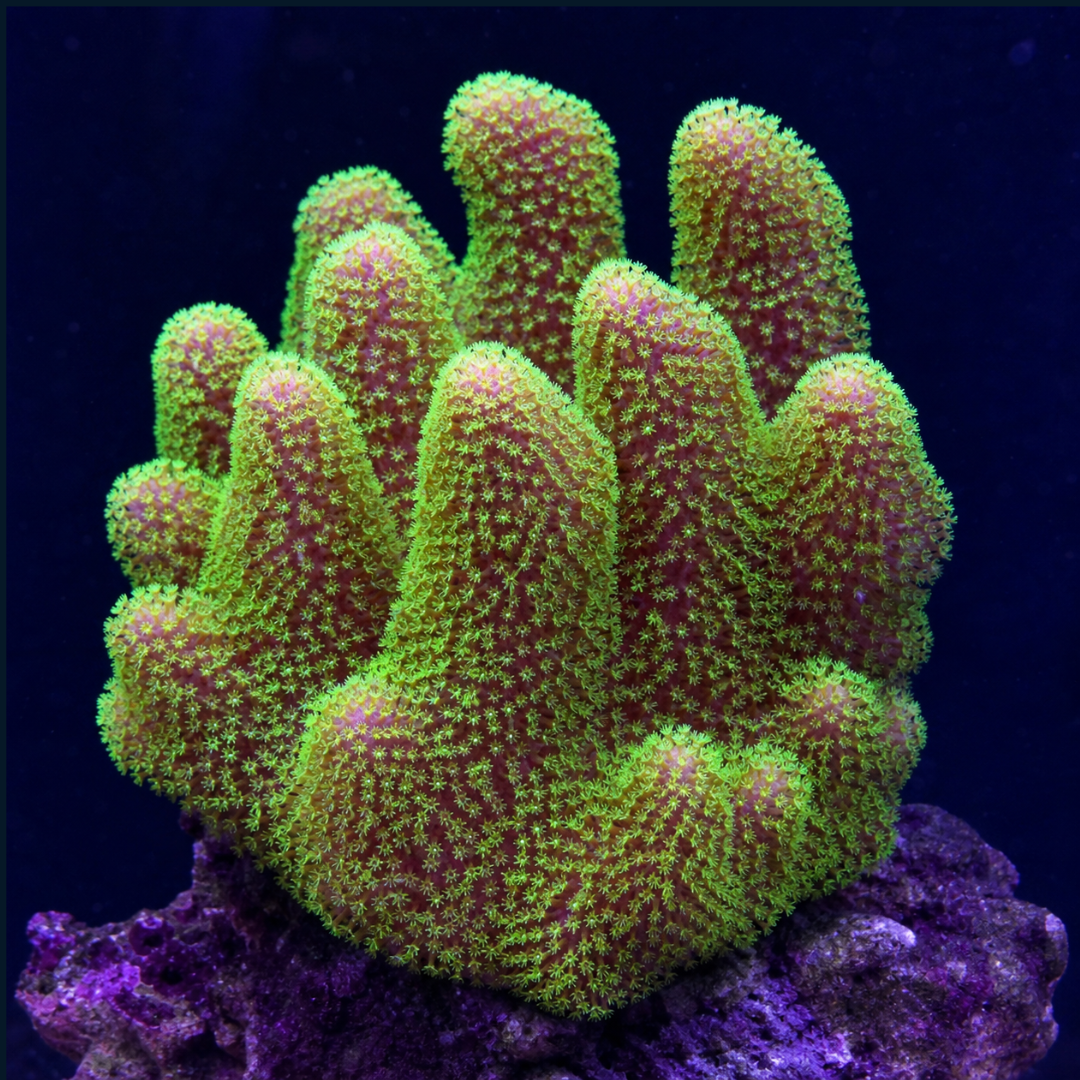
解説 / Description
ウネタケは、インド太平洋の暖かな浅海域に広く分布するLobophytum属のソフトコーラルです。柔らかな柱部の上に、波打つようなヒダを持つ冠部を広げ、表面から多数の小さなポリプを開きます。褐色やベージュの個体が多い一方、青色照明の下で明るく発色するグリーン系も流通し、ゆったり揺れる姿は水槽に自然な動きを与えます。比較的丈夫で株分けもしやすいため入門向けとされますが、良好な水流、急激な高水温の回避、そして他のサンゴに影響する化学物質への配慮が長期飼育の鍵になります。 Lobophytum corals are soft corals widely distributed in warm, shallow waters of the Indo-Pacific. A flexible stalk supports a folded or ridged upper surface covered with many small polyps. Brown and beige colonies are common, while green forms can glow vividly under blue aquarium lighting. Their gently waving shape adds natural movement to a reef display. They are generally hardy and easy to propagate, but long-term success still depends on suitable water flow, protection from sudden heat stress, and control of chemical compounds that may affect neighboring corals.
基本情報 / Basic Information
| 学名 / Scientific Name | Lobophytum spp. |
|---|---|
| 通称・英名 / Common and English Names | ウネタケ、ロボフィツム。販売時には種まで同定されず「Lobophytum sp.」と表記されることも多くあります。Devil’s hand coral, lobed leather coral, and Lobophytum leather coral. Aquarium specimens are often sold simply as “Lobophytum sp.” because species-level identification is difficult. |
| 分類 / Classification | 刺胞動物門、八放サンゴ綱、ウミトサカ目、ウミトサカ科またはオオウミキノコ科として扱われるLobophytum属。分類体系は研究の進展により見直されることがあります。Phylum Cnidaria, Class Octocorallia, Order Alcyonacea or Malacalcyonacea, Genus Lobophytum. Depending on the taxonomic system, the genus may be placed in Alcyoniidae or Sarcophytidae, and its classification continues to be revised. |
| 分布 / Distribution | インド太平洋の熱帯から亜熱帯海域。琉球列島を含むサンゴ礁の浅場、礁原、礁斜面などに見られ、光が届き水通しのよい岩礁域に群体を形成します。Tropical and subtropical Indo-Pacific, including the Ryukyu Islands. Colonies occur on shallow reef flats, reef slopes, and other illuminated rocky habitats with regular water movement. |
| 最大サイズ / Maximum Size | 種や環境による差が大きく、正確な属共通値は定めにくいものの、成熟した群体は数十cm規模に広がります。水槽内でも十分な空間があると大きな冠部を形成します。Size varies greatly among species and environments, so there is no single reliable maximum for the genus. Mature colonies commonly reach several tens of centimeters across and can become substantial in aquaria. |
| 寿命 / Lifespan | 種ごとの寿命は詳しく分かっていません。安定した環境では群体を長期間維持でき、分裂や株分けによって同じ遺伝的個体が長く受け継がれます。Species-specific lifespan is not well documented. Under stable conditions, colonies can persist for many years, while clonal fragments may continue the same genetic individual over long periods. |
飼育環境 / Aquarium Environment
| 水槽サイズ / Tank Size | 小さなフラグなら60cm規格水槽、約55〜65Lから飼育できます。ただし成長後の広がりと他のサンゴとの間隔を考えると、90cm規格水槽、約150L以上が管理しやすく、大型コロニーにはさらに余裕のある水槽が適します。A small fragment can be kept in a standard 60 cm aquarium of roughly 55–65 L. For mature growth and safe spacing from other corals, a standard 90 cm aquarium of about 150 L or larger is easier to manage. |
|---|---|
| 水温・比重 / Temperature and Specific Gravity | 水温は23〜25℃を中心に安定させます。20〜25℃程度には対応しますが、28℃以上の状態が続くと白化や弱りの危険が高まるため、日本の夏季は水槽用クーラーが重要です。比重は天然海水に近い1.023〜1.026を目安にします。Maintain a stable temperature around 23–25°C. Although the coral can tolerate roughly 20–25°C, prolonged temperatures above 28°C increase the risk of bleaching and decline. A chiller is often important during hot Japanese summers. Keep specific gravity near natural seawater, approximately 1.023–1.026. |
| 水質 / Water Quality | 急変の少ない一般的なリーフ水質を維持します。目安はpH 8.0〜8.4、KH 7〜10 dKH、カルシウム400〜450mg/L、マグネシウム1250〜1350mg/Lです。ソフトコーラルのため骨格形成への要求は高くありませんが、安定性は重要です。硝酸塩やリン酸塩を極端なゼロにせず、硝酸塩1〜15mg/L、リン酸塩0.02〜0.10mg/L程度の低濃度を保つと管理しやすくなります。Maintain stable reef-aquarium conditions with minimal sudden change. General targets are pH 8.0–8.4, alkalinity 7–10 dKH, calcium 400–450 mg/L, and magnesium 1,250–1,350 mg/L. Although this soft coral does not build a massive skeleton, stability remains important. Avoid stripping nutrients to absolute zero; approximately 1–15 mg/L nitrate and 0.02–0.10 mg/L phosphate are practical low-level targets. |
| 光量 / Lighting | 中程度からやや強めの光が適し、PARではおおむね80〜200程度を出発点にできます。強い照明へ急に移すと縮みや色抜けを起こすため、導入直後は低い位置または短い点灯時間から始め、1〜2週間以上かけて徐々に光へ慣らします。Moderate to moderately strong lighting is suitable, with roughly 80–200 PAR as a useful starting range. Sudden exposure to intense light may cause contraction or paling, so begin lower in the tank or with a shorter photoperiod and acclimate gradually over at least one to two weeks. |
| 水流 / Water Flow | ポリプやヒダが穏やかにたなびく中程度のランダム水流が理想です。一方向から強く直撃させるのではなく、ポンプの流れをガラス面や岩に当てて拡散させます。冠部のくぼみに汚れが残らず、脱皮した膜が自然に流される程度を目安にします。Provide moderate, irregular flow that gently moves the polyps and folds. Avoid a harsh, constant jet aimed directly at the colony. Deflect pump output from glass or rock so debris does not settle in the ridges and shed mucus can lift away naturally. |
| レイアウト・配置 / Layout and Placement | ライブロック上の安定した場所に固定し、冠部が広がる空間を確保します。デトリタスがたまりやすい淀みや、強い直射水流の正面は避けます。成長すると周囲へ張り出すため、特にミドリイシ類など繊細なサンゴとは接触しない距離を取ります。Secure the coral on stable rockwork with room for the upper surface to expand. Avoid stagnant pockets where detritus accumulates and positions directly in front of a powerful pump. Because the colony can spread widely, keep it from touching sensitive corals, especially small-polyp stony corals. |
| 注意点 / Precautions | 導入時は水温と比重を丁寧に合わせ、急な照明変化を避けます。数日間ポリプを閉じて表面に薄い膜を作る脱皮は正常な生理現象であり、無理に手で剥がしてはいけません。適切な水流と軽いスポイト送水で自然な剥離を助けます。水槽内では活性炭を使用し、定期的に交換すると化学物質の蓄積を抑えられます。魚病薬はサンゴに使用しません。Match temperature and specific gravity carefully during introduction and avoid abrupt changes in lighting. Closing for several days while forming a thin surface film is often normal shedding; do not peel it away by hand. Appropriate flow and a gentle puff from a pipette can help loosen an already-detached film. Use activated carbon and replace it regularly to reduce dissolved chemical compounds. Never apply fish medication directly to the coral. |
餌と給餌 / Feeding
| 栄養の得方・餌 / Nutrition and Diet | 体内に共生する褐虫藻の光合成産物が主要な栄養源です。また、水中の溶存有機物や微細な粒子も利用すると考えられています。基本的に直接給餌なしでも維持できますが、液状サンゴフード、濃縮ワムシ、植物プランクトンなどをごく少量補助的に与えることができます。Photosynthetic products supplied by symbiotic dinoflagellates are the main source of nutrition. The colony is also thought to use dissolved organic matter and fine suspended particles. Direct feeding is usually unnecessary, although tiny amounts of liquid coral food, concentrated rotifers, or phytoplankton may be offered as supplements. |
|---|---|
| 給餌のポイント / Feeding Tips | 成長促進を狙う場合でも週1回以下の少量から始めます。粒子が群体表面に触れる程度に水流を弱め、完全に止める必要はありません。食べ残しや過剰添加は硝酸塩・リン酸塩の上昇、コケやシアノバクテリアの増殖につながるため、反応が乏しい場合は給餌量を増やさず中止します。Even when encouraging growth, begin with a very small amount no more than once a week. Reduce flow enough for fine particles to contact the colony, but complete shutdown is usually unnecessary. Excess food can raise nitrate and phosphate and encourage algae or cyanobacteria, so stop rather than increasing the dose when no clear response is observed. |
性質と相性 / Characteristics and Compatibility
| 形態・成長 / Form and Growth | 強固な石灰質骨格を持たない群体性ソフトコーラルで、組織内の微細な骨片が体を支えます。柱部と冠部からなり、冠部には波状の隆起と多数のポリプが並びます。環境が合えば比較的よく成長し、分裂や切り分けによって容易にクローン増殖します。自ら歩き回ることはありませんが、成長に伴って岩面を覆い、周囲へ大きく張り出します。This is a colonial soft coral without a massive calcareous skeleton. Microscopic sclerites distributed through the tissue provide support. A stalk carries a folded upper surface covered with many polyps. Under favorable conditions it grows steadily and clones readily by natural division or fragmentation. It does not actively walk, but can spread over rock and extend well beyond its original footprint. |
|---|---|
| 攻撃性 / Aggression | 長いスイーパー触手で攻撃するタイプではありませんが、テルペノイドなどの二次代謝産物を放出するアレロパシーが強く、周囲のサンゴの成長や組織に影響する場合があります。特に閉鎖的な小型水槽や密集したリーフ水槽では、十分な間隔、定期換水、良好なろ過、活性炭の使用が重要です。Lobophytum does not normally attack with long sweeper tentacles, but it can exert strong allelopathic effects by releasing terpenoid and other secondary metabolites. These compounds may suppress the growth or damage the tissue of neighboring corals. In small or crowded reef aquaria, maintain generous spacing, regular water changes, effective filtration, and fresh activated carbon. |
| 相性 / Compatibility | 一般的なリーフセーフの魚や多くの無脊椎動物とは同居できます。イソギンチャクがない水槽では、クマノミが冠部へ潜り込むことがありますが、頻繁な接触でポリプが閉じ続ける場合は様子を見ます。ミドリイシ類など化学物質に敏感なサンゴとは距離を取り、ウミウサギガイ類や一部のウミウシなどソフトコーラルを食べる生物の混入に注意します。It is compatible with most reef-safe fish and many invertebrates. In aquaria without an anemone, clownfish may shelter among the folds, although persistent rubbing can keep the polyps closed. Keep chemical-sensitive corals such as many Acropora species at a distance, and inspect new arrivals for coral-eating cowries or nudibranchs. |
病気と対策 / Diseases and Prevention
| 不調・病気・害虫 / Problems, Diseases, and Pests | よく見られる状態は、脱皮に伴うポリプの閉鎖、光や水質変化による縮み、強光や高水温による色抜け・白化、デトリタス堆積による表面の汚れです。組織が溶ける、悪臭がする、短期間で壊死が広がる場合は細菌性の障害も疑われます。害虫としてはウミウサギガイ類や一部のウミウシが付着することがあります。Common problems include closed polyps during shedding, contraction after changes in light or water quality, paling or bleaching from excessive light or heat, and surface fouling where detritus settles. Rapid tissue breakdown, foul odor, or spreading necrosis may indicate bacterial damage. Coral-eating cowries and certain nudibranchs can also arrive as pests. |
|---|---|
| 対策と予防 / Prevention | 水温・比重・pHを安定させ、冠部に汚れが残らないランダム水流を保ちます。脱皮中は膜を手で剥がさず、剥がれかけた部分へスポイトで軽く海水を当てます。新規個体は別容器で観察し、サンゴ用ディップ剤で洗浄してから導入します。壊死が明確な場合は健全部まで余裕を持って切除し、器具を洗浄して別の清潔な場所へ固定します。Keep temperature, salinity, and pH stable, and maintain irregular flow that prevents debris from settling on the folds. During shedding, never peel the film manually; gently direct seawater at sections that are already lifting. Observe and dip new specimens before introduction. When necrosis is clearly advancing, cut back into healthy tissue with clean tools and remount the surviving section in a clean area. |
増やし方(繁殖・株分け) / Reproduction and Propagation
| 無性生殖・株分け / Asexual Reproduction and Fragmentation | 自然界では分裂や出芽によってクローン群落を形成します。水槽では、健康な冠部の一部をよく切れる刃物で切り取り、ライブロック片やセラミックプラグへ固定するフラッギングが可能です。柔らかな組織は接着剤だけでは外れやすいため、緩い輪ゴム、メッシュ、つまようじと輪ゴムなどで圧迫しすぎないよう保持すると活着しやすくなります。In nature, colonies expand clonally by fission and budding. In aquaria, a healthy section of the upper surface can be cut with a sharp blade and attached to live-rock rubble or a ceramic plug. Soft, slimy tissue often slips free from glue alone, so a loose rubber band, mesh, or a toothpick-and-band method can hold the fragment without crushing it until attachment occurs. |
|---|---|
| 有性生殖 / Sexual Reproduction | 多くのウネタケ類は雌雄異体で、卵と精子を海中へ放出する放卵放精型です。卵形成には約12か月、精子形成には約4〜5か月を要する例が知られ、夏から初秋の月齢に同調して産卵することがあります。家庭水槽での計画的な有性繁殖は、雌雄の成熟群体と産卵条件の再現が必要なため一般的ではありません。Many Lobophytum species are gonochoric broadcast spawners, with separate male and female colonies releasing gametes into the water. Documented examples show oogenesis lasting about 12 months and spermatogenesis about four to five months, with spawning sometimes synchronized to lunar cycles from summer to early autumn. Planned sexual reproduction in home aquaria is uncommon because mature colonies of both sexes and precise spawning conditions are required. |
| 増殖のポイント / Propagation Tips | 親株のポリプがよく開き、組織に傷みがない時期に行います。刃物と固定材料を清潔にし、作業は別容器で行うと水槽内へ粘液が広がりにくくなります。切断後はヨウ素系のサンゴ用ディップ剤を製品指示どおりに使い、中程度の水流と安定した光の下で回復させます。活着まで数週間かかることがあるため、固定部を頻繁に触りません。Propagate only when the parent colony is open and free of tissue damage. Clean the blade and mounting materials, and work in a separate container to limit the spread of mucus in the display. After cutting, an iodine-based coral dip may be used according to its label. Recover the fragment under moderate flow and stable light, and avoid repeated handling because attachment may take several weeks. |
毒性と取り扱い / Toxicity and Handling
| 毒性 / Toxicity | 刺胞動物として刺胞を持つほか、捕食防御や空間競争に働く生理活性のあるテルペノイド類を含みます。通常の接触で重大な中毒が起こる生体として知られているわけではありませんが、粘液が皮膚、目、口、傷口に入ると刺激になる可能性があります。ウネタケは、パリトキシンを代表的な毒として持つボタンポリプ類とは別のグループです。As a cnidarian, Lobophytum possesses stinging cells and also contains biologically active terpenoids used in defense and spatial competition. It is not generally known as a coral that causes severe poisoning through ordinary contact, but mucus may irritate skin, eyes, the mouth, or open wounds. Lobophytum is a different group from zoanthids that are notably associated with palytoxin. |
|---|---|
| 取り扱い上の注意 / Handling Precautions | 移動や株分けでは使い捨て手袋を着用し、切断時は保護眼鏡も使用します。手に傷がある場合は直接触れず、粘液が目や口へ入った場合は大量の清潔な水で洗い流します。作業後は手、器具、作業面を十分に洗浄します。サンゴや付着した岩を加熱・煮沸すると未知の刺激物質が飛散するおそれがあるため行いません。Wear disposable gloves when moving or fragmenting the coral, and use eye protection during cutting. Avoid direct contact when you have open wounds. If mucus reaches the eyes or mouth, rinse immediately with plenty of clean water. Wash hands, tools, and work surfaces thoroughly afterward. Do not heat or boil the coral or attached rock, because irritating compounds may become airborne. |
雑学と豆知識 / Trivia and Fun Facts
| 「悪魔の手」と呼ばれる理由 / Why It Is Called the Devil’s Hand | 英語圏で使われるDevil’s hand coralという呼び名は、冠部から立ち上がる太いヒダが指を広げた手のように見えることに由来します。水流を受けてポリプが一斉に開くと、硬い骨格を持たない柔らかな群体が、まるで呼吸しているようにゆっくり姿を変えます。The name “devil’s hand coral” comes from the thick lobes of the upper surface, which can resemble an outstretched hand. When the polyps open in flowing water, the flexible colony slowly changes shape in a way that can appear almost like breathing. |
|---|---|
| 見た目だけでは種を決めにくい / Appearance Alone Rarely Identifies the Species | ウネタケの正確な同定では、色やヒダの形だけでなく、組織内にある骨片の形と配置が重要です。冠部と柱部では骨片の種類が異なり、樽形、紡錘形、キャプスタン形、棍棒形などの微細な特徴を顕微鏡で比較します。そのため、アクアリウム市場では無理に種名を付けず、Lobophytum sp.として扱う方が誠実な場合があります。Accurate identification requires more than color or lobe shape. Taxonomists compare the form and arrangement of microscopic sclerites from different parts of the colony, including barrel-shaped, spindle-shaped, capstan-shaped, and club-shaped elements. For this reason, aquarium specimens are often more honestly labeled simply as Lobophytum sp. |
| DNAが明らかにした分類の難しさ / DNA Revealed a Complicated Family Tree | 分子系統解析では、外見上ウネタケとウミキノコに分けられてきた仲間が、必ずしもきれいな二つの系統に分かれないことが示されています。形態の中間的な群や、同じ種名の中に遺伝的に異なる隠蔽種が含まれる可能性もあり、骨片、DNA、二次代謝産物を組み合わせた再検討が進められています。Molecular studies have shown that corals traditionally separated into Lobophytum and Sarcophyton do not always fall into two neat evolutionary lineages. Intermediate forms and genetically distinct cryptic species may be hidden under a single name, so modern revisions increasingly combine sclerite morphology, DNA, and chemical profiles. |
| 目に見えない化学戦 / An Invisible Chemical Contest | ウネタケは隣のサンゴへ触手を伸ばさなくても、水中へ放出する化学物質によって競争相手へ影響を与えます。自然のサンゴ礁では限られた岩面を守る有効な戦略ですが、閉鎖された水槽では濃度が高まりやすくなります。活性炭、換水、適切な間隔が勧められるのは、この生態を水槽内で穏やかに管理するためです。Lobophytum can influence neighboring corals without touching them, releasing dissolved compounds that affect competitors. On a natural reef this helps defend limited rock space, but in a closed aquarium those compounds can accumulate. Activated carbon, water changes, and generous spacing are therefore practical ways to manage a natural ecological strategy. |
| 脱皮は自分を掃除する仕組み / Shedding Is a Self-Cleaning System | 波打つ冠部には微細な汚れや藻類が付着しやすいため、ウネタケは表面を薄い膜で覆い、それをまとめて剥がすことで清潔さを取り戻します。ポリプが閉じた姿だけを見ると弱ったように見えますが、膜が流れ去った後に以前よりよく開くこともあります。飼育者がするべきことは剥がす作業ではなく、自然に剥がれる水流を整えることです。The folded surface easily collects fine debris and algae, so the coral periodically coats itself with a thin film and sheds it away. The closed colony can appear unhealthy, yet it may reopen more fully once the film is gone. The aquarist’s role is not to peel the surface, but to provide flow that allows the natural cleaning process to finish. |
| 白化から戻っても影響が残る / Recovery of Color Does Not End the Stress | 重い白化を経験したウネタケでは、褐虫藻と体色が戻った後も、卵数や卵サイズの減少など繁殖への影響が長く残る例が報告されています。見た目の回復だけでは完全な回復を判断できないことは、高水温を避ける重要性をよく示しています。Studies of severely bleached Lobophytum have found that reduced egg number and egg size may persist even after symbionts and normal color return. Visible recovery therefore does not always mean complete biological recovery, emphasizing the importance of preventing prolonged heat stress. |
| 海洋天然物研究の宝庫 / A Source of Marine Natural Products | 捕食者や競争相手から身を守るための化学物質は、創薬研究でも注目されています。ウネタケ類からはセンブレン型ジテルペン、ステロイド、セスキテルペンなどが単離され、培養細胞や実験モデルでは抗炎症、細胞毒性、抗マラリア、抗菌などの活性が調べられてきました。ただし、研究段階の化合物がそのまま医薬品として利用できるわけではなく、有効性と安全性の検証が必要です。The compounds used to deter predators and competitors also attract interest in drug-discovery research. Cembranoid diterpenes, steroids, sesquiterpenes, and other substances isolated from Lobophytum have been examined for anti-inflammatory, cytotoxic, antimalarial, and antimicrobial activity in laboratory systems. Such findings do not mean that the coral or its extracts are medicines; extensive testing of effectiveness and safety is still required. |
| 日本の八放サンゴ研究とのつながり / A Link to Japanese Octocoral Research | 日本産八放サンゴの研究は19世紀に始まり、昭和初期以降はパラオ、紀伊半島、琉球列島などを舞台に分類学的な蓄積が進みました。現在も琉球列島では新記録種が見つかることがあり、黒潮が結ぶ南方海域とのつながりと、生物多様性の豊かさを感じさせます。Research on Japanese octocorals began in the nineteenth century and expanded through work in Palau, the Kii Peninsula, and the Ryukyu Islands. New national records continue to appear in the Ryukyus, reflecting both the region’s biodiversity and its connection to southern reefs through the Kuroshio Current. |
| クマノミが選ぶ代わりの寝床 / A Substitute Home for Clownfish | クマノミは本来イソギンチャクと結びつく魚ですが、水槽内では大きく育ったウネタケのヒダへ潜ることがあります。必ず起こる関係ではなく、自然界の共生と同じものでもありません。それでも、魚が柔らかな冠部を寝床として選ぶ姿は、サンゴと魚の行動が水槽内で思わぬ景色を作る一例です。Clownfish are naturally associated with sea anemones, yet in aquaria they may nestle into the folds of a large Lobophytum colony. This is neither guaranteed nor identical to a natural anemone partnership, but it is a striking example of how animal behavior can create unexpected relationships in a reef tank. |
まとめ / Conclusion
ウネタケは、丈夫さと柔らかな造形をあわせ持ち、ポリプが開いた時と脱皮中とで大きく表情を変えるソフトコーラルです。中程度の光、汚れを残さないランダム水流、安定した水温と比重を保ち、活性炭と換水でアレロパシーを管理すれば、初心者でも長く付き合いやすい存在になります。 Lobophytum combines resilience with a soft, expressive form, changing dramatically between full polyp extension and periodic shedding. With moderate light, irregular flow that prevents debris buildup, stable temperature and salinity, and chemical control through activated carbon and water changes, it can be a rewarding long-term coral even for a developing reef keeper.
小さなフラグが岩へ活着し、やがて波打つ冠部を大きく広げていく過程には、時間をかけて育てる楽しさがあります。水槽の流れに合わせて静かに揺れる姿は、サンゴ礁の生きた風景を身近に感じさせてくれるでしょう。 Watching a small fragment attach to rock and gradually develop a broad, folded crown is one of the pleasures of patient coral keeping. Its slow movement in the current brings a quiet sense of a living reef into the aquarium.

気になる道具や飼い方を見つけてみませんか?
 アイのアクアグッズ案内水槽のろ材の選び方|ウール・リング・活性炭の違いとおすすめ商品フィルターの中の綿や石は何をしている? アイとコタロウが、ウール・スポンジ・セラミック・焼結ガラス・活性炭・ゼオライトを比較。機種との相性、入れ方、洗い方と交換まで商品とともに紹介します。記事はコチラ →
 アイのアクアグッズ案内プレコ飼育に必要なもの|餌・流木・ろ過・隠れ家・掃除用品道具の特徴や使い方、選ぶときのポイントをアイが紹介します。記事はコチラ →
 アイのアクアグッズ案内小型カラシンの群れを楽しむ|餌と水換えから考える飼育用品ガイド小型カラシンの群れを眺める時間を、もっと楽しく。泳ぐ余白、餌の食べ方、続けやすい水換えを軸に、日本で揃えやすい用品の選び方を紹介します。記事はコチラ →
 アイのアクアグッズ案内水合わせの道具とやり方|魚を迎える前にそろえたい容器・点滴キット・ネット買ってきた魚はすぐ水槽に入れていい? 水温合わせと水合わせの違いから、透明ケース・点滴キット・ネットの選び方、時間をかけすぎない注意点まで、アイとコタロウが紹介します。記事はコチラ →
さまざまな飼育テーマをご紹介。リンク先の記事には広告・商品紹介が含まれます。
案内・紹介記事一覧へ →分布マップ
ウネタケ属は、琉球列島を含むインド太平洋の熱帯から亜熱帯海域に広く分布し、光と水流のある浅いサンゴ礁や岩礁域で見られます。地図では属全体の広い分布を概略範囲で示しています。
この地図は記事の分布記述をもとにした概略表示です。表示範囲と代表地点は、実際の採集地点、個別種の確認地点、厳密な生息範囲を示すものではありません。
参考文献・資料
ウネタケの分類、形態、分布、生息環境、飼育、繁殖、白化、サンゴ間競争および健康管理に関する記述の参考となる、公的データベース、専門書、査読論文、研究機関の資料を掲載しています。
-
分類・学名
World Register of Marine Species. “Lobophytum Marenzeller, 1886.” World List of Octocorallia.
WoRMSの分類情報を確認する -
形態・骨片・同定
Verseveldt, J. 1983. “A revision of the Genus Lobophytum von Marenzeller (Octocorallia, Alcyonacea).” Zoologische Verhandelingen, 200(1): 1–103.
Naturalisの公開資料を確認する -
分布・生息環境・生態
Fabricius, K. E. and Alderslade, P. 2001. Soft Corals and Sea Fans: A Comprehensive Guide to the Tropical Shallow Water Genera of the Central-West Pacific, the Indian Ocean and the Red Sea. Australian Institute of Marine Science, Townsville. 264 pp.
書誌情報と公開資料を確認する -
琉球列島の分布
Benayahu, Y. 2002. “Soft corals (Octocorallia: Alcyonacea) of the southern Ryukyu Archipelago: The families Tubiporidae, Clavulariidae, Alcyoniidae and Briareidae.” Journal of the Japanese Coral Reef Society, 4: 11–32.
J-STAGEの論文を確認する -
飼育・株分け・養殖
Ellis, S. and Sharron, L. 1998. The Culture of Soft Corals (Order: Alcyonacea) for the Marine Aquarium Trade. Center for Tropical and Subtropical Aquaculture, Publication No. 137.
NOAAの公開資料を確認する -
水質・照明・水流・健康管理
Leewis, R. J. and Janse, M., eds. 2008. Advances in Coral Husbandry in Public Aquariums. Public Aquarium Husbandry Series, Vol. 2. Burgers’ Zoo, Arnhem. 444 pp.
書誌情報を確認する -
有性生殖
Baran, C. C. and Baria-Rodriguez, M. V. 2021. “Sexual reproduction in the soft coral Lobophytum schoedei in Bolinao–Anda Reef Complex, Pangasinan, northwestern Philippines.” Invertebrate Biology, 140: e12316.
論文情報を確認する -
白化・繁殖への影響
Michalek-Wagner, K. and Willis, B. L. 2001. “Impacts of bleaching on the soft coral Lobophytum compactum. I. Fecundity, fertilization and offspring viability.” Coral Reefs, 19: 231–239.
論文情報を確認する -
アレロパシー・サンゴ間競争
Sammarco, P. W., Coll, J. C., La Barre, S. and Willis, B. 1983. “Competitive strategies of soft corals (Coelenterata: Octocorallia): Allelopathic effects on selected scleractinian corals.” Coral Reefs, 1: 173–178.
論文情報を確認する -
病変・不調の観察と安全な調査
Woodley, C. M., Bruckner, A. W., McLenon, A. L., Higgins, J. L., Galloway, S. B. and Nicholson, J. H. 2008. Field Manual for Investigating Coral Disease Outbreaks. NOAA Technical Memorandum NOS NCCOS 80 and CRCP 6. 85 pp.
NOAAのフィールドマニュアルを確認する
飼育条件の具体的な数値は、水槽設備、照明、個体の産地や順応状態によって変化します。上記資料は、記事内の各項目を検討するための基礎資料として参照しています。





コメント