
解説 / Description
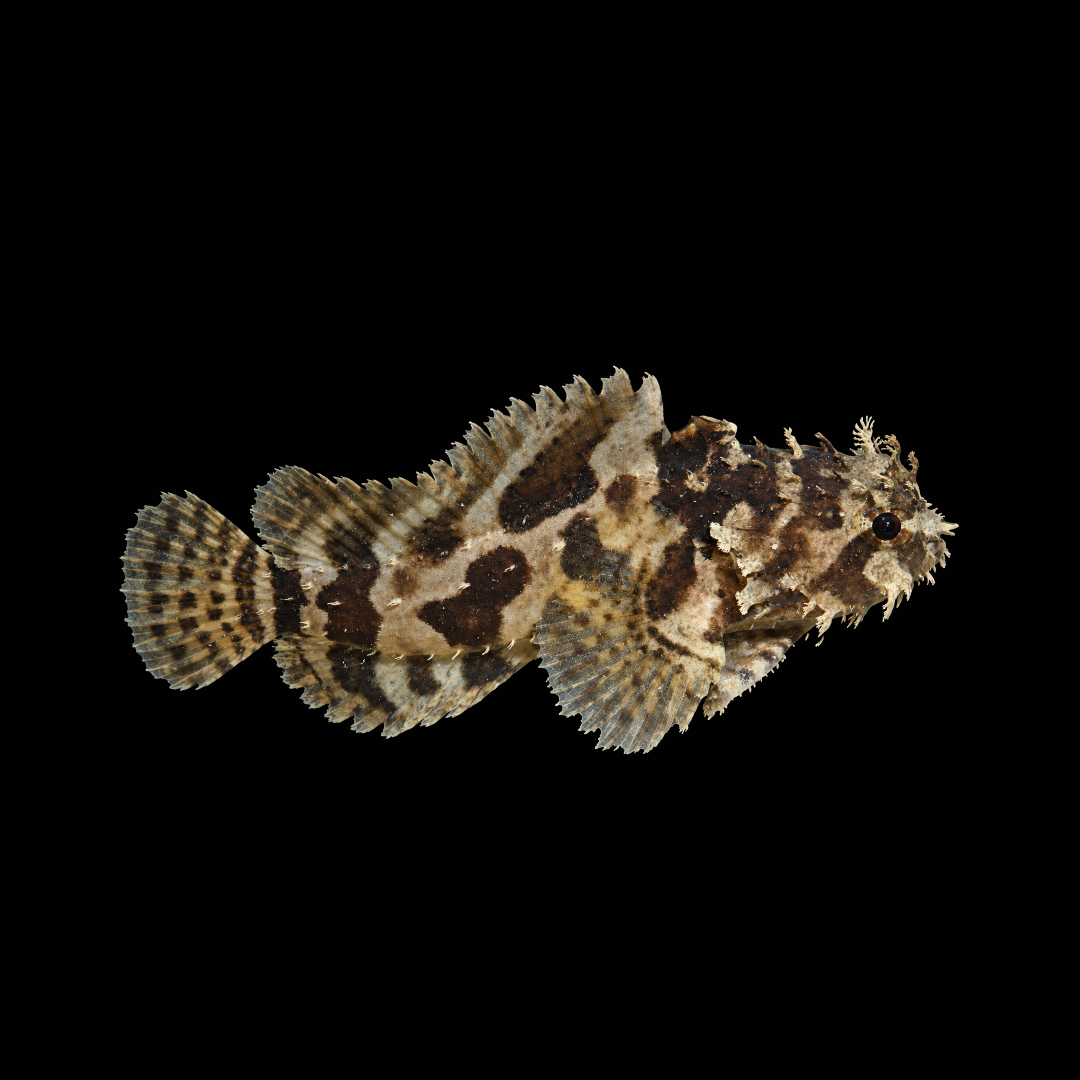
バンデッドフロッグは、大きく平たい頭と幅広い口、褐色の帯模様が印象的なガマアンコウ科の海水魚です。顔や体にある房状の皮弁が輪郭をぼかし、岩陰や海底の堆積物に紛れて獲物を待ち伏せます。普段は底でじっとしていますが、小魚や甲殻類が近づくと素早く捕らえます。「フロッグフィッシュ」という名前で流通するものの、カエルアンコウとは異なる仲間です。活発な遊泳よりも、巧みな擬態や捕食行動をじっくり観察する楽しみがあります。飼育には海水魚の水質管理に加え、餌付けと安全な取り扱いへの配慮が必要です。 The banded frogfish is a marine toadfish with a broad, flattened head, a large mouth, and brown bands. Tassel-like skin flaps break up its outline as it waits among rocks and bottom debris. Usually motionless, it strikes quickly when a small fish or crustacean comes close. Despite its common name, it is not an antennariid frogfish. Its appeal lies in observing camouflage and ambush feeding rather than active swimming. Successful care requires sound marine aquarium management, patient feeding, and careful handling.
基本情報 / Basic Information
| 学名 / Scientific Name | Halophryne diemensis (Lesueur, 1824) |
|---|---|
| 通称 / Common Name | バンデッドフロッグ、バンデッドフロッグフィッシュ、バンデッドトードフィッシュ。流通名だけでは近縁種と区別できない場合があります。Banded frogfish, banded toadfish, Australian frogfish. Trade names alone may not reliably distinguish related species. |
| 分類 / Family | ガマアンコウ目・ガマアンコウ科・Halophryne属。Order Batrachoidiformes; family Batrachoididae; genus Halophryne. |
| 英名 / English Name | Banded frogfish, Banded toadfish, Australian frogfish |
| 分布 / Distribution | 東部インド洋から西太平洋の熱帯域。オーストラリアでは西部のシャーク湾から北部沿岸を経て、グレートバリアリーフ南部にかけて分布します。沿岸の岩礁やサンゴ礁、河口、マングローブ域などに生息します。Tropical eastern Indian Ocean and western Pacific. In Australia, its range extends from Shark Bay around the northern coast to the southern Great Barrier Reef. Habitats include coastal reefs, estuaries, and mangrove areas. |
| 最大体長 / Max Size | 全長約28cm。頭部が大きく、成魚には体長以上の存在感があります。Approximately 28 cm total length. Its broad head gives adults a substantial appearance. |
| 寿命 / Lifespan | 飼育下での一般的な寿命を示す、信頼できる情報は十分ではありません。短い飼育期間を本来の寿命とみなさず、長期飼育を前提に設備と栄養管理を整えます。Reliable information is insufficient to establish a typical captive lifespan. Short periods of survival should not be treated as the species’ natural lifespan; plan facilities and nutrition for long-term care. |
飼育環境 / Aquarium Environment
| 水槽サイズ / Tank Size | 成魚1匹の飼育では、90cm規格水槽(90×45×45cm、寸法から計算した容量約182L)以上を設備計画の目安とし、余裕があれば120cm規格水槽(120×45×45cm、約243L)や120cmワイド水槽(120×60×60cm、約432L)を検討します。本種の飼育に必要な最低水槽サイズが検証されているわけではないため、水量だけでなく、成魚が無理なく向きを変えられる底面の広さを重視します。実際の水量は、水位や岩組みなどによって上記の容量より少なくなります。For one adult, a standard Japanese 90 cm aquarium measuring 90 × 45 × 45 cm, approximately 182 L by dimensional calculation, is a planning guideline. Where space permits, consider a 120 × 45 × 45 cm tank, approximately 243 L, or a wide 120 × 60 × 60 cm tank, approximately 432 L. A minimum tank size has not been established for this species, so prioritize enough floor space for an adult to turn comfortably rather than volume alone. Actual water volume will be lower because of the water level and displacement by decorations. |
|---|---|
| 水温 / Temperature | 飼育管理の目安は24~27℃。本種の最適水温として厳密に検証された範囲ではありません。急な変化を避け、夏季は必要に応じて冷却設備を使い、十分な酸素供給を確保します。 A practical maintenance guideline is 24–27°C, although this has not been rigorously established as the species’ optimal range. Avoid abrupt changes, use cooling when needed in hot weather, and maintain adequate oxygenation. |
| 水質 / Water Quality | 海水での管理を基本とし、一般的な海水魚水槽の管理目安として塩分約30~35‰、pH8.0~8.4を参考にします。塩分を比重で管理する場合は約1.023~1.026が目安ですが、温度や計器の基準によって対応が異なるため、使用する計器の説明に従ってください。十分に成熟した生物ろ過を用い、アンモニアと亜硝酸は検出されない状態を維持します。汽水域にも生息しますが、淡水での長期飼育は勧められません。導入時は販売店の塩分を確認し、大きな差がある場合は急変させないよう調整します。Marine maintenance is the preferred approach. Approximately 30–35 ppt salinity and pH 8.0–8.4 are general marine aquarium guidelines. This salinity roughly corresponds to a specific gravity of 1.023–1.026, but the relationship depends on temperature and instrument calibration; follow the instrument’s instructions. Use mature biological filtration and maintain undetectable ammonia and nitrite. Occurrence in estuaries does not justify long-term freshwater care. Check the supplier’s salinity and avoid abrupt changes during acclimation. |
| レイアウト / Layout | 体全体を隠せる洞窟状のシェルターを設け、岩は底砂が動いても崩れないように固定します。底床を使う場合は、細かく角の少ない砂を薄く敷くと、残餌を回収しやすくなります。落ち着ける陰と、給餌や観察がしやすい開けた場所を用意します。強い水流を体に直接当てず、岩陰にも緩やかに水が回るようにしてください。Provide a cave large enough to conceal the entire fish and secure rocks against collapse if the sand shifts. A shallow layer of fine, smooth sand makes waste removal easier if a substrate is used. Provide both shaded shelter and an open area accessible for feeding and observation. Avoid directing a powerful jet at the fish while maintaining gentle circulation through sheltered spaces. |
| 注意点 / Precautions | 鋭い棘と大きな口があるため、素手でつかまないでください。移動時は水中で硬質の容器へ誘導すると、網に棘が絡まるのを避けられます。皮膚分泌物が他魚に害を及ぼす可能性も指摘されているため、不必要に追い回さず、単独飼育を基本にします。ただし、飼育下で分泌物の影響が現れる条件は十分に分かっていません。Do not grasp this fish with bare hands because of its sharp spines and large mouth. Guiding it underwater into a rigid container avoids snagging the spines in a net. Skin secretions have also been implicated in harmful effects on other fishes, so avoid unnecessary disturbance and favor solitary housing. The conditions under which these secretions affect other animals in aquaria remain poorly understood. |
餌と給餌 / Feeding
| 餌の種類 / Diet | 肉食性で、自然下では小魚やエビ、カニなどを捕食します。飼育下では、解凍したエビや海産魚の切り身などを食べやすい大きさで与え、同じ餌ばかりに偏らないようにします。導入直後に動く餌しか受け付けない場合は、状態のよい餌用エビなどを使い、食べることに慣れてから冷凍餌への切り替えを試します。人工飼料を食べるとは限らないため、購入前に餌の種類と実際の食べ方を確認すると安心です。A carnivore that naturally takes small fishes, shrimps, crabs, and other prey. Offer appropriately sized portions of thawed shrimp and marine fish, avoiding reliance on a single food. If a newly acquired individual accepts only moving prey, healthy feeder shrimp can help establish feeding before attempting a transition to thawed foods. Acceptance of formulated food is not guaranteed, so check both the diet and actual feeding response before purchase. |
|---|---|
| 給餌のポイント / Feeding Tips | 先端の鋭くない給餌用の棒や長いピンセットを使い、餌を口の少し前で小さく動かします。器具ごとかみ込ませないよう、食いついたら餌が離れる持ち方にしてください。隠れ家の中へ無理に器具を差し込まず、薄暗く落ち着いた時間帯に試します。給餌量と間隔は固定せず、体の大きさ、腹部の張り、食欲、排泄の様子を見ながら調整し、一度に大量に与えないようにします。幼魚には体格に合った小さな餌を与えます。食べ残しは回収し、拒食が続く場合は餌の好みだけでなく、塩分、水温、水質、呼吸状態も確認します。Use a blunt feeding stick or long forceps to move food gently just in front of the mouth. Hold it so that it releases readily when taken, reducing the risk of the fish biting the implement. Avoid probing inside its shelter and try feeding during quiet, dim periods. Adjust portions and intervals to size, abdominal fullness, appetite, and waste production rather than following a rigid schedule, and avoid large meals. Offer juveniles suitably small food items. Remove leftovers and investigate salinity, temperature, water quality, and breathing if food refusal persists. |
性格と混泳 / Temperament and Tank Mates
| 性格 / Temperament | 底で獲物を待つ、動きの少ない捕食者です。泳ぎ回って他魚を追い続けるタイプではありませんが、近づいた生体を素早く捕食します。普段の動きが少なくても、混泳相手にとって安全とは限りません。A largely sedentary ambush predator. It does not typically pursue other fishes continuously, but can strike quickly at nearby animals. Its usual stillness does not make it safe around tankmates. |
|---|---|
| 混泳の相性 / Compatibility | 捕食と皮膚分泌物による影響を避けるため、原則として単独飼育を勧めます。口に入る魚やエビ、カニは捕食対象となり、特に細長い魚は体長だけでは安全性を判断できません。大きな魚でも、本種をつついたり隠れ家を奪ったりするとストレスの原因になります。同種同士でも、体格差による捕食や争いに注意が必要です。サンゴを主食とする魚ではありませんが、小型魚や甲殻類を含む一般的なサンゴ水槽での混泳には向きません。Solitary housing is recommended to avoid predation and possible effects from skin secretions. Fishes, shrimps, and crabs small enough to swallow are potential prey; length alone is an unreliable measure of safety, especially for slender fishes. Larger tankmates may peck at it or compete for shelter. Keeping multiple individuals also carries risks of aggression and size-related predation. Although it is not a coral feeder, it is unsuitable for typical reef communities containing small fishes and crustaceans. |
病気と対策 / Diseases and Prevention
| かかりやすい病気 / Common Diseases | 本種が特にかかりやすい病気について、十分な情報はありません。飼育上は、海水魚で見られる白点病などの寄生虫症、外傷に伴う細菌感染、拒食や偏食による栄養状態の悪化に注意します。白い点の有無だけでなく、呼吸が速い、体をこする、皮膚がただれる、体が痩せるといった変化も観察します。There is insufficient information to identify diseases to which this species is particularly susceptible. Potential problems include marine parasitic infections such as marine white spot, bacterial infections following injury, and poor condition caused by food refusal or an unbalanced diet. Watch for rapid breathing, rubbing, skin lesions, and loss of condition as well as visible spots. |
|---|---|
| 対策と予防 / Prevention | 導入時には独立した水槽で状態を観察し、塩分と水温を安定させ、十分なろ過と酸素供給を確保します。残餌を取り除き、定期的に換水して水質の悪化を防ぎます。異常が見られたらまず水質を測定し、見た目の症状だけで薬を選ばず、原因を確認します。本種に安全に使える薬剤の情報は限られるため、薬浴は製品の適用条件を確認し、海水魚に詳しい専門店や魚類を診療できる獣医師に相談して進めます。Observe new arrivals in a separate aquarium, stabilize salinity and temperature, and provide effective filtration and oxygenation. Remove uneaten food and perform regular water changes. Test water first when problems arise and identify the likely cause before selecting medication based on appearance alone. Information on safe medication use in this species is limited; follow product restrictions and consult an experienced marine specialist or aquatic veterinarian. |
増やし方(繁殖) / Breeding
| 雌雄の判別 / Sexing | 外見から確実に雌雄を判別する方法について、一般の飼育に利用できる情報は十分ではありません。体の大きさや腹部の膨らみだけで断定せず、ペアとして販売されている場合も判別の根拠を確認します。Information on reliable external sex identification is insufficient for routine aquarium use. Size and abdominal fullness alone are not conclusive; ask how sex was determined even when fish are offered as a pair. |
|---|---|
| 繁殖形態 / Reproduction | 卵生。卵を口の中に保持して保育し、孵化後も親魚の一方が子を保護すると報告されています。ただし、保育する親の性別や詳しい産卵条件など、飼育下で繁殖させるための情報は限られています。Egg-laying. Mouth incubation of eggs and protection of the young by one parent after hatching have been reported. Information on the sex providing care and the conditions needed for captive reproduction remains limited. |
| 繁殖のポイント / Breeding Tips | 家庭水槽で安定して繁殖させるための手順は、十分に分かっていません。繁殖を目的に無理に複数個体を同居させると、争いや捕食につながるおそれがあります。複数飼育を試みる場合は、すぐに分けられる設備と複数の隠れ家を用意し、相性を慎重に観察します。産卵や保育が見られた場合は、親魚の移動や隠れ家の点検を繰り返さず、落ち着いた環境を維持します。A reliably repeatable home breeding procedure is not well documented. Forcing individuals together may cause aggression or predation. Any attempt at group housing requires facilities for immediate separation, multiple shelters, and careful observation of compatibility. If spawning or parental care is observed, maintain a quiet environment and avoid repeatedly moving the parent or inspecting its shelter. |
雑学と豆知識 / Trivia and Fun Facts
| 1. 同じ「フロッグフィッシュ」でも異なる仲間 / 1. One common name, different fish families | 「フロッグフィッシュ」と聞くと、頭の上の突起を釣りざおのように動かすカエルアンコウを思い浮かべるかもしれません。ところが、オーストラリアではガマアンコウ科の魚にもこの呼び名が使われます。バンデッドフロッグはガマアンコウ科に属し、カエルアンコウのように獲物を誘う突起は持ちません。大きな口、底で待つ暮らし、周囲に紛れる姿という共通点はあっても、分類上は異なる仲間です。呼び名が同じでも飼育上の特徴まで同じとは限らないため、学名を確かめることが魚を正しく知る手掛かりになります。The word “frogfish” may bring to mind an antennariid waving a lure above its head. In Australia, however, the name is also used for toadfishes. The banded frogfish belongs to Batrachoididae and lacks the antennariid fishing lure. A large mouth, a bottom-dwelling lifestyle, and camouflage give these different families a similar appearance. Shared common names do not imply identical care requirements, making the scientific name a useful guide to identification. |
|---|---|
| 2. 学名に残る採集地の取り違え / 2. A locality error preserved in its name | 本種は1824年、フランスの博物学者ルスールによってBatrachoides diemensisとして記載されました。その後Halophryne属へ移されたため、現在の学名では命名者と年が括弧で囲まれています。種小名diemensisは、タスマニアの旧称「ヴァン・ディーメンズ・ランド」に由来しますが、これは当初、標本がその土地から来たと誤認されていたためです。現在、タイプ産地、つまり命名の基準となる標本の産地は、オーストラリア北部のノーザンテリトリーとされています。熱帯の海に暮らす魚の名前には、採集地をめぐる歴史も残っているのです。Lesueur described the species in 1824 as Batrachoides diemensis. Its later transfer to Halophryne explains the parentheses around the author and year in its current scientific name. The epithet diemensis refers to Van Diemen’s Land, the former name of Tasmania, because the specimen was originally thought to have come from there. The type locality—the locality associated with the specimen on which the name is based—is now given as the Northern Territory. This tropical fish’s name preserves a historical mistake about its origin. |
| 3. 帯模様だけでは完成しない擬態 / 3. Camouflage beyond the bands | 褐色の濃淡は岩や砂に紛れるだけでなく、体の輪郭を見分けにくくします。さらに、顔や体にある房状の皮弁が輪郭をぼかし、動かずに待つ行動が擬態を支えます。色、形、行動が組み合わさることで、周囲の景色に溶け込むのです。水槽でも、岩の一部のように見えていた姿が、目の動きや呼吸をきっかけに魚だと分かることがあります。派手に泳ぐことは少なくても、細部に目を向ける楽しみがある魚です。The brown pattern blends with rock and sand while making the body outline harder to distinguish. Tassel-like skin flaps further soften its edges, and remaining still reinforces the camouflage. Color, shape, and behavior work together. In an aquarium, an apparently rock-like shape may become recognizable as a fish when its eyes move or its breathing becomes visible. It offers much to observe even without active swimming. |
| 4. 棘の危険と皮膚分泌物は別の問題 / 4. Spines and skin secretions are different issues | オニダルマオコゼを連想させる姿から、棘で強い毒を注入する魚と混同されることがあります。しかし、本種の棘を覆う組織を調べた研究では、毒を注入するための器官は認められませんでした。一方、皮膚には大きな棍棒状細胞が見つかり、他魚を死なせると報告された皮膚分泌物が、この細胞に由来する可能性が指摘されています。つまり、棘から毒を注入する仕組みと、皮膚から出る物質の影響は、分けて考える必要があります。棍棒状細胞が分泌物の供給源であることは、この研究だけで確定したわけではありません。また、毒を注入する器官が見つからなくても、鋭い棘によるけがの危険は残ります。素手で触れず、魚を不必要に刺激しない扱いが大切です。Its stonefish-like appearance has contributed to a reputation for venomous spines. However, examination of the tissue surrounding its spines found no venom-injection apparatus. Large clavate cells were found in the skin and proposed as a possible source of secretions reported to kill other fishes. Venom injection through a spine and the effects of skin secretions are therefore separate issues. The study did not conclusively establish these cells as the source of the secretions. Nor does the absence of a venom apparatus remove the risk of injury from sharp spines. Avoid bare-handed contact and unnecessary disturbance. |
| 5. 河口に暮らせても淡水魚ではない / 5. Estuarine does not mean freshwater | マングローブ域や河口は、潮の満ち引きや降雨によって塩分が変化する場所です。本種がそこで見られることは、塩分のない水で長期間飼えることを意味しません。また、自然の河口では水が入れ替わりますが、水槽では残餌や排泄物を適切に処理しなければ水質が悪化します。生息地の印象だけで飼育条件を決めず、購入する個体が管理されていた塩分を確認し、安定した海水と清潔な隠れ家を用意することが大切です。Salinity in mangroves and estuaries changes with tides and rainfall. Finding this species there does not establish that it can be kept indefinitely in freshwater. Natural estuaries also exchange water, whereas aquaria require active management of uneaten food and waste. Rather than choosing conditions from a habitat label alone, check the individual’s existing salinity and provide stable seawater and clean shelter. |
まとめ / Conclusion
バンデッドフロッグは、岩陰に溶け込む姿と、獲物を捉える瞬間の素早さが魅力の魚です。大きな頭や房状の皮弁、静かに待つ行動には、海底で暮らす捕食者ならではの特徴が表れています。 The banded frogfish combines a rock-like stillness with quick feeding strikes. Its broad head, tasselled skin, and patient behavior reflect its life as a bottom-dwelling ambush predator.
飼育では単独飼育を基本とし、落ち着ける隠れ家、安定した海水、個体に合った給餌を整えることが大切です。日々の動きや食欲を丁寧に見守ることで、静かな姿の中にある豊かな表情を楽しめます。 Solitary housing, secure shelter, stable seawater, and feeding suited to the individual form the basis of care. Watching its movements and appetite closely reveals the subtle character of this quiet aquarium resident.
気になる道具や飼い方を見つけてみませんか?
 アイのアクアグッズ案内エーハイムはおもちゃから始まった? 小さな噴水から水槽へ、アイとコタロウの探訪道具の特徴や使い方、選ぶときのポイントをアイが紹介します。記事はコチラ →
 アイのアクアグッズ案内水槽のエアーポンプの選び方|水深・音・泡で選ぶおすすめ用品道具の特徴や使い方、選ぶときのポイントをアイが紹介します。記事はコチラ →
さまざまな飼育テーマをご紹介。リンク先の記事には広告・商品紹介が含まれます。
案内・紹介記事一覧へ →分布マップ
バンデッドフロッグ(Halophryne diemensis)は、東部インド洋から西太平洋の熱帯域に分布します。オーストラリアでは、シャーク湾から北部沿岸を経てグレートバリアリーフ南部にかけて、沿岸の岩礁やサンゴ礁、河口、マングローブ域などに生息します。
地図は分布地域の位置関係を示す概略表示です。表示範囲全体に生息することや、正確な分布境界を示すものではありません。マーカーはオーストラリア北部沿岸付近に設定した代表地点で、実際の採集地点ではありません。Google Earthのリンクも同じ代表地点を開きます。
参考文献
-
World Register of Marine Species(WoRMS):Dendrochirus brachypterus (Cuvier, 1829)
旧学名から現在の有効名 Neochirus brachyptera への対応を確認できる分類データベース。
-
Chou, T.-K., Liu, M.-Y. & Liao, T.-Y.(2023).
Systematics of lionfishes (Scorpaenidae: Pteroini) using molecular and morphological data.
Frontiers in Marine Science, 10, 1109655.
遺伝子と形態に基づく分類再検討、新属 Neochirus の設立、属名の由来、吻端のひげや胸ビレの識別形質。
-
Matsunuma, M., Motomura, H. & Bogorodsky, S. V.(2017).
Review of Indo-Pacific dwarf lionfishes (Scorpaenidae: Pteroinae) in the Dendrochirus brachypterus complex, with description of a new species from the western Indian Ocean.
Ichthyological Research, 64, 369–414.
近縁種の識別と分布の再検討。紅海・西インド洋の個体を別種 Dendrochirus hemprichi(現 Neochirus hemprichi)として区別した研究。
-
Bray, D. J.(2025).
Dwarf Lionfish, Neochirus brachypterus (Cuvier 1829).
Fishes of Australia(Museums Victoria/OzFishNet).
体色や皮弁、オーストラリアでの分布、昼間の隠れ場所、夜行性と甲殻類を中心とする食性、毒棘に関する種別解説。
-
Ornamental Aquatic Trade Association(OATA)(2022).
Tropical Marine Fish: How to care for lionfish & scorpionfish(PDF).
ミノカサゴ類の飼育環境、水温、水質、ろ過、隠れ家、給餌、混泳、健康観察を扱う業界団体の飼育指針。
-
Fishelson, L.(1975).
Ethology and reproduction of pteroid fishes found in the Golf of Aqaba (Red Sea), especially Dendrochirus brachypterus (Cuvier), (Pteroidae, Teleostei).
Pubblicazioni della Stazione Zoologica di Napoli, 39(Suppl. 1), 635–656.
紅海・アカバ湾における行動と繁殖の古典的研究。現在の種区分と照合して読む、近縁種の繁殖に関する歴史的資料。
-
Evolutionary and ecological correlates of thiaminase in fishes(2023).
PubMed Central公開論文.
魚類におけるチアミナーゼの分布と、食物を通じたビタミンB1不足を理解するための栄養学的背景。
-
Yanong, R. P. E.
Cryptocaryon irritans Infections (Marine White Spot Disease) in Fish.
University of Florida, IFAS Extension, FA164.
海水白点病の症状、生活環、診断、治療と予防。白点の有無だけでは判断できない感染や、呼吸・行動の観察についての専門解説。
-
Use of Copper in Marine Aquaculture and Aquarium Systems.
University of Florida, IFAS Extension, FA165.
海水白点虫とウーディニウム病の原因生物を対象とする銅剤の利用、濃度管理、魚や無脊椎動物への影響に関する専門資料。
-
Divers Alert Network(DAN).
Lionfish Awareness.
ミノカサゴ類の毒棘による刺傷と応急処置。洗浄、やけどを避けた温水の使用、医療機関での評価に関する指針。
コメント