

解説 / Description
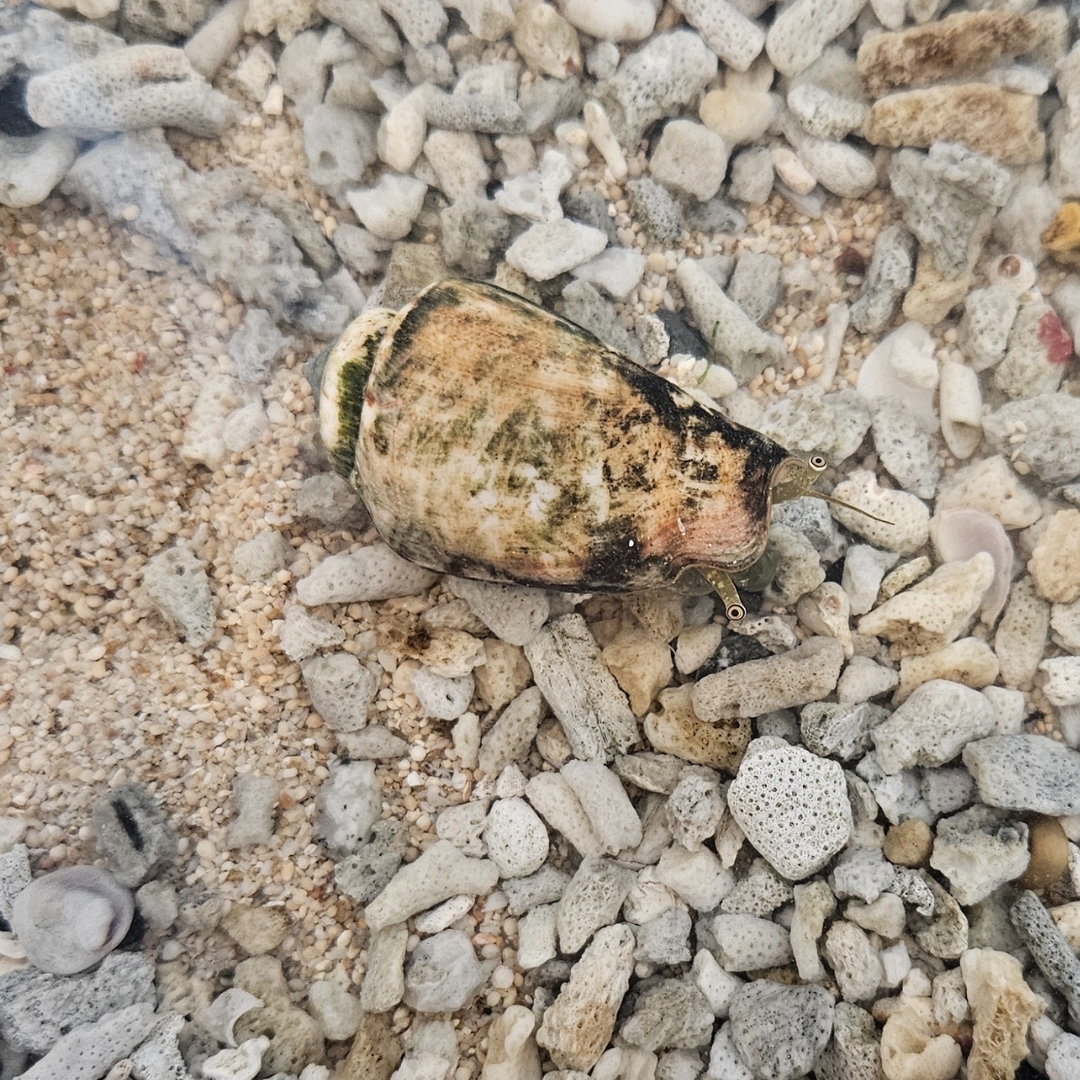
マガキガイは、海水水槽の底砂まわりで活躍する中型の巻貝です。長い口吻を伸ばして砂の表面を探り、珪藻などの藻類膜やデトリタス、魚の食べ残しを少しずつ利用します。水槽のガラス面を主に掃除する貝とは役割が異なり、底砂の表面とその周辺を担当するクリーナー生体として考えると分かりやすいでしょう。 The strawberry conch is a medium-sized marine snail that is especially useful around the sandy substrate of a saltwater aquarium. It extends its long proboscis over the sand surface and gradually feeds on algal films such as diatoms, detritus, and small leftovers. Unlike snails that mainly graze on aquarium glass, this species is best understood as a clean-up crew member for the sand bed and its immediate surroundings.
高知県では「チャンバラガイ」、沖縄県では「ティラジャー」などの地方名でも親しまれ、食用としての文化的な側面も持っています。アクアリウムでは「ストロベリーコンク」や「タイガーコンク」といった英名で紹介されることがあり、長い眼柄の先にある大きな目、鋸歯状のフタを使って跳ねるように動く姿が大きな魅力です。ただし、底砂の汚れを何でも解決する万能生体ではありません。餌が少ない新しい水槽や、底砂の面積が不足する水槽では痩せやすいため、導入前に環境を整えることが大切です。 In Japan, it is also known by regional names such as “Chanbara-gai” in Kochi and “Tiraja” in Okinawa, reflecting its cultural importance as a local seafood. In the aquarium trade, it may be introduced as strawberry conch or tiger conch. Its large eyes on long stalks and its distinctive lurching movement using a serrated operculum make it a memorable animal. However, it is not a magic solution for all substrate problems. In very new aquariums with little natural food or in tanks with insufficient sand-bed area, it may gradually lose condition, so the environment should be prepared before introduction.
基本情報 / Basic Information
| 学名 / Scientific Name | Conomurex luhuanus(旧学名・シノニム: (former scientific name and synonym: Strombus luhuanus)) |
|---|---|
| 通称 / Common Name | マガキガイ、チャンバラガイ、ティラジャー、コマガイ、テラジャーStrawberry conch, tiger conch, blood-mouthed conch |
| 分類 / Family | 軟体動物門 腹足綱 新生腹足類 タマキビガイ目 ソデボラ科、またはスイショウガイ科Phylum Mollusca, Class Gastropoda, Subclass Caenogastropoda, Order Littorinimorpha, Family Strombidae |
| 英名 / English Name | Strawberry conch, Tiger conch, Blood-mouthed conch |
| 分布 / Distribution | 日本では本州中部以南から四国、九州、南西諸島にかけて見られ、海外ではインド太平洋の熱帯から亜熱帯域に広く分布します。砂地、サンゴ礁周辺の砂礫底、沿岸の保護的な浅場などに生息します。In Japan, it is found from central to southern Honshu southward through Shikoku, Kyushu, and the Nansei Islands. More broadly, it is distributed across tropical and subtropical Indo-Pacific waters. It inhabits sandy bottoms, coral-associated sand and rubble areas, and protected shallow coastal habitats. |
| 最大体長 / Max Size | 殻長はおおむね3〜8cm程度です。水槽に流通する個体は3〜6cm前後のものが多く、成長や体格には産地差・個体差があります。Shell length is generally about 3–8 cm. Aquarium specimens are often around 3–6 cm, with size varying by individual and locality. |
| 寿命 / Lifespan | 飼育下での明確な寿命データは限られます。安定した水質、十分な餌、捕食されない混泳環境が整えば、数年単位で維持されることもあります。Precise captive lifespan data are limited. With stable water quality, sufficient food, and safe tank mates, it may be maintained for multiple years. |
飼育環境 / Aquarium Environment
| 水槽サイズ / Tank Size | 1匹なら60cm規格水槽以上、複数匹を安定して維持するなら90cm規格水槽以上が扱いやすいです。マガキガイは底砂の面積と成熟した砂地に発生する餌に依存するため、水量だけでなく、歩き回れる砂地を十分に確保できるかが重要です。For one individual, a standard 60 cm tank or larger is recommended; for multiple individuals, a standard 90 cm tank or larger is easier to manage. Because this species depends on available sand-bed area and the natural food produced in mature sand, usable substrate area matters as much as water volume. |
|---|---|
| 水温 / Temperature | 23〜27℃前後を目安にします。短期間であれば多少の幅には耐えますが、低すぎる水温では活動が鈍り、高すぎる水温や急変は衰弱の原因になります。 Aim for about 23–27°C. It can tolerate a modest range for short periods, but low temperatures reduce activity, while excessive heat or rapid temperature changes can cause stress. |
| 水質 / Water Quality | 一般的な海水魚・サンゴ水槽に準じ、比重は1.023〜1.026、pHは8.0〜8.4前後を目安にします。急激な比重変化、低pH、銅を含む薬品の使用は避けてください。貝類は水質変化に敏感なため、水合わせは時間をかけて丁寧に行います。Use typical marine aquarium parameters: specific gravity around 1.023–1.026 and pH around 8.0–8.4. Avoid sudden salinity changes, low pH, and copper-based medications. As with many marine snails, careful acclimation is important. |
| レイアウト / Layout | 細かめから中粒程度のサンゴ砂を敷いたレイアウトが適しています。底砂の表面を移動し、時には浅く潜るため、極端に粗い砂利だけの水槽やベアタンクには向きません。ライブロックは先に安定させ、貝が潜ったり通ったりしても崩れないように組んでください。砂上に置いた小さなサンゴは押されることがあるため、配置に注意します。A layout with fine to medium-grade coral sand is suitable. Because it moves over the sand and sometimes buries shallowly, tanks with only very coarse gravel or bare-bottom setups are not ideal. Stabilize rockwork before introduction so it will not collapse when the snail passes or buries nearby. Small corals placed directly on the sand may be pushed aside, so place them carefully. |
| 注意点 / Precautions | 立ち上げ直後の水槽では、底砂に十分な微細藻類やデトリタスがなく餌不足になりやすいです。導入は水槽が落ち着き、底砂にうっすら茶ゴケや有機物が出る段階になってからが安心です。ヤドカリ、大型の肉食魚、貝をつつく魚との同居では、捕食やストレスに注意してください。ひっくり返って戻れない個体を見つけた場合は、そっと起こしてあげます。In newly set up tanks, the sand bed may not yet contain enough microalgae or detritus, which can lead to starvation. It is safer to introduce this species after the aquarium has matured and a light film of diatoms or organic material appears on the substrate. Watch for predation or stress from hermit crabs, large carnivorous fish, or fish that peck at snails. If an individual is found upside down and unable to right itself, gently turn it over. |
餌と給餌 / Feeding
| 餌の種類 / Diet | 自然下では底質上の藻類、デトリタス、微細な有機物を主に利用します。水槽内では、底砂表面の茶ゴケ、薄い藻類膜、魚の食べ残しなどを食べます。餌が不足する場合は、沈下性の海水魚用フード、海藻系フード、細かくした冷凍餌をごく少量だけ補助的に与えます。In nature, it mainly uses benthic algae, detritus, and fine organic matter on the substrate. In aquariums, it grazes on brown diatom films, thin algal films, and small leftovers on the sand. If natural food is insufficient, supplement with small amounts of sinking marine fish food, algae-based food, or finely chopped frozen food. |
|---|---|
| 給餌のポイント / Feeding Tips | 「掃除役」として導入しても、餌が不要なわけではありません。水槽がきれいすぎる場合や、同じ底砂掃除役を入れすぎた場合は餌不足になります。消灯前などに少量の沈下性フードを底砂の上へ落とし、翌朝まで残らない量で補助すると維持しやすくなります。食べ残しが増えると水質悪化につながるため、追加給餌は控えめに行います。Even though it is a clean-up crew animal, it does not live without food. If the aquarium is too clean or has too many sand-bed grazers, food can become scarce. Offering a small amount of sinking food near lights-out can help, provided it is all consumed by the next morning. Supplement sparingly, as leftover food can degrade water quality. |
性格と混泳 / Temperament and Tank Mates
| 性格 / Temperament | 基本的には温和で、魚やサンゴを積極的に攻撃することはありません。普段は底砂の上を探るように移動しますが、危険を感じた時や移動時には、鋸歯状のフタを支点にして体を押し出すような独特の動きを見せます。It is generally peaceful and does not actively attack fish or corals. It usually probes across the sand surface, but when disturbed or moving quickly it can use its serrated operculum as a lever to push the body forward in a distinctive lurching motion. |
|---|---|
| 混泳の相性 / Compatibility | クマノミ、小型ハゼ、テンジクダイ、温和な小型魚、多くのサンゴ類との相性は良好です。サンゴを食べる貝ではありませんが、砂上の小さなサンゴに乗ったり押したりすることはあります。一方、モンガラカワハギ類、フグ類、大型ベラ類、大型ヤドカリ、貝を割る甲殻類などは避けた方が安全です。It is compatible with clownfish, small gobies, cardinalfish, peaceful small marine fish, and many corals. It does not feed on corals, but it may climb over or push small corals placed on the sand. Avoid triggerfish, puffers, large wrasses, large hermit crabs, and shell-crushing crustaceans. |
病気と対策 / Diseases and Prevention
| かかりやすい病気 / Common Diseases | 魚の白点病のように分かりやすい病名で語られることは多くありません。問題になりやすいのは、水合わせ不足、急な比重変化、輸送ダメージ、餌不足、水質悪化による衰弱です。長時間まったく動かない、体を出さない、異臭がする場合は状態悪化のサインです。It is not usually discussed in terms of obvious fish diseases such as marine ich. More common problems are stress from poor acclimation, rapid salinity changes, shipping damage, starvation, and deteriorating water quality. Remaining inactive for a long time, failing to extend the body, or producing a bad odor can indicate serious decline. |
|---|---|
| 対策と予防 / Prevention | 導入時は水温と比重を合わせ、時間をかけて水合わせします。硝酸塩やリン酸塩が高すぎる環境、底砂に汚れが溜まりすぎる環境、銅系薬品の使用は避けます。餌不足が疑われる場合は、少量の沈下性フードで補助してください。死亡個体は水を急速に悪化させるため、異臭がある場合はすぐに取り出します。During introduction, match temperature and salinity and acclimate slowly. Avoid excessive nitrate or phosphate, overly dirty substrate, and copper-based treatments. If starvation is suspected, provide a small amount of sinking food. Remove dead individuals promptly, as they can rapidly degrade water quality. |
増やし方(繁殖) / Breeding
| 雌雄の判別 / Sexing | 雌雄異体ですが、外見だけで確実に判別するのは困難です。雌の方がやや丸みを帯び、雄は細身になりやすいとされることもありますが、家庭水槽での確実な判別法としては扱いにくいです。The species has separate sexes, but reliable sexing by appearance alone is difficult. Females may be somewhat rounder and males more slender, but this is not a dependable method for ordinary aquarium keeping. |
|---|---|
| 繁殖形態 / Reproduction | 交尾による体内受精を行い、メスは砂粒などをまとわせた細長いゼリー状の卵嚢を産みます。卵からはベリジャー幼生がふ化し、一定期間水中を浮遊してから着底します。この浮遊幼生期があるため、一般的な水槽内で自然に増えることはほとんど期待できません。Fertilization is internal through copulation, and the female lays a long gelatinous egg mass that often incorporates sand grains and debris. The eggs hatch into free-swimming veliger larvae, which spend time in the water column before settling. Because of this planktonic larval stage, successful reproduction in ordinary aquariums is unlikely. |
| 繁殖のポイント / Breeding Tips | 人工繁殖には、清浄な海水、安定した水温、微細藻類の継続給餌、浮遊幼生期を乗り切る管理が必要です。研究例では、ベリジャー幼生がふ化まで約4日前後、着底期までおよそ2週間以上を要することが示されており、Chaetoceros、Dunaliella、Pavlova など複数の微細藻類を組み合わせた餌料管理が重要とされています。家庭水槽では繁殖よりも長期飼育を目標にするのが現実的です。Captive propagation requires clean seawater, stable temperature, continuous microalgal feeding, and careful management through the planktonic larval stage. Research indicates that veligers develop around four days after spawning and require more than about two weeks before settlement, with mixed microalgae such as Chaetoceros, Dunaliella, and Pavlova being important for larval culture. In home aquariums, long-term maintenance is a more realistic goal than breeding. |
雑学と豆知識 / Trivia and Fun Facts
| 1. 現在の学名と古い学名 / 1. Current and former scientific names | マガキガイは現在、Conomurex luhuanus という学名で扱われます。古い文献やショップ表記では Strombus luhuanus の名を見ることがありますが、これは現在ではシノニムとして扱われます。図鑑や流通名では古い名前が残ることもあるため、どちらの表記も同じマガキガイを指している場合があります。The currently accepted scientific name is Conomurex luhuanus. Older literature and some trade labels may still use Strombus luhuanus, but this is now treated as a synonym. Because older names often remain in field guides and trade usage, both names may refer to the same strawberry conch. |
|---|---|
| 2. 「チャンバラガイ」と呼ばれる理由 / 2. Why it is called “Chanbara-gai” | マガキガイの足の後方には、三日月形で硬いフタがあります。このフタの縁は鋸歯状になっており、砂や岩に引っかけて体を前に押し出すように移動します。手に取るとフタを振るように動くため、高知県などでは時代劇の斬り合いを思わせる「チャンバラガイ」という名で親しまれています。名前はユーモラスですが、自然界では捕食者から距離を取るための大切な運動器官です。At the rear of the foot is a hard, crescent-shaped operculum with a serrated edge. The snail can hook it into sand or rock and push its body forward. When handled, it may swing the operculum vigorously, which led to the Japanese nickname “Chanbara-gai,” evoking sword-fighting scenes from period dramas. The name is humorous, but in nature the structure helps the snail move away from danger. |
| 3. 巻貝とは思えないほど発達した目 / 3. Surprisingly advanced eyes for a snail | 長い眼柄の先にある目は、マガキガイの大きな見どころです。ソデボラ科の巻貝は、一般的な巻貝の印象よりも発達したカメラ型の眼を持つことで知られ、マガキガイでは細かな動きや低いコントラストの刺激に反応する視覚能力が研究されています。水槽内で目を伸ばして周囲を探る姿は、ただの掃除役ではなく、よく見て行動する動物であることを感じさせてくれます。The eyes at the tips of the long stalks are one of the most striking features of this species. Strombid snails have camera-type eyes that are much more developed than many people expect from a snail, and studies on Conomurex luhuanus have examined its ability to respond to fine visual detail and low-contrast stimuli. Watching it extend its eyes across the sand reminds us that this animal is not just a cleaner, but a visually alert marine snail. |
| 4. 食材としての顔 / 4. A familiar seafood in some regions | マガキガイは観賞用だけでなく、地域によっては食材としても親しまれています。高知県ではチャンバラガイ、沖縄県ではティラジャーなどの名で流通し、塩茹で、炊き込みご飯、バター焼き、酢味噌和えなどで食べられます。フタをつまんで殻の巻きに沿って身を引き出す食べ方は、味だけでなく体験そのものも楽しめる料理文化になっています。The species is not only an aquarium animal but also a regional seafood in parts of Japan. It is known as Chanbara-gai in Kochi and Tiraja in Okinawa, where it may be served boiled in salt water, cooked with rice, sautéed with butter, or dressed with vinegar-miso. Pulling the meat from the shell by holding the operculum is part of the dining experience itself. |
| 5. 縄文時代から続く「貝の道」 / 5. The ancient “shell road” | 南西諸島から九州にかけての貝塚では、マガキガイの殻が食料残滓として見つかっています。また、マガキガイや近い大きさの巻貝の殻は、螺塔部を切り出して「貝珠」と呼ばれるビーズ状の装身具に加工されることがありました。こうした貝製品は黒潮に沿うように広く流通し、古代の人々の装い、交易、文化的なつながりを支えた素材の一つだったと考えられています。Shell middens from the Nansei Islands to Kyushu contain remains of this species as food waste. Shells of this and similarly sized marine snails were also worked into bead-like ornaments called shell beads. These shell products likely moved widely along Kuroshio-linked exchange routes, contributing to adornment, trade, and cultural connections among ancient communities. |
| 6. 養殖研究とポリカルチャーへの期待 / 6. Aquaculture research and the promise of polyculture | マガキガイは食用・観賞用の両面で需要がありますが、種苗生産では浮遊幼生期の管理が大きな課題になります。近年は、エビやカニなどの養殖池で一緒に育てる複合養殖のように、自然に近い餌環境や微生物環境を活かす方法も注目されています。国内で安定した養殖個体が供給されるようになれば、採集圧を抑えながら、輸送ストレスの少ないクリーナー生体としてアクアリウム市場にも良い影響をもたらす可能性があります。This species has demand both as seafood and as an aquarium animal, but seed production is difficult because the planktonic larval stage requires careful management. Approaches that make use of more natural feeding and microbial environments, such as polyculture with shrimp or crabs, are attracting interest. If stable domestic aquaculture becomes available, it could reduce collection pressure while providing hardier clean-up crew animals with less shipping stress for the aquarium trade. |
まとめ / Conclusion
マガキガイは、底砂の上を静かに歩く小さな巻貝でありながら、水槽内では砂地を整える実用性を持ち、自然界では発達した目と独特の跳躍運動で外敵に対応し、さらに日本各地の食文化や先史時代の貝利用にもつながる奥行きのある生き物です。単なる「掃除役」としてだけでなく、砂地という環境そのものを観察するきっかけを与えてくれる存在といえるでしょう。 The strawberry conch may be a small snail moving quietly across the sand, yet it has many layers of interest. In aquariums, it helps maintain the sandy substrate; in nature, it relies on advanced eyes and distinctive leaping movements to respond to predators; and in Japan, it is connected to regional food culture and ancient shell use. It is not merely a “cleaner,” but an animal that invites aquarists to observe the sand-bed environment itself.
長く楽しむためには、成熟した底砂、安定した海水、十分な餌、そして貝を襲わない混泳相手が欠かせません。マガキガイが眼柄を伸ばし、口吻で砂を探り、時にフタで体を押し出す姿は、海の底に広がる小さな生態系を水槽の中で感じさせてくれます。図鑑の一種として見れば、本種は「きれいにしてくれる貝」であると同時に、形・行動・文化史のすべてに物語を持つ、たいへん魅力的な海水生体です。 To enjoy it for a long time, provide mature sand, stable marine water, enough food, and tank mates that will not harm snails. When the conch extends its eye stalks, probes the sand with its proboscis, and occasionally pushes itself forward with the operculum, it reveals a small piece of the sea-floor ecosystem inside the aquarium. As an aquarium encyclopedia species, it is both a useful sand-bed cleaner and a fascinating marine animal with stories in its form, behavior, and cultural history.

気になる道具や飼い方を見つけてみませんか?
 アイのアクアグッズ案内水槽のエアーポンプの選び方|水深・音・泡で選ぶおすすめ用品道具の特徴や使い方、選ぶときのポイントをアイが紹介します。記事はコチラ →
 アイのアクアグッズ案内バルブの仲間に合わせる飼育用品|チェリーバルブ・スマトラ・中型種の水槽とろ過道具の特徴や使い方、選ぶときのポイントをアイが紹介します。記事はコチラ →
さまざまな飼育テーマをご紹介。リンク先の記事には広告・商品紹介が含まれます。
案内・紹介記事一覧へ →参考文献・根拠資料
この記事では、店舗・通販サイト、個人ブログ、まとめサイトは参考文献から除外し、分類、分布、生息環境、飼育条件、繁殖、注意点を確認できる学術論文・公的データベース・大学または公的機関系の資料を中心に照合しています。
-
MolluscaBase eds. (2026). Conomurex luhuanus (Linnaeus, 1758). World Register of Marine Species.
用途:現行学名、分類階級、Strombus luhuanus を含むシノニム関係の確認。
https://www.marinespecies.org/aphia.php?p=taxdetails&id=565370 -
GBIF Secretariat. Conomurex luhuanus (Linnaeus, 1758). GBIF Backbone Taxonomy.
用途:分類体系、和名・英名、国際的な分布記録を確認するための補助資料。
https://www.gbif.org/species/6489952 -
Poutiers, J. M. (1998). Gastropods. In Carpenter, K. E. & Niem, V. H. (eds.), The Living Marine Resources of the Western Central Pacific, Volume 1: Seaweeds, corals, bivalves and gastropods. FAO.
用途:インド太平洋域の分布、生息環境、形態、漁業資源としての扱いを確認。
https://www.fao.org/4/w7192e/w7192e00.htm -
Wada, K., Fukao, R., Kuwamura, T., Nishida, M. & Yanagisawa, Y. (1983). Distribution and growth of the gastropod Strombus luhuanus at Shirahama, Japan. Publications of the Seto Marine Biological Laboratory, 28(5–6), 417–432.
用途:日本沿岸での分布、成長、生活段階に応じた生息場所の変化を確認。
https://doi.org/10.5134/176066 -
Nakajima, T., Fukui, A., Suzuki, N. & Tanaka, S. (2015). Burrowing and migration of Strombus luhuanus in the coral sand gravel area in the Acropora tumida community in Suruga Bay, Japan. Aquaculture Science, 63(2), 135–139.
用途:低水温期の潜砂、移動距離、水温変化に対する行動変化を確認。飼育時の水温管理や低温時の活動低下の根拠。
https://doi.org/10.11233/aquaculturesci.63.135 -
Wiedemeyer, W. L. (1998). Contributions to the larval biology of the red-lipped conch, Strombus luhuanus L. 1758, with respect to seed production for mariculture. Aquaculture Research, 29, 1–7.
用途:産卵、ふ化、浮遊幼生期、種苗生産上の難しさを確認。繁殖項目の主要根拠。
https://doi.org/10.1046/j.1365-2109.1998.00833.x -
Irwin, A. R., Kirwan, J. D. & Bok, M. J. (2022). The marine gastropod Conomurex luhuanus (Strombidae) has high-resolution spatial vision and eyes with complex retinas. Journal of Experimental Biology, 225(16), jeb243927.
用途:大きな眼、複雑な網膜、視覚能力に関する記述の根拠。生態・行動の補足資料。
https://doi.org/10.1242/jeb.243927 -
Berg, C. J. (1974). A comparative ethological study of strombid gastropods. Behaviour, 51(3–4), 274–321.
用途:ソデボラ科巻貝の行動、移動様式、逃避行動に関する基礎資料。マガキガイの「跳ねるような動き」を説明する際の補助根拠。
https://doi.org/10.1163/156853974X00219 -
Yang, N., Li, C., Su, W., Chen, Y., Chen, P., Cao, L., Jiang, F. & Huang, H. (2026). Comparative analysis of gut microbiota diversity, composition, and metabolic functions in wild and farmed Conomurex luhuanus. Journal of Applied Microbiology, 137(4), lxag068.
用途:野生個体と養殖個体の腸内細菌叢の差、飼育環境が生理状態に与える影響を確認。餌・飼育環境・養殖面の注意点の補足資料。
https://doi.org/10.1093/jambio/lxag068 -
Yanong, R. P. E. (2009; reviewed 2013). Use of copper in marine aquaculture and aquarium systems. University of Florida IFAS Extension, FA165.
用途:海水魚水槽で使われる銅系薬品が無脊椎動物に強いリスクを持つことを確認。病気対策・薬品使用時の注意点の根拠。
https://edis.ifas.ufl.edu/publication/FA165




コメント