
解説 / Description
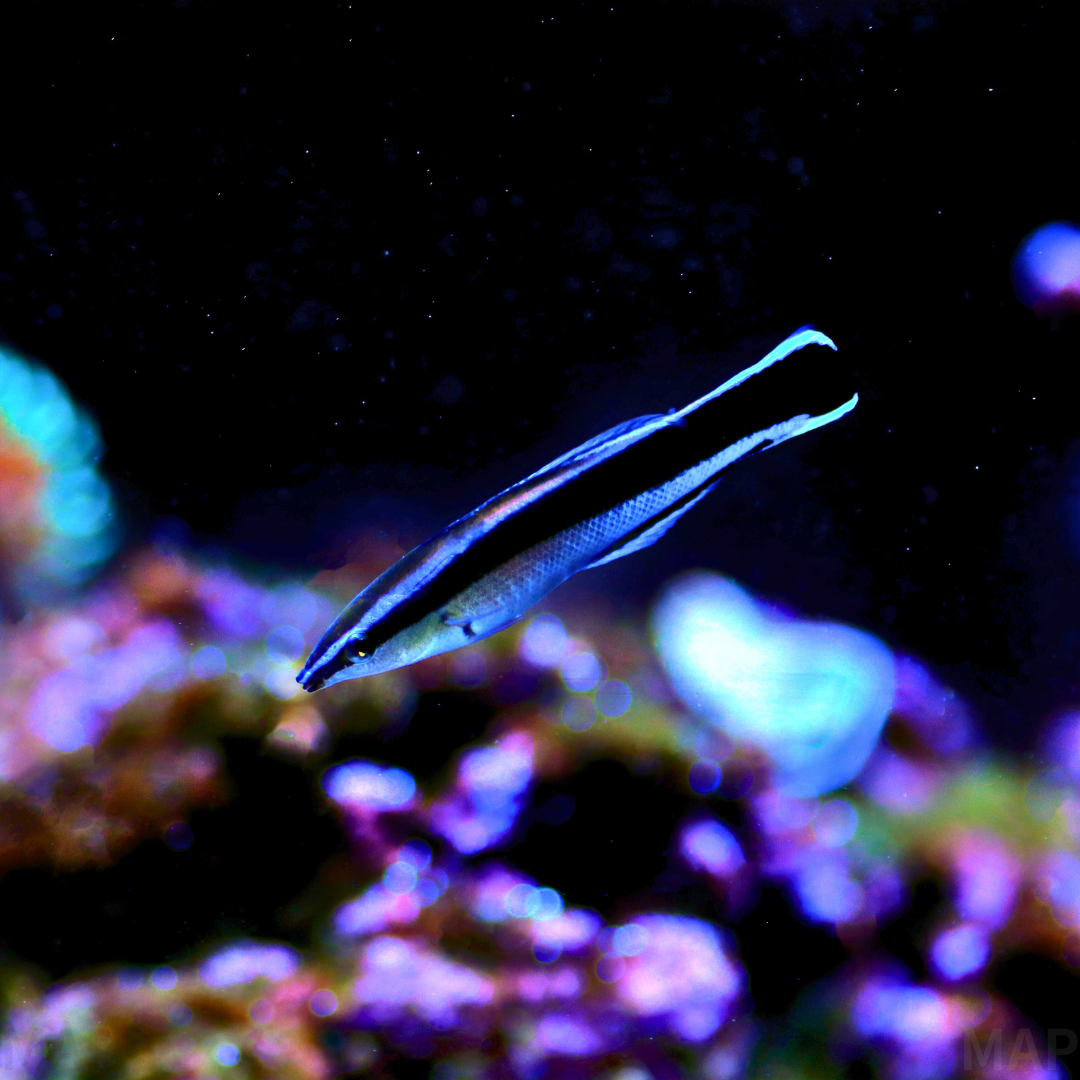
ホンソメワケベラは、青みを帯びた細長い体と、口先から尾びれへ続く黒い帯が印象的な小型の海水魚です。サンゴ礁では、ほかの魚の体表や口の中にいる外部寄生虫などを食べる「掃除魚」として知られています。相手の前で体を上下に動かす独特の泳ぎ方も特徴です。幼魚は黒い体に鮮やかな青い線が入り、成長すると白っぽい部分が広がります。水槽でも興味深い行動を観察できますが、特殊な食性のため、長期飼育には丁寧な餌付けと栄養管理が欠かせません。掃除行動だけで養える魚ではなく、毎日の食事を十分に用意して迎えたい種類です。 The bluestreak cleaner wrasse is a slender marine fish with bluish coloration and a black stripe running from its snout to its tail. On coral reefs, it removes external parasites and other material from the bodies and mouths of other fishes. Its distinctive bobbing dance is another characteristic feature. Juveniles are black with a vivid blue line, and pale areas expand as they grow. Its behavior is fascinating to observe, but its specialized feeding ecology makes long-term aquarium care demanding. Cleaning alone cannot sustain it: careful food acceptance and adequate daily nutrition are essential.
基本情報 / Basic Information
| 学名 / Scientific Name | Labroides dimidiatus (Valenciennes, 1839) |
|---|---|
| 通称 / Common Name | ホンソメワケベラ。観賞魚の流通では「クリーナーラス」と呼ばれることもあります。Bluestreak cleaner wrasse; also sold as cleaner wrasse. |
| 分類 / Family | ベラ科・ソメワケベラ属。従来はスズキ目に含められてきましたが、目などの上位分類の扱いは分類体系によって異なります。Family Labridae, genus Labroides. Traditionally placed in Perciformes; its order and other higher-level classifications vary among classification systems. |
| 英名 / English Name | Bluestreak cleaner wrasse |
| 分布 / Distribution | 紅海を含むインド洋から、西部・中部太平洋の熱帯・亜熱帯海域に広く分布します。日本では南西諸島などに生息します。サンゴ礁や岩礁の浅場を中心に見られますが、水深数十メートルの場所にも生息します。Widely distributed in tropical and subtropical waters from the Indian Ocean, including the Red Sea, to the western and central Pacific. In Japan, it occurs around the southwestern islands and elsewhere. It inhabits coral and rocky reefs, from shallow areas to depths of several tens of meters. |
| 最大体長 / Max Size | 全長約14cm。流通する個体はこれより小さいことが多いため、購入時の大きさだけでなく、成長後に必要な遊泳空間も考えて飼育します。Approximately 14 cm in total length. Specimens offered for sale are often smaller, so plan swimming space for their adult size rather than their size at purchase. |
| 寿命 / Lifespan | 年齢の報告には4年の記録がありますが、これが寿命の上限とは限りません。飼育下の平均寿命は明確ではなく、餌付けの成否や栄養状態が飼育期間を大きく左右します。A reported age record is four years, but this is not necessarily an absolute lifespan limit. Average aquarium lifespan is not well established. Food acceptance and nutritional condition strongly influence survival in captivity. |
飼育環境 / Aquarium Environment
| 水槽サイズ / Tank Size | 長期飼育では、1匹に対して90cm規格水槽(90×45×45cm、寸法から計算した容量約182L)以上を目安にすると、遊泳空間と隠れ家を確保しやすくなります。これは余裕を持たせるための目安であり、飼育の成功を保証する最低条件ではありません。大型魚と混泳させる場合は、120cmワイド水槽(120×60×60cm、同約432L)以上も検討し、同居魚に必要な広さを優先します。実際の水量は、ガラスの厚み、水位、岩や底砂によって少なくなります。水槽が大きくても、十分な給餌は欠かせません。For long-term care, a standard 90 cm aquarium (90 × 45 × 45 cm; a calculated volume of approximately 182 L) or larger offers useful space for one specimen and its shelters. This is a practical allowance for space, not a scientifically established minimum that guarantees success. With large companions, consider a 120 cm wide aquarium (120 × 60 × 60 cm; approximately 432 L by the same calculation) or larger, according to their needs. Actual water volume is lower because of glass thickness, water level, rock, and substrate. A large aquarium still requires adequate feeding. |
|---|---|
| 水温 / Temperature | 24~26℃を飼育の目安とし、急な変化を避けます。高水温時は酸素不足にも注意し、温度管理と十分な水面の攪拌を行います。A practical target is 24–26°C, with minimal abrupt fluctuation. At higher temperatures, maintain oxygenation through temperature control and adequate surface agitation. |
| 水質 / Water Quality | 通常の海水環境で飼育します。塩分濃度は約33~35‰、比重は25℃でおおむね1.024~1.026、pHは8.0~8.4を目安に、安定した状態を保ちます。比重の読み値は測定器の仕様や温度によって異なるため、測定器を校正して確認してください。生物ろ過が十分に働き、アンモニアと亜硝酸が検出されない水槽を用います。Maintain normal marine conditions: approximately 33–35 ppt salinity, roughly 1.024–1.026 specific gravity at 25°C, and pH 8.0–8.4. Keep these conditions stable. Specific-gravity readings depend on instrument specifications and temperature, so use a calibrated instrument. Biological filtration should be established, with no detectable ammonia or nitrite. |
| レイアウト / Layout | ライブロックは崩れないように組み、体が収まる隙間や洞穴を複数設けます。前面には泳ぐ空間を残してください。隔離水槽では塩ビパイプなども隠れ家になります。夜は岩の隙間などで休むため、砂に潜って眠るベラと同じように、深い底砂を必須とする必要はありません。強い水流が水槽全体に当たらないよう、流れの穏やかな場所も用意します。Arrange live rock securely, providing several body-sized crevices and caves while leaving open swimming space at the front. PVC shelters are useful in isolation tanks. It rests in reef crevices at night, so a deep sand bed is not obligatory as it is for some sand-burying wrasses. Provide calmer areas away from strong flow. |
| 注意点 / Precautions | 飛び出しを防ぐため、配管まわりも含めて隙間を塞いだフタを設置します。水槽の縁だけでは十分な対策になりません。購入時は、実際に餌を飲み込む様子、腹部や背中の肉付き、呼吸が落ち着いているかを確認してください。導入前には、隠れ家と給餌環境を整えた別水槽で観察し、拒食や痩せを見逃さないことが大切です。Use a secure lid that closes gaps around plumbing; a rim alone is insufficient protection against jumping. Before purchase, check that the fish actually swallows food, has reasonable body condition, and breathes calmly. Before introduction, observe it in a separate aquarium with shelter and suitable feeding opportunities, watching closely for food refusal or weight loss. |
餌と給餌 / Feeding
| 餌の種類 / Diet | 自然下では、ウミクワガタ類の幼生などの外部寄生虫や、魚の体表の粘液を食べます。飼育下では、冷凍コペポーダ、ブラインシュリンプ、アミ類などの小さな甲殻類や、海水魚用の細粒・小粒の人工飼料を用います。餌は口に収まる大きさに調整し、餌付け後も複数の種類を組み合わせます。ブラインシュリンプだけに偏らず、必要に応じて栄養強化されたものを選んでください。In nature, it eats external parasites such as juvenile gnathiid isopods, as well as fish mucus. Aquarium foods include frozen copepods, brine shrimp, small shrimp, and suitably small prepared marine-fish foods. Adjust particle size to its mouth and maintain dietary variety after food acceptance is established. Avoid relying entirely on brine shrimp; nutritionally enriched forms can be useful. |
|---|---|
| 給餌のポイント / Feeding Tips | 日中に少量ずつ、1日3~5回程度を目安に与え、体格や食べ方に合わせて調整します。回数だけで栄養が足りていると判断せず、腹部のへこみや背中の痩せが進んでいないかを継続して確認してください。導入直後は食べる冷凍餌から始め、慣れた餌に人工飼料を少しずつ混ぜます。ついばむだけで吐き出していないかも観察しましょう。混泳相手の掃除だけを餌の供給源にせず、同居魚や寄生虫を増やして餌を確保しようとしないでください。食べ残しを取り除き、給餌量に見合うろ過と換水を行います。Offer small daytime meals about three to five times daily as a practical starting point, adjusting to the individual. Frequency alone does not prove adequate nutrition: monitor the abdomen and back for progressive thinning. Begin with accepted frozen foods and gradually mix in prepared food. Check for swallowing rather than repeated picking and spitting. Do not rely on cleaning companions as its food supply, or add fish or parasites to provide food. Remove leftovers and match filtration and water changes to the feeding load. |
性格と混泳 / Temperament and Tank Mates
| 性格 / Temperament | ほかの種類の魚には比較的穏やかですが、相手に近づいて体をついばむ行動が多く見られます。同種に対しては縄張り意識が強く、激しく追い回すことがあります。掃除魚だからといって、どの魚にも接近を受け入れてもらえるとは限りません。It is generally relatively peaceful toward other species, but frequently approaches and picks at them. Territorial aggression toward its own species can be intense. Its role as a cleaner does not mean every fish will welcome its attention. |
|---|---|
| 混泳の相性 / Compatibility | 広さに余裕があり、本種が十分に餌を食べられる環境では、ヤッコ類やハギ類などと混泳できる場合があります。一方、小型魚、動きの遅い魚、神経質な魚は、繰り返し接近されることで負担を受けることがあります。相手が逃げ続ける、激しく追い払う、皮膚に傷が生じるといった状態が続く場合は分離してください。一般的な家庭水槽では本種は1匹を基本とし、近縁の掃除ベラとの混泳も慎重に判断します。通常はサンゴを積極的に食べませんが、大型の肉食魚に捕食される可能性はあります。It may coexist with angelfishes, tangs, and other fishes when space is adequate and it can obtain enough food. Small, slow-moving, or nervous fishes may be stressed by repeated approaches. Separate individuals if persistent avoidance, forceful chasing, or skin injuries occur. Keep one cleaner wrasse as the default in a typical home aquarium, and approach combinations with related cleaner wrasses cautiously. It does not normally feed on corals, but it may still be eaten by large predators. |
病気と対策 / Diseases and Prevention
| かかりやすい病気 / Common Diseases | 海水魚の白点病やウーディニウム病などに感染することがあります。ほかの魚を掃除する本種自身も、寄生虫から完全に守られているわけではありません。また、拒食や摂取量不足による栄養不良は、長期飼育で特に注意したい問題です。白い点、呼吸の速さ、体をこする動作、食欲低下などを観察し、見た目だけで病名を決めつけないようにします。It can develop marine white spot disease, marine velvet, and other infections. Cleaning other fishes does not make it immune to parasites. Malnutrition from food refusal or inadequate intake is another major concern in long-term care. Watch for white spots, rapid breathing, rubbing, and appetite loss, without diagnosing a disease from appearance alone. |
|---|---|
| 対策と予防 / Prevention | 新しい魚の隔離観察、水質の安定、十分な栄養を基本とします。白点病の病原虫は魚の皮膚やえらの表面組織に入り込むため、本種による掃除を治療や確実な予防の代わりにはできません。発病時は原因を確認し、治療水槽で病原体に応じた対応を行います。銅薬には魚への毒性もあり、製剤や濃度、個体の状態によって反応が異なります。使用する場合は本種への適合性と製品の指示を確認し、対応する測定器で濃度を管理してください。サンゴや貝、エビのいる水槽へ直接使用しないでください。低比重療法もすべての病原体に有効ではないため、安易に塩分を下げることは避けます。本水槽を魚なしで管理する場合も、必要な期間は病原体や水温によって異なり、一律の短期間で根絶できるとは限りません。Prevention relies on observation of new arrivals in isolation, stable water quality, and adequate nutrition. Marine white spot parasites enter the surface tissues of the skin and gills, so cleaning cannot replace treatment or reliable prevention. Identify the cause and use a separate treatment aquarium. Copper can also harm fish, with responses varying by formulation, concentration, and individual condition. Confirm suitability for this species, follow product instructions, and monitor concentrations with a compatible test. Do not dose copper directly into aquariums containing corals or other invertebrates. Reduced salinity is not effective against every pathogen and should not be applied casually. A fishless display period must account for the pathogen and temperature; a short fixed duration does not necessarily eradicate infection. |
増やし方(繁殖) / Breeding
| 雌雄の判別 / Sexing | 外見だけで確実に判別するのは難しく、社会集団では一般に大きな優位個体がオスです。ただし、大きさだけでは断定できません。通常はメスとして繁殖に参加し、その後、社会的な条件に応じてオスへ性転換します。特定の条件では、オスからメスへの逆方向の性転換も報告されています。Reliable visual sexing is difficult. The large dominant member of a social group is generally male, but size alone is not conclusive. Individuals usually begin reproductive life as females and may later change to males according to social conditions. Reversed change from male to female has also been reported under particular conditions. |
|---|---|
| 繁殖形態 / Reproduction | 卵生。自然下では、1匹のオスと複数のメスからなる集団を形成することがあります。産卵時にはオスとメスが上方へ泳ぎ、卵と精子を水中に放出する浮上産卵を行います。卵は水中を漂い、孵化した仔魚もしばらく浮遊生活を送ります。An egg-laying species that may form groups consisting of one male and several females. A spawning pair swims upward and releases eggs and sperm into the water. The eggs are pelagic, and the larvae spend an initial period drifting in the plankton. |
| 繁殖のポイント / Breeding Tips | 飼育下での産卵と仔魚育成による人工繁殖の成功が報告されていますが、家庭で安定して増やすのは難しい種類です。産卵後は、微小な仔魚に合う初期餌料を十分な密度で用意し、清浄な育成環境を維持する必要があります。親魚とは別の育成水槽で、ワムシなどの微小な餌料を含め、仔魚の成長に合わせた計画的な管理が求められます。特定の餌を与えるだけで育成できるわけではありません。繁殖目的で複数匹を入れる場合は相性を慎重に観察し、攻撃された個体をすぐ分離できるよう準備してください。Successful captive spawning and larval rearing have been reported, but reliable home breeding remains difficult. Larvae require suitably small first foods at adequate densities and a clean rearing environment. A separate larval tank and planned feeding management, including tiny foods such as rotifers, are needed as the larvae develop. Offering a particular food alone does not guarantee success. When keeping multiple adults for breeding, monitor compatibility closely and be ready to separate any fish subjected to aggression. |
雑学と豆知識 / Trivia and Fun Facts
| 1. 学名に残る分類の歩み / 1. A Scientific Name with a History | ホンソメワケベラは1839年に、現在とは異なる属名を用いた Cossyphus dimidiatus として記載されました。その後、ソメワケベラ属へ移され、現在の学名になっています。命名者と年が括弧で囲まれているのは、記載当時から属が変更されたことを示す約束です。Labroides は、ベラの属名 Labrus に「似たもの」を表す語尾を組み合わせた名称で、種小名 dimidiatus は「半分に分けられた」という意味のラテン語に由来します。また、広い分布域の個体を比較した遺伝研究では、地域によって異なる系統が示されています。同じ種名で呼ばれる魚でも、地域ごとの進化の歩みを詳しく調べる余地が残っているのです。This fish was described in 1839 as Cossyphus dimidiatus and later transferred to Labroides. Parentheses around the author’s name and year indicate that its genus has changed since the original description. Labroides combines Labrus with a suffix meaning “resembling,” while the Latin dimidiatus means “divided in half.” Genetic studies have identified geographically differentiated lineages across its broad range. Fishes sharing one species name may therefore still have regional evolutionary histories that require further study. |
|---|---|
| 2. 掃除場所で交わされる小さな駆け引き / 2. Negotiations at a Cleaning Station | サンゴ礁の決まった場所でホンソメワケベラが体を上下に動かすと、掃除を受けたい魚が近づき、口やえらぶたを開いたり、ひれを広げたりします。一見すると穏やかな助け合いですが、双方の利益はいつも一致するわけではありません。相手の魚は寄生虫を取ってもらうことで利益を得ますが、ホンソメワケベラは栄養のある粘液も好んで食べるためです。粘液をかじられた相手は体をびくつかせ、掃除魚を追い払ったり、その場を離れたりします。ほかの魚が見ていると掃除の仕方が変わることも実験で示されています。こうした関係を、相手を選ぶ機会や得られる利益の違いから捉える考え方が「生物市場理論」です。別の掃除場所へ移れる魚と、その場を離れにくい魚では、ホンソメワケベラとのやり取りにも違いが生じます。人間の商売を連想させる関係ですが、魚が人間と同じ意図で交渉していると確認されたわけではありません。At familiar reef locations, the cleaner’s bobbing movements attract fishes that spread their fins or open their mouths and gill covers. Their interests do not always coincide: clients benefit from parasite removal, while cleaners also prefer nutritious mucus. A bitten client may jolt, chase the cleaner, or leave. Experiments show that an audience can alter cleaning behavior. Biological market theory examines these interactions through differences in benefits and opportunities to choose partners. Clients able to visit another station may be treated differently from those with fewer alternatives. The comparison with commerce is useful, but does not establish human-like negotiating intentions. |
| 3. ひれで触れることにも意味がある / 3. More Than Parasite Removal | ホンソメワケベラは、胸びれや腹びれで相手の体に触れることがあります。この接触は、掃除を受ける魚との関係を保つうえで重要な行動です。ハギの仲間を使った実験では、柔らかな接触を与える動く模型を利用した魚で、ストレスに関係するホルモンのコルチゾールが低くなることが示されました。これは、寄生虫を取り除かなくても、体に触れること自体が相手に利益をもたらす可能性を示しています。ただし、家庭水槽のすべての魚が、本種との混泳で落ち着くとは限りません。相手が逃げ続けている場合は、繰り返し接近されることが負担になっていないかを確認する必要があります。Cleaner wrasses sometimes touch clients with their pectoral or pelvic fins, helping maintain their interactions. In an experiment with a surgeonfish, access to moving models providing gentle physical stimulation reduced the stress-related hormone cortisol. This suggests that physical contact itself can benefit a client, even without parasite removal. It does not mean every aquarium fish becomes calmer when housed with a cleaner. Persistent avoidance calls for checking whether repeated approaches are causing stress. |
| 4. 小さな掃除魚が支えるサンゴ礁 / 4. A Small Fish with Wider Ecological Effects | 全長十数センチの魚でも、周囲の生き物との結びつきは広い範囲に及びます。グレートバリアリーフの小規模なサンゴ礁で、本種を除去した状態を8年以上維持した実験では、掃除魚のいる礁と比べて、訪れる魚の数や種数が少なく、調べられた定住性の魚の一部では体サイズも小さくなっていました。ただし、影響は魚の種類や調べる指標によって異なり、すべてが一様に減ったわけではありません。この結果は、掃除をする魚と掃除を受ける魚の関係が、長い時間を通じて、礁に集まる魚やそこで暮らす魚の成長にも関わり得ることを示しています。岩陰の小さな掃除場所は、多くの魚の暮らしとつながっているのです。Even a fish only a dozen centimeters long can affect a broader community. On small Great Barrier Reef patches kept without this cleaner for more than eight years, visiting-fish abundance and richness were lower, and certain resident fishes were smaller, than on reefs with cleaners. Effects varied among species and measurements rather than showing a universal decline. The findings indicate that cleaning relationships can influence which fishes gather at a reef and the growth of some residents over the long term. |
| 5. よく似た魚を見分ける口の位置 / 5. A Look-Alike with a Different Mouth | ニセクロスジギンポは、ホンソメワケベラに似た体色や動きを持つイソギンポ科の魚です。掃除魚に似ることで相手に近づき、ひれなどをかじる行動が知られ、攻撃型擬態の例として研究されてきました。ただし、食物や採餌行動には地域や体の大きさによる違いがあり、魚を襲うことだけで暮らしているわけではありません。見分ける手がかりの一つが口の位置です。ホンソメワケベラの口は吻端、つまり口先の先端にあるのに対し、ニセクロスジギンポの口はそれより下側にあります。帯模様だけに頼らず、頭部を横から確認すると違いをつかみやすくなります。The false cleanerfish, Aspidontus taeniatus, is a blenny resembling the cleaner wrasse in coloration and movement. It can approach fishes and bite their fins, making it a classic subject of aggressive-mimicry research. Its diet and feeding behavior vary with location and body size, and it does not live solely by attacking fishes. Mouth position is a useful clue: the cleaner wrasse’s mouth is at the snout tip, whereas the false cleanerfish’s mouth lies below it. Examine the head from the side rather than relying on the stripe alone. |
| 6. 鏡の中の姿をどう理解しているのか / 6. Understanding a Reflection | ホンソメワケベラは、動物の自己認識を考える研究でも注目されています。2019年の研究では、鏡に慣れた個体が、直接は見えない喉に付けられた茶色の印を鏡で見た後、喉をこする行動を示しました。2022年には印の色や鏡を見た経験を変えた追加実験が行われ、2023年には自分の顔を含む写真への反応も調べられました。鏡に慣れた魚が、喉に印を加えた自分の写真を見て自身の喉をこすったことは、動きのない写真でも自分の姿と体を結びつけられる可能性を示しています。一方、こうした結果をどこまで「自己認識」と呼べるか、人間の自己意識とどう関係するかについては議論があります。鏡や写真を通じて自分の体の異変に反応する能力と、人間のように自分自身を意識することは、区別して考える必要があります。This species is important in research on self-recognition. A 2019 study reported that mirror-experienced fish scraped their throats after viewing otherwise invisible brown marks in a mirror. Further experiments in 2022 varied mark color and mirror experience, and a 2023 study examined responses to photographs containing the fish’s own face. Mirror-experienced fish scraped their throats after seeing marked self-photographs, suggesting that they may connect a static image of themselves with their own bodies. However, the interpretation as self-recognition and its relationship to human self-awareness remain debated. Responding to an apparent bodily abnormality through a reflection or photograph should be distinguished from having human-like awareness of oneself. |
| 7. 夜の隠れ家と粘液の繭 / 7. Night Shelters and Mucus Cocoons | 日中は忙しく泳ぐホンソメワケベラも、夜になると岩の隙間などへ入り、休息します。その際、粘液で体を包む繭を作ることがあります。こうした習性は、一部のベラやブダイにも見られます。ブダイを使った実験では、粘液の繭が夜間の寄生虫による吸血を減らすことが示されました。ただし、その結果をそのまま本種に当てはめ、同じ働きがあると断定することはできません。飼育では、落ち着いて休める隠れ家と、規則的な明暗のリズムを整えることが大切です。After a busy day, this wrasse retreats into crevices and may enclose itself in a mucus cocoon. Similar behavior occurs in some other wrasses and parrotfishes. Experiments on parrotfish demonstrated reduced blood-feeding by nighttime parasites when cocoons were present. That result does not by itself establish an identical function in this cleaner wrasse. In aquariums, provide secure sleeping shelters and a regular day–night cycle. |
| 8. 人工繁殖が開いた新しい可能性 / 8. Progress in Captive Breeding | ホンソメワケベラの繁殖で難しいのは、親魚に産卵してもらうことだけではありません。孵化直後の小さな口に合う餌を用意し、水質を保ちながら仔魚を育てることが大きな課題です。2022年には、産卵、初期発育、仔魚育成を扱った研究で、人工繁殖の成功が報告されました。仔魚を育てられることが示された一方で、家庭での繁殖や安定した供給には、再現性のある育成管理が必要です。また、繁殖成功の報告があることと、国内で繁殖個体を常に入手できることは別です。購入時には採集個体か繁殖個体かを確認し、由来にかかわらず、現在食べている餌と体調を確かめることが、長く飼育するための第一歩になります。Breeding involves more than getting adults to spawn. Tiny larvae require appropriately sized food and carefully maintained water quality. A 2022 study reported successful hatchery production alongside work on spawning and early development. This demonstrated that larvae can be reared, but home breeding and dependable supply still require repeatable husbandry. A breeding report does not establish consistent availability of captive-bred specimens in Japan. Ask about a specimen’s origin and, regardless of that origin, verify its current diet and condition. |
まとめ / Conclusion
ホンソメワケベラの魅力は、青と黒のすっきりとした姿に加え、ほかの魚との細やかなやり取りにあります。相手に近づく動きや、掃除を受け入れる魚の姿からは、水槽の中で育まれる生き物同士の関係が感じられます。ただし、掃除をしている姿が見えていても、十分に食べられているとは限りません。少量多頻度の給餌と、日々の食欲や肉付きの確認が、この魚の健やかな暮らしを支えます。 The appeal of the bluestreak cleaner wrasse lies in both its crisp blue-and-black appearance and its subtle interactions with other fishes. Its approaches and a client’s responses reveal the relationships within an aquarium. Visible cleaning, however, does not prove adequate nutrition. Frequent small meals and regular checks of appetite and body condition support its well-being.
安心して眠れる隠れ家、飛び出しを防ぐフタ、相手にも負担の少ない混泳環境を整えることも大切です。一匹の魚として必要な世話を続けながら見守ると、忙しく泳ぐ姿の中にも、相手への近づき方や距離の取り方の違いが見えてきます。ホンソメワケベラは、そうした日々の観察に豊かな楽しみを添えてくれる魚です。 Peaceful sleeping shelters, a secure lid, and companions that tolerate its attention are also important. Consistent care and observation reveal differences in how this active little fish approaches others or keeps its distance. These daily interactions make the bluestreak cleaner wrasse a rewarding fish to watch.
気になる道具や飼い方を見つけてみませんか?
 アイのアクアグッズ案内ラスボラ・ボララスの群泳を楽しむ飼育用品|水槽・ろ過・ヒーター・餌・水草道具の特徴や使い方、選ぶときのポイントをアイが紹介します。記事はコチラ →
 アイのアクアグッズ案内グッピー・プラティ・モーリーを親子で楽しむ飼育用品|水槽・稚魚保護・ろ過・餌・水草道具の特徴や使い方、選ぶときのポイントをアイが紹介します。記事はコチラ →
さまざまな飼育テーマをご紹介。リンク先の記事には広告・商品紹介が含まれます。
案内・紹介記事一覧へ →分布マップ
ホンソメワケベラ(Labroides dimidiatus)は、紅海を含むインド洋から西部・中部太平洋の熱帯・亜熱帯海域に広く分布します。日本では南西諸島などに生息し、サンゴ礁や岩礁で見られます。
地図は分布地域の位置関係を確認するための概略表示です。日付変更線をまたぐ太平洋の分布地域も含めるため、広い範囲を表示しています。表示範囲全体に生息することや、正確な分布境界を示すものではありません。マーカーは分布域の代表地点として設定した北緯0°・東経115°の目安であり、実際の採集地点や生息確認地点ではありません。
参考文献
分類・分布・生息環境
-
WoRMS — World Register of Marine Species
Labroides dimidiatus (Valenciennes, 1839) -
FishBase
Labroides dimidiatus — Bluestreak cleaner wrasse -
Oregon Coast Aquarium
Bluestreak Cleaner Wrasse -
Sims, C. A. ほか(2014)
Cleaning up the biogeography of Labroides dimidiatus using phylogenetics and morphometrics
Coral Reefs, 33, 223–233.
飼育・給餌・疾病管理
-
Merck Veterinary Manual
Management of Aquarium Fish -
Grutter, A. S. & Bshary, R.(2003)
Cleaner wrasse prefer client mucus: support for partner control mechanisms in cleaning interactions
Proceedings of the Royal Society B, 270(Suppl. 2), S242–S244. -
Yanong, R. P. E./University of Florida IFAS Extension
Cryptocaryon irritans Infections (Marine White Spot Disease) in Fish
FA164. -
Yanong, R. P. E./University of Florida IFAS Extension
Use of Copper in Marine Aquaculture and Aquarium Systems
FA165.
繁殖・性転換
-
Leu, M.-Y. ほか(2022)
Natural spawning, early development and first successful hatchery production of the bluestreak cleaner wrasse, Labroides dimidiatus (Valenciennes, 1839), with application of an inorganic fertilization method in larviculture
Aquaculture, 553, 738056. -
Kuwamura, T., Kadota, T. & Suzuki, S.(2014)
Testing the Low-density Hypothesis for Reversed Sex Change in Polygynous Fish: Experiments in Labroides dimidiatus
Scientific Reports, 4, 4369.
掃除行動・生態・認知研究
-
Soares, M. C. ほか(2011)
Tactile stimulation lowers stress in fish
Nature Communications, 2, 534. -
Waldie, P. A. ほか(2011)
Long-Term Effects of the Cleaner Fish Labroides dimidiatus on Coral Reef Fish Communities
PLOS ONE, 6(6), e21201. -
Fujisawa, M., Sakai, Y. & Kuwamura, T.(2020)
The false cleanerfish relies on aggressive mimicry to bite fish fins when benthic foods are scarce in their local habitat
Scientific Reports. -
Grutter, A. S. ほか(2011)
Fish mucous cocoons: the ‘mosquito nets’ of the sea
Biology Letters, 7(2), 292–294. -
Kohda, M. ほか(2019)
If a fish can pass the mark test, what are the implications for consciousness and self-awareness testing in animals?
PLOS Biology, 17(2), e3000021. -
Kohda, M. ほか(2022)
Further evidence for the capacity of mirror self-recognition in cleaner fish and the significance of ecologically relevant marks
PLOS Biology, 20(2), e3001529. -
Kohda, M. ほか(2023)
Cleaner fish recognize self in a mirror via self-face recognition like humans
PNAS, 120(7), e2208420120.
コメント