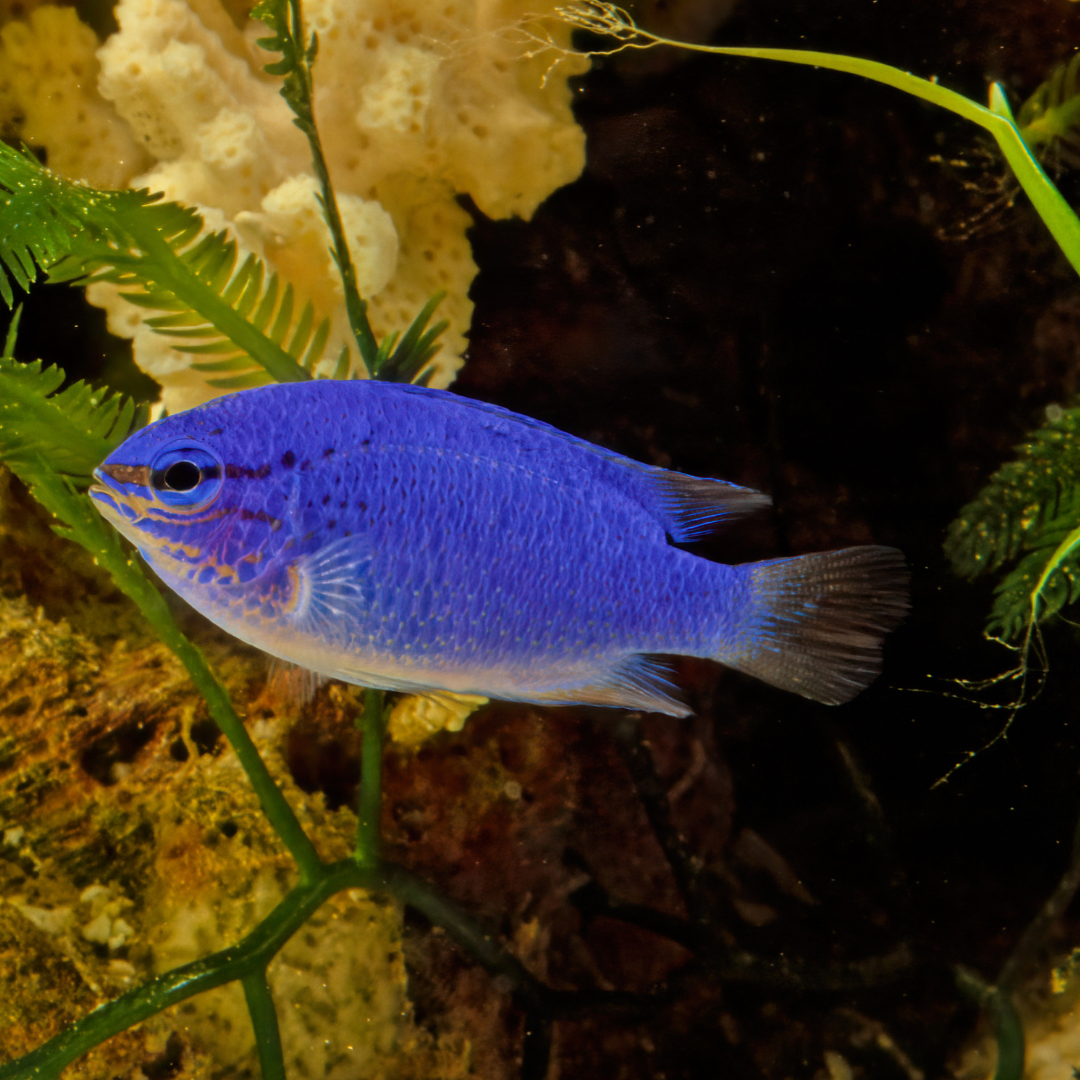
ルリスズメダイは、南国の海をそのまま形にしたような、鮮烈なコバルトブルーの体色が最大の特徴です。日本国内ではコバルトスズメという通称でも親しまれ、海水魚飼育の入門種として不動の人気を誇ります。非常に強健で環境適応能力が高く、サンゴ礁の浅い海で太陽の光を浴びて輝く姿は、まさにマリンアクアリウムの象徴と言えるでしょう。単に美しいだけでなく、一瞬で体色を変化させる高度な生理機能や、複雑な社会構造を持つ非常に知的な魚でもあります。The Blue Damselfish is best known for its vivid cobalt blue coloration, looking as if a piece of the tropical ocean has taken form. In Japan, it is affectionately known as the Cobalt Damselfish and holds a steadfast position as a popular choice for marine aquarium beginners. Extremely hardy with high adaptability, its shimmering appearance under the tropical sun in shallow coral reefs is an icon of marine aquariums. Beyond its beauty, it is a highly intelligent fish with advanced physiological functions that allow it to change color instantly, as well as a complex social structure.
基本情報 / Basic Information
学名 / Scientific Name
Chrysiptera cyanea
通称 / Common Name
ルリスズメダイ、コバルトスズメBlue Damselfish, Cobalt Blue Damselfish
分類 / Family
スズメダイ科ルリスズメダイ属Pomacentridae, Chrysiptera genus
英名 / English Name
Blue Devil, Sapphire Devil
分布 / Distribution
インド洋東部から西太平洋(和歌山県以南の日本沿岸を含む)Eastern Indian Ocean to Western Pacific (including Japanese coasts south of Wakayama)
最大体長 / Max Size
約8.5cmApprox. 8.5 cm
寿命 / Lifespan
約3〜5年(飼育下ではより長期の記録もあり)Approx. 3-5 years (longer records exist in captivity)
飼育環境 / Aquarium Environment
水槽サイズ / Tank Size
単独飼育であれば30cm規格水槽(約25リットル)以上。混泳を考慮する場合は90cm規格水槽(約157リットル)以上の広さが推奨されます。At least a 30cm standard tank (approx. 25L) for a single specimen. For community tanks, a 90cm standard tank (approx. 157L) or larger is recommended to manage aggression.
水温 / Temperature
22〜28℃(安定した水温管理が望ましい)22-28 degrees Celsius (stable temperature management is ideal)
水質 / Water Quality
pH 8.1〜8.4、比重 1.020〜1.025。非常に丈夫ですが、硝酸塩の蓄積には注意が必要です。pH 8.1-8.4, Specific Gravity 1.020-1.025. Very hardy, but monitoring nitrate accumulation is necessary.
レイアウト / Layout
ライブロックを複雑に組み、多くの隠れ家を作ることが重要です。サンゴ礫を敷いた環境も好みます。It is important to arrange live rock in a complex manner to create many hiding spots. They also prefer environments with coral rubble.
注意点 / Precautions
非常に強い縄張り意識を持つため、狭い水槽での複数飼育は激しい争いを招きます。導入順序には細心の注意を払いましょう。Due to their very strong territorial instincts, keeping multiples in a small tank will lead to intense fighting. Pay close attention to the order of introduction.
餌と給餌 / Feeding
餌の種類 / Diet
雑食性。海水魚用の人工飼料(フレーク・ペレット)、イサザアミ、ブラインシュリンプなどをバランスよく与えます。Omnivorous. Provide a balanced diet of marine artificial feeds (flakes/pellets), mysis shrimp, and brine shrimp.
給餌のポイント / Feeding Tips
餌付きは非常に良く、水槽導入直後から食べることが多いです。色揚げ効果のある餌を与えると、美しい青色を維持しやすくなります。They accept food very easily, often eating immediately after introduction. Using color-enhancing foods helps maintain their beautiful blue hue.
性格と混泳 / Temperament and Tank Mates
性格 / Temperament
極めて気が強く、攻撃的。自分の縄張りに侵入する他魚を執拗に追い回すことがあります。Extremely aggressive and bold. They may relentlessly chase other fish that enter their territory.
混泳の相性 / Compatibility
本種より大きく、気の強い魚(中大型のヤッコやハギなど)との混泳が適しています。大人しい小型魚や底生魚との混泳は避けるのが賢明です。Suitable for tanks with larger, assertive fish like medium-to-large angelfish or surgeonfish. It is wise to avoid tank mates that are gentle small fish or bottom-dwellers.
病気と対策 / Diseases and Prevention
かかりやすい病気 / Common Diseases
白点病、トリコディナ症。また、輸入個体には寄生性の甲殻類が付着している場合があります。Ich (Cryptocaryon irritans), Brooklynella. Also, imported specimens may have parasitic crustaceans attached.
対策と予防 / Prevention
水質の安定と殺菌灯の使用が効果的です。導入時のトリートメントを丁寧に行い、寄生虫の持ち込みを防ぎましょう。Stable water quality and the use of UV sterilizers are effective. Perform thorough quarantine upon introduction to prevent the entry of parasites.
増やし方(繁殖) / Breeding
雌雄の判別 / Sexing
雌や幼魚は背ビレの後端に黒い斑点があり、尾ビレなどが透明です。成熟した雄は斑点が消え、尾ビレが鮮やかな黄色に染まります。Females and juveniles have a black spot on the rear of the dorsal fin and translucent tails. Mature males lose this spot and develop bright yellow tails.
繁殖形態 / Reproduction
卵生。雄が岩の隙間などに産卵床を作り、複数の雌を誘い込んで産卵させ、孵化まで雄が卵を守ります。Oviparous (egg-laying). Males create a nesting site in rock crevices, entice multiple females to spawn, and guard the eggs until hatching.
繁殖のポイント / Breeding Tips
産卵までは比較的容易ですが、仔魚の初期餌料として非常に微小なカイアシ類を用意できるかが成功の鍵を握ります。Spawning is relatively easy to achieve, but the key to success lies in providing extremely small copepods as the initial food for the larvae.
雑学と豆知識 / Trivia and Fun Facts
1. 青色の秘密と「ブラインド理論」 / 1. The Secret of Blue and the Venetian Blind Model
ルリスズメダイの鮮やかな青色は、体内に青い色素があるわけではありません。虹色素胞という細胞の中に並んだ無色のグアニン結晶板が、光を干渉させて生み出す「構造色」です。驚くべきことに、彼らはストレスを感じると数秒で体色を黒く変化させます。これは、最下層にある黒色素胞からメラニン顆粒がブラインドのように広がって、上層の構造色を覆い隠してしまうため。この精緻な仕組みは「ブラインド理論」と呼ばれ、科学界でも注目されています。The vivid blue of the Blue Damselfish isn’t caused by blue pigment. It is a structural color created by the interference of light through colorless guanine crystals within cells called iridophores. Remarkably, they can change to a dark color within seconds when stressed. This happens because melanin granules from the underlying melanophores spread out like a venetian blind, obscuring the structural color above. This sophisticated mechanism is known as the Venetian Blind Model and is a subject of scientific interest.
繁殖期、雌のルリスズメダイは非常に面白い基準でパートナーを選びます。彼女たちは、雄のダンスの上手さよりも「その雄の巣に、既にどれだけの卵があるか」を重視するのです。既に他の雌から卵を託されている雄ほど「子育ての能力が高い」と見なされ、巣の前には産卵を待つ雌の行列ができることすらあります。この時、雄は逆に雌を攻撃して追い払おうとすることもありますが、雌はひるまずに巣に押し入って産卵するという、力強い生命のドラマが繰り広げられます。During breeding season, female Blue Damselfish choose partners based on an intriguing criterion. Instead of a male’s courtship dance, they prioritize “how many eggs are already in his nest.” A male who has already been entrusted with eggs by other females is seen as a more capable father, sometimes leading to a queue of females waiting to spawn at his nest. Interestingly, the male may try to drive the females away aggressively, but the females will often undeterredly force their way in to spawn.
3. 繁殖の壁を突破した「カイアシ類」 / 3. Copepods: Breaking the Breeding Barrier
かつてスズメダイ類の人工繁殖は、孵化したばかりの赤ちゃんが小さすぎて、一般的なエサ(ワムシなど)を食べられないことが最大の壁でした。しかし近年の研究で、天然のプランクトンである「カイアシ類(コペポーダ)」の非常に小さな幼生を与えることで、生存率が劇的に向上することが判明しました。この技術の確立により、野生のサンゴ礁を守りつつ、私たちがこの美しい青い魚を将来にわたって楽しみ続ける道が開かれつつあります。Artificial breeding of damselfish once faced a major hurdle: the newly hatched larvae were too small to consume standard feeds like rotifers. Recent research, however, revealed that providing the extremely small nauplii of natural planktonic copepods dramatically improves survival rates. The establishment of this protocol paves the way for us to continue enjoying these beautiful blue fish sustainably, while protecting wild coral reefs.
4. 地中海で見つかった「青い侵略者」 / 4. The Blue Invader in the Mediterranean
本来はインド太平洋にしか住んでいないルリスズメダイですが、近年、地中海のアドリア海沿岸でもその姿が目撃され、ニュースとなりました。観賞魚として飼われていた個体が放流されたか、船舶のバラスト水に紛れ込んだと考えられています。彼らの驚異的な環境適応能力は、本来の生息地とは異なる地中海でも生き抜く力を秘めているのです。これは、私たちが飼育魚を絶対に自然に放してはいけないという、重要な教訓でもあります。While native only to the Indo-Pacific, the Blue Damselfish was recently sighted and reported along the Adriatic coast of the Mediterranean. It is believed that captive specimens were either released or transported via ship ballast water. Their extraordinary adaptability allows them to survive even in environments as different as the Mediterranean. This serves as a vital lesson that we must never release our aquarium fish into the wild.
まとめ / Conclusion
ルリスズメダイは、その美しさと飼いやすさから、マリンアクアリウムの門を叩く多くの人々を魅了し続けてきました。しかし、今回見てきたように、彼らは単なる入門魚という言葉では片付けられない、驚異的な生理機能と複雑な生態を持つ生き物です。その鮮烈な青色は、自然界での生存戦略や繁殖のドラマと密接に関わっています。The Blue Damselfish continues to enchant many who enter the world of marine aquariums with its beauty and hardiness. However, as we have seen, they are far more than just a beginner’s fish; they are organisms with amazing physiological functions and complex ecologies. Their vivid blue hue is deeply intertwined with their survival strategies and reproductive dramas in the natural world.
彼らの気の強さを理解し、十分なスペースと隠れ家を用意してあげることで、水槽内でもその本来の輝きと興味深い行動を存分に観察することができるでしょう。科学的な視点を持って接することで、この小さな青い魚との付き合いは、より深く、豊かなものになるはずです。By understanding their bold temperament and providing ample space and hiding spots, you can fully observe their natural brilliance and fascinating behaviors within your aquarium. Engaging with them from a scientific perspective will undoubtedly make your relationship with these small blue fish deeper and more rewarding.



 アイのアクアグッズ案内水合わせの道具とやり方|魚を迎える前にそろえたい容器・点滴キット・ネット買ってきた魚はすぐ水槽に入れていい? 水温合わせと水合わせの違いから、透明ケース・点滴キット・ネットの選び方、時間をかけすぎない注意点まで、アイとコタロウが紹介します。記事はコチラ →
 アイのアクアグッズ案内アカヒレの仲間に合わせる飼育用品|無加温・混泳・繁殖の水槽とろ過道具の特徴や使い方、選ぶときのポイントをアイが紹介します。記事はコチラ →
 アイのアクアグッズ案内アフリカンシクリッドの飼育用品|水槽・ろ過・底砂・岩組み・餌の選び方道具の特徴や使い方、選ぶときのポイントをアイが紹介します。記事はコチラ →
 アイのアクアグッズ案内水換え・底砂掃除の道具の選び方|砂利・砂・ソイルに合うクリーナーとポンプ道具の特徴や使い方、選ぶときのポイントをアイが紹介します。記事はコチラ →



コメント