

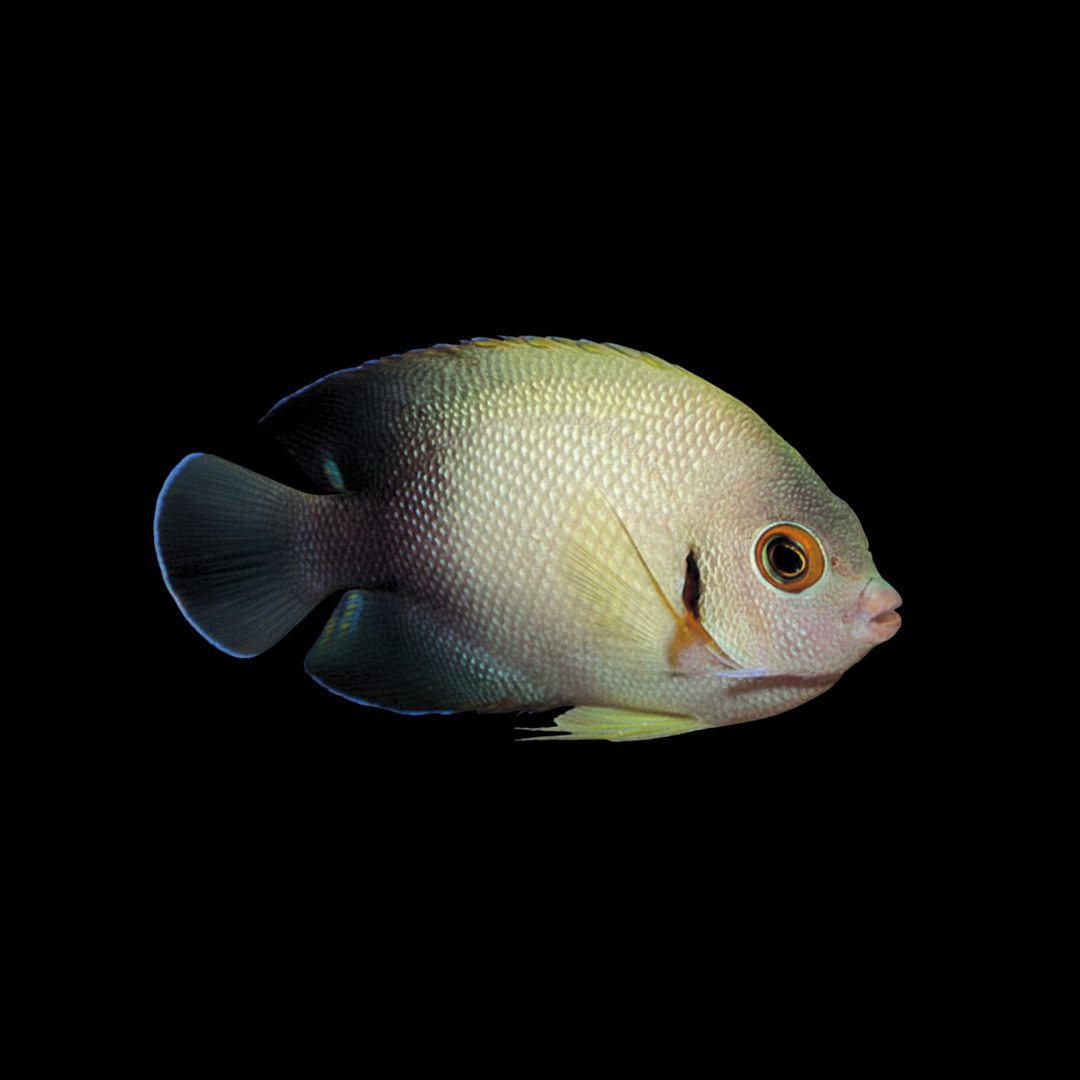
解説 / Description
ナメラヤッコは、西太平洋のサンゴ礁に広く生息する小型のヤッコです。派手な色彩が多いアブラヤッコ属の中では落ち着いた印象を与え、頭部から体幹部にかけての淡い褐色から、尾部に向かって暗黒色へと変化する滑らかなグラデーションが最大の特徴です。その一見控えめな色彩の中には、真珠のように白く輝く鱗の模様や、鰭の縁に走る繊細な青いラインなど、非常に細やかな美しさが隠されています。非常に強健で水槽環境に馴染みやすい反面、個体によっては餌付きに時間を要する場合や、サンゴを突くといったヤッコ類特有の性質も持ち合わせています。日本国内ではポピュラーな海水魚として親しまれており、入門種としての立ち位置を確立していますが、進化学的な性転換や交雑のメカニズムなど、学術的にも奥深い背景を持つ魅力的な魚種です。 The Pearlscale Angelfish (Centropyge vrolikii) is a small marine angelfish widely distributed throughout the Western Pacific reefs. Unlike many vibrant members of its genus, it features a sophisticated gradient transitioning from a pale tan on the head and torso to a deep black towards the tail. Within its subtle colors lie delicate pearl-like scale patterns and subtle blue lines along the fin edges. While known for its hardiness and adaptability, some individuals may require time to acclimate to prepared foods or may exhibit the typical angelfish behavior of nipping at corals. Long popular in Japan as an introductory species, it also possesses intriguing biological traits such as complex sex-change mechanisms and frequent hybridization with related species.
基本情報 / Basic Information
| 学名 / Scientific Name | Centropyge vrolikii |
|---|---|
| 通称 / Common Name | ナメラヤッコPearlscale angelfish |
| 分類 / Family | キンチャクダイ科 アブラヤッコ属Pomacanthidae, Genus Centropyge |
| 英名 / English Name | Pearlscale angelfish |
| 分布 / Distribution | 西太平洋(クリスマス島周辺からバリ、マーシャル諸島、バヌアツ、南日本など)Western Pacific (from Christmas Island to Bali, Marshall Islands, Vanuatu, South Japan, etc.) |
| 最大体長 / Max Size | 約10cmApprox. 10 cm |
| 寿命 / Lifespan | 約5〜10年(飼育環境により10年前後の記録もあり)Approx. 5-10 years (records of around 10 years in good conditions) |
飼育環境 / Aquarium Environment
| 水槽サイズ / Tank Size | 60cm規格水槽(約60リットル)以上。理想は60〜90cm水槽。60cm standard tank (approx. 60L) or larger. Ideally 60-90cm. |
|---|---|
| 水温 / Temperature | 24〜26度(水温変動に敏感なため、安定させることが重要です) 24-26 degrees Celsius (Important to maintain stability as they are sensitive to fluctuations) |
| 水質 / Water Quality | 海水(比重1.023〜1.025)、pH 8.1〜8.4Marine water (Specific gravity 1.023-1.025), pH 8.1-8.4 |
| レイアウト / Layout | ライブロックで多くの隠れ家を作る。やや神経質なため、安心できる場所が必要です。Provide plenty of hiding spots with live rock. They need a sense of security. |
| 注意点 / Precautions | LPSやシャコガイを突く可能性があります。個体差やサイズにより被害の程度は異なります。May nip at LPS corals and clams. The extent of damage varies by individual and size. |
餌と給餌 / Feeding
| 餌の種類 / Diet | 藻食性メインの雑食。人工飼料、冷凍餌(イサザアミ、ブラインシュリンプ等)Omnivorous with a preference for algae. Dry food, frozen food (mysis, brine shrimp, etc.) |
|---|---|
| 給餌のポイント / Feeding Tips | 大型個体は餌付きにくい傾向があるため、小型個体の導入が推奨されます。冷凍餌から段階的に人工飼料へ馴化させます。Larger individuals may be harder to feed; introducing juveniles is recommended. Gradually transition from frozen to dry food. |
性格と混泳 / Temperament and Tank Mates
| 性格 / Temperament | 比較的温和ですが、同属やシルエットの似た種には攻撃的になることがあります。Relatively peaceful but can be aggressive towards same-genus or similar-looking species. |
|---|---|
| 混泳の相性 / Compatibility | スズメダイ、ハゼ、ベラ等とは良好。テリトリー意識に配慮し、注意しながら導入してください。Good with damselfish, gobies, and wrasses. Introduce carefully considering territory. |
病気と対策 / Diseases and Prevention
| かかりやすい病気 / Common Diseases | 白点病、ウーディニウム病(マリンベルベット)Ich (Cryptocaryon irritans), Marine Velvet (Amyloodinium) |
|---|---|
| 対策と予防 / Prevention | 水質の急変やストレスを避け、導入時のトリートメントを徹底することが最大の予防です。Avoid sudden changes and stress; thorough quarantine upon introduction is the best prevention. |
増やし方(繁殖) / Breeding
| 雌雄の判別 / Sexing | 外見判別は困難ですが、雄は婚姻色として鰭の青い縁取りが強調される傾向があります。Hard to distinguish visually; males may show enhanced blue fin edges during spawning periods. |
|---|---|
| 繁殖形態 / Reproduction | 卵生。雌性先熟の性転換を行い、ハレムを形成します。Egg-layer. Exhibits protogynous hermaphroditism and forms harems. |
| 繁殖のポイント / Breeding Tips | ペアやハレムでの飼育が基本。浮遊性卵のため、家庭での稚魚育成は極めて難易度が高いです。Best kept in pairs or harems. Raising larvae is extremely difficult due to their pelagic egg nature. |
雑学と豆知識 / Trivia and Fun Facts
| 1. 学名の由来と偉大な解剖学者1. Etymology and a Great Anatomist | ナメラヤッコの種小名「vrolikii」は、19世紀オランダの著名な解剖学者ウィレム・フローリックへの献名です。彼は脊椎動物の発生史や比較解剖学において多大な功績を残した人物であり、この魚の学名には当時の博物学的な敬意が込められています。また、属名の「Centropyge」は、ギリシャ語で「棘のある後部」を意味しており、前鰓蓋骨にある鋭い棘というヤッコ類最大の特徴を的確に表現しています。The species name “vrolikii” honors Willem Vrolik, a prominent 19th-century Dutch anatomist. The genus name “Centropyge” translates to “spine-rear,” accurately describing the sharp preopercular spines characteristic of these angelfish. |
|---|---|
| 2. 巧みな生存戦略:ニザダイの擬態2. Survival Strategy: Mimicry in Tangs | サンゴ礁には、他のヤッコ類に姿を似せて身を守る「擬態」の名手がいます。ニザダイの仲間であるクログチニザの幼魚は、地域によって異なるアブラヤッコ属(アカキンチャクヤッコなど)に擬態することが知られています。ヤッコ類は鋭い棘を持ち捕食者に嫌われるため、非力なニザダイの幼魚は彼らのフリをすることで、厳しい自然界を生き抜く知恵を獲得したのです。In reefs, juvenile Mimic Tangs (Acanthurus pyroferus) are known to mimic various Centropyge species, such as Flame Angelfish, depending on the region. Since angelfish have sharp spines, the defenseless tangs gain protection by imitating their prickly neighbors. |
| 3. 性別を自在に操る驚異の可能性3. The Amazing Potential of Gender Fluidity | 多くのヤッコ類は、群れの雄がいなくなると最大の雌が雄へと変わる「雌性先熟」の性質を持ちます。さらに近年のアブラヤッコ属(アカハラヤッコ等)の研究では、一度雄になった個体が再び雌に戻る「逆性転換」すら可能であることが示唆されています。ナメラヤッコにおいても同様のメカニズムを持っている可能性があり、環境に合わせて繁殖成功率を最大化するための究極の戦略といえるでしょう。While most angelfish are protogynous (changing from female to male), research on the Centropyge genus suggests the potential for bidirectional sex change. This ability to revert to female based on social status is an ultimate strategy to maximize reproductive success. |
| 4. 進化の交差点:ナメラピールの存在4. Intersection of Evolution: The Namera-peel | ナメラヤッコは、レモンピールエンゼルやエイブルズエンゼルと自然交雑することが報告されています。特にレモンピールとの交雑個体は「ナメラピール」と呼ばれ、複雑な色彩のバリエーションを見せます。近年では人工繁殖された個体も流通し、環境に馴染みやすい面もありますが、食性や耐性には個体差があるため、それぞれの特性を観察しながら飼育することが大切です。The Pearlscale Angelfish is known to hybridize with Lemonpeel and Eibl’s Angelfish. Hybrids with Lemonpeels, called “Namera-peels,” show stunning variations. While captive-bred individuals are available, it is important to observe each one carefully as temperament and feeding habits can vary. |
まとめ / Conclusion
ナメラヤッコは、その控えめながら奥深い色彩、そして海水魚の中でも安定した強健さから、多くのアクアリストに推奨できる素晴らしい魚です。60cm以上の水槽で、安定した水温と多くの隠れ家を用意することが長期飼育の鍵となります。ライブロックを啄む愛らしい姿は、観賞魚としての大きな魅力といえるでしょう。 The Pearlscale Angelfish is a wonderful species recommended for many aquarists due to its subtle colors and hardiness. The keys to long-term success are a tank of at least 60cm, stable temperatures, and plenty of hiding spots. Their charming behavior of grazing on live rock makes them a joy to keep.
導入時は小型個体を選ぶことで餌付けの成功率を高め、個体ごとの性格を見極めながら混泳やレイアウトを楽しんでください。性転換や交雑といった進化的背景を知ることで、水槽の中で泳ぐその一匹の姿が、より一層ロマン溢れるものとして感じられるはずです。 By choosing a juvenile, you can increase the chances of successful feeding. Enjoy their presence by observing their unique personalities and learning about their evolutionary background. Knowing their complex biology makes keeping them even more rewarding and fascinating.

気になる道具や飼い方を見つけてみませんか?
 アイのアクアグッズ案内水槽のエアーポンプの選び方|水深・音・泡で選ぶおすすめ用品道具の特徴や使い方、選ぶときのポイントをアイが紹介します。記事はコチラ →
 アイのアクアグッズ案内旅行中、お魚のごはんはどうする? 自動給餌器・使える餌・スマート水槽の選び方旅行中の魚の餌やりを助ける自動給餌器を、アイとコタロウが紹介。時間指定、おかわり給餌、対応するフレークや顆粒、設置台、スマホ管理、一体型水槽、留守番フードまで、使いどころと選び方を案内します。記事はコチラ →
 アイのアクアグッズ案内水槽ライトの選び方|魚の見え方・水草・海水で選ぶおすすめ照明道具の特徴や使い方、選ぶときのポイントをアイが紹介します。記事はコチラ →
 アイのアクアグッズ案内マジックリーフ物語|一枚の葉がアクアリウム用品になるまで道具の特徴や使い方、選ぶときのポイントをアイが紹介します。記事はコチラ →
さまざまな飼育テーマをご紹介。リンク先の記事には広告・商品紹介が含まれます。
案内・紹介記事一覧へ →🔍 参考文献・典拠資料
1. 学術データベース・一次文献(分類・分布・食性)
- ・Bleeker, P. (1853). Diagnostische beschrijvingen van nieuwe of weinig bekende vischsoorten van Batavia. Tiental I-VI, Natuurkundig Tijdschrift voor Nederlandsch Indië. (ナメラヤッコの原記載論文)
- ・FishBase – Centropyge vrolikii (Pearlscale angelfish). (分類、最大体長、分布、生息水深の科学的根拠として参照)
- ・WoRMS – World Register of Marine Species. (最新の有効学名および分類体系の確認)
- ・Encyclopedia of Life (EOL). (西太平洋における地理的分布データの裏付け)
2. 査読付き論文(生態・性転換・交雑メカニズム)
- ・Kuwamura, M., Suzuki, S., & Kadota, T. (2002). Bidirectional sex change in the angelfish Centropyge ferrugata. Environmental Biology of Fishes. (アブラヤッコ属における双方向性転換の生理学的根拠)
- ・Randall, J. E. (2005). Reef and Shore Fishes of the South Pacific. (サンゴ礁魚類の擬態および自然交雑に関する記述の検証)
- ・Hodge, J. R., et al. (2020). Species-specific aquarium suitability and trade dynamics of marine angelfishes. (ヤッコ類の特性および生態的背景の分析)





コメント