
解説 / Description
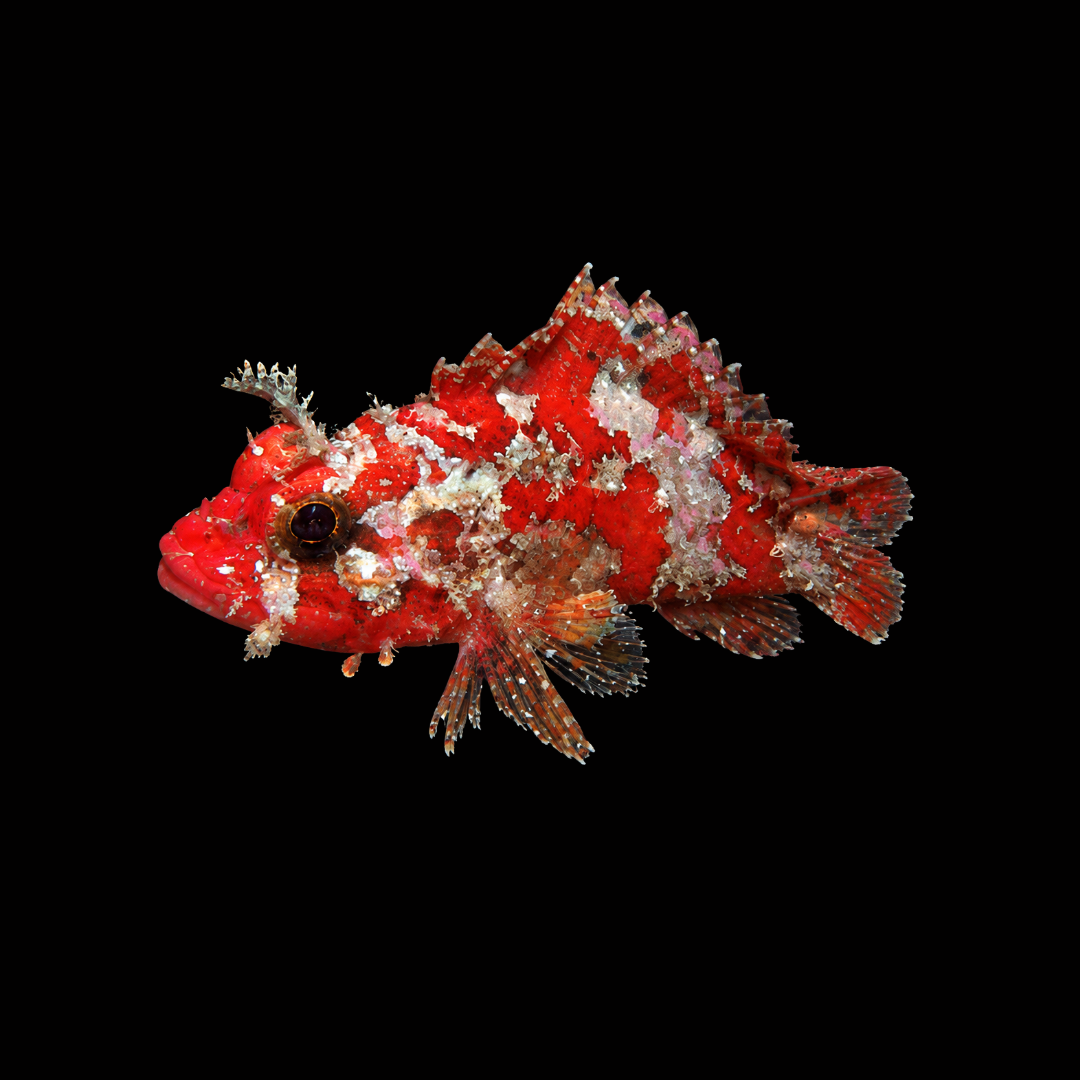
マダラフサカサゴは、サンゴ礁の岩陰や、砂とサンゴのかけらが混じるガレ場に暮らす小型の海水魚です。茶色や赤褐色を基調としたまだら模様に、凹凸のある頭部や皮膚の突起が重なり、周囲の岩や海藻に巧みに紛れ込みます。普段は底近くで静かに過ごしますが、近づいた小魚やエビを素早く捕らえる肉食魚でもあります。水槽では、隠れ場所を選ぶ仕草や給餌時の反応をじっくり観察できることが魅力です。小型でも毒棘を備えるため、安全な取り扱いと、口に入る大きさの生体を混泳させない配慮が欠かせません。 The barchin scorpionfish is a small marine fish that lives among reef crevices and areas of mixed sand and coral rubble. Brown or reddish mottling, an uneven head, and skin appendages help it blend into rocks and algae. It usually rests near the bottom, but quickly captures small fish and shrimp that approach. In an aquarium, much of its appeal lies in observing its choice of shelter and its feeding responses. Despite its small size, it has venomous spines and requires careful handling. Animals small enough to fit into its mouth should not be housed with it.
基本情報 / Basic Information
| 学名 / Scientific Name | Sebastapistes strongia (Cuvier, 1829) |
|---|---|
| 通称 / Common Name | マダラフサカサゴ。Barchin scorpionfish. |
| 分類 / Family | フサカサゴ科・フサカサゴ亜科・マダラフサカサゴ属。目の分類は体系によって異なり、スズキ目カサゴ亜目に含める場合と、カサゴ目に含める場合があります。Family Scorpaenidae, subfamily Scorpaeninae, genus Sebastapistes. Classification at the order level varies: some systems use Perciformes, suborder Scorpaenoidei, while others use Scorpaeniformes. |
| 英名 / English Name | Barchin scorpionfish |
| 分布 / Distribution | 紅海・東アフリカ沿岸からインド洋、西太平洋を経てソシエテ諸島に至るインド太平洋。日本では琉球列島などに分布します。浅いサンゴ礁の礁池やガレ場に生息します。The Indo-Pacific, from the Red Sea and East Africa through the Indian Ocean and western Pacific to the Society Islands. In Japan, it occurs in areas including the Ryukyu Islands. It inhabits shallow reef lagoons and rubble habitats. |
| 最大体長 / Max Size | 最大全長約9.5cm。尾びれを含む長さです。Approximately 9.5 cm total length, including the caudal fin. |
| 寿命 / Lifespan | 本種の寿命に関する確かな情報は限られており、飼育下での標準的な寿命は不明です。Reliable lifespan information for this species is limited, and a typical lifespan in captivity is unknown. |
飼育環境 / Aquarium Environment
| 水槽サイズ / Tank Size | 単独飼育では、60cm規格水槽(幅60×奥行30×高さ36cm、容積約65L)を設備選びの目安にします。水質の変動を抑えやすくするには、90cm規格水槽(幅90×奥行45×高さ45cm、容積約180L)など、水量に余裕のある環境も選択肢です。いずれも本種の最低必要水量を示すものではなく、ろ過能力や給餌量、換水頻度を含めて管理する必要があります。実際の水量は、水位や底砂、岩の量によって容積より少なくなります。混泳する場合は、相手の成長後の大きさと必要な遊泳スペースも考慮してください。For a single fish, a standard Japanese 60 cm aquarium measuring 60 × 30 × 36 cm, with a nominal volume of about 65 L, can serve as a starting point when selecting equipment. A standard 90 cm aquarium measuring 90 × 45 × 45 cm, about 180 L nominal, offers more water volume to help moderate changes in water quality. These figures are practical planning guides rather than established minimum requirements for the species; filtration, feeding, and water changes must also be considered. Actual water volume is lower because of the water level, substrate, and rocks. Community setups must accommodate the adult sizes and swimming needs of all tank mates. |
|---|---|
| 水温 / Temperature | 飼育管理では24〜26℃程度を目安にし、急な変動を避けます。これは熱帯性海水魚の管理を参考にした範囲で、本種の厳密な適温や耐温限界を示すものではありません。夏季は室温や機器の発熱に応じて冷却設備を用意し、高水温に伴う酸素不足にも注意してください。A practical husbandry target is around 24–26°C, avoiding abrupt changes. This is a guideline informed by tropical marine aquarium care, not a precisely established optimum or thermal limit for this species. Provide cooling when room temperature or equipment heat makes it necessary, and watch for oxygen shortage as water temperature rises. |
| 水質 / Water Quality | 安定した海水環境を維持します。一般的な海水魚飼育の目安として、塩分33〜35‰、pH8.0〜8.4を参考にし、アンモニアと亜硝酸は検出されない状態を保ちます。生物ろ過が十分に機能する水槽を用い、硝酸塩の測定値や汚れの蓄積に応じて定期的に換水してください。蒸発した分は淡水で補い、塩分の上昇を防ぎます。Maintain stable marine conditions. General marine aquarium targets of 33–35 ppt salinity and pH 8.0–8.4 are useful, with ammonia and nitrite kept undetectable. Use an aquarium with established biological filtration and perform regular water changes according to nitrate measurements and waste accumulation. Replace evaporated water with freshwater to prevent salinity from rising. |
| レイアウト / Layout | ライブロックや人工岩を崩れないように配置し、体を隠せる隙間と、底近くで落ち着ける場所をつくります。底砂を使う場合は、細かいサンゴ砂などを薄く敷くと清掃しやすくなります。照明が直接当たらない陰も残してください。水流はよどみを防ぐ程度に確保し、休息場所へ強い流れを直接当てないようにします。Arrange live rock or artificial rock securely to provide crevices and sheltered resting places near the bottom. If substrate is used, a thin layer of fine coral sand is easier to clean. Include shaded areas away from direct lighting. Maintain circulation to prevent stagnant zones without directing a strong jet at the fish’s resting place. |
| 注意点 / Precautions | 毒棘があるため、素手で触れたり、姿を確認せず岩の隙間へ手を入れたりしないでください。移動には硬い容器などを使い、棘を網に引っ掛けたり、袋に突き刺したりしないようにします。清掃や岩の移動は、個体の位置を確認してから行います。導入時は水温と塩分の差に配慮してください。刺された場合は作業を中止して速やかに医療機関へ相談し、呼吸困難や意識の異常がある場合は救急要請してください。Do not touch the fish with bare hands or reach into crevices without locating it first. Use a rigid container for transfers where practical, avoiding entanglement of spines in nets or punctures in bags. Locate the fish before cleaning or moving rocks. Account for temperature and salinity differences during introduction. If stung, stop working and promptly seek medical advice. Breathing difficulty or altered consciousness requires emergency assistance. |
餌と給餌 / Feeding
| 餌の種類 / Diet | 小魚や甲殻類を食べる肉食性です。飼育下では、解凍したエビ類や海産魚の小さな切り身などを、飲み込みやすい大きさで与えます。導入直後に食べない場合は、入手元と衛生状態を確認した活きた小型エビを使い、餌付けを始める方法があります。冷凍オキアミなど一種類の餌に偏らず、食べる個体には海水性肉食魚向けの配合飼料も取り入れます。金魚などの淡水魚を主食にすることは避けてください。This carnivore eats small fish and crustaceans. Offer suitably sized pieces of thawed shrimp and marine fish. If a newly introduced fish refuses prepared food, small live shrimp from a known, hygienic source may help initiate feeding. Avoid relying on a single food such as frozen krill, and incorporate formulated marine carnivore food if accepted. Freshwater feeder fish such as goldfish should not be used as the staple diet. |
|---|---|
| 給餌のポイント / Feeding Tips | 薄暗い時間帯に、長い給餌用ピンセットや給餌棒を使って、口元の少し前へ餌を差し出します。軽く動かして反応を見ながら、活き餌から解凍した餌へ徐々に慣らしていきます。器具を口へ押し込まず、魚が自分でくわえるのを待ってください。本種に適した給餌頻度を一律に示せる情報は限られるため、成長段階、体つき、腹部の膨らみ、食欲を見ながら量と間隔を調整します。食べ残しは回収し、混泳時は他魚に奪われず、本種が実際に食べていることを確認してください。Feed under subdued lighting, presenting food slightly in front of the mouth with long feeding tongs or a feeding stick. Gentle movement may attract attention and help a gradual transition from live to thawed food. Never push the tool into the mouth; let the fish take the food itself. Information supporting a fixed feeding schedule for this species is limited, so adjust meal size and frequency according to growth stage, body condition, abdominal fullness, and appetite. Remove leftovers and confirm that the fish receives food rather than losing it to tank mates. |
性格と混泳 / Temperament and Tank Mates
| 性格 / Temperament | 単独で身を隠して過ごすことが多い、待ち伏せ型の魚です。他魚を活発に追い回すことは少なくても、近づいた小さな生体を捕食します。同種同士の複数飼育でも相性の確認が必要で、おとなしく見えることが、そのまま混泳の安全性を意味するわけではありません。A solitary, secretive ambush predator. Even if it rarely chases other fish, it may capture small animals that approach. Compatibility must also be assessed when keeping more than one individual of the species; a quiet appearance does not guarantee safe cohabitation. |
|---|---|
| 混泳の相性 / Compatibility | 単独飼育が管理しやすい選択です。混泳する場合は、口に入らない十分な体格があり、本種を攻撃したり餌を独占したりしない海水魚を選びます。小型ハゼ、テンジクダイ、小さなスズメダイ、スカンクシュリンプやホワイトソックスなどのエビ類は、捕食されるおそれがあります。フグやカワハギの仲間など、ひれや皮膚の突起をかじる魚にも注意が必要です。サンゴを主な餌にはしませんが、岩上にとまる際に接触する場合があるため、サンゴとの配置にも配慮します。Keeping it alone is often the simplest option. Tank mates must be too large to swallow and must neither harass it nor monopolize food. Small gobies, cardinalfish, juvenile damselfish, cleaner shrimp, and fire shrimp may be eaten. Fish that nip fins or skin appendages, including some puffers and filefish, also require caution. Corals are not its primary food, but it may contact them while resting on rockwork, so placement matters. |
病気と対策 / Diseases and Prevention
| かかりやすい病気 / Common Diseases | 本種が特にかかりやすい病気についての情報は限られていますが、海水白点病やウーディニウム病などの寄生虫疾患、傷に伴う感染症には注意が必要です。食欲の低下、呼吸が速くなる様子、体をこする動作、傷や白点の有無を日頃から観察します。Information on particular disease susceptibility in this species is limited. Nevertheless, marine white spot disease, velvet disease, and infections associated with injuries warrant attention. Monitor appetite, breathing, scratching, wounds, and white spots. |
|---|---|
| 対策と予防 / Prevention | 新しく迎えた魚は隔離して観察し、水槽間での器具の共用を避け、水質を安定させます。異常が見られたら原因を確認し、必要に応じて治療用水槽で対応します。海水白点病は加温だけでは治療できません。薬剤は海水魚と対象の病気に使えるものか確認し、銅製剤などを使う場合は、魚病に詳しい専門家の助言と製品の指示に従って濃度を管理してください。サンゴやエビのいる水槽へ安易に投薬せず、白点が消えただけで治療を終えないことも大切です。Quarantine new fish, avoid sharing equipment between aquariums, and maintain stable water quality. Investigate abnormalities and use a separate treatment aquarium when needed. Heating alone does not cure marine white spot disease. Confirm that a medication is suitable for marine fish and the condition being treated. Copper treatment requires concentration monitoring, product instructions, and guidance from a fish health specialist. Do not casually medicate an aquarium containing corals or shrimp, or stop treatment simply because visible spots disappear. |
増やし方(繁殖) / Breeding
| 雌雄の判別 / Sexing | 外見から確実に雌雄を見分ける方法について、十分な情報はありません。体色や大きさ、腹部の膨らみだけで判断することは困難です。Information on reliable external sexing is insufficient. Color, size, and abdominal fullness alone do not allow confident identification of sex. |
|---|---|
| 繁殖形態 / Reproduction | 卵生です。ただし、本種の産卵行動や卵の性状、孵化後の仔魚の発育については、飼育に応用できる詳しい情報が限られています。Oviparous. However, detailed information on spawning behavior, egg characteristics, and larval development that can be applied to captive breeding is limited. |
| 繁殖のポイント / Breeding Tips | 家庭水槽での具体的な繁殖条件や仔魚の育成方法について、十分な情報はありません。繁殖を試みる場合も、まずは親魚の健康と個体同士の相性を確認し、安定した環境で行動を観察することが基本です。産卵を促そうとして餌を過剰に与えたり、水温や塩分を急変させたりすることは避けてください。Specific home-aquarium breeding conditions and larval rearing methods are not sufficiently documented. Any attempt should begin with healthy adults, assessment of compatibility, and observation under stable conditions. Avoid excessive feeding or abrupt temperature and salinity changes in an effort to induce spawning. |
雑学と豆知識 / Trivia and Fun Facts
| 1. 学名に残る島の記憶 / 1. An Island Remembered in Its Name | 種小名の strongia は、ミクロネシアのコスラエ島がかつて「ストロング島」と呼ばれていたことに由来します。1829年にキュヴィエが新種として記載した際の名前は Scorpaena strongia でした。その後、所属する属が変更され、現在の Sebastapistes strongia という組み合わせになりました。記載者名と年が括弧で囲まれているのは、最初に記載された属から移されたことを示しています。小さな魚の学名には、かつての地名と、分類を見直してきた歴史が残されているのです。The epithet strongia refers to Kosrae in Micronesia, formerly known as Strong’s Island. Cuvier described the fish in 1829 as Scorpaena strongia. A later change in generic placement produced the current combination, Sebastapistes strongia. Parentheses around the author and year indicate that the species has been transferred from its original genus. This small fish’s scientific name preserves both an old place name and part of its taxonomic history. |
|---|---|
| 2. 動かないことが狩りになる / 2. Stillness as a Hunting Strategy | 岩陰でじっとしている姿は、休息だけでなく、獲物を待つ姿でもあります。不規則なまだら模様は体の輪郭を分かりにくくし、目の上などにある皮膚の突起は、周囲の藻や岩の付着物に紛れるのに役立ちます。そのまま獲物が近づくのを待ち、機会を捉えると口を素早く開いて、水と一緒に獲物を吸い込みます。隠れ場所は身を守る場所であると同時に、餌を捕らえる場所でもあるのです。水槽でも落ち着いて潜める場所を用意すると、この魚らしい過ごし方を観察しやすくなります。Remaining motionless in a crevice can be part of hunting as well as resting. Irregular mottling obscures the outline of the body, while skin appendages above the eyes and elsewhere help it blend with algae and growth on rocks. It waits for prey to approach, then rapidly opens its mouth to draw in the prey with water. A shelter is therefore both a refuge and a hunting position. Providing secure hiding places in an aquarium makes it easier to observe this characteristic behavior. |
| 3. 似た姿の魚を見分ける難しさ / 3. The Challenge of Identifying Look-Alikes | フサカサゴの仲間は体色の個体差が大きく、赤い、茶色いといった印象だけでは種を見分けられません。2014年に新種として記載されたアカマダラフサカサゴも、マダラフサカサゴと姿が似た近縁種です。見分ける際には、胸びれを支える鰭条の数、頭部の棘、鱗や黒斑の特徴などを組み合わせます。鰭条の数には種同士で重なる範囲があるため、一つの特徴だけで決めるのではなく、体のつくりを総合して判断する必要があります。飼育個体を無理に捕まえて調べず、産地情報と鮮明な写真を添えて専門家に相談する方が安全です。Scorpionfishes vary greatly in color, so impressions such as red or brown cannot reliably identify a species. Sebastapistes perplexa, described in 2014, is a similar-looking relative. Identification combines the number of rays supporting the pectoral fins with head spines, scales, and dark markings. Fin-ray counts overlap between species, so identification requires a combination of anatomical features rather than a single character. Consulting a specialist with locality information and clear photographs is safer than restraining a live fish for examination. |
| 4. 毒棘は小さな体を守る備え / 4. Venomous Spines Protect a Small Body | マダラフサカサゴの毒棘は、主に外敵から身を守るために役立ちます。獲物を捕らえるときは擬態と素早い口の動きを使いますが、危険にさらされたときには鋭い棘が防御になります。普段おとなしく見える個体でも、飼育者の手が触れれば刺傷事故につながるため、扱いには注意が必要です。岩や底砂に紛れる姿は水槽の中でも見つけにくく、清掃前に居場所を確かめる習慣が、安全に世話を続けるうえで大切になります。The barchin scorpionfish’s venomous spines primarily help protect it from predators. It captures prey through camouflage and rapid mouth movement, while its sharp spines provide defense when threatened. Even a quiet individual can cause a sting if a keeper’s hand contacts it, so careful handling is essential. Its camouflage remains effective among aquarium rocks and substrate, making the habit of locating it before cleaning important for safe care. |
まとめ / Conclusion
マダラフサカサゴは、小さな体に巧みな擬態と待ち伏せの技を備えた海水魚です。落ち着ける岩陰と安定した海水環境を用意し、食べ方や体つきに合わせて給餌を調整することが、飼育の基本になります。静かに潜む姿にも、隠れ場所の選び方や餌への反応など、観察するほどに気づく面白さがあります。 The barchin scorpionfish combines effective camouflage and ambush hunting in a small body. Secure rock shelters, stable marine conditions, and feeding adjusted to appetite and body condition form the basis of its care. Its quiet presence rewards close observation, from the choice of a hiding place to its response to food.
毒棘に配慮し、混泳相手を慎重に選ぶことで、この魚の習性に合わせた環境を整えられます。岩陰に紛れる姿を見つけ、一瞬の捕食を見守る時間は、活発に泳ぐ魚の観賞とはまた違った楽しみです。水槽の静けさの中に、小さな捕食者ならではの存在感を感じさせてくれます。 Respecting its venomous spines and choosing tank mates carefully help create an environment suited to its habits. Finding it among the rocks and watching a sudden feeding strike offer a different pleasure from observing active swimmers. Within the quiet of an aquarium, it brings the distinctive presence of a small predator.
気になる道具や飼い方を見つけてみませんか?
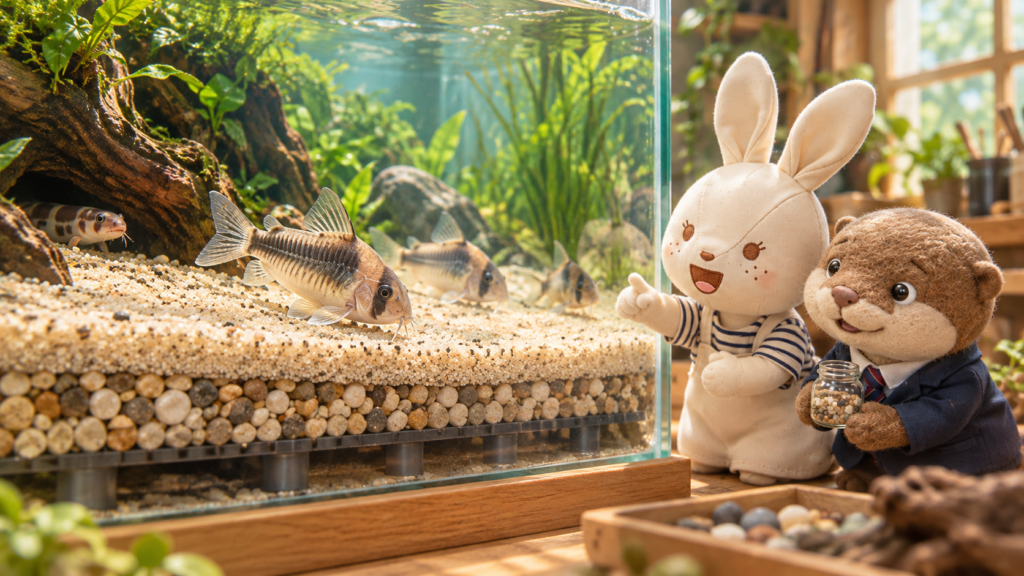 アイのアクアグッズ案内水槽の底砂の選び方|砂・砂利の違いとおすすめ商品道具の特徴や使い方、選ぶときのポイントをアイが紹介します。記事はコチラ →
 アイのアクアグッズ案内マジックリーフ物語|一枚の葉がアクアリウム用品になるまで道具の特徴や使い方、選ぶときのポイントをアイが紹介します。記事はコチラ →
さまざまな飼育テーマをご紹介。リンク先の記事には広告・商品紹介が含まれます。
案内・紹介記事一覧へ →分布マップ
マダラフサカサゴ(Sebastapistes strongia)は、紅海・東アフリカ沿岸からインド洋、西太平洋を経てソシエテ諸島に至るインド太平洋に分布します。日本では琉球列島などに見られます。
地図は分布地域全体の位置関係を示す概略表示であり、表示範囲のすべてに生息することを示すものではありません。マーカーは表示上の代表地点(北緯10°・東経140°)で、実際の採集地点や生息確認地点ではありません。Google Earthのリンクも同じ代表地点を開きます。
参考文献
- FishBase. 「Sebastapistes strongia (Cuvier, 1829), Barchin scorpionfish」. 分類、分布、生息環境、最大体長、食性。
- Motomura, H., Aizawa, M. & Endo, H. (2014). 「Sebastapistes perplexa, a New Species of Scorpionfish (Teleostei: Scorpaenidae) from Japan」. Species Diversity, 19(2), 133–139. アカマダラフサカサゴの新種記載と、マダラフサカサゴを含む近縁種の形態比較。
- Francis-Floyd, R. & Petty, B. D. 「Providing a Home for Fish」. Merck Veterinary Manual. 観賞魚全般の飼育環境、水温・水質管理、生物ろ過、給餌の基本。
- Koya, Y. & Muñoz, M. (2007). 「Comparative study on ovarian structures in scorpaenids: possible evolutional process of reproductive mode」. Ichthyological Research, 54, 221–230. フサカサゴ類の卵巣構造と繁殖様式に関する比較資料。
- Petty, B. D., Francis-Floyd, R. & Yanong, R. P. E. 「Management of Aquarium Fish」. Merck Veterinary Manual. 観賞魚全般の隔離、感染予防、診断と薬剤使用の基本。
- Yanong, R. P. E. 「Cryptocaryon irritans Infections (Marine White Spot Disease) in Fish」. University of Florida, IFAS Extension, FA164. 海水白点病の症状、生活環、隔離と治療、銅濃度管理。
- MedlinePlus Medical Encyclopedia. 「Scorpion fish sting」. U.S. National Library of Medicine. カサゴ類の毒棘による刺傷の症状と、受診・救急対応。
コメント