
解説 / Description
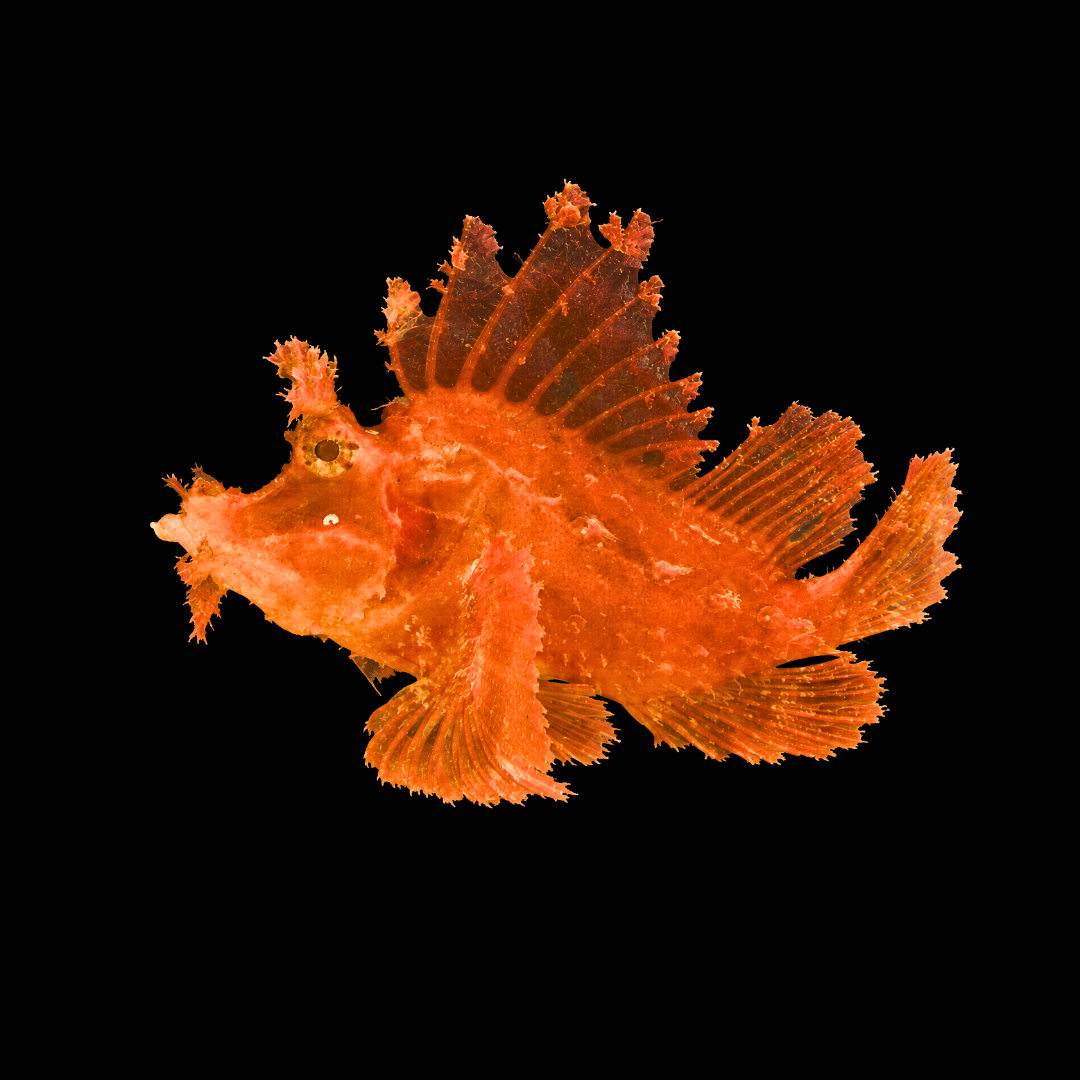
エスクマイヤーズ・スコーピオンフィッシュは、標準和名をホウセキカサゴという、ボロカサゴ属の海水魚です。左右に平たい体、上向きの大きな口、目の上に張り出した平たい皮弁が特徴で、赤や黄色、ピンクなど、個体によって異なる色合いを見せます。岩や海藻に紛れて静止し、近づいた小魚やエビを素早く吸い込む待ち伏せ型の捕食者です。水槽でも活発に泳ぎ回ることは少なく、底をゆっくり移動したり、体を揺らしたりする姿が目を引きます。普段の穏やかな動作に反して大きな獲物も狙い、鰭には毒棘もあるため、餌付けと安全な管理に取り組める経験者向けの魚です。 Eschmeyer’s scorpionfish, known in Japan as Houseki-kasago, is a marine fish of the genus Rhinopias. Its laterally compressed body, large upturned mouth, and flattened skin flaps above the eyes give it a distinctive appearance. Individuals may be red, yellow, pink, or other shades. This ambush predator remains concealed among its surroundings and rapidly sucks in passing fish or shrimp. In an aquarium, it spends much of its time resting, moving slowly along the bottom, or gently rocking. Despite its quiet behavior, it can target surprisingly large prey and has venomous fin spines, making it best suited to experienced keepers prepared for specialized feeding and safe maintenance.
基本情報 / Basic Information
| 学名 / Scientific Name | Rhinopias eschmeyeri Condé, 1977 |
|---|---|
| 通称 / Common Name | エスクマイヤーズ・スコーピオンフィッシュ、ホウセキカサゴ(標準和名)。販売時に「ボロカサゴ」の名称で扱われる場合がありますが、標準和名のボロカサゴは近縁の別種を指します。Eschmeyer’s scorpionfish; Houseki-kasago is its standard Japanese name. It may be sold under the Japanese trade name Boro-kasago, although that standard Japanese name refers to a different, closely related species. |
| 分類 / Family | カサゴ科(Scorpaenidae)ボロカサゴ属(Rhinopias)。Family Scorpaenidae; genus Rhinopias. |
| 英名 / English Name | Eschmeyer’s scorpionfish, Paddle-flap scorpionfish |
| 分布 / Distribution | インド西太平洋。モーリシャスなどのインド洋の島々から、日本、東南アジア、オーストラリアにかけて記録されています。サンゴ礁や岩礁周辺の礫底などに生息します。水深18〜55mで知られますが、より浅い場所での採集記録もあります。Indo-West Pacific, with records from Indian Ocean islands including Mauritius eastward to Japan, Southeast Asia, and Australia. It inhabits rubble bottoms around coral and rocky reefs. It is known from depths of 18–55 m, with shallower collection records also documented. |
| 最大体長 / Max Size | 全長約23cm。吻の先から尾鰭の先までを含む長さで、尾鰭を含めない標準体長とは異なります。Approximately 23 cm total length, measured from the snout to the tip of the tail. This differs from standard length, which excludes the caudal fin. |
| 寿命 / Lifespan | 野生下・飼育下ともに、一般的な寿命を示す十分な情報はありません。購入時の年齢も分かりにくく、飼育できた年数をそのまま本種の寿命とみなすことはできません。There is insufficient information to give a reliable typical lifespan in the wild or in captivity. Because age at purchase is usually unknown, the length of time a specimen survives in an aquarium does not establish its natural lifespan. |
飼育環境 / Aquarium Environment
| 水槽サイズ / Tank Size | 成魚1匹を余裕を持って飼育するなら、120cm規格水槽(120×45×45cm、寸法から計算した容量約243L)を目安にできます。120cmワイド水槽(120×60×60cm、同約432L)なら、さらに広い底面を確保できます。いずれも本種に必須と確認された最低サイズではなく、成魚の大きさと水質管理の余裕を考えた選択です。実際の水量は水位、ガラスの厚さ、岩や底砂の量によって少なくなります。水量だけでなく、無理なく向きを変えられる底面の広さも重視します。For spacious housing of one adult, a Japanese standard 120 cm aquarium measuring 120 × 45 × 45 cm, with a calculated geometric capacity of approximately 243 L, is a practical option. A wide 120 × 60 × 60 cm aquarium, approximately 432 L by the same calculation, provides more floor space. These are generous husbandry choices rather than established minimum requirements. Actual water volume is lower because of the water level, glass thickness, rock, and substrate. Allow sufficient unobstructed floor space for the fish to turn comfortably. |
|---|---|
| 水温 / Temperature | 24〜26℃を飼育管理の目安とし、急変を避けます。高水温では酸素が不足しやすくなるため、夏季は必要に応じて冷却し、水面の動きなどで十分なガス交換を確保します。 Use 24–26°C as a practical husbandry target and avoid sudden changes. Warm water holds less oxygen, so provide cooling when necessary and maintain effective gas exchange through surface movement. |
| 水質 / Water Quality | 生物ろ過が十分に機能する海水水槽で飼育します。塩分33〜35‰、pH8.1〜8.4を管理の目安にし、急激な変化を避けます。比重計を使う場合は、機器の基準温度や換算表を確認してください。アンモニアと亜硝酸は検出されない状態を保ち、硝酸塩は20mg/L以下を管理目標とします。これらは一般的な海水水槽の管理目安であり、本種の耐えられる限界を示すものではありません。生物ろ過とプロテインスキマーを活用し、残餌や排泄物を除去します。蒸発した分は真水で補い、塩分を定期的に確認します。Use a marine aquarium with fully established biological filtration. Practical targets are salinity of 33–35 ppt and pH 8.1–8.4, without abrupt changes. When measuring specific gravity, follow the instrument’s reference temperature and conversion guidance. Keep ammonia and nitrite undetectable and use nitrate below 20 mg/L as a maintenance target. These are general marine aquarium guidelines, not the species’ tolerance limits. Use biological filtration and a protein skimmer, remove waste, replace evaporation with fresh water, and check salinity regularly. |
| レイアウト / Layout | 安定した岩組と、体を休められる開けた底面を組み合わせます。底砂を敷く場合は角の少ない海水用の砂を使い、鋭い装飾や崩れやすい岩組を避けます。強い照明から離れられる陰を設け、水流は水槽全体に穏やかに行き渡らせます。魚体に強い流れを当て続けず、ポンプの吸水口には接触を防ぐカバーを設けます。Combine stable rockwork with open resting areas. If substrate is used, choose smooth marine sand and avoid sharp decorations or unstable rocks. Provide shade from intense lighting and gentle circulation throughout the aquarium. Avoid continuously directing strong flow at the fish, and fit protective covers to pump intakes. |
| 注意点 / Precautions | 背鰭などの棘には毒があるため、素手で触れず、作業前に必ず魚の居場所を確認します。移動には十分な大きさの硬い容器を使い、網への絡まりや、棘による袋の破損に注意してください。薄い手袋だけでは刺傷を防げません。 導入前に販売店の飼育水の水温と塩分を確認し、差の小さい受け入れ水を用意します。長時間輸送された袋では、開封後や飼育水を加えた後にpHが上がり、蓄積したアンモニアの毒性が増すことがあります。輸送水の状態を考慮せず、長時間の点滴水合わせを一律に行うことは避け、販売店と導入方法を確認しておきます。 刺された場合は作業を中止し、速やかに医療機関を受診してください。呼吸困難や意識の異常があれば119番通報します。受診までの痛みを和らげるために患部を温水に浸す方法がありますが、45℃を上限に、やけどをしない温度を確認し、受診を遅らせないでください。傷を切ったり、口で吸ったり、埋まった棘を無理に掘り出したりしないでください。The fin spines are venomous. Never handle the fish with bare hands, and always locate it before maintenance. Use a sufficiently large rigid container for transfers, avoiding net entanglement and punctured transport bags. Thin gloves do not reliably prevent punctures. Before arrival, check the seller’s water temperature and salinity and prepare receiving water with similar conditions. After prolonged shipping, opening the bag or adding aquarium water may raise pH and increase the toxicity of accumulated ammonia. Do not automatically use prolonged drip acclimation without considering transport-water quality; discuss the introduction procedure with the seller beforehand. If stung, stop work and seek prompt medical attention. In Japan, call 119 for breathing difficulty or altered consciousness. Warm-water immersion may help relieve pain while care is arranged, but verify a non-scalding temperature, never exceed 45°C, and do not delay treatment. Do not cut or suck the wound or dig out embedded spine fragments. |
餌と給餌 / Feeding
| 餌の種類 / Diet | 小魚や甲殻類を食べる肉食性です。導入直後は、健康状態を確認した生きた小エビなどが必要になることがあります。落ち着いたら、十分に解凍した海産エビや海水魚、イカなどを、飲み込みやすい大きさにして試します。食べられる餌を確認しながら種類を組み合わせ、小赤などの淡水魚や乾燥クリルだけに頼る給餌は避けます。冷凍餌に慣れない個体もいるため、購入前に何を食べているか確認することが大切です。This carnivore eats small fish and crustaceans. Newly acquired specimens may initially require healthy live shrimp. Once settled, offer fully thawed marine shrimp, marine fish, and squid in easily swallowed sizes. Offer a variety of accepted foods rather than relying solely on freshwater feeder fish or dried krill. Some individuals do not accept frozen food, so confirm their current diet before purchase. |
|---|---|
| 給餌のポイント / Feeding Tips | 成魚では週2回程度を目安に、体格、腹部の膨らみ、消化の様子を見て量と間隔を調整します。腹部が大きく張るまで与えず、無理なく飲み込める大きさの餌を選びます。成長中の幼魚や痩せた個体では、同じ頻度に固定せず、状態に応じた調整が必要です。先端が鋭くない長い給餌具を使い、餌を目の前で穏やかに動かして誘います。器具を口に入れたり、魚に噛ませたりしないよう注意してください。残餌や食べられずに残った生餌は回収します。拒食が続くときは、餌の種類だけでなく、水質、呼吸、混泳相手からの干渉も確認します。For adults, about two feeding sessions per week is a useful starting point. Adjust portions and intervals according to body condition, abdominal fullness, and digestion. Avoid pronounced belly distension and choose easily swallowed food. Growing juveniles and underweight specimens require individual adjustment rather than a fixed adult schedule. Gently move food with a long, blunt feeding tool, keeping the tool out of the mouth. Remove leftovers and uneaten live prey. Persistent refusal requires checking water quality, breathing, and harassment as well as food choice. |
性格と混泳 / Temperament and Tank Mates
| 性格 / Temperament | 普段は静かで、他魚を追い回すことは多くありません。ただし、温和に見えても、小魚にとっては捕食者です。口に入る大きさの相手には、ほとんど前触れなく襲いかかります。静止している時間が長いため、動きの少なさだけで体調を判断せず、呼吸、姿勢、餌への反応を合わせて観察します。Usually quiet, it seldom chases other fish. Nevertheless, it remains a predator to smaller tank mates and may strike with little warning. Because prolonged resting is normal, assess health through breathing, posture, and feeding response rather than inactivity alone. |
|---|---|
| 混泳の相性 / Compatibility | 1匹での飼育が最も管理しやすい方法です。小型魚、エビ、小型のカニは捕食されるおそれがあります。口は大きく開くため、見た目だけで「飲み込めない大きさ」と判断しないことが大切です。フグやモンガラカワハギ類など、鰭や皮弁をつつくおそれのある魚や、餌を横取りする活発な魚も避けます。混泳を試みる場合は、捕食されない十分な体格の温和な相手を慎重に選び、分離できる水槽を用意します。同属同士でも相性や体格差による事故があるため、安全とは限りません。サンゴを主食にはしませんが、上に乗って傷める場合があります。サンゴ水槽では、甲殻類の捕食と給餌に伴う栄養塩の増加にも配慮します。Keeping one specimen alone is the simplest approach. Small fish, shrimp, and small crabs may be eaten. Its mouth expands considerably, so a tank mate that merely looks too large may still be at risk. Avoid potential fin or skin-flap nippers, including puffers and triggerfish, as well as vigorous food competitors. If companions are attempted, choose peaceful fish with ample body size and keep a separate aquarium available. Even other Rhinopias are not automatically compatible. Although it does not specialize in eating corals, resting on them can cause damage. Crustacean predation and feeding-related nutrient accumulation also matter in reef aquaria. |
病気と対策 / Diseases and Prevention
| かかりやすい病気 / Common Diseases | 本種に特に多い病気については、十分な情報がありません。海水魚に共通する白点病、ウーディニウム病、外傷に伴う細菌感染などに注意します。拒食、呼吸の速まり、体の擦りつけ、潰瘍、持続する体の傾きは異常の手掛かりです。体表の薄い膜が剥がれること自体は正常な更新行動の場合がありますが、白濁や剥離だけを見て正常と判断することはできません。浮き上がりや転覆も、食べ過ぎや腸内ガスと決めつけず、ほかの症状と合わせて確認する必要があります。There is insufficient information to identify diseases especially common in this species. Watch for marine white spot, velvet, and bacterial infection following injury. Appetite loss, rapid breathing, rubbing, ulcers, and persistent tilting are warning signs. Shedding a thin surface layer can be normal, but cloudiness or peeling alone does not establish that the fish is healthy. Abnormal buoyancy or inversion should be assessed alongside other signs rather than automatically attributed to overeating or intestinal gas. |
|---|---|
| 対策と予防 / Prevention | 新しく迎えた個体は、生物ろ過の機能する別水槽で状態を観察し、病気の兆候がないことと、安定して餌を食べることを確認してから本水槽へ移します。異常が見られたら、まず水温、塩分、アンモニア、亜硝酸、酸素供給を点検し、必要に応じて温度と塩分を合わせた海水で換水します。症状が続く場合や呼吸が苦しそうな場合は、魚類を診療できる獣医師に相談してください。薬剤は病因と使用条件を確認して選び、原因が分からないまま銅剤や抗菌薬を使うことは避けます。剥がれかけた体表の膜を手で引っ張らず、穏やかな水流と清潔な水を保ちます。Observe new arrivals in a separate aquarium with established biological filtration. Confirm that they show no signs of disease and feed reliably before moving them to the main aquarium. If problems arise, first check temperature, salinity, ammonia, nitrite, and oxygenation. Change water with temperature- and salinity-matched seawater when necessary. Persistent signs or breathing distress warrant advice from a veterinarian experienced with fish. Select medication according to the likely cause and required treatment conditions; avoid using copper or antibiotics without identifying the problem. Do not pull away shedding surface material. Maintain clean water and gentle circulation. |
増やし方(繁殖) / Breeding
| 雌雄の判別 / Sexing | 一般の飼育者が外見だけで雌雄を確実に判別する方法は、十分に分かっていません。体色や皮弁の多さを、そのまま雌雄の違いと判断しないでください。腹部の膨らみも、卵の発達だけでなく、摂餌や体調によって変わります。A reliable method for hobbyists to determine sex from external appearance is not well established. Color and the amount of skin ornamentation should not be treated as direct indicators of sex. Abdominal fullness may reflect feeding or illness as well as developing eggs. |
|---|---|
| 繁殖形態 / Reproduction | 卵生です。ボロカサゴ属では、浮遊するゼラチン質の卵塊が知られています。水族館で本種とボロカサゴを同居させた水槽から卵塊が見つかり、孵化まで観察された例があります。ただし、この例だけでは本種同士の繁殖を確認したことにはなりません。Oviparous. Buoyant, gelatinous egg masses are known in Rhinopias. An aquarium housing this species together with a weedy scorpionfish produced egg masses that subsequently hatched. That observation alone does not confirm breeding between two Eschmeyer’s scorpionfish. |
| 繁殖のポイント / Breeding Tips | 家庭水槽で安定して繁殖させ、稚魚まで育てる方法については、十分な情報がありません。複数飼育では、雌雄の組み合わせだけでなく、相性や捕食事故への配慮が必要です。産卵が見られても、孵化とその後の育成は別の段階になります。卵や仔魚を保護する設備に加え、仔魚が食べられる大きさの餌を継続して用意する必要がありますが、本種に適した餌や育成条件は十分に明らかではありません。There is insufficient information on reliably breeding this species and raising juveniles in home aquaria. Keeping multiple specimens requires attention to compatibility and predation as well as sex. Spawning, hatching, and successful rearing are separate stages. Eggs and larvae require protective rearing facilities and a continuous supply of suitably sized food, but the appropriate foods and rearing conditions for this species remain insufficiently documented. |
雑学と豆知識 / Trivia and Fun Facts
| 1. 学名に残る魚類学者への敬意 / 1. A Name Honoring an Ichthyologist | 本種は1977年にコンデによって記載されました。種小名の「eschmeyeri」は、魚類学者ウィリアム・N・エシュマイヤーにちなんだ名前です。長い流通名には少し覚えにくさもありますが、その中には、魚の違いを調べて分類してきた研究者への敬意が込められています。日本での名前はホウセキカサゴ。鮮やかな色合いと個性的な姿を思い浮かべながら覚えると、親しみが湧く名前です。Described by Condé in 1977, this species bears an epithet honoring ichthyologist William N. Eschmeyer. Its lengthy aquarium name preserves a tribute to a researcher who studied and classified fishes. In Japan, it is called Houseki-kasago, a memorable name to associate with its vivid colors and distinctive appearance. |
|---|---|
| 2. ボロカサゴとの違いは色よりも形に / 2. Shape Matters More Than Color | かつて本種は、ボロカサゴの変異や雌雄の違いではないかと考えられたことがありました。2006年の再検討では、どちらの形態にも成熟した雌が確認されました。つまり、一方が雄でもう一方が雌という説明では、両者の違いを説明できなかったのです。形態上の違いも確認され、本種は独立した種として扱われています。見分ける際には色よりも形が役立ちます。本種は下顎下面の皮弁が基本的に1対と少なく、背鰭の前半部分も縁の切れ込みが弱いのが特徴です。一方、ボロカサゴは下顎の皮弁が多く、背鰭の切れ込みも目立ちます。よく似た色の個体でも、顎の下や鰭の輪郭を見比べると違いが分かります。This fish was once considered a possible variant or opposite sex of the weedy scorpionfish. A 2006 reassessment found mature females in both forms, showing that a simple male-versus-female explanation could not account for their differences. Morphological distinctions also supported recognition as separate species. Eschmeyer’s scorpionfish typically has one pair of flaps beneath the lower jaw and a weakly notched spinous dorsal-fin margin. The weedy scorpionfish has more chin flaps and deeper dorsal-fin notches. Even similarly colored individuals can be distinguished by comparing these features. |
| 3. 静止から一転する捕食の瞬間 / 3. From Stillness to a Sudden Strike | ゆっくりと底を移動する姿からは想像しにくいものの、餌を捕らえる動作は素早いものです。獲物が近づくと大きな口を開き、口の中の空間を急に広げて、水と一緒に獲物を吸い込みます。遠くまで追いかける代わりに、相手が近づくのを待つ暮らし方なのです。胸鰭などで体を支えながら周囲に紛れる姿は、この待ち伏せに適しています。動かずにいる時間も、単に休んでいるとは限らず、獲物を待っているのかもしれません。Its slow movements conceal a rapid feeding strike. When prey approaches, the fish opens its large mouth and abruptly expands the space inside, drawing prey in with water. Rather than pursuing food over long distances, it waits for food to come close. Bracing against the bottom with its fins and blending into the surroundings suit this strategy. A motionless fish may therefore be waiting for prey rather than simply resting. |
| 4. 魚なのに「脱皮」する? / 4. A Fish That Sheds Its Outer Covering | 体の表面から薄い膜が剥がれる様子は、しばしば「脱皮」と呼ばれます。ただし、エビやカニが硬い外骨格を脱ぐ現象とは異なります。長く同じ場所で過ごすボロカサゴ属では、体表の膜を更新することが、付着した藻類などを取り除くのに役立つと考えられています。膜が水流に揺れて離れる姿は独特ですが、その間隔は一定ではありません。また、膜が剥がれるからといって寄生虫に感染しないわけではありません。膜の様子だけでなく、呼吸や食欲が普段と変わらないかを一緒に観察することが大切です。The release of a thin surface covering is often called shedding, but it differs from the molting of a shrimp’s or crab’s hard exoskeleton. In largely stationary Rhinopias, renewing this covering is thought to help remove attached algae and other material. The drifting film is distinctive, but shedding intervals vary. Shedding does not prevent all parasitic infections, so breathing and appetite should be observed alongside the condition of the skin. |
| 5. 購入時の色がずっと続くとは限らない / 5. Color Can Change After Purchase | 鮮やかな黄色や赤色は大きな魅力ですが、その色が一生変わらないとは限りません。飼育中に色合いが変化することがあり、照明によっても見え方が異なります。魚類の体色には、色素を持つ細胞や光を反射する細胞が関わりますが、本種の色の変化を左右する条件は十分に解明されていません。背景を特定の色にすれば、魚も同じ色になるとは限らないのです。色を保とうと環境を頻繁に変えるより、落ち着いて餌を食べられる環境を整え、その個体の変化を見守ることが大切です。Bright yellow or red coloration is attractive, but it is not necessarily permanent. Colors can change in captivity, and lighting also affects their appearance. Pigment-containing and light-reflecting cells contribute to fish coloration, but the conditions governing color changes in this species are not fully understood. A colored background cannot guarantee a matching fish. Stable conditions and reliable feeding are more important than repeatedly changing the environment to preserve a particular shade. |
| 6. 美しさだけでは分からない、迎える前の確認 / 6. Looking Beyond Appearance Before Purchase | 静止していることが多いため、店頭で健康状態を見極めるには、泳ぎの活発さとは別の点に目を向けます。姿勢が安定しているか、呼吸が速すぎないか、腹部が極端に痩せていないかを確認し、可能なら実際に餌を食べる場面を見せてもらいます。「冷凍餌を食べる」という説明も、餌の種類や与え方まで聞いておけば、自宅で慣れた方法を続けやすくなります。目を引く体色だけでなく、健康状態と餌付けの状況を確かめて迎えることが、その後の飼育を支えてくれます。Because this fish naturally remains still, assessing its health in a shop requires more than looking for active swimming. Check for a stable posture, unlabored breathing, and a body that is not severely thin. If possible, watch it feed. When told that it accepts frozen food, ask which food and how it is offered so the familiar routine can be continued at home. Checking health and feeding habits is as important as choosing an attractive color. |
まとめ / Conclusion
エスクマイヤーズ・スコーピオンフィッシュは、鮮やかな色合いと、海底に溶け込むような姿が印象的な魚です。静かに獲物を待ち、ゆっくりと底を移動する様子には、泳ぎ回る魚とは違った魅力があります。 Eschmeyer’s scorpionfish combines vivid coloration with an appearance that blends into the seabed. Its patient waiting and deliberate movements offer a different kind of appeal from constantly swimming fishes.
安定した水質、個体に合った給餌、毒棘に配慮した安全な管理が、長く付き合うための基本です。日々の呼吸や食欲を見守り、落ち着いて過ごせる環境を保つことで、その独特な表情や仕草をじっくり楽しめます。 Stable water quality, feeding suited to the individual, and safe maintenance around its venomous spines are the foundations of long-term care. Watching its breathing and appetite while maintaining a calm environment allows keepers to appreciate its unusual expressions and behavior.
気になる道具や飼い方を見つけてみませんか?
 アイのアクアグッズ案内水草水槽のCO₂添加|3つの方式の選び方とおすすめ用品道具の特徴や使い方、選ぶときのポイントをアイが紹介します。記事はコチラ →
 アイのアクアグッズ案内水槽用ヒーターの選び方|固定式・温度調節式と、水量に合うW数の考え方水槽の魚は冬に寒くない? アイとコタロウが水温計から固定式・温度調節式・分離式ヒーターまで比較。水量と室温に合うW数、設置場所、水換えや交換の注意点を、国内メーカーの商品とともに紹介します。記事はコチラ →
さまざまな飼育テーマをご紹介。リンク先の記事には広告・商品紹介が含まれます。
案内・紹介記事一覧へ →分布マップ
ホウセキカサゴ(Rhinopias eschmeyeri)はインド西太平洋に分布し、モーリシャスなどのインド洋の島々から、日本、東南アジア、オーストラリアにかけて記録されています。
この地図は分布地域の位置関係を示す概略表示です。表示範囲全体に生息することや、正確な分布境界を示すものではありません。マーカーは地理的な目安として設定した代表地点であり、実際の採集地点ではありません。Google Earthのリンクも同じ代表地点を表示します。
参考文献
-
Motomura, H. & Johnson, J. W.(2006)
Validity of the Poorly Known Scorpionfish, Rhinopias eschmeyeri, with Redescriptions of R. frondosa and R. aphanes (Scorpaeniformes: Scorpaenidae)
Copeia, 2006(3), 500–515.
分類・近縁種との識別・分布・採集水深・成熟雌の確認。 -
California Academy of Sciences
Eschmeyer’s Catalog of Fishes:Rhinopias eschmeyeri
魚類分類データベース。
有効学名・命名者・記載年・分類上の位置・分布。 -
FishBase
Rhinopias eschmeyeri — Eschmeyer’s scorpionfish
魚類生物学データベース。
最大体長・分布・生息水深・生息環境。 -
Gosnell, J.(2010)
Rhinopias Scorpionfish
Tropical Fish Hobbyist, August 2010.
ボロカサゴ属の飼育経験に基づく給餌・餌付け・混泳・体表膜の更新。 -
Francis-Floyd, R., Yanong, R. P. E. & Petty, B. D.
Environmental Diseases of Aquatic Animals in Aquatic Systems
Merck Veterinary Manual.
魚類一般の水質管理・酸素不足・温度と塩分・pHとアンモニア毒性の関係。 -
Petty, B. D., Francis-Floyd, R. & Yanong, R. P. E.
Management of Aquarium Fish
Merck Veterinary Manual.
観賞魚一般の隔離・健康観察・診断・薬剤使用・水質管理。 -
Yanong, R. P. E.
Cryptocaryon irritans Infections (Marine White Spot Disease) in Fish
University of Florida, IFAS Extension, FA164.
海水魚の白点病の症状・感染経路・予防と治療管理。 -
Divers Alert Network
Hazardous Marine Life Injuries
潜水医学・安全情報。
カサゴ類の毒棘による刺傷・温水による応急処置・受診の必要性。
閲覧日:2026年10月14日
コメント