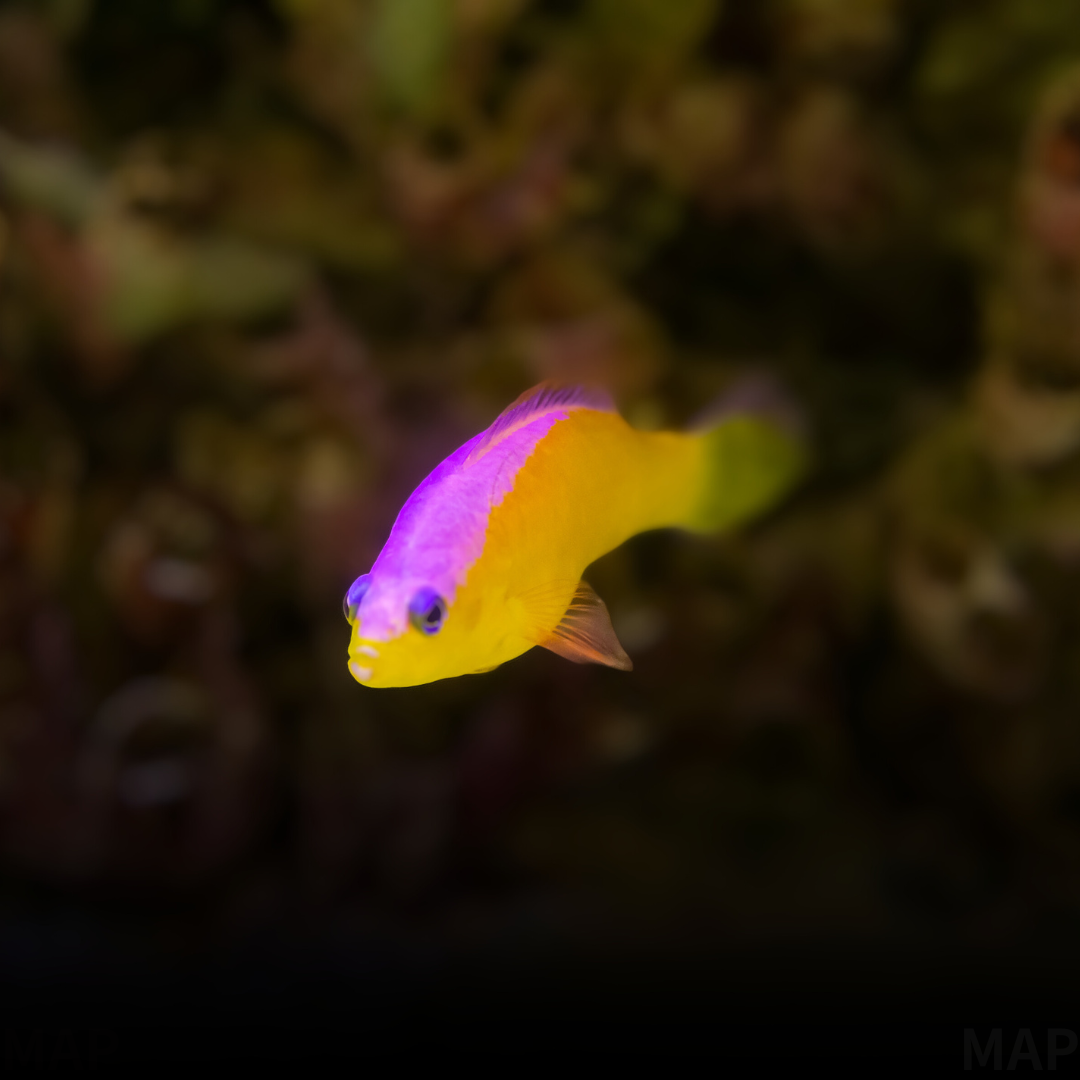
カンムリニセスズメは、目が覚めるような鮮やかなイエローのボディと、背中に美しく走るマゼンタ色のラインが特徴の小型海水魚です。その姿はまさに「王冠(ディアデマ)」を戴いたような気品に満ちていますが、性格は非常に活発で、サンゴ礁の隙間を機敏に泳ぎ回ります。丈夫で病気にも強く、人工飼料にも餌付きやすいため、海水魚飼育の入門種としても古くから愛されてきました。しかし、その愛らしい見た目とは裏腹に、自分より小さな魚やエビ、あるいは似た姿の魚に対しては非常に強気な一面を見せることもあります。彼らの持つ「双方向の性転換」という驚異的な生命の神秘を水槽内で観察できることは、アクアリストにとって大きな喜びとなるでしょう。The Diadem Dottyback (Pictichromis diadema) is a small marine fish characterized by a vibrant yellow body and a stunning magenta stripe running along its back. While its appearance is elegant, reminiscent of wearing a crown (Diadema), it is a highly active fish that darts agilely through coral reefs. Known for its hardiness, disease resistance, and ease of transitioning to prepared foods, it has long been a favorite for beginners. Despite its charming looks, it can be quite assertive toward smaller fish, shrimp, or similar-looking tank mates. Observing the wonder of their bi-directional sex change in an aquarium offers a unique window into the mysteries of marine life.
基本情報 / Basic Information
学名 / Scientific Name
Pictichromis diadema
通称 / Common Name
カンムリニセスズメDiadem Dottyback
分類 / Family
スズキ目(あるいはギンポ目)ニセスズメ科Pseudochromidae
英名 / English Name
Diadem Dottyback / Purple-top Dottyback
分布 / Distribution
中西部太平洋(マレー半島、フィリピン、ボルネオなど)Central West Pacific (Malay Peninsula, Philippines, Borneo, etc.)
最大体長 / Max Size
約6cmApprox. 6 cm (2.4 inches)
寿命 / Lifespan
約5〜7年(飼育下ではさらに長期生存の可能性あり)5-7 years (Potential for longer in captivity)
飼育環境 / Aquarium Environment
水槽サイズ / Tank Size
60cm規格水槽(約60リットル)以上を推奨。広大な縄張りを持つため、理想的には90cmスリム水槽や60cmワイド水槽(約114リットル相当)があると安心です。Minimum 60 cm standard tank (60L). Ideally, a 90 cm slim or 60 cm wide tank (approx. 114L) is recommended due to their territorial nature.
水温 / Temperature
24〜26℃(ヒーターとクーラーによる一定管理が望ましい)24-26°C (75-79°F). Stable temperature control is essential.
水質 / Water Quality
pH 8.1〜8.4、比重 1.020〜1.025の清浄な海水を維持。Maintain clean seawater with pH 8.1-8.4 and specific gravity 1.020-1.025.
レイアウト / Layout
ライブロックを複雑に組み上げ、多くの洞窟や隠れ家を用意してください。複雑な水流を作るための小型水流ポンプの設置も効果的です。Arrange live rock to create numerous caves and hiding spots. Small wave makers can help replicate their natural, dynamic environment.
注意点 / Precautions
驚くと水槽から飛び出す習性(ジャンパー)があるため、隙間のない厳重なフタが必須です。They are known jumpers; a tight-fitting lid is absolutely mandatory to prevent escape.
餌と給餌 / Feeding
餌の種類 / Diet
肉食性です。冷凍のイサザアミやブラインシュリンプ、細かく刻んだ鮮魚などを好みます。人工の海水魚用ペレットにも容易に餌付きます。Carnivorous. They enjoy frozen mysis shrimp, brine shrimp, and finely chopped seafood. They also readily accept high-quality marine pellets.
給餌のポイント / Feeding Tips
色彩の鮮やかさを維持するため、アスタキサンチンを含む甲殻類ベースの餌を織り交ぜて与えてください。不適切な食事は褪色の原因となります。To maintain their brilliant colors, offer a varied diet including crustacean-based foods rich in astaxanthin. Poor nutrition can lead to color fading.
性格と混泳 / Temperament and Tank Mates
性格 / Temperament
非常に気が強く、縄張り意識が極めて高いです。Highly territorial and can be very aggressive (Semi-aggressive to Aggressive).
混泳の相性 / Compatibility
同種や、ロイヤルグランマなど姿の似た魚との混泳は厳禁です。混泳させる場合は、本種を水槽に「一番最後」に導入してください。小型のエビは食べられてしまうため注意が必要です。Avoid housing with conspecifics or similar-looking species like Royal Grammas. They should be the last fish introduced to the tank. Small ornamental shrimp are likely to be eaten.
本来は非常に強健ですが、ストレスや水質悪化で発症します。導入時のトリートメントと、隠れ家を十分に確保してストレスを軽減させることが最大の予防です。While naturally hardy, they can succumb to disease under stress or poor water quality. Quarantine new arrivals and provide plenty of hiding spots to minimize stress.
増やし方(繁殖) / Breeding
雌雄の判別 / Sexing
外見上の違いはほとんどありませんが、一般的に雄の方がわずかに大きくなる傾向があります。Extremely difficult to distinguish visually, though males may grow slightly larger.
繁殖形態 / Reproduction
卵生。雌雄がペアを組むと岩の隙間などに産卵し、雄が献身的に卵を保護(エアレーションや清掃)します。Egg layers. Once a pair forms, they spawn in rock crevices, and the male diligently guards and aerates the egg mass.
繁殖のポイント / Breeding Tips
本種は双方向の性転換が可能なため、無作為に選んだ2匹でもペアになる確率が高いです。現在は養殖個体(CB)も多く流通しており、これらは家庭でも比較的繁殖させやすいとされています。Thanks to their bi-directional sex change capability, any two individuals are likely to form a pair. Captive-bred (CB) specimens are widely available and generally easier to breed in home aquaria.
雑学と豆知識 / Trivia and Fun Facts
1. 学名に刻まれた「王冠」の正体 / 1. The Meaning Behind the Royal Name
種小名の「diadema」は、古代の王族が身につけた布製のヘッドバンドや王冠を意味します。これは、頭部から背びれに沿って鮮やかに走るマゼンタのラインを、高貴な王冠の飾りに見立てて名付けられたものです。水槽の中でもひときわ目を引くこの「王冠」は、サンゴ礁という過酷な環境を生き抜く彼らの誇りそのものと言えるでしょう。The species name “diadema” refers to an ancient royal headband or crown. This describes the magenta stripe running from the head along the dorsal fin, resembling a regal adornment. This “crown” makes them stand out in any aquarium, symbolizing their vibrant presence in the competitive coral reef environment.
2. 驚異のサバイバル戦略「双方向の性転換」 / 2. The Amazing Bi-directional Sex Change
多くの魚は一生のうち一方通行の性転換(雌から雄など)を行いますが、ニセスズメの仲間は必要に応じて「雌から雄へ」も「雄から雌へ」も変化できる稀有な能力を持っています。広大なサンゴ礁で出会った2匹がもし同性であっても、どちらかが性別を変えることで確実に子孫を残すことができます。この柔軟な適応力が、彼らの種としての強さの秘密です。While many fish change sex in one direction, dottybacks possess the rare ability to change both from female to male and male to female as needed. If two individuals of the same sex meet on a vast reef, one can transition to ensure successful reproduction. This flexible strategy is a key secret to their survival as a species.
3. 「Diadema」検索の落とし穴 / 3. The “Diadema” Search Trap
実は海洋生物の世界では「Diadema」という名前を持つ生き物がもう一種有名です。それはカリブ海などに生息するガンガゼ(ウニ)の仲間です。学術的なデータベースで本種の病気を調べようとすると、このウニの大量死に関する論文が大量にヒットすることがあります。全く異なる生き物が同じ「王冠」の名を共有しているのは、分類学上の面白いエピソードです。In the marine world, another famous organism shares the name “Diadema”—a genus of long-spined sea urchins. Searching academic databases for this fish may lead to numerous results regarding mass die-offs of these urchins. It is a fascinating taxonomic coincidence that such different creatures share the same royal name.
4. 未来を創る「養殖個体(CB)」の普及 / 4. The Future of Captive Bred Specimens
かつて観賞魚はすべて海から採集されていましたが、カンムリニセスズメはその繁殖のしやすさから、現在では多くの養殖個体が市場に出回っています。養殖個体は野生個体に比べて、水槽という閉鎖的な環境や人工飼料に最初から慣れているため、非常に飼育しやすいのがメリットです。海を守りながらアクアリウムを楽しむ、持続可能な趣味のモデルケースと言えます。While most marine fish were once wild-caught, Diadem Dottybacks are now widely available as captive-bred (CB) specimens. CB fish are generally hardier and more accustomed to aquarium life and prepared foods from day one. They represent a sustainable model for the hobby, allowing us to enjoy aquariums while protecting natural reefs.
まとめ / Conclusion
カンムリニセスズメは、その小さな体に数億年の進化のドラマと、サンゴ礁を生き抜くための驚くべき知恵を秘めた魚です。鮮やかな色彩は水槽に彩りを与え、その気の強い性格は、観察すればするほど個性的で飽きることがありません。初心者の方でも、十分な隠れ家と厳重なフタ、そして栄養豊富な食事を用意してあげれば、長く付き合える素晴らしいパートナーになってくれるでしょう。The Diadem Dottyback carries within its small body millions of years of evolutionary drama and incredible survival wisdom. Their vivid colors brighten any tank, and their feisty temperament becomes more fascinating the more you observe them. For beginners, providing ample hiding spots, a secure lid, and a nutrient-rich diet ensures a rewarding, long-term partnership with this remarkable fish.
本種の飼育を通じて、海洋生態系の奥深さや、性転換という生命の不思議に触れてみてください。一匹の魚が持つ物語を理解したとき、あなたのアクアリウムはより一層輝きを増すはずです。この小さな「王様」が、あなたの水槽で健やかに過ごせることを心より願っております。Through keeping this species, you can experience the depths of marine ecosystems and the wonders of life’s biological flexibility. When you understand the story behind a single fish, your aquarium truly begins to shine. We hope this little “crowned” resident thrives and brings joy to your underwater world for years to come.
・Lubbock, R. and J.E. Randall, 1978. Fishes of the genus Pseudochromis (Perciformes: Pseudochromidae) from the Indo-Malayan Archipelago. Rec. West. Aust. Mus. 6(2):167-202.
・Senou, H., et al., 2004. A Checklist of Fishes from Japan. National Museum of Nature and Science (国立科学博物館附属自然教育園研究報告).
・Munday, P. L., et al. (2010). Bi-directional sex change in marine fishes. Biological Reviews of the Cambridge Philosophical Society.



 アイのアクアグッズ案内水槽のコケ掃除|道具の選び方とお掃除生体の得意・不得意道具の特徴や使い方、選ぶときのポイントをアイが紹介します。記事はコチラ →
 アイのアクアグッズ案内プレコ飼育に必要なもの|餌・流木・ろ過・隠れ家・掃除用品道具の特徴や使い方、選ぶときのポイントをアイが紹介します。記事はコチラ →



コメント