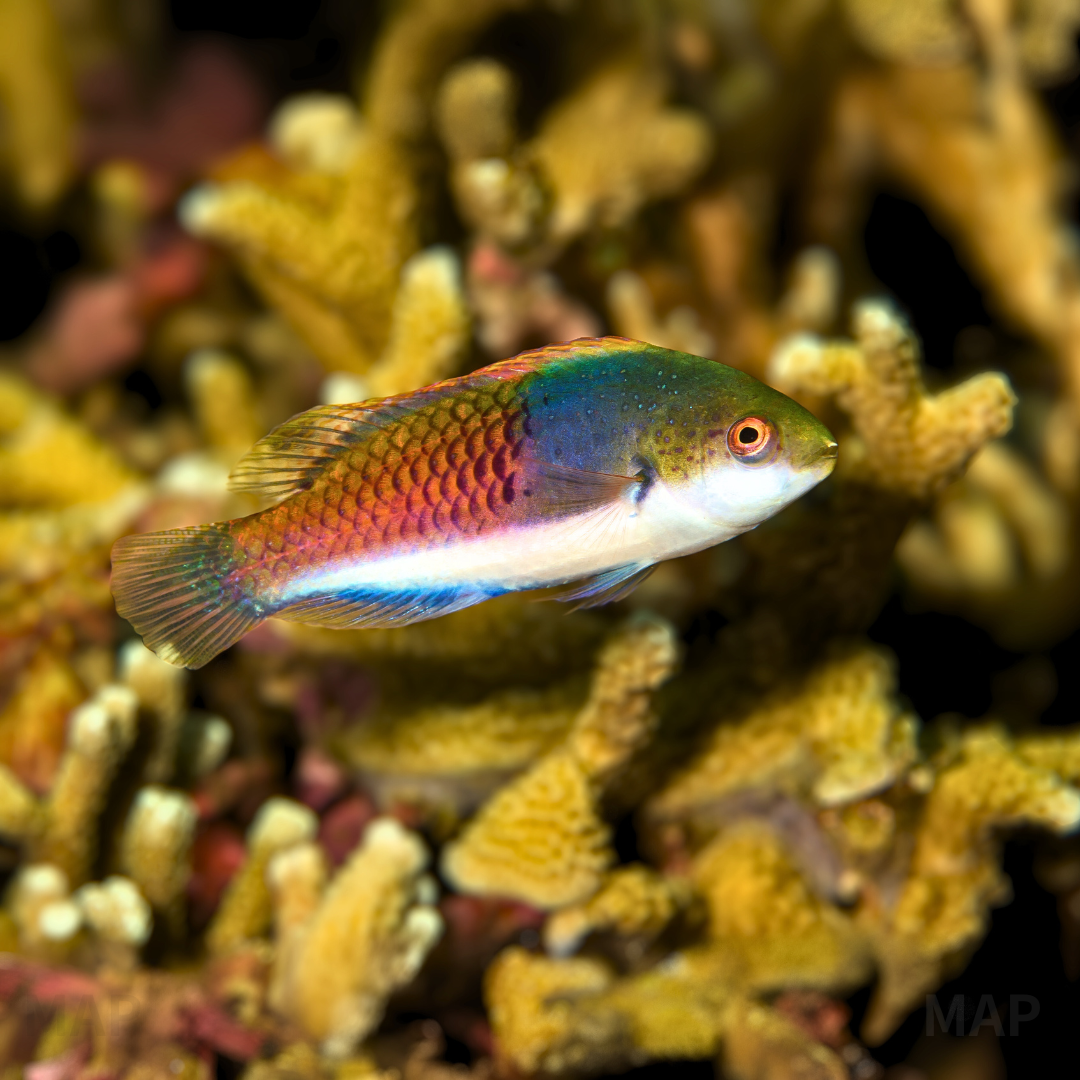
クロヘリイトヒキベラは、インド洋から太平洋のサンゴ礁域に広く分布する、イトヒキベラ属を代表する美しい海水魚です。1851年に記載された本種は、イトヒキベラ類の中で最初に科学的に認知された種としても知られています。成熟した雄が見せるオレンジ、黄色、バラ色の複雑なグラデーションと、背鰭を縁取る黒い帯のコントラストは、まさに動く宝石と呼ぶにふさわしい華やかさを持ちます。性格は比較的温和ですが、遊泳力が非常に高く、広々とした空間を好むのが特徴です。サンゴに害を及ぼさないリーフセーフな性質から、リーフアクアリウムの主役やアクセントとして世界中の愛好家から親しまれています。The Blueside Wrasse is a stunning marine fish widely distributed across coral reefs from the Indian Ocean to the Pacific. Described in 1851, it is famous as the first Cirrhilabrus species scientifically recognized. Mature males exhibit a complex gradient of orange, yellow, and rosy pink, contrasted with a distinct black margin on their fins, earning them a reputation as “living jewels.” While generally docile, they are active swimmers that require ample open space. Being reef-safe and non-destructive to corals, they are a popular choice as centerpieces or accents in reef aquariums worldwide.
基本情報 / Basic Information
学名 / Scientific Name
Cirrhilabrus cyanopleura
通称 / Common Name
クロヘリイトヒキベラBlueside Wrasse
分類 / Family
スズキ目 ベラ科 イトヒキベラ属Labridae, Genus Cirrhilabrus
英名 / English Name
Blueside wrasse, Blue-sided fairy wrasse
分布 / Distribution
インド洋東部から太平洋西部(インドネシア、フィリピン、オーストラリア、日本近海など)Eastern Indian Ocean to Western Pacific (Indonesia, Philippines, Australia, Southern Japan, etc.)
最大体長 / Max Size
約12cmから15cmApprox. 12cm to 15cm
寿命 / Lifespan
約3年から5年(飼育下)Approx. 3 to 5 years (in captivity)
飼育環境 / Aquarium Environment
水槽サイズ / Tank Size
120cm規格水槽(約400L)以上を強く推奨。活発な遊泳性を考慮し、十分な直線距離が必要です。A 120cm standard tank (approx. 400L) or larger is strongly recommended to accommodate their active swimming behavior.
水温 / Temperature
24℃から26℃(安定した水温維持が重要です)24°C to 26°C (maintaining a stable temperature is crucial)
水質 / Water Quality
pH 8.1から8.4の弱アルカリ性。高溶存酸素状態を維持してください。Slightly alkaline pH (8.1 to 8.4). Maintain high dissolved oxygen levels.
レイアウト / Layout
ライブロックで多くのアーチや洞窟を作り、夜間の隠れ家を提供してください。中層には広い遊泳スペースを確保します。Provide numerous arches and caves using live rock for nighttime shelter, while keeping the middle water column open for swimming.
注意点 / Precautions
極めて飛び出しやすいため、水槽のフタは隙間なく完全に密閉する必要があります。導入初期のストレスに非常に敏感です。A tight-fitting lid is mandatory as they are prone to jumping. They are highly sensitive to stress during the initial acclimation period.
餌と給餌 / Feeding
餌の種類 / Diet
動物性プランクトン食です。冷凍のイサザアミ、ブラインシュリンプ、コペポーダに加え、色揚げ効果のある人工飼料をバランスよく与えます。Primarily planktivorous. Feed a balanced diet of frozen mysis shrimp, brine shrimp, and copepods, along with color-enhancing pellets or flakes.
給餌のポイント / Feeding Tips
一度に多く与えるよりも、少量を1日3回程度に分けて与える「少量頻回給餌」が、高い代謝を維持するのに理想的です。Feeding small amounts multiple times a day (3 times daily) is ideal to support their high metabolism rather than one large feeding.
性格と混泳 / Temperament and Tank Mates
性格 / Temperament
基本的には温和ですが、同属の雄に対しては激しい縄張り意識を持ちます。Generally docile, but can be highly territorial toward other males of the same genus.
混泳の相性 / Compatibility
他種(ヤッコ、ハギ等)とは良好。同種間では雄1匹の単独飼育が推奨されます。小型のエビは捕食対象になる可能性があるため注意が必要です。Good with other species like angelfish or tangs. It is best to keep only one male per tank. Use caution with small ornamental shrimp as they may be preyed upon.
病気と対策 / Diseases and Prevention
かかりやすい病気 / Common Diseases
白点病、ハダムシ(吸虫症)。輸送ストレス後の導入初期に発症しやすい傾向があります。Marine Ich (Cryptocaryon irritans) and skin flukes. They are most vulnerable during the initial introduction phase due to shipping stress.
対策と予防 / Prevention
導入前の淡水浴が極めて有効です。真水のpHを重曹などで飼育水と完全に一致させ、3分から5分間の薬浴を行います。A freshwater dip before introduction is highly effective. Ensure the pH of the freshwater is adjusted to match the tank water exactly before the 3-5 minute dip.
増やし方(繁殖) / Breeding
雌雄の判別 / Sexing
性的二形が顕著です。雄は極彩色で、雌は赤褐色を帯びた地味な体色に腹部が白く、胸鰭付近に斜めの暗色帯があります。Exhibits strong sexual dichromatism. Males are brilliantly colored, while females are more muted reddish-brown with white bellies and dark diagonal bands.
繁殖形態 / Reproduction
雌性先熟の雌雄同体です。自然界では1匹の雄が複数の雌を従えるハレムを形成し、夕方に水柱へ昇って産卵を行います。Protogynous hermaphrodites. In nature, they form harems with one dominant male, performing spawning ascents into the water column at dusk.
繁殖のポイント / Breeding Tips
飼育下での産卵成功例は稀ですが、広い水槽と適切な日照時間の再現、そして栄養価の高い生餌の供給が鍵となります。Spawning in captivity is rare, but success depends on a large tank, accurate lighting cycles, and high-quality live food.
雑学と豆知識 / Trivia and Fun Facts
1. イトヒキベラ研究の「原点」としての歴史 / 1. A Historical Benchmark for Fairy Wrasses
クロヘリイトヒキベラの物語は、1851年に高名な博物学者ピーター・ブリーカーがインドネシアの標本を記載したことから始まります。彼は当初Cheilinoides属として記載しましたが、その2年後、日本産のニシキイトヒキベラなどを記載する際に新属「Cirrhilabrus(イトヒキベラ属)」を設立。本種をそこへ統合しました。つまり、現代アクアリウムで愛される多種多様なイトヒキベラ類の中で、本種こそが科学の光を最初に浴びた「記念碑的な種」なのです。The story of the Blueside Wrasse began in 1851 when Pieter Bleeker described a specimen from Indonesia. Initially placed in the genus Cheilinoides, it was reassigned to the new genus Cirrhilabrus two years later. Among the diverse fairy wrasses cherished in the hobby today, this species stands as the monumental “first” to be scientifically recognized.
2. 「リュウキュウイトヒキベラ」を巡る分類学の旅 / 2. The Taxonomic Journey of the Yellow-Flanked Variant
かつて、胸鰭の後ろに鮮やかな黄色い斑紋(パッチ)を持つ個体は「リュウキュウイトヒキベラ」という独立した種として扱われていました。しかし、その後のフィールド観察により、同じ海域でパッチを持つ個体と持たない個体が混泳し、さらにその中間的な特徴を持つ個体も多数発見されました。現在ではこれらは遺伝的に同一の種であると結論付けられ、リュウキュウイトヒキベラの名はクロヘリイトヒキベラのシノニム(同物異名)として、その歴史を一つに統合しています。Once, individuals with a yellow patch behind their pectoral fins were treated as a distinct species, the Yellow-flanked Fairy Wrasse. However, field observations revealed that both variants coexist and interbreed, with many intermediate forms. Today, they are considered a single species, and the name “ryukyuensis” remains as a synonym, unifying their history into one species.
3. 色彩を維持するための「社会的刺激」 / 3. Social Stimulation for Maintaining Vibrant Colors
水槽で雄を単独飼育していると、自慢の極彩色が徐々に色褪せてしまうことがあります。これは栄養不足ではなく「ライバルや雌がいない平和すぎる環境」が原因かもしれません。自然界では常に雌へのアピールや他魚への威嚇を通じてホルモンが活性化され、その輝きを維持しています。熟練のアクアリストの中には、あえて体色の異なる近縁種を慎重に混泳させ、適度な緊張感を与えることで、魚本来の美しさを引き出し続けるという高度な工夫を行う方もいます。In home aquariums, a lone male’s vibrant colors may fade over time. This is often due to a lack of social stimulation. In nature, hormonal activity driven by courting females or warding off rivals maintains their brilliance. Some advanced hobbyists carefully introduce different but compatible fairy wrasses to provide enough social interaction to keep their fish looking their best.
4. 日本の海に見られる温暖化の足音 / 4. Echoes of Climate Change in Japanese Waters
かつて伊豆半島などの温帯域では、本種は冬の寒さを越えられない「死滅回遊魚」の幼魚として知られていました。しかし近年の海水温上昇に伴い、日本の各地で立派に成長した雄の成魚や、産卵行動を思わせるペアが観察されるようになっています。彼らの分布域が北上し、日本の温帯沿岸に定着しつつあるという事実は、ダイバーたちの目を通じて、地球規模の環境変化を私たちに伝える静かなメッセージとなっているのです。In temperate regions like the Izu Peninsula, this species was once known only as seasonal juveniles unable to survive the winter. However, with rising sea temperatures, mature males and spawning pairs are now observed. Their northward expansion and establishment in Japanese waters serve as a silent yet clear biological indicator of global environmental shifts.
まとめ / Conclusion
クロヘリイトヒキベラは、その歴史的な価値と圧倒的な色彩美を兼ね備えた、海水魚飼育の醍醐味を凝縮したような魚です。導入初期の検疫や、飛び出し防止のための徹底した水槽管理など、飼育者には細やかな配慮が求められますが、それに応えて広々とした水槽を縦横無尽に泳ぎ回る姿は、何物にも代えがたい感動を与えてくれます。The Blueside Wrasse is a species that embodies the true joy of marine fish keeping, combining historical significance with breathtaking beauty. While it demands careful attention—particularly regarding initial quarantine and strict jump-proofing—the sight of a healthy individual gliding through a spacious reef tank offers an unparalleled sense of satisfaction for any dedicated aquarist.
サンゴとの調和も素晴らしく、あなたのリーフアクアリウムに躍動感あふれる色彩の物語を添えてくれることでしょう。適切な環境を整え、この「極彩色の原点」との生活をぜひ楽しんでください。Its harmony with corals is exceptional, adding a dynamic story of color to your reef aquarium. By providing the right environment, you can truly enjoy the presence of this colorful pioneer in the world of fairy wrasses.
・Bleeker, P. (1851). Bijdrage tot de kennis der ichthyologische fauna van Celebes, met beschrijving van eenige nieuwe soorten van visschen. Natuurkundig Tijdschrift voor Nederlandsch Indië, 2(1), 209-224.
2. 専門図鑑・書籍(Reference Books)
・中坊 徹次 編. (2013). 日本産魚類検索 全種の同定 第3版. 東海大学出版部.
・Kuiter, R. H. (2002). Fairy and Rainbow Wrasses and their Relatives: A Comprehensive Guide to Selected Labrids. TMC Publishing.
・Allen, G. R., & Erdmann, M. V. (2012). Reef Fishes of the East Indies. Volumes I-III. Tropical Reef Research.
3. Webデータベース(Web Databases)
・Froese, R. and D. Pauly. Editors. (2024). FishBase. World Wide Web electronic publication. Cirrhilabrus cyanopleura (Bleeker, 1851). https://www.fishbase.se/summary/Cirrhilabrus-cyanopleura.html (Accessed on April 23, 2026).
・IUCN. (2010). Cirrhilabrus cyanopleura. The IUCN Red List of Threatened Species 2010: e.T187515A8555621. https://www.iucnredlist.org/species/187515/8555621 (Accessed on April 23, 2026).
・Eschmeyer’s Catalog of Fishes. (2024). Cirrhilabrus cyanopleura. California Academy of Sciences. https://researcharchive.calacademy.org/research/ichthyology/catalog/fishcatmain.asp (Accessed on April 23, 2026).



 アイのアクアグッズ案内水槽ライトの選び方|魚の見え方・水草・海水で選ぶおすすめ照明道具の特徴や使い方、選ぶときのポイントをアイが紹介します。記事はコチラ →
 アイのアクアグッズ案内旅行中、お魚のごはんはどうする? 自動給餌器・使える餌・スマート水槽の選び方旅行中の魚の餌やりを助ける自動給餌器を、アイとコタロウが紹介。時間指定、おかわり給餌、対応するフレークや顆粒、設置台、スマホ管理、一体型水槽、留守番フードまで、使いどころと選び方を案内します。記事はコチラ →
 アイのアクアグッズ案内マジックリーフ物語|一枚の葉がアクアリウム用品になるまで道具の特徴や使い方、選ぶときのポイントをアイが紹介します。記事はコチラ →
 アイのアクアグッズ案内水槽のろ材の選び方|ウール・リング・活性炭の違いとおすすめ商品フィルターの中の綿や石は何をしている? アイとコタロウが、ウール・スポンジ・セラミック・焼結ガラス・活性炭・ゼオライトを比較。機種との相性、入れ方、洗い方と交換まで商品とともに紹介します。記事はコチラ →



コメント