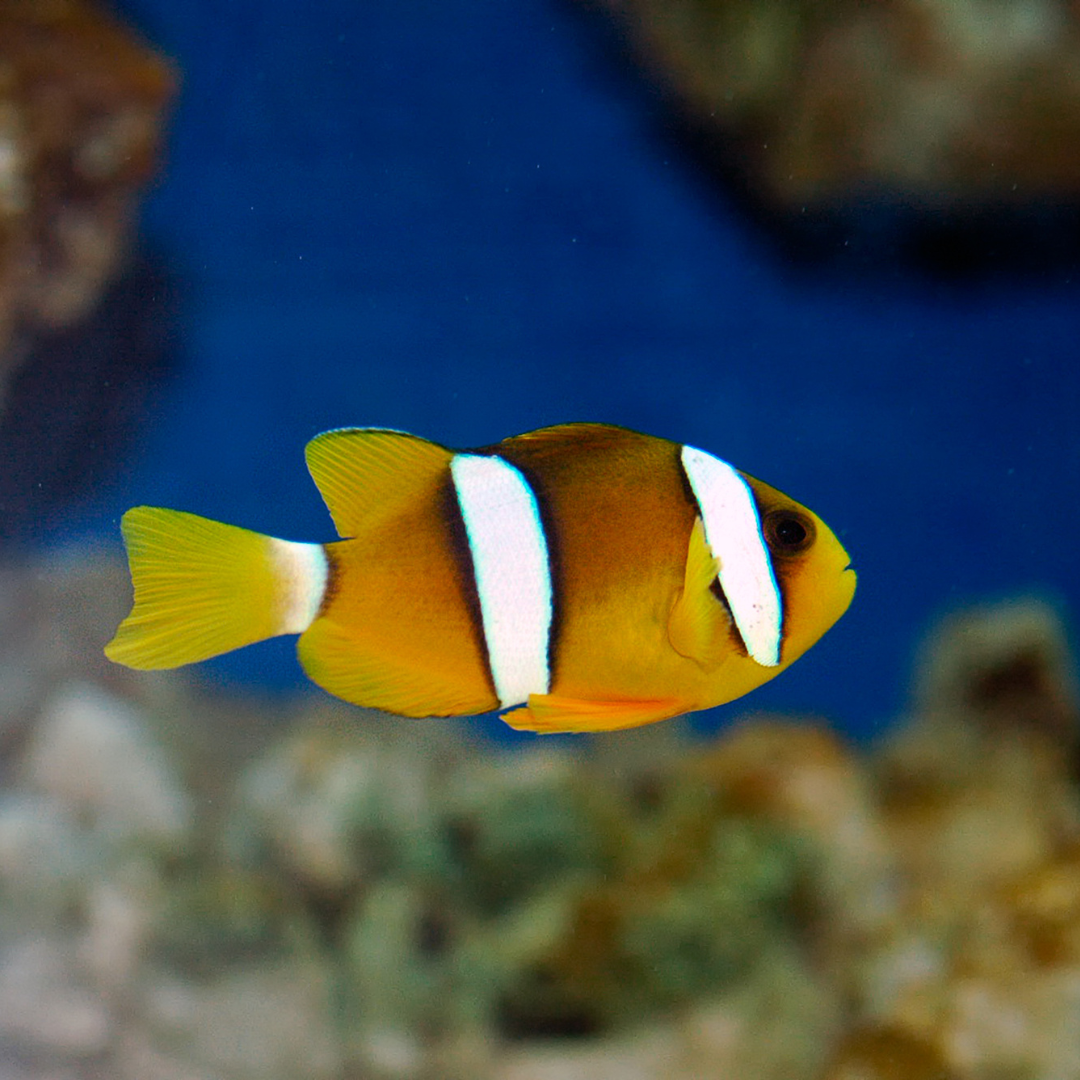
クマノミ(Amphiprion clarkii)は、インド太平洋のサンゴ礁に広く分布するスズメダイ科の魚類です。日本国内では温帯から亜熱帯にかけて最も一般的に見られるクマノミの仲間であり、南日本沿岸などで単にクマノミと呼ぶ場合は本種を指します。鮮やかな3本の白い横帯が特徴で、イソギンチャクとの絶対的な相利共生を営むことで知られています。非常に強健で環境適応能力が高いため、海水魚飼育の入門種として定評がありますが、成長に伴い強くなる縄張り意識や、雄性先熟に基づく柔軟な性転換システムなど、生物学的にも非常に奥深い側面を数多く持っています。Clark’s Anemonefish (Amphiprion clarkii) is a species of damselfish widely distributed across the coral reefs of the Indo-Pacific. In Japan, it is the most common anemonefish found from temperate to subtropical waters, particularly along the southern coasts. Characterized by three vivid white bands, it is well-known for its obligate mutualism with sea anemones. While it is highly hardy and adaptable, making it a staple choice for marine aquarium beginners, it also possesses deep biological traits such as increasing territoriality and a flexible protandrous sex-change system.
インド洋から西太平洋(日本近海、台湾、オーストラリア北部、ペルシャ湾など)Indo-West Pacific (Japan, Taiwan, Northern Australia, Persian Gulf, etc.)
最大体長 / Max Size
約15cm(飼育下では10cm前後が多い)Approx. 15cm (often around 10cm in captivity)
寿命 / Lifespan
10年以上(適切な環境では15年以上の記録もあり)10+ years (records of over 15 years in optimal environments)
飼育環境 / Aquarium Environment
水槽サイズ / Tank Size
60cm規格水槽(約60リットル)以上を推奨60cm standard tank (approx. 60L) or larger recommended
水温 / Temperature
24度〜28度(安定した温度管理が重要)24-28 degrees Celsius (Stable temperature control is essential)
水質 / Water Quality
比重 1.020〜1.025、pH 8.1〜8.4、アンモニアや亜硝酸は検出されない環境Specific Gravity 1.020-1.025, pH 8.1-8.4, zero ammonia and nitrite
レイアウト / Layout
ライブロックで隠れ家を作り、十分な遊泳スペースを確保する。Create hiding spots with live rock and ensure plenty of swimming space.
注意点 / Precautions
特にワイルド個体は導入時のクマノミ病(トリコディナ症)に注意し、検疫を行うこと。Pay close attention to Brooklynella (clownfish disease) especially in wild-caught specimens; quarantine is essential.
餌と給餌 / Feeding
餌の種類 / Diet
雑食性。人工飼料(ペレット・フレーク)、冷凍コペポーダ、イサザアミなど。Omnivorous. Artificial food (pellets/flakes), frozen copepods, mysis shrimp, etc.
給餌のポイント / Feeding Tips
1日2〜3回、数分で食べきる量を与える。人工繁殖(CB)個体は餌付きが非常に良い。Feed 2-3 times a day in amounts they can finish in a few minutes. Captive-bred (CB) specimens are very easy to feed.
性格と混泳 / Temperament and Tank Mates
性格 / Temperament
比較的強健。自身の縄張り(特に宿主周辺)に対しては非常に攻撃的になる。Hardy. Can become very aggressive around their territory, especially near their host.
混泳の相性 / Compatibility
1つの水槽に1ペアが基本。ハゼ類やベラ類など生活圏が異なる魚種とは混泳しやすい。One pair per tank is the standard. Compatible with fish like gobies and wrasses that occupy different niches.
新規導入時の徹底した検疫と、水質の安定、殺菌灯の導入などが有効。Thorough quarantine of new arrivals, stabilizing water quality, and using UV sterilizers are effective.
増やし方(繁殖) / Breeding
雌雄の判別 / Sexing
ペアのうち大きい方がメス、小さい方がオスです。地域変異もありますが、多くの場合メスは尾鰭が白く、オスは黄色みを帯びる傾向があります。The larger of the pair is female, the smaller is male. While varying by region, females often have white tails and males tend toward yellowish.
繁殖形態 / Reproduction
雄性先熟の雌雄同体。岩肌を掃除して産卵し、オスが孵化まで保護します。Protandrous hermaphrodite. Eggs are laid on cleaned rocks and guarded by the male until hatching.
繁殖のポイント / Breeding Tips
高頻度な給餌で親魚を仕上げます。孵化後の稚魚には、初期餌料としてシオミズツボワムシが必須です。Condition parents with frequent feeding. Rotifers are essential as initial food for larvae after hatching.
雑学と豆知識 / Trivia and Fun Facts
1. 命名の歴史とシーボルトの「日本動物誌」 / 1. Historical Naming and “Fauna Japonica”
クマノミの学名は、19世紀にスリランカの魚類を記録した版画家ジョン・クラークへの献名として名付けられました。日本ではさらに深い歴史があり、江戸時代に出島へ滞在したシーボルトが収集した標本に基づき、1840年代に刊行された記念碑的著作「日本動物誌(Fauna Japonica)」において「Amphiprion japonicus」の名で新種記載された経緯を持ちます。現在は世界的にAmphiprion clarkiiのシノニム(同種異名)とされていますが、日本独自の自然史を繋ぐ象徴的な存在です。The scientific name of this species honors John Clark, a 19th-century engraver of Sri Lankan fishes. In Japan, it has deep roots: based on specimens collected by Philipp Franz von Siebold, it was described as a new species, “Amphiprion japonicus,” in the monumental “Fauna Japonica” published in the 1840s. While now considered a synonym of Amphiprion clarkii, it remains a symbolic entity in Japan’s natural history.
2. 適応戦略としての3つの生活史軌跡 / 2. Three Life Trajectories as an Adaptive Strategy
クマノミの性転換は、環境に応じて極めて柔軟に行われます。近年の研究では、社会的環境に基づき「通常経路(オスからメスへ)」「オス段階をスキップして直接メスとして成熟する経路」「未成熟のまま留まる経路」の3つの選択肢を使い分けていることが示唆されています。例えば、上位個体が不在の空白のイソギンチャクに辿り着いた幼魚は、オスとしての機能を介さず即座にメスへと成熟することで、繁殖機会の損失を最小限に抑える高度な適応能力を備えています。Sex change in Clark’s anemonefish is highly flexible. Recent studies suggest they use three life trajectories based on social cues: the normal path (male to female), skipping the functional male stage to mature directly as a female, or remaining immature. For example, a juvenile arriving at a vacant anemone can bypass the male stage to mature as a female immediately, an advanced adaptation to minimize loss of reproductive opportunities.
3. 究極のジェネラリスト:宿主を選ばない共生能力 / 3. The Ultimate Generalist: Versatile Symbiosis
多くのクマノミ類が特定のイソギンチャクとしか共生できないスペシャリストであるのに対し、本種は自然界で共生が確認されている10種類すべてのイソギンチャクとパートナーを組むことができる究極のジェネラリストです。この並外れた適応力こそが、インド洋から日本近海までという圧倒的な広範囲に勢力を広げることができた最大の理由と考えられています。時には宿主の毒性の強さに応じて、自身の体色を漆黒に染める黒化(メラニズム)を見せることもあります。While many anemonefishes are specialists, this species is the ultimate generalist, partnering with all ten host anemone species found in nature. This extraordinary adaptability is considered the primary reason for its vast range from the Indo-Pacific to Japan. It may even exhibit melanism, turning jet black in response to the toxicity or characteristics of its host.
クマノミの繁殖力は高く、特に飼育環境や栄養状態が極めて良好なペアにおいて「重複産卵」という現象が観察されることがあります。通常は一つの卵塊が孵化した後に次の産卵を行いますが、高密度のペアでは、孵化直前の卵がまだ基質に残っている段階で、その隣にすでに次の新しい卵塊を産み付けることがあります。これは、サンゴ礁や安定した水槽環境という限られたリソースの中で、いかに効率よく次世代を送り出そうとしているかを示す生態的特徴です。Clark’s anemonefish are highly prolific; particularly in pairs with optimal nutrition and environment, “overlapping clutches” can be observed. While they typically wait for one batch to hatch, high-performance pairs may lay a new clutch next to silver eggs that are just about to hatch. This ecological trait demonstrates their efficiency in producing the next generation within stable environments.
まとめ / Conclusion
クマノミは、その鮮やかな色彩と愛らしい共生関係から海水魚飼育のシンボルといえる存在です。かつては天然個体の病気リスクが課題でしたが、現在は国内でも人工繁殖(CB)個体が安定して流通しており、環境負荷を抑えつつ、初心者の方でも安心して長期飼育を楽しめる時代になっています。より深い生態理解のためには、PubMed等でAmphiprion clarkii sex changeに関する学術論文を参照することも推奨されます。Clark’s Anemonefish is a symbol of marine aquarium keeping due to its vibrant colors and endearing symbiosis. While disease risks in wild specimens were once a hurdle, stable availability of captive-bred (CB) individuals in Japan now allows for sustainable and beginner-friendly long-term care. For deeper ecological understanding, referring to academic papers via PubMed regarding “Amphiprion clarkii sex change” is highly recommended.
単なる観賞魚としてだけでなく、シーボルトの時代から続く歴史や、複雑な社会システム、そして驚異的な適応能力を知ることで、水槽の中の小さな命がより一層愛おしく感じられるはずです。彼らの豊かな表情とダイナミックな生活史を、ぜひご自身の水槽で観察してみてください。By understanding their history since Siebold’s era, their complex social systems, and their incredible adaptability, one can find deeper appreciation for the small life within the tank. We invite you to observe their rich expressions and dynamic life histories in your own aquarium.
・
Temminck, C. J., & Schlegel, H. (1843). Fauna Japonica, sive Descriptio animalium, quae in itinere per Japoniam… suscepto, annis 1823-1830 collegit, notis, observationibus et adumbrationibus illustravit Ph. Fr. de Siebold. Pisces. Lugduni Batavorum.
・
Hattori, A. (2012). Socially controlled growth and alternative life-history strategies in the protandrous anemonefish Amphiprion clarkii. Journal of Ethology, 30(1), 175-182.
・
Fautin, D. G., & Allen, G. R. (1992). Field Guide to Anemonefishes and Their Host Sea Anemones. Western Australian Museum.
・
Moyer, J. T. (1980). Influence of temperate waters on the behavior of the social units of the anemonefish Amphiprion clarkii at Miyake-jima, Japan. Japanese Journal of Ichthyology, 27(3), 190-202.



 アイのアクアグッズ案内アカヒレの仲間に合わせる飼育用品|無加温・混泳・繁殖の水槽とろ過道具の特徴や使い方、選ぶときのポイントをアイが紹介します。記事はコチラ →
 アイのアクアグッズ案内バルブの仲間に合わせる飼育用品|チェリーバルブ・スマトラ・中型種の水槽とろ過道具の特徴や使い方、選ぶときのポイントをアイが紹介します。記事はコチラ →
 アイのアクアグッズ案内水槽のろ材の選び方|ウール・リング・活性炭の違いとおすすめ商品フィルターの中の綿や石は何をしている? アイとコタロウが、ウール・スポンジ・セラミック・焼結ガラス・活性炭・ゼオライトを比較。機種との相性、入れ方、洗い方と交換まで商品とともに紹介します。記事はコチラ →
 アイのアクアグッズ案内エーハイムはおもちゃから始まった? 小さな噴水から水槽へ、アイとコタロウの探訪道具の特徴や使い方、選ぶときのポイントをアイが紹介します。記事はコチラ →



コメント