

解説 / Description
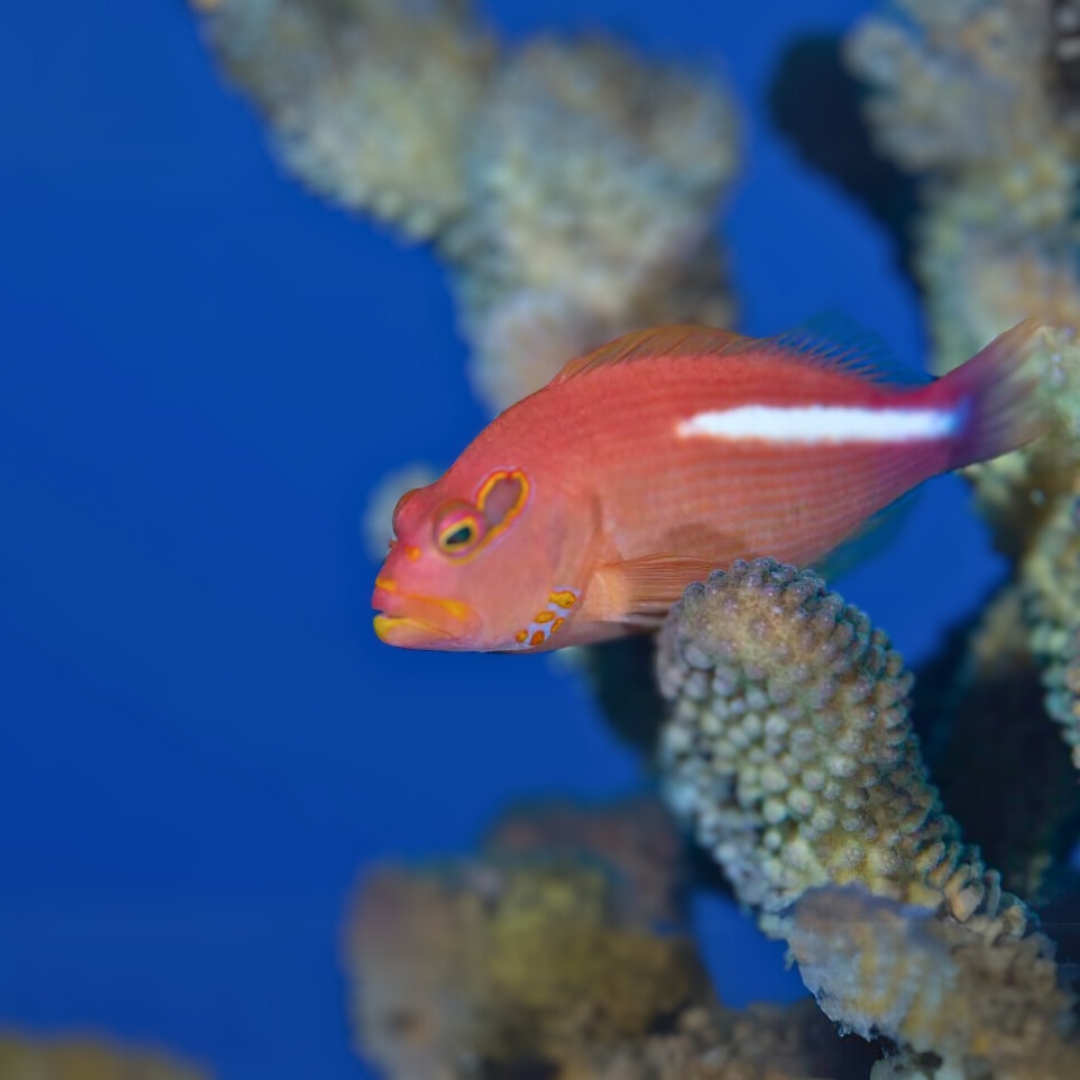
メガネゴンベは、眼の後ろに伸びる馬蹄形の模様が印象的なゴンベ科の海水魚です。枝状サンゴやライブロックの上にちょこんと止まり、周囲を見渡すように待機する姿が魅力で、英名のHawkfishも「高い場所から獲物を狙うタカ」のような行動に由来します。丈夫で人工飼料にも慣れやすい一方、飛び出し事故、小型甲殻類への捕食、同種や近縁種への縄張り意識には注意が必要です。 The arc-eye hawkfish is a marine hawkfish recognized by the horseshoe-shaped marking that curves behind the eye. It often perches on branching corals or live rock, watching its surroundings from a fixed vantage point; the name “hawkfish” reflects this raptor-like ambush behavior. It is generally hardy and often adapts well to prepared foods, but aquarists should take jumping, predation on small crustaceans, and territorial behavior toward conspecifics and related hawkfish seriously.
基本情報 / Basic Information
| 学名 / Scientific Name | Paracirrhites arcatus |
|---|---|
| 通称 / Common Name | メガネゴンベ、アークアイホークフィッシュArc-eye hawkfish, ringeye hawkfish, horseshoe hawkfish, whiteline hawkfish |
| 分類 / Family | ゴンベ科 ホシゴンベ属。分類体系によって目の扱いは異なり、近年のFishBaseではCentrarchiformes、国内の一般的な解説ではスズキ目として扱われることがあります。Family Cirrhitidae, genus Paracirrhites. Order-level placement differs among classification systems; FishBase currently lists it under Centrarchiformes, while many Japanese aquarium references still treat hawkfishes under Perciformes in a broad traditional sense. |
| 英名 / English Name | Arc-eye Hawkfish |
| 分布 / Distribution | インド太平洋に広く分布し、東アフリカからハワイ諸島・ライン諸島・マンガレヴァ諸島周辺、北は南日本、南はオーストラリアやラパ方面まで記録されています。Widely distributed in the Indo-Pacific, from East Africa to the Hawaiian, Line, and Mangaréva islands, north to southern Japan, and south to Australia and Rapa. |
| 最大体長 / Max Size | 最大で全長約20cmの記録があります。観賞魚として見かける個体は、これより小さいサイズで流通することが多いです。Recorded up to about 20 cm total length. Aquarium specimens are often offered at smaller sizes. |
| 寿命 / Lifespan | 明確な公的データは限られますが、安定した海水環境では数年以上の長期飼育を目指せます。飼育下の目安としては5年前後から、良好な環境ではさらに長期の維持が期待されます。Public lifespan data are limited, but in a stable marine aquarium it can be maintained for multiple years. A practical husbandry expectation is around five years or longer under good conditions. |
飼育環境 / Aquarium Environment
| 水槽サイズ / Tank Size | 単独飼育の小型個体なら45cm規格水槽から検討できますが、長期飼育や混泳を考えるなら60cm規格水槽以上、できれば90cm規格水槽程度の底面積があると安心です。中層を泳ぎ回る魚ではありませんが、縄張りと止まり場所を確保できるレイアウトが重要です。A small individual may be considered for a 45 cm standard tank, but for long-term care or community setups, a 60 cm standard tank or larger is preferable, and a 90 cm standard tank offers more comfortable territory and perching space. It is not a constant open-water swimmer, but the footprint and layout matter. |
|---|---|
| 水温 / Temperature | 24〜27℃前後を目安にします。急な水温変化は避け、夏場の高水温と冬場の低水温に注意してください。 Aim for about 24–27°C. Avoid sudden changes, and pay attention to overheating in summer and chilling in winter. |
| 水質 / Water Quality | 一般的なサンゴ礁性海水魚に準じ、比重は1.023〜1.026前後、pHは8.1〜8.4前後を目安に安定させます。硝酸塩の蓄積や急な比重変化を避け、プロテインスキマーや十分なろ過で酸素量を保つと安定しやすくなります。Maintain stable reef-style marine conditions, with specific gravity around 1.023–1.026 and pH around 8.1–8.4. Avoid nitrate accumulation and sudden salinity shifts; protein skimming and adequate filtration help maintain oxygen and stability. |
| レイアウト / Layout | ライブロックや枝状の人工サンゴを使い、水槽内を見渡せる止まり場所を複数作ります。野生では枝状サンゴの頭部や枝間にいることが多いため、隠れ家と見張り台を両方用意すると落ち着きやすくなります。Use live rock and branching coral-like structures to create several lookout perches. In the wild, it is often associated with the heads and branches of small branching corals, so both shelter and elevated perches help it settle. |
| 注意点 / Precautions | 飛び出し事故が大きなリスクです。驚いたときに水面方向へ突進することがあるため、フタやメッシュカバーで隙間を減らしてください。サンゴそのものを食害する魚ではありませんが、よく止まる場所のLPSや繊細なSPSはポリプを閉じることがあるため、サンゴの反応を見ながら配置を調整します。Jumping is a major risk. When startled, it may launch upward, so use a tight lid or mesh cover. It does not normally eat coral tissue, but repeated perching can bother some fleshy LPS or delicate SPS corals, so adjust coral placement if polyps remain closed. |
餌と給餌 / Feeding
| 餌の種類 / Diet | 肉食性が強く、野生ではエビ類・カニ類などの甲殻類や小魚を主に捕食します。飼育下では海水魚用の粒餌、冷凍イサザアミ、ブラインシュリンプ、細かく刻んだ魚介類などを組み合わせるとよいでしょう。It is strongly carnivorous and naturally feeds mainly on shrimps, crabs, other crustaceans, and small fishes. In aquaria, use marine pellets, frozen mysids, brine shrimp, and finely chopped seafood as part of a varied diet. |
|---|---|
| 給餌のポイント / Feeding Tips | 餌付きは比較的よい魚ですが、導入直後は冷凍餌から始めると反応を引き出しやすいです。慣れてきたら人工飼料へ移行し、1日1〜2回を目安に、食べ残しが出ない量を与えます。大食いになりやすいため、肥満と水質悪化には注意してください。It usually feeds readily, but newly introduced individuals may respond best to frozen foods first. Once settled, transition to prepared foods and feed modest portions once or twice daily. Avoid overfeeding, as excess food can quickly degrade water quality. |
性格と混泳 / Temperament and Tank Mates
| 性格 / Temperament | 基本的には単独で止まり場所を守る、縄張り意識のある待ち伏せ型の魚です。水槽内を常に泳ぎ回るタイプではありませんが、自分の周囲へ近づく魚には強く反応することがあります。It is a territorial, ambush-style fish that usually holds a favored perch. It is not a constant swimmer, but it may react strongly to fish that approach its chosen area. |
|---|---|
| 混泳の相性 / Compatibility | 同種や近縁のゴンベ類との混泳は避けるのが無難です。中層を泳ぐやや大きめの魚とは比較的合わせやすい一方、小型のハゼ類、弱い底生魚、口に入るサイズのエビやカニは攻撃や捕食の対象になる可能性があります。スカンクシュリンプなど大型のエビでも、個体差や脱皮直後のリスクを考慮してください。Avoid keeping it with conspecifics or closely related hawkfish unless there is a well-established compatible pair. It is often easier to keep with somewhat larger midwater fish, but tiny gobies, timid bottom dwellers, and shrimp or crabs small enough to be swallowed may be harassed or eaten. Even larger cleaner shrimp carry some risk, especially after molting. |
病気と対策 / Diseases and Prevention
| かかりやすい病気 / Common Diseases | 本種だけに特別多い病気は知られていませんが、海水魚一般と同じく白点病、ウーディニウム症、細菌性の皮膚トラブルなどには注意が必要です。輸送後や導入直後はストレスで発症しやすくなります。No disease uniquely associated with this species is commonly emphasized, but like other marine fishes it can be affected by marine ich, velvet, and bacterial skin problems. Stress after shipping or introduction increases risk. |
|---|---|
| 対策と予防 / Prevention | 購入後は水温と比重を丁寧に合わせ、輸送水を本水槽へ入れないようにします。可能であれば検疫水槽で状態を確認し、食欲、呼吸、体表の白点や擦れを観察してください。水質の急変を避け、隠れ家を確保することが予防の基本です。Acclimate temperature and salinity carefully after purchase, and avoid adding shipping water to the display tank. Quarantine is recommended when possible; observe appetite, breathing, white spots, and skin damage. Stable water quality and secure shelter are the foundation of prevention. |
増やし方(繁殖) / Breeding
| 雌雄の判別 / Sexing | 外見だけで雌雄を確実に判別するのは難しいです。ゴンベ類では社会的な優位性やサイズ差が性に関わることが知られ、メガネゴンベもペア形成では体格差が重要になる可能性があります。Reliable sexing by appearance alone is difficult. In hawkfishes, social status and size differences can be linked to sex, and size disparity may be important when attempting to form a pair. |
|---|---|
| 繁殖形態 / Reproduction | 水中へ上昇しながら産卵する行動が知られており、FishBaseではペアでの産卵上昇が記録されています。卵や仔魚は浮遊生活を送るタイプと考えられ、一般家庭で稚魚まで育てる難度は非常に高い魚です。Spawning ascents into the water column are documented, with FishBase noting distinct pairing and short upward spawning rises. Eggs and larvae are considered pelagic, making larval rearing extremely difficult in ordinary home aquaria. |
| 繁殖のポイント / Breeding Tips | 家庭水槽では産卵を狙うより、まず安定飼育を目標にするのが現実的です。挑戦する場合は、体格差のある個体を慎重に慣らし、攻撃を避けるために隔離ケースなどで様子を見る必要があります。仮に産卵しても、微小な初期餌料、安定したプランクトン管理、仔魚を傷めにくい水流などが必要になり、商業的に一般流通するブリード個体は少なくとも通常の市場では確認しにくい状況です。In home aquaria, stable long-term care is a more realistic goal than breeding. If attempted, introduce differently sized individuals with great caution and use an acclimation box to monitor aggression. Even if spawning occurs, larval rearing requires tiny first foods, stable plankton cultures, and larva-safe water movement; captive-bred specimens are not commonly seen in the ordinary aquarium trade. |
雑学と豆知識 / Trivia and Fun Facts
| 1. 名前の由来は眼の後ろの弧 / 1. Named for the arc behind the eye | 種小名のarcatusは「弧状の」という意味を持つ語で、眼の後ろにある馬蹄形の模様を連想させます。和名のメガネゴンベも同じ特徴をよく表しており、魚を正面から見るよりも、少し横から観察すると名前の意味がすっと伝わります。The species name arcatus means “arched,” a fitting reference to the horseshoe-like mark behind the eye. The Japanese name Megane-gonbe also points to this spectacle-like marking, which is easiest to appreciate from a slight side angle. |
|---|---|
| 2. 止まり木にいる捕食者 / 2. A predator on a perch | メガネゴンベの魅力は、泳ぎ続ける魚とは違う「止まって待つ」暮らし方にあります。枝状サンゴや岩の上でじっと周囲を見て、エビや小魚などが近づくと一気に飛び出すため、水槽内でもお気に入りの見張り台を作ってあげると本来の行動が観察しやすくなります。Its charm lies in a lifestyle built around waiting rather than constant swimming. It watches from coral branches or rockwork and lunges when small prey approaches. Providing favorite perches in the aquarium makes this natural behavior easier to observe. |
| 3. 分類は変わることがある / 3. Classification can change | 古い図鑑やアクアリウム記事ではゴンベ科をスズキ目として扱う記述がよく見られます。一方で、現在のFishBaseではCentrarchiformesの中に置かれており、分類学は研究やデータベースの更新に合わせて変わることがあります。資料によって分類が異なるときは、発行年や採用されている分類体系を確認してみましょう。Older field guides and aquarium articles often place hawkfishes in Perciformes, while FishBase currently lists this species in Centrarchiformes. Taxonomy changes as research and databases are updated, so noting the difference helps readers understand why sources may disagree. |
| 4. 保全評価と観賞魚流通 / 4. Conservation status and aquarium trade | FishBaseでは本種のIUCN評価が低懸念として掲載され、観賞魚として商業利用されることも示されています。ただし、低懸念であることは無制限に採集してよいという意味ではありません。購入時は状態のよい個体を選び、長く飼うことが、趣味としての負荷を下げる第一歩になります。FishBase lists the species as Least Concern and notes commercial aquarium use. However, “Least Concern” does not mean collection is impact-free. Choosing healthy specimens and keeping them responsibly for the long term is the first step toward reducing hobby-related pressure. |
まとめ / Conclusion
メガネゴンベは、眼の後ろの馬蹄形模様と、ライブロックやサンゴの上に止まる独特の姿が魅力の海水魚です。丈夫で餌付きもよく、海水魚飼育の入門種としても候補になりますが、飛び出し防止のフタ、安定した水質、止まり場所を意識したレイアウトは必須です。 The arc-eye hawkfish is attractive for its horseshoe-shaped eye marking and its distinctive habit of perching on live rock or coral. It is hardy and usually feeds well, making it a potential introductory marine fish, but a secure lid, stable water quality, and a layout with perching sites are essential.
混泳では、同種・近縁種、小型魚、小型甲殻類との相性に注意してください。サンゴを直接食べる魚ではありませんが、よく止まる場所のサンゴには物理的なストレスがかかることがあります。性格と生態を理解して環境を整えれば、観察していて飽きない、表情豊かな一匹として長く楽しめるでしょう。 For tank mates, be careful with conspecifics, related hawkfish, tiny fishes, and small crustaceans. It does not usually eat corals directly, but repeated perching can stress corals in favored resting spots. With an environment designed around its behavior, it can become a long-lived and endlessly watchable aquarium resident.

気になる道具や飼い方を見つけてみませんか?
 アイのアクアグッズ案内バルブの仲間に合わせる飼育用品|チェリーバルブ・スマトラ・中型種の水槽とろ過道具の特徴や使い方、選ぶときのポイントをアイが紹介します。記事はコチラ →
 アイのアクアグッズ案内エーハイムはおもちゃから始まった? 小さな噴水から水槽へ、アイとコタロウの探訪道具の特徴や使い方、選ぶときのポイントをアイが紹介します。記事はコチラ →
さまざまな飼育テーマをご紹介。リンク先の記事には広告・商品紹介が含まれます。
案内・紹介記事一覧へ →有効学名、著者年、海産生物としての分類階級、シノニム確認の補助資料として使用。
WoRMS taxon details
分類体系の照合、特にデータベース間で目レベルの扱いに差がある点を確認する補助資料として使用。
GBIF species record
眼後方の馬蹄形斑、鰓蓋部の橙色斑、背鰭棘先端の房状突起、食性、タイプ産地、色彩多型に関する確認に使用。
Fishes of Australia species page
ゴンベ科魚類のサンゴ礁・岩礁性、パーチング行動、厚く発達した胸鰭下部軟条、背鰭棘先端の房状突起、小魚・甲殻類食性の確認に使用。
Fishes of Australia family page
分類、英名、外部形態、インド太平洋における分布とオーストラリア周辺の記録を補強する資料として使用。
Australian Museum species page
白帯型・暗色型などの色彩多型と水深・環境条件の関係を支える査読論文として使用。
JSTOR record
同所的に見られる色彩型、遺伝的分化、色彩多型の進化的背景を補足する査読論文として使用。
PubMed record
ゴンベ科魚類における雌性先熟・性転換の理解を支える資料として使用。メガネゴンベ単独について確定できない点もあるため、近縁群の知見を補う資料として参照。
Springer record
ゴンベ科魚類の社会構造、求愛、産卵上昇などの繁殖行動を支える基礎文献として使用。
Semantic Scholar record
海水魚の白点病、症状、生活環、診断、隔離・予防・管理の注意点を支える水産獣医学系資料として使用。
UF/IFAS Extension publication
Cryptocaryonを含む魚類寄生虫症、白点症状、治療・管理時の注意点を確認する獣医学資料として使用。
MSD Veterinary Manual
輸入・導入時の隔離、検疫、水質管理、病原体拡散リスクを考えるための公的な水産防疫資料として使用。
FAO quarantine manual




コメント