

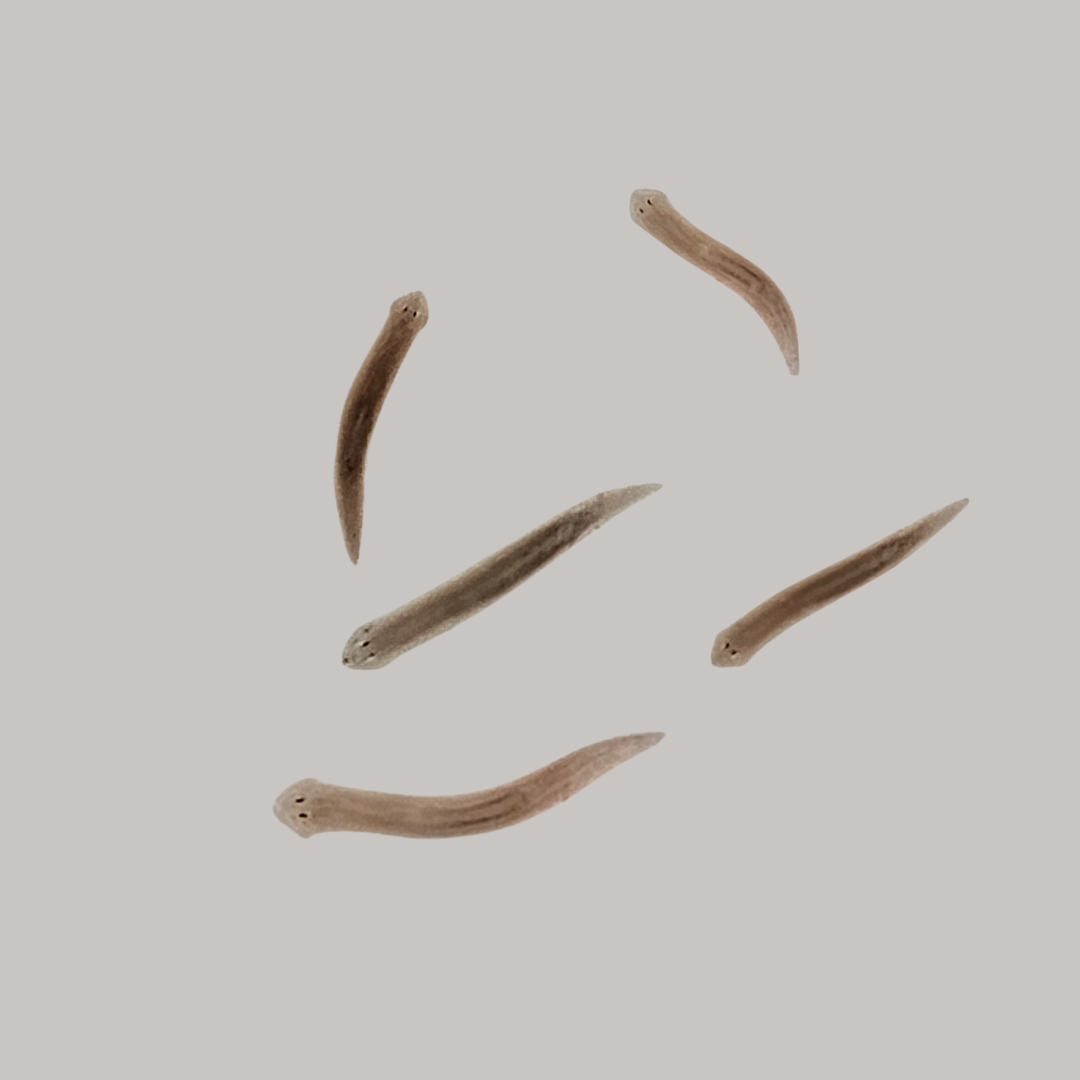
解説 / Description
ナミウズムシは、日本の河川上流や湧水、池沼の石の裏などに見られる淡水性のプラナリアです。一般に「再生する生き物」として知られ、体を分けても条件が整えば再び形を整えていく高い再生能力を持ちます。アクアリウムでは観賞魚のように泳ぎ回る主役ではありませんが、高温を避けた涼しめの室内で、小型容器を清潔に保ってじっくり観察すると、光を避けながら滑るように移動し、餌に集まる独特の姿を楽しめます。日本語のナミウズムシは、通常はヒモムシではなく、扁形動物門に属するDugesia japonicaを指します。 The Japanese freshwater planarian known as Nami-uzumushi is a freshwater flatworm found under stones in cool, clean headwaters, springs, and ponds in Japan. It is famous for its remarkable regenerative ability: under suitable conditions, body fragments can reorganize and regenerate. In aquariums it is not a showy swimmer like an ornamental fish, but in a clean observation container kept in a moderately cool indoor location, it reveals a quiet and fascinating life, gliding away from light and gathering around food. In Japanese usage, Nami-uzumushi usually refers to Dugesia japonica, a flatworm, not a ribbon worm.
基本情報 / Basic Information
| 学名 / Scientific Name | Dugesia japonica |
|---|---|
| 通称 / Common Name | ナミウズムシ、プラナリア、淡水プラナリアNami-uzumushi, Japanese freshwater planarian, planarian |
| 分類 / Family | 扁形動物門、三岐腸目、サンカクアタマウズムシ科。資料によってはDugesiidaeとして扱われます。Phylum Platyhelminthes, order Tricladida, family Dugesiidae. |
| 英名 / English Name | Japanese freshwater planarian |
| 分布 / Distribution | 日本各地の河川上流、湧水、池沼など。北海道と南西諸島では分布がやや限られるとされ、南西日本ではリュウキュウナミウズムシとの区別が重要です。東アジアにも広く見られる系統として扱われます。Found in cool headwaters, springs, and ponds across Japan. Its distribution is considered somewhat limited in Hokkaido and the southwestern islands, and separation from Dugesia ryukyuensis is important in southwestern Japan. It is also treated as part of a broader East Asian freshwater planarian group. |
| 最大体長 / Max Size | おおむね10〜35mmほど。個体群や飼育条件により大きさには差があります。Usually about 10–35 mm, with variation depending on population and husbandry conditions. |
| 寿命 / Lifespan | 個体が分裂して増えるため、一般的な魚のように寿命を一個体単位で語りにくい生き物です。清潔な低温環境では飼育群を長く維持でき、無性繁殖によって継代できます。Its lifespan is difficult to define in the same way as fish because it can reproduce by fission. Under cool and clean conditions, a culture can be maintained for long periods through asexual propagation. |
飼育環境 / Aquarium Environment
| 水槽サイズ / Tank Size | 観察用なら1〜5L程度の浅いプラケース、ガラス容器、シャーレでも飼育できます。数を多めに維持する場合でも、30cm規格水槽ほどの空間があれば十分余裕があります。深い水槽よりも、掃除しやすい浅い容器が扱いやすいです。For observation, a shallow 1–5 L plastic case, glass container, or petri dish is sufficient. Even for a larger culture, a standard 30 cm aquarium provides ample room. A shallow, easy-to-clean container is more practical than a deep tank. |
|---|---|
| 水温 / Temperature | 15〜22℃前後が扱いやすい目安です。一般的な室温、特に20〜25℃前後であれば飼育できることも多いですが、25℃を超える状態が続く場合や30℃近い環境は弱りやすいため避けます。家庭用冷蔵庫での常時管理は、低温になりすぎたり温度差が出たりしやすいため推奨しません。夏場はエアコンの効いた室内、玄関などの涼しい場所、保冷材を直接当てない保冷対策でゆるやかに温度を抑えます。 About 15–22°C is an easy practical range. It can often be kept at ordinary indoor room temperatures, especially around 20–25°C, but prolonged temperatures above 25°C or conditions close to 30°C should be avoided. Constant storage in a household refrigerator is not recommended because it may become too cold or cause temperature swings. In summer, use an air-conditioned room, a naturally cooler indoor spot, or gentle cooling measures that do not place ice packs directly against the container. |
| 水質 / Water Quality | 残留塩素を抜いた水を使い、急な変化の少ない弱酸性〜中性を目安にします。ここでいう「きれいな水」は、人間の目に透明で殺菌されたような水という意味ではなく、薬品や人工的な汚染が少なく、落ち葉由来の腐植質が自然に溶け込むような穏やかな淡水環境です。実験飼育ではpH 6.9〜8.1が目安にされることがありますが、水が合わないと丈夫そうに見えても短時間で弱り、ロットごと全滅することがあります。Use dechlorinated water with minimal sudden change, aiming for slightly acidic to neutral conditions. Here, “clean water” does not mean visually clear, sterilized-looking water for humans; it means a gentle freshwater environment with few chemicals or artificial contaminants, somewhat like water where leaf-derived humic substances have naturally dissolved. Laboratory husbandry may use pH 6.9–8.1 as a practical range, but if the water does not suit them, even apparently hardy individuals can decline quickly and an entire group may be lost. |
| レイアウト / Layout | 掃除しやすさを優先し、底砂は入れないか、ごく薄くします。隠れ家として平たい石片や小さなタイルを入れると、自然下の石裏に近い環境になり、観察もしやすくなります。直射日光は避け、弱い光で管理します。Prioritize easy cleaning: use no substrate or only a very thin layer. Flat stones or small tiles provide shelter similar to the undersides of stones in nature and make observation easier. Avoid direct sunlight and keep the container in dim light. |
| 注意点 / Precautions | 高温、残留塩素、餌の腐敗、過密、水質の不一致に弱いです。「冷涼」は冷蔵庫保管という意味ではなく、高温を避けた涼しめの室内管理と考えると分かりやすいです。見た目だけ澄んだ真新しい水や、薬剤の影響が残る水が合うとは限りません。採集個体や購入個体は産地や種名が不明な場合があるため、屋外の水域へ戻したり放流したりしないでください。国立公園などの保護地域では採集に許可が必要になる場合があります。It is vulnerable to heat, residual chlorine, decaying food, overcrowding, and unsuitable water chemistry. “Cool” should be understood as a moderately cool indoor environment, not routine refrigerator storage. Fresh, visually clear water or water with chemical residues is not automatically suitable. Wild-caught or purchased individuals may have uncertain origin or identification, so never release them back into outdoor waters. Collecting in protected areas such as national parks may require permission. |
餌と給餌 / Feeding
| 餌の種類 / Diet | 小さく切った豚レバーや鶏レバー、冷凍赤虫などを少量与えます。教育・研究用の飼育ではレバーが定番ですが、水を汚しやすいため、赤虫を使うと管理しやすい場合があります。Feed small pieces of pork or chicken liver, or frozen bloodworms, in very small amounts. Liver is a classic food in educational and research cultures, but it can foul the water easily, so bloodworms may be easier to manage. |
|---|---|
| 給餌のポイント / Feeding Tips | 毎日与える必要はなく、状態を見ながら週1回から2週間に1回程度で十分です。餌は食べ切れる量だけにし、給餌後は半日〜2日以内を目安に残餌を取り除き、水を替えます。実験や切断観察の前には48時間以上絶食させることがあります。Daily feeding is unnecessary; once a week to once every two weeks is usually enough depending on condition. Offer only what they can consume, then remove leftovers and change the water within roughly half a day to two days. Before experiments or cutting observations, they are often fasted for at least 48 hours. |
性格と混泳 / Temperament and Tank Mates
| 性格 / Temperament | 光を避ける傾向があり、普段は石や容器の影に潜みます。動きはゆっくりですが、餌を見つけると集まり、咽頭を伸ばして摂食します。肉食性または腐肉食性の小型底生生物として見ると理解しやすいです。It tends to avoid light and usually hides under stones or shaded parts of the container. Its movement is slow, but it gathers around food and feeds by extending its pharynx. It is best understood as a small benthic carnivore or scavenger. |
|---|---|
| 混泳の相性 / Compatibility | 観察目的では単独飼育が基本です。魚や大型のエビには食べられることがあり、逆に小さな稚エビや卵、弱った生体に干渉する可能性もあります。観賞魚水槽へ意図的に入れるより、専用容器で管理する方が安全です。For observation, species-only culture is recommended. Fish and larger shrimp may eat it, while it may also interfere with tiny shrimp fry, eggs, or weakened animals. A dedicated container is safer than intentionally adding it to a community aquarium. |
病気と対策 / Diseases and Prevention
| かかりやすい病気 / Common Diseases | 魚病のように標準化された病名で管理されることは少なく、実際には高温、低酸素、水質悪化、水質の不一致、残留塩素、過密、餌の腐敗による飼育崩壊が主なトラブルになります。病原体に感染するというより、環境が合わずに一気に調子を崩すケースが多いと考えると管理しやすいです。動きが鈍る、縮む、体が崩れる、死亡個体が増える場合は環境悪化を疑います。It is rarely managed by standardized disease names like fish diseases. Most problems are husbandry failures caused by heat, low oxygen, poor or unsuitable water quality, residual chlorine, overcrowding, or decaying food. It is often more practical to think of sudden decline as an environmental mismatch rather than a typical infectious disease. Sluggish movement, shrinking, body breakdown, or increasing deaths suggest environmental deterioration. |
|---|---|
| 対策と予防 / Prevention | まず温度差と水質差を大きくしすぎない範囲で、状態のよい脱塩素水へ移し、暑い場合は涼しい場所へ移動し、密度を下げます。死んだ個体や餌の残りはすぐに取り除き、容器を洗います。薬を使うよりも、水温、水換え、給餌量、飼育密度、弱酸性〜中性で安定した水づくりを整えることが基本です。落ち葉や腐植質を利用する場合も、農薬や腐敗、急なpH低下を避け、ごく控えめに扱います。Move them to better dechlorinated water while avoiding large temperature or chemistry shocks, place them somewhere cooler if they are too warm, and reduce density. Remove dead individuals and leftover food promptly, then clean the container. Rather than medication, the focus should be temperature, water changes, feeding amount, stocking density, and stable slightly acidic to neutral water. If leaves or humic substances are used, keep them very limited and avoid pesticides, decay, or a sudden pH drop. |
増やし方(繁殖) / Breeding
| 雌雄の判別 / Sexing | 外見から雌雄を分けて見分けることはできません。有性個体は雌雄同体ですが、通常の教材・観察用飼育では無性分裂で増える個体群として扱うことが多いです。Males and females cannot be distinguished externally. Sexual individuals are hermaphroditic, but in ordinary educational or observation cultures they are often treated as asexually reproducing colonies. |
|---|---|
| 繁殖形態 / Reproduction | 主に無性生殖として体が分裂し、各断片が再生して増えます。条件や系統によっては有性生殖を行い、卵のうから仔虫がふ化することもあります。It commonly reproduces asexually by fission, with each fragment regenerating into a complete animal. Depending on conditions and lineage, sexual reproduction can also occur, producing cocoons from which juveniles hatch. |
| 繁殖のポイント / Breeding Tips | よく太った個体を高温を避けた清潔な環境で維持すると、自然に分裂して増えます。意図的に切断して増やす場合は、十分に状態のよい個体を選び、事前に絶食させ、切断後は低密度で清潔に管理します。家庭飼育では無理に増やしすぎず、余剰個体を屋外へ逃がさない管理が大切です。Well-fed individuals kept in clean conditions without excessive heat may divide naturally. If intentionally cutting them for propagation or observation, choose healthy individuals, fast them beforehand, and keep the fragments clean and uncrowded afterward. In home culture, avoid overproduction and never release surplus animals outdoors. |
雑学と豆知識 / Trivia and Fun Facts
| 1. 名前から起こりやすい誤解 / 1. A Common Name Trap | ナミウズムシは、英語の直訳感覚で「ヒモムシ」と混同されることがあります。しかし日本の生物資料でナミウズムシといえば、通常は扁形動物門の淡水プラナリアDugesia japonicaを指します。ヒモムシは紐形動物門という別のグループで、体のつくりも分類上の位置も異なります。小さな生き物ほど名前が似て見えますが、図鑑づくりではここを丁寧に分けるだけで情報の信頼性が大きく上がります。Nami-uzumushi is sometimes confused with ribbon worms when translated too literally. In Japanese biological sources, however, the name usually refers to the freshwater planarian Dugesia japonica, a flatworm. Ribbon worms belong to a different phylum, Nemertea, with a different body plan and taxonomic position. Carefully separating these names greatly improves the reliability of an aquarium encyclopedia entry. |
|---|---|
| 2. 「きれいな水」の本当の意味 / 2. What “Clean Water” Really Means | ナミウズムシは水生生物調査で「きれいな水」の指標として親しまれてきましたが、これは人間が見て透明で美しい清流というだけの意味ではありません。生物にとって大切なのは、残留塩素や薬剤、人工的な汚染が少なく、落ち葉や土壌由来の成分が穏やかに溶け込んだような、自然の淡水に近い安定した環境です。見た目だけ澄んだ水でも、pHや硬度、薬品の影響が合わなければ一気に弱り、全滅につながることがあります。小さな体で環境の変化を受けやすいからこそ、「透明さ」よりも「生き物に合う安定感」を重視したい生き物です。This species has long been familiar in aquatic surveys as an indicator of “clean water,” but that does not simply mean a visually clear, beautiful stream from a human perspective. What matters biologically is a stable freshwater environment with little residual chlorine, medication, or artificial pollution, and with gentle natural components such as leaf- and soil-derived substances. Water may look clear yet still be unsuitable if pH, hardness, or chemical residues are wrong, and the group may decline rapidly or be lost. Because its small body is sensitive to environmental change, suitability and stability matter more than visual clarity. |
| 3. 再生研究を支える小さなモデル生物 / 3. A Small Model for Regeneration | プラナリアの魅力は、体が小さいことではなく、体の作り直しを目の前で見せてくれるところにあります。ナミウズムシは日本の教育や研究の現場で扱われ、再生、行動、神経、生殖様式の研究とも深く関わってきました。水槽の片隅で静かに滑っている姿の背後には、生物が形を保ち、失った部分を取り戻す仕組みに迫る長い研究史があります。The appeal of planarians is not simply that they are small, but that they visibly demonstrate the rebuilding of a body. Dugesia japonica has been used in Japanese education and research, contributing to studies of regeneration, behavior, nervous systems, and reproduction. Behind its quiet gliding in a small container lies a long scientific history of asking how animals maintain form and replace lost parts. |
| 4. 流通と管理の考え方 / 4. Trade and Responsible Keeping | 国内で見かけるナミウズムシは、大量に売られる一般的なペットというより、学校教材、研究用生体、自由研究向けの小口流通として出会うことが多い生き物です。だからこそ、学名、由来、飼育温度、受け取り後の水換えを確認する価値があります。小さな容器で飼える手軽さと、野外へ戻してはいけない責任は、いつもセットで考える必要があります。In Japan, this planarian is encountered less as a mass-market pet and more as an educational, research, or small-scale observation organism. That makes it worth confirming the scientific name, origin, recommended temperature, and post-arrival water-change instructions. The ease of keeping it in a small container must always be paired with the responsibility not to release it outdoors. |
まとめ / Conclusion
ナミウズムシは、高温を避け、人工的な薬剤の影響が少ない安定した淡水で観察しやすい小さな淡水プラナリアです。派手さはありませんが、石の裏に潜み、餌に集まり、分裂と再生で命をつないでいく姿には、身近な水辺の奥深さが凝縮されています。 Dugesia japonica is a small freshwater planarian that is easiest to observe in stable, natural-feeling freshwater without excessive heat or chemical stress. It is not flashy, but its hidden life under stones, its gathering around food, and its ability to persist through fission and regeneration reveal the quiet depth of freshwater habitats.
飼育では、高温を避けること、脱塩素、少量給餌、早めの掃除に加えて、見た目の透明さだけに頼らず、生体に合う弱酸性〜中性の安定した水を用意することが何より大切です。専用の小さな容器で丁寧に向き合うと、ナミウズムシは水槽の主役とは違う、観察するほど引き込まれる存在感を見せてくれます。 In culture, the essentials are avoiding excessive heat, using dechlorinated water, light feeding, prompt cleaning, and preparing stable slightly acidic to neutral water that suits the animals rather than relying only on visual clarity. Kept carefully in a dedicated small container, this planarian offers a presence very different from a typical aquarium centerpiece, becoming more fascinating the longer it is observed.

気になる道具や飼い方を見つけてみませんか?
 アイのアクアグッズ案内コケを食べるコイの仲間に合わせる飼育用品|フライングフォックス・アルジイーター・ガラ道具の特徴や使い方、選ぶときのポイントをアイが紹介します。記事はコチラ →
 アイのアクアグッズ案内水槽のろ材の選び方|ウール・リング・活性炭の違いとおすすめ商品フィルターの中の綿や石は何をしている? アイとコタロウが、ウール・スポンジ・セラミック・焼結ガラス・活性炭・ゼオライトを比較。機種との相性、入れ方、洗い方と交換まで商品とともに紹介します。記事はコチラ →
さまざまな飼育テーマをご紹介。リンク先の記事には広告・商品紹介が含まれます。
案内・紹介記事一覧へ →分布マップ
ナミウズムシは、日本各地の河川上流、湧水、池沼などに見られる淡水性のプラナリアです。北海道や南西諸島では分布がやや限られるとされ、東アジアにも広く見られる系統として扱われます。
この地図は、記事中の分布情報をもとにした分布イメージ用の概略代表地点です。実際の採集地点や厳密な生息範囲を示すものではありません。
参考文献・参照資料
この記事では、店舗・通販ページ、個人ブログ、まとめサイト由来の情報は参考文献から除外し、分類、分布、生息環境、飼育条件、繁殖、病気や注意点を支える公的機関・博物館系資料・学術文献・研究用プロトコルを中心に選定しています。
-
国土交通省 九州地方整備局 筑後川河川事務所「河川・水辺の生物図鑑 底生動物 ナミウズムシ」
学名、分類、体長、形態、生息環境、上流〜中流域での分布、分裂・卵による繁殖、再生能力の記述を支える基礎資料です。日本国内向けの図鑑情報として、記事全体の土台にしています。 -
環境省「全国水生生物調査 水生生物調査とは」
ナミウズムシが水質階級Iの指標生物に含まれること、同時に「指標生物がいるから直ちに水がきれい・きたないとは限らない」という注意書きを支える資料です。記事内の「きれいな水」の誤解を避ける説明に反映しています。 -
Kawakatsu, Oki & Tamura “Taxonomy and geographical distribution of Dugesia japonica and D. ryukyuensis in the Far East”
Dugesia japonicaの分類学的位置づけ、東アジアでの分布、Dugesia ryukyuensisを別種として扱う整理を支える学術資料です。南西日本でリュウキュウナミウズムシとの区別が重要になる点の根拠として採用しています。 -
横浜市環境科学研究所「横浜市の河川におけるプラナリア類の分布について」
都市河川における在来ナミウズムシと外来プラナリア類の分布傾向を支える資料です。在来種が源上流域寄り、外来種が中下流域寄りに確認された事例として、分布と放流注意の補足根拠にしています。 -
Stowers Institute “Protocol 1: Planarian maintenance”
18〜22℃程度の室温管理、pH 6.9〜8.1のプラナリア用水、密閉による酸欠リスク、週1〜2回の水換え、給餌後の掃除、状態の悪い個体を早めに除く管理を支える研究・教育向けプロトコルです。冷蔵庫管理ではなく、涼しめの室内管理を基本とする説明に使っています。 -
Merryman & Sánchez Alvarado “Culturing Planarians in the Laboratory”
Dugesia japonicaを含むプラナリア類の研究飼育について、餌、容器、給餌、掃除、切断による拡殖、飼育トラブルへの対応を扱うプロトコルです。記事内の飼育条件、繁殖、病気というより環境不適合による崩壊として見る説明を補強します。 -
Pacis et al. “Red Midge Larvae Are an Invertebrate Alternative Diet to Beef Liver for Planarian Husbandry”
Dugesia japonicaを赤虫類で長期維持できることを示した研究です。記事内のレバー以外に冷凍赤虫を利用できるという給餌説明の補助資料として採用しています。 -
An et al. “Draft genome of Dugesia japonica provides insights into conserved regulatory elements of the brain restriction gene nou-darake in planarians”
Dugesia japonicaが小さな体断片から個体を再生でき、再生生物学や神経生物学のモデルとして使われることを支える学術資料です。雑学欄の再生研究・モデル生物としての位置づけに対応しています。 -
Kobayashi et al. “Switching from Asexual to Sexual Reproduction in the Planarian Dugesia ryukyuensis”
近縁種Dugesia ryukyuensisで無性個体から有性化を誘導する研究です。ナミウズムシそのものの家庭飼育手順ではなく、記事内で触れている近縁種の繁殖研究・有性化研究の背景資料として位置づけています。 -
環境省「国立・国定公園内における動物の保護対策について」
国立・国定公園の特別保護地区では動物の捕獲等が禁止され、必要な場合は許可が求められることを示す資料です。採集時の注意点、保護地域での採集可否確認を促す記述の根拠として採用しています。 -
GBIF Backbone Taxonomy “Dugesia japonica Ichikawa & Kawakatsu, 1964”
Dugesia japonicaの学名、命名者、受理名、和名ナミウズムシの確認に用いる補助的な生物多様性データベースです。分類の主根拠は学術文献と公的図鑑に置き、この資料は表記確認用として使用しています。




コメント