

解説 / Description
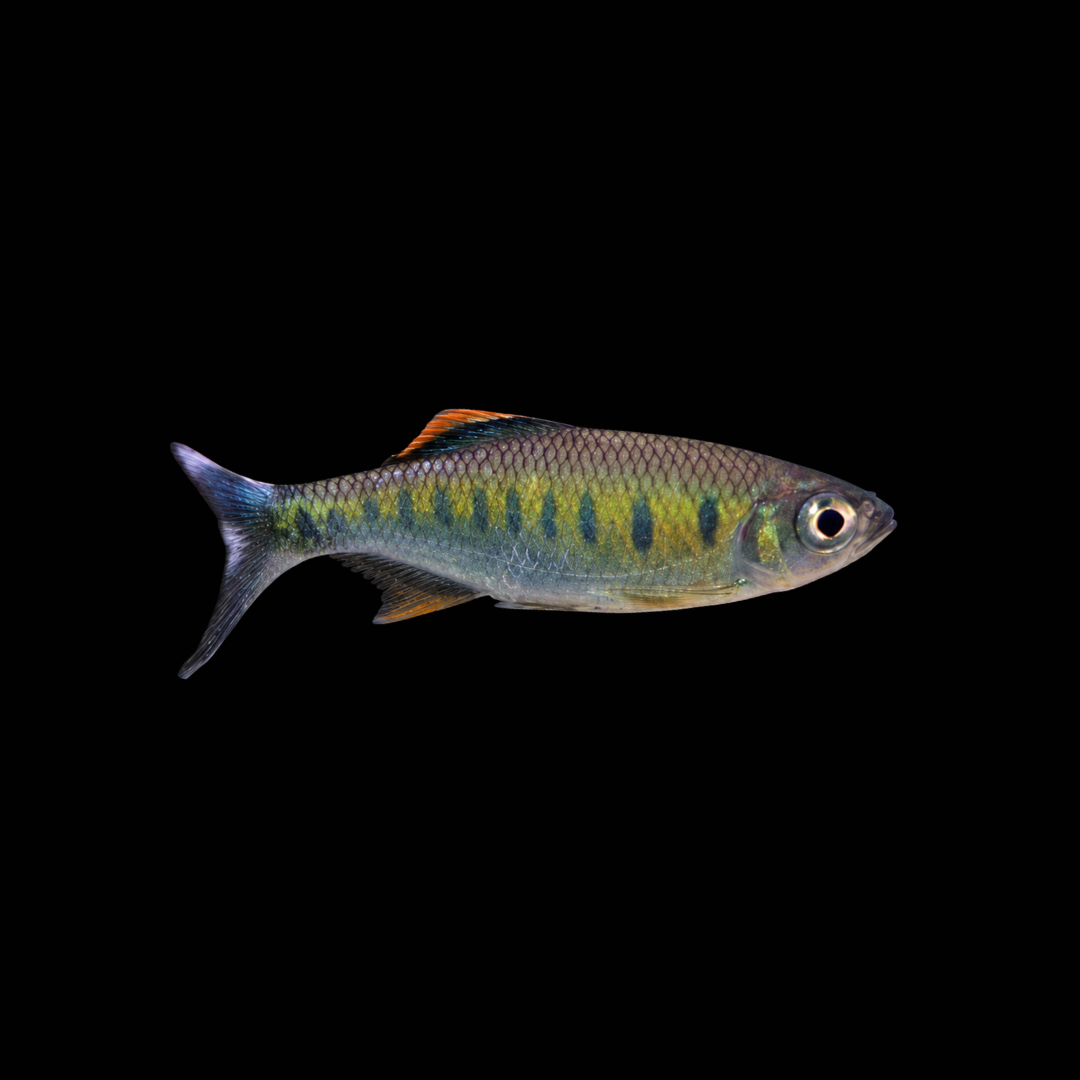
バリリウス・バケリィは、インド南部の西ガーツ山脈に分布する、流れの速い清流に適応したダニオ科の魚です。現在の主要な分類データベースでは Opsarius bakeri として扱われますが、観賞魚の流通名や旧学名として Barilius bakeri の名前も広く使われています。細長く力強い体つきで水流に向かって泳ぎ、体側に並ぶ青緑色のスポットと、白く縁取られたヒレが涼しげな印象を与えます。一般的な小型熱帯魚のように静かな水槽で気軽に飼うタイプではなく、強い水流、高い溶存酸素、低めで安定した水温、清潔な水を求める渓流魚らしい性質を持っています。 Barilius bakeri is a trade name widely used for Opsarius bakeri, a danionid fish from the Western Ghats of southern India, adapted to fast, clear streams. Modern taxonomic databases generally treat it as Opsarius bakeri, while Barilius bakeri remains familiar in the aquarium trade and in older literature. It has a streamlined, powerful body, blue-green spots along the flanks, and clean white fin margins. It is not a casual fish for calm community aquariums; it is a hill-stream species that requires strong current, high dissolved oxygen, cooler stable water, and excellent water cleanliness.
基本情報 / Basic Information
| 学名 / Scientific Name | Opsarius bakeri (Day, 1865)。流通名・旧学名として Barilius bakeri がよく用いられます。(Day, 1865). The trade name and former scientific name Barilius bakeri are still commonly used. |
|---|---|
| 通称 / Common Name | バリリウス・バケリィ、ブルースポット・ヒルトラウト、ロイヤルトラウトダニオBlue-spotted hill trout, Royal Trout Danio, hill trout |
| 分類 / Family | コイ目 ダニオ科 チェドラ亜科。古い資料ではコイ科として扱われる場合があります。Order Cypriniformes, family Danionidae, subfamily Chedrinae. Older sources may place it within Cyprinidae. |
| 英名 / English Name | Blue-spotted hill trout |
| 分布 / Distribution | 南インドの西ガーツ山脈。ケララ州の小さな山地渓流を中心に知られ、分類データベースではカルナータカ州南部を含む記録も示されています。Western Ghats of southern India. It is especially known from small mountain streams in Kerala, with taxonomic databases also listing records from southern Karnataka. |
| 最大体長 / Max Size | 最大で全長約15cm。飼育情報では標準体長11〜13cm前後として扱われることもあります。水槽内では体長以上に広い遊泳空間が必要です。Up to about 15 cm total length. Some aquarium references treat it as around 11-13 cm standard length. In aquaria it needs more swimming space than its body length alone might suggest. |
| 寿命 / Lifespan | 明確な定説は限られています。水温と水質が安定した適切な環境では、数年単位での長期飼育が期待されます。Reliable lifespan data are limited. In a stable, well-maintained aquarium with suitable temperature and water quality, it can be expected to live for several years. |
飼育環境 / Aquarium Environment
| 水槽サイズ / Tank Size | 理想は幅150cm×奥行き60cm以上の大型水槽です。日本の住宅事情では、幼魚や少数導入時の最低ラインとして90cm規格水槽が使われることもありますが、成魚を6匹以上で安定して飼うなら120cm規格水槽以上、できれば120cmワイド水槽以上をおすすめします。水量だけでなく、横方向に泳ぎ続けられる距離を重視します。A tank with a footprint of 150 × 60 cm or larger is ideal. In Japanese homes, a standard 90 cm tank may sometimes be used as a practical lower limit for juveniles or a small introductory group, but for a stable group of six or more adults, a standard 120 cm tank or, preferably, a 120 cm wide tank or larger is recommended. Horizontal swimming distance matters as much as total volume. |
|---|---|
| 水温 / Temperature | 18〜26℃。高水温と酸欠に弱いため、日本の夏は水槽用クーラーの使用を前提に考えます。 18-26°C. It is sensitive to warm, oxygen-poor water, so an aquarium chiller should be considered essential during Japanese summers. |
| 水質 / Water Quality | pH6.0〜7.5、硬度18〜179ppm程度を目安に、急変の少ない安定した水質を保ちます。海外の飼育情報では中性から弱アルカリ性寄りの条件をすすめる例もあるため、数値を追いかけるよりも、清潔さ、安定性、高い溶存酸素を優先します。硝酸塩や有機物の蓄積を嫌うため、ろ過と換水を強めに管理します。A pH of 6.0-7.5 and hardness around 18-179 ppm are useful guidelines, but stability is more important than chasing exact numbers. Some aquarium references recommend neutral to slightly alkaline conditions, so prioritize cleanliness, stability, and high dissolved oxygen. It does not tolerate accumulated nitrate or organic waste well, so filtration and water changes should be generous. |
| レイアウト / Layout | 川砂、丸みのある小石、砂利、大きめの丸石を使って渓流の河床を再現します。流木や石で変化をつけつつ、前面や中央には広いオープンスペースを残します。水草を使う場合は、ミクロソリウム、ボルビティス、アヌビアスなど、石や流木に活着できる丈夫な種類が向いています。Use river sand, smooth pebbles, gravel, and larger rounded stones to recreate a stream bed. Driftwood and rocks can add structure, but leave wide open swimming areas in the front or center. If plants are used, hardy attached plants such as Microsorum, Bolbitis, and Anubias are the most suitable choices. |
| 注意点 / Precautions | 強い水流と高い酸素量が必要です。外部式フィルター、水流ポンプ、ディフューザーなどを組み合わせ、水面がしっかり波立つ環境を作ります。とても飛び出しやすい魚でもあるため、フタは必須で、配管やコード周りの小さな隙間も塞ぎます。立ち上げ直後の不安定な水槽への導入は避けます。Strong current and high oxygen levels are essential. Combine an external canister filter, circulation pump, and diffuser to keep the water surface well agitated. This species is an excellent jumper, so a tight-fitting lid is mandatory, including sealed gaps around pipes and cables. Avoid adding it to a newly set up or unstable aquarium. |
餌と給餌 / Feeding
| 餌の種類 / Diet | 主食には、粗タンパク質30〜40%程度の高品質なフレーク、顆粒、緩沈下性フードが適しています。副食として冷凍アカムシ、冷凍ブラインシュリンプ、ミジンコ、細かく刻んだミミズ、小型の昆虫などを与えると、自然に近い摂食行動を引き出しやすくなります。High-quality flakes, granules, or slow-sinking foods with roughly 30-40% crude protein are suitable staples. Frozen bloodworms, frozen brine shrimp, daphnia, finely chopped earthworms, and small insects can be offered as supplementary foods to encourage more natural feeding behavior. |
|---|---|
| 給餌のポイント / Feeding Tips | 水面から水面直下で餌を追う性質が強いため、流れに乗せて少量ずつ与えます。食べ残しは水質悪化につながるため、強いろ過を備えた水槽でも与えすぎは避けます。素早く餌を取る魚なので、混泳相手がいる場合は全体に餌が行き渡っているか確認します。It tends to feed at or just below the surface, so offer small amounts into the current. Uneaten food quickly degrades water quality, so avoid overfeeding even in a strongly filtered tank. Because it feeds quickly, make sure slower tank mates are not being outcompeted. |
性格と混泳 / Temperament and Tank Mates
| 性格 / Temperament | 群れで行動しますが、完全に一方向へ揃って泳ぐだけの魚ではなく、群れの中で優劣関係を作ります。2〜3匹の少数飼育では攻撃が特定の個体に集中しやすいため、6匹以上を目安に導入すると安心です。It is gregarious, but it does not simply school in a uniform direction; a hierarchy develops within the group. Keeping only two or three can concentrate aggression on weaker individuals, so a group of six or more is a safer guideline. |
|---|---|
| 混泳の相性 / Compatibility | 同じように水流と低めの水温を好み、泳ぎの速さに負けない丈夫な魚が向きます。例として、同程度のサイズの大型デバリオ、ドーキンスィア、他のバリリウス類、底層ではガラ、ボティア、シストゥラ、流れを好むハゼ類などが候補になります。エンゼルフィッシュやグラミーのようなゆったりした魚、口に入る小型魚、臆病で餌を取れない魚は避けます。Suitable tank mates are robust fish that also enjoy current and cooler, oxygen-rich water. Possible examples include similarly sized large Devario, Dawkinsia, other Barilius-type fishes, and bottom dwellers such as Garra, Botia, Schistura, and stream-loving gobies. Avoid slow fishes such as angelfish or gouramis, very small fish that may fit in its mouth, and shy species that may be outcompeted at feeding time. |
病気と対策 / Diseases and Prevention
| かかりやすい病気 / Common Diseases | 特定の病気だけに極端に弱いというより、水温上昇、酸欠、有機物の蓄積、輸入直後のストレスによって体調を崩しやすい魚です。白点病、細菌性の肌荒れ、ヒレの損傷、痩せなどには注意します。Rather than being vulnerable to one specific disease, it is prone to decline under high temperature, low oxygen, accumulated organic waste, or post-import stress. Watch for ich, bacterial skin problems, fin damage, and weight loss. |
|---|---|
| 対策と予防 / Prevention | 水温を上げすぎず、酸素量を確保し、定期的な換水で清潔な水を維持します。導入時は水合わせを丁寧に行い、落ち着くまでは照明を弱め、飛び出しにも注意します。ろ過が完成していない水槽や、硝酸塩が高くなりやすい水槽には入れないことが大切です。Keep temperatures from rising too high, maintain strong oxygenation, and perform regular water changes to keep the water clean. Acclimate new arrivals carefully, keep lighting subdued until they settle, and prevent jumping. Do not add them to immature tanks or systems where nitrate tends to accumulate. |
増やし方(繁殖) / Breeding
| 雌雄の判別 / Sexing | 成熟したオスは繁殖期に腹部が鮮やかなオレンジ色を帯び、頭部に追星が出ることがあります。メスは全体に色が控えめで、成熟すると腹部がふっくらしやすい傾向があります。Mature males may develop bright orange coloration on the lower body during breeding condition and can show breeding tubercles on the head. Females are generally less colorful and tend to become fuller-bodied when mature. |
|---|---|
| 繁殖形態 / Reproduction | 卵散布型で、親が卵や稚魚を保護する行動は確認されていません。近縁種の行動や飼育情報から、産卵には砂利や丸みのある小石を敷いた底床が関係する可能性が示唆されています。It is treated as an egg-scattering species with no confirmed parental care in aquaria. Based on related species and aquarium observations, gravel or smooth rounded stones may be important as a spawning substrate. |
| 繁殖のポイント / Breeding Tips | 水槽内繁殖の確実な情報は非常に限られています。産卵誘発には、雨季を思わせる清潔でやや冷たい水による換水が役立つ可能性があります。卵は親魚に食べられやすく、強い水流下では稚魚が吸い込まれやすいため、底網や隔離水槽、初期飼料の準備が成功の鍵になります。Reliable aquarium breeding information is very limited. A water change with clean, slightly cooler water that resembles the onset of the monsoon season may help trigger spawning. Eggs are easily eaten by adults, and fry may be drawn into filters in strong current, so egg screens, separate rearing tanks, and suitable first foods are key challenges. |
雑学と豆知識 / Trivia and Fun Facts
| 1. Barilius か Opsarius か / 1. Barilius or Opsarius? | 本種は観賞魚の世界ではバリリウス・バケリィとして親しまれていますが、現在の主要な分類データベースでは Opsarius bakeri が有効名として扱われています。とはいえ、過去の文献や流通名では Barilius bakeri の表記が広く残っており、入荷リストやショップ名では今後も両方の名前に出会う可能性があります。名前の違いは別種という意味ではなく、分類研究の更新によって属の扱いが変わってきたことを示すものです。In the aquarium world this species is still widely known as Barilius bakeri, but major current taxonomic databases treat Opsarius bakeri as the valid name. Older literature and trade lists still commonly use Barilius bakeri, so both names may continue to appear. The difference does not mean they are separate aquarium species; it reflects changes in the way the genus has been classified. |
|---|---|
| 2. 学名に残された宣教師の足跡 / 2. A missionary remembered in the name | 種小名の bakeri は、19世紀に南インドと関わりを持った宣教師ヘンリー・ベーカー・ジュニアに由来します。彼が採集、または提供に関わった標本をもとに、フランシス・デイが1865年に本種を記載しました。水槽内を鋭く泳ぐ一匹の魚の名前には、南インドの山地、自然史研究、そして当時の標本収集の歴史が静かに残されています。The species name bakeri honors Rev. Henry Baker Jr., a missionary connected with southern India in the 19th century. Francis Day described the species in 1865 based on material collected or supplied through Baker. Behind the name of this fast-swimming aquarium fish lies a quieter history of the South Indian hills, natural history, and specimen collection. |
| 3. ヒルトラウトという呼び名 / 3. Why it is called a hill trout | 英名に含まれる hill trout は、サケ科のマスそのものを意味するわけではありません。冷涼で酸素の多い山地の流れを好み、水流に向かって力強く泳ぎながら餌を追う姿が、マス類の生態的な立ち位置を思わせることから使われる呼び名です。熱帯魚として販売される魚でありながら、飼育の考え方は一般的な熱帯魚水槽よりも渓流魚に近くなります。The name hill trout does not mean it is a true salmonid trout. The name reflects its trout-like ecological role: it lives in cool, oxygen-rich hill streams and swims strongly into the current while chasing food. Although it is sold as a tropical ornamental fish, its care is closer to that of a stream fish than a typical warm, calm community fish. |
| 4. 青緑のスポットと白いヒレ縁 / 4. Blue-green spots and white fin edges | バリリウス類はよく似た種類が多く、輸入時に混同されることがあります。本種では、体側に単列で並ぶ青緑色のスポットと、背ビレや尻ビレに見られる白い縁取りが重要な手がかりになります。近縁種には、オレンジのヒレ縁や大きな縦長の斑紋を持つものもいるため、入荷名だけでなく模様の出方を観察することが大切です。Many Barilius-type fishes look similar, and trade names can be confused during import. In this species, the single row of blue-green flank spots and the white margins on the dorsal and anal fins are important clues. Some related species show orange fin margins or larger vertical blotches, so observing the actual pattern is more reliable than relying only on the shipment name. |
| 5. 飼育の核心は水の鮮度 / 5. Fresh water is the real key | 強い水流が注目されがちな魚ですが、長期飼育の核心は、酸素を多く含み、有機物が少なく、温度が上がりすぎない水を保つことです。水流ポンプだけを追加しても、水が汚れていたり高温になっていたりすれば調子を崩します。水槽用クーラー、余裕のある外部式フィルター、定期的な換水がそろってはじめて、本来の俊敏な泳ぎと発色を楽しめます。Strong current is often emphasized, but the real key to long-term care is fresh, oxygen-rich, low-waste water that does not become too warm. Adding a circulation pump alone will not help if the water is dirty or overheated. An aquarium chiller, oversized external filtration, and regular water changes together allow this fish to show its natural speed and coloration. |
| 6. 野生個体と向き合う責任 / 6. Responsibility toward wild fish | 本種は国際的な評価では低懸念とされていますが、流通する個体は野生採集に由来する場合が多いと考えられます。だからこそ、入手した個体を短期間で消耗させず、適した設備で長く飼うことが大切です。清流に暮らす魚を水槽へ迎えることは、その環境を小さく再現し、魚の本来の動きを引き出す責任を引き受けることでもあります。The species is assessed internationally as Least Concern, but aquarium specimens are often understood to be wild-collected. For that reason, it is important not to treat them as short-lived display fish, but to keep them long-term in suitable conditions. Bringing a stream fish into an aquarium means accepting the responsibility of recreating a small part of its environment and allowing its natural behavior to emerge. |
まとめ / Conclusion
バリリウス・バケリィは、青緑色のスポットをきらめかせながら水流の中を泳ぐ、清流性の美しい魚です。細身の体で流れを受け止める姿には、落ち着いた水草水槽とはまったく違う、山地の川を思わせる力強さがあります。 Barilius bakeri is a beautiful stream fish whose blue-green spots shimmer as it swims through the current. Its slender body holding position in flowing water gives the aquarium a dynamic feeling very different from a quiet planted tank, evoking the energy of a mountain stream.
十分な遊泳空間、低めで安定した水温、澄んだ酸素豊富な水を用意できれば、その魅力は日ごとに深まっていきます。設備と管理に手をかけるほど、群れの動き、ヒレの白い縁取り、そして野性味のある泳ぎが水槽の中で際立ち、飼育者に清流を切り取ったような時間を見せてくれます。 When given ample swimming space, cooler stable water, and clear oxygen-rich conditions, its appeal deepens over time. The more carefully the setup is prepared and maintained, the more its group movement, white fin margins, and wild, athletic swimming stand out, offering the aquarist a vivid glimpse of a clear running stream.

気になる道具や飼い方を見つけてみませんか?
 アイのアクアグッズ案内カルキ抜き・水質調整剤の選び方|水換えと水槽の種類に合わせて選ぶ道具の特徴や使い方、選ぶときのポイントをアイが紹介します。記事はコチラ →
 アイのアクアグッズ案内グッピー・プラティ・モーリーを親子で楽しむ飼育用品|水槽・稚魚保護・ろ過・餌・水草道具の特徴や使い方、選ぶときのポイントをアイが紹介します。記事はコチラ →
 アイのアクアグッズ案内プレコ飼育に必要なもの|餌・流木・ろ過・隠れ家・掃除用品道具の特徴や使い方、選ぶときのポイントをアイが紹介します。記事はコチラ →
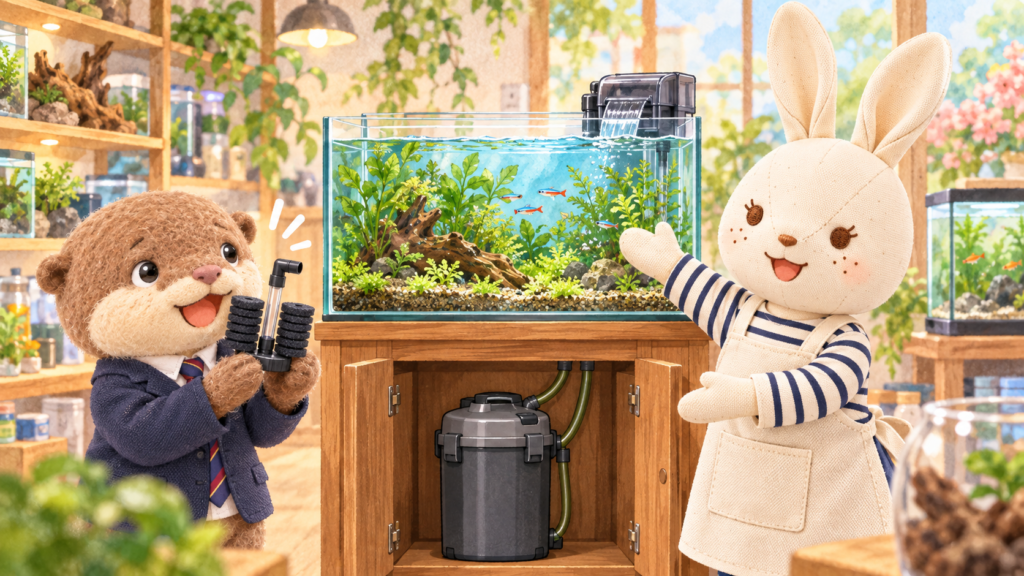 アイのアクアグッズ案内水槽フィルターの選び方|外掛け・外部・上部から小型オーバーフローまで道具の特徴や使い方、選ぶときのポイントをアイが紹介します。記事はコチラ →
さまざまな飼育テーマをご紹介。リンク先の記事には広告・商品紹介が含まれます。
案内・紹介記事一覧へ →分布マップ
バリリウス・バケリィは、南インドの西ガーツ山脈に分布し、ケララ州の小さな山地渓流を中心に知られ、カルナータカ州南部を含む記録も示されています。地図では、西ガーツ山脈南部の分布イメージを示す概略代表地点として表示しています。
この地点は分布欄の内容から作成した概略プロットです。実際の採集地点や厳密な生息範囲を示すものではありません。
参考文献・参照資料
この記事では、分類、分布、生息環境、飼育条件、繁殖、病気や注意点を支える資料として、魚類分類データベース、国際保全評価、査読論文、専門書、専門性の高い魚類情報データベースを中心に選定しました。店舗・通販サイト、個人ブログ、一般的なまとめサイト、Wikipediaは採用していません。
-
Fricke, R., Eschmeyer, W. N. & van der Laan, R. Eschmeyer’s Catalog of Fishes: Barilius bakeri.
California Academy of Sciences. Online Version, updated 10 June 2026.
https://researcharchive.calacademy.org/research/ichthyology/catalog/fishcatget.asp?spid=3263
分類上の現在の有効名、旧学名、原記載、タイプ産地、Danionidae・Chedrinae、分布、淡水性の確認に使用。 -
Froese, R. & Pauly, D. FishBase: Opsarius bakeri.
FishBase, species summary page.
https://fishbase.se/summary/24306
分類、英名、最大体長、ケララ州・西ガーツ山脈の分布、小さな山地渓流に生息すること、IUCN評価、観賞魚利用の確認に使用。 -
Dahanukar, N. 2011. Barilius bakeri.
The IUCN Red List of Threatened Species 2011: e.T169603A6652158.
https://doi.org/10.2305/IUCN.UK.2011-1.RLTS.T169603A6652158.en
保全状況、自然分布、野生個体の扱いに関する注意喚起の背景資料として使用。 -
Knight, J. D. M., Rai, A., D’Souza, R. K. P. & Vijaykrishnan, B. 2015.
Barilius ardens, a new species from the Western Ghats, India, with redescription of B. malabaricus and B. canarensis. Zootaxa, 3926(3): 396–412.
https://doi.org/10.11646/zootaxa.3926.3.5
近縁種との混同、斑紋、ヒレの縁取り、Barilius類の分類整理、識別上の注意点を支える資料として使用。 -
Day, F. 1865.
On the fishes of Cochin, on the Malabar Coast of India. Part II. Anacanthini. Proceedings of the Zoological Society of London 1865(1): 286–318.
https://doi.org/10.1111/j.1469-7998.1865.tb02337.x
原記載、命名者、記載年、タイプ産地に関する基礎資料として使用。 -
Seriously Fish. Barilius bakeri species profile.
Seriously Fish species profile.
https://www.seriouslyfish.com/species/barilius-bakeri/
水槽サイズ、水温、pH、硬度、強い水流、群れでの飼育、混泳、飛び出し、繁殖情報が限られる点など、飼育実務に関する補助資料として使用。店舗・通販・個人ブログではない専門魚類データベースとして採用。 -
Noga, E. J. 2010.
Fish Disease: Diagnosis and Treatment, 2nd Edition. Wiley-Blackwell.
https://www.wiley.com/en-us/Fish%2BDisease%3A%2BDiagnosis%2Band%2BTreatment%2C%2B2nd%2BEdition-p-9780813806976
白点病、細菌性疾患、非感染性要因、水質悪化やストレスと魚病の関係など、病気と予防に関する一般的な魚病学的背景として使用。 -
Gorgoglione, B. et al. 2022.
Workshop report: Diseases of ornamental and laboratory fishes. Bulletin of the European Association of Fish Pathologists.
https://eafpbulletin.scholasticahq.com/article/36235-workshop-report-diseases-of-ornamental-and-laboratory-fishes
観賞魚における外部寄生虫、輸送・高密度・水質悪化・不適切な管理によるストレス、検疫の重要性など、導入時の注意点と予防管理の補助資料として使用。
注記:飼育条件は、自然環境に関する分類・生態資料と、専門魚類データベースの飼育情報を照合して整理しています。本種の確実な水槽内繁殖記録は限られており、詳しい繁殖条件には不明な点が残ります。




コメント