

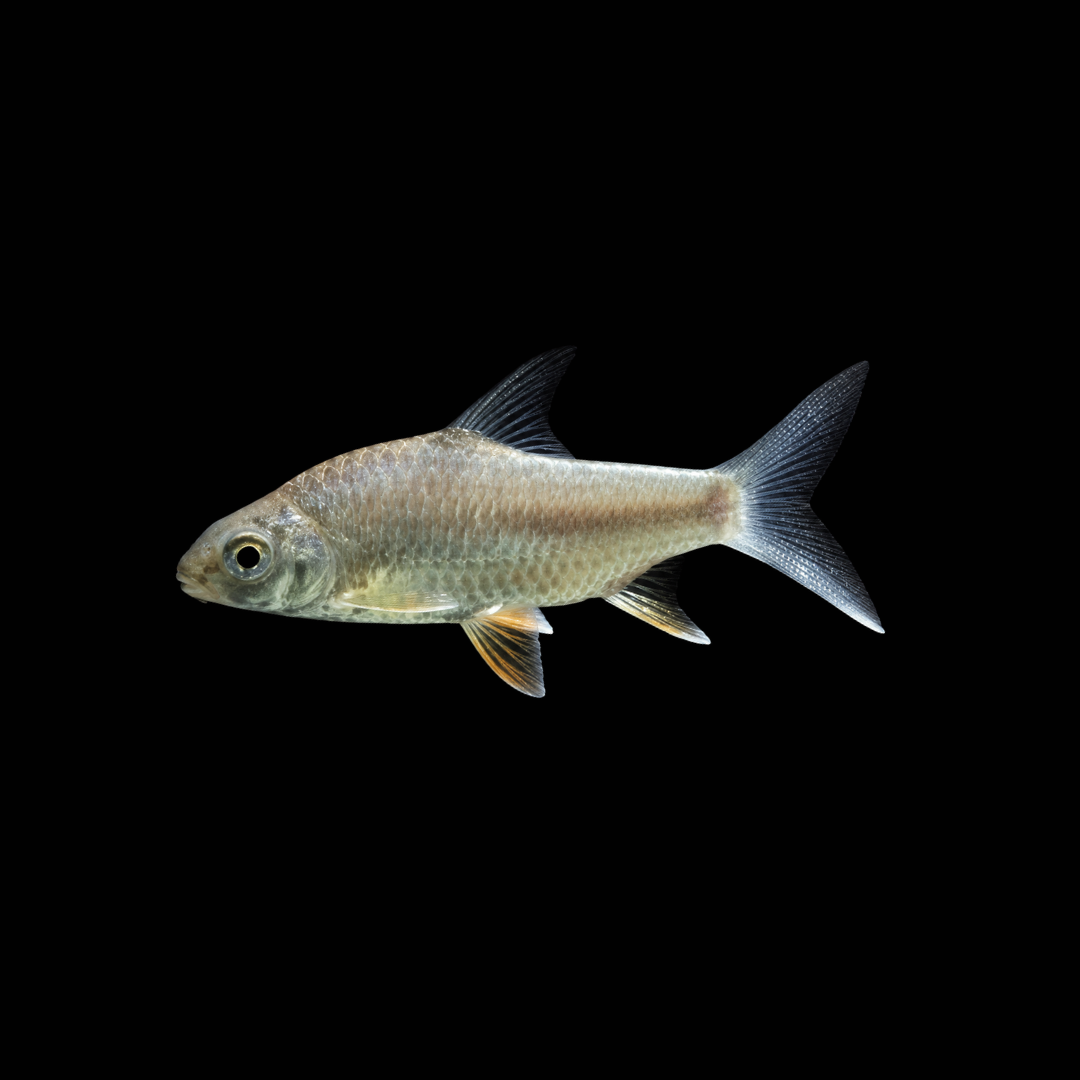
解説 / Description
イエローフィンバルブは、東南アジアの河川にすむヒプシバルブス属の中大型コイ科魚類として流通する観賞魚です。銀色から淡い黄色を帯びた体、黒く縁取られた鱗がつくる網目模様、そして黄色から橙色に染まる鰭が印象的で、大型魚水槽では古くから混泳相手として親しまれてきました。ただし、日本の観賞魚名としての「イエローフィンバルブ」は単一種だけを厳密に指しているとは限らず、Hypsibarbus wetmorei を中心に、Hypsibarbus vernayi など近縁種が含まれている可能性があります。飼育面では丈夫で餌付きのよい魚ですが、本来は広い流れのある水域を泳ぐ魚であるため、十分な遊泳空間、強い濾過、酸素量の多い清潔な水が長期飼育の鍵になります。 The Yellowfin Barb is an aquarium trade name applied to medium to large cyprinid fishes of the genus Hypsibarbus from Southeast Asian rivers. It is admired for its silvery to pale yellow body, dark-edged reticulated scales, and yellow to orange fins, and it has long been kept as a tank mate in large-fish aquariums. However, the Japanese trade name “Yellowfin Barb” does not always refer to a single species with strict certainty; it is most often associated with Hypsibarbus wetmorei, but related species such as Hypsibarbus vernayi may also be involved. It is hardy and feeds readily, but because it is naturally a river fish that uses open, flowing water, long-term success depends on generous swimming space, strong filtration, and clean, oxygen-rich water.
基本情報 / Basic Information
| 学名 / Scientific Name | Hypsibarbus wetmorei を代表的な流通上の学名とすることが多いです。ただし、黄色い鰭の特徴が強い個体では Hypsibarbus vernayi など近縁種の可能性もあるため、外見だけでの確実な同定は難しい魚です。 |
|---|---|
| 通称 / Common Name | イエローフィンバルブ、レモンフィンバルブ、ゴールデンベリーバルブYellowfin Barb, Lemon Fin Barb, Golden Belly Barb |
| 分類 / Family | コイ目 コイ科 コイ亜科 ヒプシバルブス属Order Cypriniformes, family Cyprinidae, subfamily Cyprininae, genus Hypsibarbus |
| 英名 / English Name | Yellowfin Barb, Lemon Fin Barb, Golden Belly Barb |
| 分布 / Distribution | メークロン川、メコン川、チャオプラヤ川の各水系、マレー半島など、東南アジアの淡水域に分布します。近縁種を含む流通名で扱われるため、実際の分布域は同定される種によって差があります。Distributed in freshwater habitats of Southeast Asia, including the Mae Klong, Mekong, and Chao Phraya basins and the Malay Peninsula. Because the trade name can include closely related species, the exact native range depends on the species being identified. |
| 最大体長 / Max Size | 水槽内では25〜35cm前後で扱われることが多いですが、種と環境によってさらに大きくなります。参考値として、H. vernayi は最大30cm標準体長、H. wetmorei は最大46cm全長がデータベースに示されています。成魚飼育では少なくとも30cm超、余裕を見て40cm級の魚として計画すると安全です。In aquariums it is often encountered at around 25–35 cm, but final size varies by species and conditions. As reference values, databases list H. vernayi at up to 30 cm standard length and H. wetmorei at up to 46 cm total length. For adult care, it is safest to plan for a fish exceeding 30 cm, with room for individuals approaching the 40 cm class. |
| 寿命 / Lifespan | 明確な飼育下寿命の記録は限られますが、適切な水量と水質を維持できれば10年前後、またはそれ以上の長期飼育が期待できます。Precise captive lifespan records are limited, but with adequate water volume and stable water quality, a lifespan around 10 years or longer can be expected. |
飼育環境 / Aquarium Environment
| 水槽サイズ / Tank Size | 幼魚の一時飼育でも90cm規格水槽以上が望ましく、成魚の長期飼育では120cm水槽は手狭になりやすいです。単独または少数でも150〜180cm以上の大型水槽、群泳を前提にするなら120cmワイド水槽以上、可能であれば底面240cm×60cm級の環境を目標にします。よく泳ぐ魚なので、単なる水量よりも水槽の長さと奥行きが重要です。Even juveniles are best kept temporarily in at least a standard 90 cm tank, and a 120 cm tank can become cramped for long-term adult care. For one or a few individuals, a 150–180 cm or larger aquarium is preferred. For a group, start from a wide 120 cm tank or larger, and aim for a footprint around 240 × 60 cm when possible. Because this is an active swimmer, tank length and depth matter as much as total volume. |
|---|---|
| 水温 / Temperature | 20〜28℃の範囲で飼育されますが、日常管理では22〜26℃前後を安定させると扱いやすいです。 It is kept within roughly 20–28°C, while a stable daily range around 22–26°C is practical for routine care. |
| 水質 / Water Quality | 弱酸性から中性、弱アルカリ性まで比較的幅広く適応します。目安はpH 6.0〜8.0、軟水から中硬水です。ただし、数値の幅よりも有機物をためないこと、酸素量を高く保つこと、水温やpHを急変させないことを優先します。It is fairly adaptable from slightly acidic to neutral and mildly alkaline water. A practical guide is pH 6.0–8.0 and soft to moderately hard water. More important than the exact numbers are low organic waste, high oxygen levels, and avoiding sudden shifts in temperature or pH. |
| レイアウト / Layout | 開けた遊泳スペースと水流を重視します。流木や岩を入れる場合も中央を空け、前後左右へしっかり泳げるようにします。柔らかい水草や新芽はつつかれることがあるため、水草を入れるならアヌビアス・ナナ、ミクロソリウムなど硬い葉を持つ種類を選ぶと扱いやすいです。Prioritize open swimming space and water movement. If driftwood or rocks are used, keep the central area clear so the fish can swim freely in all directions. Soft plants or new shoots may be nibbled, so tough-leaved plants such as Anubias and Microsorum are safer choices when plants are used. |
| 注意点 / Precautions | 大食漢で排泄量が多いため、強力な生物濾過、十分な水流、定期的な換水が欠かせません。目安として、水槽水量に対して1時間あたり4〜5回転程度の濾過流量を確保すると安定させやすくなります。驚いた時や給餌時に飛び出すことがあるため、頑丈なフタを隙間なく設置します。It feeds heavily and produces a substantial waste load, so strong biological filtration, good current, and regular water changes are essential. A filter turnover around 4–5 times the tank volume per hour is a useful target. This fish may jump when startled or during feeding, so a secure, sturdy lid with no gaps is necessary. |
餌と給餌 / Feeding
| 餌の種類 / Diet | 雑食性で、人工飼料への餌付きは非常に良好です。主食には中大型魚用の沈下性ペレットやフレークを使い、補助的に冷凍赤虫、アルテミア、ミジンコなどを与えます。自然下では底生動物や細かな有機物、藻類などを利用すると考えられるため、植物質を含む人工飼料、茹でたホウレンソウ、レタス、ズッキーニなどを少量加えるとバランスを取りやすくなります。It is omnivorous and usually accepts prepared foods readily. Use sinking pellets or flakes for medium to large fish as the staple, supplemented with frozen bloodworms, Artemia, and daphnia. In the wild, it likely uses benthic animals, fine organic matter, and algae, so vegetable-rich prepared foods and small portions of blanched spinach, lettuce, or zucchini help maintain a balanced diet. |
|---|---|
| 給餌のポイント / Feeding Tips | 勢いよく食べますが、動物性の餌だけに偏らせると肥満や内臓への負担につながります。主食は栄養バランスのよい人工飼料にし、植物質を定期的に加えます。大型魚水槽では残餌を拾うこともありますが、それは水質管理の代わりではありません。食べ残しが出ない量を観察しながら与え、過給餌を避けます。It is a vigorous feeder, but a diet based only on animal foods can contribute to obesity and internal stress. Balanced prepared foods should be the staple, with plant matter added regularly. In large-fish aquariums it may pick up leftovers, but this should not be treated as a substitute for water maintenance. Feed only what is consumed cleanly and avoid overfeeding. |
性格と混泳 / Temperament and Tank Mates
| 性格 / Temperament | 基本的には温和で、同程度のサイズの魚に対して強く攻撃することは少ない魚です。一方で、常に活発に泳ぐため、落ち着いた魚や泳ぎの弱い魚にはプレッシャーになることがあります。単独でも飼育はできますが、余裕のある水槽では5〜6匹以上のグループにすると警戒心が和らぎ、自然な群泳を観察しやすくなります。It is generally peaceful and rarely aggressive toward similarly sized fish. However, because it swims constantly, it can pressure shy or weak-swimming tank mates. It can be kept singly, but in a spacious aquarium a group of five to six or more reduces nervousness and makes natural schooling behavior easier to observe. |
|---|---|
| 混泳の相性 / Compatibility | アロワナ、ダトニオ、ポリプテルス、大型シクリッド、淡水エイなど、大型魚水槽の混泳相手として利用されます。オープンスペースを堂々と泳ぐ姿は、神経質な大型魚に安心感を与えるディザーフィッシュとしても役立ちます。ただし、口に入るサイズの小型魚は捕食される可能性があり、極端に臆病な魚、遊泳力の弱い魚、長い鰭を持つ魚との組み合わせにも注意が必要です。It is used as a tank mate for large fish such as arowanas, datnioides, Polypterus, large cichlids, and freshwater stingrays. A confident group swimming in open water can also act as dither fish, helping nervous large fish feel more secure. However, small fish that fit in its mouth may be eaten, and care is needed with very timid species, weak swimmers, or fish with long flowing fins. |
病気と対策 / Diseases and Prevention
| かかりやすい病気 / Common Diseases | 特定の病気に極端に弱い魚ではありませんが、水質悪化、酸欠、急な環境変化が続くと白点病、尾ぐされ病、肌荒れ、エロモナス症状などを起こすことがあります。輸入直後や導入直後は、スレ傷、外部寄生虫、痩せにも注意します。It is not especially delicate, but poor water quality, low oxygen, and sudden environmental changes can lead to ich, fin rot, skin irritation, or Aeromonas-related symptoms. Newly imported or newly introduced fish should also be watched for abrasions, external parasites, and weight loss. |
|---|---|
| 対策と予防 / Prevention | 強い濾過、十分な水流、こまめな換水、過密飼育を避けることが最も大切です。新しく迎えた個体は、可能であればトリートメント水槽で状態を観察してから本水槽へ入れます。水温やpHの急変を避け、フタやレイアウトで外傷を防ぐことも安定飼育につながります。Strong filtration, ample water movement, frequent water changes, and avoiding overcrowding are the most important preventive measures. New individuals should ideally be observed in a quarantine or treatment tank before entering the main aquarium. Avoid sudden shifts in temperature or pH, and reduce injury risks with secure covers and safe layout choices. |
増やし方(繁殖) / Breeding
| 雌雄の判別 / Sexing | 水槽内での明確な雌雄判別は簡単ではありません。成熟したメスは腹部がふっくらし、体高が出やすいと考えられますが、外見だけで確実に見分けるのは難しい魚です。Reliable sexing in aquariums is difficult. Mature females may become fuller in the belly and deeper-bodied, but external appearance alone is not a dependable method. |
|---|---|
| 繁殖形態 / Reproduction | 卵をばらまくタイプの産卵を行うコイ科魚類です。野外では水位上昇に合わせて移動する性質が示されており、近縁種では雨季と乾季で利用する河川環境が変わる例も知られます。It is an egg-scattering cyprinid. In the wild, movement associated with rising water levels has been reported, and related species are known to use different river habitats between wet and dry seasons. |
| 繁殖のポイント / Breeding Tips | 家庭水槽での繁殖は現実的には難しい魚です。十分な水量、成熟した複数個体、水位上昇や水流の変化など、自然の季節変化に近い刺激が必要になると考えられます。原産地では食用・資源保全の文脈で人工的な種苗生産が行われているとされますが、一般的な観賞魚飼育では繁殖よりも長期維持を目標にするのが現実的です。Breeding in a home aquarium is generally impractical. It would likely require very large water volume, multiple mature fish, and seasonal cues such as rising water levels and changes in current. Artificial propagation is reported in its native range in fisheries and conservation contexts, but for most aquarists long-term maintenance is a more realistic goal than breeding. |
雑学と豆知識 / Trivia and Fun Facts
| 1. 「イエローフィン」という名前と学名のずれ / 1. The gap between the name “Yellowfin” and the scientific name | 日本でイエローフィンバルブと呼ばれる魚は、長く Hypsibarbus wetmorei として紹介されることが多かった一方で、実際の流通個体には Hypsibarbus vernayi など近縁種が混ざっている可能性があります。面白いのは、H. wetmorei では腹鰭や尻鰭が赤色から橙色に記載されるのに対し、H. vernayi では胸鰭や尻鰭が黄色と記載される点です。つまり、名前の印象どおりに「黄色い鰭」が目立つ個体ほど、流通名だけでは学術的な種名を決めきれないという、観賞魚ならではの奥深さを持っています。Fish sold in Japan as Yellowfin Barbs have long often been introduced as Hypsibarbus wetmorei, while actual trade specimens may include close relatives such as Hypsibarbus vernayi. An interesting point is that H. wetmorei is described with red to reddish-orange pelvic and anal fins, whereas H. vernayi is described with yellow pectoral and anal fins. In other words, individuals that look most “yellow-finned” cannot be identified with certainty from the trade name alone, which gives this aquarium fish a particularly interesting taxonomic background. |
|---|---|
| 2. ヒプシバルブス属は比較的新しく整理された分類群 / 2. Hypsibarbus is a relatively recently organized genus | ヒプシバルブス属は、1996年に W.J. Rainboth によって東南アジアの大型バルブ類として整理された分類群です。それ以前は、Puntius、Barbus、Poropuntius、Acrossocheilus など、別の属に入れられてきた歴史があります。属名の Hypsibarbus は「高い」または「深い」を示す語と、ヒゲを持つコイ科魚類を連想させる Barbus を組み合わせた名前で、成長とともに体高が増す本属の姿をよく表しています。The genus Hypsibarbus was organized by W.J. Rainboth in 1996 for large Southeast Asian barbs. Before that, these fishes had a history of being placed in genera such as Puntius, Barbus, Poropuntius, and Acrossocheilus. The name Hypsibarbus combines a word element meaning “high” or “deep” with Barbus, a name associated with barbel-bearing cyprinids, and it suits the deep-bodied form these fish develop with age. |
| 3. DNA解析で見える近縁種の違い / 3. DNA analysis reveals differences among close relatives | H. wetmorei、H. vernayi、H. malcolmi は外見がよく似ており、特に若い個体では見分けが難しい魚です。ミトコンドリアのシトクロムb遺伝子を対象にしたPCR-RFLP法では、制限酵素 Bsp143I と BcuI の組み合わせにより、これら3種の識別に役立つパターンが得られることが示されています。水槽では色や混泳性に目が向きますが、その背後には、外見だけでは追いきれない分類学の世界が広がっています。H. wetmorei, H. vernayi, and H. malcolmi are very similar in appearance, especially as juveniles. PCR-RFLP analysis of the mitochondrial cytochrome b gene has shown that the restriction enzymes Bsp143I and BcuI can produce useful patterns for identifying these three species. In the aquarium, their color and compatibility are often the focus, but behind that familiar presence is a taxonomic world that cannot always be followed by appearance alone. |
| 4. 大型魚水槽で重宝されるディザーフィッシュ / 4. A useful dither fish for large-fish aquariums | イエローフィンバルブは、アロワナやダトニオなどの大型魚水槽で「脇役」として扱われることがあります。しかし、その役割は小さくありません。堂々と群れで泳ぐ魚がいると、神経質な大型魚は水槽内を安全な空間として認識しやすくなり、前面に出てくるきっかけになります。さらに食べ残しを素早く拾うこともありますが、この長所はあくまで補助的なものです。清潔な水を維持する主役は、強い濾過と日々の管理です。The Yellowfin Barb is sometimes treated as a supporting fish in aquariums with arowanas, datnioides, and other large species, but its role is not minor. When a confident group swims in open water, nervous large fish may perceive the aquarium as a safer space and come forward more readily. It may also pick up leftover food quickly, but this is only a supporting benefit. The real foundation of clean water remains strong filtration and consistent maintenance. |
| 5. タイの川と文化に結びつく魚 / 5. A fish connected with Thai rivers and culture | タイでは、この魚は Pla Tapak や Pla Krapak などの名で知られています。ラーマ5世のサイヨークへの旅に関わる詩にも登場すると紹介されることがあり、清らかな流れに魚が集う情景を想像させる存在です。こうした背景は、イエローフィンバルブが単なる観賞魚や食用魚ではなく、東南アジアの河川と人々の暮らしに根ざした魚であることを教えてくれます。In Thailand, this fish is known by names such as Pla Tapak and Pla Krapak. It is also introduced in some accounts as appearing in poetry associated with King Rama V’s journey to Sai Yok, evoking the image of fish gathering in clear flowing water. This background reminds us that the Yellowfin Barb is not only an aquarium or food fish, but also a river fish rooted in the lives and landscapes of Southeast Asia. |
| 6. 野生環境では「流れ」が暮らしそのもの / 6. In the wild, current is part of its life | 野生の Hypsibarbus 類は、流れのある河川環境と深く結びついています。H. wetmorei では森林に囲まれた中規模河川の中層から底層を利用し、水位が高い時期には上流へ移動する可能性が示されています。また、せき止められた水域では定着しにくいとされます。水槽内で水流と酸素を重視することは、単なる飼育テクニックではなく、この魚の本来の暮らし方に近づけるための大切な配慮です。Wild Hypsibarbus species are closely tied to flowing river habitats. H. wetmorei is described as using midwater to bottom levels of medium-sized forest streams, and it may move upstream during high-water periods. It is also reported not to persist in impoundments. Providing current and oxygen in the aquarium is therefore more than a husbandry trick; it is a way to care for the fish in a manner closer to its natural life. |
まとめ / Conclusion
イエローフィンバルブは、丈夫で餌付きがよく、大型魚水槽の混泳相手として頼りになる魚です。しかし、その本質は「残餌処理役」だけではありません。流れの中を力強く泳ぎ、群れで水槽の空間を満たし、成長とともに体高と鰭の色彩を増していく、存在感のある大型コイ科魚類です。 The Yellowfin Barb is hardy, easy to feed, and dependable as a tank mate in large-fish aquariums. Yet its value is not limited to being a cleanup helper. It is a large cyprinid with real presence, swimming powerfully through current, filling open space as a group, and developing deeper body form and richer fin color as it matures.
広い水槽、清潔で酸素量の多い水、余裕のある混泳相手を用意できた時、この魚は脇役ではなく、水槽全体の雰囲気をつくる大切な一員になります。銀色の幼魚が堂々とした成魚へ変わっていく姿には、東南アジアの川を思わせる力強さと、長く付き合うほど深まる味わいがあります。 When provided with a spacious aquarium, clean oxygen-rich water, and suitable tank mates, this fish becomes more than a supporting character; it becomes an important part of the aquarium’s atmosphere. Watching a silvery juvenile grow into a confident adult offers a sense of Southeast Asian river life and a charm that deepens the longer it is kept.

気になる道具や飼い方を見つけてみませんか?
 アイのアクアグッズ案内水槽の流木の選び方|枝・マングローブ・アク抜きとおすすめ商品水槽に小さな森を作る流木。枝流木やマングローブという名前の違いから、魚の隠れ家、水草の取り付け、浮く・水が茶色くなるときの準備まで、アイとコタロウが商品とともに案内します。記事はコチラ →
 アイのアクアグッズ案内水草水槽のCO₂添加|3つの方式の選び方とおすすめ用品道具の特徴や使い方、選ぶときのポイントをアイが紹介します。記事はコチラ →
 アイのアクアグッズ案内ベタの一匹飼いを楽しむ|水槽・ヒーター・ふた・フィルターの選び方ベタの一匹飼いに向く水槽容量、ふたと空気層、ヒーターと水温計、弱い水流のフィルターを、コタロウとアイの会話で分かりやすく解説します。記事はコチラ →
 アイのアクアグッズ案内水槽用ヒーターの選び方|固定式・温度調節式と、水量に合うW数の考え方水槽の魚は冬に寒くない? アイとコタロウが水温計から固定式・温度調節式・分離式ヒーターまで比較。水量と室温に合うW数、設置場所、水換えや交換の注意点を、国内メーカーの商品とともに紹介します。記事はコチラ →
さまざまな飼育テーマをご紹介。リンク先の記事には広告・商品紹介が含まれます。
案内・紹介記事一覧へ →分布マップ
イエローフィンバルブは、メークロン川、メコン川、チャオプラヤ川の各水系、マレー半島など、東南アジアの淡水域に分布するとされます。地図では、その広い分布イメージを中央タイ付近の概略代表地点として示しています。
この地図のマーカーは、分布欄の内容から作成した分布イメージ用の概略代表地点です。実際の採集地点や厳密な生息範囲を示すものではありません。
参考文献
この記事では、店舗・通販ページ、個人ブログ、価格情報、まとめサイトを参考文献から除外し、分類・分布・生息環境・飼育条件・繁殖・病気予防の根拠として確認しやすい資料に絞っています。観賞魚名としての「イエローフィンバルブ」は複数の近縁種を含む可能性があるため、分類・形態に関する資料は Hypsibarbus wetmorei と Hypsibarbus vernayi の両方を確認対象にしています。
-
Eschmeyer’s Catalog of Fishes, California Academy of Sciences: Hypsibarbus wetmorei
分類、原記載、シノニム、現在の有効名、分布域の確認に使用。特に「Hypsibarbus wetmorei が有効名であること」と、チャオプラヤ川・メコン川・メークロン川・マレー半島周辺を含む分布情報の基礎資料です。 -
Kottelat, M. 2013. The Fishes of the Inland Waters of Southeast Asia. The Raffles Bulletin of Zoology Supplement 27
東南アジア内水面魚類の包括的カタログ。Hypsibarbus 属の種リスト、H. vernayi と H. wetmorei の原記載・タイプ産地・シノニム確認に使用。 -
Rainboth, W. J. 1996. Fishes of the Cambodian Mekong. FAO Species Identification Field Guide for Fishery Purposes
メコン水系の魚類相、淡水魚の識別、東南アジア河川魚類の背景を支えるFAO資料。生息環境や地域魚類相を説明する際の基礎資料として使用。 -
Rainboth, W. J. 1996. The Taxonomy, Systematics, and Zoogeography of Hypsibarbus, a New Genus of Large Barbs from the Rivers of Southeastern Asia
ヒプシバルブス属の成立、属レベルの整理、東南アジア大型バルブ類の分類史を支える中心的文献として選定。 -
FishBase: Hypsibarbus wetmorei
最大体長、淡水・中層から底層を利用する生態、pH・硬度などの水質目安、分布、IUCN評価、河川環境に関する記述の確認に使用。 -
FishBase: Hypsibarbus vernayi
黄色味のある体色、黄色い胸鰭・尻鰭、鱗列などの識別形質を確認するために使用。流通名「イエローフィンバルブ」に近縁種が含まれる可能性を説明する補助資料です。 -
Jantrarotai, P. et al. 2007. Species Identification of 3 Hypsibarbus spp. Using PCR-RFLP of Cytochrome b Gene. Kasetsart Journal (Natural Science) 41(4):660–666
H. wetmorei、H. vernayi、H. malcolmi の識別に関する分子同定資料。Bsp143I と BcuI を用いたPCR-RFLPによる種判別の説明を支える資料です。 -
Seriously Fish: Hypsibarbus wetmorei
店舗・通販ではない種別飼育データベースとして、成魚飼育に必要な大型水槽、強い水流、溶存酸素、混泳、水草食害、給餌など、家庭水槽での実務的な飼育条件を補う資料として限定的に使用。 -
FishBase Manual: The REPRODUCTION Table
魚類の繁殖様式を整理するための用語確認に使用。卵をばらまくタイプ、親が卵や仔魚を保護しないタイプなど、繁殖形態の説明を補強する資料です。 -
Merck Veterinary Manual: Management of Aquarium Fish
水質管理、検疫、バイオセキュリティ、薬剤使用時の注意点など、病気予防と飼育上の注意点を支える獣医学系資料として使用。 -
University of Florida IFAS Extension: Ichthyophthirius multifiliis (White Spot) Infections in Fish
白点病の原因、生活環、再感染防止、清掃や隔離の重要性を確認するために使用。淡水観賞魚の代表的な病気と予防策の説明を支える資料です。
閲覧日:2026-06-21。国内流通価格、ショートボディやプラチナ個体の販売実例、店舗ごとの入荷頻度は、信頼性の高い生物学・飼育根拠とは性質が異なるため、この参考文献ブロックには含めていません。




コメント