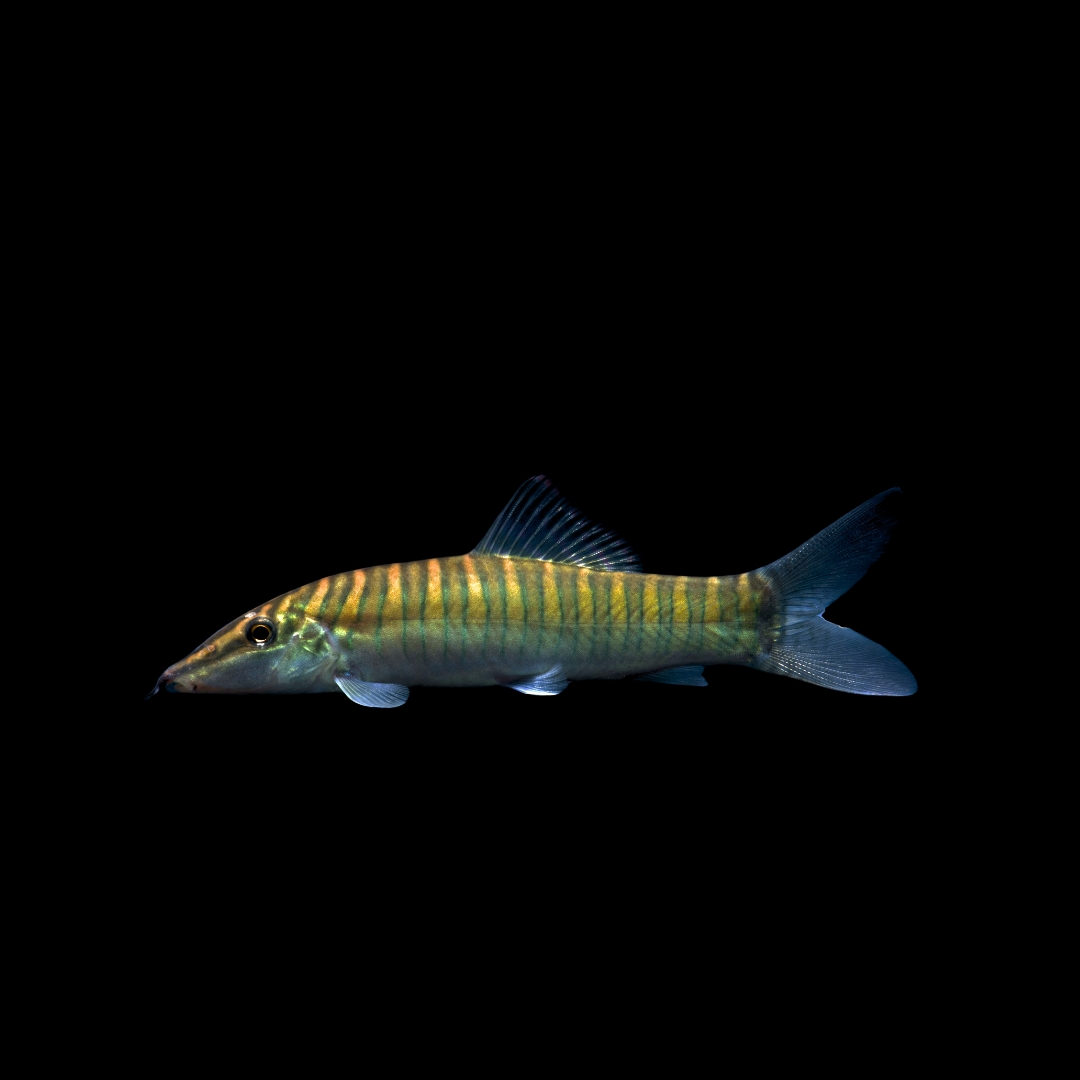
タイガーボーシャは、東南アジアの河川に生息するアユモドキ科シンクロスス属の大型ボーシャ類に使われる流通名です。代表的には、グリーンタイガーボーシャと呼ばれる Syncrossus hymenophysa、バンデッドタイガーローチとして知られる Syncrossus helodes、レッドフィンタイガーローチの名で扱われる Syncrossus berdmorei などが含まれます。鮮明な縞模様、底層を力強く泳ぐ姿、給餌時の活発な行動が魅力ですが、流通名だけでは種の判別が難しいことがあり、最大サイズや適した水槽規模にも差が出ます。美しい見た目に反して気性は強く、一般的な小型魚中心の混泳水槽には向きません。大型水槽、強力なろ過、細かな砂床、豊富な隠れ家、そして群れとしての社会関係を保てる環境を用意してこそ、本来の魅力を楽しめる上級者向けの魚です。Tiger loach is a trade name used for large botiid loaches of the genus Syncrossus from Southeast Asian rivers. Common examples include Syncrossus hymenophysa, often called the Green Tiger Loach, Syncrossus helodes, known as the Banded Tiger Loach, and Syncrossus berdmorei, often traded as the Redfin Tiger Loach. Their bold stripes, powerful bottom-dwelling movement, and energetic feeding behavior are highly attractive, but the trade name alone does not always identify the exact species, and adult size and tank requirements vary. Despite their beautiful appearance, they are assertive and are not suitable for ordinary community tanks with small peaceful fish. They are best regarded as advanced fish that need a large aquarium, strong filtration, fine sand, abundant hiding places, and enough social space for a stable group.
コイ目 アユモドキ科 シンクロスス属Order Cypriniformes, family Botiidae, genus Syncrossus
英名 / English Name
Tiger Loach, Tiger Botia, Banded Tiger Loach, Green Tiger Loach
分布 / Distribution
東南アジア。種によって分布は異なり、スマトラ島、ボルネオ島、マレー半島、メコン川水系、チャオプラヤ川水系、メークロン川水系、ミャンマーやインド北東部周辺の河川などに記録があります。流通名で混在することがあるため、産地や外見の確認が重要です。Southeast Asia. Distribution varies by species and includes Sumatra, Borneo, the Malay Peninsula, the Mekong, Chao Phraya and Mae Klong basins, and river systems around Myanmar and northeastern India. Because different species may be mixed under similar trade names, origin and appearance should be checked carefully.
最大体長 / Max Size
種により差があります。Syncrossus hymenophysa は標準体長で約21cm、Syncrossus helodes は約25〜30cm級として扱います。Syncrossus berdmorei と Syncrossus beauforti は資料により数値差があり、飼育上は少なくとも15〜20cm以上、種や個体によってはそれ以上を想定しておくと安全です。Size differs by species. Syncrossus hymenophysa is recorded at about 21 cm standard length, while Syncrossus helodes should be treated as a 25–30 cm class fish. Published values for Syncrossus berdmorei and Syncrossus beauforti vary, so for aquarium planning it is safest to expect at least 15–20 cm or more depending on the species and individual.
寿命 / Lifespan
正確な寿命は種や飼育条件で差がありますが、良好な環境では10年以上の長期飼育を目標にできる魚です。大型化と長寿を前提に、導入前から水槽規模を計画します。Exact lifespan varies by species and conditions, but with good care these fish can be kept for many years and a lifespan of ten years or more is a realistic long-term goal. Plan tank size from the start with their size and longevity in mind.
飼育環境 / Aquarium Environment
水槽サイズ / Tank Size
幼魚期だけなら120cm規格水槽で一時的に飼える場合もありますが、長期飼育ではより広い底面積が必要です。Syncrossus hymenophysa では150×45cm以上、Syncrossus helodes や大型化する個体では180×45cm以上の水槽を目安にします。水量だけでなく、底層を泳ぎ回れる横幅と奥行き、追われた個体が逃げ込める空間を重視します。Juveniles may be kept temporarily in a standard 120 cm tank, but long-term care requires a larger footprint. For Syncrossus hymenophysa, a base of 150 × 45 cm or larger is a better minimum, while Syncrossus helodes and larger individuals should be planned for 180 × 45 cm or larger. Floor space, width, depth, and escape routes for subordinate fish matter as much as total water volume.
水温 / Temperature
おおむね24〜30℃。種類によって好む範囲に差があるため、購入時の種名や産地情報も確認します。急変を避け、季節を通じて安定した水温を維持します。Generally around 24–30°C. Preferred range can differ by species, so check the species name and origin when possible. Avoid sudden changes and keep the temperature stable.
水質 / Water Quality
弱酸性から中性、軟水から中硬水を基本にします。Syncrossus helodes ではpH 6.0〜6.5程度の記録があり、Syncrossus hymenophysa も軟水寄りの清浄な水を好む魚として扱うと無難です。日本の一般的な水道水は軟水寄りで合わせやすい場合が多いものの、重要なのはアンモニアと亜硝酸を出さない成熟したろ過、豊富な溶存酸素、硝酸塩をためすぎない換水です。外部式フィルターなどで強い生物ろ過と水流を確保し、週1回を目安に30〜50%の換水を行うと安定しやすくなります。Slightly acidic to neutral, soft to moderately hard water is a safe general approach. Syncrossus helodes is recorded from water around pH 6.0–6.5, and Syncrossus hymenophysa is best treated as a clean-water fish that does well in softer conditions. Japanese tap water is often relatively soft and may be easy to adapt, but the key points are mature filtration with no ammonia or nitrite, high dissolved oxygen, and regular water changes to prevent nitrate buildup. Strong biological filtration and current from external canister filters, plus weekly 30–50% water changes, help keep conditions stable.
レイアウト / Layout
底床は角のない細かな砂を使います。吻部と口ひげで底を探るため、粗い砂利では傷や感染の原因になります。流木、丸石、丈夫な土管やシェルターを組み合わせ、個体数以上の隠れ家と視線を遮る場所を作ります。隠れ家は単なる飾りではなく、追い回しを途中で切るための安全装置です。飛び出し防止のため、蓋やコード穴の隙間も確実にふさぎます。Use smooth, fine sand as the substrate. These loaches probe the bottom with their snout and barbels, so coarse gravel can cause injuries and infections. Combine driftwood, rounded stones, sturdy pipes, and shelters to provide more hiding places than fish and to break lines of sight. Hiding places are not just decoration; they are safety features that interrupt chasing. A tight-fitting lid is essential, including covers for cable gaps, because startled fish can jump.
注意点 / Precautions
立ち上げ直後の不安定な水槽には導入しないでください。少数飼育では強い個体の攻撃が特定個体に集中しやすいため、少なくとも5匹以上、可能なら8匹以上の群れで管理し、隠れ家と視覚的バリアを十分に用意します。ただし、数を増やせば必ず穏やかになるわけではないため、弱った個体を隔離できる予備水槽もあると安心です。Do not introduce them to a newly set-up or biologically unstable aquarium. In very small groups, aggression can focus on one weaker fish, so keep at least five individuals and preferably eight or more, with plenty of shelters and visual barriers. Larger groups help disperse aggression but do not guarantee peace, so a spare tank for separating injured or bullied fish is useful.
餌と給餌 / Feeding
餌の種類 / Diet
肉食傾向の強い雑食性です。沈下性の肉食魚用ペレット、タブレットフード、冷凍アカムシ、イトミミズ、冷凍ブラインシュリンプ、イサザアミ、小型の貝類などを組み合わせます。野生では水生昆虫、ミミズ類、甲殻類、貝類などの底生動物を食べるため、単一の人工飼料だけでなく複数の餌をローテーションすると状態を維持しやすくなります。They are omnivores with a strong carnivorous tendency. Offer a rotation of sinking carnivore pellets, tablet foods, frozen bloodworms, tubifex worms, frozen brine shrimp, mysids, and small snails. In nature they feed on benthic prey such as aquatic insects, worms, crustaceans, and mollusks, so variety is better than relying on only one processed food.
給餌のポイント / Feeding Tips
給餌時は争いが起こりやすいため、餌は水槽の複数箇所へ同時に落とします。強い個体が独占しないよう、消灯前後など底層魚が落ち着いて採餌しやすい時間を利用するのも有効です。スネールを食べる力はありますが、スネール駆除だけを目的に温和な小型魚水槽へ入れるのは避けてください。痩せる個体が出る場合は、餌負け、ストレス、内部寄生虫の可能性を順に確認します。Feeding often triggers competition, so distribute food in several areas at the same time. Feeding around lights-out can help bottom fish feed more calmly. They can eat snails, but they should not be added to a peaceful small-fish community tank purely for snail control. If an individual becomes thin, check for food competition, stress, and possible internal parasites.
性格と混泳 / Temperament and Tank Mates
性格 / Temperament
活発で好奇心が強く、ボーシャ類の中でも攻撃性が目立つグループです。群れの中では順位関係を作り、強い個体が弱い個体を追うことがあります。順位争いや給餌時には、体色が一時的に薄くなるグレイイング・アウトや、カチッというクリック音が見られることがあります。これらは行動としては知られていますが、長く続く退色、傷、拒食、激しい呼吸を伴う場合はストレスや病気のサインとして見直します。They are active, curious, and among the more aggressive botiid loaches. Within a group, they form a hierarchy, and dominant fish may chase weaker ones. During rank disputes or feeding, they may show temporary paling known as greying out and may produce audible clicking sounds. These behaviors are known in loaches, but persistent paling, injuries, refusal to feed, or rapid breathing should be treated as warning signs of stress or disease.
混泳の相性 / Compatibility
ネオンテトラなどの小型魚、ヒレの長いベタやエンゼルフィッシュ、動きの遅いコリドラスや小型プレコとの混泳は避けます。比較的合わせやすいのは、底層の縄張りに干渉しにくい中〜上層を泳ぐ、大きくて遊泳力のある丈夫な魚です。候補としてはティンホイルバルブ、ジャイアントダニオ、大型レインボーフィッシュなどが挙げられます。底層同士で合わせる場合は、同等の体格と気性を持つ大型ボーシャ類に限り、十分な水槽サイズと個体数を確保して慎重に行います。Avoid small fish such as neon tetras, long-finned fish such as bettas or angelfish, and slow bottom dwellers such as Corydoras or small plecos. Better companions are large, robust, fast-swimming fish that occupy the middle to upper layers and do not compete for bottom territories. Possible choices include tinfoil barbs, giant danios, and large rainbowfish. Bottom-dwelling companions should only be similarly large and robust loaches, and only in a spacious tank with enough individuals and shelters.
病気と対策 / Diseases and Prevention
かかりやすい病気 / Common Diseases
白点病、水カビ病、口ひげや吻部の傷からの細菌感染、輸入直後の痩せ症状、いわゆるスキニー病に注意します。体表の鱗は非常に細かく皮膚に埋もれるように見えるため、アクアリウムでは薬品に敏感な魚として扱うのが安全です。水質悪化、粗い底床、強い個体からの追い回しは、病気の引き金になります。Watch for ich, fungal infections, bacterial infections from injured barbels or snouts, post-import wasting, and the condition often called skinny disease. Their scales are very small and appear embedded in the skin, so in aquarium practice they should be treated as medication-sensitive fish. Poor water quality, coarse substrate, and bullying can all trigger health problems.
対策と予防 / Prevention
予防の基本は、成熟したろ過、十分な酸素量、清潔な底床、角のない砂、過密による水質悪化を避けることです。薬浴が必要な場合、硫酸銅やマラカイトグリーンなどの強い薬は、製品説明で無鱗魚やドジョウ類への注意を必ず確認し、規定量をそのまま入れる前に低めの濃度から慎重に始めます。新規導入魚は可能な限り隔離し、痩せが続く場合は餌負けだけでなく内部寄生虫の可能性も考えます。薬剤名や量は地域の製品差があるため、販売店や魚病に詳しい専門家に確認してから扱うと安全です。Prevention depends on mature filtration, high oxygen levels, clean substrate, smooth sand, and avoiding water deterioration from overcrowding. If medication is required, always check the product warning for scaleless fish and loaches, especially with strong treatments such as copper or malachite green, and start cautiously at a lower concentration rather than adding the full dose immediately. Quarantine new arrivals whenever possible, and if wasting continues, consider internal parasites as well as food competition. Medication names and doses vary by region, so consult a knowledgeable shop or fish-health specialist when in doubt.
増やし方(繁殖) / Breeding
雌雄の判別 / Sexing
外見だけでの判別は難しい魚です。成熟したメスは腹部がやや丸く、体に厚みが出ることがありますが、若魚や非繁殖期では確実な判断はできません。販売サイズでは雌雄不明として扱うのが現実的です。Sexing by appearance is difficult. Mature females may have a rounder abdomen and deeper body, but reliable identification is difficult in juveniles or outside reproductive condition. Fish sold in shops should usually be treated as unsexed.
繁殖形態 / Reproduction
卵生です。自然下では雨季の増水、水温や水流の変化、氾濫原や小河川への移動など、複数の季節的な変化が産卵に関わると考えられています。Syncrossus helodes では雨季に冠水域へ移動し、乾季に川へ戻る行動が記録されています。They are egg-layers. In nature, spawning is thought to be linked to seasonal changes such as rainy-season flooding, changes in temperature and current, and movement into flooded areas or smaller streams. Syncrossus helodes is recorded as moving into flooded areas during the rainy season and returning to rivers during the dry season.
繁殖のポイント / Breeding Tips
家庭水槽での自然繁殖は非常に難しく、一般的な飼育者が安定して狙える魚ではありません。近縁のボーシャ類やクラウンローチではホルモン誘発繁殖の研究・実用例があり、流通個体にも養殖由来が含まれる可能性がありますが、タイガーボーシャとして販売される個体の由来は輸入便や販売店によって異なります。飼育者は繁殖を第一目標にするより、長期飼育、適切な種の同定、群れの安定、健康維持を優先するのが現実的です。Natural breeding in home aquaria is very difficult and is not a realistic target for most aquarists. Hormone-induced breeding has been researched and used in related botiid loaches and clown loaches, and some fish in the trade may be farm-produced, but the origin of fish sold as tiger loaches varies by shipment and retailer. For aquarists, long-term maintenance, correct identification, stable group behavior, and good health are more realistic goals than breeding.
雑学と豆知識 / Trivia and Fun Facts
1. 流通名と学名のずれ / 1. Trade Names and Scientific Names
タイガーボーシャという流通名だけでは、種を特定できないことがあります。古い資料や輸入リストでは、現在シンクロスス属に置かれる魚が Botia の名で扱われることがあり、さらに店頭では複数種が似た名前で並ぶことがあります。縞の本数、背びれ前方の縞の傾き、腹部のスポット、背びれの黒斑を見比べると、単なる「縞のあるボーシャ」ではなく、それぞれ異なる河川環境で進化してきた魚であることが見えてきます。The trade name “Tiger Loach” does not always identify a single species. Older aquarium literature and import lists may use the genus name Botia for fish now placed in Syncrossus, and several species can appear in shops under similar trade names. By comparing stripe number, the angle of the bars before the dorsal fin, ventral spots, and dorsal-fin markings, the fish becomes more than simply a striped loach; it becomes a group of related species shaped by different river habitats.
2. カチッと鳴るクリック音 / 2. The Audible Click
給餌時や威嚇時に、タイガーボーシャがカチッ、コチッという音を出すことがあります。ボーシャ類のクリック音は、喉の奥にある咽頭歯や咽頭顎の摩擦が関わると説明されることが多く、魚同士の距離を取らせる合図や、餌場での主張として働いている可能性があります。水槽の前で小さな音が聞こえたら、それはガラスや器具の音ではなく、群れの中で交わされる短いメッセージかもしれません。Tiger loaches may produce clicking sounds during feeding or threat displays. In botiid loaches, these sounds are often explained as being linked to stridulation of the pharyngeal teeth or pharyngeal jaws, and they may function as short signals during feeding competition or social spacing. If a small click is heard from the tank, it may not be the glass or equipment; it may be a brief message exchanged within the group.
3. グレイイング・アウトという緊張のサイン / 3. Greying Out as a Sign of Tension
新しい個体を入れた直後や順位争いの最中には、縞模様が薄れ、体全体が白っぽく見えることがあります。これはグレイイング・アウトと呼ばれ、ボーシャ類の社会行動として知られています。短時間で戻るなら大きな問題でないこともありますが、退色が長引く、隠れっぱなしになる、傷が増える、餌を食べないといった変化が重なる場合は、群れのバランスやレイアウトを見直す合図です。After introducing new fish or during rank disputes, the stripes may fade and the whole body may appear pale. This is known as greying out and is recognized as part of loach social behavior. If the color returns quickly, it may not be a major problem, but if paling persists together with hiding, injuries, or refusal to feed, it is a sign to review group balance and layout.
4. 横たわって休む姿 / 4. Resting on Their Side
ボーシャ類を初めて飼う人が最も驚きやすい行動のひとつが、流木の陰や土管の中で横倒しになって休む姿です。まるで死んでしまったように見えることがありますが、エラの動きが正常で、近づくと反応するなら、たいていはリラックスした休息姿勢です。この習性を知っておくと、慌てて水槽をかき回して魚を余計に驚かせる失敗を防げます。One of the most surprising behaviors for first-time loach keepers is seeing the fish lying on its side under driftwood or inside a pipe. It can look as if the fish has died, but if gill movement is normal and it reacts when approached, it is usually simply resting. Knowing this habit prevents unnecessary panic and disturbance.
5. 目の下に隠れた眼下棘 / 5. The Hidden Suborbital Spine
タイガーボーシャの目の下には、ふだん皮膚の中に隠れている鋭い眼下棘があります。驚いたときや網ですくわれたときに開くことがあり、網に引っかかったり、人の手を傷つけたりする可能性があります。移動させるときは無理に網から外そうとせず、大きめの容器で水ごとすくう方法が安全です。美しい縞模様の下には、野生の川で生き抜くための防御装置も備わっています。Below the eye is a sharp suborbital spine that normally lies hidden under the skin. It may be extended when the fish is frightened or netted, and it can snag in nets or injure hands. When moving the fish, do not force it out of a net; scooping it with water in a large container is safer. Beneath the attractive stripes is a defensive tool shaped by life in wild rivers.
まとめ / Conclusion
タイガーボーシャは、縞模様の美しさ、底層を走るように泳ぐ力強さ、クリック音や体色変化を伴う社会行動など、図鑑の中でも強い個性を放つ魚です。ただし、その魅力は「小型水槽で気軽に楽しめる魚」という方向ではなく、広い水槽の底層に自然な群れの緊張感を再現することで引き出されます。流通名には複数種が含まれる可能性があるため、購入時は学名、産地、成魚サイズの見積もりを確認することが大切です。Tiger loaches stand out in any aquarium reference for their bold stripes, powerful bottom-dwelling movement, audible clicks, and social color changes. Their appeal is not that they are easy fish for a small tank, but that they can bring the tension and energy of a natural loach group to the bottom of a large aquarium. Because the trade name may include several species, check the scientific name, origin, and expected adult size before purchase.
長く付き合うなら、150〜180cm級以上の水槽、細かな砂床、複数の隠れ家、強いろ過と酸素量、そして攻撃を分散できる十分な個体数が基本になります。準備が整った水槽で群れが安定すると、タイガーボーシャは単なるスネールハンターではなく、東南アジアの河川を思わせる野性味と観察の面白さを水槽にもたらしてくれます。設備と覚悟を持って迎えることで、図鑑で読む知識が日々の行動観察へとつながる、長期飼育にふさわしい存在になるでしょう。For long-term care, prepare a 150–180 cm class aquarium or larger, fine sand, multiple shelters, strong filtration, high oxygen levels, and enough individuals to spread aggression. Once the group stabilizes in a well-prepared aquarium, tiger loaches become far more than snail-eating fish; they bring the wild energy and observational depth of Southeast Asian rivers into the tank. With the right equipment and commitment, the knowledge in a reference article turns into daily behavior worth watching for many years.
Fricke, R., Eschmeyer, W. N. & Van der Laan, R. Eschmeyer’s Catalog of Fishes. California Academy of Sciences. 根拠範囲:Syncrossus hymenophysa と Syncrossus helodes の有効学名、命名者、分類上の位置づけ、旧 Botia から Syncrossus として扱われる分類整理、分布の確認。 Syncrossus hymenophysa の項目 / Syncrossus helodes の項目
Kottelat, M. 2013. The fishes of the inland waters of Southeast Asia: a catalogue and core bibliography of the fishes known to occur in freshwaters, mangroves and estuaries. The Raffles Bulletin of Zoology, Supplement 27: 1–663. 根拠範囲:東南アジア内水面魚類の総合目録、Botiidae と Syncrossus 属の分類、属名に関する命名上の整理、主要な Syncrossus 種の掲載。 PDF
Froese, R. & Pauly, D. FishBase. Syncrossus hymenophysa, Tiger loach. 根拠範囲:分布、湖沼・河川・渓流での生息環境、沈木や石底との関係、餌生物、小河川・湿地林での繁殖に関する記述。 FishBase の種ページ
Froese, R. & Pauly, D. FishBase. Syncrossus helodes, Tiger botia. 根拠範囲:メコン川、チャオプラヤ川、メークロン川水系などの分布、30.0cm SL の最大体長記録、pH 6.0–6.5・24–30℃の環境値、大河川の泥底・岩・流木などの生息環境、雨季の冠水域移動と乾季の河川回帰、食性。 FishBase の種ページ
Sarawut F., Kanokwan B. & Thawatchai A. 2013. Length-weight relationships, physical state factors and gut contents of Syncrossus helodes and Yasuhikotakia modesta from the Mekong River, Muang District, Nong Khai Province, Northeastern Thailand. Global Journal of Fisheries and Aquaculture 1(1): 001–010. 根拠範囲:メコン川産 S. helodes の体長・体重関係、肥満度、相対腸長、胃内容物、肉食寄りの食性評価。給餌内容や底生生物を中心とした食性記述の補強。 PDF
Poulsen, A. F., Ouch Poeu, Sintavong Viravong, Ubolratana Suntornratana & Nguyen Thanh Tung. 2002. Fish migrations of the Lower Mekong Basin: implications for development, planning and environmental management. MRC Technical Paper No. 8. Mekong River Commission. 根拠範囲:メコン川下流域における季節移動、洪水期の氾濫原利用、乾季の避難場所、回遊魚に重要な水文パターン。記事内の雨季・乾季と繁殖環境の説明を支える広域生態資料。 PDF
Bohlen, J., Šlechtová, V., Šlechta, V., Šlechtová, V., Sember, A. & Ráb, P. 2016. A Ploidy Difference Represents an Impassable Barrier for Hybridisation in Animals. Is There an Exception among Botiid Loaches (Teleostei: Botiidae)? PLOS ONE 11(7): e0159311. 根拠範囲:Botiidae の進化的背景、Leptobotiinae と Botiinae の倍数性差、Botiinae が4n=98–100の四倍体系統として扱われる根拠。 論文ページ
Legendre, M., Satyani, D., Subandiyah, S., Sudarto, Pouyaud, L., Baras, E. & Slembrouck, J. 2012. Biology and culture of the clown loach Chromobotia macracanthus (Cypriniformes, Cobitidae): 1. Hormonal induced breeding, unusual latency response and egg production in two populations from Sumatra and Borneo Islands. Aquatic Living Resources 25(2): 95–108. 根拠範囲:ボーシャ類近縁種におけるホルモン誘発繁殖、親魚管理、排卵誘発、人工繁殖が家庭水槽の自然繁殖とは別領域の技術であることの補強。 Cambridge Core
Francis-Floyd, R. & University of Florida IFAS Extension. Ichthyophthirius multifiliis (White Spot) Infections in Fish. UF/IFAS Extension, FA006. 根拠範囲:白点病の生活環、導入魚による持ち込み、隔離・清掃・複数回治療の必要性、マラカイトグリーンや薬剤使用時の注意。ドジョウ類のような薬剤に敏感な魚を扱う際の慎重な投薬方針の補強。 UF/IFAS Extension



 アイのアクアグッズ案内グッピー・プラティ・モーリーを親子で楽しむ飼育用品|水槽・稚魚保護・ろ過・餌・水草道具の特徴や使い方、選ぶときのポイントをアイが紹介します。記事はコチラ →
 アイのアクアグッズ案内水槽の中に波がある!? コタロウと探る、サンゴがゆらゆら揺れる秘密道具の特徴や使い方、選ぶときのポイントをアイが紹介します。記事はコチラ →



コメント