

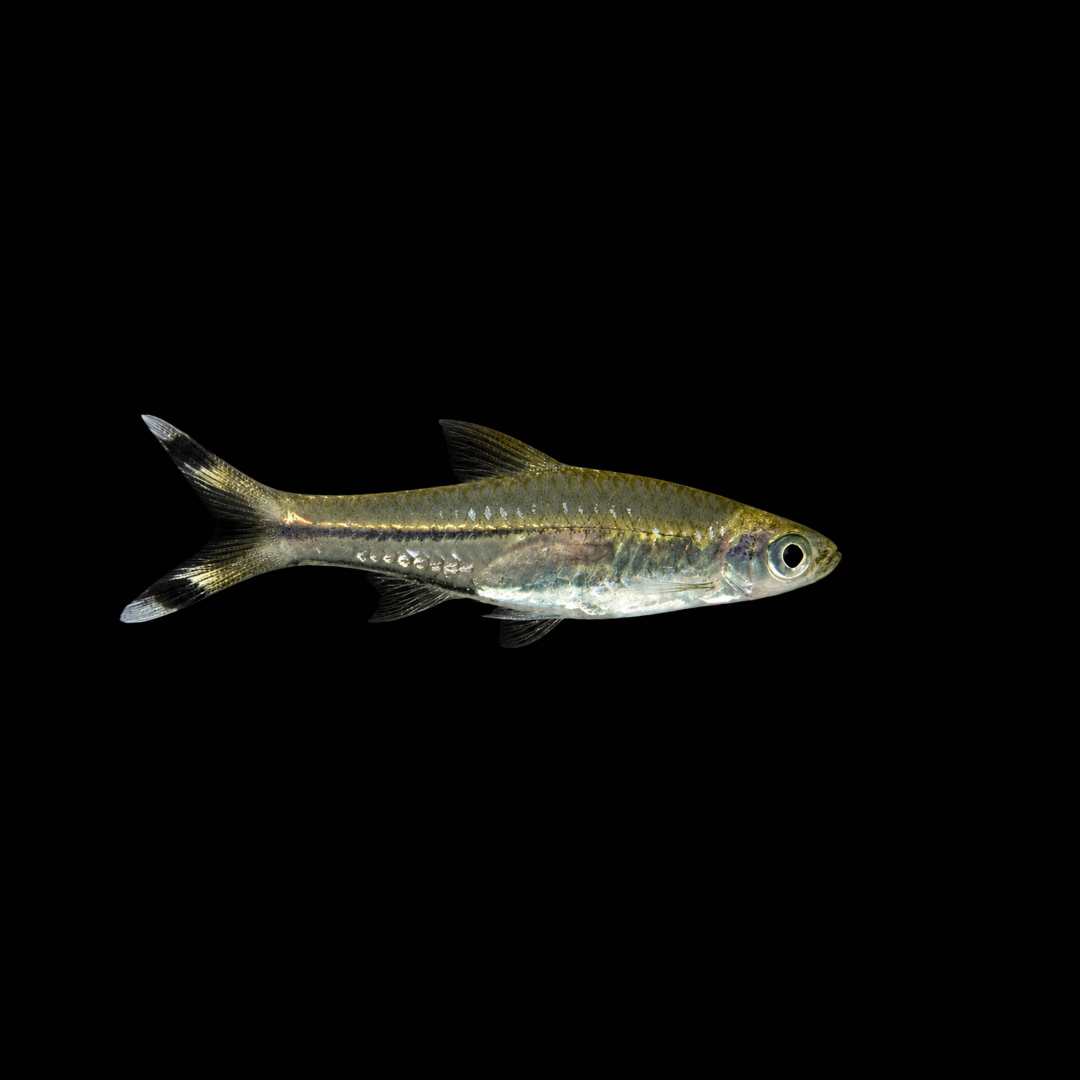
解説 / Description
シザーステールラスボラは、東南アジアに広く分布するラスボラ属の淡水魚です。透明感のある銀色の体と、黒・白・黄みを帯びた模様が入る尾びれが特徴で、泳ぎながら尾びれを小刻みに開閉する様子がハサミの動きに見えることから、この名前で親しまれています。派手な赤や青を主役にする魚ではありませんが、細身の体で中層から表層を軽やかに泳ぐ姿は、水草水槽に涼やかな動きを加えてくれます。 The scissortail rasbora is a freshwater fish of the genus Rasbora, widely distributed in Southeast Asia. It is known for its translucent silver body and caudal fin markings with black, white, and yellowish tones. Its common name comes from the way the forked tail opens and closes like a pair of scissors while swimming. Although it is not a boldly colored red or blue show fish, its slender body and active mid-to-upper level swimming add a cool, graceful sense of movement to planted aquariums.
性格は温和で、丈夫な普及種として扱われることが多い一方、成魚は意外に大きくなり、よく泳ぎ、驚くと飛び出しやすい魚でもあります。小型水槽に少数だけ入れるより、十分な横幅のある水槽で複数匹を群泳させることで、本来の落ち着きと美しさが引き出されます。 It is generally peaceful and hardy, and is often treated as a common aquarium species. However, adults can become larger than many beginners expect, are very active swimmers, and may jump when startled. Rather than keeping only a few specimens in a small tank, they show their natural calmness and beauty best when maintained as a group in a tank with generous swimming length.
基本情報 / Basic Information
| 学名 / Scientific Name | Rasbora trilineata Steindachner, 1870 |
|---|---|
| 通称 / Common Name | シザーステールラスボラ、シザーステール・ラスボラ、スリーラインラスボラScissortail rasbora, three-lined rasbora |
| 分類 / Family | コイ目ラスボラ属。分類体系により、コイ科またはダニオ科ラスボラ亜科として扱われます。Order Cypriniformes, genus Rasbora. Depending on the classification system, it may be placed in Cyprinidae or in Danionidae, subfamily Rasborinae. |
| 英名 / English Name | Scissortail rasbora, Three-lined rasbora |
| 分布 / Distribution | メコン川・チャオプラヤ川流域、マレー半島、スマトラ島、ボルネオ島などの東南アジア。観賞魚として世界各地に流通しています。Southeast Asia, including the Mekong and Chao Phraya basins, the Malay Peninsula, Sumatra, and Borneo. It is distributed worldwide through the aquarium trade. |
| 最大体長 / Max Size | 最大約13cm。飼育下では8〜10cm前後で流通・維持されることが多いですが、余裕のある環境では中型の群泳魚として扱います。Up to about 13 cm total length. In aquaria, many specimens are traded and maintained at around 8–10 cm, but it should be treated as a medium-sized schooling fish when planning the tank. |
| 寿命 / Lifespan | 一般的には3〜5年ほどが目安です。水質、餌、飛び出し対策が安定していれば、より長く維持できることもあります。Usually around 3–5 years. With stable water quality, appropriate feeding, and reliable jump prevention, some individuals may be maintained for longer. |
飼育環境 / Aquarium Environment
| 水槽サイズ / Tank Size | 最低でも60cm規格水槽を目安にし、成魚の群泳をきれいに見せるなら90cm規格水槽以上が安心です。よく泳ぐ性質を考えると、理想は横幅のある90〜120cmクラスの水槽です。A standard 60 cm tank should be considered the minimum, while a 90 cm tank or larger is safer for displaying an adult group. Because this species is an active swimmer, a 90–120 cm long tank is ideal. |
|---|---|
| 水温 / Temperature | 23〜25℃前後が安定管理の中心です。飼育上は22〜28℃程度まで対応できますが、急な変化を避け、夏は高水温対策、冬はヒーター管理を行います。 Around 23–25°C is a stable central range. It can generally be maintained at about 22–28°C in aquaria, but sudden changes should be avoided. Use cooling measures in summer and a heater in winter as needed. |
| 水質 / Water Quality | 弱酸性〜中性を中心に、pH6.0〜8.0、硬度は中程度までが目安です。日本の水道水をカルキ抜きして使えば対応しやすく、ソイルを使った水草水槽にもよくなじみます。Slightly acidic to neutral water is ideal, with a general range of pH 6.0–8.0 and low to moderate hardness. Dechlorinated Japanese tap water is usually easy to adapt, and the species also suits planted aquariums using aquasoil. |
| レイアウト / Layout | 水草、流木、落ち葉風の装飾などで落ち着ける陰を作りつつ、中央から前面には広い遊泳スペースを残します。表層から中層をよく使うため、背の高い水草で全体を塞ぎすぎないようにすると群泳が映えます。Provide shaded areas with aquatic plants, driftwood, or leaf-litter-style decor, while keeping an open swimming space in the center and front. Since it uses the upper to middle levels actively, avoid blocking the whole tank with tall plants if you want to enjoy the schooling display. |
| 注意点 / Precautions | 最重要ポイントは飛び出し対策です。驚くと勢いよく跳ねることがあるため、隙間の少ないフタを必ず使用し、フィルター配管やコード周りのすき間も塞ぎます。水位を水槽上端ぎりぎりまで上げすぎず、1〜2cm以上の余裕を持たせると安全性が高まります。The most important precaution is jump prevention. This species may leap forcefully when startled, so always use a tight-fitting lid and cover gaps around filter pipes and cables. Leaving at least 1–2 cm of space below the tank rim instead of filling the tank to the very top improves safety. |
餌と給餌 / Feeding
| 餌の種類 / Diet | 自然下では水面に落ちる昆虫、小型の無脊椎動物、甲殻類などを食べる雑食性寄りの小型捕食者です。飼育下ではフレーク、顆粒、細かいペレットによく餌付き、冷凍アカムシ、ブラインシュリンプ、ミジンコなどを補助的に与えると状態を整えやすくなります。In nature it is an omnivorous micro-predator that feeds on fallen insects, small invertebrates, and crustaceans. In aquaria it readily accepts flakes, granules, and small pellets, and benefits from occasional frozen bloodworms, brine shrimp, and daphnia. |
|---|---|
| 給餌のポイント / Feeding Tips | 食欲旺盛で表層の餌を素早く食べるため、与えすぎに注意します。1〜2分で食べ切れる量を基本にし、底ものと混泳する場合は沈下性の餌も併用して、コリドラスなどに餌が届くようにします。It is a vigorous feeder and quickly takes food from the surface, so overfeeding should be avoided. Feed only what the fish can consume in 1–2 minutes. When kept with bottom dwellers such as Corydoras, use sinking foods as well so that food reaches them. |
性格と混泳 / Temperament and Tank Mates
| 性格 / Temperament | 温和で、同種同士でも激しく争うことは少ない魚です。単独や少数では落ち着きにくいため、6匹以上、できれば8匹以上の群れで飼うと自然な行動が出やすくなります。It is peaceful and rarely shows serious aggression toward its own kind. It may become nervous when kept singly or in very small numbers, so groups of six or more, preferably eight or more, bring out more natural behavior. |
|---|---|
| 混泳の相性 / Compatibility | 同じくらいのサイズで温和なテトラ、ラスボラ、ダニオ、レインボーフィッシュ、コリドラス、小型プレコ、グラミー類などと相性が良いです。口に入るサイズの稚魚や小さなエビは食べられる可能性があります。また、本種の泳ぎが速いため、極端に臆病な魚や動きの遅い魚との組み合わせでは水槽サイズと隠れ家に余裕を持たせます。It is compatible with similarly sized peaceful tetras, rasboras, danios, rainbowfish, Corydoras, small plecos, and gouramis. Very small fry or tiny shrimp may be eaten. Because this species swims quickly, provide enough space and shelter when combining it with very shy or slow-moving fish. |
病気と対策 / Diseases and Prevention
| かかりやすい病気 / Common Diseases | 特定の病気に極端に弱い魚ではありませんが、導入直後の白点病、尾ぐされ、口ぐされ、輸送ストレスによる体調不良には注意が必要です。水質悪化や急な温度変化が重なると発症しやすくなります。It is not especially delicate, but newly introduced specimens may suffer from ich, fin rot, mouth rot, or general stress-related weakness after transport. Poor water quality and sudden temperature changes increase the risk. |
|---|---|
| 対策と予防 / Prevention | 購入後は急な水合わせを避け、点滴法などでゆっくり導入します。過密を避け、ろ過を安定させ、定期的な換水を行うことが基本です。白点やヒレの傷みを見つけた場合は、隔離して市販薬を用いた薬浴を検討します。薬剤の種類や濃度は、必ず製品の説明に従います。Avoid sudden acclimation after purchase and introduce the fish slowly, such as by the drip method. Prevent overcrowding, maintain stable filtration, and perform regular water changes. If ich or fin damage is observed, consider isolating the fish and treating it with an appropriate commercial medication, always following the product instructions. |
増やし方(繁殖) / Breeding
| 雌雄の判別 / Sexing | 平常時の雌雄差は大きくありません。成熟したメスはオスより腹部がふっくらし、体に厚みが出る傾向があります。オスはやや細身で、繁殖期には模様がよりはっきり見えることがあります。Sexual differences are not very obvious in normal condition. Mature females tend to have a fuller abdomen and deeper body. Males are usually slimmer, and their markings may appear clearer during the breeding season. |
|---|---|
| 繁殖形態 / Reproduction | 卵生で、体外受精を行います。グッピーやプラティのように稚魚を直接産む卵胎生魚ではありません。資料によっては水草に卵をばらまく魚として説明されますが、本種では暗めの産卵環境で、底面の物陰や産卵素材の下に粘着卵を産みつける行動も報告されています。親魚は卵や稚魚を保護しません。It is an egg-laying fish with external fertilization, not a livebearer like guppies or platies. Some sources describe it broadly as an egg-scattering rasbora, but for this species adhesive eggs have also been reported to be deposited under objects or spawning materials in a darkened breeding setup. The parents do not guard the eggs or fry. |
| 繁殖のポイント / Breeding Tips | 繁殖を狙う場合は、親魚を冷凍餌や小型の生餌でよく仕上げ、薄暗い小型水槽に細かい水草、産卵モップ、ネット、底面の隠れ場所を用意します。産卵後は親魚による食卵を避けるため、親を戻すか卵を保護します。稚魚は非常に小さいため、初期はインフゾリアや微細な稚魚用フードを使い、成長に合わせてブラインシュリンプベビーやミジンコへ移行します。To breed them deliberately, condition adults with frozen or small live foods, then prepare a dim breeding tank with fine plants, spawning mops, mesh, and hiding places near the bottom. After spawning, remove the adults or protect the eggs to prevent egg predation. The fry are very small, so start with infusoria or very fine fry food, then move on to newly hatched brine shrimp and daphnia as they grow. |
雑学と豆知識 / Trivia and Fun Facts
| 1. 名前に込められた「3本線」 / 1. The “three lines” in its name | 種小名のtrilineataは「3本の線を持つ」という意味です。体側を走る細い暗色線、背中側の黒っぽい線、臀びれ基部から尾柄にかけて見られる黒い線が、学名の背景にある特徴として知られています。シザーステールという通称は尾びれの動きと模様から生まれた観賞魚らしい名前ですが、学名はより落ち着いた形態的特徴を示しています。The species name trilineata means “three-lined.” It refers to the narrow dark mid-lateral stripe, the darker line along the back, and the black line running near the base of the anal fin toward the caudal peduncle. While “scissortail” is a hobby-friendly name inspired by the tail movement and pattern, the scientific name points to more precise morphological traits. |
|---|---|
| 2. 分類表記が揺れる理由 / 2. Why the family name may differ | シザーステールラスボラは、古くは広くコイ科の魚として扱われてきました。近年の分類体系では、ダニオ類やラスボラ類を含むグループをダニオ科として扱う資料もあり、図鑑やデータベースによって「コイ科」と「ダニオ科」の表記が分かれることがあります。どちらの表記を見かけても、ラスボラ属RasboraのRasbora trilineataを指しているかを確認することが大切です。The scissortail rasbora has long been treated broadly as a cyprinid fish. In more recent classifications, some references place danios and rasboras in Danionidae, so you may see either Cyprinidae or Danionidae depending on the source. When comparing references, it is best to confirm that they refer to Rasbora trilineata in the genus Rasbora. |
| 3. 普及種でも小型魚ではない / 3. Common, but not a nano fish | 店頭では小さな若魚で売られることが多いため、ネオンテトラのような小型魚として考えられがちです。しかし成長すると10cm前後、文献上は最大約13cmに達する中型の群泳魚です。広い水槽でまとまって泳ぐ姿は見応えがありますが、30cm前後の小型水槽では本来の遊泳力を持て余しやすくなります。Because it is often sold as a small juvenile, it may be mistaken for a small fish like a neon tetra. In reality, it commonly reaches around 10 cm in aquaria, with a recorded maximum of about 13 cm. A group swimming together in a spacious tank is impressive, but a small 30 cm-class aquarium does not provide enough room for its active nature. |
| 4. 繁殖情報で注意したい誤解 / 4. A common breeding misconception | ラスボラ類はグッピーのような卵胎生魚ではありません。シザーステールラスボラも卵生で、オスとメスが放精・放卵することで受精します。国内外の一般解説では「卵をばらまく」と説明されることがありますが、本種については暗い環境で粘着卵を物陰に産む行動も報告されており、繁殖を狙う場合は水草だけでなく産卵モップや底面の隠れ場所を用意すると観察しやすくなります。Rasboras are not livebearers like guppies. The scissortail rasbora is egg-laying, with external fertilization. General aquarium guides may describe rasboras as egg scatterers, but this species has also been reported to deposit adhesive eggs in sheltered spots in dim conditions. When attempting breeding, provide not only fine plants but also spawning mops and bottom shelters. |
| 5. 研究対象としても注目される魚 / 5. A species of research interest | シザーステールラスボラは観賞魚として親しまれるだけでなく、発生や繁殖に関する研究対象にもなっています。近年の研究では、タイの野生個体を用いた人工産卵誘発や仔稚魚の発達が詳しく調べられ、観賞魚流通だけに頼らない繁殖技術や資源保全への応用が期待されています。水槽の中を静かに群れて泳ぐ姿の背後には、東南アジアの淡水魚多様性を支える生き物としての一面もあります。The scissortail rasbora is not only a popular ornamental fish but also a subject of research on breeding and development. Recent studies using wild Thai broodstock have examined induced spawning and larval development in detail, with potential applications for captive breeding and resource conservation. Behind its calm schooling display in the aquarium lies its broader role as part of Southeast Asia’s freshwater fish diversity. |
まとめ / Conclusion
シザーステールラスボラは、銀色の体とハサミのように動く尾びれで、水槽に澄んだ流れを感じさせてくれる魚です。丈夫で温和な一方、成魚はよく泳ぐ中型の群泳魚であり、広い遊泳スペース、安定した水質、そして確実なフタが長期飼育の鍵になります。 The scissortail rasbora brings a clear, flowing atmosphere to the aquarium with its silver body and scissor-like tail movement. It is hardy and peaceful, but as an active medium-sized schooling fish, it needs ample swimming space, stable water quality, and a secure lid for long-term care.
水草の緑の中を群れで横切る姿は、派手さよりも洗練された美しさで見る人を引きつけます。小さな若魚として迎えた一匹一匹が、やがて水槽の中層を軽やかに結び、落ち着いた群泳の景色をつくっていくところに、この魚ならではの魅力があります。 When a group moves through the green of a planted aquarium, its appeal lies not in flamboyance but in refined beauty. Each small juvenile eventually grows into part of a graceful midwater school, creating a calm and elegant scene that is uniquely characteristic of this species.

気になる道具や飼い方を見つけてみませんか?
 アイのアクアグッズ案内ローチの仲間に合わせる飼育用品|クーリー・流水性・ボーシャの水槽と底砂道具の特徴や使い方、選ぶときのポイントをアイが紹介します。記事はコチラ →
 アイのアクアグッズ案内海水魚初心者の必需品|水槽・人工海水・比重計・水質検査道具の特徴や使い方、選ぶときのポイントをアイが紹介します。記事はコチラ →
 アイのアクアグッズ案内水草用ライトの選び方|緑の絨毯と赤い水草を楽しむ照明・植栽用品道具の特徴や使い方、選ぶときのポイントをアイが紹介します。記事はコチラ →
 アイのアクアグッズ案内水草トリミングの道具とやり方|ハサミ・ピンセットを水草に合わせて選ぼう伸びすぎた水草は切っていい? 有茎草の差し戻し、前景草の絨毯、流木のモスを整える場面から、水草用ハサミ・ピンセット・ゴミ取りネットの選び方と片付けを紹介します。記事はコチラ →
さまざまな飼育テーマをご紹介。リンク先の記事には広告・商品紹介が含まれます。
案内・紹介記事一覧へ →分布マップ
シザーステールラスボラは、メコン川・チャオプラヤ川流域、マレー半島、スマトラ島、ボルネオ島など、東南アジアの広い淡水域に分布します。この地図では、分布イメージをつかむための概略代表地点を表示しています。
※この地図上のマーカーは、記事内の「分布」欄をもとにした分布イメージ用の概略代表地点です。実際の採集地点や厳密な生息範囲を示すものではありません。
参考文献・参照資料
この記事では、店舗・通販サイト、個人ブログ、まとめサイトを参考文献から除外し、分類、分布、生息環境、飼育条件、繁殖、病気や注意点を確認できる公的データベース、学術論文、獣医学系資料を中心に参照しました。
-
Froese, R. and D. Pauly. Editors. FishBase: Rasbora trilineata, Three-lined rasbora.
分類、学名、英名、最大体長、水温、pH、硬度、分布、生息環境、食性の確認に使用。
https://www.fishbase.se/summary/Rasbora-trilineata -
Fricke, R., Eschmeyer, W. N. and Van der Laan, R. Editors. Eschmeyer’s Catalog of Fishes, California Academy of Sciences.
Rasbora stigmaturaがRasbora trilineataのシノニムとして扱われる点、記載史、分類上の確認に使用。
https://researcharchive.calacademy.org/research/ichthyology/catalog/fishcatget.asp?spid=30866 -
GBIF Secretariat. GBIF Backbone Taxonomy: Rasbora trilineata Steindachner, 1870.
分類体系によって科の扱いが異なる点、シノニム、分布記録、一般名の確認に使用。
https://www.gbif.org/species/2359627 -
Kasamawut, K.; Udduang, S.; Kattakdad, S.; Danwandee, K.; Jutagate, A.; Saowakoon, S.; Jutagate, T. 2025. Breeding and Ontogeny of the Aquarium-Traded Scissortail Rasbora (Rasbora trilineata). Animals 15(13): 1823.
雌雄差、繁殖、粘着卵、孵化、仔稚魚の初期育成、人工繁殖研究の確認に使用。
https://doi.org/10.3390/ani15131823 -
Merck Veterinary Manual. Environmental Diseases of Aquatic Animals in Aquatic Systems.
水質悪化、アンモニア、亜硝酸、pH、温度変化などが魚の健康に与える影響と、水質管理の重要性の確認に使用。
https://www.merckvetmanual.com/exotic-and-laboratory-animals/aquatic-systems/environmental-diseases-of-aquatic-animals-in-aquatic-systems -
Merck Veterinary Manual. Bacterial Diseases of Fish.
尾ぐされ、細菌性感染症、ストレス、過密、水質悪化、輸送や急な温度変化が発症要因になり得る点の確認に使用。
https://www.merckvetmanual.com/exotic-and-laboratory-animals/aquarium-fish/bacterial-diseases-of-fish -
Merck Veterinary Manual. Parasitic Diseases of Fish.
白点病の原因生物、感染経路、症状、生活環、治療時に複数回の処置が必要となる理由の確認に使用。
https://www.merckvetmanual.com/exotic-and-laboratory-animals/aquarium-fish/parasitic-diseases-of-fish -
Merck Veterinary Manual. Providing a Home for Fish.
新規導入時の温度合わせ、病気を持ち込まないための隔離、過密や攻撃行動によるストレス、ろ過能力と水質確認の重要性の確認に使用。
https://www.merckvetmanual.com/all-other-pets/fish/providing-a-home-for-fish




コメント