

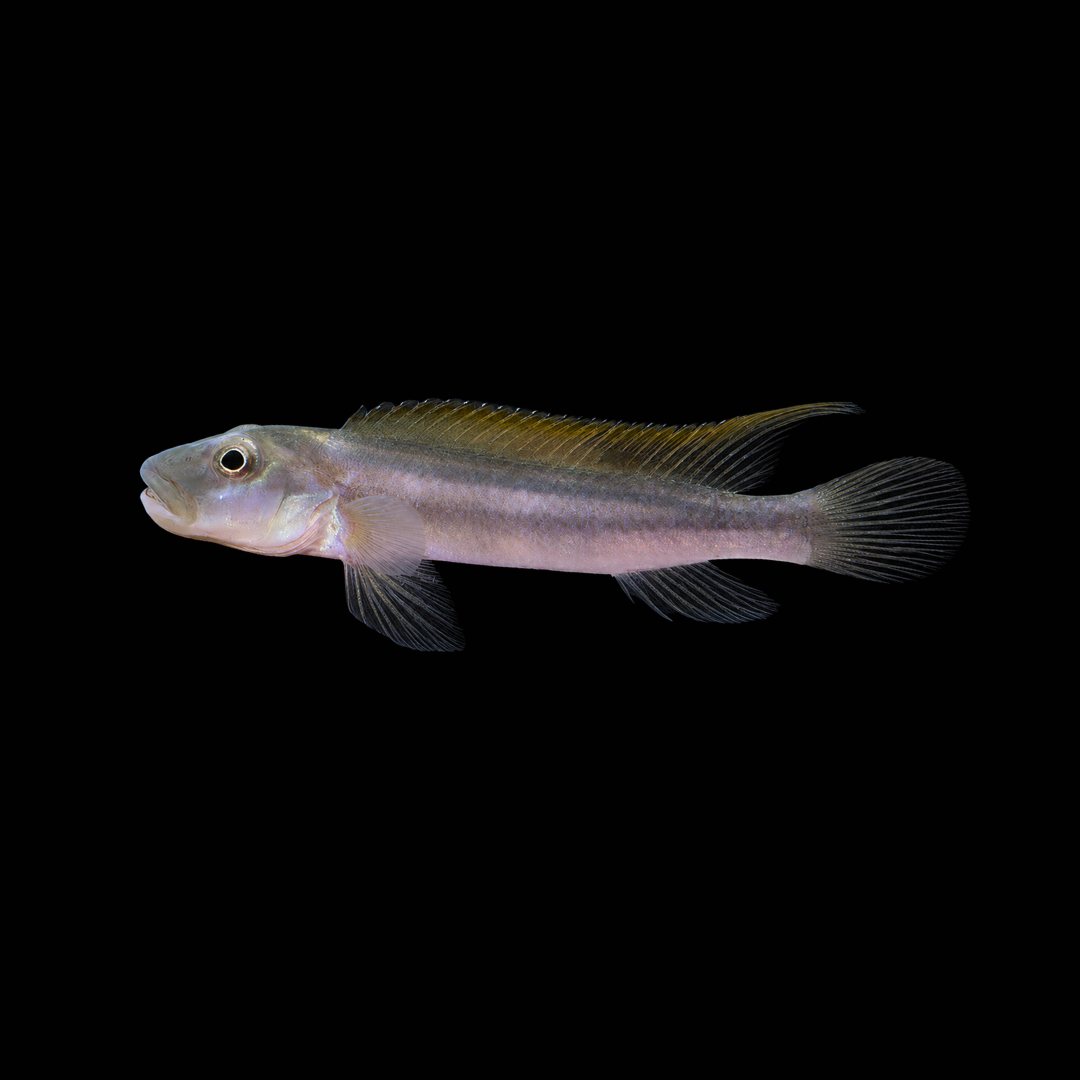
解説 / Description
ステアトクラヌス・ティナンティは、コンゴ川下流域とプール・マレボ周辺の流れの速い水域に生息する、細長い体型の河川産シクリッドです。体高の低い伸長した体、小さな浮袋、底近くを短く跳ねるように移動する独特の泳ぎが大きな特徴です。湖産のアフリカンシクリッドとは飼育の考え方が異なり、極端な水質に寄せることよりも、清浄で酸素量の多い水と、流れのある環境を安定して保つことが重要です。派手な色彩で目を引くタイプではありませんが、急流生活に結びついた体のつくりと、ペアで卵や稚魚を守る行動をじっくり観察できる、個性の強いシクリッドです。 Steatocranus tinanti is a slender riverine cichlid from fast-flowing habitats in the lower Congo River and around Pool Malebo. Its elongated low-profile body, small swim bladder, and distinctive hopping movement close to the substrate are among its defining traits. Its husbandry differs from that of the Rift Lake cichlids often associated with the term African cichlid: stable, clean, oxygen-rich water and suitable current are more important than forcing the aquarium toward extreme water chemistry. Its appeal lies less in brilliant coloration than in its specialized body form and the cooperative parental behavior shown by compatible pairs.
基本情報 / Basic Information
| 学名 / Scientific Name | Steatocranus tinanti (Poll, 1939) |
|---|---|
| 通称 / Common Name | ステアトクラヌス・ティナンティ、スレンダー・ライオンヘッドシクリッド、スレンダー・バッファローヘッドSlender Lionhead Cichlid, Slender Buffalohead Cichlid |
| 分類 / Family | シクリッド科 Cichlidae、Pseudocrenilabrinae亜科、Steatocranus属Family Cichlidae, subfamily Pseudocrenilabrinae, genus Steatocranus |
| 英名 / English Name | Slender Lionhead Cichlid |
| 分布 / Distribution | 中央アフリカのコンゴ川下流域およびプール・マレボ周辺。コンゴ民主共和国とコンゴ共和国にまたがる急流・流れの強い水域に分布します。Central Africa, primarily the lower Congo River basin and the Pool Malebo region, including fast-flowing waters associated with the Democratic Republic of the Congo and the Republic of the Congo. |
| 最大体長 / Max Size | 最大サイズの記載には幅があります。魚類データベースでは最大6.3cm標準体長(SL)が示される一方、飼育分野ではオスが全長10cmを超える例も知られています。標準体長と全長は測定方法が異なるため、数値を単純に比較せず、成魚では10cm前後以上になる可能性を見込んで飼育スペースを確保します。Published size figures vary. Fish databases list a maximum of 6.3 cm standard length (SL), while aquarium sources report adults exceeding 10 cm in total length. Because standard length and total length are different measurements, these figures should not be compared directly; aquarium planning should allow for adults around or above 10 cm in overall length. |
| 寿命 / Lifespan | 本種に限定した信頼できる寿命の年数は、明確には示されていません。長期飼育では安定した水質と十分な酸素供給を維持し、年数だけを目安にせず継続的に状態を観察します。A reliable species-specific lifespan in years has not been clearly established. For long-term care, stable water quality and adequate oxygenation are more useful management targets than a fixed lifespan figure. |
飼育環境 / Aquarium Environment
| 水槽サイズ / Tank Size | ペア単独でも60cm規格水槽(約60L)は下限として考え、成魚を長期飼育するなら底面積に余裕のある90cm規格水槽(約180L)程度以上が安心です。複数ペアや底層魚を含む混泳では、120cm規格水槽(約240L)程度以上を目安に、岩組みで視線と縄張りを明確に分けます。水深よりも横方向の底面積を優先して選びます。A standard 60 cm aquarium of roughly 60 L should be regarded as a lower limit for a pair. For long-term care of adults, a standard 90 cm aquarium of roughly 180 L or larger provides a safer amount of floor space. For multiple pairs or communities that include other bottom-oriented fishes, a 120 cm-class aquarium of roughly 240 L or more is a more appropriate starting point, with rockwork used to divide sight lines and territories. Horizontal floor area matters more than depth. |
|---|---|
| 水温 / Temperature | 24〜28℃を飼育上の目安とし、25〜27℃付近で安定させると管理しやすい魚です。高水温では溶存酸素が低下しやすいため、夏季は水温上昇と酸欠が重ならないよう、冷却とエアレーションを意識します。 A practical aquarium range is 24–28°C, with stable conditions around 25–27°C being easy to manage. Because dissolved oxygen falls as temperature rises, cooling and additional aeration are important during hot periods so that heat and oxygen shortage do not occur together. |
| 水質 / Water Quality | pH6.0〜8.0、硬度5〜19dGH程度までの範囲が知られており、特定の数値へ強く寄せるよりも急変を避けることが大切です。マラウイ湖やタンガニーカ湖の多くのシクリッドと同じ感覚で高pH・高硬度へ調整する必要はありません。安定した清浄な水と十分な溶存酸素を優先します。A range of about pH 6.0–8.0 and 5–19 dGH has been reported. Avoiding abrupt changes is more important than forcing the aquarium toward a narrow value. This riverine species does not need to be managed like many Lake Malawi or Lake Tanganyika cichlids by deliberately pushing pH and hardness upward; stable, clean, oxygen-rich water is the priority. |
| レイアウト / Layout | 細目の川砂や田砂を敷き、岩や流木で複数の洞窟と視線を遮る場所を作ります。岩は掘削による崩落を防ぐため、砂の上に不安定に積まず、底面へ安定して設置してください。素焼き鉢や塩化ビニル管も安全なシェルターとして利用できます。水草は掘り返されにくいアヌビアス類やミクロソリウムなどの活着性水草が向きます。外部式フィルターや水中ポンプで流れを作りつつ、岩陰には休息できる緩流域も残します。Use fine river sand and create several caves and visual barriers with securely positioned rocks or driftwood. Rocks should never be stacked precariously on top of loose sand, because the fish dig beneath structures. Half flowerpots or suitably sized PVC pipes can also provide safe shelters. Epiphytic plants such as Anubias and Microsorum are suitable because they are less vulnerable to digging. Provide current with filtration or circulation pumps, but always leave calmer zones behind rocks where the fish can rest. |
| 注意点 / Precautions | 底生性が強く、生活空間の大半を水底で過ごすため、水量だけでなく底面積を重視します。強い流れを好みますが、水槽全体を逃げ場のない激流にすると消耗するため、強流域と緩流域を同時に作ることが重要です。また、砂を掘る習性が強いので岩組みの崩落防止は必須です。成熟個体、とくに繁殖期のオスは縄張り防衛が強くなるため、狭い水槽での複数オス飼育は避けます。This is a strongly bottom-oriented species, so floor space matters more than water volume alone. It appreciates strong current, but an aquarium with no sheltered low-flow zones can cause unnecessary exhaustion. Secure rockwork is essential because the fish excavate sand beneath shelters. Mature fish, especially males during breeding, can become strongly territorial, so multiple males should not be crowded into a small tank. |
餌と給餌 / Feeding
| 餌の種類 / Diet | 沈下性の高品質なシクリッド用ペレットを主食にし、冷凍アカムシ、ブラインシュリンプ、ミジンコなどの小型動物性餌を補助的に与えます。特定の餌だけに偏らせず、人工飼料と複数の補助餌を組み合わせて栄養の偏りを避けます。Use a high-quality sinking cichlid pellet as the staple food, supplemented with small animal-based foods such as frozen bloodworms, brine shrimp, and daphnia. Avoid relying on a single food type; combining prepared foods with several supplementary foods helps keep the diet balanced. |
|---|---|
| 給餌のポイント / Feeding Tips | 底面近くで採餌するため、強い水流に流されやすい浮上性フレークだけに頼らず、すばやく沈む餌を選びます。洞窟や岩陰にも餌が届くよう給餌位置を分散すると、力の弱い個体も食べやすくなります。繁殖を狙う場合は、人工飼料だけでなくブラインシュリンプなどを組み合わせてコンディションを整えます。Because the fish feed close to the bottom, choose foods that sink quickly rather than relying only on floating flakes that may be swept away by current. Distributing food among several bottom areas helps subordinate fish feed without entering dominant territories. When conditioning a pair for breeding, a varied diet including brine shrimp and other nutritious supplementary foods is useful. |
性格と混泳 / Temperament and Tank Mates
| 性格 / Temperament | シクリッドとしては比較的落ち着いた性格ですが、底面の洞窟や岩陰を中心に明確な縄張りを作ります。繁殖期にはペアの結びつきが強くなり、オスは巣穴周辺を積極的に防衛します。相性のよいペアは協力して巣を整え、卵や稚魚を守る高度な社会行動を見せます。Relatively calm for a cichlid, but clearly territorial around caves and bottom structures. During breeding, the pair bond becomes especially strong and the male actively defends the nesting area. Compatible pairs cooperate in nest preparation and show highly developed parental care toward eggs and fry. |
|---|---|
| 混泳の相性 / Compatibility | 遊泳層が重なりにくく、同じく清浄で酸素量の多い水を好む中層〜上層魚とは比較的合わせやすく、コンゴテトラなどは候補になります。一方、極小魚や小型エビは捕食される可能性があり、底面で縄張りを競う他のシクリッドとは衝突しやすくなります。湖産アフリカンシクリッドとは水質要求と行動特性が合いにくいため、同居は避けるのが無難です。最も安定しやすいのは相性の確認できた単独ペア飼育です。Midwater and upper-level fishes that prefer similarly clean, oxygen-rich water are generally easier to combine with this species, and Congo tetras are a possible example. Very small fishes and ornamental shrimp may be treated as prey, while other bottom-territorial cichlids can compete directly for space. Rift Lake cichlids are poor companions because their water requirements and behavioral patterns differ. A compatible single pair kept on its own is often the most stable arrangement. |
病気と対策 / Diseases and Prevention
| かかりやすい病気 / Common Diseases | 本種に特有の好発疾患について、十分に確立された情報はありません。導入直後は消耗、食欲不振、体表やヒレの損傷などがないかを確認し、高水温、酸素不足、水質悪化、縄張り争いによるストレスを避けることが重要です。No well-established disease uniquely associated with this species is known. Newly introduced fish should be checked for exhaustion, poor appetite, and external damage, while excessive temperature, low dissolved oxygen, deteriorating water quality, and persistent territorial stress should be avoided. |
|---|---|
| 対策と予防 / Prevention | 安定した水温、十分なろ過、高い溶存酸素、定期的な換水を基本とし、導入直後は落ち着ける洞窟を多めに用意して摂餌状態を観察します。外傷を防ぐため岩の尖りや崩落リスクを減らし、縄張り争いが続く場合はレイアウト変更や隔離を行います。体調不良が見られた場合は原因を水質、酸素量、温度、同居魚から順に確認し、安易に薬剤を追加する前に環境要因を整えることが大切です。Prevention begins with stable temperature, adequate filtration, high dissolved oxygen, and regular water changes. Newly introduced fish should be given several secure caves and monitored carefully for feeding. Reduce sharp edges and unstable rockwork to prevent injury, and separate fish or rearrange territories if persistent aggression develops. When health problems appear, check water quality, oxygenation, temperature, and social stress before resorting to medication. |
増やし方(繁殖) / Breeding
| 雌雄の判別 / Sexing | 成熟したオスはメスより頭部と顎が発達し、頭部の隆起が目立つことがあります。体格差も判別材料になりますが、若魚では雌雄差が分かりにくいため、外見だけで早期に断定するのは困難です。複数の若魚から自然に相性のよいペアが形成されるのを待つ方法は、無理な組み合わせによる争いを避けるうえで有効です。Mature males tend to develop a more massive head and jaws, and the nuchal profile may become more pronounced. Body size can also provide a clue, but juveniles are difficult to sex reliably from appearance alone. Allowing compatible pairs to form naturally from a small group of juveniles can reduce the risk of forcing incompatible adults together. |
|---|---|
| 繁殖形態 / Reproduction | 強いペア関係を形成する洞窟産卵型です。メスは洞窟内に産卵し、産卵数は最大100個程度とされています。産卵後は両親が子を守り、メスが洞窟内の卵や仔魚のそばに残り、オスが周囲を防衛する行動が見られます。A strongly pair-bonding cave spawner. The female lays eggs inside a cave, with clutches reported up to around 100 eggs. Both parents protect the brood; the female commonly remains close to the eggs and larvae inside the shelter while the male guards the surrounding area. |
| 繁殖のポイント / Breeding Tips | 若魚を複数飼育し、自然にできた相性のよいペアを残す方法が安全です。洞窟を複数用意し、ペア形成後は他個体との争いを避けられる空間を確保します。孵化や自由遊泳までの日数は水温などの条件で変わるため、固定した日数だけを目安にせず、親魚の行動と稚魚の発育を観察します。自由遊泳を始めた稚魚にはブラインシュリンプの幼生やマイクロワームなどを与え、成長に合わせて細かくした人工飼料へ移行できます。両親が稚魚を守る行動は、自由遊泳後も続きます。A safer approach is to raise several juveniles and retain a naturally formed compatible pair. Provide multiple caves and enough space to reduce conflict once a pair forms. Hatching and the transition to free swimming vary with conditions such as temperature, so brood development and parental behavior are more useful guides than fixed day counts. Once the fry begin free swimming, offer brine shrimp nauplii or microworms and later introduce finely crushed prepared foods. Biparental protection continues after the fry leave the cave. |
雑学と豆知識 / Trivia and Fun Facts
| 1. 急流に暮らす「沈むシクリッド」 / 1. A Bottom-Oriented Cichlid of the Rapids | ステアトクラヌス・ティナンティの姿を初めて見ると、シクリッドというよりハゼを思わせる人も少なくありません。その印象を生むのが、細長く低い体と、著しく小さな浮袋です。中層で静止し続ける魚とは異なり、本種は底面近くを短い動きで移動し、岩場を生活の中心にします。小さな浮袋と底生的な行動は、急流性の生息環境とよく対応した特徴です。ただし、浮袋が小さくなった進化的理由を単一の要因だけで説明するのではなく、急流で暮らす本種の体と行動を一体として捉えると、その独特な姿の意味が分かりやすくなります。At first glance, Steatocranus tinanti can look more like a goby than a typical cichlid. That impression comes largely from its elongated low body and very small swim bladder. Rather than remaining suspended in midwater, it stays close to the bottom and moves through rocky habitat in short bursts. Its reduced swim bladder and bottom-oriented behavior fit well with its life in fast-flowing water. Rather than assigning the reduction to a single evolutionary cause, it is more accurate to view body form, buoyancy, habitat, and behavior together as parts of its rheophilic lifestyle. |
|---|---|
| 2. 小さな浮袋と「聞こえ方」の関係 / 2. A Small Swim Bladder and Hearing | 魚の浮袋は浮力調節だけに関わる器官ではなく、種類によっては水中の音圧を内耳へ伝える働きにも関係します。ステアトクラヌス・ティナンティの浮袋は非常に小さく、内耳へ近づく前方伸長部もありません。比較実験では、本種はそのような伸長部を持つシクリッドより検出できる周波数帯が狭く、特に高い周波数で聴覚感度が低いことが示されています。ここで重要なのは、「急流への適応の代償として聴覚を失った」と断定することではありません。浮袋の形態と聞こえ方が密接に結びついていることを示す、シクリッド類の感覚進化を考えるうえで興味深い例です。A fish’s swim bladder is not only involved in buoyancy; in some species its relationship with the inner ear also affects sensitivity to sound pressure. In Steatocranus tinanti the swim bladder is very small and lacks specialized anterior extensions toward the inner ear. Comparative hearing experiments show that this species detects a narrower frequency range and has lower sensitivity at higher frequencies than cichlids with such extensions. The evidence therefore supports a close link between swim bladder morphology and hearing, but it does not by itself prove that reduced hearing evolved as a direct cost of adaptation to rapid current. |
| 3. 学名には一人の採集者の物語が残されている / 3. A Collector’s Story Preserved in the Name | 本種は1939年、魚類学者マックス・ポールによって最初はGobiochromis tinantiとして記載され、その後Leptotilapia tinantiという組み合わせを経て、現在のSteatocranus tinantiへ整理されました。種小名tinantiは、当時のベルギー領コンゴで魚類標本の採集に関わったアンドレ・ティナン博士に献名されたものです。一方、属名Steatocranusはギリシャ語の「脂肪」と「頭部・頭蓋」に由来し、同属の成熟オスで見られる頭部の脂肪瘤を示しています。小さな学名の中に、魚の形態と20世紀前半のアフリカ魚類研究史の両方が折り重なっています。The species was described by Max Poll in 1939 as Gobiochromis tinanti, later appeared in the combination Leptotilapia tinanti, and was eventually placed in Steatocranus. The species name tinanti honors Dr. André Tinant, who contributed fish specimens from the former Belgian Congo. The genus name Steatocranus is derived from Greek roots referring to fat and the head or skull, alluding to the nuchal hump seen in mature males of the genus. Its scientific name therefore carries both a morphological clue and a piece of twentieth-century ichthyological history. |
| 4. コンゴ川下流は、わずかな距離が進化の壁になる / 4. In the Lower Congo, Short Distances Can Become Evolutionary Barriers | コンゴ川下流域は、巨大な流量、急勾配、深い峡谷、渦や急流が連続する特殊な河川環境です。人の目には一本の川に見えても、底生魚にとっては越えられない流れや深みが何重にも存在し、近い距離の集団同士でさえ交流が制限されることがあります。こうした水理学的な障壁は、コンゴ川で多様な魚が細かく分化してきた背景の一つと考えられています。ステアトクラヌス属の独特な体型や生活様式も、この激しい環境を抜きにしては理解できません。The lower Congo River is shaped by enormous discharge, steep gradients, deep channels, powerful vortices, and repeated rapids. To a human it may appear to be one continuous river, but to a bottom-dwelling fish, particular currents or deep sections can function as major barriers. Such hydraulic fragmentation can restrict movement even between populations separated by relatively short distances and is considered an important background to the remarkable diversification of fishes in the lower Congo. The unusual form and lifestyle of Steatocranus make the most sense when viewed against this extreme river landscape. |
| 5. 「アフリカンシクリッド=アルカリ性」という思い込みに注意 / 5. Not Every African Cichlid Wants Alkaline Water | 日本のアクアリウムでは「アフリカンシクリッド」と聞くと、マラウイ湖やタンガニーカ湖の多くの種で用いられるアルカリ性寄りの飼育法を連想しがちです。しかしステアトクラヌス・ティナンティは湖ではなくコンゴ川水系の河川魚で、その方法をそのまま当てはめる必要はありません。本種では、極端な水質調整よりも、急変の少ない水質、十分な溶存酸素、そして流れと休息場所を両立させることが重要です。「アフリカ産」という大きなくくりより、実際にどのような水域で暮らす魚なのかを見ることが、飼育環境を考える手がかりになります。In the aquarium hobby, the phrase “African cichlid” often brings to mind the alkaline-oriented husbandry used for many fishes from Lakes Malawi and Tanganyika. Steatocranus tinanti, however, is a river fish from the Congo system, so those methods do not transfer automatically. Avoiding abrupt water-chemistry changes, maintaining abundant oxygen, and balancing current with sheltered resting areas are more important than deliberately elevating pH. Habitat is a better guide to husbandry than continent alone. |
| 6. 親魚は「産んで終わり」ではない / 6. Parenting Continues Long After Spawning | この魚の繁殖で特に印象的なのは、産卵後も両親の保育が続くことです。メスは主に洞窟内の卵や仔魚のそばに残り、オスは周囲を警戒します。稚魚が自由遊泳を始めたあとも、両親は外敵や同居魚から子を守ります。縄張りを防衛する強さと、子に向ける保護行動が同じペアの中に現れる点は、シクリッド類の社会行動を観察する大きな魅力です。One of the most memorable aspects of breeding this fish is the parental care that continues after spawning. The female generally remains close to the eggs and larvae inside the cave while the male guards the surrounding area. After the fry become free swimming, both parents continue to protect the brood from intruders. The contrast between firm territorial defense and careful protection of offspring is one of the clearest ways to appreciate the social behavior of cichlids. |
まとめ / Conclusion
ステアトクラヌス・ティナンティは、鮮やかな色彩よりも、細長い体と底面近くで見せる独特の動きに魅力があるシクリッドです。小さな浮袋、岩場を利用する生活、流れのある水域を好む性質は、コンゴ川下流の急流性環境と深く結びついています。飼育では、十分な底面積、崩れにくい岩組み、清浄で酸素量の多い水、そして流れから休める場所をそろえることが大切です。 Steatocranus tinanti is a cichlid whose appeal comes less from brilliant color than from its slender form and distinctive bottom-oriented movement. Its small swim bladder, close association with rocky shelter, and preference for flowing water are closely linked to life in the lower Congo’s rapid habitats. In captivity, provide generous floor space, secure rockwork, clean oxygen-rich water, and both noticeable current and sheltered places where the fish can rest.
相性のよいペアが形成されれば、洞窟での産卵から両親による保育まで、本種らしい社会行動を観察できます。底面を短く移動し、岩陰を選び、縄張りと子を守る一つひとつの仕草からは、急流性の河川で暮らす魚ならではの性質が伝わってきます。落ち着いた色合いと独特の行動を時間をかけて楽しみたい飼育者にとって、存在感のあるシクリッドです。 Once a compatible pair forms, the fish can display its characteristic social behavior from cave spawning through biparental care. Its short movements along the bottom, use of rocky shelter, territorial defense, and protection of the brood all reflect the lifestyle of a river cichlid associated with rapid water. For aquarists who enjoy understated coloration and behavior that rewards close observation, it is a distinctive and engaging species.

気になる道具や飼い方を見つけてみませんか?
 アイのアクアグッズ案内金魚を長く楽しむ飼育用品|水槽・フィルター・エアレーション・水換え道具の特徴や使い方、選ぶときのポイントをアイが紹介します。記事はコチラ →
 アイのアクアグッズ案内水槽のろ材の選び方|ウール・リング・活性炭の違いとおすすめ商品フィルターの中の綿や石は何をしている? アイとコタロウが、ウール・スポンジ・セラミック・焼結ガラス・活性炭・ゼオライトを比較。機種との相性、入れ方、洗い方と交換まで商品とともに紹介します。記事はコチラ →
 アイのアクアグッズ案内海水魚の底砂の選び方|サンゴ砂・ライブサンドとおすすめ商品道具の特徴や使い方、選ぶときのポイントをアイが紹介します。記事はコチラ →
 アイのアクアグッズ案内プレコ飼育に必要なもの|餌・流木・ろ過・隠れ家・掃除用品道具の特徴や使い方、選ぶときのポイントをアイが紹介します。記事はコチラ →
さまざまな飼育テーマをご紹介。リンク先の記事には広告・商品紹介が含まれます。
案内・紹介記事一覧へ →分布マップ
Steatocranus tinanti は、中央アフリカのコンゴ川下流域からプール・マレボ周辺にかけて分布し、コンゴ民主共和国とコンゴ共和国にまたがる急流や流れの強い水域に生息します。
※この地図は、記事に記載された「コンゴ川下流域およびプール・マレボ周辺」という分布情報をもとにした概略表示です。マーカーは分布域を把握しやすくするためプール・マレボ周辺に設定した代表地点であり、実際の採集地点・標本記録地点を示すものではありません。
参考文献
-
分類・有効学名・分布Fricke, R., Eschmeyer, W. N. & Van der Laan, R. (eds.). Eschmeyer’s Catalog of Fishes: Genera, Species, References. California Academy of Sciences. Steatocranus tinanti (Poll, 1939).
-
分布・生息環境・体長・飼育水質・繁殖Froese, R. & Pauly, D. (eds.). FishBase. Steatocranus tinanti (Poll, 1939). Species Summary.
-
コンゴ川下流の急流環境・河川性シクリッドの進化的背景Schwarzer, J., Misof, B., Ifuta, S. N. & Schliewen, U. K. (2011). Time and Origin of Cichlid Colonization of the Lower Congo Rapids. PLoS ONE, 6(7), e22380. doi:10.1371/journal.pone.0022380
-
浮袋の形態・聴覚特性Schulz-Mirbach, T., Metscher, B. & Ladich, F. (2012). Relationship between Swim Bladder Morphology and Hearing Abilities—A Case Study on Asian and African Cichlids. PLoS ONE, 7(8), e42292. doi:10.1371/journal.pone.0042292
-
分類体系Dunz, A. R. & Schliewen, U. K. (2013). Molecular phylogeny and revised classification of the haplotilapiine cichlid fishes formerly referred to as “Tilapia”. Molecular Phylogenetics and Evolution, 68(1), 64–80. doi:10.1016/j.ympev.2013.03.015
-
病気・水質悪化・低酸素・温度変動などの注意点Francis-Floyd, R., Yanong, R. P. E. & Petty, B. D. Environmental Diseases of Aquatic Animals in Aquatic Systems. Merck Veterinary Manual. Full review May 2023; updated September 2024.




コメント