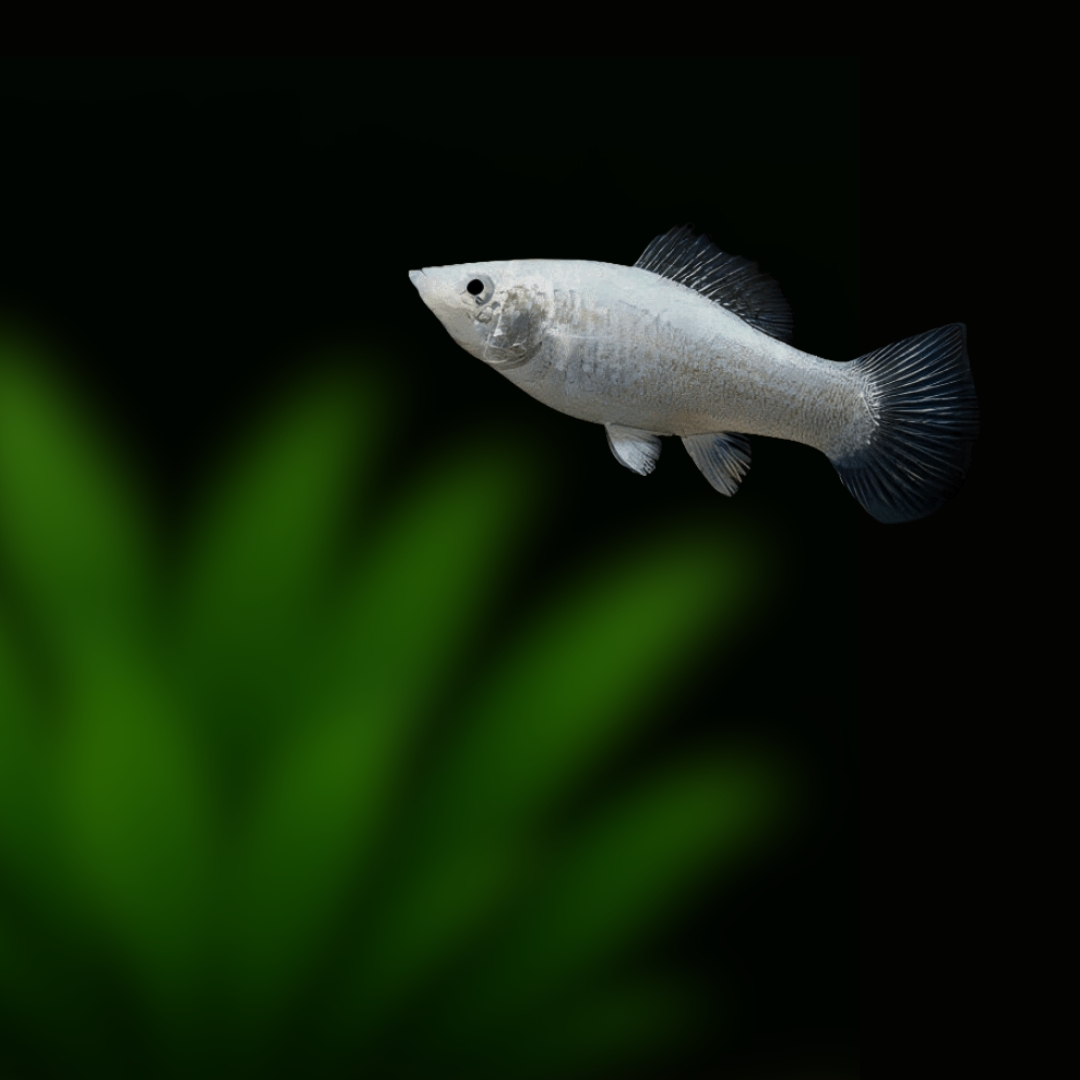
シルバーモーリーは、全身を銀白色に輝かせる改良品種のモーリーです。丸みのある体つきと穏やかな性格を持ち、初心者にも親しまれる一方で、油膜や一部の藻類をついばむ実用性から、水槽の景観維持を助けるお掃除役の魚としても高く評価されています。日本の水道水は比較的軟水に傾きやすいため、長期飼育では弱アルカリ性から中硬水寄りの環境を意識すると、本来の丈夫さと美しさを引き出しやすくなります。The Silver Molly is a selectively bred molly known for its uniform silvery-white body. With a rounded body shape and generally peaceful nature, it is popular with beginners, while its habit of grazing on surface film and some algae also makes it valued as a practical maintenance fish. Because tap water in Japan is often relatively soft, long-term care is usually more successful when the aquarium is maintained from neutral to slightly alkaline and moderately hard.
基本情報 / Basic Information
学名 / Scientific Name
Poecilia sphenops var. と表記されることが多いですが、市販の改良モーリーは Poecilia 属の複数系統を背景に持つ場合があるため、厳密には Poecilia sp. domestic strain と扱うのが安全です。Often listed as Poecilia sphenops var., but domestic mollies may have mixed ancestry within Poecilia, so Poecilia sp. domestic strain is a cautious treatment.
カダヤシ目 カダヤシ科 Poecilia 属。モーリー類は Poecilia 属内の Mollienesia 亜属として扱われることがあり、流通個体はショートフィン系、セルフィン系、ジャイアントセルフィン系などの血統が関わる改良品種として理解すると安全です。Order Cyprinodontiformes, family Poeciliidae, genus Poecilia. Mollies are often treated within the subgenus Mollienesia, and aquarium strains are best understood as domestic forms that may involve shortfin, sailfin, and giant sailfin molly ancestry.
英名 / English Name
Silver Molly
分布 / Distribution
基礎となるモーリー類はメキシコから中米、南米北部にかけての淡水域や汽水域に分布します。ただし P. sphenops 周辺は近縁種との混同や分類上の見直しが多いため、分布情報を調べる際は、どの種を対象とした資料か確認が必要です。現在流通するシルバーモーリーは人工的に選別された改良品種で、東南アジアなどの養殖個体が多く見られます。The molly lineages behind domestic strains are associated with freshwater and brackish habitats from Mexico through Central America and northern South America. Because the P. sphenops complex has a history of confusion with related species, it is important to check which species a distribution source covers. The aquarium Silver Molly is a selectively bred domestic form, with many commercial individuals produced on farms in Southeast Asia and other regions.
最大体長 / Max Size
一般的なショートフィン系では約6〜8cmが目安です。セルフィン系や大型血統を含む個体、よく育ったメスでは10cm前後に達することもあります。一般的な流通サイズは2〜6cm前後です。Shortfin-type domestic mollies are usually around 6–8 cm. Individuals with sailfin or larger ancestry, especially well-grown females, may approach about 10 cm or more. Most individuals are sold at around 2–6 cm.
寿命 / Lifespan
おおむね3〜5年。水温、水質、過密の管理が安定しているほど長期飼育しやすくなります。Generally about 3–5 years. Stable temperature, suitable water chemistry, and avoiding overcrowding help support a longer lifespan.
飼育環境 / Aquarium Environment
水槽サイズ / Tank Size
安定飼育の基本は60cm規格水槽以上が目安です。ごく短期の小数飼育なら45cm規格水槽で扱われることもありますが、活発に泳ぎ、繁殖で数が増えやすい魚なので、長期飼育や繁殖を考えるなら60cm規格水槽以上、余裕を持つなら90cm規格水槽が安心です。A standard 60 cm tank or larger is the safer baseline for stable care. A 45 cm tank may be used for a very small short-term group, but mollies are active and reproduce readily, so a standard 60 cm tank or larger is preferable for long-term care or breeding, and a 90 cm tank provides greater stability.
水温 / Temperature
23〜28℃が目安です。急な低温や水温変動は白点病などの引き金になりやすいため、冬季はヒーターで安定させます。A range of 23–28°C is suitable. Sudden chilling or unstable temperature can trigger diseases such as ich, so a heater should be used in cooler seasons.
水質 / Water Quality
中性〜弱アルカリ性、pH7.0〜8.5程度、硬度は中硬水〜硬水寄りを好みます。軟水化しやすいソイル水槽では調子を崩すことがあるため、必要に応じてサンゴ砂や大磯砂を少量使い、急変させずに調整します。汽水域にも適応する仲間ですが、淡水飼育で常に塩分が必須というわけではありません。導入時や不調時の短期塩水浴は有効な場合がありますが、水草や混泳魚への影響を考えて隔離下で慎重に行います。Neutral to slightly alkaline water, around pH 7.0–8.5, with moderate to high hardness is preferred. Soil substrates that soften and acidify water can cause problems, so coral sand or gravel may be used in small amounts when needed, without causing sudden changes. Although molly relatives can tolerate brackish conditions, salt is not always required for freshwater care. Short-term salt treatment may help stressed fish, but it should be done cautiously, preferably in isolation, because plants and tank mates may be affected.
レイアウト / Layout
遊泳スペースを確保しつつ、流木、石、水草を組み合わせると落ち着きます。稚魚を自然に残したい場合は、マツモ、アナカリス、カボンバなど細かい葉の水草を密生させると隠れ家になります。弱アルカリ性を維持したい水槽では、石材や底床が水質へ与える影響も確認しておくと安心です。Provide open swimming space along with driftwood, stones, and plants for security. If you want some fry to survive naturally, dense fine-leaved plants such as hornwort, Egeria, or Cabomba provide shelter. In aquariums maintained on the alkaline side, it is also useful to consider how stones and substrate affect water chemistry.
注意点 / Precautions
繁殖力が非常に高いため、雌雄を一緒にすると短期間で過密になりやすい魚です。オスはメスを追い回すことがあるため、オス1匹に対してメス2〜3匹を目安にすると負担を分散しやすくなります。日本の軟水環境や酸性に傾いた水槽では調子を崩すことがあるため、見た目の丈夫さだけに頼らず水質を確認してください。They reproduce very readily, so mixed-sex groups can become overcrowded quickly. Males may chase females, so keeping one male with two or three females helps reduce pressure on any single female. In soft or acidic water, they may gradually decline, so water parameters should be checked rather than relying only on their reputation for hardiness.
餌と給餌 / Feeding
餌の種類 / Diet
雑食性ですが植物質を強く好みます。フレークフード、顆粒飼料、スピルリナ配合飼料を主食にし、補助的に茹でたほうれん草や植物質の多いタブレットを与えるとよいでしょう。水槽内ではガラス面、石、流木、水草表面の藻類や水面の油膜もよくついばみます。They are omnivorous but strongly herbivorous in tendency. Flake foods, small pellets, and spirulina-based diets work well, with blanched spinach or vegetable-rich tablets as supplements. In the aquarium, they also graze on algae from glass, stones, driftwood, plant surfaces, and surface film.
給餌のポイント / Feeding Tips
1日2〜3回、数分で食べきれる量を与えます。大食漢のため、与えすぎると水質悪化と過密繁殖を招きやすくなります。お掃除役として期待する場合でも、完全な無給餌ではなく、植物質を含むバランスのよい餌で体力を維持させることが大切です。Feed two or three times a day, only as much as they can finish within a few minutes. They eat eagerly, so overfeeding can worsen water quality and support rapid population growth. Even when used as maintenance fish, they should not be left unfed; a balanced vegetable-rich diet helps maintain condition.
性格と混泳 / Temperament and Tank Mates
性格 / Temperament
基本的には温和で、活発に水槽内を泳ぎ回ります。ただし成熟したオス同士では順位争いや小競り合いが見られることがあり、メスへの追尾も起こります。群れで飼う場合は、性比と隠れ場所の確保が安定飼育の鍵になります。They are generally peaceful and active swimmers. Mature males may show hierarchy disputes or minor chasing, and females can be pursued frequently. In groups, a suitable sex ratio and enough refuges are important for stable care.
混泳の相性 / Compatibility
同程度の大きさで温和、かつ中性〜弱アルカリ性に適応できる魚と相性がよく、プラティ、穏やかな小型カラシン、コリドラス、オトシンクルスなどと混泳しやすいです。大型シクリッド、ヒレをかじる魚、強い軟水・酸性を好む魚とは相性がよくありません。血統維持を重視する場合は、同じ Poecilia 属の他モーリー類やグッピーとの交雑・系統混乱に注意し、プラティなど別属の卵胎生メダカ類については交雑よりも水質や性格の相性を中心に判断します。They mix well with similarly sized peaceful fish that tolerate neutral to slightly alkaline water, such as platies, calm small characins, Corydoras, and Otocinclus. Large cichlids, fin-nippers, or fish requiring very soft acidic water are poor matches. If strain purity matters, be careful with other Poecilia mollies and guppies because they can cause hybrid or lineage confusion; with livebearers of other genera such as platies, water chemistry and temperament are usually the main considerations rather than hybridization.
病気と対策 / Diseases and Prevention
かかりやすい病気 / Common Diseases
導入直後のストレス、水温低下、水質の急変によって、白点病、尾腐れ病、カラムナリス症、水カビ病などが見られることがあります。軟水や酸性に傾きすぎた環境では、体表の荒れや細菌感染が起こりやすくなる場合があります。After introduction, stress, low temperature, or sudden water changes may lead to ich, fin rot, columnaris, or fungal infections. In water that is too soft or acidic, skin irritation and bacterial problems may become more likely.
対策と予防 / Prevention
購入後は急な水合わせを避け、温度と水質を丁寧に合わせます。日常管理では、水温の安定、過密回避、定期的な換水、弱アルカリ性寄りの水質維持が基本です。不調時には隔離して0.3〜0.5%前後の短期塩水浴を行う方法がありますが、これは主に浸透圧負担を和らげる補助的な処置であり、万能薬ではありません。長期化させず、状態を見ながら段階的に通常水へ戻します。薬浴を行う場合は、症状に合った観賞魚用薬を選び、規定量と期間を守ります。After purchase, acclimate them slowly to temperature and water chemistry. Daily prevention depends on stable temperature, avoiding overcrowding, regular water changes, and maintaining water on the neutral to slightly alkaline side. For stressed fish, short-term isolation in around 0.3–0.5% salt water may be helpful, mainly as supportive osmotic relief rather than a cure-all. Do not prolong treatment unnecessarily, and return them gradually to normal water as condition improves. If medication is needed, choose an aquarium medicine appropriate for the symptoms and follow the label directions.
増やし方(繁殖) / Breeding
雌雄の判別 / Sexing
成熟したオスは尻ビレが細長い交接器、ゴノポディウムに変化します。メスは尻ビレが扇形で、腹部がふっくらしやすく、妊娠期には尻ビレ付近に妊娠マークが見えることがあります。Mature males have a modified anal fin called a gonopodium. Females retain a fan-shaped anal fin, usually have a fuller abdomen, and may show a gravid spot near the anal fin when pregnant.
繁殖形態 / Reproduction
卵胎生です。メスは体内で卵を発生させ、稚魚の姿で直接産みます。妊娠期間はおおむね28〜35日前後ですが、水温や個体の状態により前後します。一度の交尾で精子を体内に保存し、オスがいない環境でも複数回出産することがあります。They are livebearers. Females develop the eggs internally and give birth to free-swimming fry. Gestation is usually around 28–35 days, though it varies with temperature and condition. Females can store sperm from a single mating and may give birth several times even without a male present.
繁殖のポイント / Breeding Tips
繁殖は容易ですが、親魚が稚魚を食べることがあるため、稚魚を多く残したい場合は産卵ケースや水草の茂みを用意します。稚魚は生まれた時点で比較的大きく、細かく砕いた人工飼料や孵化したてのブラインシュリンプを食べられます。成長が早く、条件がよいと2〜3ヶ月ほどで性成熟するため、増えすぎを防ぐ計画も必要です。Breeding is easy, but adults may eat the fry, so use a breeding box or dense plant growth if you want many fry to survive. Newborn fry are relatively large and can eat finely crushed prepared food or newly hatched brine shrimp. They grow quickly and may mature in about two to three months under good conditions, so population control should be planned.
雑学と豆知識 / Trivia and Fun Facts
1. 「モーリー」という名前の旅 / 1. The Journey of the Name “Molly”
モーリーという呼び名は、かつて使われた Mollienesia という分類名に由来するとされます。この名は、フランスの博物学者シャルル・アレクサンドル・ルシュールが、科学の支援者でもあったニコラ・フランソワ・モリアン伯爵に敬意を表して命名したものとされています。現在は Poecilia 属内のモーリー類として扱われますが、アクアリウムの世界では昔の名残がそのまま愛称として残りました。水槽の中を泳ぐ小さな魚の名前にも、博物学とヨーロッパの科学史が静かに息づいているのです。The name “molly” is generally traced to the former classification name Mollienesia. It was named by the French naturalist Charles Alexandre Lesueur in honor of Nicolas François, Count Mollien, a supporter of science. Today, mollies are treated within the genus Poecilia, but the old name survived as a familiar aquarium name. Even this small fish’s everyday name carries a quiet trace of natural history and European scientific culture.
2. 銀白色は選別交配の結晶 / 2. The Silver Color Is a Product of Selective Breeding
野生のモーリー類は、自然環境で身を守るために灰色、褐色、黒い斑点などを含む保護色を持つことが多く、全身が均一な銀白色の個体は一般的ではありません。シルバーモーリーの輝きは、人の手によって淡色や金属光沢の強い個体を選び続けた結果として固定されてきたものです。流通上の系統には複数のモーリー類の血統が関わることがあるため、単純な一遺伝子だけで説明し切るよりも、長い選別交配によって整えられた改良品種として理解するのが安全です。Wild mollies often show protective gray, brown, or spotted coloration, and uniformly silver-white individuals are not typical. The shine of the Silver Molly has been fixed by repeatedly selecting pale, metallic-looking fish. Because commercial strains may involve more than one molly lineage, it is safer to understand this fish as a domestic strain shaped by long-term selection rather than explaining it only through a single gene.
3. 油膜と藍藻に立ち向かうお掃除役 / 3. A Maintenance Fish That Tackles Surface Film and Cyanobacteria
シルバーモーリーは、水槽の水面にできる油膜をついばむ魚としてよく知られています。水面近くで体を少し立てるようにしながら、薄い膜をすくい取る姿は、水槽管理をしている人にとって頼もしい光景です。また、緑藻類や柔らかい付着物をついばむため、コケ対策の補助役としても役立ちます。一方で、藍藻は厳密には藻類ではなくシアノバクテリアであり、魚が安定して食べて駆除できる対象とは言い切れません。経験的に口にする個体がいるとしても、藍藻対策では水質、光量、底床の汚れ、換水、物理的除去を整えることが本筋です。Silver Mollies are well known for grazing on the surface film that can form on aquarium water. Their slightly upright posture as they skim the surface is a reassuring sight for aquarists. They also graze on green algae and soft biofilms, making them useful as supporting maintenance fish. However, cyanobacteria are not true algae, and fish cannot be relied on to remove them consistently. Even if some individuals pick at it, cyanobacteria control should focus on water quality, lighting, substrate cleanliness, water changes, and physical removal.
4. メスだけで出産が続く不思議 / 4. The Mystery of Continued Births Without a Male
ペットショップでメスだけを選んだはずなのに、しばらくして稚魚が泳いでいたという話は、モーリーでは珍しくありません。カダヤシ科のメスは一度交尾をすると、体内に精子を保存し、時間を置いて複数回の出産につなげることがあります。これは野生下で、洪水後の孤立した水たまりや、オスが少ない環境に取り残された場合でも子孫を残すための優れた適応と考えられます。家庭の水槽で突然起こる小さな誕生劇の背後には、過酷な自然環境を生き抜くための進化の仕組みが隠れています。It is not unusual for aquarists to buy only females and later find fry in the tank. Female livebearers can store sperm after a single mating and use it for multiple births over time. This is thought to be an adaptation that helps them reproduce even when isolated in temporary pools or environments with few males. The small surprise of fry appearing in a home aquarium is backed by an evolutionary strategy for surviving unpredictable habitats.
5. 近縁種アマゾンモーリーが示す進化の奥深さ / 5. The Amazon Molly Shows the Depth of Evolution
モーリーの仲間には、アマゾンモーリーと呼ばれる非常に変わった近縁種がいます。この魚はメスだけで構成され、近縁種のオスと交尾することで卵の発生を始めますが、通常そのオスの遺伝情報は子に取り込まれません。つまり、母親とほぼ同じ遺伝子を持つ子が生まれる、雌性発生という特殊な繁殖様式を持ちます。シルバーモーリーそのものの飼育に直接必要な知識ではありませんが、同じ Poecilia の周辺には、魚類の繁殖と進化を考えるうえで驚くほど興味深い物語が広がっています。Among molly relatives is the remarkable Amazon Molly, a species composed only of females. It mates with males of related species to trigger egg development, yet the male’s genetic material is usually not incorporated into the offspring. The result is a form of gynogenesis, producing young genetically very similar to the mother. This is not essential knowledge for keeping Silver Mollies, but it shows how surprisingly rich the evolutionary stories around Poecilia can be.
まとめ / Conclusion
シルバーモーリーは、美しい銀白色の体色、温和で活発な性格、油膜や一部の藻類をついばむ実用性を兼ね備えた、非常に魅力的な卵胎生メダカです。丈夫な魚として知られますが、日本の水槽では軟水や酸性に傾きすぎないように意識し、弱アルカリ性から中硬水寄りの環境を整えることが長期飼育の大きなポイントになります。The Silver Molly is an appealing livebearer that combines a beautiful silvery-white body, active but generally peaceful behavior, and practical value as a grazer of surface film and some algae. Although it is known as a hardy fish, long-term care in Japanese aquariums benefits from avoiding water that is too soft or acidic and maintaining conditions from neutral to slightly alkaline with moderate hardness.
繁殖は容易で、稚魚の成長も早いため、生命の誕生を観察する楽しさがあります。その一方で、増えすぎによる過密や水質悪化には注意が必要です。水質、性比、給餌量、稚魚の隠れ家を丁寧に管理すれば、シルバーモーリーは水景に明るさと動きを加えながら、飼育者を長く楽しませてくれる頼もしい存在になります。Breeding is easy and fry grow quickly, making this species enjoyable for observing the birth and development of new life. At the same time, excessive reproduction can lead to overcrowding and water quality problems. With careful management of water chemistry, sex ratio, feeding amount, and fry shelters, the Silver Molly becomes a dependable fish that adds brightness, movement, and long-lasting interest to the aquarium.



 アイのアクアグッズ案内水草水槽のCO₂添加|3つの方式の選び方とおすすめ用品道具の特徴や使い方、選ぶときのポイントをアイが紹介します。記事はコチラ →
 アイのアクアグッズ案内水草の肥料の選び方|底床用・液肥・メネデールの使い分け道具の特徴や使い方、選ぶときのポイントをアイが紹介します。記事はコチラ →



コメント