

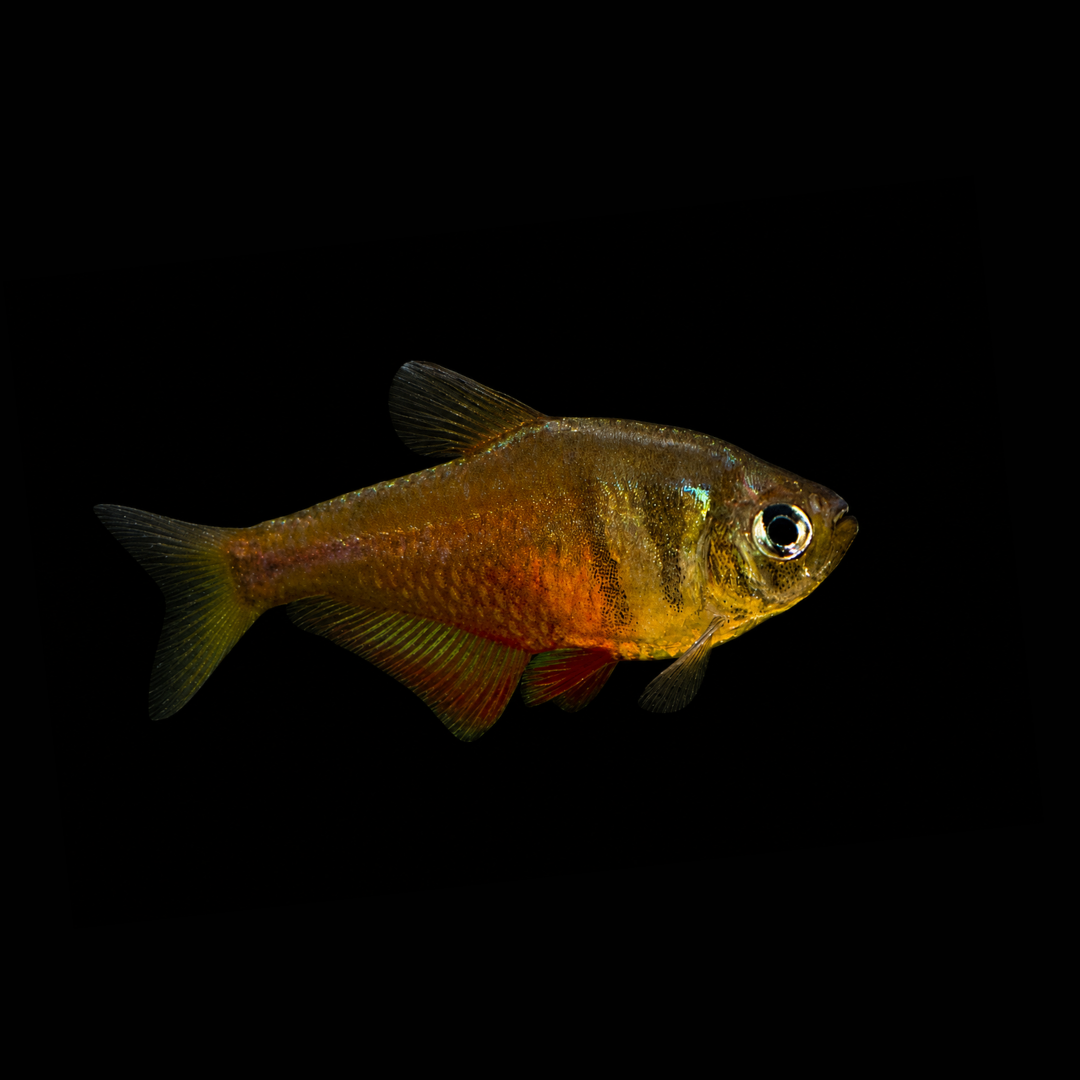
解説 / Description
ゴールデンフレームテトラは、南米原産のフレームテトラをもとに、黒い斑紋が目立ちにくい黄金色の体色を選抜した観賞魚品種です。原種のフレームテトラは、赤く染まる後半身と温和な性格で古くから親しまれてきた小型カラシンで、ゴールデンタイプではその印象がより柔らかく、淡い黄色からオレンジ色を帯びた明るい姿になります。丈夫で人工飼料にも慣れやすく、群れで泳がせると水草水槽の中層に穏やかな彩りを添えてくれます。一方で、原種は野生下で絶滅危惧種に評価されており、水槽内で長く維持されてきた歴史も、この魚を語るうえで大切な背景です。 The Golden Flame Tetra is an aquarium strain derived from the South American Flame Tetra, selected for a golden body color with reduced dark markings. The wild-type Flame Tetra has long been valued as a peaceful small characin with a reddish rear body, while the golden form gives a softer impression with pale yellow to orange tones. It is hardy, usually accepts prepared foods readily, and adds calm mid-water color to planted aquaria when kept in a group. At the same time, the wild form is assessed as Endangered, so the long history of captive maintenance is an important part of this fish’s story.
基本情報 / Basic Information
| 学名 / Scientific Name | Hyphessobrycon flammeus (Myers, 1924) |
|---|---|
| 通称 / Common Name | ゴールデンフレームテトラ、フレームテトラ・ゴールデンタイプ、ゴールデンタイプのフレームテトラGolden Flame Tetra, Gold form of the Flame Tetra |
| 分類 / Family | カラシン目・Acestrorhamphidae・ヒフェソブリコン属。従来の資料や流通上では、広い意味でカラシン科として扱われることもあります。Order Characiformes, family Acestrorhamphidae, genus Hyphessobrycon. Older references and aquarium trade usage may still place it broadly within Characidae. |
| 英名 / English Name | Golden Flame Tetra, Flame Tetra Gold |
| 分布 / Distribution | 原種はブラジル南東部のリオデジャネイロ州周辺、グアナバラ湾流域、パライバ・ド・スル川中流域、グアンドゥ川流域、サンパウロ州のチエテ川上流域などに由来します。ゴールデン品種は観賞魚として選抜された飼育品種で、自然分布を持つ野生型ではありません。The wild form is native to southeastern Brazil, including areas around Rio de Janeiro, the Guanabara Bay basin, the middle Paraíba do Sul basin, the Guandu basin, and the upper Tietê drainage in São Paulo. The golden form is a selected aquarium strain and is not a naturally distributed wild form. |
| 最大体長 / Max Size | 標準体長で約2.6cm。飼育上は全長3cm前後の小型魚として扱うと分かりやすいです。About 2.6 cm standard length. In aquarium care, it is easiest to regard it as a small fish of around 3 cm total length. |
| 寿命 / Lifespan | おおむね3〜5年。文献上は約4年とされることがあり、安定した水質と群れでの飼育が長期維持の基本になります。Generally around 3 to 5 years. A lifespan of about four years is often cited, and stable water quality plus group maintenance are key to long-term care. |
飼育環境 / Aquarium Environment
| 水槽サイズ / Tank Size | 小型魚のため30cm規格水槽でも維持は可能ですが、群れで落ち着かせることを考えると45cm規格水槽以上が扱いやすく、余裕を持つなら60cm規格水槽が理想的です。最低5〜6匹、できれば8匹以上で泳がせると本来の群泳感が出やすくなります。Although this small fish can be maintained in a 30 cm aquarium, a 45 cm standard tank or larger is easier for stable group keeping, and a 60 cm standard aquarium is ideal if space allows. Keep at least 5 to 6 individuals, preferably 8 or more, to bring out natural schooling behavior. |
|---|---|
| 水温 / Temperature | 22〜28℃。日常管理では24〜26℃前後で安定させると、活動性と寿命のバランスを取りやすくなります。 22 to 28°C. For everyday maintenance, a stable range around 24 to 26°C offers a good balance between activity and longevity. |
| 水質 / Water Quality | pH5.8〜7.8、軟水〜中硬水まで適応しますが、色揚がりと落ち着きの面では弱酸性〜中性、pH6.0〜7.0前後が扱いやすいです。アンモニアや亜硝酸には弱いため、立ち上がったろ過環境で飼育し、週1回を目安に20〜30%程度の換水を行います。It can adapt to about pH 5.8 to 7.8 and soft to moderately hard water, but slightly acidic to neutral water around pH 6.0 to 7.0 is usually easiest for good condition and color. Because it is sensitive to ammonia and nitrite, keep it in a mature filtered aquarium and perform weekly water changes of about 20 to 30 percent. |
| レイアウト / Layout | 水草を植えた落ち着いた水槽と相性がよく、流木、落ち葉、暗色系の底床を使うと明るい体色が引き立ちます。原種は水草や岸辺の植物がある浅く流れの緩やかな小川に見られるため、陰になる場所と中層を泳ぐ開けた空間を両方用意すると安心します。It suits calm planted aquaria, and driftwood, leaf litter, and darker substrates help its light body color stand out. The wild form occurs in shallow, slow-flowing streams with vegetation, so provide both shaded cover and open mid-water swimming space. |
| 注意点 / Precautions | 単独や少数飼育では警戒心が強くなり、隠れがちになったり、同種間の小競り合いが目立ったりすることがあります。導入時は水温合わせと水合わせを丁寧に行い、急なpH変化や水温差を避けてください。販売名が似た改良品種もあるため、体色や入荷名だけでなく、販売店で品種名を確認すると安心です。When kept alone or in very small numbers, it may become shy or show more noticeable minor sparring. Acclimate carefully and avoid sudden changes in pH or temperature. Because similar trade names may be used for related color forms, it is best to confirm the strain name with the retailer. |
餌と給餌 / Feeding
| 餌の種類 / Diet | 雑食性で、細かなフレークフード、小粒の顆粒フードをよく食べます。発色と繁殖コンディションを整えたい場合は、冷凍ブラインシュリンプ、ミジンコ、細かく刻んだアカムシなどの小型魚向け冷凍餌を補助的に与えます。植物質を含むフードも時折取り入れると、栄養の偏りを防ぎやすくなります。It is omnivorous and readily accepts fine flake foods and small granules. To improve color and breeding condition, supplement with small frozen foods such as brine shrimp, daphnia, and finely chopped bloodworms. Occasional foods containing plant matter help prevent nutritional imbalance. |
|---|---|
| 給餌のポイント / Feeding Tips | 1日1〜2回、数分で食べきれる量を与えます。口が小さいため、餌は細かく砕いて水面から中層に広がるようにすると食べやすくなります。残餌は水質悪化につながるため、食べ残しが出る場合は量を減らしてください。Feed once or twice a day, only as much as the fish can finish within a few minutes. Because the mouth is small, crush foods finely and let them spread from the surface into mid-water. Reduce the amount if uneaten food remains. |
性格と混泳 / Temperament and Tank Mates
| 性格 / Temperament | 基本的には温和で、群れを作って中層を泳ぐ小型カラシンです。雄同士が順位をめぐって軽く張り合うことはありますが、十分な匹数と水草による視線の遮りがあれば、深刻な争いにはなりにくいです。It is generally peaceful and swims in the middle layer in groups. Males may display or spar mildly, but this rarely becomes serious when the group is large enough and plants provide visual breaks. |
|---|---|
| 混泳の相性 / Compatibility | ネオンテトラ、ラミーノーズテトラ、レモンテトラ、小型ラスボラ、コリドラス、オトシンクルス、小型で温和なドワーフシクリッドなど、同程度の水質を好む穏やかな魚と相性がよいです。成魚のエンゼルフィッシュなど本種を捕食できる魚、ヒレをかじる魚、大型甲殻類との混泳は避けます。Good tank mates include peaceful fish that prefer similar conditions, such as neon tetras, rummy-nose tetras, lemon tetras, small rasboras, Corydoras, Otocinclus, and small calm dwarf cichlids. Avoid fish large enough to eat them, fin nippers, and large crustaceans. |
病気と対策 / Diseases and Prevention
| かかりやすい病気 / Common Diseases | 白点病、尾ぐされ病、カラムナリス症、水質悪化による体調不良に注意します。特に導入直後、低水温、急な水質変化、過密飼育が重なると発症しやすくなります。Watch for ich, fin rot, columnaris, and general stress-related illness caused by poor water quality. Problems are more likely soon after introduction, at low temperatures, after sudden water changes, or under overcrowded conditions. |
|---|---|
| 対策と予防 / Prevention | 予防の基本は、安定した水温、成熟したろ過、過密を避けた群れの管理、定期的な換水です。新しく導入する個体は体表、ヒレ、泳ぎ方を確認し、可能であれば短期間の隔離観察を行ってから合流させると安心です。発症時は症状を見極め、早めに隔離と適切な薬浴を検討します。Prevention depends on stable temperature, mature filtration, sensible stocking density, and regular water changes. Check new fish for body, fin, and swimming problems and, if possible, observe them separately for a short period before adding them to the main aquarium. If disease appears, identify symptoms early and consider isolation and appropriate medication. |
増やし方(繁殖) / Breeding
| 雌雄の判別 / Sexing | 雄は比較的スリムで発色が強く、原種では尻ビレや腹ビレの先端に黒い色が出やすく、微小な骨質の鉤を持ちます。雌はやや体高があり、成熟すると腹部がふっくらします。ゴールデン品種では黒色色素が弱く見えることがあるため、体型、腹部の丸み、尻ビレの形に注目すると判別しやすいです。Males are usually slimmer and more intensely colored; in the wild-type form, they may show dark tips on the anal and pelvic fins and possess tiny bony hooks. Females are deeper-bodied and become fuller when mature. In the golden form, dark pigmentation may be reduced, so body shape, belly fullness, and anal-fin shape are useful for sexing. |
|---|---|
| 繁殖形態 / Reproduction | 自由放卵型の産卵魚で、親は卵や稚魚を保護しません。親魚が卵を食べることがあるため、繁殖を狙う場合は別水槽を用意し、産卵後は親魚をすみやかに取り出します。It is an egg-scattering species that provides no parental care. Adults may eat the eggs, so use a separate breeding tank and remove the parents promptly after spawning. |
| 繁殖のポイント / Breeding Tips | 10〜20L程度の繁殖水槽に、ウィローモス、細葉の水草、産卵モップ、または卵が親から逃げ込めるネットやビー玉を用意します。水質は弱酸性で軟らかめ、水温は25〜26℃前後が目安です。雌は200〜300個前後の卵を産むことがあり、水温にもよりますが卵はおよそ2〜3日で孵化します。卵や仔魚は明るすぎる環境を避けたほうが無難なため、産卵後は照明を抑えます。自由遊泳を始めたらインフゾリアなどの極小餌から始め、成長に合わせて孵化したてのブラインシュリンプへ切り替えます。Prepare a 10 to 20 liter breeding tank with Java moss, fine-leaved plants, a spawning mop, or marbles or mesh that let eggs fall out of the parents’ reach. Soft, slightly acidic water and a temperature around 25 to 26°C are suitable. Females may release around 200 to 300 eggs, and hatching usually takes about 2 to 3 days depending on conditions. Because eggs and larvae are best kept away from overly bright light, keep lighting subdued after spawning. Once fry become free-swimming, begin with infusoria or similarly tiny foods, then move to newly hatched brine shrimp as they grow. |
雑学と豆知識 / Trivia and Fun Facts
| 1. ゴールデン品種は「黒い斑紋が抜けた」印象の改良品種 / 1. A golden strain with reduced dark markings | ゴールデンフレームテトラは、原種フレームテトラの改良品種として流通する黄金色のタイプです。海外の観賞魚卸の記述では、ゴールデンタイプは黒い斑紋が欠ける、または目立たない姿として紹介されています。遺伝の細かな仕組みまで一般向け資料で詳しく確認できる魚ではありませんが、野生で採集される通常個体ではなく、観賞魚として選抜・維持されてきた色彩型として理解すると分かりやすいです。The Golden Flame Tetra is a golden aquarium strain of the Flame Tetra. Ornamental fish trade sources describe the gold form as one in which the black markings are lacking or greatly reduced. The detailed genetics are not usually documented in hobby references, so it is best understood as a selected and maintained aquarium color form rather than a wild-collected natural type. |
|---|---|
| 2. 「ゴールデンテトラ」とは金色の理由が違う / 2. Its gold color differs from the Gold Tetra | アクアリウムで「ゴールデン」と呼ばれる魚には複数の系統があります。たとえばゴールデンテトラとして知られるヘミグラムス・ロドウェイは、野外では寄生虫への反応によりグアニンが関わった金属光沢を示すことが知られ、飼育下で生まれた若魚は同じ金属光沢を示さない場合があります。ゴールデンフレームテトラの黄金色は、そのような野外由来の一時的な金属光沢ではなく、観賞魚として維持される色彩型として扱われます。同じ「ゴールデン」という名前でも、背景は大きく異なります。Several aquarium fish are called “golden” for different reasons. The Gold Tetra, Hemigrammus rodwayi, is known to develop a metallic sheen in the wild due to a guanine-related reaction associated with parasites, and captive-bred young may not show the same sheen. The Golden Flame Tetra is different: its golden appearance is treated as a maintained aquarium color strain, not a temporary wild-derived metallic effect. The same word “golden” can therefore describe very different biological backgrounds. |
| 3. 原種の学名には「炎」の印象が残されている / 3. The scientific name preserves the image of flame | 原種フレームテトラの種小名 flammeus は、炎のような赤い体色を思わせる名前です。1920年代に観賞魚として紹介され、1924年に Myers によって記載されたこの魚は、赤い小型カラシンとして長く愛好家に親しまれてきました。ゴールデン品種では炎のような赤みは柔らかく見えますが、学名をたどると、原種が持っていた鮮やかな赤の印象へ戻っていくことができます。The species name flammeus evokes the flame-like red coloration of the wild form. Introduced to the aquarium hobby in the 1920s and described by Myers in 1924, this fish has long been familiar to aquarists as a red small characin. The golden form softens that fiery impression, but the name still leads back to the vivid red character of the original fish. |
| 4. 分類名は資料によって揺れることがある / 4. Family placement may vary among references | 古い図鑑や流通名では、フレームテトラは広くカラシン科の魚として紹介されることが多くあります。一方で、近年のデータベースでは Acestrorhamphidae として扱われる例もあります。これは魚そのものが変わったわけではなく、南米小型カラシン類の分類整理が進んできたためです。購入や飼育の実務では「小型カラシン」として理解して差し支えありませんが、学術的な表記では参照する資料の新旧を意識すると混乱しにくくなります。Older aquarium books and trade usage often present the Flame Tetra broadly as a characin in Characidae, while newer databases may place it in Acestrorhamphidae. This does not mean the fish itself has changed; rather, the classification of South American small characins has been revised. For practical aquarium care, it is still safe to think of it as a small tetra, but checking the age and system used by a reference helps avoid confusion. |
| 5. 野生では危機にあり、水槽で受け継がれてきた魚 / 5. Threatened in the wild, continued in aquaria | 原種フレームテトラは、ブラジル南東部の都市圏に近い小河川を故郷とする魚です。開発、水質汚染、河川環境の変化、外来魚の影響などにより野生個体群は大きく減少し、国際的には絶滅危惧種に評価されています。一方で、飼育下で繁殖しやすかったため、観賞魚として世界中の水槽や養殖場で維持されてきました。水槽の中を泳ぐ小さな群れは、単にきれいな改良品種というだけでなく、自然の生息地と人の手による飼育文化が交差する存在でもあります。The wild Flame Tetra comes from small river systems near heavily urbanized parts of southeastern Brazil. Development, pollution, habitat alteration, and introduced fish have contributed to the decline of wild populations, and the species is internationally assessed as Endangered. At the same time, because it breeds readily in captivity, it has been maintained in aquaria and fish farms around the world. A small group swimming in a tank is therefore not only a beautiful aquarium strain, but also a reminder of the connection between natural habitats and aquarium culture. |
| 6. 日本の水草水槽で映える、控えめな黄金色 / 6. A modest golden accent for planted aquaria | 日本の家庭では45cm〜60cm規格水槽のような中小型水槽が扱いやすく、ゴールデンフレームテトラの小さな体と温和な性格はその環境に合わせやすい魅力があります。派手に主張する魚ではありませんが、暗めの底床と水草の緑の中では、淡い黄金色がやさしく浮かび上がります。数匹だけで見るよりも、群れとして泳がせたときに、この魚らしい落ち着いた美しさがよく伝わります。In Japanese homes, compact aquaria such as 45 to 60 cm standard tanks are often practical, and the Golden Flame Tetra’s small size and peaceful temperament suit that setting well. It is not a flashy fish, but against dark substrate and green plants its soft gold color appears gently luminous. Its quiet beauty is best appreciated not as a single specimen, but as a small group moving together. |
まとめ / Conclusion
ゴールデンフレームテトラは、丈夫さ、温和さ、群泳の美しさを兼ね備えた小型カラシンです。淡い黄金色の体色は水草や暗色系の底床とよく調和し、45cm〜60cm規格水槽のような扱いやすい水槽でも、落ち着いた存在感を見せてくれます。飼育では、十分な匹数で迎えること、急な水質変化を避けること、清潔で安定した環境を保つことが大切です。 The Golden Flame Tetra is a small characin that combines hardiness, peaceful behavior, and attractive schooling. Its soft golden body color harmonizes well with aquatic plants and dark substrates, giving a calm presence even in manageable 45 to 60 cm standard aquaria. Successful care depends on keeping a proper group, avoiding sudden water changes, and maintaining a clean, stable environment.
原種フレームテトラが野生で厳しい状況に置かれていることを知ると、この魚の見え方は少し変わります。水槽の中で穏やかに泳ぐ黄金色の群れは、観賞魚としての美しさだけでなく、人の手によって受け継がれてきた小さな生命の歴史も感じさせてくれます。日々の世話を丁寧に重ねるほど、その静かな輝きは水槽の中で長く親しめる魅力になっていきます。 Knowing that the wild Flame Tetra faces serious pressure in nature changes how this fish is seen. A calm golden group in the aquarium offers more than ornamental beauty; it also carries the history of a small life maintained through human care. With steady daily attention, its quiet glow becomes a lasting and familiar charm in the aquarium.

気になる道具や飼い方を見つけてみませんか?
 アイのアクアグッズ案内ダニオの仲間に合わせる飼育用品|ゼブラダニオから超小型種まで水槽・ろ過・餌を選ぶ道具の特徴や使い方、選ぶときのポイントをアイが紹介します。記事はコチラ →
 アイのアクアグッズ案内水槽ライトの選び方|魚の見え方・水草・海水で選ぶおすすめ照明道具の特徴や使い方、選ぶときのポイントをアイが紹介します。記事はコチラ →
 アイのアクアグッズ案内水槽のろ材の選び方|ウール・リング・活性炭の違いとおすすめ商品フィルターの中の綿や石は何をしている? アイとコタロウが、ウール・スポンジ・セラミック・焼結ガラス・活性炭・ゼオライトを比較。機種との相性、入れ方、洗い方と交換まで商品とともに紹介します。記事はコチラ →
 アイのアクアグッズ案内エンゼルフィッシュの飼育用品|高さのある水槽・ろ過・水草・餌の選び方道具の特徴や使い方、選ぶときのポイントをアイが紹介します。記事はコチラ →
さまざまな飼育テーマをご紹介。リンク先の記事には広告・商品紹介が含まれます。
案内・紹介記事一覧へ →分布マップ
原種フレームテトラは、ブラジル南東部のリオデジャネイロ州周辺、グアナバラ湾流域、パライバ・ド・スル川中流域、グアンドゥ川流域、サンパウロ州のチエテ川上流域などに由来します。ゴールデンフレームテトラは観賞魚として選抜された飼育品種で、自然分布を持つ野生型ではありません。
この地図は分布イメージ用に、原種の由来地域を概略代表地点として示したものです。実際の採集地点や厳密な生息範囲を示すものではありません。
この記事では、分類、分布、生息環境、飼育条件、繁殖、病気や注意点を支える資料として、学術論文、魚類データベース、レッドリスト、大学・獣医学系の解説資料を中心に参照しています。店舗・通販サイト、個人ブログ、まとめサイトは参考文献から除外しています。
-
Fricke, R., Eschmeyer, W. N. & Van der Laan, R. eds. Eschmeyer’s Catalog of Fishes: Hyphessobrycon flammeus Myers 1924.
用途:学名、原記載者、現在の有効名、分類上の扱い、分布、保全評価の確認。
https://researcharchive.calacademy.org/research/ichthyology/catalog/fishcatget.asp?spid=29136 -
Myers, G. S. 1924. A new characin fish from Rio de Janeiro. The Fish Culturist, 4(3): 330-331.
用途:Hyphessobrycon flammeus の原記載に関する書誌情報の確認。
https://researcharchive.calacademy.org/research/ichthyology/catalog/getref.asp?id=15459 -
Carvalho, F. R., de Jesus, G. C. & Langeani, F. 2014. Redescription of Hyphessobrycon flammeus Myers, 1924 (Ostariophysi: Characidae), a threatened species from Brazil. Neotropical Ichthyology, 12(2): 247-256.
用途:形態形質、識別点、性的二形、分布、保全上の背景の確認。
https://doi.org/10.1590/1982-0224-20130197 -
Froese, R. & Pauly, D. eds. FishBase: Hyphessobrycon flammeus, Flame tetra.
用途:分類、分布、水温、pH、硬度、体長、生息環境、群れ行動、食性、繁殖卵数、孵化日数、寿命、飼育時の群泳数の確認。
https://www.fishbase.se/summary/Hyphessobrycon-flammeus -
IUCN Red List. Hyphessobrycon flammeus. The IUCN Red List of Threatened Species.
用途:原種フレームテトラの保全状況、絶滅危惧評価、評価基準の確認。
https://www.iucnredlist.org/species/186967/1821074 -
Francis-Floyd, R., Yanong, R. P. E. & Pouder, D. B. Ichthyophthirius multifiliis (White Spot) Infections in Fish. University of Florida IFAS Extension.
用途:白点病の原因、感染性、淡水魚での注意点、早期発見と治療の必要性の確認。
https://ask.ifas.ufl.edu/publication/FA006 -
Petty, B. D., Francis-Floyd, R. & Yanong, R. P. E. Bacterial Diseases of Fish. Merck Veterinary Manual.
用途:尾ぐされ、カラムナリスなど細菌性疾患の背景、発症要因としての水質悪化、過密、輸送、温度変化、ストレスの確認。
https://www.merckvetmanual.com/exotic-and-laboratory-animals/aquarium-fish/bacterial-diseases-of-fish -
Francis-Floyd, R. & Petty, B. D. Routine Health Care of Fish. Merck Veterinary Manual.
用途:病気予防における水質、栄養、清掃、隔離観察の重要性の確認。
https://www.merckvetmanual.com/all-other-pets/fish/routine-health-care-of-fish -
Francis-Floyd, R., Watson, C., Petty, D. & Pouder, D. B. Ammonia in Aquatic Systems. University of Florida IFAS Extension.
用途:アンモニア、亜硝酸、硝酸塩、水質検査、換水による水質管理の基本の確認。
https://ask.ifas.ufl.edu/publication/FA031




コメント