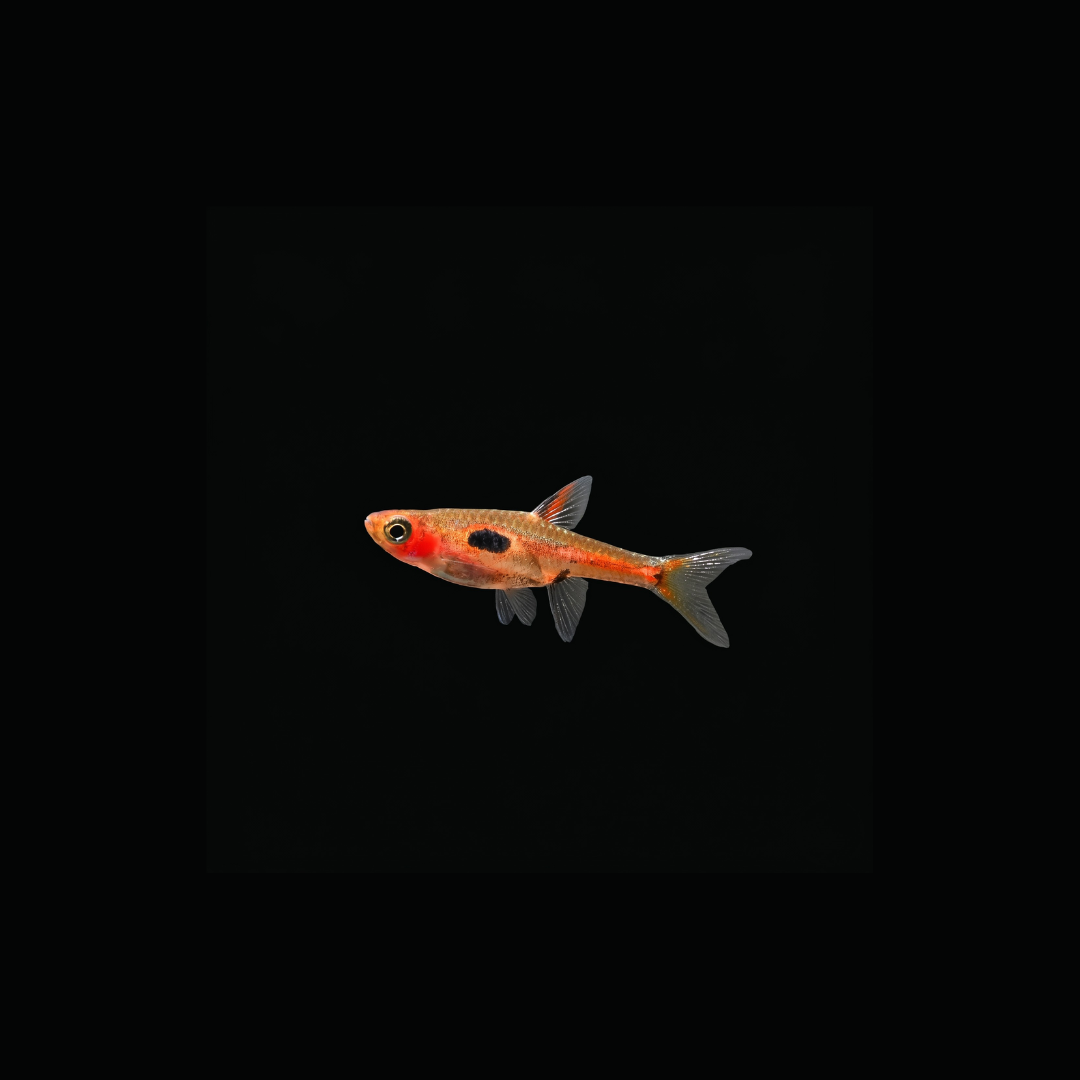
ボララス・メラーは、東南アジアのボルネオ島に生息する世界最小級の淡水熱帯魚です。体長はわずか2センチメートルに満たないほど小さく、その繊細な体躯には鮮やかなオレンジから赤色の色彩が宿ります。最大の特徴は、体側にある楕円形の黒いスポットと、その周囲を後光のように囲む赤い発色で、この様子からフェニックス・ラスボラという美しい流通名でも親しまれています。水槽内では群れをなして泳ぐ性質が強く、適切な環境下ではオス同士がヒレを広げて美しさを競い合う見事なディスプレイを見せてくれます。Boraras merah is one of the world’s smallest freshwater tropical fish, native to the island of Borneo in Southeast Asia. Growing to less than 2 centimeters in length, its delicate body features vibrant shades of orange to red. The most distinctive feature is the oval-shaped black spot on the side, surrounded by a reddish halo-like coloration, which has earned it the beautiful common name Phoenix Rasbora. In an aquarium, they exhibit a strong shoaling instinct, and under proper conditions, males will perform stunning displays of fin-spreading to compete with one another.
基本情報 / Basic Information
学名 / Scientific Name
Boraras merah
通称 / Common Name
ボララス・メラー、フェニックス・ラスボラPhoenix Rasbora
分類 / Family
コイ目 ダニオ科 ボララス属Cypriniformes: Danionidae: Boraras
英名 / English Name
Phoenix Rasbora
分布 / Distribution
インドネシア(ボルネオ島南部および西部)Indonesia (Southern and Western Borneo)
最大体長 / Max Size
約1.5cmから2.0cmApprox. 1.5cm – 2.0cm
寿命 / Lifespan
約3年から5年Approx. 3 – 5 years
飼育環境 / Aquarium Environment
水槽サイズ / Tank Size
30cmキューブ水槽(約25L)から45cm規格水槽(約35L)以上推奨。水量は少なくとも10L以上を確保してください。Recommended for 30cm cube tanks (approx. 25L) or 45cm standard tanks (approx. 35L) or larger. Ensure at least 10L of water volume.
水温 / Temperature
20度から28度。冬期はヒーターによる一定の温度管理が必須です。20°C to 28°C. Constant temperature control with a heater is essential during winter.
水質 / Water Quality
pH 4.0から6.5の弱酸性、1から5 dGHの軟水。Weakly acidic (pH 4.0 – 6.5) and soft water (1 – 5 dGH).
レイアウト / Layout
ウィローモスなどの細かな水草を茂らせ、マジックリーフや流木でブラックウォーターを再現した環境が理想です。照明は控えめにし、水面に浮き草を配置して日陰を作ると落ち着きます。An environment with dense fine-leaved plants like Java moss and blackwater recreated using Indian Almond leaves or driftwood is ideal. Use subdued lighting and floating plants to provide shade.
注意点 / Precautions
水流が強すぎると疲弊して死に至るため、スポンジフィルターなどを用いて緩やかな流れを作ってください。導入時の水質ショックには非常に弱いため、長時間をかけた丁寧な水合わせが必要です。Excessive water flow can lead to exhaustion and death, so use a sponge filter to create a gentle current. They are very sensitive to water quality shock upon introduction, requiring careful and slow acclimation.
餌と給餌 / Feeding
餌の種類 / Diet
微小な捕食者のため、ブラインシュリンプの幼生やマイクロワームなどの活き餌を好みます。人工飼料にも慣れますが、口が非常に小さいため、指ですり潰して細かな粉末状にする必要があります。As micro-predators, they prefer live food such as baby brine shrimp and microworms. They can adapt to artificial food, but it must be crushed into a fine powder as their mouths are very small.
給餌のポイント / Feeding Tips
一度にたくさん食べられないため、少量を数回に分けて与えるのがコツです。特に発色を良くしたい場合は、栄養価の高いブラインシュリンプを定期的に与えることが効果的です。Since they cannot eat much at once, the key is to feed small amounts several times a day. Regularly feeding highly nutritious brine shrimp is effective for enhancing their coloration.
性格と混泳 / Temperament and Tank Mates
性格 / Temperament
極めて温和で臆病です。必ず8匹から10匹以上の群れで飼育して安心させてあげてください。Extremely peaceful and shy. Always keep them in a shoal of 8 to 10 or more individuals to make them feel secure.
混泳の相性 / Compatibility
サイズの大きな魚や活発すぎる魚との混泳は、本種がストレスで衰弱するため避けてください。同じ極小型のコイ科や、ミナミヌマエビ、オトシンクルスなどのお掃除役の生き物とは良好な関係を築けます。Avoid housing them with larger or overly active fish, as this can cause stress and weaken them. They get along well with other micro-cyprinids and cleaning crews like freshwater shrimp or Otocinclus.
病気と対策 / Diseases and Prevention
かかりやすい病気 / Common Diseases
水温や水質の急変による白点病や、輸送ストレスに起因する衰弱。Ich (White Spot Disease) caused by sudden changes in temperature or water quality, and lethargy due to shipping stress.
対策と予防 / Prevention
導入初期のトリートメントを徹底し、ブラックウォーター環境で体表の粘膜を保護することが最善の予防です。換水時は新水のpHと温度を飼育水に厳密に合わせ、一度に大量の水を換えないようにしてください。Thorough quarantine during initial introduction and protecting their mucous membrane with blackwater conditions is the best prevention. When changing water, strictly match the pH and temperature of the new water to the tank water, and avoid large water changes at once.
増やし方(繁殖) / Breeding
雌雄の判別 / Sexing
オスは色彩がより鮮やかで、成熟すると腹部が直線的になります。メスは体色がやや淡く、抱卵すると腹部が大きく丸みを帯びるため判別は比較的容易です。Males are more vibrantly colored and have a straighter belly when mature. Females have slightly paler colors and a noticeably rounded belly when carrying eggs, making them relatively easy to distinguish.
繁殖形態 / Reproduction
卵を水草の茂みなどにばら撒くタイプ(ばら撒き型産卵)です。They are continuous scatterers, laying eggs among dense vegetation.
繁殖のポイント / Breeding Tips
親魚が卵を食べてしまうため、繁殖用の水槽を用意し、底にメッシュやビー玉を敷いて卵を保護する工夫が必要です。孵化した稚魚は極めて小さいため、初期飼料としてゾウリムシなどのインフゾリアが不可欠です。Since parents may eat their eggs, a separate breeding tank with a mesh bottom or marbles is needed to protect the eggs. The newly hatched fry are extremely small and require infusoria as their initial food.
雑学と豆知識 / Trivia and Fun Facts
1. 名前は文字のパズル?「ボララス」の秘密 / 1. A Word Puzzle? The Secret of “Boraras”
ボララスという属名は、実はもともと分類されていた「ラスボラ(Rasbora)」という綴りを並べ替えたアナグラム(言葉遊び)によって名付けられました。これは、単なる遊び心ではなく、彼らの骨格が一般的なラスボラと比べて腹椎と尾椎の比率が「逆転」しているという解剖学的な特徴を、文字の入れ替えという形で表現した非常に知的な命名なのです。The genus name Boraras is actually an anagram of “Rasbora,” the genus they were originally classified in. This was not just a playful touch but an intelligent naming convention reflecting an anatomical feature: the ratio of their abdominal and caudal vertebrae is “reversed” compared to typical Rasbora.
2. 成長を止めることで手に入れた宝石のような姿 / 2. Gem-like Appearance Gained by Halting Growth
ボララスがこれほどまでに小さいのは、「発生の短縮」と呼ばれる進化のプロセスを選んだからです。彼らは、一般的な魚が成魚になるまでの成長ステップの途中で身体の発達をあえて停止させ、未熟な段階のまま大人になる道を選びました。この進化によって、限られた小さな体の中に、他の魚にはない驚くほど複雑で鮮烈な色彩パターンを凝縮させることができたのです。The reason Boraras are so small is due to an evolutionary process called “developmental truncation.” They essentially chose to stop their physical development midway through the typical growth steps to adulthood. This evolution allowed them to condense incredibly complex and vivid color patterns, unseen in other fish, into their tiny frames.
3. 「メラー」は情熱の赤を意味する言葉 / 3. “Merah” Means Passionate Red
種小名の「メラー(merah)」は、生息地であるインドネシアやマレーシアの言葉で、直訳するとズバリ「赤」を意味します。現地の湿地帯で紅茶色のブラックウォーターの中を、キラリと赤い光を放ちながら泳ぐ彼らの姿を見た人々が、その美しさをそのまま名前に込めたのです。まさに、名前そのものが彼らのアイデンティティを表しています。The specific epithet “merah” means “red” in Indonesian and Malay, the languages of its native region. People who saw these fish swimming in the tea-colored blackwater of the local swamps, emitting sparks of red light, gave them a name that perfectly captures their beauty. Their name is truly their identity.
4. 極限の環境「pH 4.0」で生きるスペシャリスト / 4. A Specialist Living in the Extreme pH 4.0 Environment
ボララス・メラーが住むボルネオ島の泥炭湿地は、植物が分解されてできた強力な有機酸によって、時にはレモン汁に近いpH 4.0という驚くべき強酸性を示します。普通の魚なら生きていけないような過酷な環境を、彼らは最高の楽園へと変えました。この酸性環境は天然の殺菌剤となり、彼らを病気から守るバリアの役割も果たしているのです。The peat swamps of Borneo where Boraras merah live can exhibit a remarkably strong acidity of pH 4.0—close to lemon juice—due to organic acids from decomposing vegetation. While most fish couldn’t survive there, these specialists turned an extreme environment into their paradise. This acidity acts as a natural disinfectant, shielding them from diseases.
まとめ / Conclusion
ボララス・メラーは、その小さな体からは想像もできないほど豊かな進化の歴史と、宝石のような美しさを兼ね備えた魅力的な魚です。飼育にはブラックウォーターの再現や緩やかな水流の維持など、細やかな配慮が必要ですが、彼らが安心感を得て本来の赤い輝きを放ち始めたとき、その苦労を補って余りある感動を私たちに与えてくれます。Boraras merah is a fascinating fish that combines a rich evolutionary history with gem-like beauty far beyond what its tiny size suggests. While their care requires meticulous attention, such as recreating blackwater conditions and maintaining a gentle flow, the moment they feel secure and begin to emit their natural red glow, the reward far outweighs the effort.
ボルネオ島の神秘を凝縮したようなこの極小の熱帯魚を、ぜひあなたの水槽で大切に育んでみてください。適切な環境を整えることで、小さな水槽の中に広がる大自然のドラマを、日々楽しむことができるはずです。Try welcoming this micro-tropical fish, a condensed mystery of Borneo, into your aquarium. By providing the right environment, you can enjoy the daily drama of nature unfolding within your small tank.
Kottelat, M. (1991). Notes on the taxonomy of some Sundaic and Indochinese species of Rasbora, with description of four new species. Ichthyological Exploration of Freshwaters, Vol. 2, No. 2, pp. 177-191.
Kottelat, M. and Vidthayanon, C. (1993). Boraras micros, a new genus and species of minute freshwater fish from Thailand (Teleostei: Cyprinidae). Ichthyological Exploration of Freshwaters, Vol. 4, No. 2, pp. 161-176.
Kottelat, M. (2013). The fishes of the inland waters of Southeast Asia: a catalogue and core bibliography of the fishes known to occur in freshwaters, mangroves and estuaries. Raffles Bulletin of Zoology, Supplement No. 27, pp. 1-663.
分類・生態データベース
Fricke, R., Eschmeyer, W. N. and van der Laan, R. (eds) (2024). Eschmeyer’s Catalog of Fishes: Genera, Species, References. Electronic version.
Froese, R. and Pauly, D. (eds) (2024). FishBase. World Wide Web electronic publication. Species: Boraras merah.



 アイのアクアグッズ案内グッピー・プラティ・モーリーを親子で楽しむ飼育用品|水槽・稚魚保護・ろ過・餌・水草道具の特徴や使い方、選ぶときのポイントをアイが紹介します。記事はコチラ →
 アイのアクアグッズ案内水槽フィルターの選び方|外掛け・外部・上部から小型オーバーフローまで道具の特徴や使い方、選ぶときのポイントをアイが紹介します。記事はコチラ →



コメント