

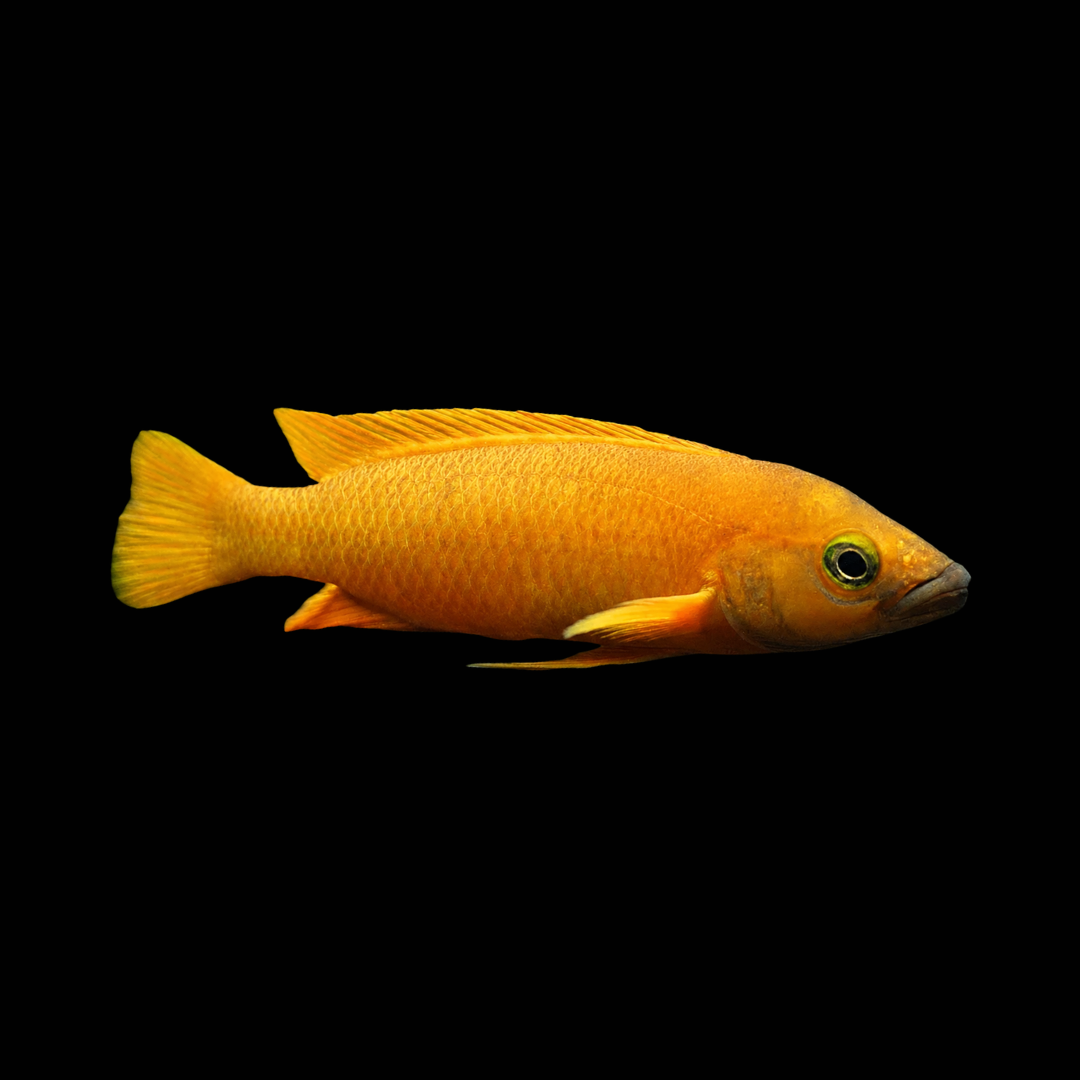
解説 / Description
ネオランプロローグス・レレウピーは、アフリカのタンガニイカ湖に固有分布する小型のシクリッドです。岩の割れ目や洞窟を生活の拠点とし、野生下では岩肌を覆う生物膜や、その奥に潜む小型の無脊椎動物を探して暮らしています。流線型の体と、レモンイエローからオレンジ、褐色まで変化に富む体色が大きな魅力です。水槽内でも岩礁性の習性は明瞭に表れ、選んだ洞窟を中心に縄張りを形成します。そのため、美しい姿を楽しみながら安定して飼育するには、アルカリ性の硬水を保つだけでなく、十分な広さと複数の隠れ家を備えた環境が欠かせません。 Neolamprologus leleupi is a small cichlid endemic to Lake Tanganyika in Africa. It uses cracks and caves as the center of its daily life and searches for small invertebrates living in the biological growth and recesses of rocky substrates. Its streamlined body and variable coloration, ranging from lemon yellow and orange to brown, make it especially attractive. In an aquarium, its rock-dwelling nature remains pronounced, and each fish may establish a territory around a chosen cave. Stable care therefore requires not only alkaline, mineral-rich water but also sufficient swimming space and several secure shelters.
基本情報 / Basic Information
| 学名 / Scientific Name | Neolamprologus leleupi (Poll, 1956) |
|---|---|
| 通称 / Common Name | レレウピー、レモン・シクリッドLeleupi, Lemon Cichlid |
| 分類 / Family | シクリッド科・ネオランプロローグス属(亜科:Pseudocrenilabrinae)Family Cichlidae, subfamily Pseudocrenilabrinae, genus Neolamprologus |
| 英名 / English Name | Lemon Cichlid |
| 分布 / Distribution | アフリカ・タンガニイカ湖南半部。主に岩の割れ目や窪みが多い岩礁環境に生息します。The southern half of Lake Tanganyika, Africa, mainly in rocky habitats with abundant cracks and recesses. |
| 最大体長 / Max Size | 全長約10cmApproximately 10 cm total length |
| 寿命 / Lifespan | 信頼できる統一的な寿命データは少なく、一律の年数は示せません。長期飼育では、水質の安定と個体間の争いを抑える環境づくりが重要です。Reliable, standardized lifespan data are limited, so a single definitive figure cannot be given. Long-term success depends on stable water conditions and an aquarium design that reduces territorial conflict. |
飼育環境 / Aquarium Environment
| 水槽サイズ / Tank Size | 単独または相性の確認できたペアでも、幅80cm以上が目安です。日本の規格水槽では90cm規格水槽を基本とすると、縄張りと退避場所を分けやすくなります。複数種との混泳を試みる場合は、120cm規格水槽以上の広さを確保してください。A tank at least 80 cm long is advisable even for a single fish or a proven compatible pair. In Japan, a standard 90 cm aquarium provides a practical minimum for separating territories and escape areas. A standard 120 cm aquarium or larger is preferable for carefully planned community setups. |
|---|---|
| 水温 / Temperature | 24〜26℃を目安に、急な変化を避けて安定させます。Maintain a stable temperature of approximately 24–26°C and avoid sudden changes. |
| 水質 / Water Quality | pH7.5〜8.0、硬度12〜15dH程度のアルカリ性硬水が基準です。日本の水道水は地域によって軟水になりやすいため、サンゴ砂や硬度調整用のミネラル剤を利用する場合は、pH、GH、KHを測定しながら少しずつ調整します。数値を急に変えるよりも、適正範囲で安定させることが大切です。A practical reference range is pH 7.5–8.0 with hardness around 12–15 dH. Because tap water in many parts of Japan is relatively soft, coral sand or mineral supplements may be used while monitoring pH, GH, and KH. Stability within a suitable range is more important than making rapid adjustments. |
| レイアウト / Layout | 砂地の上に石を重ねるのではなく、石組みを水槽底面に安定させてから底砂を入れます。大小の石を組み合わせ、入口の向きが異なる洞窟や、互いの視線を遮る壁を複数設けてください。明るい色の砂は黄色い個体の体色を観察しやすく、サンゴ砂は水質の緩衝にも役立ちます。ただし、底砂だけに頼らず、水質は必ず測定して管理します。Place and stabilize the rockwork directly on the aquarium base before adding sand, rather than stacking heavy rocks on loose substrate. Combine rocks of different sizes to create caves with entrances facing different directions and barriers that block direct lines of sight. Light-colored sand can make yellow individuals easier to appreciate, while coral sand may help buffer the water, but water parameters should still be measured rather than assumed. |
| 注意点 / Precautions | 本種は小型でも縄張り意識が強く、相性が合わない個体を狭い場所へ追い込むことがあります。呼吸が速い、餌を食べない、物陰から出ない、ヒレが傷むといった変化が見られた場合は、早めに隔離できるよう予備水槽を用意しておくと安心です。換水量は水槽の状態に合わせますが、週1回20%前後を一つの目安とし、新しい水の温度と水質を合わせてください。Despite its small size, this species is strongly territorial and may corner an incompatible tank mate. Rapid breathing, refusal of food, constant hiding, or damaged fins should be treated as warning signs, so a spare isolation tank is useful. Water-change volume should reflect the condition of the aquarium, but about 20% weekly is a practical starting point when the temperature and chemistry of the replacement water are closely matched. |
餌と給餌 / Feeding
| 餌の種類 / Diet | 野生下では、岩の生物膜や隙間に潜む小型の無脊椎動物を捕食します。飼育下では、良質なシクリッド用顆粒飼料を主食にし、ブラインシュリンプ、イサザアミ、小型甲殻類を原料とした冷凍餌などを組み合わせます。In the wild, it feeds on small invertebrates living in biological growth and rocky recesses. In captivity, use a high-quality cichlid pellet as the staple and supplement it with foods such as brine shrimp, mysid shrimp, and frozen preparations made from small crustaceans. |
|---|---|
| 給餌のポイント / Feeding Tips | 一度に多量を与えず、短時間で食べ切れる量を1日1〜2回に分けます。カロテノイドを含む餌は黄色やオレンジ色の発色を支える一助になりますが、体色には遺伝的な違い、地域個体群、健康状態、照明、背景色なども関係します。色揚げだけを目的に餌を偏らせず、栄養のバランスを優先してください。Offer small portions once or twice daily, using only an amount that can be consumed quickly. Carotenoid-containing foods may support yellow and orange coloration, but color is also influenced by genetics, locality, health, lighting, and the visual background. Maintain a balanced diet rather than relying excessively on color-enhancing food. |
性格と混泳 / Temperament and Tank Mates
| 性格 / Temperament | 岩の隙間を拠点にする縄張り性の強い魚です。同種間では、体格差や成熟の進み方によって関係が急に悪化することがあります。繁殖行動が始まると、洞窟の周囲を守る行動がさらに強くなるため、普段は問題なく見える組み合わせでも注意が必要です。This is a strongly territorial fish that centers its activity on rocky crevices. Relationships between conspecifics can deteriorate suddenly as size and maturity change. Territorial defense becomes more intense during breeding, so even combinations that previously appeared stable require close observation. |
|---|---|
| 混泳の相性 / Compatibility | 同じ洞窟や岩陰を利用する、体型の似たシクリッドとは争いが起こりやすいため、安易な混泳は避けます。混泳させる場合は、遊泳層や生活場所が異なるタンガニイカ湖産魚を候補とし、大型水槽の中で縄張りを明確に分けてください。ただし、魚種名だけで相性を保証することはできません。個体差を前提に観察し、追われる個体をすぐに隔離できる体制を整えます。Avoid casual mixing with similarly shaped cichlids that use the same caves and rocky shelters. In a large aquarium, Tanganyikan species occupying different swimming zones and habitats may be considered, provided that territories are clearly separated. Compatibility cannot be guaranteed by species name alone, so individual behavior must be monitored and any persistently harassed fish must be removable without delay. |
病気と対策 / Diseases and Prevention
| かかりやすい病気 / Common Diseases | 本種だけに特有の代表的な病気は知られていません。一方で、水質の急変、窒素化合物の蓄積、過密、縄張り争いによる慢性的なストレスが続くと、白点病などの寄生虫症や、傷口からの細菌感染を招きやすくなります。No single disease is recognized as uniquely characteristic of this species. However, sudden changes in water chemistry, accumulation of nitrogenous waste, crowding, and chronic territorial stress can increase susceptibility to parasitic conditions such as white spot disease and to bacterial infection of damaged tissue. |
|---|---|
| 対策と予防 / Prevention | 予防の基本は、ろ過を安定させ、アンモニアと亜硝酸を検出されない状態に保ち、硝酸塩の蓄積を定期換水で抑えることです。新しい魚は別水槽で健康状態を確認してから導入します。治療が必要になった場合は、病名を外見だけで決めつけず、症状、水質、経過を確認したうえで対応してください。Prevention begins with mature filtration, undetectable ammonia and nitrite, and regular water changes that limit nitrate accumulation. Quarantine new fish before introduction. When treatment is necessary, avoid diagnosing from appearance alone and consider the symptoms, water parameters, and progression of the condition. |
増やし方(繁殖) / Breeding
| 雌雄の判別 / Sexing | 雌雄の外見差は小さく、若魚の段階で確実に見分けることは困難です。成熟したオスはメスより大きくなる傾向がありますが、体格やヒレの形だけで断定はできません。繁殖期の行動や生殖孔も含め、複数の特徴を総合して判断します。External differences between the sexes are slight, and reliable sexing of juveniles is difficult. Mature males often become larger than females, but body size and fin shape alone are not conclusive. Breeding behavior and the genital papilla should be considered together with other traits. |
|---|---|
| 繁殖形態 / Reproduction | 洞窟の内壁や天井に卵を付着させる基質産卵型です。受精は体外で行われ、親魚は産卵場所と卵を守ります。産卵数は親魚の大きさや状態によって変わり、100個を超えることもあります。孵化までの日数は水温に左右されますが、通常は数日です。It is a substrate-spawning cichlid that attaches eggs to the wall or ceiling of a cave. Fertilization is external, and the parents guard the spawning site and clutch. The number of eggs varies with the size and condition of the parents and may exceed one hundred. Incubation time depends on temperature but is generally several days. |
| 繁殖のポイント / Breeding Tips | 相性のよい雌雄を最初から選ぶことは難しいため、若魚を複数匹育て、その中から自然に形成された組み合わせを残す方法が一般的です。ペアらしい行動が見られても、産卵期以外には関係が悪化する場合があります。洞窟を複数用意し、メスがオスから逃れられる通路を確保してください。自由遊泳を始めた稚魚には、孵化直後のブラインシュリンプや微細な人工飼料を少量ずつ与えます。Because it is difficult to select a compatible male and female in advance, aquarists commonly raise several juveniles and retain a naturally formed pair. Even an apparently bonded pair may become less tolerant outside the spawning period. Provide several caves and routes through which the female can avoid the male. Once the fry become free-swimming, offer small amounts of newly hatched brine shrimp or finely powdered prepared food. |
雑学と豆知識 / Trivia and Fun Facts
| 1. 一文字違いの学名が生んだ混同 / 1. A One-Letter Taxonomic Confusion | 本種の種小名「leleupi」は、タイプ標本の採集に関わったベルギーの昆虫学者ナルシス・ルルーに献名されたものです。タンガニイカ湖には、学名が一文字だけ異なるネオランプロローグス・ルルーピィ(Neolamprologus leloupi)も生息しています。こちらは別種であり、ウジェーヌ・ルルーにちなむ名前です。どちらもマックス・ポールが記載したため、学術名を確認するときは綴りまで注意する必要があります。The specific name leleupi honors the Belgian entomologist Narcisse Leleup, who was involved in collecting the type material. Lake Tanganyika also contains a different species with a name that differs by only one letter, Neolamprologus leloupi, named for Eugène Leloup. Both were described by Max Poll, so the exact spelling is important when checking scientific records. |
|---|---|
| 2. 黄色だけではない多彩な体色 / 2. More Than a Yellow Cichlid | 「レモン・シクリッド」という通称から黄色一色の魚と思われがちですが、野生個体の体色には黄色、オレンジ、褐色などの幅があります。かつて亜種として扱われた暗色型の「メラス」も、現在は本種の異名として整理されています。体色だけで近縁種や産地を断定することはできないため、由来の明確な個体を選ぶことが大切です。The common name Lemon Cichlid can give the impression that the species is always bright yellow, but wild individuals range through yellow, orange, and brown forms. The dark form once treated as “melas” is now listed as a synonym of this species. Color alone is therefore not sufficient for identifying a locality or separating similar species, and reliable provenance is valuable. |
| 3. 草食魚の採餌を利用する捕食者 / 3. A Predator That Follows Grazers | タンガニイカ湖では、藻類を食べるトロフェウス・モーリーの後ろを本種が追い、岩肌から飛び出した小型のエビを捕らえる行動が観察されています。トロフェウスが岩をついばむことで隠れていた獲物が動き出し、レレウピーはその機会を逃さず利用します。他種の行動が生み出した餌場を活用する、岩礁帯ならではの採餌戦略です。In Lake Tanganyika, N. leleupi has been observed following the algae-grazing cichlid Tropheus moorii and capturing small shrimp disturbed from the rocks. The grazing activity causes hidden prey to move, and N. leleupi takes advantage of the opportunity. This is a distinctive feeding association shaped by life in the rocky habitat. |
| 4. 属名と系統関係は完全には一致しない / 4. Genus Names Do Not Fully Match the Family Tree | 分子系統学の研究では、現在ネオランプロローグス属に置かれている種が、単一のまとまりとして整然と分岐したわけではないことが示されています。ランプロローグス族では、従来の属分類と遺伝的な系統関係が一致しない例が複数あり、分類体系の再検討が続いています。本種の学名は現在も有効ですが、その背後にはタンガニイカ湖の複雑な進化史が隠れています。Molecular phylogenetic studies indicate that the species currently assigned to Neolamprologus do not form one simple, neatly separated lineage. Several genera in the tribe Lamprologini do not correspond perfectly with genetic relationships, and their classification continues to be examined. The current scientific name of this species remains valid, but it sits within a complex evolutionary history. |
| 5. ロンギオールはよく似た独立種 / 5. N. longior Is a Similar but Separate Species | ネオランプロローグス・ロンギオール(Neolamprologus longior)は、かつてレレウピーの亜種として記載されましたが、現在は独立種として扱われています。両種の違いは体の比率や色彩などに表れますが、外見上の差は小さく、流通名だけでは判別しにくい場合があります。繁殖を目的とする場合は、とくに学名と産地情報を確認して導入することが重要です。Neolamprologus longior was originally described as a subspecies of N. leleupi but is now treated as a separate species. Differences occur in body proportions and coloration, yet the two can be difficult to separate in the aquarium trade. Aquarists intending to breed them should pay particular attention to scientific identification and locality information. |
| 6. 保全状況は低懸念 / 6. Current Conservation Status | 国際自然保護連合の2025年評価では、本種は低懸念(Least Concern)に分類されています。ただし、タンガニイカ湖の固有種であることに変わりはありません。野生採集個体を選ぶ際は、産地情報や合法的な流通経路を確認し、飼育下で長く健康に維持する姿勢が求められます。The 2025 IUCN assessment classifies this species as Least Concern. It nevertheless remains endemic to Lake Tanganyika. When purchasing wild-caught fish, aquarists should confirm locality information and a legitimate supply chain and should be prepared to maintain the fish responsibly for the long term. |
まとめ / Conclusion
ネオランプロローグス・レレウピーは、鮮やかな体色と鋭い輪郭を楽しめるだけでなく、岩陰を巡回し、洞窟を選び、縄張りを守る姿から、タンガニイカ湖の岩礁環境に適応した暮らしぶりまで観察できる魚です。小型でありながら存在感は強く、一匹ごとの行動や関係性が水槽全体の印象を大きく左右します。 Neolamprologus leleupi offers more than vivid color and a sharply defined form. Its patrols around rockwork, choice of caves, and defense of territory allow aquarists to observe a way of life shaped by the rocky shores of Lake Tanganyika. Although small, each individual has a strong presence, and its behavior can influence the character of the entire aquarium.
安定したアルカリ性硬水、崩れない岩組み、複数の退避場所、そして個体同士の距離を確保できる水槽を用意すると、本来の落ち着いた行動を引き出しやすくなります。体色の鮮やかさだけを追うのではなく、岩礁性シクリッドとしての習性を尊重して環境を整えることが、この魚と長く付き合うための確かな土台になります。 Stable alkaline hard water, secure rockwork, multiple retreats, and enough space for individuals to keep their distance help reveal the species’ natural behavior. Rather than pursuing color alone, respecting its needs as a territorial rock-dwelling cichlid provides the most reliable foundation for a long and rewarding relationship with this fish.

気になる道具や飼い方を見つけてみませんか?
 アイのアクアグッズ案内水草水槽のCO₂添加|3つの方式の選び方とおすすめ用品道具の特徴や使い方、選ぶときのポイントをアイが紹介します。記事はコチラ →
 アイのアクアグッズ案内水槽用浄水器の選び方|水換えを楽にするタイプとROの違い道具の特徴や使い方、選ぶときのポイントをアイが紹介します。記事はコチラ →
 アイのアクアグッズ案内エンゼルフィッシュの飼育用品|高さのある水槽・ろ過・水草・餌の選び方道具の特徴や使い方、選ぶときのポイントをアイが紹介します。記事はコチラ →
 アイのアクアグッズ案内水槽のろ材の選び方|ウール・リング・活性炭の違いとおすすめ商品フィルターの中の綿や石は何をしている? アイとコタロウが、ウール・スポンジ・セラミック・焼結ガラス・活性炭・ゼオライトを比較。機種との相性、入れ方、洗い方と交換まで商品とともに紹介します。記事はコチラ →
さまざまな飼育テーマをご紹介。リンク先の記事には広告・商品紹介が含まれます。
案内・紹介記事一覧へ →分布マップ
ネオランプロローグス・レレウピーは、アフリカのタンガニイカ湖南半部に分布し、岩の割れ目や窪みが多い岩礁環境に生息します。地図上の範囲と地点は分布の位置関係を示すための概略であり、実際の採集地点や厳密な生息範囲を示すものではありません。
Google Earthで開くこの地図は記事の分布情報をもとにした概略表示です。マーカーは南部タンガニイカ湖を示す代表地点であり、実際の採集地点ではありません。着色範囲も厳密な生息境界を示すものではありません。
参考文献
-
Poll, M. (1956). Poissons Cichlidae. Résultats scientifiques de l’exploration hydrobiologique du lac Tanganika (1946–1947), Vol. III, Fasc. 5B, pp. 1–619. Institut royal des Sciences naturelles de Belgique.
対応項目:原記載、学名、形態、タイプ産地、分類学的基礎情報RBINS Open Access Library
-
Fricke, R., Eschmeyer, W. N. & Van der Laan, R. (eds.). Eschmeyer’s Catalog of Fishes: Genera, Species, References. California Academy of Sciences.
対応項目:有効学名、原記載名、異名、近似名との区別、現在の分類学的扱いNeolamprologus leleupi の種記録
-
Froese, R. & Pauly, D. (eds.). FishBase: Neolamprologus leleupi (Poll, 1956).
対応項目:分類、分布、最大体長、生息環境、食性、水温、pH、硬度、飼育水槽の基準FishBase species summary
-
Konings, A. (2019). Tanganyika Cichlids in Their Natural Habitat, 4th ed. Cichlid Press, 432 pp. ISBN 978-1-932892-26-0.
対応項目:湖内分布、岩礁環境、地域変異、食性、繁殖行動、縄張り性、自然環境を踏まえた飼育条件書誌・内容情報
-
Sturmbauer, C., Salzburger, W., Duftner, N., Schelly, R. & Koblmüller, S. (2010). Evolutionary history of the Lake Tanganyika cichlid tribe Lamprologini derived from mitochondrial and nuclear DNA data. Molecular Phylogenetics and Evolution, 57(1), 266–284. DOI: 10.1016/j.ympev.2010.06.018.
対応項目:ランプロローグス族の系統関係、Neolamprologus属の非単系統性、本種と近縁種の系統的位置全文
-
Takamura, K. (1984). Interspecific relationships of aufwuchs-eating fishes in Lake Tanganyika. Environmental Biology of Fishes, 10(4), 225–241. DOI: 10.1007/BF00001476.
対応項目:岩礁帯における魚種間関係、草食性シクリッドの採餌に追随する行動、生息環境内での採餌戦略DOI
-
Yuma, M. (1994). Food habits and foraging behaviour of benthivorous cichlid fishes in Lake Tanganyika. Environmental Biology of Fishes, 39, 173–182. DOI: 10.1007/BF00004935.
対応項目:底生性シクリッドの食性、小型甲殻類を含む餌資源、岩礁帯での採餌行動DOI
-
Petty, B. D., Francis-Floyd, R. & Yanong, R. P. E. (2024 update). Management of Aquarium Fish. MSD Veterinary Manual.
対応項目:水質悪化と疾病リスク、アンモニア・亜硝酸への対応、隔離、検疫、外傷、寄生虫・細菌感染の診断と予防MSD Veterinary Manual




コメント