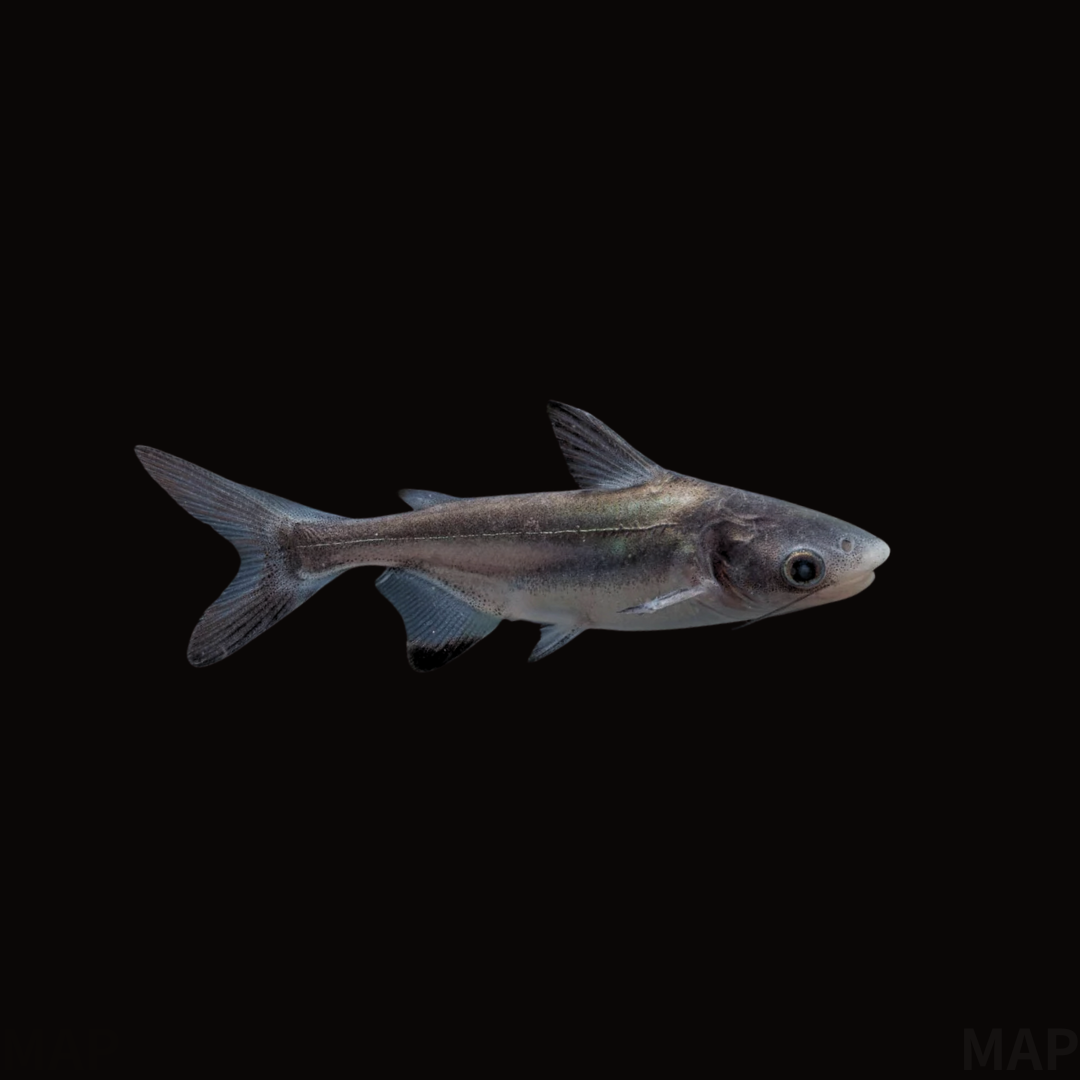
パールンは、メコン川やチャオプラヤ川といった東南アジアの大河に生息する、パンガシウス科最大級のナマズです。一般的な底生性のナマズとは異なり、中層から表層をサメのように活発に遊泳する姿が最大の特徴で、観賞魚界では「パールン・シャーク」とも呼ばれ親しまれています。幼魚期には背鰭や胸鰭の軟条が糸状に長く伸長し、銀色の体表と相まって非常に優雅な印象を与えますが、成魚は最大で300センチメートルにも達する規格外の巨大魚です。その圧倒的なパワーと、獲物を丸呑みにする貪欲な食性から、現地では畏怖の念を込めて語られることも多い、まさに大河の支配者と言える存在です。The Paroon Shark is one of the largest catfish species in the Pangasiidae family, native to the major rivers of Southeast Asia, such as the Mekong and Chao Phraya. Unlike typical bottom-dwelling catfish, it is characterized by its active swimming behavior in the middle and upper layers, resembling a shark. In the aquarium hobby, it is affectionately known as the “Paroon Shark.” While juveniles exhibit elegantly elongated fin filaments and a shimmering silver body, adults can reach a staggering 300 cm in length. Due to its overwhelming power and greedy predatory habits, it is often regarded with awe as the true ruler of the great rivers.
タイ、ラオス、カンボジア、ベトナム(メコン川、チャオプラヤ川流域)Thailand, Laos, Cambodia, Vietnam (Mekong and Chao Phraya basins)
最大体長 / Max Size
最大300cm(飼育下でも100cm以上を目指す設備が必要)Up to 300 cm (requires facilities capable of housing 100+ cm individuals in captivity)
寿命 / Lifespan
約20年 〜 30年Approximately 20 to 30 years
飼育環境 / Aquarium Environment
水槽サイズ / Tank Size
幼魚時は90cm規格水槽から。成魚には300cm以上の特注アクリル水槽や室内プールが必要。Start with a 90cm standard tank for juveniles. Adults require custom acrylic tanks over 300cm or indoor pools.
水温 / Temperature
24℃ 〜 27℃24°C to 27°C
水質 / Water Quality
pH 6.5 〜 7.5(弱酸性から中性)pH 6.5 to 7.5 (slightly acidic to neutral)
レイアウト / Layout
遊泳スペースを確保したベアタンクを推奨。障害物は激突の原因となるため避ける。A bare tank layout is recommended to ensure swimming space. Avoid decor to prevent collision injuries.
注意点 / Precautions
驚くと猛スピードで突進し、水槽を破壊・決壊させる恐れがあります。免震対策も重要。They may dash at high speeds when startled, risking tank breakage. Seismic measures are also crucial.
餌と給餌 / Feeding
餌の種類 / Diet
生餌(小魚、エビ)、切り身(アジ、鶏ササミ)、大型魚用人工飼料Live food (small fish, shrimp), cut fish/poultry, and large fish pellets.
給餌のポイント / Feeding Tips
ビタミンB1分解酵素を持つ餌の与えすぎに注意。人工飼料を混ぜて栄養バランスを整える。Be cautious not to overfeed items containing thiaminase. Mix in pellets to balance nutrition.
性格と混泳 / Temperament and Tank Mates
性格 / Temperament
神経質だが非常に貪欲。口に入るサイズの動くものは全て捕食対象。Nervous but extremely greedy. Anything that fits in its mouth is considered prey.
混泳の相性 / Compatibility
基本は単独飼育。大型で大人しい他種なら可能だが、生活圏が重ならないよう注意。Ideally kept alone. Possible with large, docile species, but avoid overlapping territories.
病気と対策 / Diseases and Prevention
かかりやすい病気 / Common Diseases
突進による外傷、ビタミン欠乏症、水質悪化による眼球の濁りPhysical injuries from dashing, vitamin deficiency, and cloudy eyes due to poor water quality.
対策と予防 / Prevention
強力な濾過装置と頻繁な換水、十分な遊泳スペースの確保。餌のバリエーションを増やす。Use powerful filtration, frequent water changes, and ensure ample space. Diversify diet.
増やし方(繁殖) / Breeding
雌雄の判別 / Sexing
外見での判別は極めて困難。一般飼育下ではほぼ不可能とされる。Extremely difficult to distinguish visually. Virtually impossible in standard aquaria.
繁殖形態 / Reproduction
雨季に上流へ遡上して産卵する純淡水回遊型。Potamodromous, migrating upstream during the rainy season to spawn.
繁殖のポイント / Breeding Tips
水槽内での繁殖例は皆無。現地ではホルモン投与による人工繁殖が行われている。No breeding records in tanks. In Asia, artificial breeding via hormone injection is practiced.
雑学と豆知識 / Trivia and Fun Facts
1. 「犬喰いナマズ」の異名とその由来 / 1. The Moniker “Dog-Eating Catfish” and Its Origins
パールンは現地タイで「犬喰いナマズ」という恐ろしい名前で呼ばれることがあります。これは、巨大な個体を釣り上げる際、現地の漁師が野犬の死骸を丸ごと巨大な針に掛けて餌にしていたという伝統的な漁法に由来しています。犬さえも飲み込む広大な口と、その貪欲な生命力を物語るエピソードですが、現代では都市伝説的な響きと共に、本種のパワーを象徴する呼び名として知られています。The Paroon is sometimes called the “Dog-Eating Catfish” in Thailand. This stems from traditional fishing methods where fishermen used carcasses of stray dogs as bait on huge hooks to catch massive individuals. While it sounds like an urban legend today, it vividly illustrates their huge mouths and greedy nature, becoming a symbol of the species’ raw power.
2. 絶滅の危機とアンブレラ種としての役割 / 2. Endangered Status and the Role as an Umbrella Species
現在、パールンは国際自然保護連合(IUCN)のレッドリストにおいて「近絶滅種(CR)」に指定されています。ダム建設による回遊ルートの遮断や乱獲が原因です。本種のような頂点捕食者を守ることは、彼らが泳ぐ広大な河川環境全体を守ることにも繋がります。これを生態学では「アンブレラ種」と呼び、パールンの保護はメコン川の豊かな生物多様性を守るための象徴的な活動となっています。The Paroon is currently listed as “Critically Endangered (CR)” by the IUCN. Factors include dam construction blocking migration and overfishing. Protecting such a top predator also means preserving the vast river environment they inhabit. In ecology, this is called an “Umbrella Species,” making Paroon conservation symbolic of protecting the Mekong’s overall biodiversity.
3. ショートボディ個体とアクアリウムの倫理 / 3. Short-Body Varieties and Aquarium Ethics
近年、日本では「ショートボディ(バルーン)」と呼ばれる、体が短く圧縮された改良個体が流通しています。日本の住宅事情に合わせて、少しでも小さな水槽で飼えるようにという需要から生まれたものですが、これは脊椎の奇形を固定したものです。内臓への負担や遊泳能力の低下など、魚本来の美しさや健康を損なう側面もあり、大型魚を愛する人々の間ではその倫理性についてしばしば議論の対象となります。Recently, “Short-Body” or “Balloon” varieties with compressed bodies have appeared in the Japanese market. Created to fit smaller tanks, these are actually fixed skeletal deformities. Because they impair swimming ability and strain internal organs, their existence often sparks ethical debates among enthusiasts who prioritize the natural health and beauty of large fish.
まとめ / Conclusion
パールンは、その優雅なヒレの伸長と力強い遊泳で、観賞魚愛好家の心を強く惹きつけてやみません。しかし、数ヶ月で数十センチ、最終的には数メートルへと成長するその生命力は、飼育者に対して「大河の主」を預かるという極めて重い責任を突きつけます。安易な気持ちで飼い始めるのではなく、将来的に特注の巨大設備を用意できるか、一生涯を添い遂げる覚悟があるかを自問自答しなければなりません。With its elegant fins and powerful swimming, the Paroon Shark never fails to captivate aquarium enthusiasts. However, its rapid growth—from a few centimeters to meters long—imposes a heavy responsibility on the keeper to act as a guardian of the “River Lord.” One must not start keeping them lightly but must reflect on whether they can provide custom massive facilities and stay committed for the fish’s entire lifespan.
もしあなたが、この素晴らしい巨大魚のために最高の環境を提供できるなら、パールンはあなたの家でメコンの鼓動を伝えてくれる唯一無二の存在となるでしょう。正しく理解し、敬意を持って向き合うこと。それこそが、パールンという偉大な生命をアクアリウムで迎えるための第一歩です。If you can provide the ultimate environment for this magnificent giant, the Paroon will become a unique companion, bringing the heartbeat of the Mekong into your home. Understanding them correctly and treating them with respect is the essential first step toward welcoming such a grand life into your aquarium.
Smith, H. M. (1931). “Descriptions of new genera and species of Siamese fishes”. Proceedings of the United States National Museum, 79(2873), 1-48.
Froese, R. and D. Pauly. Editors. (2024). FishBase. “Pangasius sanitwongsei (Smith, 1931)”. World Wide Web electronic publication.
Jenkins, A., Kullander, F.F. & Tan, H.H. (2009). “Pangasius sanitwongsei”. The IUCN Red List of Threatened Species.
Roberts, T. R., & Vidthayanon, C. (1991). “Systematic revision of the Asian catfish family Pangasiidae, with biological observations and descriptions of three new species”. Proceedings of the Academy of Natural Sciences of Philadelphia, 91-144.
Giles, F. H. (1935). “The River of the Dead and the Lord of the Giant Fish (Pla Buk)”. Journal of the Siam Society.
タイ王国水産局 (Department of Fisheries, Thailand). “Fisheries statistics of Thailand”.



 アイのアクアグッズ案内水槽ライトの選び方|魚の見え方・水草・海水で選ぶおすすめ照明道具の特徴や使い方、選ぶときのポイントをアイが紹介します。記事はコチラ →
 アイのアクアグッズ案内水槽フィルターの選び方|外掛け・外部・上部から小型オーバーフローまで道具の特徴や使い方、選ぶときのポイントをアイが紹介します。記事はコチラ →



コメント