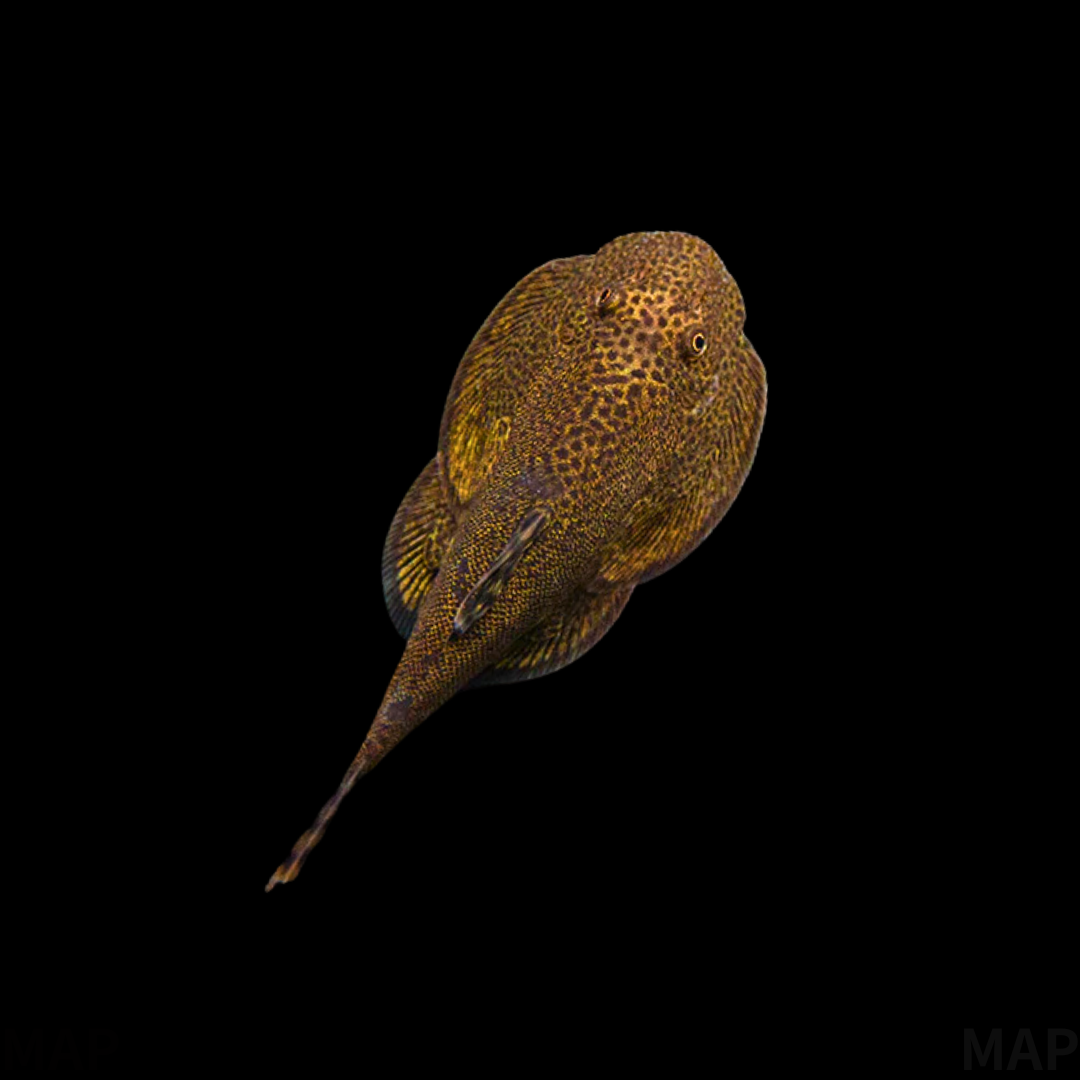
チャイナバタフライプレコは、ガラス面や石にへばりつく平べったい姿から南米産のプレコの仲間だと思われがちですが、実はアジアの急流に生息するドジョウに近い仲間(タニノボリ科)です。非常に流れの速い川で生き抜くために、水の抵抗を極限まで減らした流線型の体と、腹部全体を使った強力な吸盤構造へと進化を遂げました。水槽に張り付いてシャカシャカと素早く移動する姿や、エイのような愛嬌のあるフォルムから、日本でも古くから人気のある観賞魚です。Although commonly called a “Pleco” due to its flattened body and habit of clinging to surfaces, the China Butterfly Pleco is actually a hillstream loach native to Asia. To survive in extremely fast-flowing rivers, it has evolved a highly streamlined body to minimize water resistance and a powerful suction-cup structure covering its entire underbelly. With its charming ray-like appearance and its quick, scurrying movements along the aquarium glass, it has long been a popular ornamental fish in Japan.
中国南部(広東省、広西チワン族自治区、貴州省など、主に西江水系を中心とする河川の源流域)Southern China (Guangdong, Guangxi, Guizhou, primarily the headwaters of the Xi River system)
最大体長 / Max Size
約7.5センチメートルAbout 7.5 cm (3 inches)
寿命 / Lifespan
特筆すべき情報なし(適切な専用環境下であれば、一般的な小型底生魚と同様に数年間飼育可能と推測されます)No specific data available (Estimated to live for several years under appropriate specialized care, similar to other small benthic fish)
飼育環境 / Aquarium Environment
水槽サイズ / Tank Size
60cm規格水槽(水量約60リットルから70リットル以上)を推奨します。水質を安定させ、必要な水流を作り出すために一定以上の水量が必要です。A standard 60cm tank (approx. 60 to 70 liters or more) is recommended. Sufficient water volume is necessary to stabilize water quality and create the required strong water flow.
水温 / Temperature
16度から24度。温帯の渓流魚であるため、24度を超える水温が長く続くと酸欠や代謝異常で致命的となります。夏季は水槽用クーラーが必須です。16 to 24 degrees Celsius. Since they are temperate hillstream loaches, prolonged exposure to temperatures above 24 degrees is fatal due to hypoxia and metabolic disorders. An aquarium chiller is essential during summer.
水質 / Water Quality
pH6.5から8.0程度の中性から弱アルカリ性。硬度は5から12 dGHの中硬水を好みます。極端な軟水環境は適しません。Neutral to slightly alkaline, pH 6.5 to 8.0. They prefer moderately hard water with a GH of 5 to 12. Extremely soft water environments are not suitable.
レイアウト / Layout
大磯砂や川砂を敷き、丸みのある川石や平らな石を配置します。強力なパワーヘッド等を用いて水槽総水量の10倍から15倍に達する強い一方向の水流(層流)と、豊富なエアレーションを用意してください。Use river sand or gravel as a substrate and arrange smooth river rocks or flat stones. Provide a strong, unidirectional water flow (10 to 15 times the total tank volume per hour) using a powerhead, along with heavy aeration.
注意点 / Precautions
熱帯魚ではなく冷涼な渓流の魚です。立ち上げたばかりの綺麗な水槽では餌となる微生物がおらず餓死してしまうため、照明を当てて藻類(茶ゴケや緑藻)を十分に発生させた環境に導入してください。また、ガラス面を登って飛び出すため隙間のないフタが必須です。They are not tropical fish, but cool stream dwellers. Do not introduce them to a newly established, pristine tank, as they will starve without microorganisms. Introduce them to a mature tank with plenty of algae (diatoms or green algae). A tight-fitting lid is essential as they can climb the glass and escape.
餌と給餌 / Feeding
餌の種類 / Diet
自然界では岩の表面の底生藻類や微生物(バイオフィルム)を削り取って食べています。飼育下では水槽内に発生する柔らかいコケのほか、スピルリナを含む植物性タブレット飼料を与えます。In nature, they scrape benthic algae and microorganisms (biofilm) from rocks. In captivity, feed them soft algae growing in the tank, as well as plant-based tablet foods containing spirulina.
給餌のポイント / Feeding Tips
消化器官が草食や雑食に特化して長くなっているため、動物性タンパク質(アカムシなど)の与えすぎは重篤な消化不良を引き起こします。植物性飼料を主食としてください。屋外で緑藻を生やした石を定期的に水槽に入れるのも非常に効果的です。Because their digestive tract is long and specialized for a herbivorous/omnivorous diet, excess animal protein (like bloodworms) can cause severe indigestion. Make plant-based foods their staple diet. Rotating rocks covered in green algae grown outdoors into the tank is also highly effective.
性格と混泳 / Temperament and Tank Mates
性格 / Temperament
基本的には他種に対してとても温和です。しかし、オス同士は水流が強く良質なコケが生える一等地を巡って、お互いに覆いかぶさるような「トッピング」と呼ばれる儀式的な縄張り争いを行います。They are generally very peaceful towards other species. However, males will engage in ritualistic territorial disputes called “topping,” where they try to cover each other, competing for prime spots with strong flow and good algae.
混泳の相性 / Compatibility
強い水流と低水温という特殊な環境を必要とするため、一般的な熱帯魚との混泳はできません。ダニオ類、ラスボラ類、白雲山魚、ヨシノボリなど、同じように渓流環境を好む魚が最適な混泳相手です。Because they require the specific conditions of strong flow and low temperature, they cannot be kept with standard tropical fish. The best tank mates are other stream-dwelling fish like Danios, Rasboras, White Cloud Mountain Minnows, and certain gobies.
病気と対策 / Diseases and Prevention
かかりやすい病気 / Common Diseases
特有の病気に関する報告は少ないですが、水温の上がりすぎによる酸欠や代謝異常、不適切な餌(動物性タンパク質の過剰摂取)による消化不良に陥りやすい傾向があります。While specific diseases are rarely reported, they are highly prone to hypoxia and metabolic disorders caused by high temperatures, as well as indigestion from inappropriate diets (excessive animal protein).
対策と予防 / Prevention
日本の夏を乗り切るための水温管理(常に24度以下)と、強力なフィルター・水流ポンプを用いた酸素の供給が最大の予防策です。また、植物性メインの食生活を徹底することで内臓の健康を保ちます。The best prevention is strict temperature control (keeping it below 24 degrees Celsius) to survive hot summers, along with providing highly oxygenated water using powerful filters and flow pumps. Maintaining a plant-based diet ensures internal health.
増やし方(繁殖) / Breeding
雌雄の判別 / Sexing
真上から観察すると判別可能です。メスは体幅が広く、鼻先から胸鰭にかけて滑らかな曲線を描きます。オスはやや細身で、頭部と胸鰭の接合部に明確な段差(くびれ)が見られます。Sexing is possible when viewed directly from above. Females are broader with a smooth curve from the snout to the pectoral fins. Males are slightly slimmer and show a distinct notch where the head meets the pectoral fins.
繁殖形態 / Reproduction
卵生。自然界では急流の中の岩の深い隙間や、砂礫の奥底に卵を産み落とすと考えられています。Egg scatterer. In the wild, they are believed to scatter their eggs deep within the crevices of rocks or in the gravel bed of fast-flowing streams.
繁殖のポイント / Breeding Tips
水質、水圧、流速の変化など、産卵の引き金となる自然界の複雑な条件を人工的に再現することが至難の業であるため、家庭用水槽での意図的な繁殖は実質的に不可能です。Intentional breeding in home aquariums is practically impossible, as replicating the complex natural triggers—such as changes in water quality, pressure, and flow rate—is extremely difficult.
雑学と豆知識 / Trivia and Fun Facts
1. プレコなのにプレコじゃない? 収斂進化の不思議 / 1. Not a Pleco? The Wonder of Convergent Evolution
アクアリウムの世界で「プレコ」といえば、南米原産のナマズの仲間を指すのが一般的です。しかし、チャイナバタフライプレコはアジア原産のドジョウに近い仲間であり、南米のプレコとは全くの無縁です。生息地も系統も違う二つの生き物が、「急流の岩に張り付いて苔を食べる」という同じ生活スタイルを選んだ結果、偶然にもそっくりな姿へと進化したのです。これを生物学の言葉で「収斂進化(しゅうれんしんか)」と呼び、自然界の最適解の面白さを教えてくれます。In the aquarium hobby, the term “Pleco” usually refers to catfish from South America. However, the China Butterfly Pleco is an Asian loach relative and has no genetic connection to South American Plecos. Two completely unrelated creatures evolving the exact same flattened shape to survive by “clinging to rocks in rapids and eating algae” is a prime example of “convergent evolution,” showcasing nature’s fascinating way of finding the optimal solution.
2. 驚異の生体力学!自重の150倍に耐える吸着システム / 2. Marvels of Biomechanics: A Suction System Withstanding 150x Its Body Weight
彼らが激流に逆らって岩肌に張り付けるのには、驚くべき秘密があります。彼らの胸鰭と腹鰭は重なり合って一つの巨大な吸盤を形成していますが、単なる筋肉の力で張り付いているわけではありません。ヒレの縁に極小の気泡(マイクロバブル)を保持して岩との隙間を完全に密閉する機能や、水流の力に合わせて変形する柔らかい唇の構造を持っています。近年の研究では、自重の150倍以上の力で引っ張られても耐えうることが分かっており、水中ロボットの開発など、最先端の工学分野でも彼らの体の構造が研究対象になっています。There is an amazing secret behind their ability to cling to rocks against violent currents. Their pectoral and pelvic fins overlap to form a massive single suction cup, but they don’t just rely on muscle power. They hold microbubbles at the edges of their fins to completely seal the gap against the rock, and possess soft lip structures that dynamically deform against the water flow. Recent studies show they can withstand a pulling force over 150 times their body weight, making their anatomy a subject of study in cutting-edge engineering fields like underwater robotics.
3. 歴史に翻弄された長すぎる学名 / 3. A Scientific Name Tossed by History
この魚が学術的に記録された1930年代、当初は別の種類(Beaufortia leveretti)の亜種として扱われ、「Beaufortia leverreti kweichowensis」という非常に長い学名が付けられました。しかし、観賞魚の国際取引の現場では名前が長すぎたため、末尾の「kweichowensis」が省略されて取引されるのが常態化してしまいました。現代の分類ではこれらは別々の種であることが確定していますが、今でも古い図鑑やお店の表記では、違う魚の名前で販売されている名残を見つけることができます。When scientifically recorded in the 1930s, this fish was initially treated as a subspecies of another fish (Beaufortia leveretti), giving it the lengthy name “Beaufortia leverreti kweichowensis.” Because this name was too long for international pet trade invoices, the final part “kweichowensis” was routinely omitted. Although modern taxonomy confirms they are distinctly separate species, you can still find remnants of this historical mix-up in older books and pet shop labels today.
4. 日本のペット文化と「キモかわいい」立ち位置 / 4. The “Gross-Cute” Culture in the Japanese Market
日本国内のショップでは、主に水槽のガラス面を綺麗にしてくれる「コケ取り要員」として安価で販売されることが多い魚です。しかし、日本の愛好家の間では、実用性だけでなく、UFOやエイのようにガラス面を這い回るその奇抜な姿が「キモかわいい」として密かな人気を集めています。手軽に買える価格設定の裏側には、常に清冽な水と強力な水流が必要という、実は非常に専門的な飼育環境が求められる奥深さが隠されている、とても魅力的な魚なのです。In Japanese shops, they are often sold inexpensively as an “algae-eating crew” to keep aquarium glass clean. However, among Japanese hobbyists, they have gained a cult following not just for utility, but for their “gross-cute” (kimo-kawaii) appeal as they scurry around like UFOs or tiny rays. Behind their affordable price tag lies the fascinating depth of a fish that actually requires a highly specialized environment of pristine water and powerful flow, making them truly captivating creatures to keep.
まとめ / Conclusion
チャイナバタフライプレコは、初心者向けの安易なコケ取り魚と見なされがちですが、その実態は進化の神秘を体現した極めて特化型の渓流魚です。高温多湿な日本の夏を乗り越えるためには、適切な水槽用クーラーの設置と、水流ポンプを駆使した豊富な酸素供給システムが欠かせません。While the China Butterfly Pleco is often viewed as an easy algae-eater for beginners, it is actually a highly specialized hillstream loach embodying the mysteries of evolution. To survive the hot and humid Japanese summers, installing a proper aquarium chiller and an abundant oxygen supply system using flow pumps is absolutely essential.
一般的な熱帯魚と同じ環境では長生きさせることが難しい反面、彼らのために清冽な水と激しい水流が流れる「ヒルストリームタンク」を構築することは、アクアリウムの大きな醍醐味となります。専用の環境を用意することで見せてくれる素早い動きや、オス同士の力比べなど、自然本来の生き生きとした姿をぜひ観察してみてください。Although difficult to keep alive in the same conditions as standard tropical fish, building a dedicated “hillstream tank” with pristine water and rapid currents offers one of the greatest joys in the aquarium hobby. By providing this specialized environment, you will be rewarded with the chance to observe their true, vibrant natural behaviors, such as their swift movements and the fascinating displays of strength between rival males.



 アイのアクアグッズ案内あい先生のアクアグッズ深堀り!|泡で汚れを取り出す? プロテインスキマーの歴史と仕組み道具の特徴や使い方、選ぶときのポイントをアイが紹介します。記事はコチラ →
 アイのアクアグッズ案内アフリカンシクリッドの飼育用品|水槽・ろ過・底砂・岩組み・餌の選び方道具の特徴や使い方、選ぶときのポイントをアイが紹介します。記事はコチラ →




コメント