

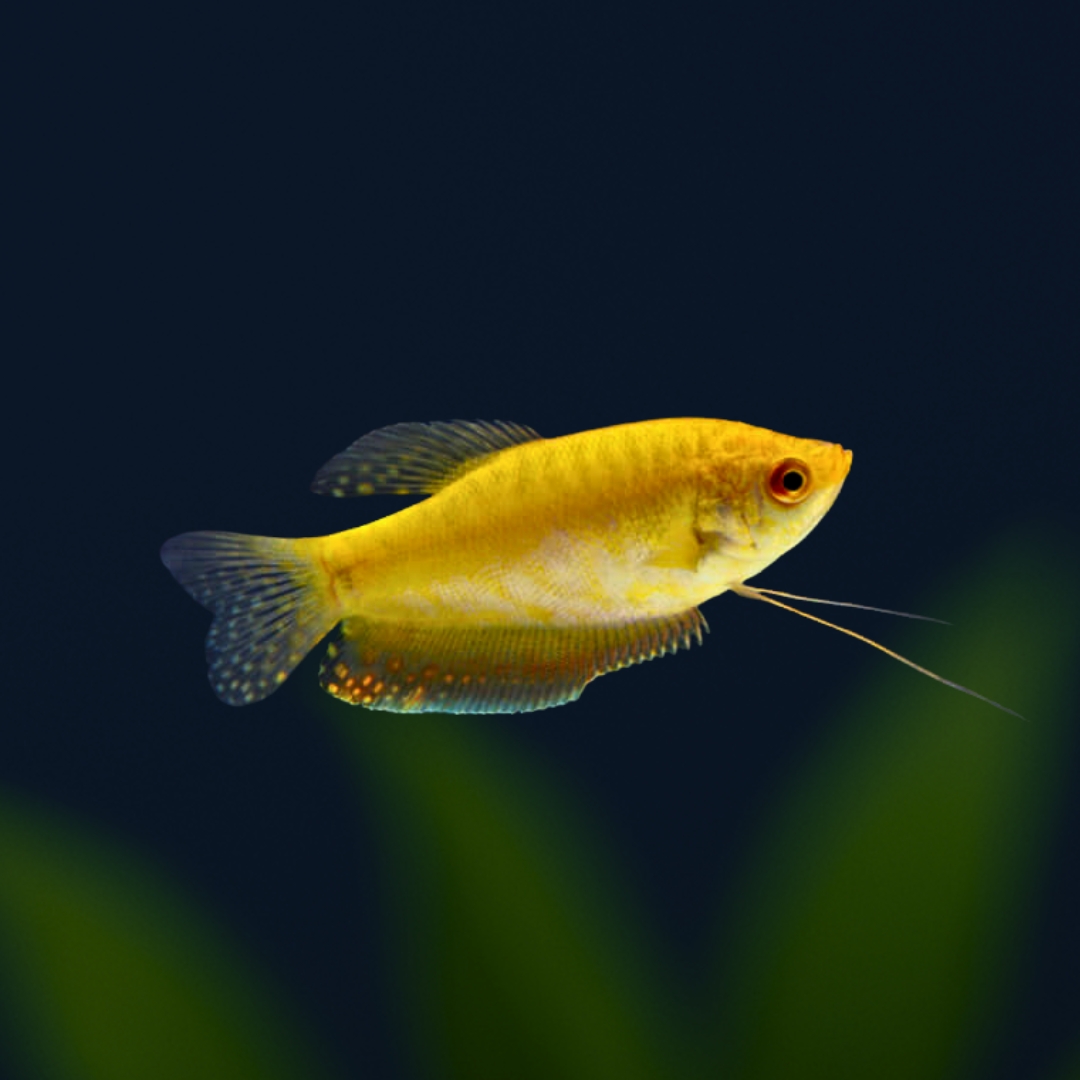
解説 / Description
ゴールデングラミーは、東南アジア原産のスリースポットグラミーをもとに作出された、黄金色の体色が美しい改良品種です。分類上は独立した種ではなく、スリースポットグラミー Trichopodus trichopterus の色彩変異を固定した観賞魚品種として扱われます。水面から空気を取り込むラビリンス器官を持ち、低酸素になりやすい湿地や沼地に適応してきたグラミー類らしい、落ち着いた泳ぎと独特の行動が魅力です。丈夫な魚として知られますが、成長すると縄張り意識が出ることがあるため、混泳相手と水槽サイズの選定が大切です。 The Golden Gourami is an ornamental color variety developed from the Southeast Asian Three-spot Gourami, admired for its warm golden body color. Taxonomically, it is not a separate species but a cultivated variety of Trichopodus trichopterus. It has a labyrinth organ that allows it to breathe atmospheric air at the surface, giving it the calm swimming style and distinctive behavior typical of gouramis adapted to oxygen-poor wetlands and swamps. Although known as a hardy fish, adults can become territorial, so tank size and tank mate selection are important.
基本情報 / Basic Information
| 学名 / Scientific Name | Trichopodus trichopterus |
|---|---|
| 通称 / Common Name | ゴールデングラミー、ゴールデン・スリースポットグラミーGolden Gourami, Gold Three-spot Gourami |
| 分類 / Family | キノボリウオ目 オスフロネムス科 トリコポドゥス属Order Anabantiformes, family Osphronemidae, genus Trichopodus |
| 英名 / English Name | Golden Gourami |
| 分布 / Distribution | ゴールデングラミーとして流通する個体は、主に観賞魚用に繁殖された養殖個体です。原種のスリースポットグラミーは、メコン川流域を中心とする東南アジアの湿地、沼地、運河、流れの緩やかな水域に広く分布します。原産域外にも導入例が知られるため、飼育個体の野外放流は避ける必要があります。Individuals sold as Golden Gouramis are mainly captive-bred for the aquarium trade. The wild Three-spot Gourami is widely distributed in Southeast Asian wetlands, swamps, canals, and slow-moving waters, especially around the Mekong basin. Introductions outside the native range are known, so aquarium fish should never be released into the wild. |
| 最大体長 / Max Size | 約12〜15cm。公的な魚類データベースでは原種が標準体長15cm程度に達する魚として扱われています。水槽内では環境や個体差により、やや小さめに収まることもあります。About 12 to 15 cm. Major fish databases list the wild form as reaching about 15 cm standard length. In aquariums, individuals may remain slightly smaller depending on conditions and genetics. |
| 寿命 / Lifespan | およそ4〜7年が目安です。水質の安定、落ち着いた混泳環境、適切な餌のローテーションにより長期飼育が期待できます。Approximately 4 to 7 years as a practical aquarium guideline. Stable water quality, calm tank mates, and a varied diet help support long-term care. |
飼育環境 / Aquarium Environment
| 水槽サイズ / Tank Size | 単独または少数飼育でも60cm規格水槽、約60L以上を推奨します。成魚は12cmを超えることがあり、縄張りも持つため、余裕があれば90cm規格水槽、約160L前後にすると混泳の安定感が高まります。繁殖用には45〜60cm水槽、約30〜60L程度を別に用意すると管理しやすくなります。A standard 60 cm tank of about 60 L or larger is recommended even for a single fish or small group. Adults can exceed 12 cm and may become territorial, so a standard 90 cm tank of around 160 L provides better stability for community setups. For breeding, a separate 45 to 60 cm tank of roughly 30 to 60 L is easier to manage. |
|---|---|
| 水温 / Temperature | 24〜28℃を基本とします。繁殖を狙う場合は、状態を見ながら28〜30℃程度のやや高めの水温に調整します。日本の室内環境では、年間を通じてヒーター管理が必要です。 Maintain 24 to 28°C for general care. For breeding, the temperature can be raised carefully to around 28 to 30°C. In Japan, year-round heater control is generally necessary. |
| 水質 / Water Quality | pH6.0〜8.0程度の弱酸性から弱アルカリ性まで幅広く適応します。硬度は軟水から中硬水程度まで対応しやすい魚ですが、極端な硬水を前提にせず、日本の水道水で中性付近に安定させる管理が扱いやすいでしょう。水質の急変は避け、水流は弱めから中程度に抑えます。It adapts to a broad range from slightly acidic to slightly alkaline water, around pH 6.0 to 8.0. It is generally tolerant of soft to moderately hard water, but extreme hardness should not be assumed necessary; stable water near neutral is usually easy to manage with Japanese tap water. Avoid sudden changes and keep the current weak to moderate. |
| レイアウト / Layout | 後景や側面に水草を密植し、流木やアヌビアス類、浮き草などで視線を遮る場所を作ると落ち着きます。水面で空気を吸うため、水面を完全に覆わないことが大切です。蓋は飛び出し防止だけでなく、水面上の空気を暖かく湿った状態に保ち、ラビリンス器官への負担を抑える意味でも有効です。Dense planting along the back and sides, together with driftwood, Anubias, and some floating plants, helps create visual barriers and calm resting areas. Because the fish breathes air at the surface, the surface should never be completely sealed by plants. A lid is useful not only to prevent jumping but also to keep the air above the water warm and humid, reducing stress on the labyrinth organ. |
| 注意点 / Precautions | 丈夫な魚ですが、成熟したオスは縄張り意識が強くなることがあります。60〜90cm水槽ではオス同士の複数飼育を避け、単独飼育、またはオス1匹に対してメスを複数匹入れる構成が無難です。水面を完全に塞ぐレイアウト、強すぎる水流、低温の外気を直接吸わせる環境は避けてください。また、原種は原産域外での定着例が知られるため、野外放流は絶対に行わず、終生飼養を徹底します。Although hardy, mature males can become territorial. In 60 to 90 cm aquariums, avoid keeping multiple males together; a single specimen or one male with several females is safer. Avoid completely blocking surface access, creating excessive current, or exposing the fish to cold air above the water. Since the wild form has established outside its native range in some regions, never release aquarium fish outdoors and keep them responsibly for life. |
餌と給餌 / Feeding
| 餌の種類 / Diet | 雑食性で、フレークフード、小型〜中型魚用ペレット、冷凍赤虫、ブラインシュリンプ、ミジンコ、乾燥飼料、スピルリナ配合飼料などをよく食べます。野生型は動物プランクトン、甲殻類、昆虫の幼虫などを食べる魚として知られ、飼育下でも動物質と植物質を偏らせすぎない給餌が向きます。小さな巻貝やヒドラをついばむ場合がありますが、効果には個体差があります。It is omnivorous and readily accepts flakes, small to medium pellets, frozen bloodworms, brine shrimp, daphnia, dried foods, and spirulina-based foods. The wild form is known to feed on zooplankton, crustaceans, and insect larvae, so a balanced mix of animal and plant-based foods is suitable in aquariums. It may peck at small pest snails or hydra, but the effect varies by individual. |
|---|---|
| 給餌のポイント / Feeding Tips | 1日1〜2回、数分で食べ切れる量を与えます。黄金色を美しく保つには、単一の餌だけに頼らず、カロテノイドやアスタキサンチンを含む色揚げ用飼料を含めてローテーションするとよいでしょう。食欲旺盛な反面、食べ残しは水質悪化につながるため、与えすぎには注意します。Feed once or twice daily, offering only what the fish can finish within a few minutes. To support its golden coloration, rotate foods rather than relying on a single diet, including quality color-enhancing foods containing carotenoids or astaxanthin. It feeds eagerly, but overfeeding quickly degrades water quality, so leftovers should be avoided. |
性格と混泳 / Temperament and Tank Mates
| 性格 / Temperament | 幼魚期は比較的おとなしいものの、成長すると半攻撃的な一面が出ることがあります。特に成熟したオスは縄張りを主張し、同種や体型の似たラビリンスフィッシュに対して強く出る場合があります。長い糸状の腹鰭を使って周囲を探る行動は本種らしい魅力ですが、この部分をかじられるとストレスや細菌感染の原因になります。Juveniles are often relatively calm, but adults can show semi-aggressive behavior. Mature males in particular may defend territories and challenge conspecifics or similarly shaped labyrinth fish. The long thread-like pelvic fins used for tactile exploration are a major charm of the species, but damage to them can lead to stress or secondary bacterial infection. |
|---|---|
| 混泳の相性 / Compatibility | 相性が良いのは、コリドラス、クーリーローチ、ブッシープレコなど生活層が異なる底棲魚や、レモンテトラ、ブラックファントムテトラ、ラスボラ・ヘテロモルファ、チェリーバルブなど、口に入らない大きさで俊敏な魚です。避けたい相手は、ベタや他のグラミー類、スマトラのようにヒレをかじる魚、大型シクリッド、ビーシュリンプやミナミヌマエビなどの小型甲殻類です。混泳では水草や流木で視線を遮り、弱い個体が逃げ込める場所を作ることが成功の鍵になります。Good tank mates include bottom-dwelling fish with different activity zones, such as Corydoras, kuhli loaches, and bristlenose plecos, as well as reasonably fast, non-bite-sized fishes such as lemon tetras, black phantom tetras, harlequin rasboras, and cherry barbs. Avoid bettas, other gouramis, fin-nippers such as tiger barbs, large cichlids, and small crustaceans such as bee shrimp or Neocaridina shrimp. In community tanks, plants and driftwood that break lines of sight are key to giving weaker fish places to retreat. |
病気と対策 / Diseases and Prevention
| かかりやすい病気 / Common Diseases | 白点病、尾ぐされ病、水カビ病、ウーディニウム症など、一般的な熱帯魚の病気に注意します。輸入や輸送、導入直後のストレスが強い時期には、グラミー類を含む観賞魚で報告されるメガロシチウイルス関連感染症も注意対象になります。ただし、体色の黒ずみや腹部の膨張、急な衰弱だけで病名を断定することはできないため、急な連続死が見られる場合は、隔離、器具の共用停止、販売店や魚病に詳しい専門家への相談を優先します。Watch for common tropical fish diseases such as ich, fin rot, fungal infections, and velvet disease. During stressful periods after import, transport, or introduction, megalocytivirus-related disease reported in ornamental fish including gouramis is also a concern. However, darkening, abdominal swelling, or sudden weakness alone cannot confirm a diagnosis. If repeated sudden deaths occur, prioritize isolation, stop sharing equipment, and consult the retailer or an aquatic animal health specialist. |
|---|---|
| 対策と予防 / Prevention | 購入後は本水槽へすぐ入れず、可能であれば1〜2週間ほど隔離水槽で観察します。導入直後の体力回復には0.3〜0.5%程度の塩水浴が役立つ場合がありますが、水草や無脊椎動物には影響があるため別容器で行います。白点病や細菌性の二次感染が疑われる場合は、症状に合わせて観賞魚用薬剤を規定量で使用します。ウイルス性疾患では家庭水槽で確実に治す方法が限られるため、安定した水温、清潔な水質、過密を避けること、輸送・導入時のストレスを下げることが最も重要です。After purchase, avoid adding the fish directly to the display tank if possible; observe it in quarantine for about one to two weeks. A 0.3 to 0.5% salt bath may help recovery after transport, but it should be done in a separate container because salt can affect plants and invertebrates. If ich or secondary bacterial infection is suspected, use aquarium medications according to the label. For viral diseases, reliable treatment in home aquariums is limited, so stable temperature, clean water, avoiding overcrowding, and reducing transport and introduction stress are most important. |
増やし方(繁殖) / Breeding
| 雌雄の判別 / Sexing | 成長したオスは背鰭が長く伸び、後端が鋭く尖りやすく、体型は比較的スリムです。メスは背鰭が短めで丸みを帯び、抱卵すると腹部がふっくらします。若魚では判別が難しいこともありますが、成熟すると比較的見分けやすい魚です。Mature males usually have a longer dorsal fin with a sharper rear edge and a slimmer body. Females tend to have a shorter, rounder dorsal fin and develop a fuller abdomen when carrying eggs. Sexing juveniles can be difficult, but adults are relatively easy to distinguish. |
|---|---|
| 繁殖形態 / Reproduction | 水面に泡巣を作るバブルネストビルダーです。成熟したオスは浮き草などを足場に、粘液を含んだ気泡を集めて巣を作ります。メスを抱き込むような交尾行動のあとに体外受精が行われ、浮上性の卵や落ちた卵をオスが口で集め、泡巣へ戻して保護します。It is a bubble-nest builder. A mature male builds a nest of mucus-coated bubbles at the surface, often using floating plants as support. After a spawning embrace, external fertilization occurs, and the male collects floating or fallen eggs with his mouth and places them back into the bubble nest for protection. |
| 繁殖のポイント / Breeding Tips | 繁殖には45〜60cm水槽、約30〜60L程度の専用水槽を用意し、水位を15〜20cmほどに下げ、水温を28〜30℃程度にします。泡巣を壊さないよう水流はごく弱くし、浮き草を入れるとオスが巣を作りやすくなります。産卵後はオスがメスを攻撃することがあるため、メスを早めに隔離します。孵化は高めの水温で24〜36時間ほど、稚魚が泳ぎ出したらオスも隔離します。初期飼料はインフゾリアや稚魚用液体フードから始め、成長に合わせてブラインシュリンプ幼生へ移行します。稚魚のラビリンス器官が発達する時期は、水槽に蓋をして水面上の空気を暖かく湿らせておくことが大切です。Prepare a dedicated 45 to 60 cm breeding tank of about 30 to 60 L, lower the water level to around 15 to 20 cm, and raise the temperature to about 28 to 30°C. Keep the current very gentle so the bubble nest is not destroyed, and add floating plants to help the male build. After spawning, remove the female promptly because the male may attack her. Eggs hatch in about 24 to 36 hours at higher temperatures, and the male should be removed once the fry become free-swimming. Start with infusoria or liquid fry food, then transition to newly hatched brine shrimp as the fry grow. During labyrinth organ development, keep the tank covered so the air above the water remains warm and humid. |
雑学と豆知識 / Trivia and Fun Facts
| 1. 学名が語る「糸のような足」 / 1. A scientific name that describes thread-like feet | ゴールデングラミーの学名 Trichopodus trichopterus には、この魚を見た人がまず気づく細長い腹鰭の印象が刻み込まれています。Trichopodus は「糸」や「髪」を思わせる語と「足」を意味する語が組み合わさった名前として説明され、種小名 trichopterus も、同じく糸や髪のようなヒレを連想させます。水の濁った湿地や水草の茂る環境で、この腹鰭は単なる飾りではなく、障害物や餌、仲間の存在を探るための感覚器官として働きます。水槽内で前後左右にそっと動かす様子は、まるで猫がヒゲで世界を測っているようにも見えます。The scientific name Trichopodus trichopterus preserves the impression of the long thread-like pelvic fins that many people notice first. Trichopodus is commonly explained as combining ideas of thread or hair with feet, and trichopterus also evokes hair-like fins. In turbid wetlands or plant-filled waters, these pelvic fins are not mere ornaments; they work as sensory organs for exploring obstacles, food, and other fish. In the aquarium, their gentle movements can look rather like a cat measuring the world with its whiskers. |
|---|---|
| 2. 「スリースポット」なのに、見える斑点は2つ / 2. Three-spot, even though only two spots are visible | 原種のスリースポットグラミーは、名前だけを見ると体に3つの黒い斑点がある魚のように思えます。ところが実際に原種を見ると、体側の中央と尾柄部にある斑点は2つです。残りの1つは、命名上「目」を斑点のひとつとして数えたものと説明されます。さらにゴールデングラミーでは、品種改良によって黒い斑点が目立たなくなっているため、「斑点がほとんどないスリースポットグラミーの改良品種」という、少し不思議で楽しい矛盾が生まれています。名前の背後にあるこうした小さな謎は、観賞魚をただ眺めるだけでなく、分類や歴史の入口として楽しむきっかけにもなります。From its name, the wild Three-spot Gourami sounds as if it should have three black marks on the body. In reality, the wild form usually shows only two dark spots on the flank, one in the mid-body area and one near the caudal peduncle. The remaining spot is commonly explained as the eye being counted as the first spot. In the Golden Gourami, selective breeding has made the dark spots much less obvious, creating the amusing paradox of a nearly spotless variety of the Three-spot Gourami. Such small mysteries make the fish a gateway not only to beauty, but also to taxonomy and history. |
| 3. 低酸素の湿地が育てたラビリンス器官 / 3. The labyrinth organ shaped by oxygen-poor wetlands | 本種が丈夫に見える背景には、東南アジアの湿地や沼地で進化してきた呼吸の工夫があります。乾季のよどんだ水域では、腐敗した有機物や高水温の影響で水中の酸素が少なくなることがあります。そこでグラミーの仲間は、鰓の上部にラビリンス器官と呼ばれる補助呼吸器官を発達させ、水面で空気を飲み込んで酸素を取り込めるようになりました。水槽で時々水面に上がるのは、苦しんでいるとは限らず、本来の呼吸行動です。ただし、水面への通路が塞がれていると命に関わるため、浮き草を入れる場合も開けた水面を残すことが大切です。Behind this species’ hardiness is a respiratory adaptation shaped by Southeast Asian wetlands and swamps. In stagnant waters during dry seasons, decomposing organic matter and high temperature can reduce dissolved oxygen. Gouramis evolved a supplementary breathing organ called the labyrinth organ, allowing them to gulp air at the surface and take in oxygen directly. When the fish rises to the surface in an aquarium, it is not necessarily in distress; it may simply be performing normal air-breathing behavior. However, blocked surface access can be life-threatening, so open water must remain even when floating plants are used. |
| 4. 食用魚の歴史から観賞魚へ / 4. From food fish history to aquarium favorite | 日本ではゴールデングラミーは観賞魚として親しまれていますが、原産地ではスリースポットグラミーが食用として扱われてきた地域もあります。特にジャワでは塩干し魚として加工されることが知られ、観賞魚売場で見る姿とは少し違う、人の暮らしに近い顔を持っています。そのような魚が、選択交配によって黄金色の観賞魚となり、いまでは家庭の水槽でゆったり泳いでいると考えると、ガラス越しの一匹にも、食文化、養殖、品種改良、国際流通の長い物語が重なって見えてきます。In Japan, the Golden Gourami is known mainly as an ornamental fish, but in parts of its native region the Three-spot Gourami has also been used as food. It is known, for example, to be processed as salted and dried fish in Java, revealing a side much closer to everyday human life than the aquarium-shop image suggests. When such a fish becomes a golden ornamental variety through selective breeding and then swims calmly in a home aquarium, one individual behind the glass carries a long story of food culture, aquaculture, breeding, and international trade. |
| 5. 美しさだけでなく、スネール対策にも役立つことがある / 5. More than beauty: sometimes useful against pest snails | ゴールデングラミーは、美しい黄金色だけで評価される魚ではありません。水草に紛れて持ち込まれるサカマキガイやモノアラガイなどの小さな巻貝、あるいは稚エビを襲うことがあるヒドラをついばむ場合があり、水草水槽の生物的な環境管理に役立つことがあります。ただし、これは万能な駆除役という意味ではありません。大きくなった巻貝をすべて食べるわけではなく、餌の量や個体の好みによって効果にも差があります。また、小型エビも食べてしまうため、エビを主役にした水槽には向きません。あくまで「美しい中型魚でありながら、条件が合えばお掃除役の一部も担うことがある」と考えるのが自然です。The Golden Gourami is not valued only for its golden color. It may peck at small pest snails introduced with aquatic plants, such as bladder snails and pond snails, and it may also pick at hydra that can threaten tiny shrimp. In this way, it can sometimes contribute to biological management in planted aquariums. However, it is not a universal pest-control fish. It will not necessarily eat all larger snails, and results depend on feeding level and individual preference. It may also eat small shrimp, so it is not suitable for shrimp-centered aquariums. It is best understood as a beautiful medium-sized fish that may also help with some cleanup under the right conditions. |
| 6. 飼育魚としての責任と外来化リスク / 6. Keeper responsibility and introduction risk | スリースポットグラミーは、低酸素に強く、食性も広く、環境への適応力が高い魚です。その強さは水槽では頼もしい魅力になりますが、原産域外では外来魚として記録されている地域もあります。日本の多くの地域では冬の低水温が壁になると考えられますが、温排水のある場所や温暖な地域では、どの観賞魚でも放流リスクを軽く見てはいけません。飼育者にできる最も大切なことは、最後まで飼い切る計画を立て、飼えなくなった個体を自然の川や池に逃がさないことです。水槽の中で美しい魚だからこそ、自然環境との境界を守る姿勢が求められます。The Three-spot Gourami is tolerant of low oxygen, broadly omnivorous, and highly adaptable. Those strengths are appealing in the aquarium, but outside its native range the species has been recorded as introduced in some regions. In many parts of Japan, winter low temperatures may limit survival, but warm-water discharge areas and warmer regions remind us that release risk should never be dismissed for any aquarium fish. The most important responsibility of the keeper is to plan for lifelong care and never release unwanted fish into rivers or ponds. Because the fish is beautiful in the aquarium, the boundary between aquarium and nature must be respected. |
まとめ / Conclusion
ゴールデングラミーは、黄金色の華やかさと原種由来の丈夫さを兼ね備えた、存在感のある中型熱帯魚です。60cm規格水槽以上を基本に、弱めの水流、安定した水質、空気呼吸のための開けた水面、そして落ち着ける水草や流木のシェルターを用意すれば、その魅力を長く楽しめます。 The Golden Gourami is a striking medium-sized tropical fish that combines golden beauty with the hardiness inherited from its wild form. With a standard 60 cm tank or larger, gentle current, stable water quality, open surface access for air breathing, and shelters made from plants and driftwood, its appeal can be enjoyed for many years.
一方で、成長したオスの縄張り意識、同属魚やヒレをかじる魚との相性、導入直後の病気リスクには注意が必要です。適切な隔離観察と混泳相手の選定を行えば、初心者にも扱いやすく、泡巣繁殖やラビリンス器官の行動観察まで楽しめる奥深い一匹になります。飼い始めた個体は最後まで責任を持って飼育し、野外への放流は絶対に避けましょう。 At the same time, care is needed with territorial adult males, compatibility with related labyrinth fish or fin-nippers, and disease risks immediately after introduction. With proper quarantine and careful selection of tank mates, it can be manageable even for beginners while offering deep enjoyment through bubble-nest breeding and observation of labyrinth-fish behavior. Any individual brought home should be cared for responsibly for its full life, and outdoor release must always be avoided.

気になる道具や飼い方を見つけてみませんか?
 アイのアクアグッズ案内お魚を撮ったのに、ボクが写ってる! スマホで楽しむ水槽撮影と便利な道具道具の特徴や使い方、選ぶときのポイントをアイが紹介します。記事はコチラ →
 アイのアクアグッズ案内アフリカンシクリッドの飼育用品|水槽・ろ過・底砂・岩組み・餌の選び方道具の特徴や使い方、選ぶときのポイントをアイが紹介します。記事はコチラ →
さまざまな飼育テーマをご紹介。リンク先の記事には広告・商品紹介が含まれます。
案内・紹介記事一覧へ →参考文献・参照データ
本記事は、店舗・通販サイトではなく、魚類データベース、分類学資料、外来種データベース、査読論文・公的研究資料を中心に、分類・分布・生態・飼育環境・繁殖・病理リスクに関する情報を照合して作成しています。
-
Froese, R. and Pauly, D. Editors. FishBase. Trichopodus trichopterus, Three spot gourami.
https://www.fishbase.se/summary/Trichopodus-trichopterus
分類、分布、水温・pH・硬度の目安、最大サイズ、低地湿地での生息、空気呼吸、食性、泡巣繁殖、人間利用の確認に使用。 -
GBIF Secretariat. Trichopodus trichopterus (Pallas, 1770). GBIF Backbone Taxonomy.
https://www.gbif.org/species/5211169
学名、分類階級、シノニム、英名の確認に使用。 -
Fricke, R., Eschmeyer, W. N. and Van der Laan, R. Editors. Eschmeyer’s Catalog of Fishes. Trichopodus trichopterus.
https://researcharchive.calacademy.org/research/ichthyology/catalog/fishcatget.asp?spid=42008
現在有効名、原記載者、分類学上の扱い、分布・導入情報の照合に使用。 -
Töpfer, J. and Schindler, I. 2009. On the type species of Trichopodus (Teleostei: Perciformes: Osphronemidae). Vertebrate Zoology 59(1):49-51.
https://vertebrate-zoology.arphahub.com/article/30948/
Trichopodus 属のタイプ種と、旧来の Trichogaster 表記をめぐる分類学的背景の確認に使用。 -
CABI Digital Library. Trichopodus trichopterus (three spot gourami). CABI Compendium.
https://www.cabidigitallibrary.org/doi/full/10.1079/cabicompendium.121020
原産域外への導入、低酸素耐性、外来化リスクを慎重に述べるための確認に使用。 -
Low, B. W., Tan, H. H. and Britz, R. 2012. Gouramies of the genus Trichopodus in Singapore. Nature in Singapore 5:83-93.
https://lkcnhm.nus.edu.sg/app/uploads/2017/04/2012nis083-093.pdf
Trichopodus 属の地域分布、導入・定着例、属レベルの背景整理に使用。 -
Mendez-Sanchez, J. F. and Burggren, W. W. 2014. Environmental modulation of the onset of air breathing and survival of the Siamese fighting fish Betta splendens and the three spot gourami Trichopodus trichopterus. Journal of Fish Biology.
https://onlinelibrary.wiley.com/doi/abs/10.1111/jfb.12322
空気呼吸魚としての発生・生理、稚魚期の呼吸発達に関する記述の裏取りに使用。 -
Johan, C. A. C. and Zainathan, S. C. 2020. Megalocytiviruses in ornamental fish: A review. Veterinary World 13(11):2565-2577.
https://veterinaryworld.org/Vol.13/November-2020/37.pdf
観賞魚におけるメガロシチウイルス関連感染症の概要、症状が非特異的である点、検出・予防の考え方の確認に使用。 -
Rimmer, A. E. et al. 2015. Detection of dwarf gourami iridovirus (Infectious spleen and kidney necrosis virus) in populations of ornamental fish prior to and after importation into Australia, with the first evidence of infection in domestically farmed platy Xiphophorus maculatus. Preventive Veterinary Medicine.
https://researchprofiles.canberra.edu.au/en/publications/detection-of-dwarf-gourami-iridovirus-infectious-spleen-and-kidne/
輸入観賞魚、特にグラミー類におけるメガロシチウイルス検出例と、導入後の隔離観察を推奨する根拠の補強に使用。 -
Rodrigues-Filho, C. A. S. et al. 2018. First report of the alien species Trichopodus trichopterus (Pallas, 1770) in the state of Ceará, Brazil. Brazilian Journal of Biology.
https://www.scielo.br/j/bjb/a/zBzyQ883wtqmYGd6QDfgXLv/?lang=en
観賞魚由来の逸出・定着リスクを説明する際の、原産域外記録の具体例として使用。
参照日:2026年6月2日




コメント