

ゼブラフィッシュに関連する記事

解説 / Description
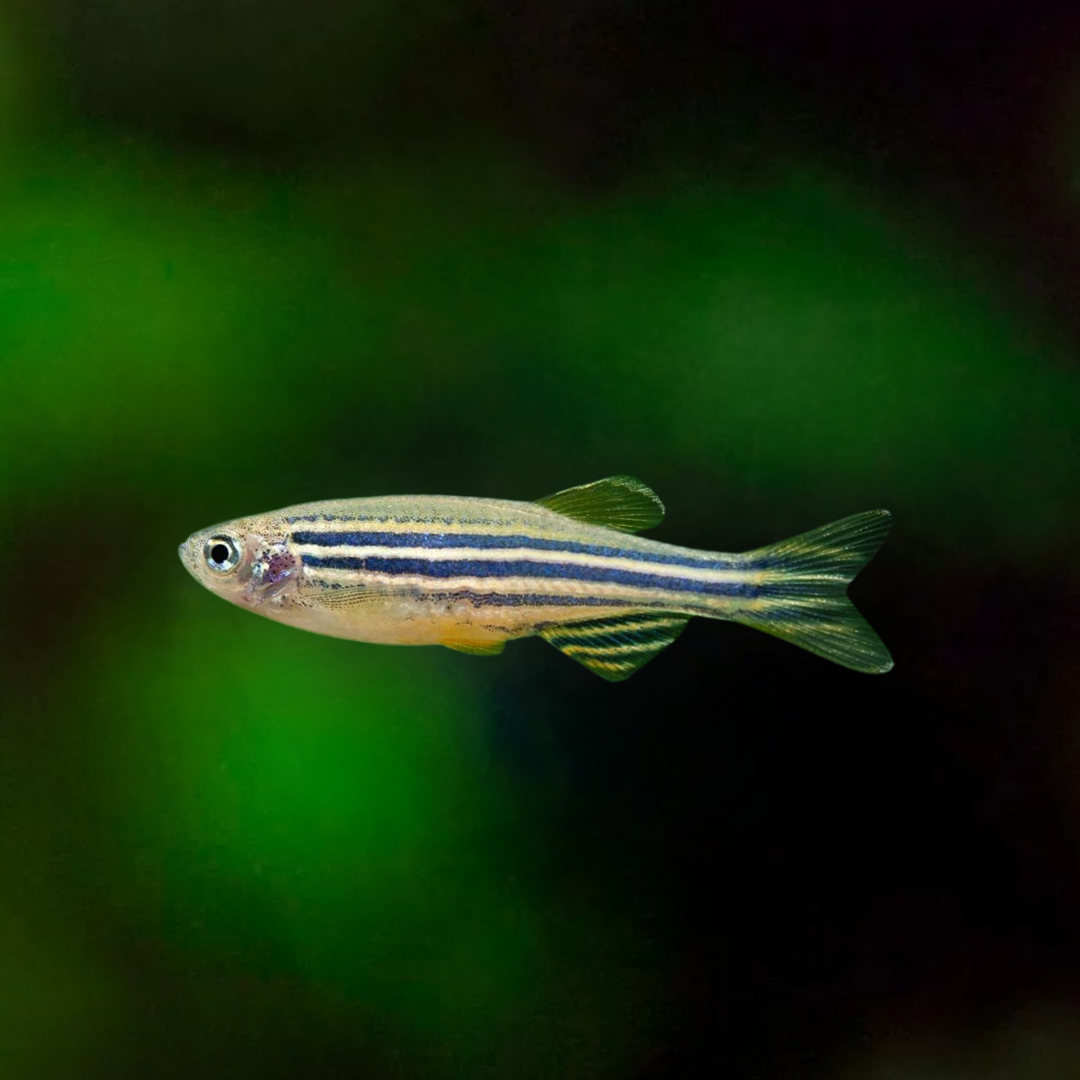
ゼブラフィッシュは、日本の観賞魚市場では「ゼブラダニオ」の名前で親しまれてきた、コイ科の小型淡水魚です。体側に走る青みを帯びた縞模様が特徴で、群れで活発に泳ぎ回る姿は水槽に軽快な動きを与えてくれます。丈夫で餌付きがよく、比較的幅広い水質に適応しやすい一方、泳ぎが非常に速く、混泳相手への圧や飛び出しには注意が必要です。 The zebrafish, widely known in the aquarium trade as the zebra danio, is a small cyprinid freshwater fish. It is recognized by its bluish horizontal stripes, and its lively shoaling behavior adds constant movement to the aquarium. It is hardy, feeds readily, and adapts to a relatively wide range of water conditions, but its speed and activity mean that tank mates and jumping accidents require careful attention.
基本情報 / Basic Information
| 学名 / Scientific Name | Danio rerio |
|---|---|
| 通称 / Common Name | ゼブラフィッシュ、ゼブラダニオZebrafish, Zebra Danio |
| 分類 / Family | コイ目コイ科ダニオ属Order Cypriniformes, family Cyprinidae, genus Danio |
| 英名 / English Name | Zebrafish, Zebra Danio |
| 分布 / Distribution | インド、バングラデシュ、ネパール、パキスタン、ブータン周辺を含む南アジアに分布するとされます。野生下では大河の本流よりも、流れの緩やかな水路、溝、池沼、水田周辺、浅い止水域や氾濫原の水域で見られることが多い魚です。観賞魚として流通する個体は、主に養殖個体です。It is considered native to parts of South Asia, including areas around India, Bangladesh, Nepal, Pakistan, and Bhutan. In the wild, it is more often associated with slow-moving canals, ditches, ponds, rice-field environments, shallow still waters, and floodplain habitats than with the main channels of large rivers. Aquarium specimens are mainly captive-bred. |
| 最大体長 / Max Size | 約4〜5cmAbout 4–5 cm |
| 寿命 / Lifespan | 一般的な飼育下では約3〜5年が目安です。水質の安定、過密の回避、過剰給餌を避けることが長期飼育の鍵になります。In aquariums, a lifespan of about 3–5 years is a general guide. Stable water quality, avoiding overcrowding, and preventing overfeeding are important for long-term care. |
飼育環境 / Aquarium Environment
| 水槽サイズ / Tank Size | 小型魚ですが遊泳力が非常に高いため、単に水量だけでなく横方向の遊泳スペースを重視します。5〜10匹程度の群れなら45cm規格水槽以上、より余裕を持たせるなら60cm規格水槽がおすすめです。小型水槽でも維持は可能ですが、飛び出しや追い回しが目立ちやすくなるため、ゆとりのある水槽の方が扱いやすい魚です。Although small, this species is very active, so horizontal swimming space is more important than water volume alone. For a group of 5–10 fish, a 45 cm standard tank or larger is recommended, with a 60 cm standard tank offering greater stability. It can be kept in smaller tanks, but jumping and chasing behavior may become more noticeable. |
|---|---|
| 水温 / Temperature | 観賞魚としての飼育では24〜28℃程度が扱いやすい目安です。研究施設では28〜28.5℃前後で維持されることが多く、繁殖や成長を安定させやすい温度帯とされています。比較的低温にも耐えますが、長期飼育では急激な水温変化を避け、冬季はヒーターで安定させると安心です。 For aquarium care, about 24–28°C is a practical range. Research colonies are often maintained around 28–28.5°C, a range commonly used to stabilize growth and breeding. The species can tolerate somewhat cooler water, but sudden temperature changes should be avoided, and a heater is recommended in winter. |
| 水質 / Water Quality | 中性付近から弱アルカリ性、pH 7.0〜8.0程度を目安にすると管理しやすいです。日本の一般的な水道水にもよく適応します。強健な魚ではありますが、アンモニアや亜硝酸には弱いため、濾過の立ち上げと定期的な水換えは欠かせません。極端な酸性や急なpH変動は避けます。Near-neutral to slightly alkaline water, around pH 7.0–8.0, is easy to manage. It usually adapts well to typical tap water. Despite its hardiness, ammonia and nitrite must be kept at zero through established filtration and regular water changes. Strong acidity and sudden pH shifts should be avoided. |
| レイアウト / Layout | 前面や中央に泳ぐための空間を確保し、後景や側面に水草を配置すると、活発さと落ち着きの両方を引き出しやすくなります。ウィローモスや細かい葉の水草は産卵床にもなります。ロングフィンタイプを飼育する場合は、鋭い流木や硬い飾りでヒレを傷つけないよう、なめらかな素材を選ぶとよいでしょう。Leave open swimming space at the front and center, while placing plants along the back and sides to provide both activity and shelter. Java moss and fine-leaved plants can also serve as spawning sites. For long-fin varieties, choose smooth materials and avoid sharp driftwood or decorations that may damage the fins. |
| 注意点 / Precautions | 最も重要なのは飛び出し対策です。驚いた時や追いかけ合いの最中に水面から飛び出すことがあるため、隙間の少ないフタを必ず設置します。また、活発さゆえにおとなしい魚へストレスを与えることがあり、混泳水槽では餌の独占にも注意が必要です。通常個体であっても、飼育個体を野外へ放流することは厳禁です。The most important precaution is preventing jumping. Zebrafish may leap from the water when startled or during chasing, so a tight-fitting lid is essential. Their activity can stress quieter fish, and they may outcompete tank mates for food. Even ordinary non-modified specimens must never be released into the wild. |
餌と給餌 / Feeding
| 餌の種類 / Diet | 雑食性で、人工飼料、細かなフレークフード、小型魚用顆粒、冷凍赤虫、ブラインシュリンプ、ミジンコなどをよく食べます。野生下では小型甲殻類、虫の幼虫、微小な水生生物などを食べるとされます。日常管理では栄養バランスのよい人工飼料を中心に、冷凍餌や活餌を補助的に使うと状態を上げやすくなります。It is omnivorous and readily accepts prepared foods, fine flakes, small pellets, frozen bloodworms, brine shrimp, and daphnia. In the wild, it feeds on small crustaceans, insect larvae, and other small aquatic organisms. A balanced prepared diet can be used as the staple, with frozen or live foods offered as supplements. |
|---|---|
| 給餌のポイント / Feeding Tips | 1日1〜2回、2〜3分で食べ切る量を目安にします。食欲が強く、素早く餌を取るため、混泳相手に餌が回らない場合があります。低層魚と混泳する場合は沈下性の餌を併用し、食べ残しが出ないよう調整しましょう。過剰給餌は肥満や水質悪化の原因になりやすいです。Feed once or twice daily, offering only what they can finish within 2–3 minutes. They eat quickly and may prevent slower tank mates from feeding. When kept with bottom-dwelling fish, use sinking foods as needed and avoid leftovers. Overfeeding can lead to obesity and deteriorating water quality. |
性格と混泳 / Temperament and Tank Mates
| 性格 / Temperament | 基本的には丈夫で温和な小型魚ですが、非常に活発で好奇心が強く、群れの中で追いかけ合うように泳ぎます。単独や少数では落ち着きにくいため、5匹以上、できれば10匹前後で飼育すると本来の群泳行動が見られやすくなります。It is generally hardy and peaceful, but very active and curious, often chasing within the group. It is less settled when kept alone or in very small numbers, so a group of at least five, preferably around ten, is recommended to encourage natural shoaling behavior. |
|---|---|
| 混泳の相性 / Compatibility | 同程度の大きさで遊泳力のある小型魚、アカヒレ、ほかの活発なダニオ類、生活圏が異なるコリドラス類などとは合わせやすいです。一方で、ベタ、グッピーのロングフィン個体、泳ぎの遅い小型魚、極端に繊細な魚とは相性が悪くなることがあります。ヒレをつつく、追い回す、餌を先取りするなどの行動が見られた場合は、早めに組み合わせを見直します。It is usually compatible with similarly sized, active fish such as white cloud mountain minnows, other active danios, and bottom-dwelling Corydoras species. It may not be suitable with bettas, long-finned guppies, slow-moving small fish, or very delicate species. If fin-nipping, persistent chasing, or food monopolization occurs, the stocking plan should be reconsidered. |
病気と対策 / Diseases and Prevention
| かかりやすい病気 / Common Diseases | 強健な魚ですが、輸送直後のストレス、水温変化、水質悪化、過密飼育が重なると白点病、尾ぐされ病、口ぐされ病、水カビ病などを発症することがあります。体表の白点、ヒレの白濁や裂け、口周りのただれ、綿状の付着物、呼吸の荒さ、群れから離れる行動は早期発見のサインです。Although hardy, it may develop ich, fin rot, mouth rot, or fungal infections when shipping stress, temperature swings, poor water quality, or overcrowding occur. Early warning signs include white spots, cloudy or frayed fins, erosion around the mouth, cotton-like growths, rapid breathing, or isolation from the group. |
|---|---|
| 対策と予防 / Prevention | 予防の基本は、安定した水温、十分な濾過、過密を避けること、そして食べ残しを出さない給餌です。白点病や水カビ病では観賞魚用の色素系薬剤が使われることがありますが、尾ぐされ病などの細菌性疾患では抗菌剤が必要になる場合があります。薬剤は症状に合わせて選び、規定量と使用期間を守って隔離水槽で処置すると安全です。症状が不明なまま強い薬剤を使うより、まず水質と水温を確認することが大切です。Prevention is based on stable temperature, adequate filtration, avoiding overcrowding, and careful feeding without leftovers. Dye-based aquarium medications may be used for ich or fungal infections, while bacterial diseases such as fin rot may require antibacterial treatments. Choose medication according to symptoms, follow dosage instructions, and use a separate treatment tank when possible. Before using strong medication, first check water quality and temperature. |
増やし方(繁殖) / Breeding
| 雌雄の判別 / Sexing | 成熟したメスは腹部がふっくらしやすく、オスは比較的細身で体色が鮮やかに見えることがあります。ただし、品種やコンディションによって差が出るため、1匹だけで断定するより、群れの中で体型や発色を比較して判断します。Mature females often have a fuller abdomen, while males tend to be slimmer and may show stronger coloration. However, differences vary by strain and condition, so sexing is best done by comparing individuals within a group rather than judging a single fish in isolation. |
|---|---|
| 繁殖形態 / Reproduction | 卵生で、体外受精を行う散卵型の魚です。親は産み落とした卵や孵化直後の稚魚を食べてしまうため、繁殖を狙う場合は卵を親から隔離する工夫が必要です。It is an egg-scattering species with external fertilization. Adults readily eat their eggs and newly hatched fry, so eggs must be protected or separated if intentional breeding is desired. |
| 繁殖のポイント / Breeding Tips | 水温は24〜28℃程度を保ち、底にウィローモス、細かな水草、メッシュ、ビー玉などを使って卵が親の口に届きにくい環境を作ります。産卵後は親魚を取り出すと孵化率が上がります。卵は透明で小さく、条件が合えば数日で孵化します。稚魚がヨークサックを吸収して泳ぎ出したら、インフゾリア、微細な初期飼料、沸かしたてのブラインシュリンプなど、口に入る餌から始めます。Keep the water around 24–28°C and use Java moss, fine-leaved plants, mesh, or glass marbles on the bottom to keep eggs out of reach of the adults. Removing the parents after spawning improves hatch rates. The eggs are small and transparent and hatch within a few days under suitable conditions. Once fry absorb the yolk sac and begin swimming, offer infusoria, very fine fry food, or newly hatched brine shrimp. |
雑学と豆知識 / Trivia and Fun Facts
| 1. 観賞魚と研究魚、二つの顔を持つ小型魚 / 1. A small fish with two identities | ゼブラフィッシュは、家庭の水槽では「ゼブラダニオ」として古くから親しまれてきた入門向けの小型魚です。一方で、研究の世界では発生生物学や遺伝学を支える重要なモデル生物として知られています。卵が透明で、発生が速く、世代時間も短いことから、細胞分裂や器官形成の様子を生きたまま観察しやすいという大きな利点があります。小さな体の中に、観賞魚としての親しみやすさと、生命科学を前進させる研究資源としての価値が同居している点が、この魚の特別な魅力です。In home aquariums, the zebrafish has long been known as the zebra danio, a hardy beginner-friendly fish. In science, however, it is one of the most important model organisms for developmental biology and genetics. Its transparent eggs, rapid development, and short generation time make it possible to observe cell division and organ formation in living embryos. This small fish uniquely combines aquarium familiarity with major scientific value. |
|---|---|
| 2. 学名と名前の由来 / 2. Name and scientific background | 学名の Danio rerio は、ダニオ属に分類されることを示しています。英名の zebrafish や日本でのゼブラダニオという呼び名は、体側に走る縞模様に由来します。観賞魚として見ると「しま模様の小型魚」ですが、分類学や研究史の文脈で見ると、南アジアの浅い淡水域にすむ一種の小魚が、世界中の実験室で標準的に扱われる存在へと広がっていった物語を持っています。The scientific name Danio rerio places the species in the genus Danio. The English name zebrafish and the aquarium name zebra danio come from the stripes along the body. As an aquarium fish it is simply a striped small fish, but in taxonomy and research history it tells the story of a South Asian freshwater species that became a standard organism in laboratories around the world. |
| 3. なぜモデル生物として使われるのか / 3. Why it became a model organism | ゼブラフィッシュが研究で重宝される理由は、飼育スペースを取りにくく、多数の卵を得やすく、胚の発生を直接観察しやすいことにあります。受精卵は透明で、初期発生の過程が外から見えます。さらに遺伝学的な解析が進み、発生や器官形成に関わる遺伝子を調べるうえで大きな役割を果たしてきました。かつては観賞魚として親しまれていた魚が、現在ではヒトの病気や再生医療の理解にもつながる生物として扱われているのは、とても象徴的です。Zebrafish are valuable in research because they require little space, produce many eggs, and allow direct observation of embryonic development. Their embryos are transparent, making early development visible from the outside. Genetic research has also made them important for studying genes involved in development and organ formation. A fish once familiar mainly as an aquarium species is now used to understand human disease and regenerative medicine. |
| 4. 再生能力と医療研究 / 4. Regeneration and medical research | ゼブラフィッシュは、ヒレだけでなく、心筋、網膜、脊髄などの再生研究でも注目されてきました。哺乳類では大きく損なわれると元通りになりにくい組織でも、ゼブラフィッシュでは再生の仕組みが働くことがあります。そのため、心臓や目の病気を理解するための研究材料として期待されています。ただし、これは家庭の水槽で特別な治療効果があるという意味ではなく、研究室で厳密な条件のもとに解析される生命現象として理解するとよいでしょう。Zebrafish have attracted attention not only for fin regeneration, but also for studies of heart muscle, retina, and spinal cord regeneration. Some tissues that are difficult for mammals to repair can regenerate in zebrafish, making them useful for research into heart and eye diseases. This does not mean that aquarium fish have special therapeutic effects; rather, it is a biological phenomenon studied under controlled laboratory conditions. |
| 5. 品種と見た目のバリエーション / 5. Varieties and appearance | 観賞魚としては、原種に近い縞模様の個体だけでなく、斑点模様が目立つレオパードダニオ、ヒレが伸びるロングフィンゼブラダニオ、白っぽい体色の改良品種などが流通することがあります。ロングフィンタイプは優雅に見える反面、ヒレが傷つきやすいため、レイアウトや混泳相手に気を配る必要があります。丈夫な魚という印象が先行しやすい種類ですが、品種ごとの特徴を見ながら環境を整えると、より美しく健康的に楽しめます。In the aquarium trade, striped forms close to the wild type are joined by varieties such as leopard danios with spotted patterns, long-fin zebra danios, and pale-bodied strains. Long-fin types look elegant but can damage their fins more easily, so layout and tank mates should be chosen carefully. Although the species is often described as hardy, paying attention to strain-specific traits helps keep it healthier and more attractive. |
| 6. 遺伝子組換え個体と日本での注意 / 6. Genetically modified fish and legal caution in Japan | 海外では蛍光タンパク質の遺伝子を導入したゼブラダニオが観賞魚として扱われる例がありますが、日本国内では遺伝子組換え生物の扱いに厳しい法規制があります。過去には未承認の遺伝子組換えゼブラダニオが輸入・販売され、行政指導の対象になった事例も報告されています。一般の飼育者は、極端に不自然な蛍光色の個体や由来が不明な個体を安易に入手せず、信頼できる流通経路の通常個体を選ぶことが大切です。In some countries, genetically modified danios carrying fluorescent protein genes are sold as ornamental fish, but Japan has strict regulations on genetically modified organisms. There have been reported cases in which unapproved genetically modified zebra danios were imported and sold in Japan, resulting in administrative guidance. Hobbyists should avoid unusually fluorescent or poorly sourced fish and choose normal specimens from reliable channels. |
| 7. 放流してはいけない理由 / 7. Why release must be avoided | ゼブラフィッシュは小さく安価に見える魚ですが、比較的幅広い環境に適応できる魚です。そのため、飼いきれなくなったからといって川や池へ放すことは絶対にしてはいけません。定着や繁殖の可能性を軽視できないだけでなく、病原体や寄生生物を持ち込むリスクもあります。観賞魚を最後まで飼うことは、魚への責任であると同時に、日本の身近な水辺を守るための基本的なマナーでもあります。Although zebrafish are small and inexpensive, they are relatively adaptable fish. They must never be released into rivers, ponds, or other outdoor waters. Establishment and reproduction should not be dismissed, and there is also the risk of introducing pathogens or parasites. Keeping aquarium fish responsibly until the end of their lives is both an ethical duty to the animal and a basic rule for protecting local ecosystems. |
まとめ / Conclusion
ゼブラフィッシュ(ゼブラダニオ)は、丈夫で餌付きがよく、群れで活発に泳ぐ姿を楽しめる小型魚です。入門種として扱いやすい一方、泳ぎの速さ、飛び出し、混泳相手への影響には注意が必要です。45cm規格水槽以上、できれば60cm規格水槽で複数匹を群泳させると、本来の魅力を引き出しやすくなります。 The zebrafish, or zebra danio, is a hardy small fish that feeds readily and shows lively shoaling behavior. It is suitable for beginners, but its speed, tendency to jump, and effect on tank mates require attention. Keeping a group in at least a 45 cm standard tank, ideally a 60 cm standard tank, brings out its natural appeal.
また、本種は観賞魚であると同時に、発生生物学や再生医療研究を支える重要なモデル生物でもあります。その背景を知ることで、単なる「丈夫な小型魚」以上の奥行きが見えてきます。家庭で飼育する際は、適切な水質管理、終生飼育、野外放流の禁止を守りながら、この小さな魚が持つ活発さと物語性を楽しみたい魚です。 This species is also an important model organism in developmental biology and regenerative medicine, not merely an aquarium fish. Understanding that background reveals a depth beyond its reputation as a hardy small fish. In home aquariums, it should be enjoyed with proper water management, lifelong responsibility, and a strict commitment never to release it into the wild.

気になる道具や飼い方を見つけてみませんか?
 アイのアクアグッズ案内マジックリーフ物語|一枚の葉がアクアリウム用品になるまで道具の特徴や使い方、選ぶときのポイントをアイが紹介します。記事はコチラ →
 アイのアクアグッズ案内水槽ライトの選び方|魚の見え方・水草・海水で選ぶおすすめ照明道具の特徴や使い方、選ぶときのポイントをアイが紹介します。記事はコチラ →
さまざまな飼育テーマをご紹介。リンク先の記事には広告・商品紹介が含まれます。
案内・紹介記事一覧へ →本記事は、以下の分類・生態情報、ゼブラフィッシュ研究資料、公的資料をもとに内容を確認しています。観賞魚店、通販サイト、個人ブログ等の店舗系情報は参考文献から除外しています。
- Froese, R. and Pauly, D. Editors. FishBase. “Danio rerio, Zebra danio.” https://www.fishbase.se/summary/4653 分類、分布、生息環境、食性、最大サイズなどの基本情報の確認に参照。
- U.S. Fish and Wildlife Service. “Ecological Risk Screening Summary: Zebra Danio, Danio rerio.” https://www.fws.gov/sites/default/files/documents/Ecological-Risk-Screening-Summary-Zebra-Danio.pdf 水質範囲、温度、外来魚としてのリスク評価、導入・定着に関する注意点の確認に参照。
- ZFIN: The Zebrafish Information Network. https://zfin.org/ ゼブラフィッシュが遺伝学・発生生物学のモデル生物として利用される背景、および学名・研究情報の確認に参照。
- Westerfield, M. “The Zebrafish Book: A guide for the laboratory use of zebrafish Danio rerio.” University of Oregon, 5th Edition, 2007. ZFIN掲載版。 https://zfin.org/zf_info/zfbook/zfbk.html 研究施設での飼育、繁殖、発生観察、ゼブラフィッシュ研究史の基礎資料として参照。
- Kimmel, C. B., Ballard, W. W., Kimmel, S. R., Ullmann, B. and Schilling, T. F. “Stages of embryonic development of the zebrafish.” Developmental Dynamics, 203:253-310, 1995. https://pubmed.ncbi.nlm.nih.gov/8589427/ 透明な胚、発生速度、発生段階に関する記述の確認に参照。
- Streisinger, G., Walker, C., Dower, N., Knauber, D. and Singer, F. “Production of clones of homozygous diploid zebra fish (Brachydanio rerio).” Nature, 291, 293-296, 1981. https://www.nature.com/articles/291293a0 ゼブラフィッシュが脊椎動物遺伝学のモデルとして発展した歴史的背景の確認に参照。
- National BioResource Project Zebrafish. https://shigen.nig.ac.jp/zebra/ 日本国内におけるゼブラフィッシュ系統の収集・保存・提供体制に関する確認に参照。
- González-Rosa, J. M., Burns, C. E. and Burns, C. G. “Zebrafish heart regeneration: 15 years of discoveries.” Regeneration, 2017. https://pmc.ncbi.nlm.nih.gov/articles/PMC5617908/ 心筋再生を含むゼブラフィッシュの再生研究に関する記述の確認に参照。
- 環境省「未承認の遺伝子組換えゼブラダニオ(熱帯魚)の販売等について」2007年4月24日。 https://www.env.go.jp/press/8314.html 未承認の遺伝子組換えゼブラダニオが国内で確認された過去事例の確認に参照。
- 環境省「未承認の遺伝子組換えゼブラダニオ(熱帯魚)の販売等について」2020年11月20日。 https://www.env.go.jp/press/108665.html 未承認の遺伝子組換えゼブラダニオの輸入・販売事例と行政対応の確認に参照。
- 環境省 生物多様性センター「カルタヘナ法に関するQ&A」。 https://www.biodic.go.jp/bch/cartagena/s_07.html 蛍光タンパク質を導入した観賞魚と、日本国内でのカルタヘナ法上の注意点の確認に参照。
- 農林水産省「輸入水産動物に関するリスク評価書概要 魚類 コイ春ウイルス血症」。 https://www.maff.go.jp/j/syouan/suisan/suisan_boueki/attach/pdf/sui_boueki_kaigi-12.pdf コイ科魚類としての防疫上の注意、SVCV感受性魚種にゼブラフィッシュが含まれる点の確認に参照。




コメント