

解説 / Description
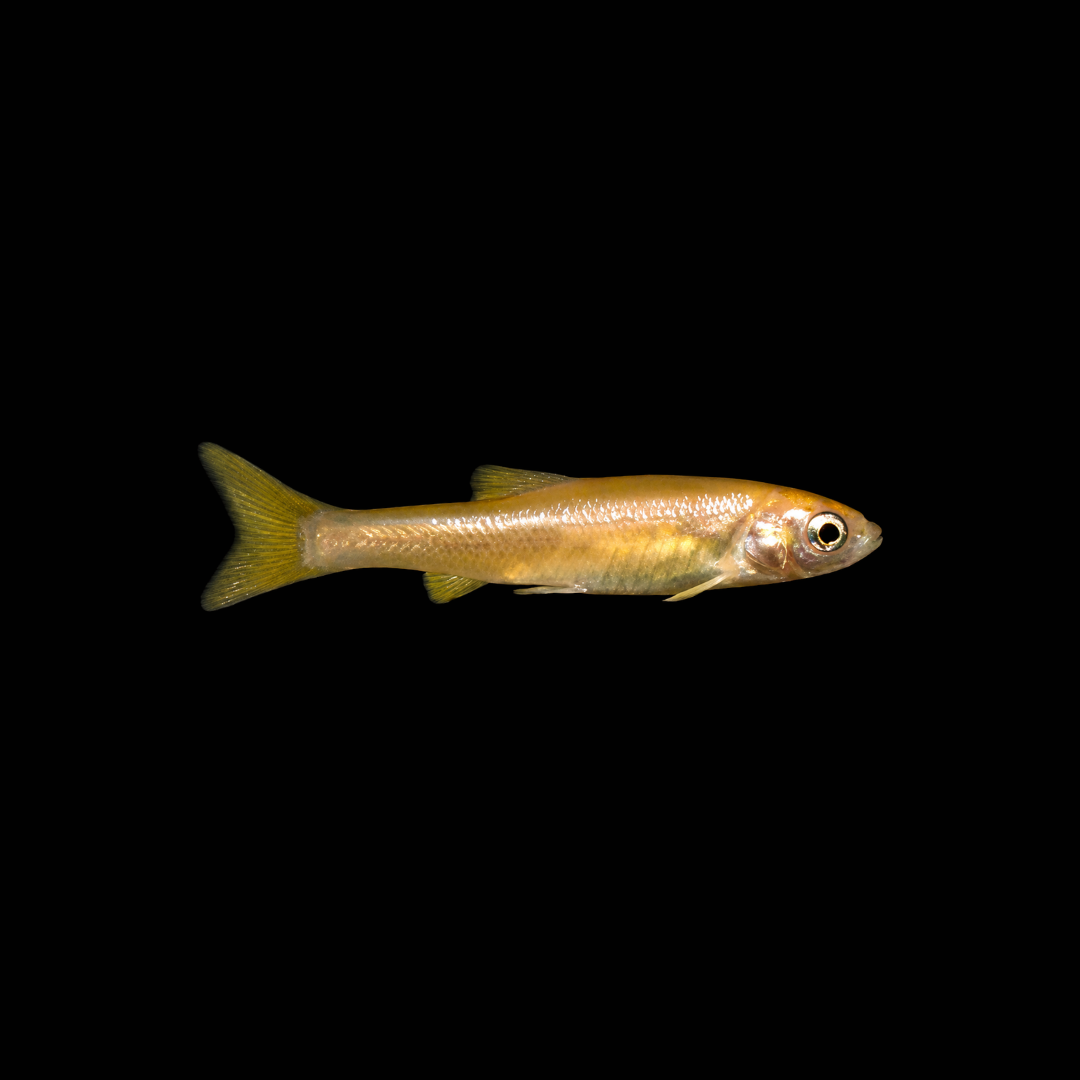
ファットヘッドミノーゴールデンは、北アメリカ原産のファットヘッドミノーから流通している黄金色から橙色の黄化系統です。野生型に見られる暗い体色が弱まり、群れで泳ぐと水槽内に明るい印象をつくります。海外ではロージーレッドミノーやピンクミノーに近い呼び名で扱われることもあり、日本の観賞魚流通では、丈夫で無加温飼育しやすい小型のコイ科系淡水魚として親しまれます。 The Golden Fathead Minnow is a golden to orange xanthic strain of the Fathead Minnow, a small freshwater fish native to North America. Compared with the darker wild form, this strain has a brighter body color and creates a lively impression when kept in a group. It is closely associated with trade names such as Rosy Red Minnow or Pink Minnow overseas, while in Japan it is appreciated as a hardy, small cypriniform aquarium fish that is easy to keep without a heater.
本種は観賞魚として扱いやすい一方で、原種のファットヘッドミノーは低酸素や濁りにも強く、環境への適応力が高い魚として知られています。その強健さは飼育上の魅力であると同時に、屋外へ逃げた場合には外来魚としてのリスクにもつながります。飼育では、フタの設置、屋外容器の溢水対策、余剰個体を野外へ放さない管理を必ず意識します。 Although this fish is easy to enjoy as an aquarium species, the wild Fathead Minnow is known for tolerating difficult conditions such as low oxygen and turbid water. That hardiness is one of its strengths in captivity, but it also means escaped fish could pose an invasive risk. Secure lids, overflow prevention for outdoor tubs, and a strict no-release policy are essential parts of responsible care.
基本情報 / Basic Information
| 学名 / Scientific Name | Pimephales promelas |
|---|---|
| 通称 / Common Name | ファットヘッドミノーゴールデン、ゴールデンファットヘッドミノー、ファットヘッドミノー黄化系統、ロージーレッドミノー、ピンクミノーGolden Fathead Minnow, xanthic Fathead Minnow, Rosy Red Minnow, Pink Minnow |
| 分類 / Family | コイ目。従来はコイ科として扱われることが多く、近年の分類体系ではウグイ科に含めて扱われる場合があります。Order Cypriniformes. It has traditionally been treated within Cyprinidae, while some modern classifications place it in Leuciscidae. |
| 英名 / English Name | Golden Fathead Minnow, Rosy Red Minnow, Fathead Minnow |
| 分布 / Distribution | 原種は北アメリカに広く分布し、池、湖、小河川、流れの緩い水域などに見られます。釣り餌や観賞魚としての流通に伴い、原産域外での記録もあります。ファットヘッドミノーゴールデンは自然分布を持つ別種ではなく、観賞魚として流通する色彩変異系統です。The wild species is widely distributed in North America and inhabits ponds, lakes, small rivers, and slow-water habitats. Records outside the native range are associated with baitfish and aquarium pathways. The Golden Fathead Minnow is not a separate naturally distributed species, but a color strain traded for aquariums. |
| 最大体長 / Max Size | およそ8cm前後、条件がよい雄では10cm近くになることがあります。雌は雄よりやや小さめにまとまることが多いです。Around 8 cm is typical, with well-grown males sometimes approaching 10 cm. Females usually remain somewhat smaller than males. |
| 寿命 / Lifespan | 一般的には2〜3年ほどです。低温期に代謝が落ちる環境では長く維持されることもありますが、過密、急な水質変化、輸送後のストレスは寿命を縮める原因になります。The usual lifespan is about 2–3 years. Fish may remain in good condition longer in cooler, stable conditions, but crowding, sudden water-quality changes, and transport stress can shorten their lifespan. |
飼育環境 / Aquarium Environment
| 水槽サイズ / Tank Size | 最低でも45cm規格水槽、できれば60cm規格水槽以上が扱いやすいです。活発に泳ぐため、単独飼育よりも6〜10匹以上の群れで飼うと本来の動きが見えやすくなります。大量育成や屋外繁殖では、60L以上のタライや大型コンテナなど、横幅と水量に余裕のある容器が向きます。A 45 cm standard aquarium is the practical minimum, while a 60 cm standard tank or larger is easier to manage. Because the fish is active, keeping a group of six to ten or more shows its natural movement better than keeping a single specimen. For larger grow-out or outdoor breeding, use tubs or containers of 60 L or more with ample surface area and water volume. |
|---|---|
| 水温 / Temperature | 目安は15〜26℃です。実験系統では20〜25℃前後で維持される例があり、観賞魚飼育でもこの範囲が安定します。耐寒性は比較的高く、室内では多くの地域で無加温飼育が可能ですが、屋外の小型容器では急冷、全面凍結、夏場の高水温に注意します。 A practical range is about 15–26°C. Laboratory lines are often maintained around 20–25°C, and this range is also stable for aquarium care. The species is relatively cold-tolerant and can often be kept indoors without a heater, but small outdoor containers need protection from sudden chilling, complete freezing, and summer overheating. |
| 水質 / Water Quality | 中性から弱アルカリ性、pH6.5〜8.0前後を目安にします。強健な魚ですが、汚れた水を好むわけではありません。よく食べてよく泳ぐため、過密にするとアンモニアや亜硝酸が上がりやすくなります。ろ過を効かせ、定期的な換水で水を安定させます。Neutral to slightly alkaline water, around pH 6.5–8.0, is suitable. The fish is hardy, but that does not mean it prefers dirty water. Because it eats well and swims actively, crowding can quickly raise ammonia and nitrite levels. Use reliable filtration and regular water changes to keep conditions stable. |
| レイアウト / Layout | 中央には広く泳げる空間を残し、後景や側面に流木、石、丈夫な水草を配置すると落ち着きます。柔らかい新芽はつつかれることがあるため、アヌビアス類やミクロソリウム類など硬めの葉を持つ水草が扱いやすいです。繁殖を狙う場合は、平たい石やタイルを数枚重ね、雄が入り込める天井状の隙間を作ると産卵床として使われやすくなります。Leave open swimming space in the center, with driftwood, stones, and tough plants along the back or sides. Soft new shoots may be nibbled, so harder-leaved plants such as Anubias or Java fern are practical choices. For breeding, stack several flat stones or tiles to create overhead gaps that males can use as nesting sites. |
| 注意点 / Precautions | 飛び出し事故が起こることがあるため、水槽には隙間の少ないフタをします。屋外飼育では、大雨で水があふれたときに魚が流出しない構造にし、排水口にはネットを設置します。本種は外来魚として扱うべき生体です。飼えなくなった個体、繁殖で増えた個体、釣り餌として入手した個体を、河川、池、用水路、ビオトープ外へ放すことは避けます。Use a tight-fitting lid because jumping accidents can occur. Outdoor containers should be designed so fish cannot escape during heavy rain, and drain outlets should be covered with mesh. Treat this fish as a non-native species. Do not release unwanted fish, surplus offspring, or baitfish into rivers, ponds, irrigation channels, or outside managed ponds. |
餌と給餌 / Feeding
| 餌の種類 / Diet | 雑食性で、熱帯魚用フード、金魚用フード、日本産淡水魚用フード、冷凍アカムシ、ブラインシュリンプ、ミジンコなどをよく食べます。原種はデトリタスや藻類も利用するため、植物質を含む人工飼料を組み合わせると安定します。黄金色から橙色の発色を保ちたい場合は、カロテノイドを含む色揚げ系の小型魚用または金魚用飼料を補助的に使うとよいでしょう。This omnivorous fish readily eats tropical fish foods, goldfish foods, native freshwater fish foods, frozen bloodworms, brine shrimp, and daphnia. The wild species also uses detritus and algae, so combining foods that include plant matter helps maintain condition. To support its golden to orange coloration, use a carotenoid-containing color food for small fish or goldfish as part of the diet. |
|---|---|
| 給餌のポイント / Feeding Tips | 1日1〜2回、数分で食べきる量を与えます。食欲が強いため、与えすぎるとすぐに水が傷みます。繁殖を狙う親魚には、人工飼料を主食にしつつ、冷凍アカムシやブラインシュリンプを少量加えるとコンディションを上げやすくなります。稚魚には初期飼料やブラインシュリンプ幼生を細かく与えます。Feed once or twice daily, only as much as they finish within a few minutes. They have a strong appetite, so overfeeding quickly fouls the water. For breeding adults, use prepared foods as the staple and supplement modestly with frozen bloodworms or brine shrimp. Fry can be started on fine starter foods and newly hatched brine shrimp. |
性格と混泳 / Temperament and Tank Mates
| 性格 / Temperament | 群れで活発に泳ぐ、丈夫で反応のよい魚です。慣れると前面に出てきて餌を待つようになり、観察しやすい一方、繁殖期の雄は産卵床を守るために強い縄張り行動を見せます。普段も動きが速く、のんびりした魚にはやや圧が強く感じられることがあります。It is a hardy, responsive fish that swims actively in groups. Once settled, it often comes to the front for food, making it easy to observe. During breeding, males become territorial around nesting sites. Even outside breeding, their fast movement may feel too intense for slower fish. |
|---|---|
| 混泳の相性 / Compatibility | 同程度の大きさで泳ぎが速い魚とは比較的合わせやすいですが、グッピー、ベタ、ロングフィンの金魚など、長いヒレを持つ魚や泳ぎの遅い魚は避けた方が無難です。卵や稚魚を食べることがあるため、メダカやタナゴ類などを繁殖させたい水槽では混泳させない方が安全です。繁殖期の雄同士の争いを避けるため、隠れ場と泳ぐ空間の両方を用意します。It can work with similarly sized, active fish, but avoid slow-moving or long-finned species such as guppies, bettas, and long-finned goldfish. Because it may eat eggs and fry, it is not suitable for tanks where medaka, bitterlings, or similar fish are being bred. Provide both hiding places and open swimming space to reduce conflicts among breeding males. |
病気と対策 / Diseases and Prevention
| かかりやすい病気 / Common Diseases | 特定の病気だけに極端に弱い魚ではありませんが、導入直後や水質悪化時には白点病、水カビ、尾ぐされ、細菌性の皮膚炎が出ることがあります。活餌や屋外由来の個体を混ぜる場合は、寄生虫や未知の病原体を持ち込むリスクにも注意します。This species is not unusually fragile, but newly introduced fish or fish kept in poor water may develop ich, fungal infections, fin rot, or bacterial skin problems. When mixing in baitfish or outdoor-sourced individuals, also consider the risk of introducing parasites or unknown pathogens. |
|---|---|
| 対策と予防 / Prevention | 導入時は2週間程度の隔離観察を行い、痩せ、白点、ヒレの溶け、体表の充血がないか確認します。過密を避け、ろ過を安定させ、急な水温変化を抑えることが基本です。輸入や販売を伴う取り扱いでは、水産動物の輸入防疫制度や地域の外来種対策の扱いが変わる可能性があるため、最新の公的情報を確認します。病気が出た場合は、症状を見極めて隔離、換水、市販薬の使用を段階的に行います。Quarantine new fish for about two weeks and check for emaciation, white spots, fin erosion, or redness on the body. Avoid crowding, maintain stable filtration, and prevent sudden temperature changes. For import or commercial handling, check the latest official information on aquatic animal biosecurity and local invasive-species measures, because rules can change. If disease appears, identify the symptoms and proceed step by step with isolation, water changes, and appropriate aquarium medications. |
増やし方(繁殖) / Breeding
| 雌雄の判別 / Sexing | 成熟した雄は雌より大きくなりやすく、繁殖期には頭部が発達し、吻部に白い追星が出ます。頭部後方から背びれ前方にかけて脂状または海綿状に見える隆起が発達し、体色もやや濃く見えることがあります。雌は雄ほど頭部が張らず、体は丸みを帯びやすいです。Mature males tend to be larger than females. In breeding condition, males develop white tubercles on the snout and a fatty or spongy-looking pad from the nape toward the front of the dorsal fin. Their body color may also become darker. Females usually lack the pronounced head development and often appear rounder. |
|---|---|
| 繁殖形態 / Reproduction | 沈性粘着卵を基質の下面に平面状に産みつけ、雄が卵を守るタイプです。雌は1回に数百個の卵を産むことがあり、条件が整うと短い間隔で産卵を繰り返します。卵は水温が安定していれば4〜5日ほどでふ化し、稚魚は成長が早く、数か月で成熟します。It lays adhesive demersal eggs on the underside of a surface, and the male guards the clutch. A female may lay several hundred eggs per spawn, and spawning can repeat at short intervals under favorable conditions. With stable temperature, eggs hatch in about four to five days, and fry grow quickly, reaching maturity within a few months. |
| 繁殖のポイント / Breeding Tips | 平たい石、植木鉢の破片、素焼きタイルなどを重ねて、雄が下に入り込める天井状の隙間を作ります。雄が縄張りを作り、雌を誘い込むと、卵は隙間の天井面に付着します。採卵する場合は、卵のついたタイルや石を別容器へ移し、弱めから中程度のエアレーションで新鮮な水を当てます。親魚と稚魚を同じ容器に残すと食べられる可能性があるため、数を残したい場合は早めに分けます。Stack flat stones, broken flowerpots, or unglazed tiles so that a male can enter the overhead space beneath them. Once the male establishes a territory and attracts a female, the eggs are attached to the ceiling-like surface. To collect eggs, move the tile or stone with eggs to a separate container and provide gentle to moderate aeration. Adults may eat fry, so separate young fish early if you want to raise them in numbers. |
雑学と豆知識 / Trivia and Fun Facts
| 1. 「ゴールデン」は品種名として理解したい色彩表現 / 1. “Golden” is best understood as a trade color name | ファットヘッドミノーゴールデンは、学術的に別種として分けられる魚ではなく、ファットヘッドミノーの明るい黄化系統として扱うのが自然です。個体によって黄金色、橙色、淡いバラ色の見え方に差があり、流通名もロージーレッドミノーやピンクミノーと重なることがあります。色名だけで別種と判断せず、学名は同じくPimephales promelasとして整理しておくと混乱を避けられます。The Golden Fathead Minnow is not a separate species, but is best treated as a bright xanthic strain of the Fathead Minnow. Individual fish may look golden, orange, or softly rosy, and trade names can overlap with Rosy Red Minnow or Pink Minnow. Rather than treating each color name as a different species, it is clearer to organize them under the same scientific name, Pimephales promelas. |
|---|---|
| 2. 研究分野でもよく知られる小さな実験魚 / 2. A small fish with a large role in research | ファットヘッドミノーは、観賞魚や餌魚としてだけでなく、水質や化学物質の影響を見る生態影響試験でもよく知られています。飼育しやすく、成熟が早く、卵や稚魚の反応を観察しやすいため、急性毒性、初期生活段階、内分泌かく乱に関する試験で利用されてきました。水槽の中で群れて泳ぐ小魚が、環境評価の分野でも重要な役割を持っている点は、本種ならではの興味深さです。The Fathead Minnow is known not only as an aquarium or bait fish, but also as a test species in studies of water quality and chemical effects. It is easy to maintain, matures quickly, and provides observable responses in eggs and young fish, making it useful in acute toxicity, early-life-stage, and endocrine-disruption testing. A small schooling fish in the aquarium also has an important role in environmental assessment. |
| 3. 雄が卵を守る、観察しがいのある繁殖行動 / 3. Males guard the eggs, making breeding behavior rewarding to observe | 繁殖期の雄は、頭部の追星と背中の隆起を発達させ、産卵床のまわりに縄張りを作ります。雌が卵を産みつけたあとは、雄が卵を守り、水を送るような動きを見せます。小型魚でありながら、ただ卵を産みっぱなしにするのではなく、雄が巣を管理する姿を観察できるところに、本種の飼育の奥行きがあります。During breeding, males develop snout tubercles and a raised pad on the back, then defend a nesting area. After the female lays eggs, the male guards them and fans water over them. Although it is a small fish, it does not simply scatter eggs and leave; watching the male manage the nest adds depth to keeping this species. |
| 4. 丈夫さは魅力であり、同時に責任でもある / 4. Hardiness is both an appeal and a responsibility | ファットヘッドミノーゴールデンの扱いやすさは大きな魅力です。しかし、原種のファットヘッドミノーは低酸素や濁りにも耐えやすい魚として知られ、地域によっては外来種対策の対象として注意されます。屋外容器で楽しむ場合ほど、フタ、ネット、排水管理を丁寧に行い、飼育のしやすさを野外への放流につなげないことが大切です。The ease of keeping the Golden Fathead Minnow is a major part of its appeal. However, the wild Fathead Minnow is known for tolerating low oxygen and turbid water, and in some regions it is treated as a species requiring invasive-species caution. The more it is enjoyed outdoors, the more carefully lids, nets, and drainage should be managed so that ease of care never leads to release into the wild. |
まとめ / Conclusion
ファットヘッドミノーゴールデンは、黄金色の体色、群れで泳ぐ活発さ、無加温でも扱いやすい丈夫さを備えた、親しみやすい小型淡水魚です。シンプルな水槽でもよく映え、広めの遊泳空間を用意すると、小さな体でせわしなく泳ぐ姿が水槽全体に明るい動きを生み出します。 The Golden Fathead Minnow is an approachable small freshwater fish with golden coloration, lively schooling behavior, and the hardiness to be kept without a heater in many indoor setups. Even in a simple aquarium it stands out well, and with open swimming space its quick movement brings brightness and energy to the whole tank.
その一方で、増えやすく、環境への適応力も高い魚だからこそ、飼育者の管理がとても大切になります。フタをして逃がさず、繁殖個体を計画的に管理し、決して野外へ放さないこと。そうした基本を守ることで、ファットヘッドミノーゴールデンは、観賞、繁殖、行動観察の楽しさを長く味わわせてくれる存在になります。 At the same time, its ability to breed readily and adapt to a wide range of conditions makes careful management essential. Keep it contained with secure lids, manage offspring responsibly, and never release it outdoors. With those basics in place, the Golden Fathead Minnow can offer lasting enjoyment through its appearance, breeding behavior, and daily activity.

気になる道具や飼い方を見つけてみませんか?
 アイのアクアグッズ案内テトラミンって、こんなにあるの? アイとコタロウのごはん探究旅道具の特徴や使い方、選ぶときのポイントをアイが紹介します。記事はコチラ →
 アイのアクアグッズ案内エーハイムはおもちゃから始まった? 小さな噴水から水槽へ、アイとコタロウの探訪道具の特徴や使い方、選ぶときのポイントをアイが紹介します。記事はコチラ →
 アイのアクアグッズ案内水槽ライトの選び方|魚の見え方・水草・海水で選ぶおすすめ照明道具の特徴や使い方、選ぶときのポイントをアイが紹介します。記事はコチラ →
 アイのアクアグッズ案内カルキ抜き・水質調整剤の選び方|水換えと水槽の種類に合わせて選ぶ道具の特徴や使い方、選ぶときのポイントをアイが紹介します。記事はコチラ →
さまざまな飼育テーマをご紹介。リンク先の記事には広告・商品紹介が含まれます。
案内・紹介記事一覧へ →分布マップ
原種のファットヘッドミノーは北アメリカに広く分布し、池、湖、小河川、流れの緩い水域などに見られます。ファットヘッドミノーゴールデンは自然分布を持つ別種ではなく、観賞魚として流通する色彩変異系統です。
この地図は、記事内の分布欄をもとにした分布イメージ用の概略プロットです。緯度経度が明記されていないため、北アメリカ中部を代表地点として示しています。実際の採集地点や厳密な生息範囲を示すものではありません。
参考文献・参照資料
この記事では、分類、分布、生息環境、飼育条件、繁殖、病気・防疫、外来種としての注意点を確認するため、店舗・通販サイト、個人ブログ、まとめサイトを除外し、公的機関、国際機関、学術系データベース、獣医学系マニュアルを中心に参照しています。
-
FishBase. Pimephales promelas, Fathead minnow
分類体系、学名、英名、原産分布、生息環境、食性、産卵環境を確認するために参照。 -
U.S. Geological Survey. Nonindigenous Aquatic Species: Fathead Minnow (Pimephales promelas) Species Profile
北アメリカでの原産範囲、原産域外での記録、非在来個体群の扱いを確認するために参照。 -
U.S. Environmental Protection Agency. Culturing of Fathead Minnows (Pimephales promelas): Supplement to Training Video
飼育水、脱塩素、給餌、アルテミアの使用、成熟、雌雄差、産卵床、卵の付着、ふ化日数など、飼育・繁殖に関する記述の裏付けとして参照。 -
U.S. Environmental Protection Agency. Method 1000.0: Fathead Minnow, Pimephales promelas, Larval Survival and Growth; Chronic Toxicity
ファットヘッドミノーが毒性試験に用いられる背景、仔魚の扱い、25±1℃の試験条件、アルテミア給餌、病原体混入への注意を確認するために参照。 -
国立環境研究所. 実験水生生物リスト
国内機関におけるファットヘッドミノーの飼育条件、水温20〜25℃、脱塩素上水または地下水、アルテミア・人工飼料、外来種として野外へ拡散しない注意を確認するために参照。 -
MSD Veterinary Manual. Disorders and Diseases of Fish
観賞魚で問題になりやすい白点病などの疾病、水質悪化、過密、ストレス、導入魚の隔離が重要であることを確認するために参照。 -
World Organisation for Animal Health. Infection with Spring Viraemia of Carp Virus, WOAH Aquatic Manual
ファットヘッドミノーがコイ春ウイルス血症ウイルスの感受性宿主として扱われること、若い魚で発症が目立ちやすいことを確認するために参照。 -
農林水産省. 水産輸入防疫制度について
水産動物の輸入時に確認すべき防疫制度、対象疾病、輸入許可手続きに関する注意の確認先として参照。 -
東京都環境局. 東京都外来種対策リスト2025
ファットヘッドミノーが魚類の侵入予防外来種として扱われていること、野外への逸出・定着防止や流通段階での導入防止が求められることを確認するために参照。
確認日:2026年6月20日





コメント