
解説 / Description
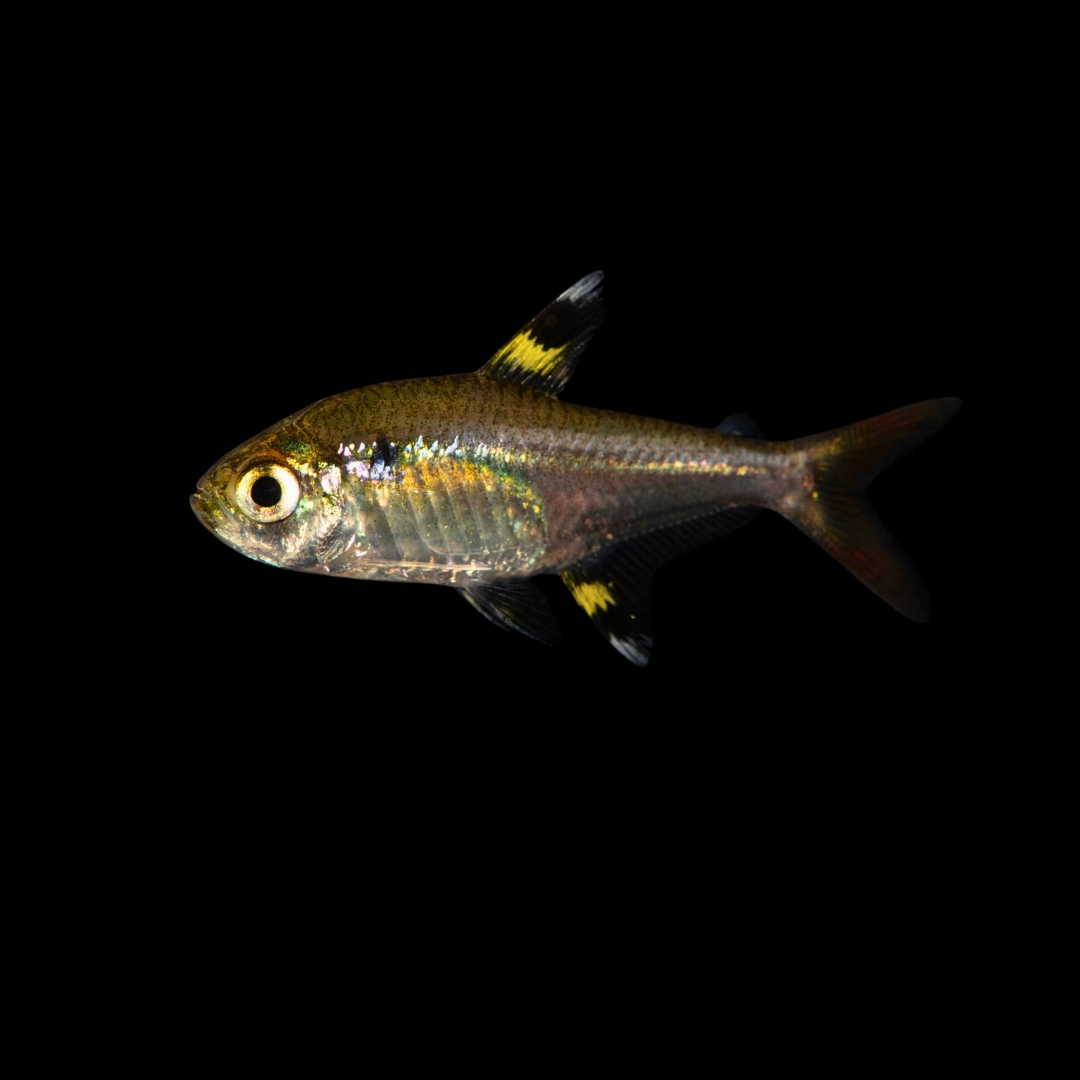
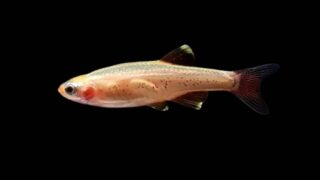
プリステラは、南米のアマゾン川水系、オリノコ川水系、ギアナ地方の河川などに分布する小型のカラシンの仲間です。半透明の体から骨格や内臓がほのかに透けて見えることがあり、英語圏では「X-ray tetra」とも呼ばれます。背びれと尻びれに入る白、黒、黄色のはっきりした模様、そして赤みを帯びる尾びれが、透明感のある体に美しく映える魚です。 Pristella is a small characiform fish native to the Amazon, Orinoco, and Guianan river systems of South America. Its semi-transparent body can make the skeleton and internal organs faintly visible, which is why it is often called the “X-ray tetra” in English-speaking countries. The bold white, black, and yellow markings on the dorsal and anal fins, together with the reddish caudal fin, stand out beautifully against its glassy body.
丈夫で水質への適応幅が広く、人工飼料にもよく慣れるため、日本でも熱帯魚飼育の入門種として長く親しまれてきました。一方で、半透明の体、沿岸部の静かな水域や水草の多い湿地にも見られる適応力、近年の分子系統学による分類体系の見直しなど、学術的にも興味深い特徴を持っています。水槽では単独よりも群れでこそ魅力が出る魚で、5〜6匹以上、できれば10匹前後で泳がせると、本種らしい落ち着いた群泳を楽しめます。 Hardy, adaptable to a broad range of water conditions, and quick to accept prepared foods, this species has long been loved in Japan as an excellent beginner’s tropical fish. At the same time, it is scientifically interesting for its semi-transparent body, adaptability to calm coastal waters and densely vegetated swamps, and recent taxonomic reassessment through molecular phylogenetics. In the aquarium, its charm is best seen in groups rather than as a single fish, and keeping five or six or more, ideally around ten, allows its calm schooling behavior to shine.
基本情報 / Basic Information
| 学名 / Scientific Name | Pristella maxillaris |
|---|---|
| 通称 / Common Name | プリステラ、ゴールデン・プリステラ、アルビノ・プリステラ、パンダ・プリステラなどPristella tetra, X-ray tetra, golden pristella, albino pristella, panda pristella |
| 分類 / Family | カラシン目 アケストロラムフス科 プリステラ亜科 プリステラ属。旧来は広義のカラシン科に置かれることが多く、近年の分子系統学的研究ではアケストロラムフス科として扱う体系が示されています。Order Characiformes, family Acestrorhamphidae, subfamily Pristellinae, genus Pristella. It was traditionally placed in the broadly defined family Characidae, while recent molecular phylogenetic studies support placement in Acestrorhamphidae. |
| 英名 / English Name | X-ray tetra, Pristella tetra |
| 分布 / Distribution | 南米のアマゾン川水系、オリノコ川水系、ギアナ地方の沿岸河川など。流れの穏やかな沿岸水域や、水草の多い湿地で見られるとされています。South America, including the Amazon and Orinoco river systems and coastal river drainages of the Guianas. It is reported from calm coastal waters and densely vegetated swamps. |
| 最大体長 / Max Size | 最大で約4.5cm。水槽内では3〜4cm前後で落ち着くことも多いです。Up to about 4.5 cm. In aquariums, many individuals remain around 3 to 4 cm. |
| 寿命 / Lifespan | おおむね3〜5年。安定した水質と過密を避けた環境では、比較的長く楽しめます。Generally 3 to 5 years. With stable water quality and avoidance of overcrowding, it can be enjoyed for a relatively long time. |
飼育環境 / Aquarium Environment
| 水槽サイズ / Tank Size | 最低でも30cm規格水槽クラスから飼育可能ですが、群泳の美しさと安定した水質を考えると45cm規格水槽以上が安心です。10匹前後の群れで楽しむなら60cm規格水槽、約57L前後を推奨します。It can be kept from a standard 30 cm aquarium, but a standard 45 cm aquarium or larger is more comfortable for schooling behavior and stable water quality. For a group of around ten fish, a standard 60 cm aquarium of about 57 L is recommended. |
|---|---|
| 水温 / Temperature | 22〜28℃。日本の冬季はオートヒーターで24〜26℃前後に安定させると管理しやすいです。 22 to 28°C. In Japan, maintaining around 24 to 26°C with an aquarium heater during winter makes care easier. |
| 水質 / Water Quality | 弱酸性〜弱アルカリ性、pH6.0〜8.0前後を目安に幅広く適応します。日本の一般的な水道水をカルキ抜きして使用しやすい魚ですが、急激な水質変化は避けてください。沿岸水域での記録から水質適応力の高さが語られることがありますが、家庭飼育では淡水で管理するのが基本です。Adaptable across a broad range, roughly pH 6.0 to 8.0. Dechlorinated Japanese tap water is usually suitable, but sudden changes in water conditions should be avoided. Records from coastal waters are sometimes cited as evidence of its adaptability, but in home aquariums it should normally be kept as a freshwater fish. |
| レイアウト / Layout | アマゾンソード、ロタラ、ミクロソリウム、ウィローモスなどの水草や流木を使い、隠れ場所を作りつつ、中央には泳ぎ回れるオープンスペースを残します。落ち着いた照明や暗めの底床にすると、透明な体とひれの模様がよく映えます。Use aquatic plants such as Amazon sword, Rotala, Java fern, and Java moss, together with driftwood, to create shelter while leaving open swimming space in the center. Subdued lighting and a darker substrate help the transparent body and fin markings stand out. |
| 注意点 / Precautions | 丈夫な魚ですが、導入直後の水温差やpH差には注意が必要です。袋の水をそのまま水槽へ大量に入れず、点滴法や少量ずつの水合わせでゆっくり慣らしてください。また、群れで安心する魚なので、少数すぎる飼育では臆病になりやすいことがあります。Although hardy, it is sensitive to abrupt temperature or pH differences immediately after introduction. Avoid pouring a large amount of bag water into the aquarium, and acclimate slowly by drip acclimation or gradual water mixing. As a schooling fish, it feels more secure in groups and may become timid if kept in very small numbers. |
餌と給餌 / Feeding
| 餌の種類 / Diet | 自然下では小型のワーム類、甲殻類、昆虫などを食べる動物食寄りの食性です。飼育下ではフレークフード、小型魚用の顆粒フード、マイクロペレットによく餌付きます。色揚げやコンディション維持には、冷凍アカムシ、ミジンコ、ブラインシュリンプ、イサザアミなどを補助的に与えると効果的です。In nature it feeds mainly on small worms, crustaceans, and insects, making it animal-food oriented. In aquariums, it readily accepts flakes, small granules, and micro pellets. For better coloration and condition, supplement with frozen bloodworms, daphnia, brine shrimp, and mysid-type small crustaceans. |
|---|---|
| 給餌のポイント / Feeding Tips | 1日1〜2回、数分で食べ切れる量を与えます。食欲旺盛なため与えすぎると残餌や排泄物で水質が悪化しやすくなります。群れ全体に行き渡るよう、細かい餌を水面に広げるように与えるとよいでしょう。Feed once or twice a day, only as much as they can finish within a few minutes. They eat eagerly, so overfeeding can quickly degrade water quality through leftovers and waste. Scatter fine foods over the surface so the whole group can feed evenly. |
性格と混泳 / Temperament and Tank Mates
| 性格 / Temperament | 非常に温和で、同種同士でも激しい争いはほとんどありません。中層を中心に泳ぎ、群れでまとまると落ち着きやすい魚です。水槽前面に出てくることも多く、観察しやすい点も魅力です。Very peaceful, with little serious aggression among its own kind. It mainly swims in the middle layers and becomes calmer when kept in a group. It often comes to the front of the aquarium, making it easy to observe. |
|---|---|
| 混泳の相性 / Compatibility | ネオンテトラ、カージナルテトラ、ラミーノーズテトラ、コリドラス、小型ラスボラ、オトシンクルス、温和な小型シクリッドなどと相性がよいです。口に入るサイズの稚魚やエビの幼生は捕食される可能性があります。また、大型魚や気の強い魚との混泳は避けてください。Compatible with neon tetras, cardinal tetras, rummy-nose tetras, Corydoras, small rasboras, Otocinclus, and peaceful dwarf cichlids. Very small fry or young shrimp may be eaten. Avoid keeping it with large or aggressive fish. |
病気と対策 / Diseases and Prevention
| かかりやすい病気 / Common Diseases | 特に導入直後や水温が不安定な時期には白点病に注意します。過密飼育、濾過不足、底床の汚れが続くと、尾腐れ病などの細菌感染症が起こることもあります。強健な魚ですが、ストレスが重なると発症しやすくなります。Be especially careful of ich immediately after introduction or during periods of unstable temperature. Overcrowding, insufficient filtration, and dirty substrate can also lead to bacterial infections such as fin rot. It is a hardy fish, but disease becomes more likely when stress accumulates. |
|---|---|
| 対策と予防 / Prevention | 新規導入時は水合わせを丁寧に行い、可能であればトリートメント水槽で数日観察します。週1回を目安に全水量の20〜30%を換水し、底床の汚れも軽く取り除きます。白点病の初期症状が見られた場合は、早期に隔離し、魚病薬の使用方法を守って薬浴を行います。Acclimate new fish carefully and, if possible, observe them for several days in a quarantine tank. Change about 20 to 30 percent of the water weekly and lightly remove debris from the substrate. If early signs of ich appear, isolate the affected fish promptly and treat with appropriate medication according to the instructions. |
増やし方(繁殖) / Breeding
| 雌雄の判別 / Sexing | 成熟したメスは卵を抱えると腹部がふっくらし、上から見ても丸みが分かります。オスはやや小柄で細身になりやすく、尻びれ周辺の体型がすっきり見える傾向があります。ただし若魚では判別が難しいため、複数匹を育てて自然にペアを得る方法が現実的です。Mature females become fuller-bodied when carrying eggs, with a rounded belly visible even from above. Males tend to be slightly smaller and slimmer, with a cleaner outline around the anal fin area. Juveniles are difficult to sex, so raising a group and allowing pairs to form naturally is practical. |
|---|---|
| 繁殖形態 / Reproduction | ばらまき型の産卵を行う卵生魚です。親は卵や稚魚を保護せず、むしろ食卵することがあるため、繁殖を狙う場合は専用水槽を用意し、産卵後に親魚をすぐ戻します。An egg-scattering oviparous fish. The parents do not guard eggs or fry and may eat the eggs, so a separate breeding tank should be used, and the adults should be removed immediately after spawning. |
| 繁殖のポイント / Breeding Tips | 30〜40L前後の繁殖水槽に、ウィローモスや産卵モップ、卵が落ち込むメッシュを設置します。水は弱酸性で軟らかめ、pH5.5〜6.5、低硬度に調整し、照明は控えめにします。ブラインシュリンプなどで親魚を十分に仕上げた後、やや低めの水で換水すると雨季の刺激に近い産卵トリガーになります。卵は24〜36時間ほどで孵化し、自由遊泳後の初期飼料にはインフゾリアや極小の稚魚用フードが必要です。数日から1週間ほどして口が大きくなれば、孵化したてのブラインシュリンプへ移行できます。Prepare a breeding tank of about 30 to 40 L with Java moss, spawning mops, or a mesh that allows eggs to fall through. Use soft, slightly acidic water around pH 5.5 to 6.5 and keep lighting subdued. Condition the adults well with foods such as brine shrimp, then perform a water change with slightly cooler water to mimic rainy-season cues. Eggs usually hatch in about 24 to 36 hours, and newly free-swimming fry require infusoria or extremely fine fry food. After several days to about a week, once their mouths are larger, they can be transitioned to newly hatched brine shrimp. |
雑学と豆知識 / Trivia and Fun Facts
| 1. 学名に残る「小さなノコギリ」の名残 / 1. A “little saw” hidden in the scientific name | プリステラ属の名は、ギリシャ語でノコギリを意味する語に由来するとされます。これは、上顎の縁に並ぶ小さな歯の構造に注目して名づけられたものです。透明な体やひれの模様が目を引く魚ですが、分類学者が最初に強く意識した特徴は、私たちが水槽越しに眺めるだけではまず気づかない、口元の細かな形だったのです。観賞魚としての美しさと、学術記載における観察眼の違いが感じられる、興味深い名前といえます。The genus name Pristella is considered to derive from a Greek word meaning “saw,” referring to the tiny teeth along the edge of the upper jaw. Although aquarists are usually drawn to the transparent body and striking fin markings, early taxonomists focused on a minute feature around the mouth that is almost impossible to appreciate through aquarium glass. The name beautifully reveals the difference between ornamental appreciation and scientific observation. |
|---|---|
| 2. 透明な体は、ただの美しさではない / 2. Transparency is more than beauty | プリステラの半透明の体は、英名「X-ray tetra」の由来になっています。しかし、この透明感は単なる見た目の個性ではなく、自然界では輪郭をぼかすカモフラージュとして働いていると考えられています。南米の小川や湿地では、木漏れ日、水草の影、落ち葉から出るタンニンによる茶色い水が複雑に重なります。その中で体の輪郭をはっきり見せないことは、鳥や大型魚など視覚に頼る捕食者から逃れるうえで大きな助けになります。水槽で涼しげに見える透明な体には、捕食圧の中で磨かれた生存戦略が隠れているのです。The semi-transparent body of Pristella gives rise to the English name “X-ray tetra.” Yet this transparency is not merely ornamental; in nature, it is thought to function as camouflage by blurring the body outline. In South American streams and marshes, dappled sunlight, aquatic plant shadows, and tannin-stained water create a complex visual environment. A body that does not present a clear silhouette can help the fish avoid visually hunting predators such as birds and larger fish. The cool, glassy beauty seen in aquariums is rooted in a survival strategy shaped by predation pressure. |
| 3. 淡水魚なのに塩分変化に強い理由 / 3. Why a freshwater fish can tolerate salinity changes | プリステラは、流れの穏やかな沿岸水域や水草の多い湿地にも見られるため、小型テトラの中では水質への適応幅が広い魚として紹介されます。ただし、これを「汽水で飼う魚」と受け取る必要はありません。家庭の水槽では淡水飼育が基本で、pH6.0〜8.0前後の安定した水を用意すれば十分に管理できます。大切なのは、丈夫さを過信して急な水合わせや大きな水質変化を与えないことです。自然界で育まれた適応力は、雑な管理を許すものではなく、丁寧な飼育を支えてくれる余裕として考えるとよいでしょう。Pristella is reported from calm coastal waters and densely vegetated swamps, so it is often introduced as one of the more adaptable small tetras in terms of water conditions. This does not mean it should be treated as a brackish-water aquarium fish. In home aquariums, freshwater care is the standard, and stable water around pH 6.0 to 8.0 is usually sufficient. The key is not to overestimate its hardiness by exposing it to abrupt acclimation or major water-quality swings. Its natural adaptability should be viewed as a helpful safety margin for careful care, not as permission for careless husbandry. |
| 4. 分類学の世界で起きた大きな見直し / 4. A major reassessment in taxonomy | プリステラは長い間、広い意味でのカラシン科の魚として紹介されてきました。しかし、近年の分子系統学では、外見だけでは分からない血縁関係がDNAの情報から見直されています。大規模なUCE解析を用いた研究では、従来カラシン科として扱われてきた一部のグループを複数の科に整理する体系が示され、プリステラ属はアケストロラムフス科、プリステラ亜科に置かれます。図鑑やショップ表記では今後もしばらく旧来の「カラシン科」表記が残る可能性がありますが、分類学の世界では、小さなテトラ一種にも進化史を読み直す大きな流れが及んでいるのです。Pristella was long introduced as a member of the broadly defined family Characidae. Recent molecular phylogenetics, however, has revised relationships that cannot be resolved by appearance alone. A large UCE-based study proposed dividing parts of the traditional Characidae into several families, placing Pristella in Acestrorhamphidae, subfamily Pristellinae. Aquarium books and shop labels may continue to use the older “Characidae” wording for some time, but in taxonomy even a small tetra is part of a broader effort to reread evolutionary history. |
| 5. 観賞魚市場で愛され続ける理由 / 5. Why it remains beloved in the aquarium trade | プリステラは日本でも昔から流通が安定しており、ノーマル個体だけでなく、ゴールデン、アルビノ、バルーン、パンダといった改良品種も知られています。野生採集個体だけに強く依存する魚ではなく、現在の観賞魚流通では養殖個体が多く扱われます。繁殖しやすく、輸送にも比較的強く、人工飼料にも慣れやすいという性質が、安定供給と手頃な価格につながっています。つまりプリステラは、自然界で獲得した強さが、そのまま観賞魚としての扱いやすさにも結びついた魚なのです。Pristella has long been reliably available in the Japanese aquarium trade, not only in its normal form but also as golden, albino, balloon, and panda varieties. It is not a species that depends heavily only on wild-caught individuals; captive-bred fish are common in the ornamental trade. Its ease of breeding, relative tolerance of transport, and readiness to accept prepared foods all contribute to stable supply and affordable prices. In other words, the resilience it gained in nature has translated directly into its practicality as an aquarium fish. |
| 6. 似ているようで異なる改良品種と遺伝子組換え魚 / 6. Selective varieties and genetically modified fish are not the same | ゴールデンやアルビノ、バルーン、パンダといったプリステラの改良品種は、主に突然変異や選択交配によって固定された形質です。一方、海外では蛍光タンパク質の遺伝子を導入した遺伝子組換え観賞魚が知られ、X-ray tetraをもとにした蛍光系統も商業化されています。しかし日本では、遺伝子組換え生物の使用や流通にはカルタヘナ法に基づく規制があり、承認を受けていない遺伝子組換え観賞魚を国内で飼育、販売、流通させることはできません。見た目が派手な魚という点では同じように見えても、選択交配による改良品種と、遺伝子を人為的に導入した魚では、法的・倫理的な扱いが大きく異なります。Golden, albino, balloon, and panda forms of Pristella are primarily traits fixed through mutation and selective breeding. In contrast, fluorescent ornamental fishes overseas are genetically modified by introducing genes for fluorescent proteins, and fluorescent lines based on the X-ray tetra have also been commercialized. In Japan, however, the use and distribution of genetically modified organisms are regulated under laws implementing the Cartagena Protocol, and unapproved genetically modified ornamental fish cannot be kept, sold, or distributed domestically. Although both may look like colorful aquarium varieties, selectively bred forms and genetically modified fish are legally and ethically very different. |
まとめ / Conclusion
プリステラは、丈夫で温和、餌付きがよく、幅広い水質に適応できることから、初めての小型熱帯魚として非常に扱いやすい種類です。30cm規格水槽から飼育できますが、本来の魅力である群泳を楽しむなら、45cm規格水槽以上、できれば60cm規格水槽で複数匹を泳がせるのがおすすめです。 Pristella is hardy, peaceful, readily accepts prepared foods, and adapts to a wide range of water conditions, making it an excellent first small tropical fish. It can be kept in a standard 30 cm aquarium, but to enjoy its natural schooling charm, a standard 45 cm aquarium or larger, ideally a 60 cm aquarium with a group, is recommended.
その一方で、半透明の体、水質への広い適応力、分子系統学による分類の見直しなど、知れば知るほど奥行きのある魚でもあります。入門魚としてのやさしさと、南米の水辺で磨かれた進化の物語をあわせ持つプリステラは、初心者にもベテランにも長く愛される、小さくも魅力的なテトラです。 At the same time, the more one learns about its semi-transparent body, broad adaptability to water conditions, and taxonomic reassessment through molecular phylogenetics, the deeper its appeal becomes. Combining beginner-friendly care with an evolutionary story shaped in South American waters, Pristella is a small but captivating tetra loved by both beginners and experienced aquarists.

気になる道具や飼い方を見つけてみませんか?
 アイのアクアグッズ案内あい先生のアクアグッズ深堀り!|泡で汚れを取り出す? プロテインスキマーの歴史と仕組み道具の特徴や使い方、選ぶときのポイントをアイが紹介します。記事はコチラ →
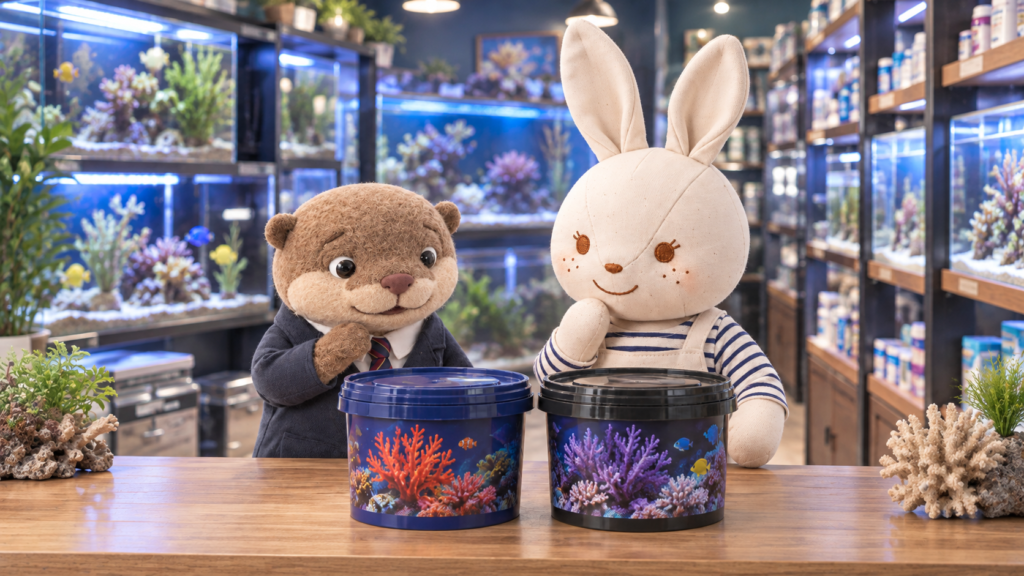 アイのアクアグッズ案内ショップで見かけるカラフルなバケツ。いったい何が入ってる?道具の特徴や使い方、選ぶときのポイントをアイが紹介します。記事はコチラ →
さまざまな飼育テーマをご紹介。リンク先の記事には広告・商品紹介が含まれます。
案内・紹介記事一覧へ →本記事では、プリステラの分類、分布、形態、生態、飼育上の基礎情報、近年の分類体系の見直し、近縁種の記載、および遺伝子組換え観賞魚に関する法制度を確認するため、以下の資料を参照しました。店舗・通販サイト由来の情報は参考文献から除外しています。
-
種の基礎情報・分布・飼育目安
Froese, R. and D. Pauly, Editors. FishBase. “Pristella maxillaris, X-ray tetra.” FishBase. https://www.fishbase.se/summary/Pristella-maxillaris.html -
分類・シノニム・有効名
Fricke, R., Eschmeyer, W. N. and Van der Laan, R., Editors. Eschmeyer’s Catalog of Fishes. “Pristella maxillaris.” California Academy of Sciences. https://researcharchive.calacademy.org/research/ichthyology/catalog/fishcatget.asp?spid=4316 -
学名の語源
Scharpf, C. “Family Acestrorhamphidae Eigenmann 1907.” The ETYFish Project. https://etyfish.org/acestrorhamphidae/ -
分子系統・新分類体系
Melo, B. F. et al. 2024. “Phylogenomics of Characidae, a hyper-diverse Neotropical freshwater fish lineage, with a phylogenetic classification including four families.” Zoological Journal of the Linnean Society, 202(1), zlae101. https://academic.oup.com/zoolinnean/article-abstract/202/1/zlae101/7748269 -
プリステラ属の新種記載
Conde-Saldaña, C. C., Albornoz-Garzón, J. G., García-Melo, J. E., Villa-Navarro, F. A., Mirande, J. M. and Lima, F. C. T. 2019. “A New Pristella (Characiformes: Characidae) from the Río Orinoco Basin, Colombia, with a Redefinition of the Genus.” Copeia, 107(3), 439–446. https://www.researchgate.net/publication/335454327_A_New_Pristella_Characiformes_Characidae_from_the_Rio_Orinoco_Basin_Colombia_with_a_Redefinition_of_the_Genus -
小型新種・逆転した性的二型
Lima, F. C. T., Caires, R. A., Conde-Saldaña, C. C., Mirande, J. M. and Carvalho, F. R. 2021. “A new miniature Pristella (Actinopterygii: Characiformes: Characidae) with reversed sexual dimorphism from the rio Tocantins and rio São Francisco basins, Brazil.” Canadian Journal of Zoology, 99(6), 339–348. https://cdnsciencepub.com/doi/10.1139/cjz-2020-0241 -
保全状況
IUCN Red List information summarized in FishBase. “Pristella maxillaris, X-ray tetra.” IUCN Red List Status: Least Concern, assessed 16 November 2020. https://fishbase.se/summary/Pristella-maxillaris -
遺伝子組換え観賞魚の国内規制
環境省. 「未承認の遺伝子組換えゼブラダニオ(熱帯魚)の販売等について」. https://www.env.go.jp/press/108665.html -
遺伝子組換えプリステラ系統の評価資料
Fisheries and Oceans Canada. 2024. “Environmental and Indirect Human Health Risk Assessment of GloFish® Electric Green®, Starfire Red®, Sunburst Orange®, and Galactic Purple® Pristella Tetras (Pristella maxillaris): Transgenic Ornamental Fishes.” Canadian Science Advisory Secretariat Science Advisory Report 2024/017. https://publications.gc.ca/collections/collection_2024/mpo-dfo/fs70-6/Fs70-6-2024-017-eng.pdf

コメント